
In 2011, British artist Martin Smith joined Geneva’s M.A.D.Gallery with machines whose only declared purpose was uselessness. Fifteen years later, one of his sculptures has discovered, almost in spite of itself, a profession: winding a watch.
A stated lineage with the sun
When Martin Smith begins drawing what will become the Solar Orbiter, he is not thinking about watchmaking. He is thinking about the sun, and about a precise reference: the Solar Do-Nothing Machine, designed in 1957 by Charles and Ray Eames for an Alcoa advertising campaign intended to demonstrate the uses of aluminium and solar energy. A mechanical object whose sole function is to move, without producing or transforming anything. Smith pursues that lineage when M.A.D.Gallery commissions him to create a limited-edition piece for its fifteenth anniversary, with a single brief: a kinetic creation celebrating fifteen years of mechanical creativity.
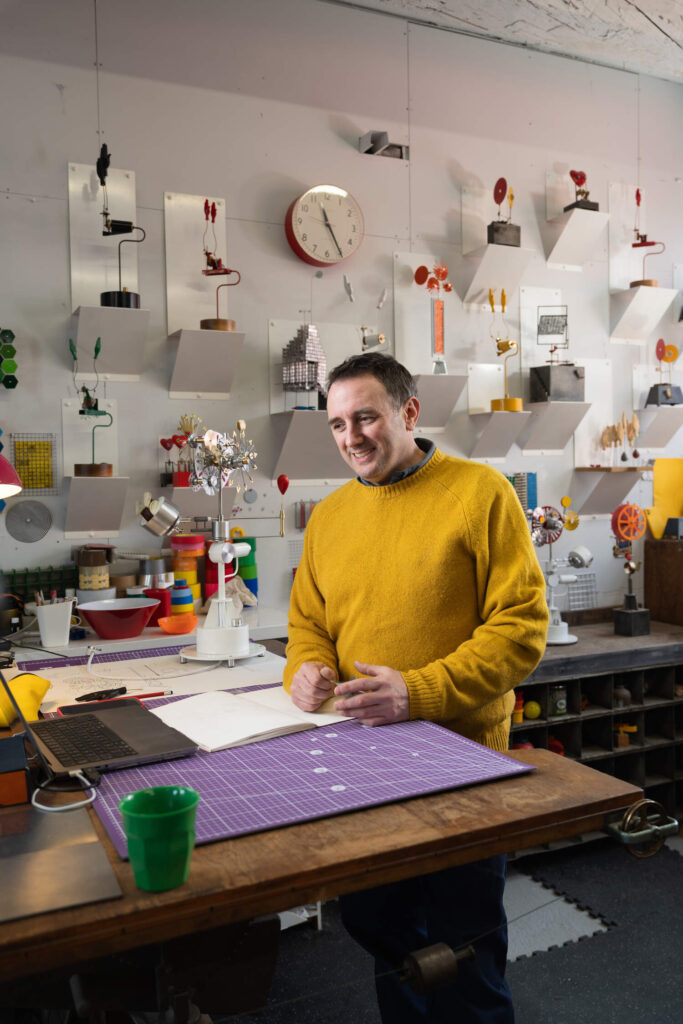
Smith is no newcomer to the Geneva gallery, founded in 2011 within the MB&F manufacture. He was in fact one of its very first exhibited artists, under the name Laikingland, the collective he founded with engineer Nick Regan. Their first works, The Applause Machine and Fingers, share the same obsession: mechanisms that repeat a gesture for no purpose other than repetition itself. Solar Orbiter was meant to follow the same path — an autonomous sculpture with no secondary function.
A founder’s diversion
The shift comes from outside the project. Maximilian Büsser, founder of MB&F, sees Smith’s drawing and asks a question that was not in the brief: what if it became a watch winder? Smith says he saw the proposal coming: “I expected it a little,” he confides — an answer that says much about the reputation of the Geneva house, accustomed to turning narrative objects into functional pieces.
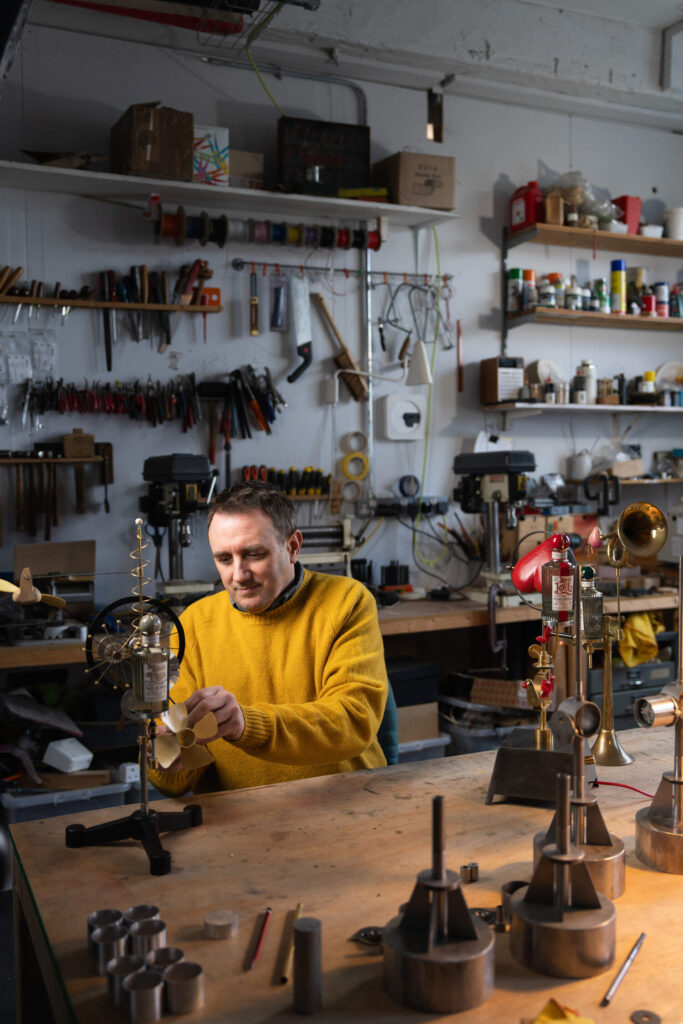
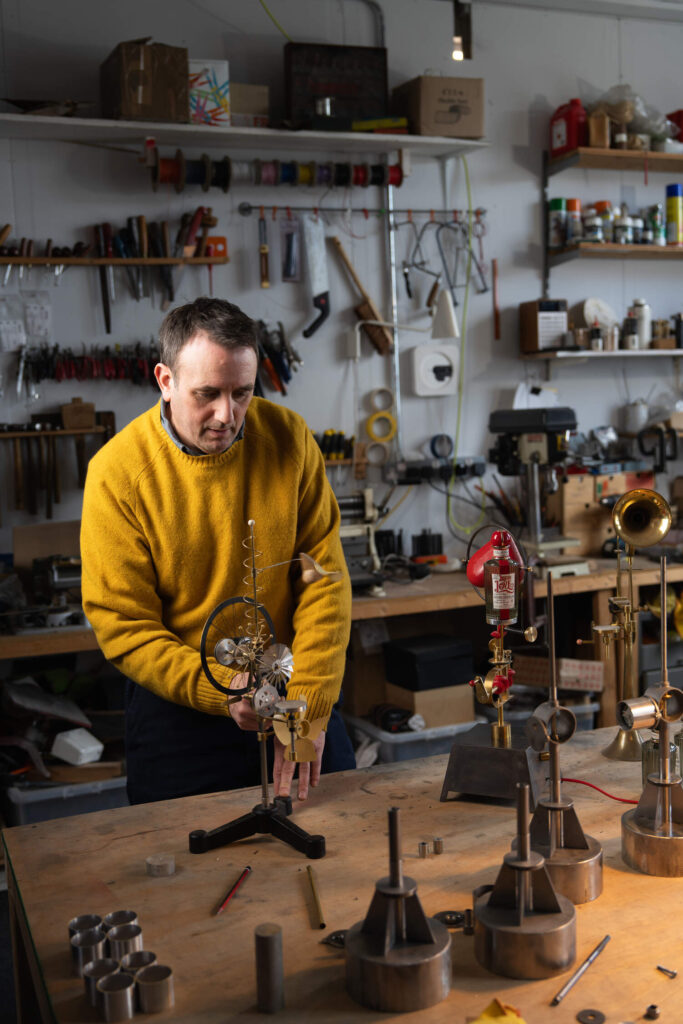
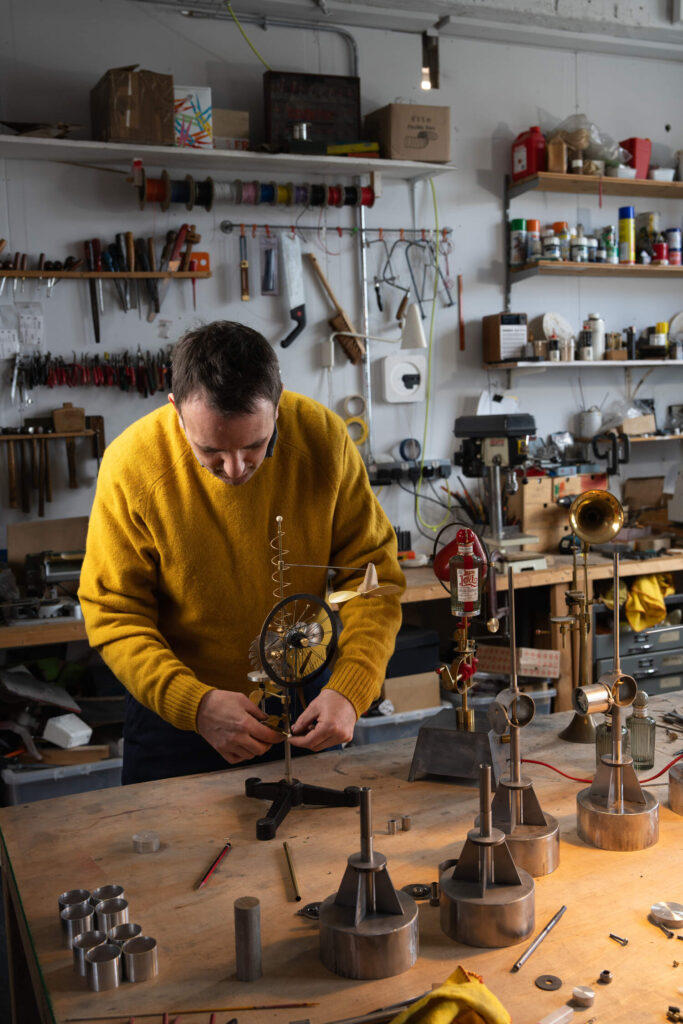
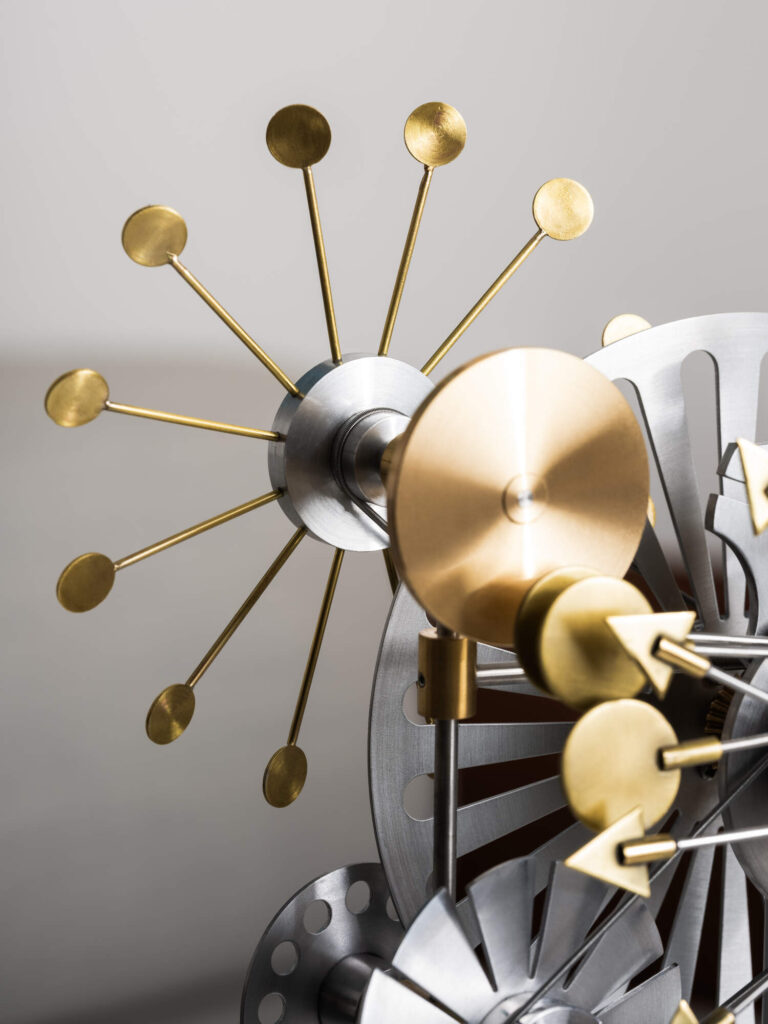
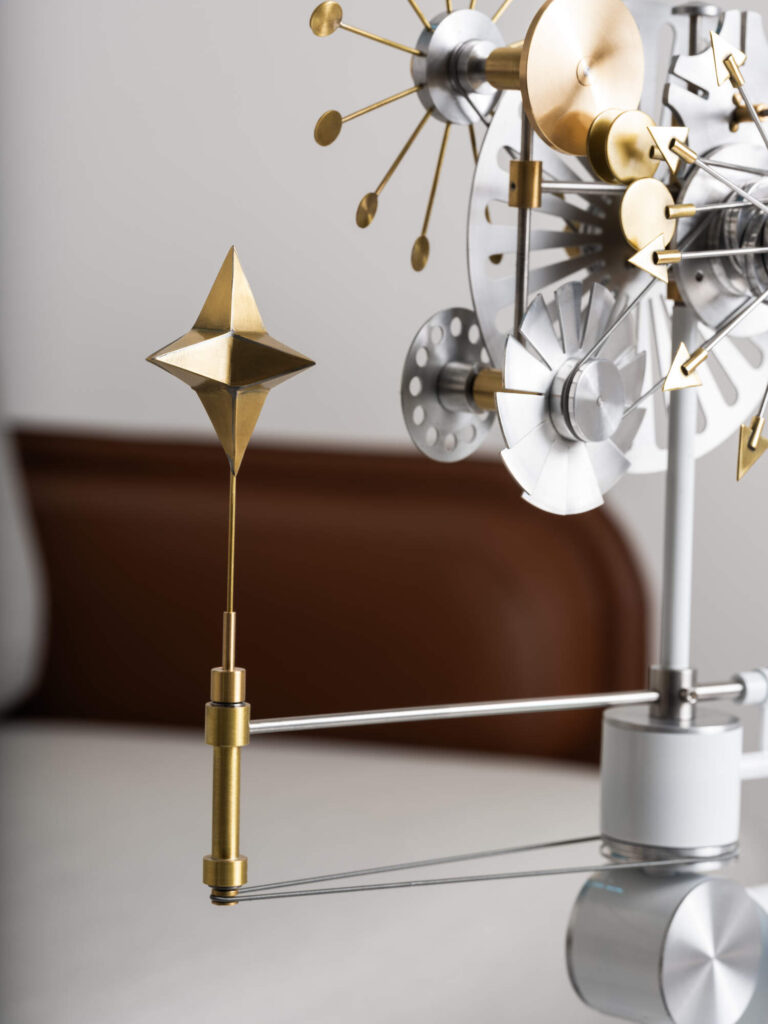
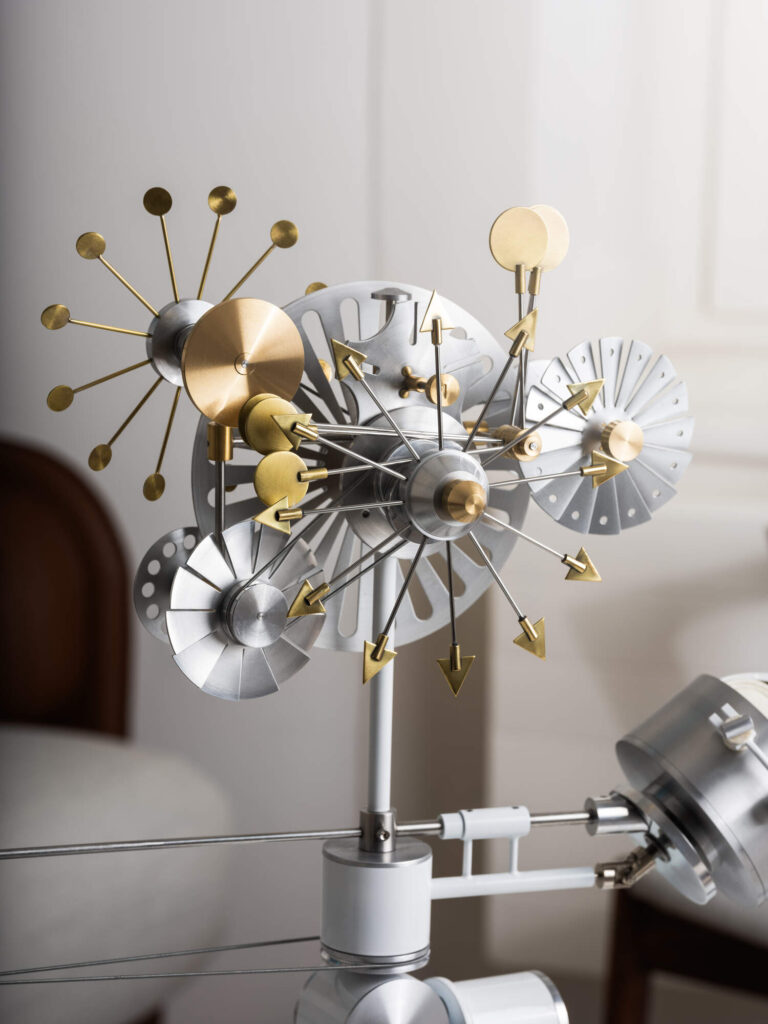
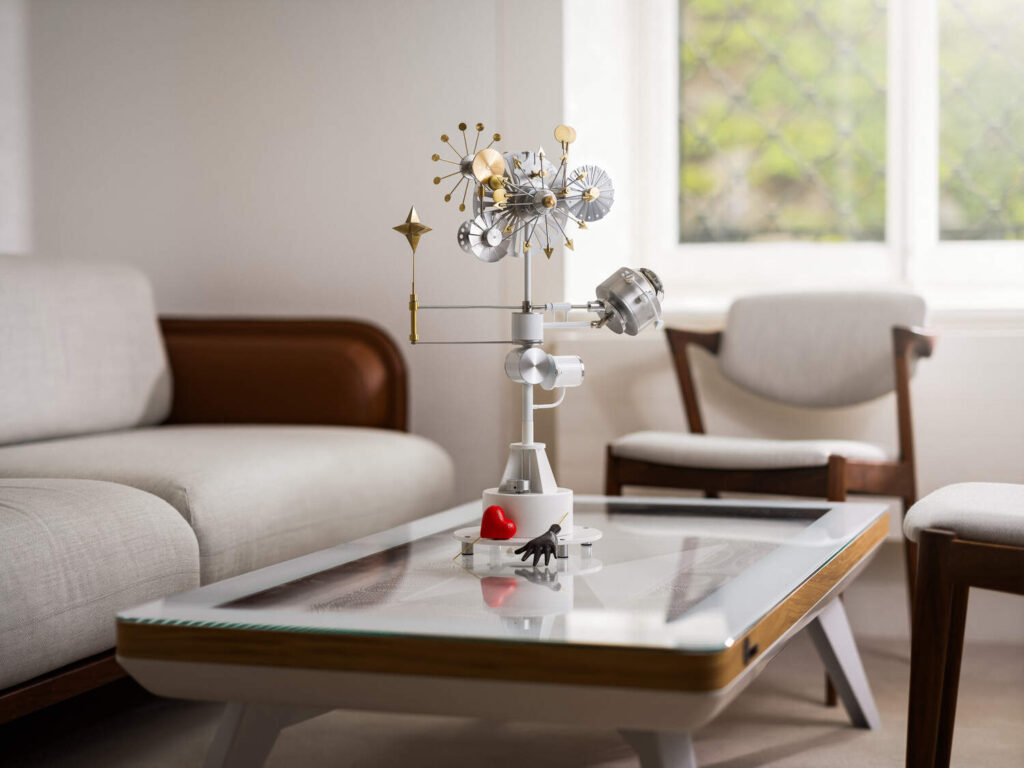
The result retains the sculpture’s original logic — slow rotation, silence, no apparent purpose — but adds a payload: a wristwatch driven by a choreography of gears and articulated arms. Electronics developed specifically for the piece allow the whole to operate without perceptible mechanical noise, changing the nature of the object: it is not heard turning; it is watched turning.
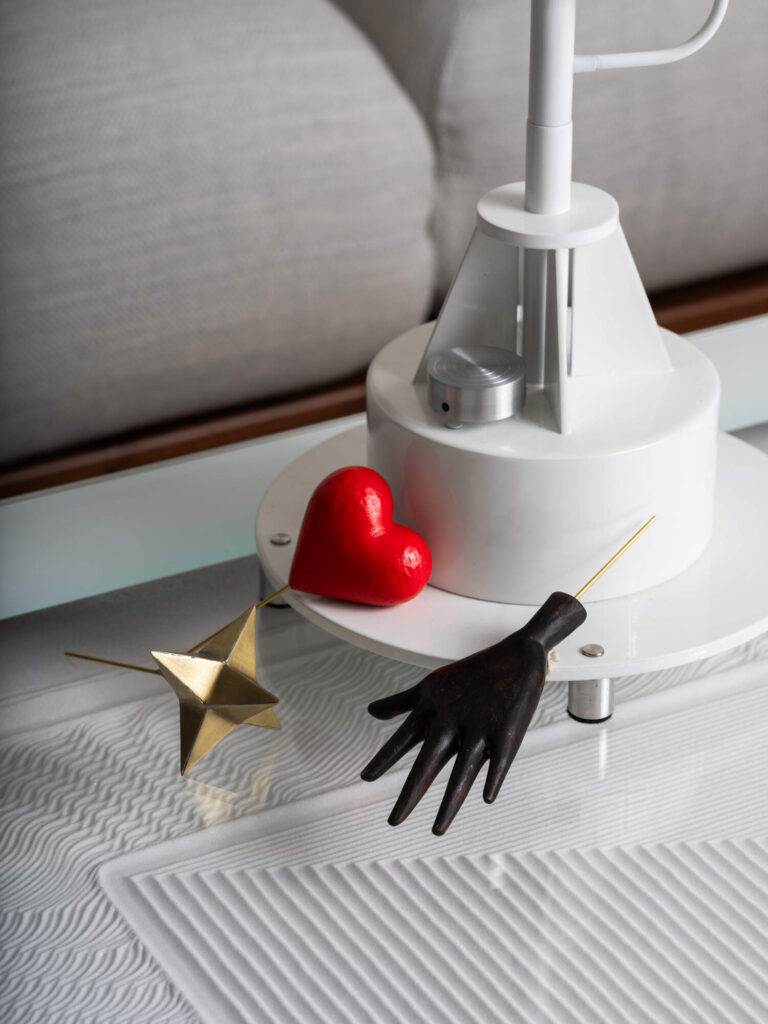
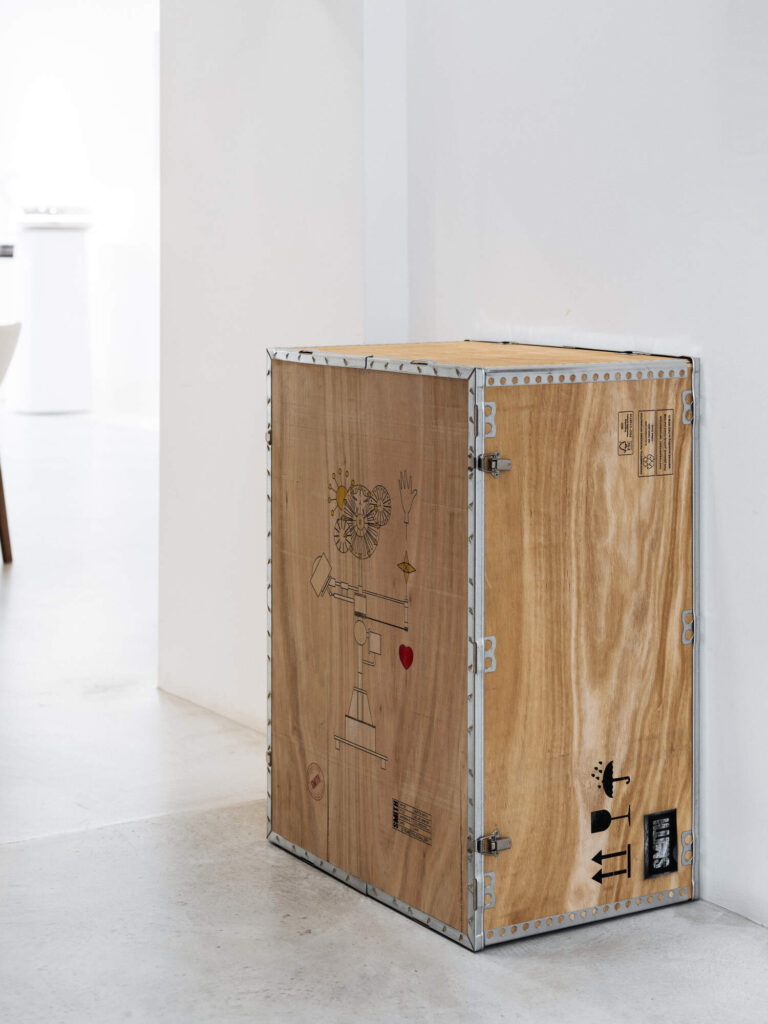
DETAIL — Solar Orbiter measures 60 centimetres high and brings together more than 300 handmade elements. Three interchangeable motifs — a heart, a hand, a star — alter the composition of the sculpture. Ten numbered examples will be produced, priced at 9,900 Swiss francs excluding tax.
A lasting signature
Those familiar with Smith’s work will recognise, in the hand motif, a direct echo of his earlier pieces for the gallery, including the emblematic applauding hand that has built his reputation since 2011. Solar Orbiter does not erase Laikingland’s vocabulary in order to conform to watchmaking codes; it makes them coexist. This is probably what distinguishes this collaboration from other encounters between artists and watchmakers: the object does not become functional against its will; sculpture after sculpture, it agrees to serve a mechanism that is not its own.
The piece leaves one question open: how long can an object designed to do nothing continue to function as such once it has been entrusted with a watch to keep turning?


Cette publication est également disponible en :


