
Since 1881, Seiko has been measuring time with the same philosophy—always one step ahead. The 5X63 caliber that powers the new limited-edition Astron chronographs is not just an update. It is the convergence of three watchmaking disciplines into a single movement, available starting in June 2026.
Seiko has been producing solar-powered GPS watches since 2012. Dual-time watches have been around even longer. The chronograph dates back to 1964 in the collection—the year the brand introduced the first Japanese wristwatch chronograph, a few weeks before the Tokyo Olympics. What the 5X63 caliber achieves for the first time is the integration of these three functions into a unified architecture: dual time with a 24-hour display, a chronograph measuring up to 24 hours to 1/20th of a second, and GPS synchronization with 38 time zones.
The accuracy in standalone mode is ±15 seconds per month, within a temperature range of 5 to 35°C. In other words, without any satellite connection, the movement deviates by less than half a second per day. With GPS reception, the timepiece synchronizes with atomic time. The perpetual calendar is programmed through 2100.
The Geography of the Dial
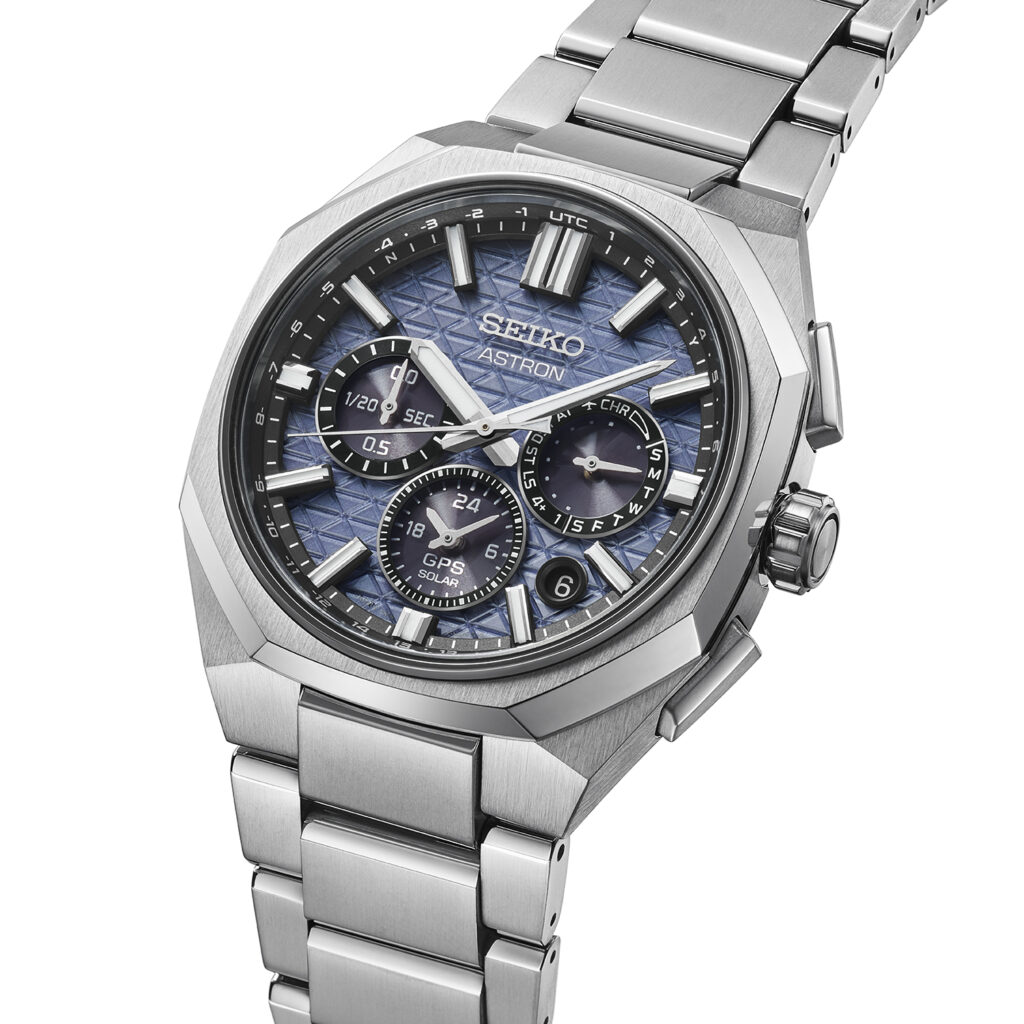
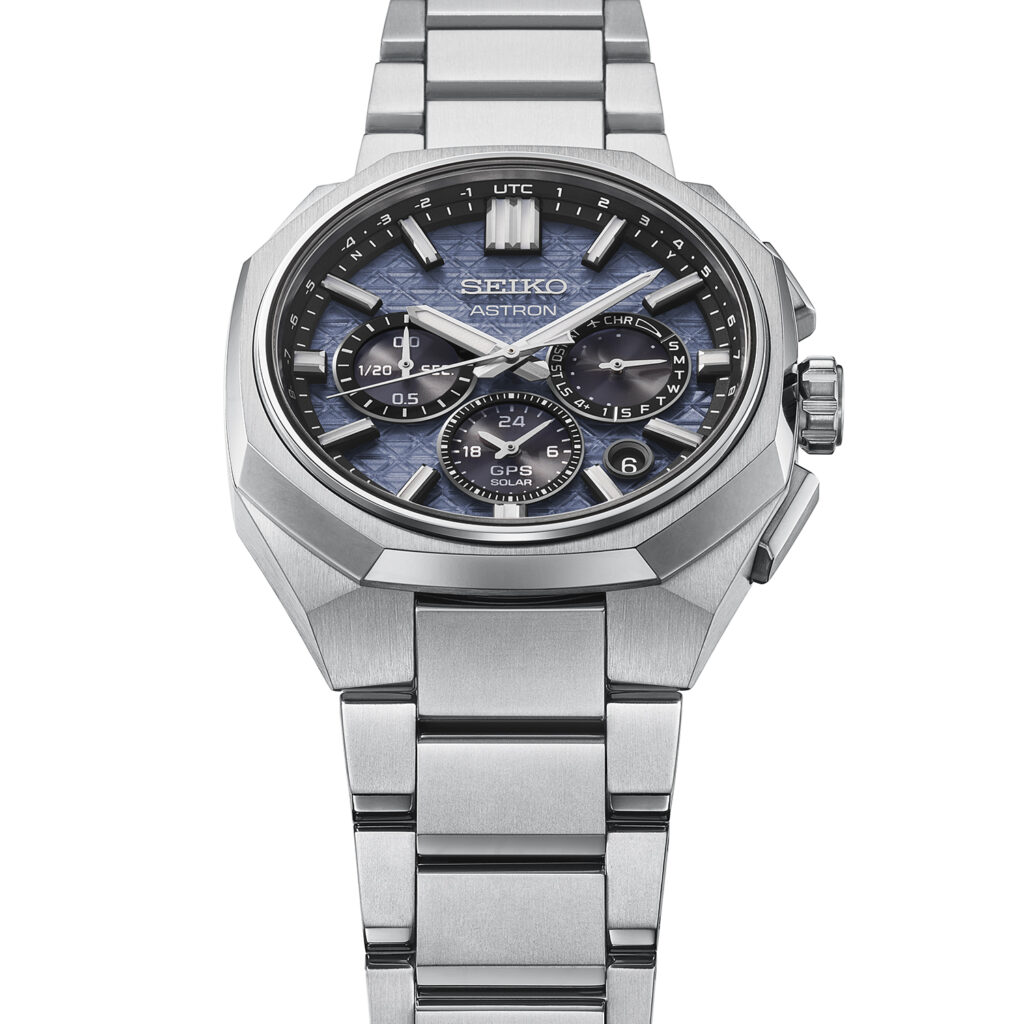
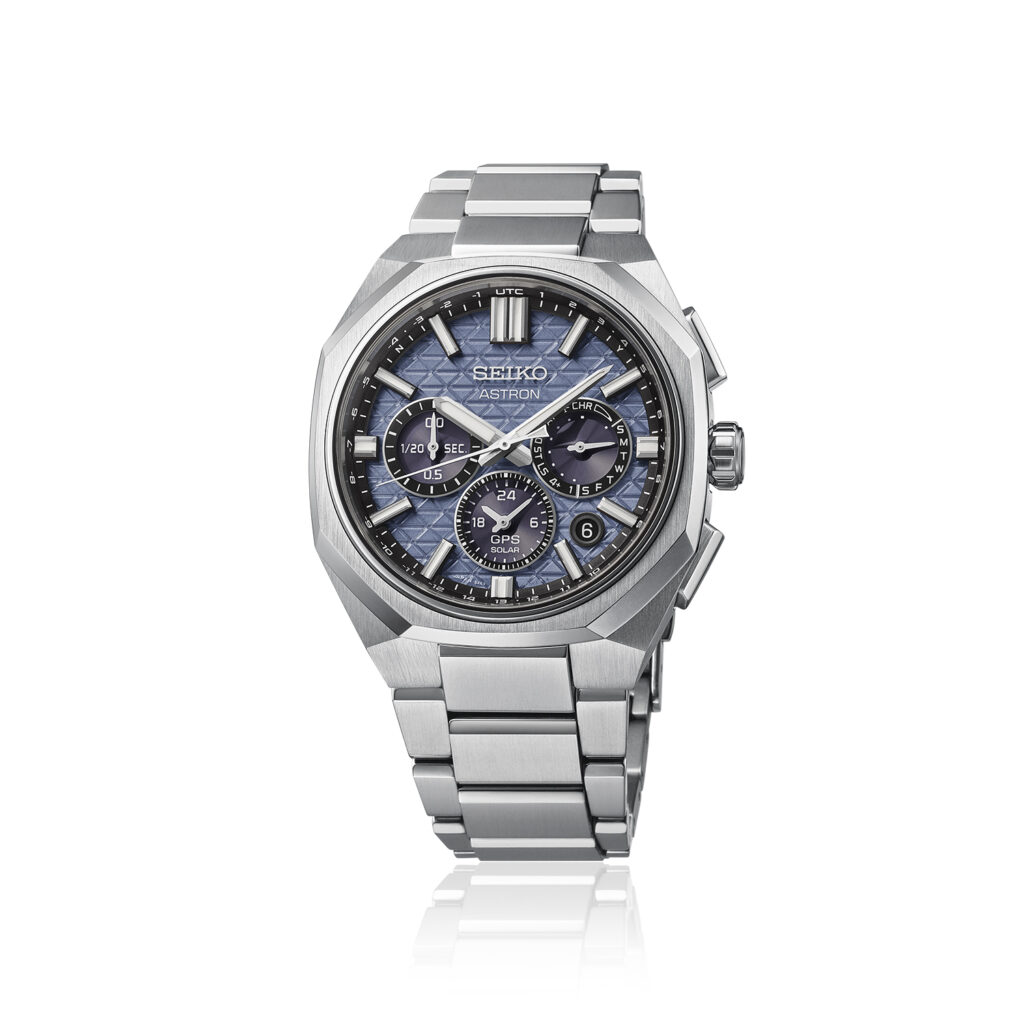
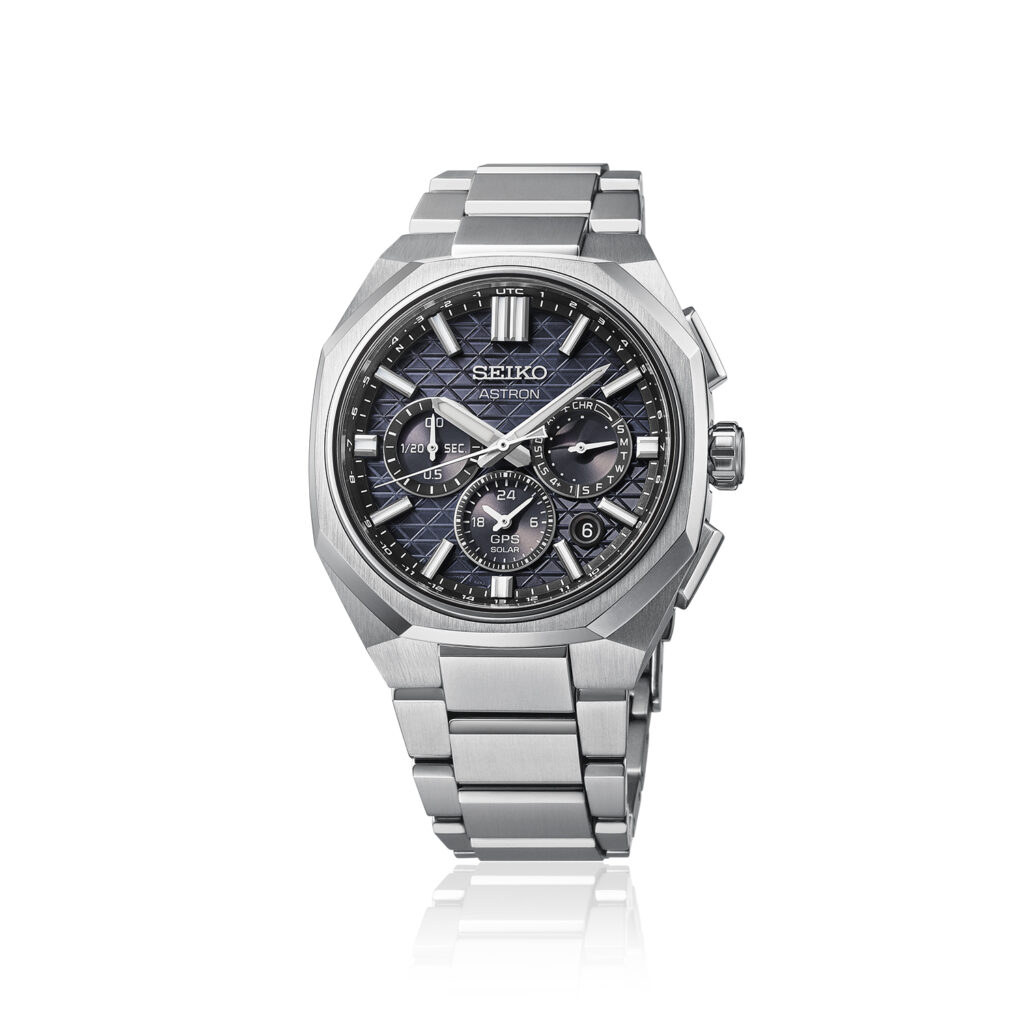
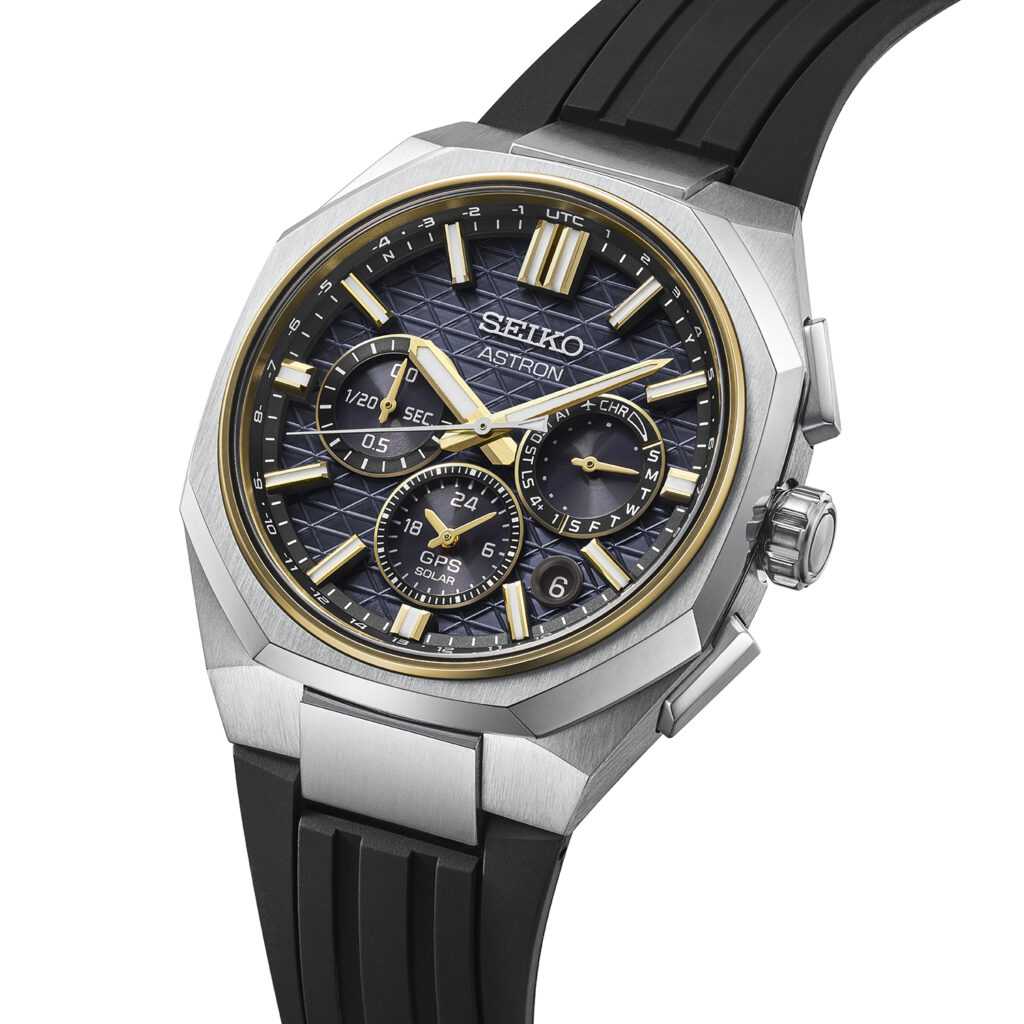
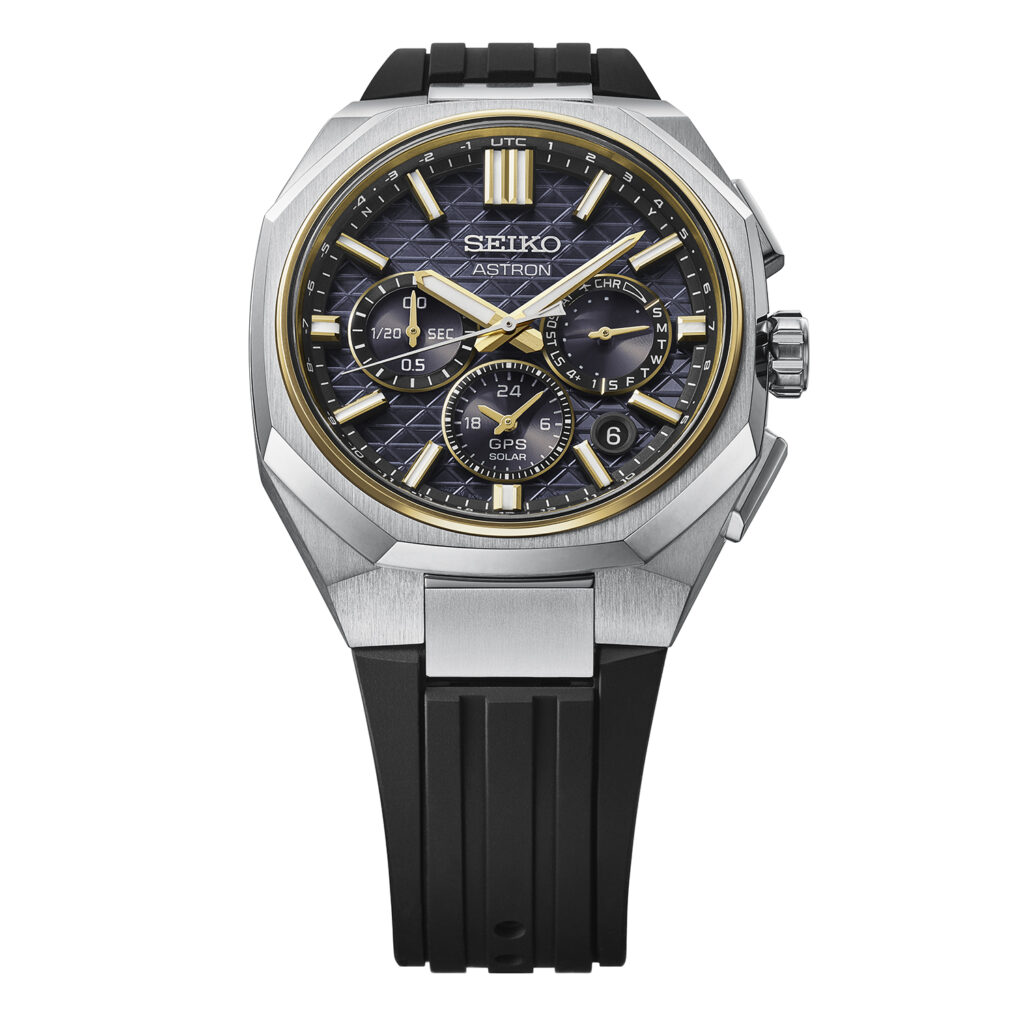
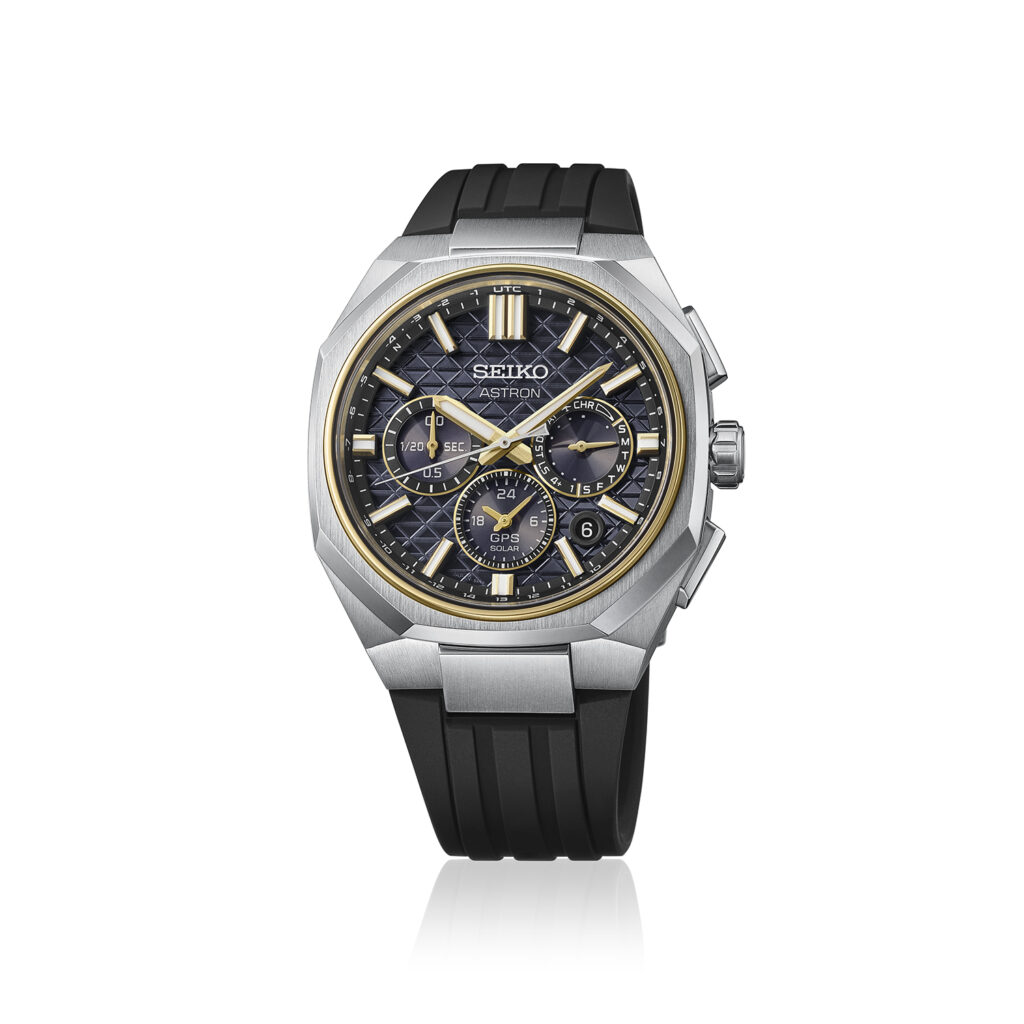
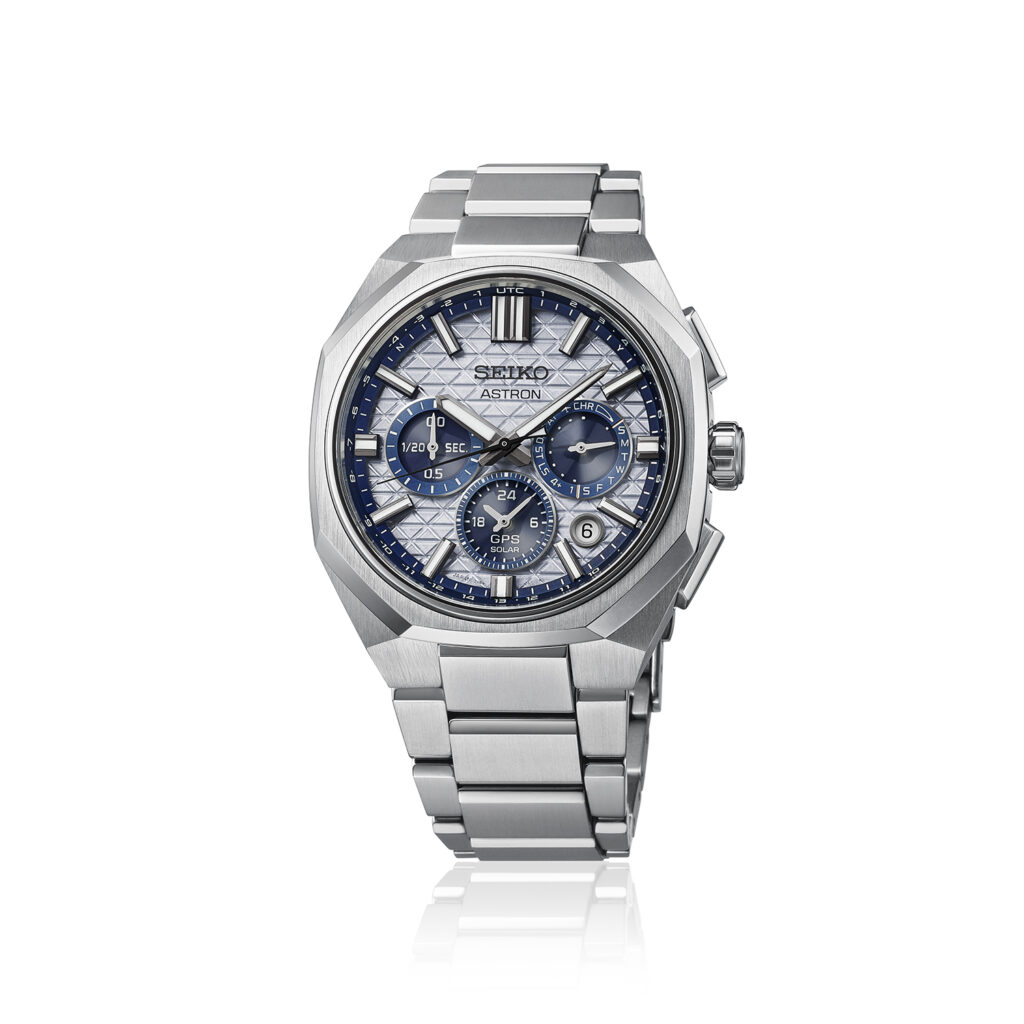
The dial’s new layout directly reflects the movement’s architecture. The sub-dials are arranged horizontally in a symmetrical configuration—a 1/20th-second sub-dial at 9 o’clock and a 24-hour display at 6 o’clock in chronograph mode. This positioning is not merely an aesthetic choice: it stems from the movement’s new geometry. The pattern of interlaced triangles that structures the dial’s surface creates a stable reading grid against which the information stands out without visual distraction.
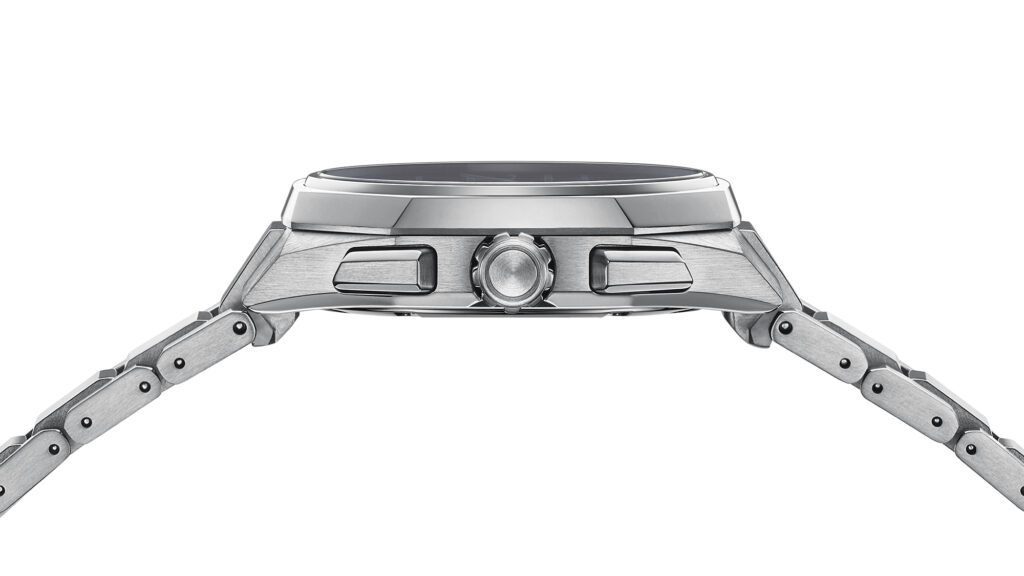
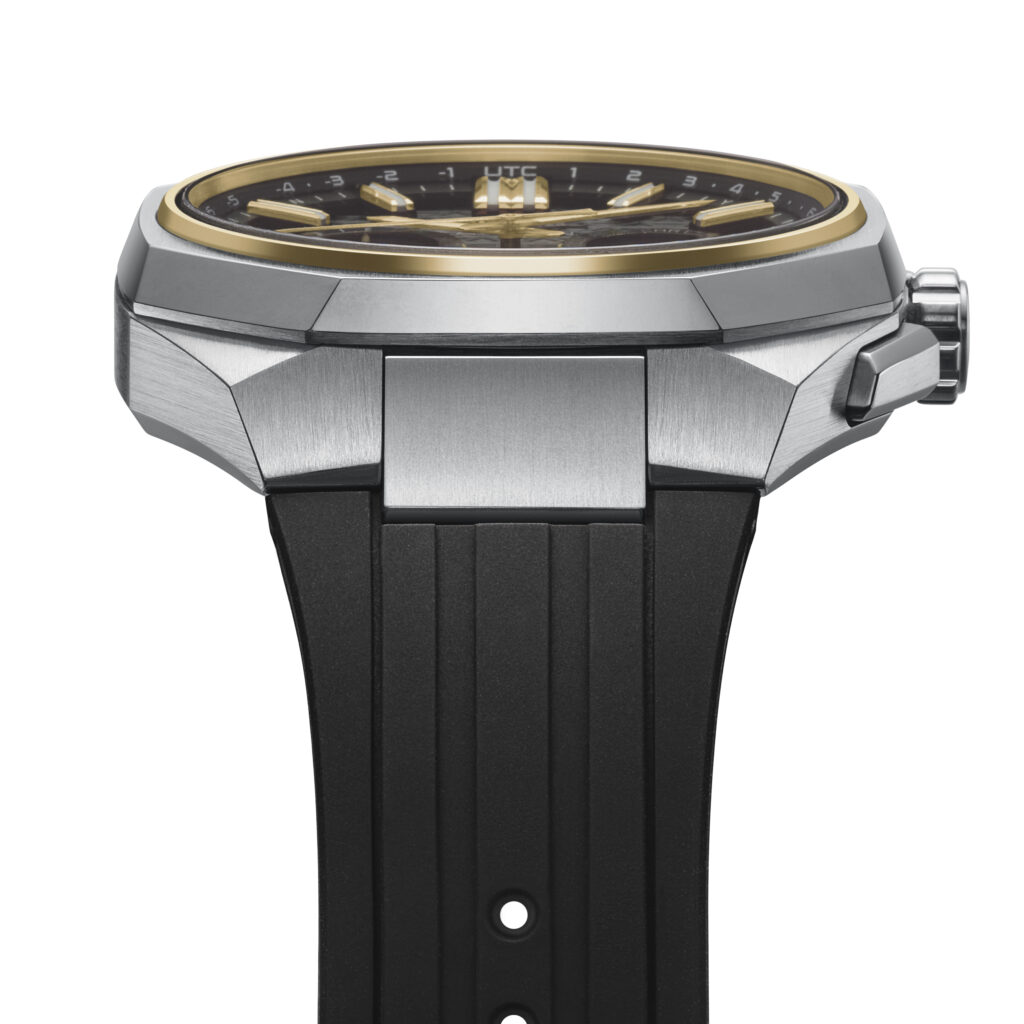
The bezel is octagonal, made of titanium, and consists of two separate pieces. This two-part construction lowers the center of gravity of the case-and-bezel assembly—titanium allows for these mass calculations, which would be more challenging with steel. The 43.4 mm diameter and 12.4 mm thickness result from this balance between the surface area required for the ornate dial and a discreet appearance on the wrist. The upper surface of the bezel is brushed; the sides are polished. The difference in finish between these two surfaces, invisible from a distance, reads like a technical signature.
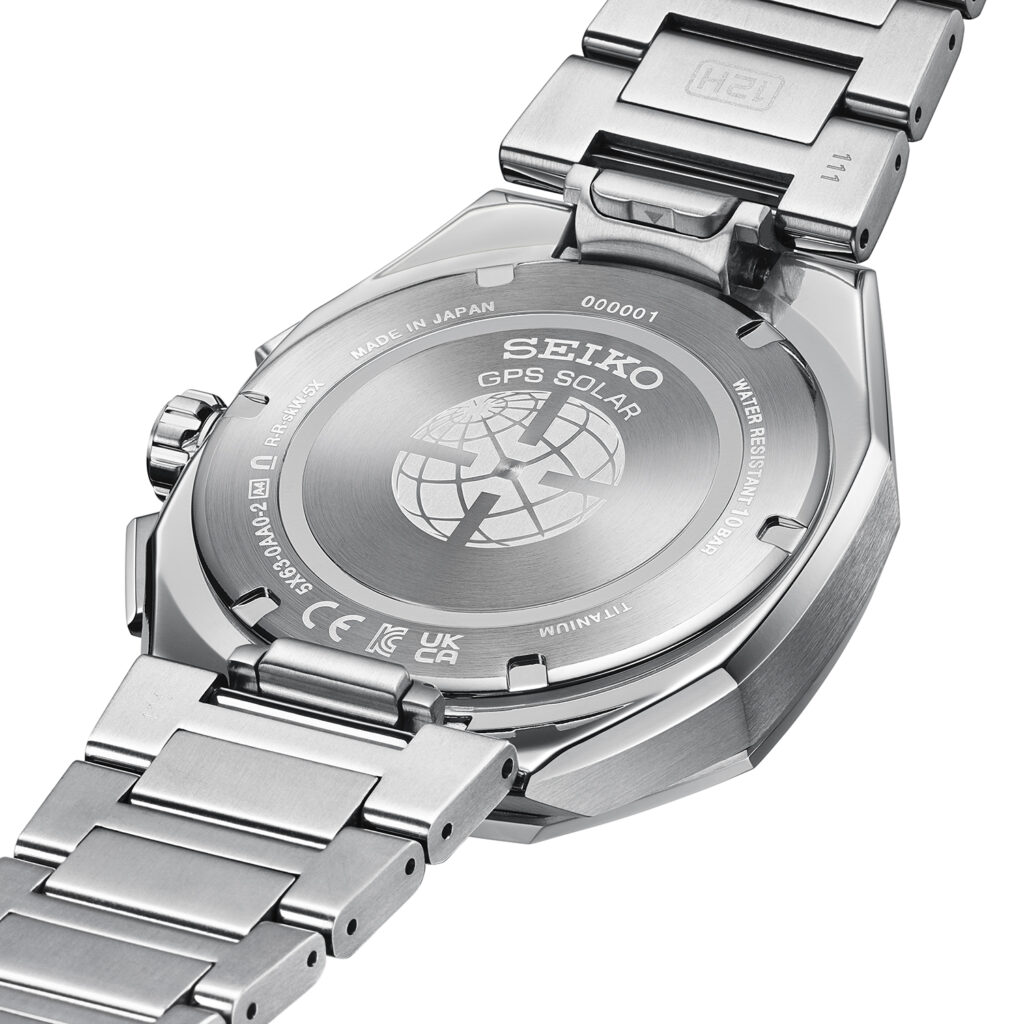
Detail — Caliber 5X63
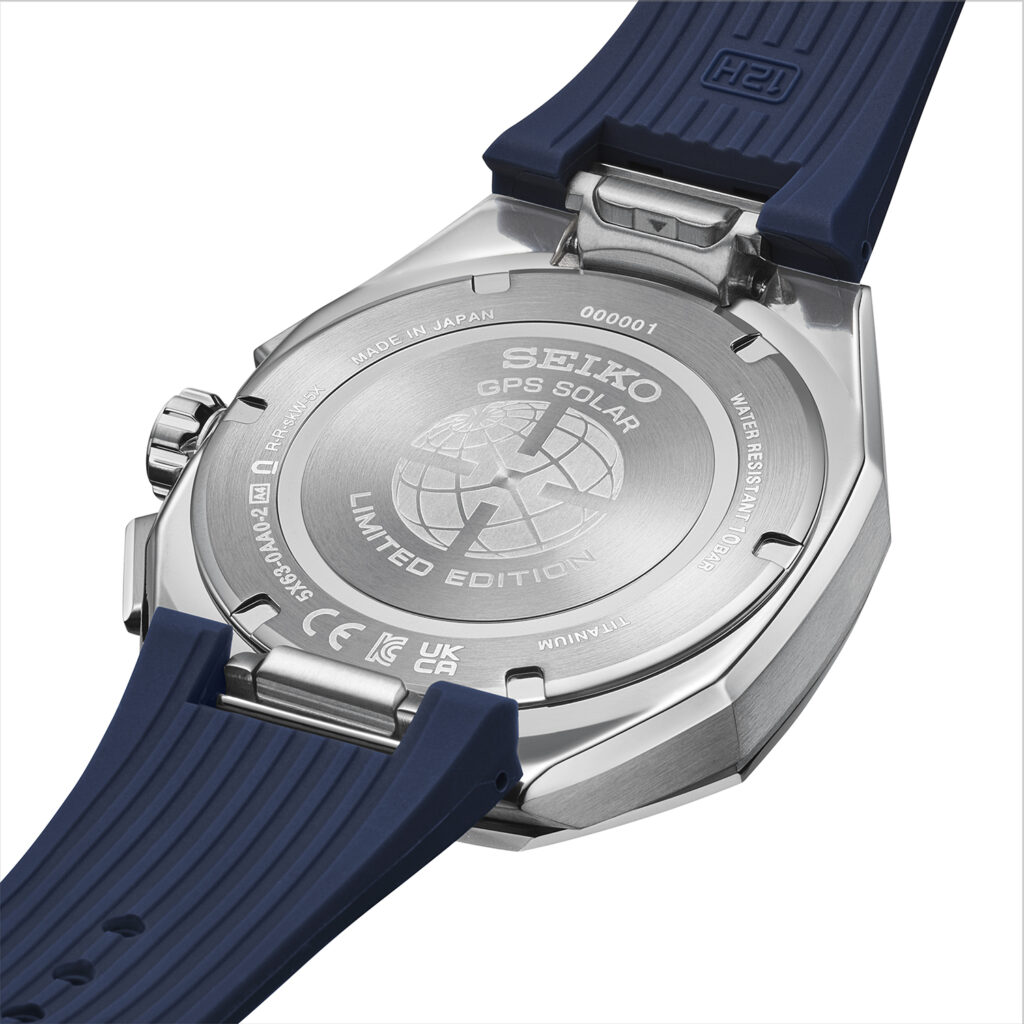
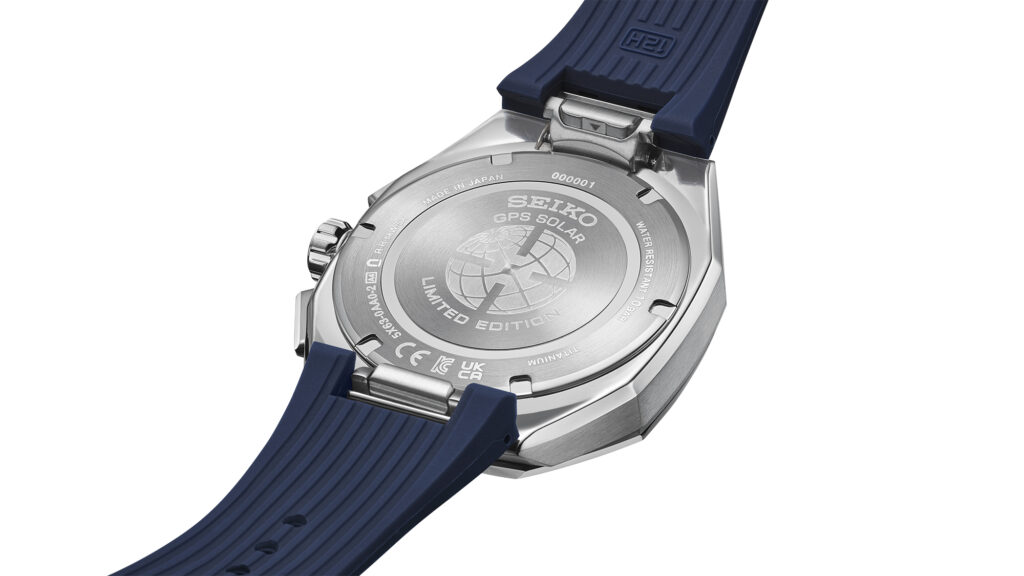
Titanium case with an ultra-durable coating. Diameter 43.4 mm, thickness 12.4 mm. Sapphire crystal with Super-Clear coating. Water-resistant to 10 bar. Magnetic resistance: 4,800 A/m. 1/20th-second chronograph, measures up to 24 hours. Perpetual calendar valid until 2100. 38 time zones. Self-regulating accuracy: ±15 seconds/month between 5°C and 35°C. Quick-change strap system with the push of a button.
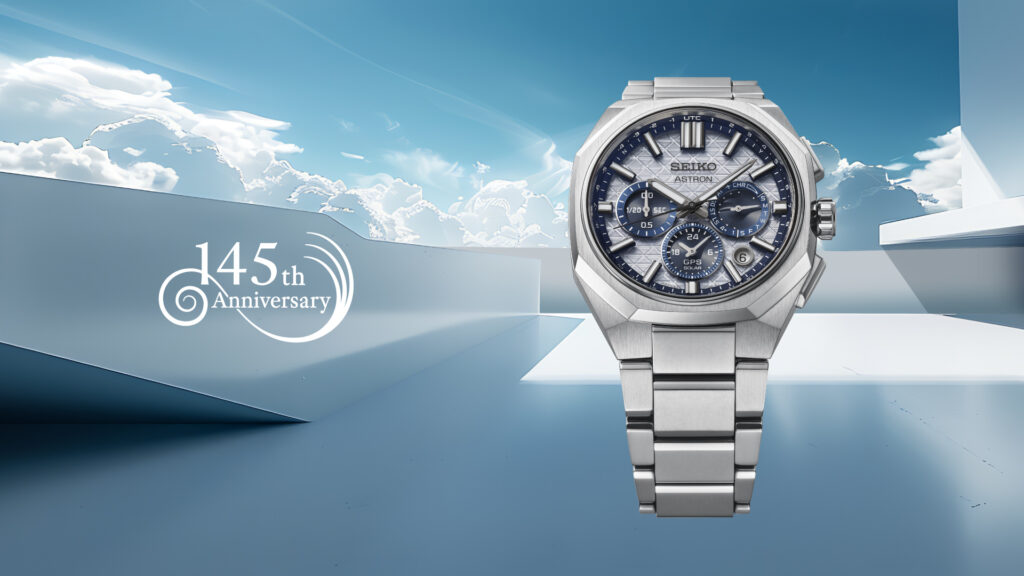
In 1969, the Quartz Astron marked a breakthrough: replacing the mechanical oscillator with a crystal. The debate over the legitimacy of quartz versus the balance wheel has never been fully settled in watchmaking circles. What the 5X63 does is shift the focus of the debate—the question is no longer mechanical versus quartz, but which technology best serves the obsession with precision that has defined Seiko for 145 years. This limited edition of 2,000 pieces marks a milestone in this ongoing journey. The next one will likely be the next movement.







Cette publication est également disponible en :

