
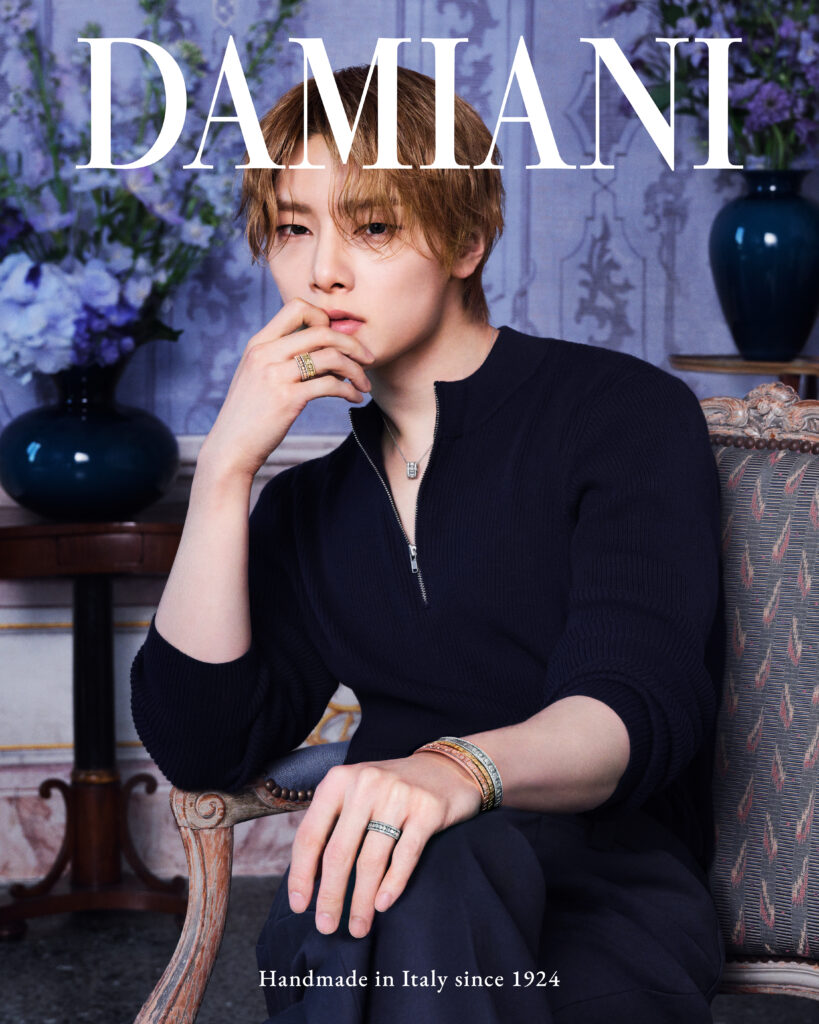
The Damiani brand is 102 years old. It was founded in Valenza Po, in the heart of Piedmont, where Italian goldsmithing has long cultivated its traditions in the shadow of the major capitals. A century later, it has chosen as its global ambassador a 22-year-old singer from Busan, a member of the K-pop group Stray Kids: I.N. This unexpected pairing, which might seem like nothing more than a marketing ploy, reveals something deeper about what the luxury industry is becoming.
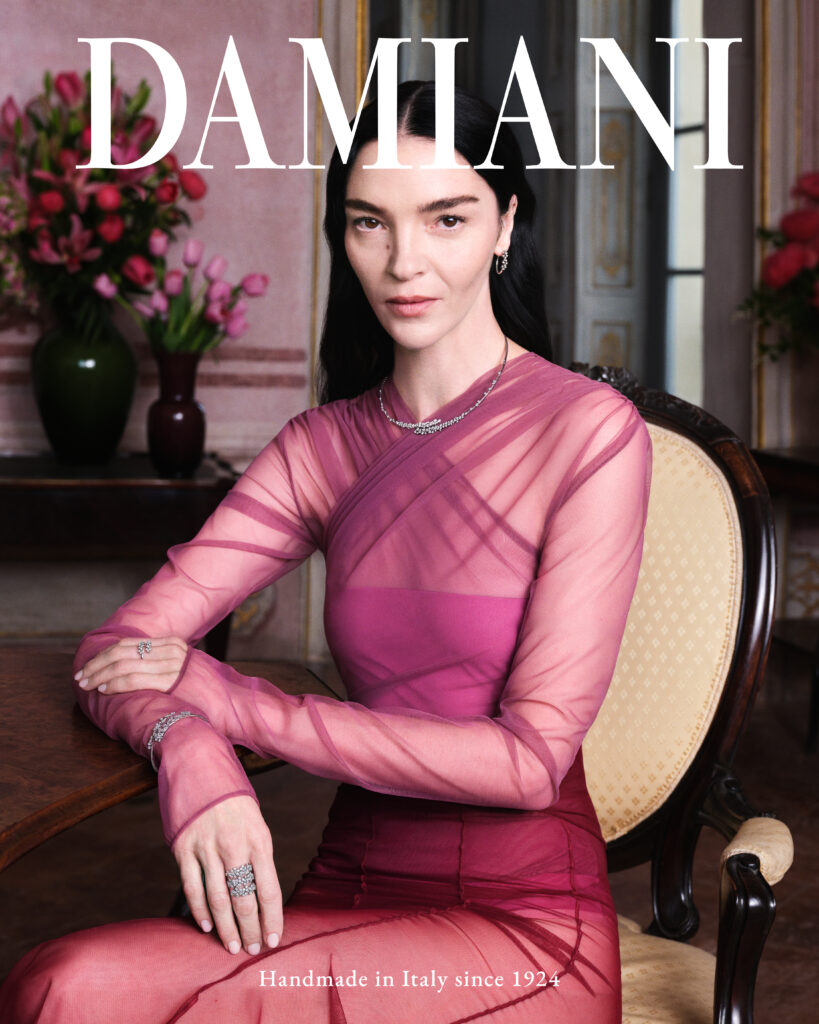
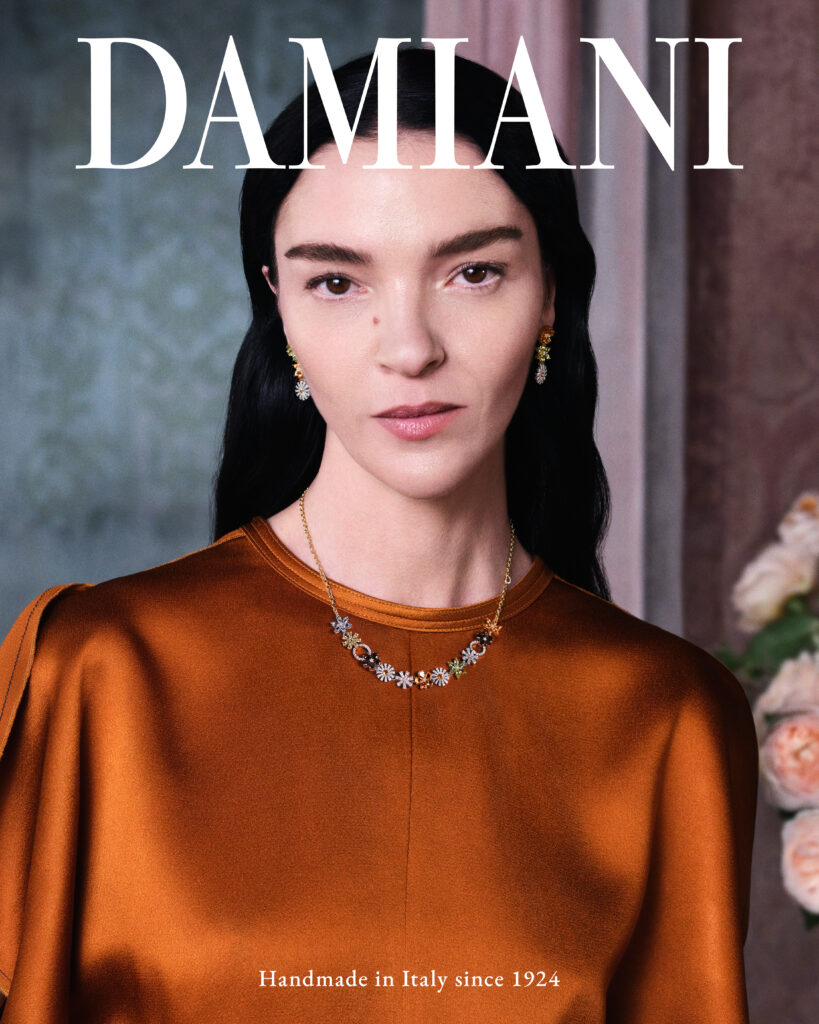
The Damiani Icons 2026 campaign, photographed by Larissa Hofmann in a historic Italian mansion, could be a painting by Boldini. Warm light, abundant floral arrangements, and wood-paneled interiors from another century. Mariacarla Boscono, a Roman model whom every fashion photographer dreams of capturing, embodies an utterly natural elegance—never ostentatious, never cold. At her side, I.N. doesn’t just pretend to be luxurious—he is it.
Christopher Simmonds and the Aesthetic of the Golden Portrait
Christopher Simmonds is the artistic director of Damiani Icons. His eye was shaped in the 1990s, at a time when fashion photography oscillated between brutalism and classicism, between Corinne Day and Irving Penn. Here, he deliberately chooses the portrait aesthetic of the 20th-century golden age—those living tableaux where one looked someone straight in the eye, without ironic detachment, without a calculated pose. The result, with Larissa Hofmann behind the lens, is part of this tradition. There is a gentle solemnity in these images that does not belong to the present.
This aesthetic choice raises a question that the press release obviously does not address: Why, in 2026, does Damiani invoke the aristocratic aesthetic of a bygone Italy to feature a 22-year-old Korean singer? The answer may lie in the image itself. I.N, trained since childhood in a stage discipline bordering on ritual, embodies a form of physical discipline that old European families recognize as a virtue. There is, in well-crafted K-pop, something that bears a striking resemblance to a classical education.
Margherita Bloom: a new play in a familiar setting
The campaign also serves as a showcase for Margherita Bloom, a brand-new piece that complements the brand’s iconic collections—Belle Époque, Belle Époque Reel, Mimosa, and Margherita. Inspired by nature in all its springtime splendor, it stands as a contemporary expression of color, grace, and what Damiani calls “femininity.” The word may be dated, but the jewelry itself is not. The flower in jewelry has a long history: from Belle Époque brooches to Cartier’s Art Deco creations, it has spanned the centuries without ever fading.
What Damiani Icons is really saying is that luxury now knows how to navigate between two time periods without confusing them. A family-owned house since 1924, still run by the Damiani family. An ambassador born in 2004. A 19th-century villa. A collection that evokes flowers and spring. There is something in this expanded family portrait that feels less like a strategy and more like a conviction: beauty, after all, knows no boundaries.
Cette publication est également disponible en :

