
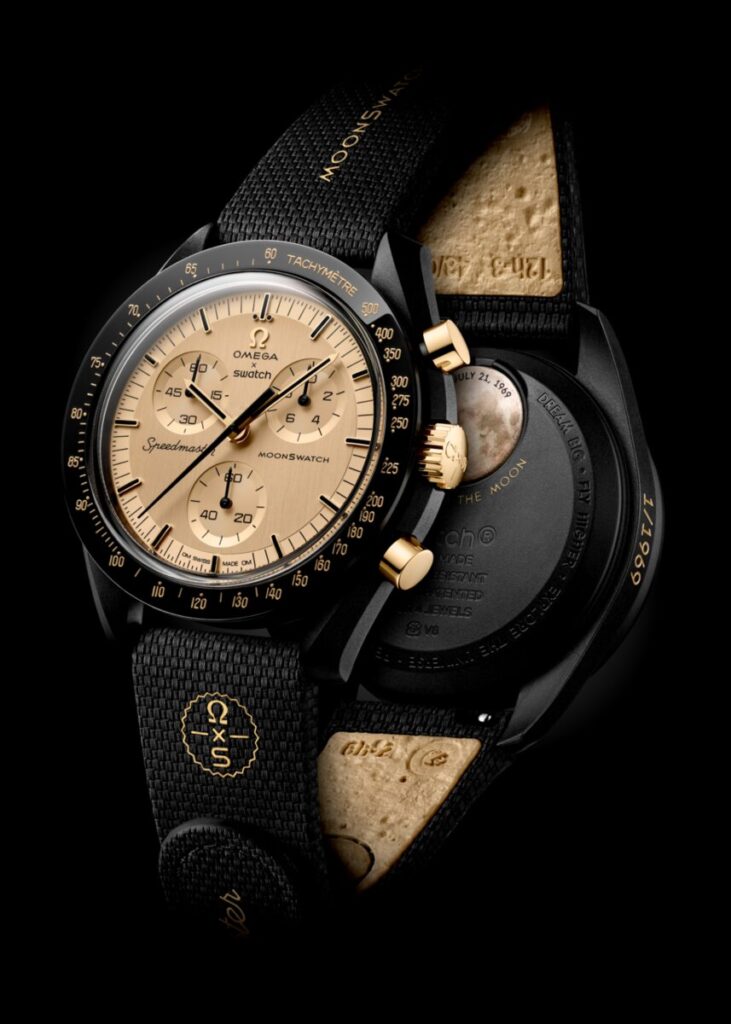
To mark the 57th anniversary of the first step on the Moon, Swatch and OMEGA are unveiling the MISSION TO THE MOON 1969, a limited edition of 1,969 pieces in 18-karat Moonshine™ gold, priced at… 1,969. Behind this seemingly affordable timepiece lies a unique concept, halfway between a historical nod and an almost absurd game—and a lesson on what rarity has become in the era of democratized luxury.
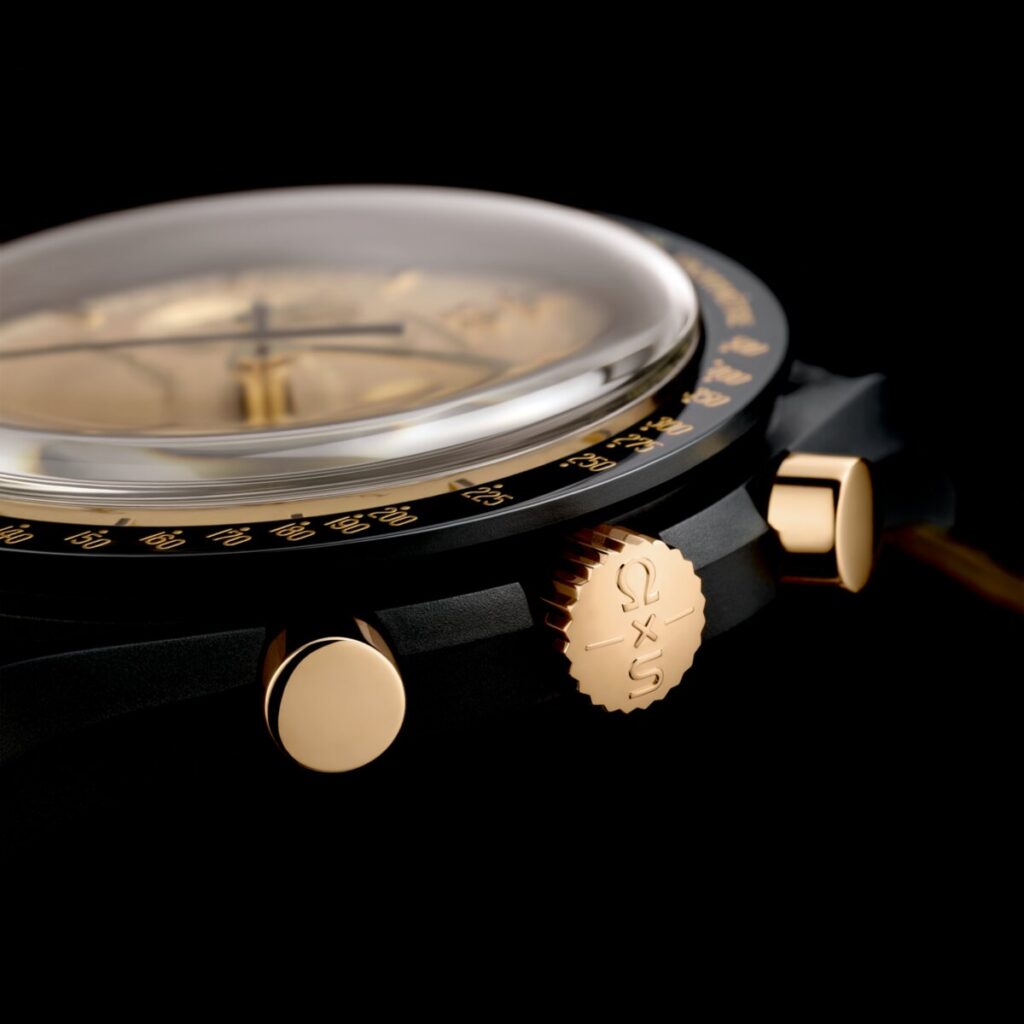
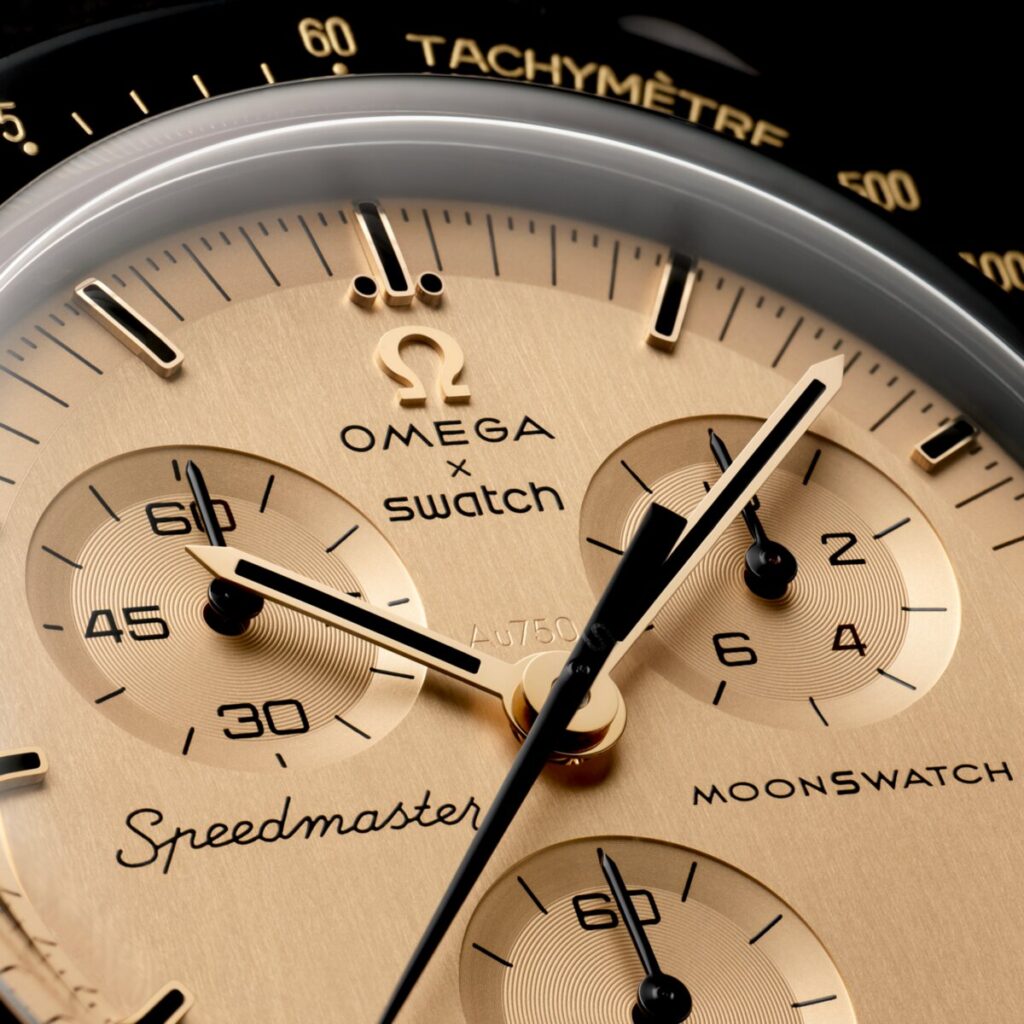
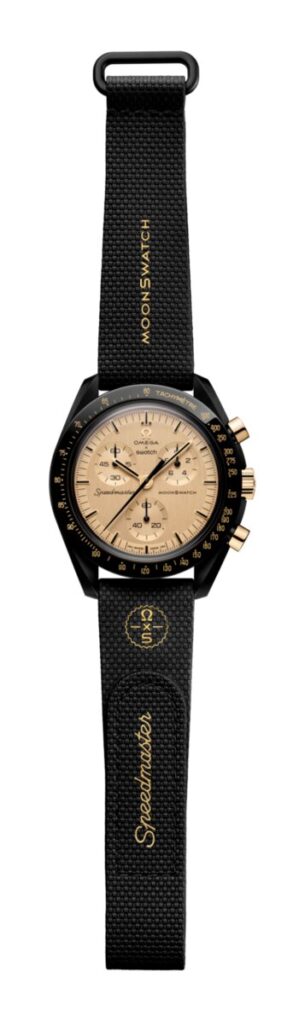
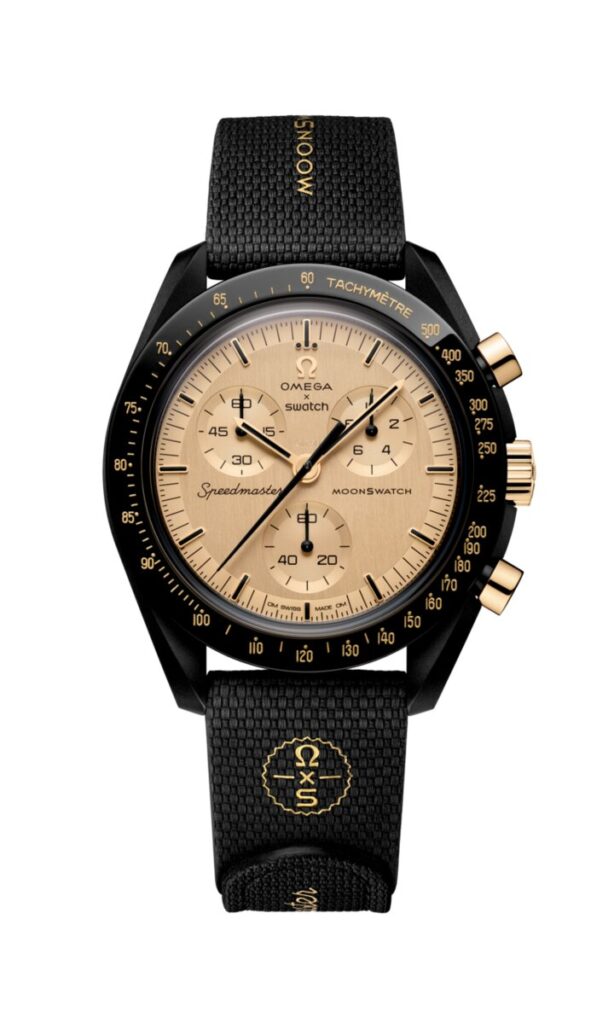
It all starts with a number: eleven grams of 18-karat gold. That’s the weight of precious metal that Swatch chose to incorporate into the dial, the hands, the crown, and the pushers of its new gold MoonSwatch—a direct tribute to the Apollo 11 mission number, which landed a man on the Moon on July 21, 1969. The gold itself is no ordinary material: it comes from old OMEGA spare parts, remelted in the brand’s own workshops to create Moonshine™ Gold, the gold alloy that the Biel-based group typically reserves for its most prestigious timepieces.
The most unusual aspect, however, is the price. Rather than pricing its watch based on the current price of gold, Swatch has chosen to sell it for 500 Swiss francs—the value those eleven grams of gold would have had in 1969, at the exchange rate of the time. It’s a jab at inflation in the luxury watch market, where every limited edition seems to be justified by a price hike rather than by an idea. Here, it’s history—not the price of the raw material—that sets the price.
The question is whether you can actually buy it. To get one of the 1,969 available pieces, applicants must fill out the ESTA—the Electronic Swatch Timepiece Application—online, a 32-question form that openly parodies its U.S. government counterpart. Only applicants selected by Swatch will be allowed to finalize their purchase in-store. The initiative, halfway between a marketing teaser and a scavenger hunt, shifts the rarity of the object to the experience of acquiring it: it is no longer the price that filters out buyers, but an almost playful selection process that transforms each applicant into a participant in a larger narrative.
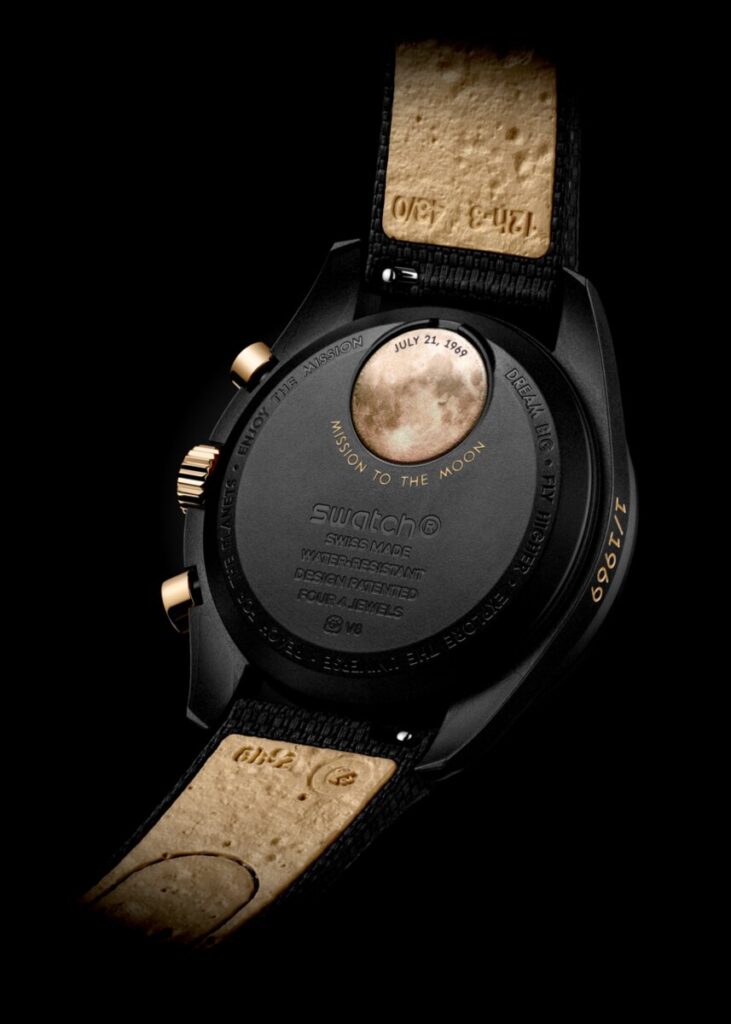
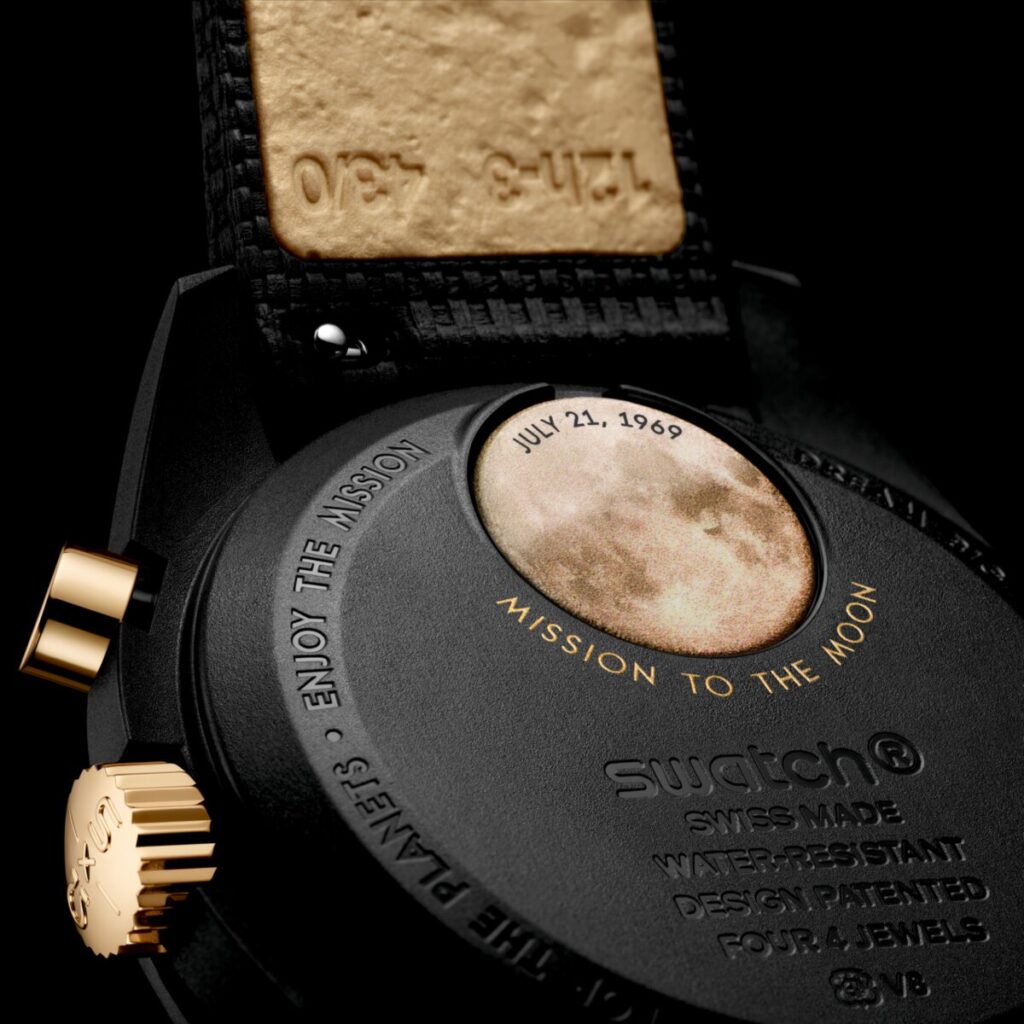
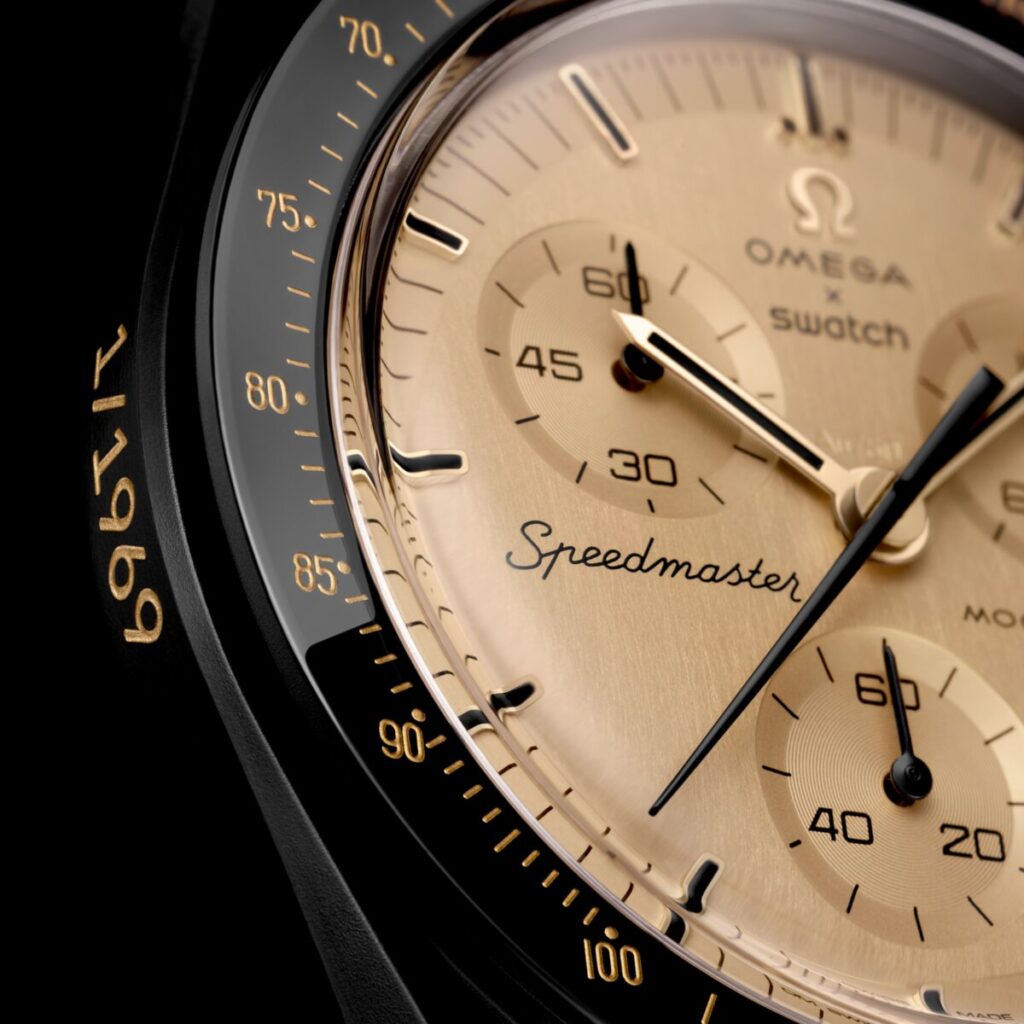
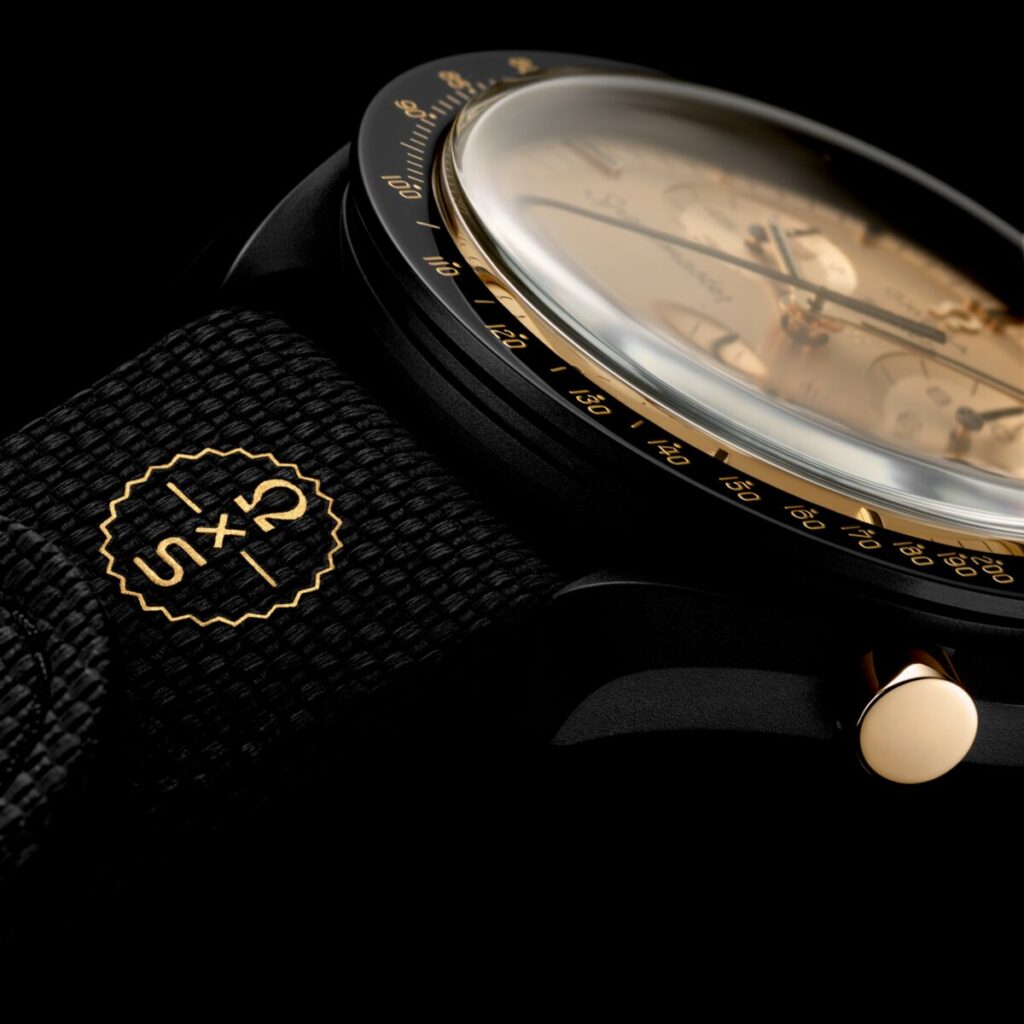
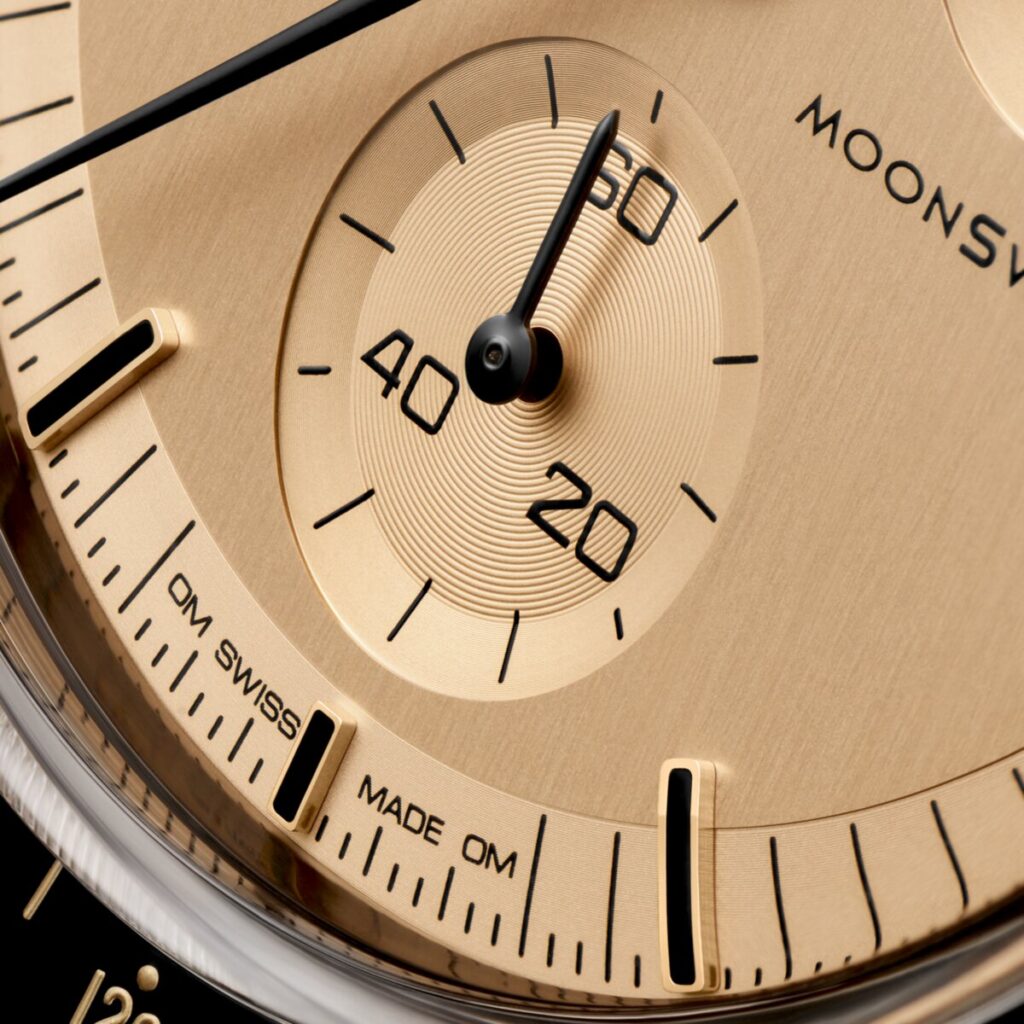
The design pays homage, down to the finest detail, to the gold Speedmaster launched by OMEGA in 1969: a matte black bioceramic bezel with a gold tachymeter scale, a vertically satin-finished dial, black-varnished beveled hour markers, and a rubber strap with a Velcro clasp lined with a texture reminiscent of the lunar surface. Two more subtle details complete the tribute: on the case back, a gold moon engraved with the date of the moon landing and a footprint reminiscent of the first step on the Sea of Tranquility; on the side, at 9 o’clock, the individual serial number of each piece, accented with a touch of gold lacquer. Taken together, these details transform this 42-mm limited-edition timepiece into a miniature relic of a feat that took place fifty-seven years ago.
An item priced at 500 Swiss francs that actually costs much more than its listed price—in terms of attention, anticipation, and presentation. At a time when traditional luxury relies on exclusivity through price, the gold MoonSwatch reminds us that there is another, more devious way to capture the imagination: making the object seem almost affordable, while reserving true rarity for the lucky few who can actually buy it.
Cette publication est également disponible en :

