
The world of robotic lawn mowers is innovating at breakneck speed. A few years ago, you had to bury a cable in the ground along the entire perimeter of the lawn. Then, you had to plant a marker near the base so the robot could navigate the area. Now all that is a thing of the past. Just plug it in, and you’re ready to give your lawn a fresh new look. That’s exactly what we’ve been testing with the Mammotion LUBA 3 AWD for the past few weeks.
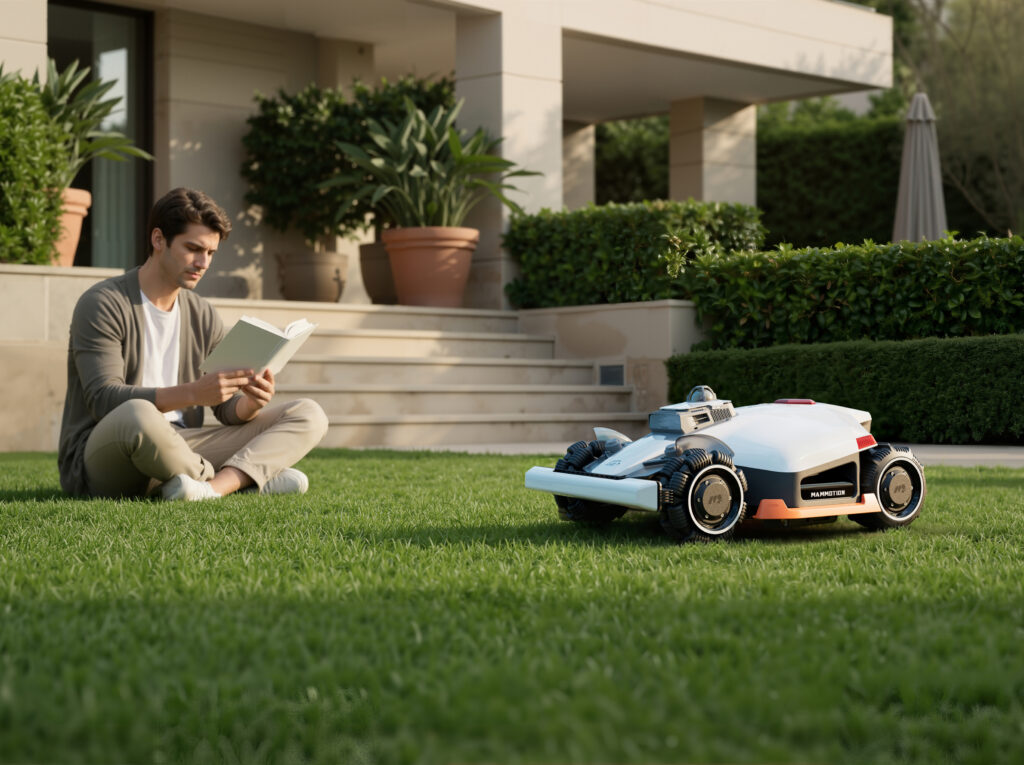
First impression: massive, but not a tank!
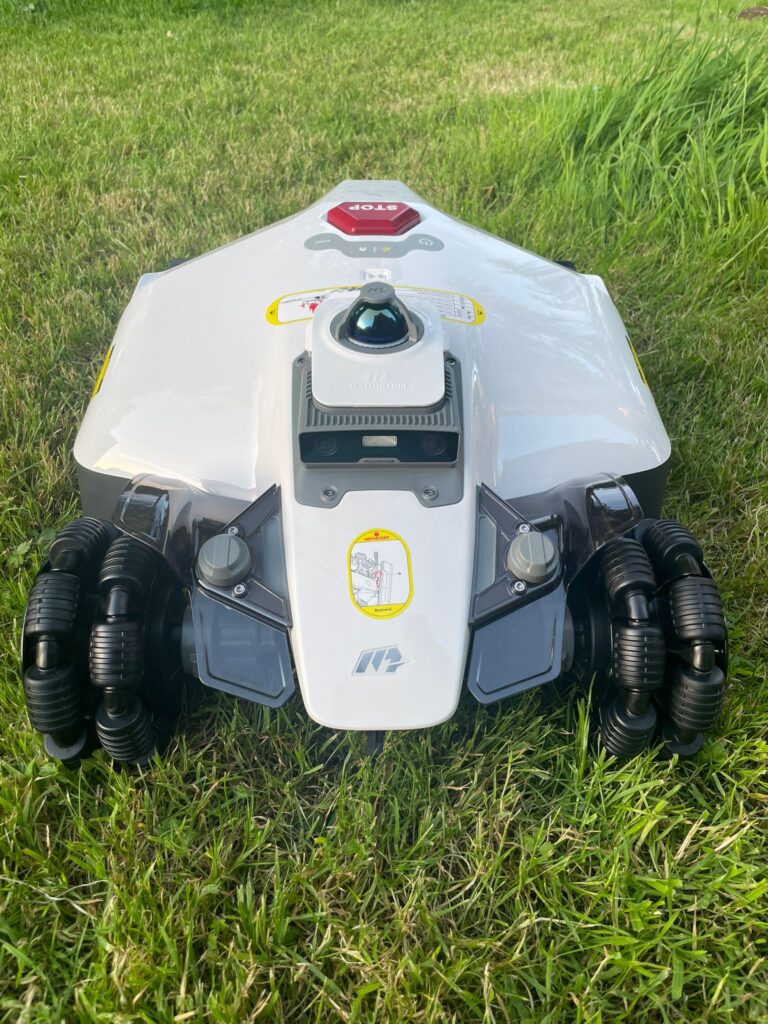
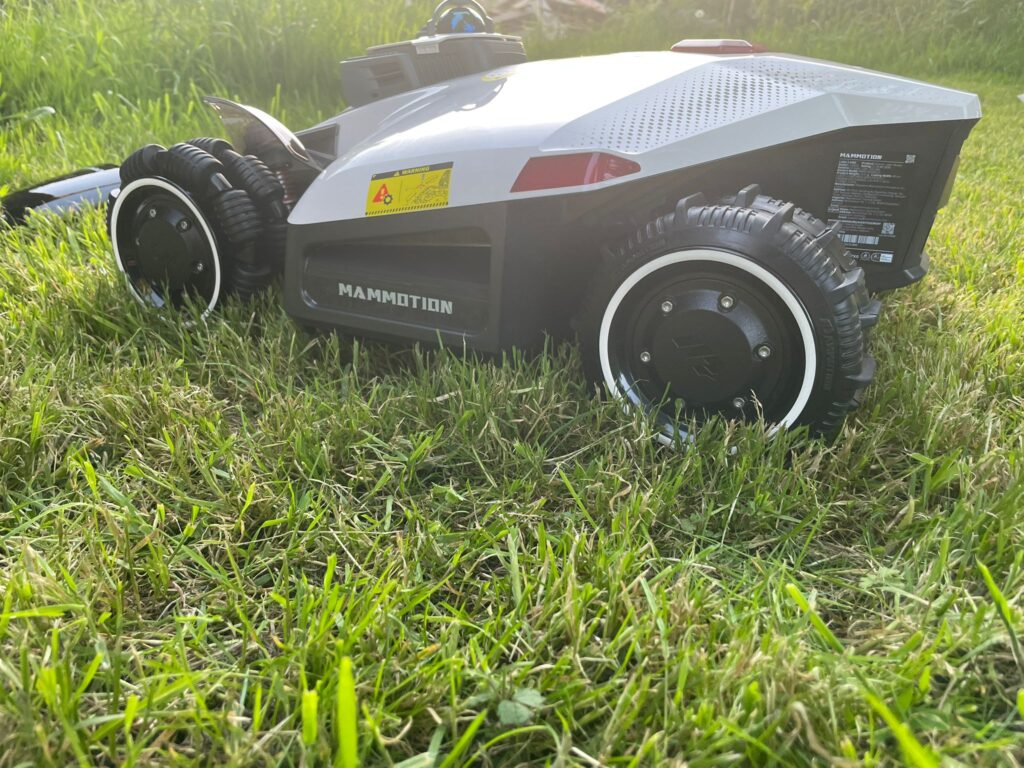
Right out of the box, the LUBA 3 AWD commands respect. It’s a stocky machine, with its knobby all-wheel-drive tires giving it the look of an off-road buggy. Depending on the model, it weighs around 19 kg—heavy enough that you won’t want to carry it three times a day, but light enough not to leave marks on the grass as it rolls. Mammotion has clearly gone for a “rugged and serious” look, rather than a cute and discreet robot mower. And honestly, on rough terrain, that’s reassuring.
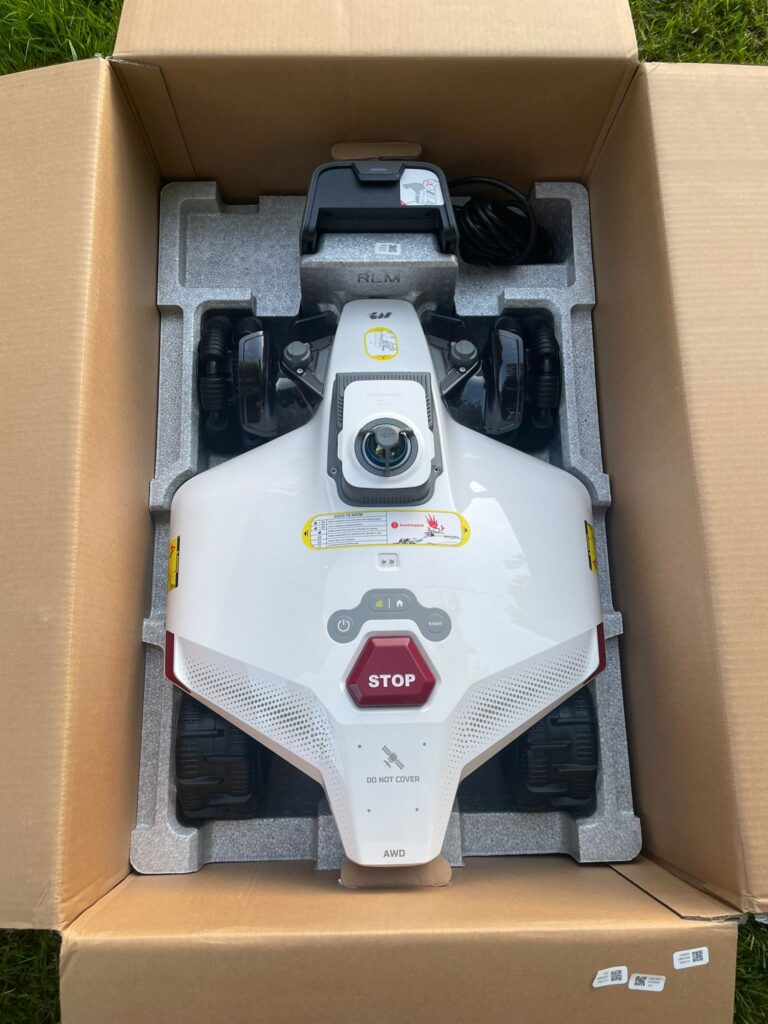
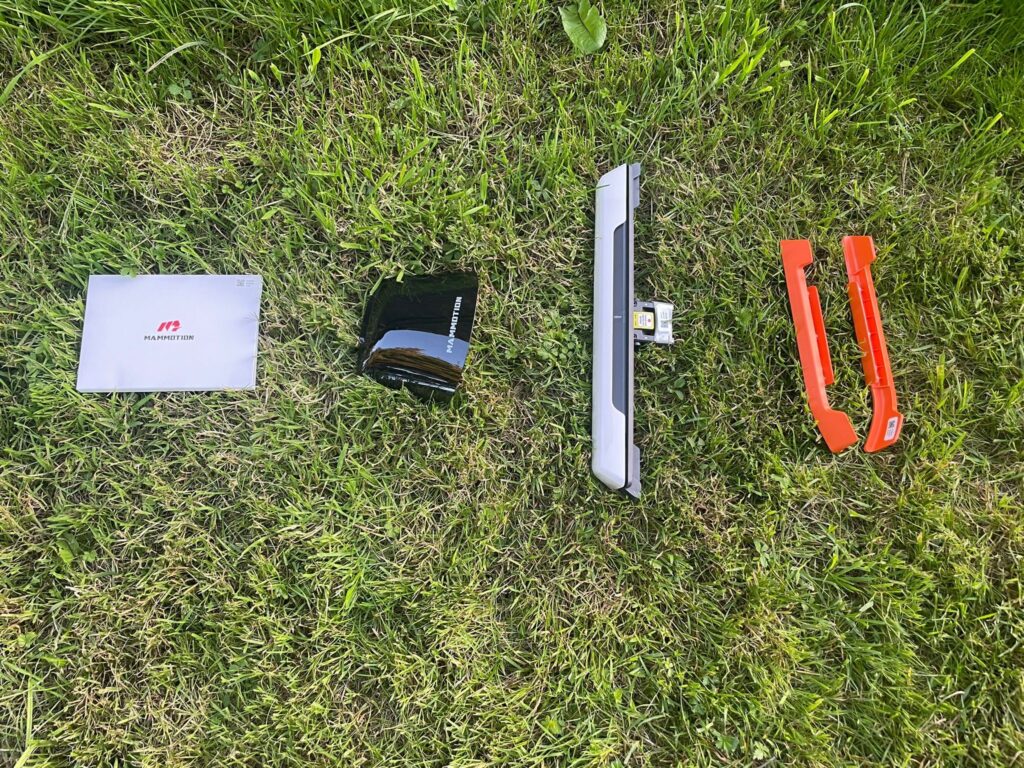
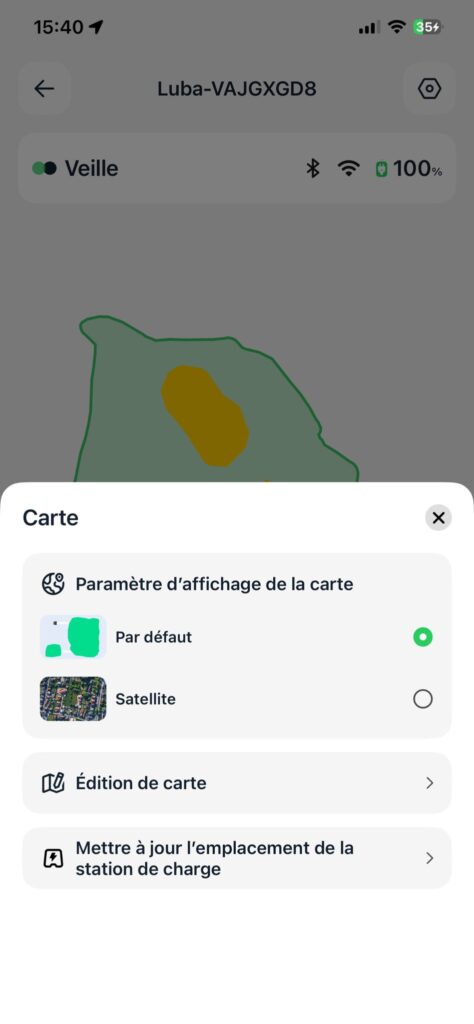
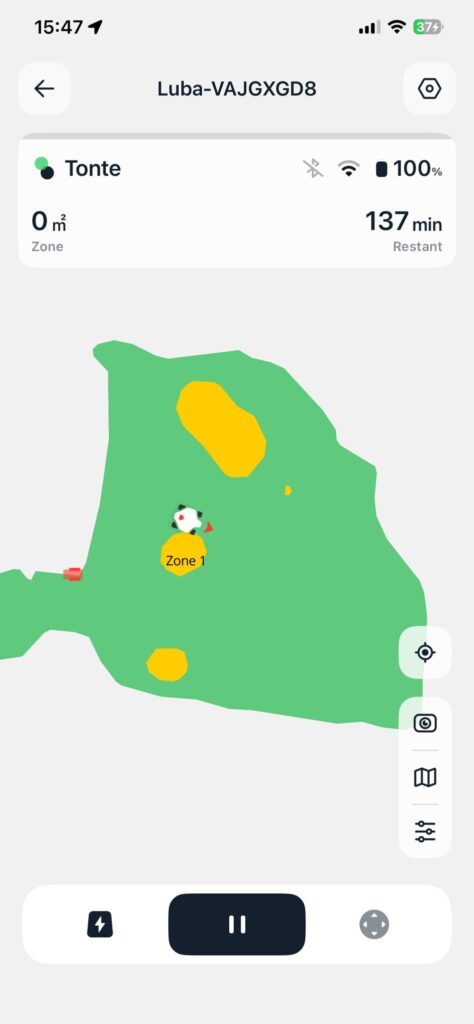
Setup took us 30 minutes flat. As mentioned in the introduction, there are no cables to bury or stakes to drive into the ground every few meters. You position the charging station, screw on the three accessories, connect the robot to the app, and define the mowing zones directly from your phone—either by guiding the robot along the edges, drawing the outlines on the map, or letting it figure out your environment on its own: Note: in our opinion, this option is only viable on a relatively simple residential property without tall grass along the edges. Of course, you’ll also need to take the time to mark off restricted areas and assess whether the mowing perimeter around the edges suits you or if you’ll need to adjust the invisible fence.
The game-changing technology: Tri-Fusion navigation
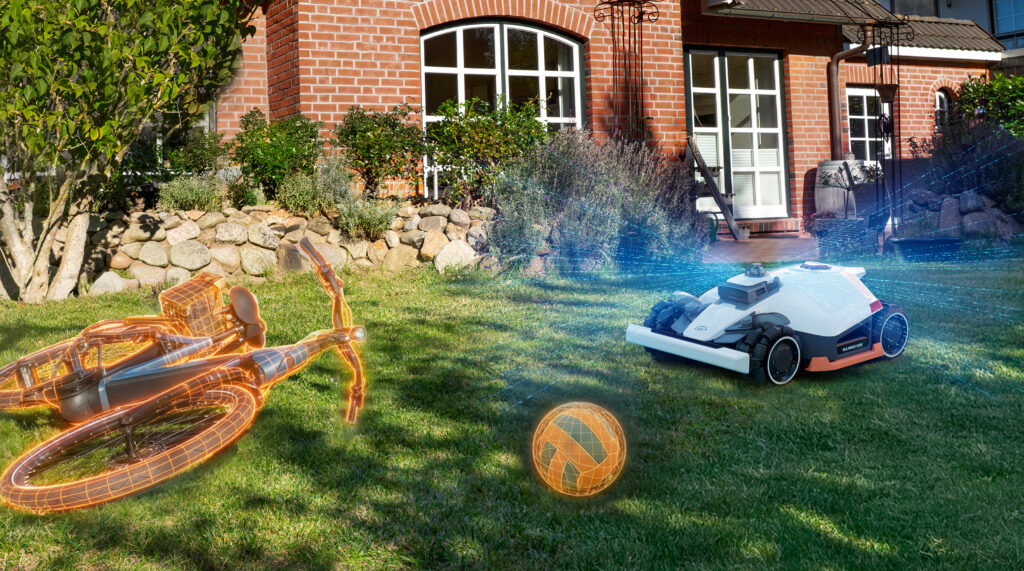
At the heart of the LUBA 3 AWD is its positioning system, which Mammotion calls Tri-Fusion. Specifically, the robot combines three technologies: a 360° LiDAR, NetRTK positioning, and a dual-camera system with AI vision. The idea is that each technology compensates for the blind spots of the others. The LiDAR builds a 3D map of the environment, from the ground up to the treetops; NetRTK ensures centimeter-level positioning accuracy; and the cameras identify obstacles in real time.
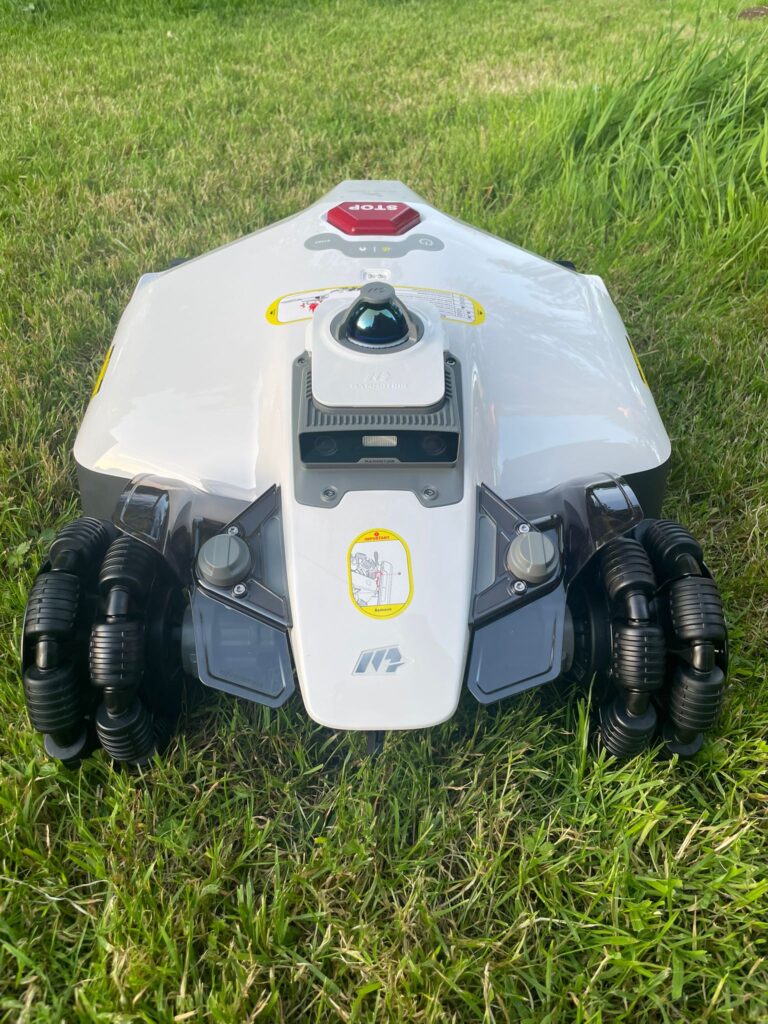
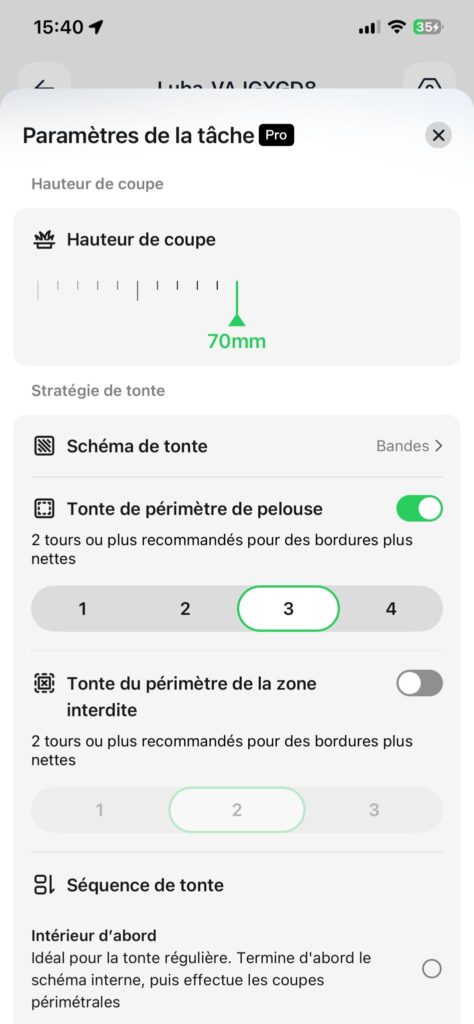
In practice, this results in an ultra-clean cut, with perfectly parallel lines (though you can change the mowing direction in the “Pro” settings) without the hesitant zigzags seen on older-generation robots. The robot knows where it is, where it has already mowed, and where it needs to go. And most importantly, it doesn’t get lost under trees or along walls, where conventional GPS signals usually falter. On a large lawn, it sometimes stops to search for the signal, but it always resumes mowing after analyzing the situation. The advertised precision is down to the centimeter, with clean edges and minimal overlap.
An important and welcome detail: Mammotion has announced that its NetRTK navigation service—essential for operating without a boundary wire—is now free for life. This is far from a minor detail, as some competitors charge a subscription fee for this type of service. Here, the initial investment is high, but it doesn’t come with an additional annual subscription requirement.
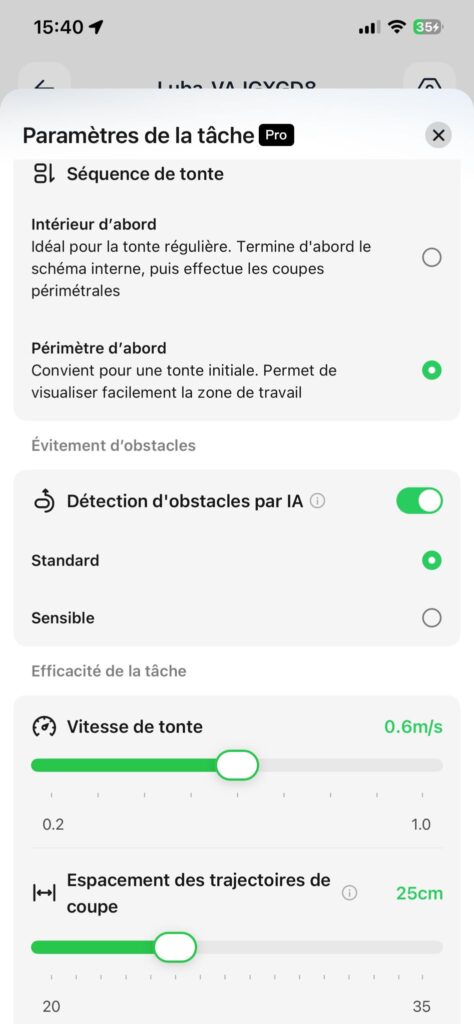
All of these sensors are also very useful for detecting obstacles.
Where it really makes a difference: rough terrain
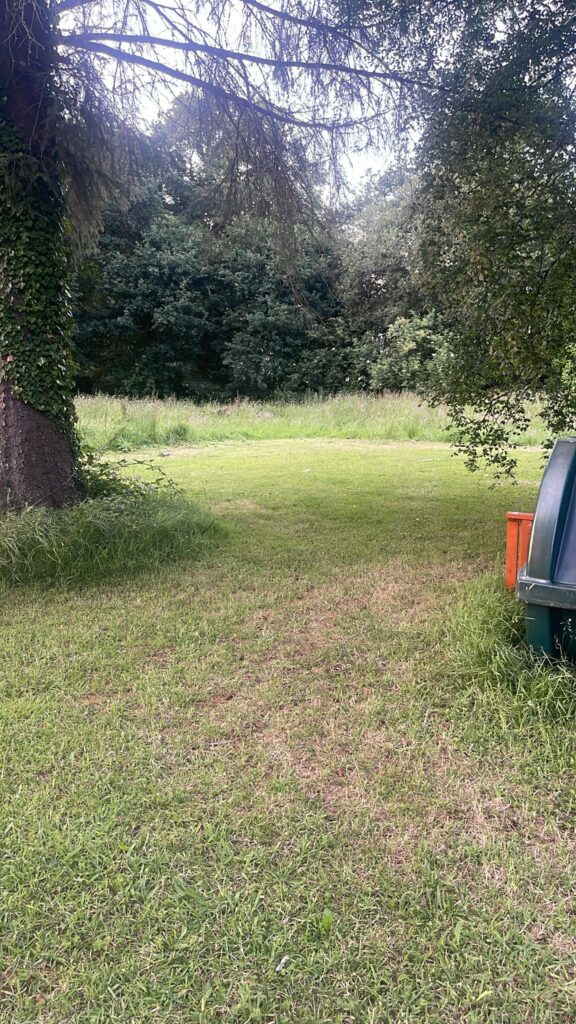
It’s the “AWD” in the name (short for “all-wheel drive”), and that’s not just marketing hype. All four wheels are independently powered, and that’s exactly what makes all the difference on terrain riddled with holes like the one in our test. This had a significant impact on our previous robot, which got stuck far too often in these holes created by the local wildlife.
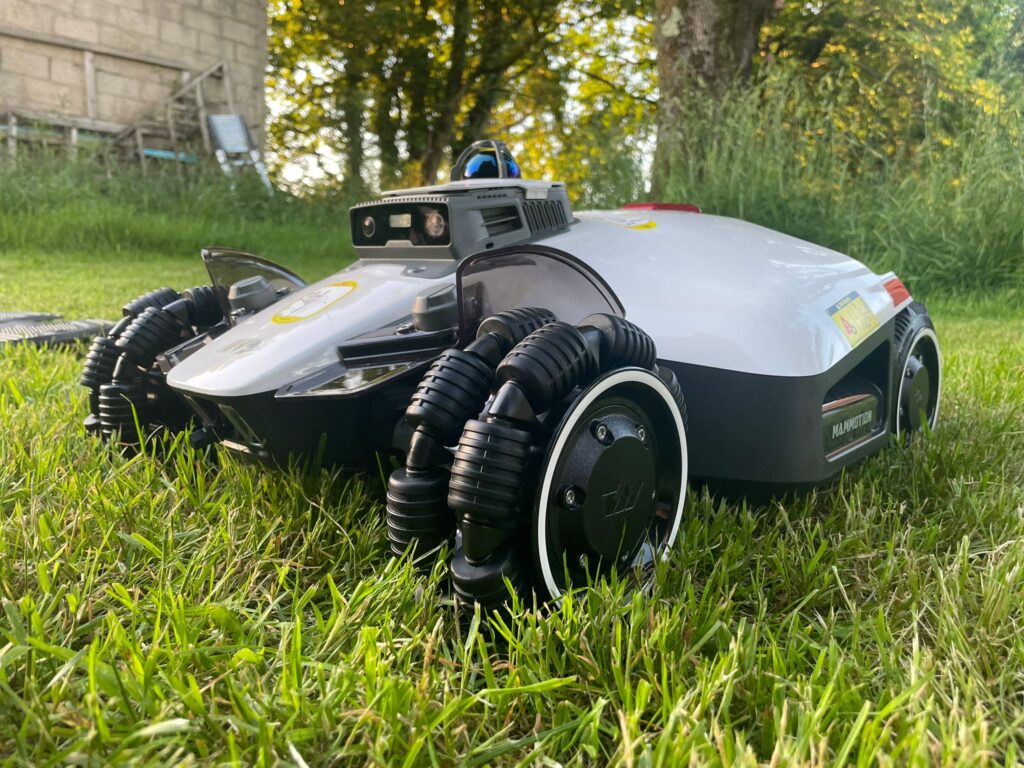
The LUBA 3 handles these challenges without batting an eye. When one wheel drops into a hole, the other three continue to push and maintain balance, so the robot never gets stuck or spins its wheels. It calmly climbs out of the hole and resumes its path as if nothing had happened.
We were impressed by its stability over bumps: where a two-wheel-drive robot would have lifted up on one side or lost contact with the ground, the LUBA 3 maintains its balance thanks to its front suspension and all-wheel drive. When it needs to turn around on uneven ground, it pivots smoothly thanks to an omnidirectional wheel that prevents it from tearing up the grass. If the terrain is rough, bumpy, or full of small holes, that’s clearly where this robot justifies its price.
Navigating the mobile app
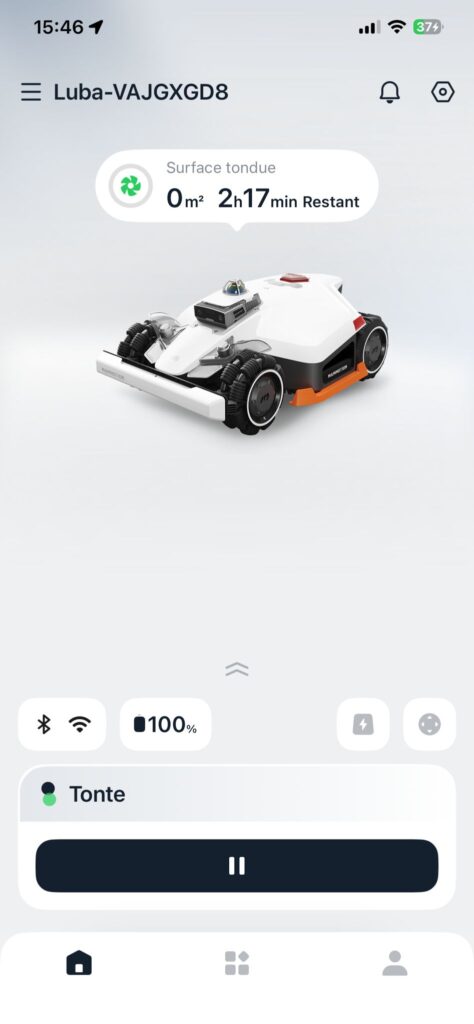
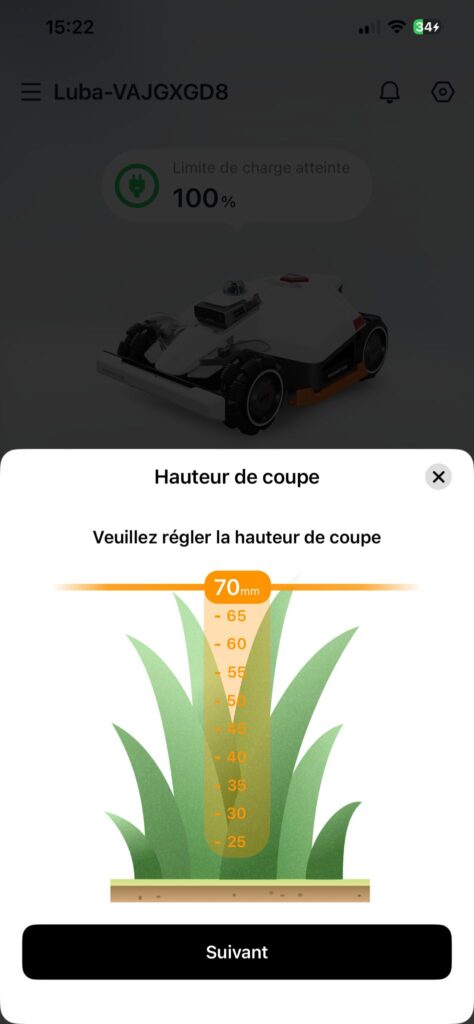
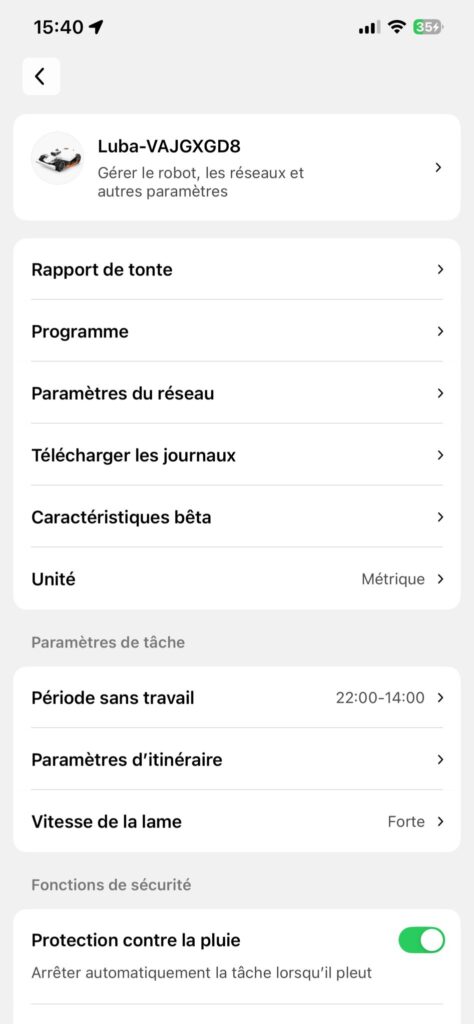
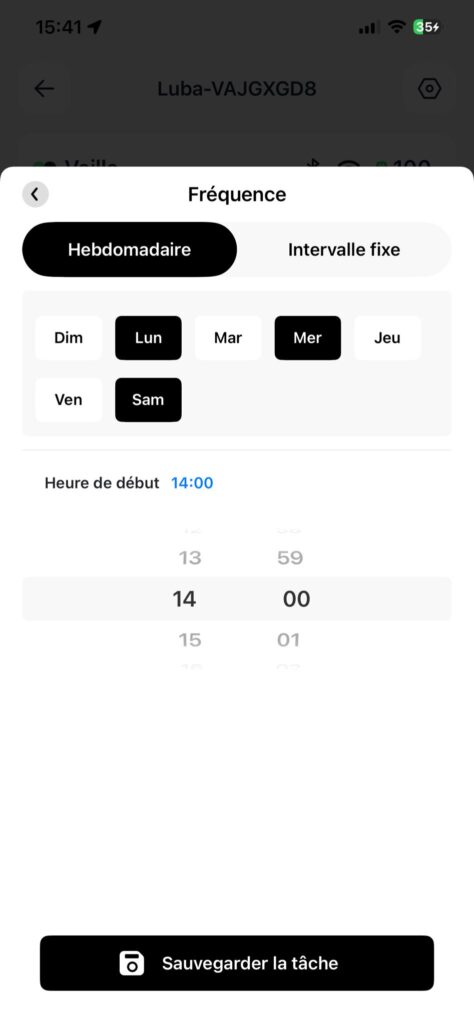
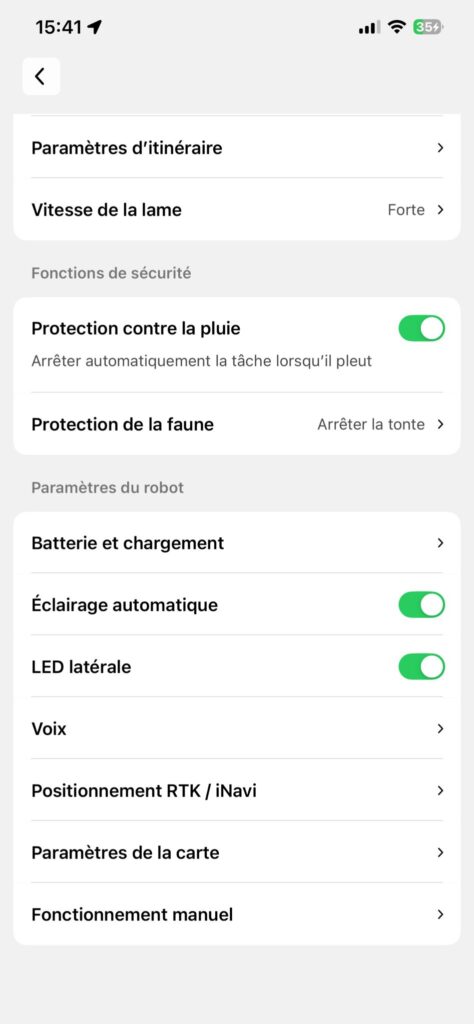
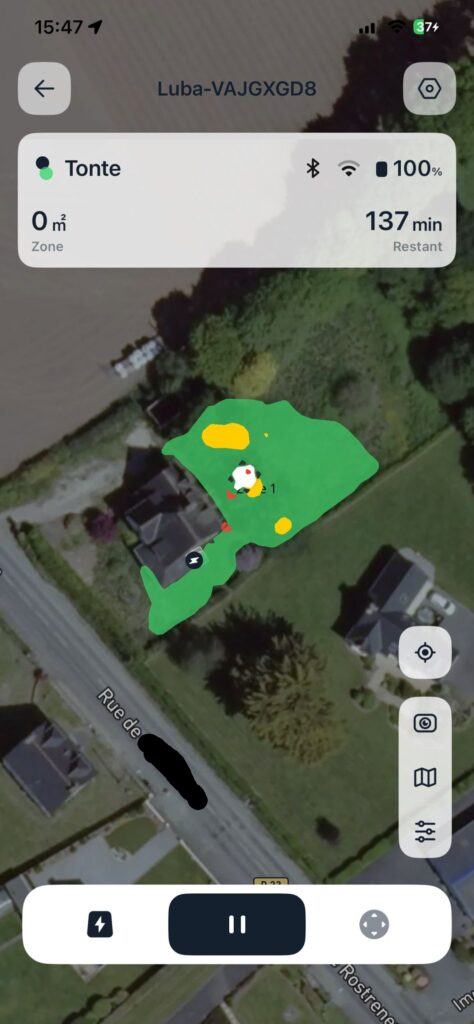
To control your robotic lawn mower, everything is done through the Mammotion mobile app. Here are several screenshots to give you a good idea of the user experience you can expect. Overall, it’s pretty intuitive and smooth.

Mowing performance and battery life
In terms of cutting performance, the LUBA 3 AWD features a cutting width of approximately 40 cm (15.8 inches) (which can also be adjusted in the “pro” settings), two 165-watt motors, and a dual-deck system with six blades. The result: it mows quickly. Mammotion claims up to about 650 m² per hour, allowing it to cover large areas in a single session. In practice, it takes longer because the advertised coverage depends heavily on the type of terrain. The cutting height can be adjusted via the app, within a range of approximately 25 to 70 mm, which covers most uses.
Battery life varies by model. It ranges from 135 to 215 minutes for areas between 1,500 and 5,000 square meters. In any case, the robot returns to its charging station on its own when it needs to, recharges, and then goes back to finish the job where it left off. You don’t have to do a thing.
FPV mode: just a gimmick or a real advantage?
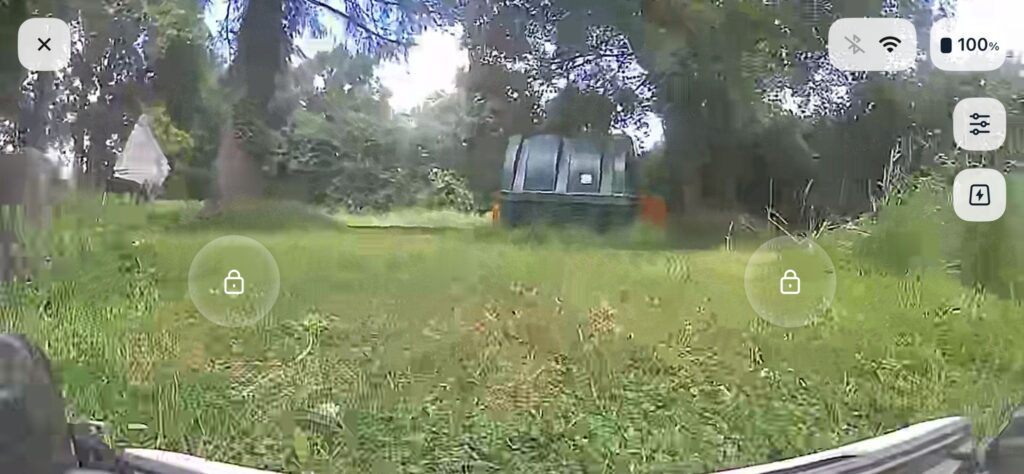
We were skeptical about the video/FPV mode, which lets you see what the robot’s cameras are filming in real time on your phone. We expected it to be a fun gadget that we’d use twice and then forget about, but we were wrong. When the robot slows down, hesitates, or stops, you can switch to camera view and immediately see what’s going on: an obstacle, a wet spot, or the dog left behind in the grass. It saves you from having to go check for yourself at the back of the yard. Bonus: it also lets you take a look at your lawn from a distance.
What we liked less
One downside worth noting is the noise level. Operating at around 70 dB, the LUBA 3 AWD isn’t the quietest robot on the market. On a large, secluded property, this isn’t an issue—which was the case at the test site. But in a residential area with adjoining yards, we don’t recommend running it early in the morning or late at night, or you’ll risk getting on your neighbors’ nerves. In rural areas, remember to turn off the mower after 10 p.m. for the sake of local wildlife.
The DropMow feature, which allows the robot to manage patches of grass without physical boundaries, also gave us a bit of a headache. Without a low wall or clear physical boundary, the robot tends to wander off and go “see if the grass is greener elsewhere.” On a fully enclosed property, no problem; on open land, you really need to clearly define these virtual zones. Finally, customer service. There’s no physical network of repair technicians: everything goes through the app, via chat or email, and in the event of a serious breakdown, you have to ship the robot in. For a purchase costing over €2,000, this is something to keep in mind.
Conclusion and Pricing
Let’s be clear: the LUBA 3 AWD is an investment. The 1500 model starts at around €1,999 to €2,299 depending on promotions, while the high-end models (3000, 5000) cost over €2,600.
But once you’ve tried it, you’ll never want to use your gas-powered mower again. The lifetime free NetRTK service also eliminates the worry of hidden fees. The Mammotion LUBA 3 AWD is, in our opinion, one of the best robotic mowers you can buy today, especially on uneven terrain. Its Tri-Fusion navigation is remarkably precise, its off-road capabilities are in a league of their own compared to the competition, and the lack of a perimeter wire makes life so much easier that you’ll never want to go back.
It’s not perfect, it’s a bit noisy, and the price tag means it’s only for those willing to invest. But if you’re looking for a robot that can handle a large, uneven yard without breaking a sweat, and the price isn’t a deal-breaker, it’s a safe bet. As for us, we wouldn’t go back.
Cette publication est également disponible en :

