
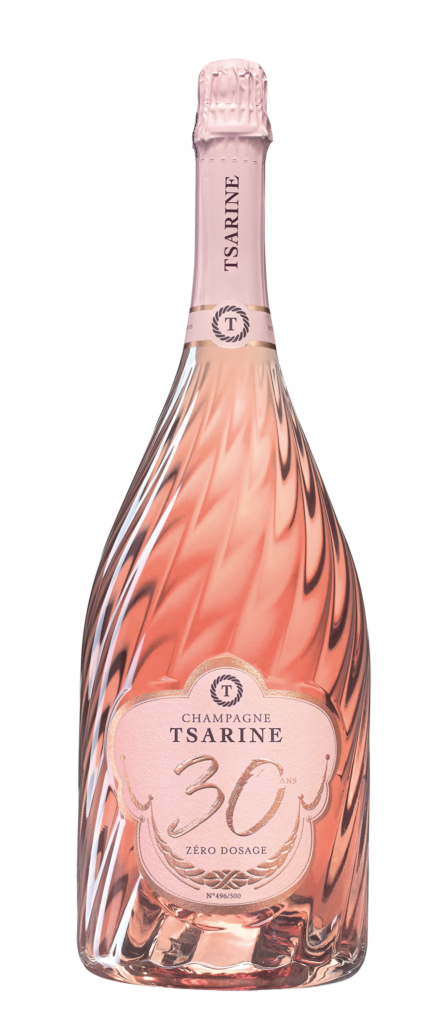
Thirty years is a special milestone for a Champagne house. Young enough not to hide behind its heritage, yet established enough to begin crafting its own style. To celebrate this anniversary, Maison Tsarine has chosen a path that is rarely taken: zero dosage. This approach strips the wine of its final touch of sweetness, revealing—without a safety net—the precision of the blend and the quality of the raw materials.
Tsarine’s anniversary cuvée is not intended to be a spectacular technical statement. It takes a more restrained approach. The blend is primarily based on Chardonnay—fifty percent—supplemented by thirty-five percent Pinot Noir and fifteen percent Meunier. The grapes come exclusively from Grands Crus and Premiers Crus in the Montagne de Reims: Tours-sur-Marne, Bisseuil, Ludes, Sermiers, Trépail, and Villers-Allerand. This geographical choice speaks volumes about the winemaker’s intent. While the Montagne de Reims has historically been associated with Pinot Noir, Tsarine uses Chardonnay as the backbone of this wine, seeking tension rather than opulence.
Zero dosage now holds a special place in the Champagne region. Long reserved for a handful of houses or winemakers seeking a more mineral-driven expression of the wine, it has gradually gained traction among a public accustomed to drier profiles, particularly in contemporary gastronomy. However, the wine must be able to withstand this absence of dosage. Isabelle Tellier, the House’s cellar master for the past twenty-five years, sums up this approach with a simple statement: “Zero dosage has become the obvious choice. It allows the wine to express itself in its purest form, unfiltered and without any artifice.”
The winemaking process is geared toward this goal. The 2021 vintage underwent complete malolactic fermentation, followed by four years of aging in the cellar and at least six months after disgorgement. This aging profile matters more than the hype surrounding the limited edition. The time spent on lees provides the texture needed to balance the absence of dosage. In the glass, the cuvée reveals a precise profile: citrus, peony, subtle red fruits, and a briny finish. A more nuanced than showy profile.
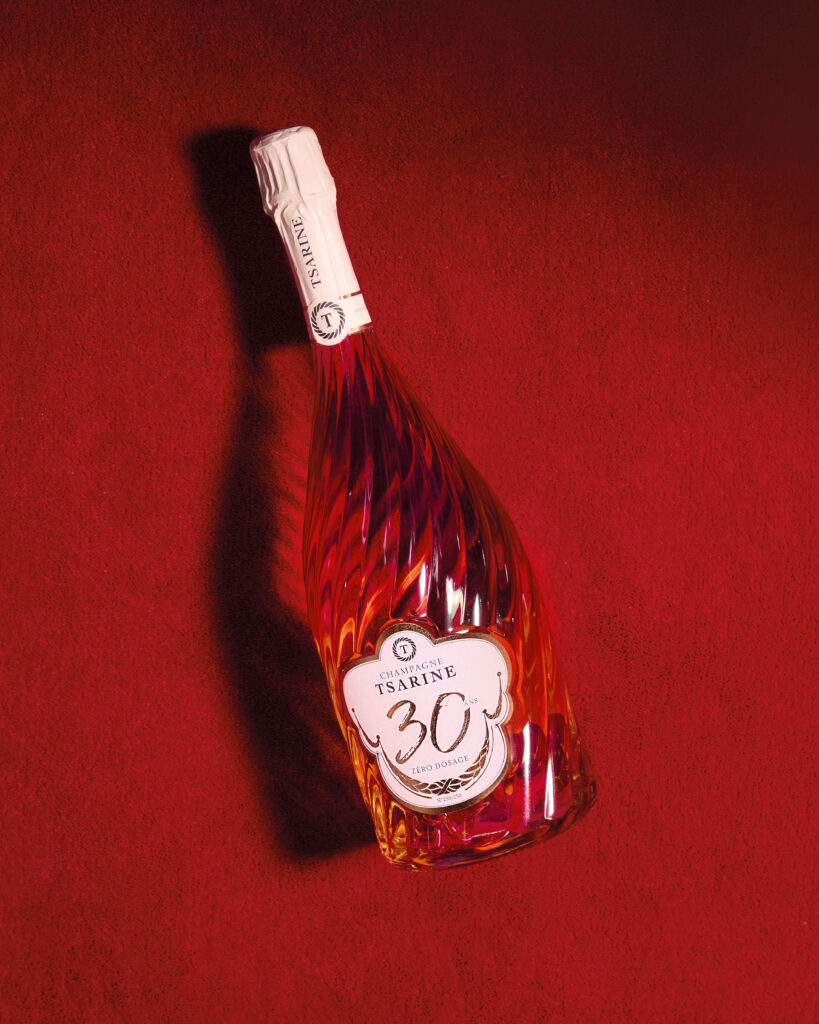
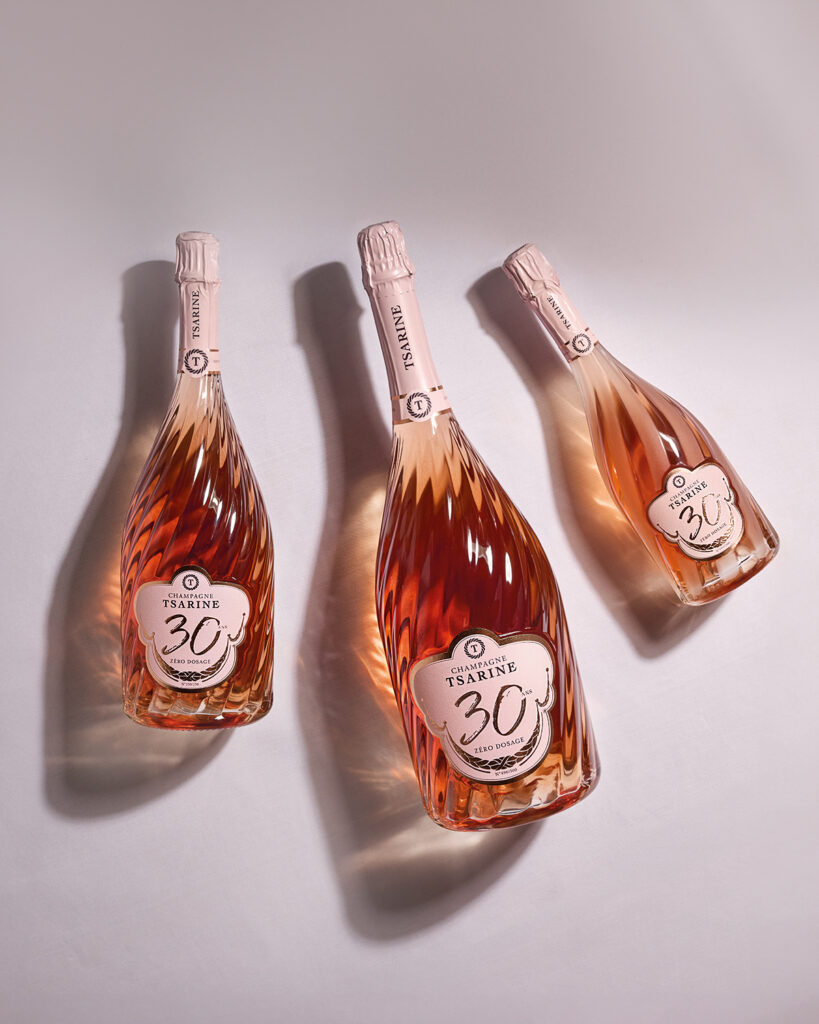
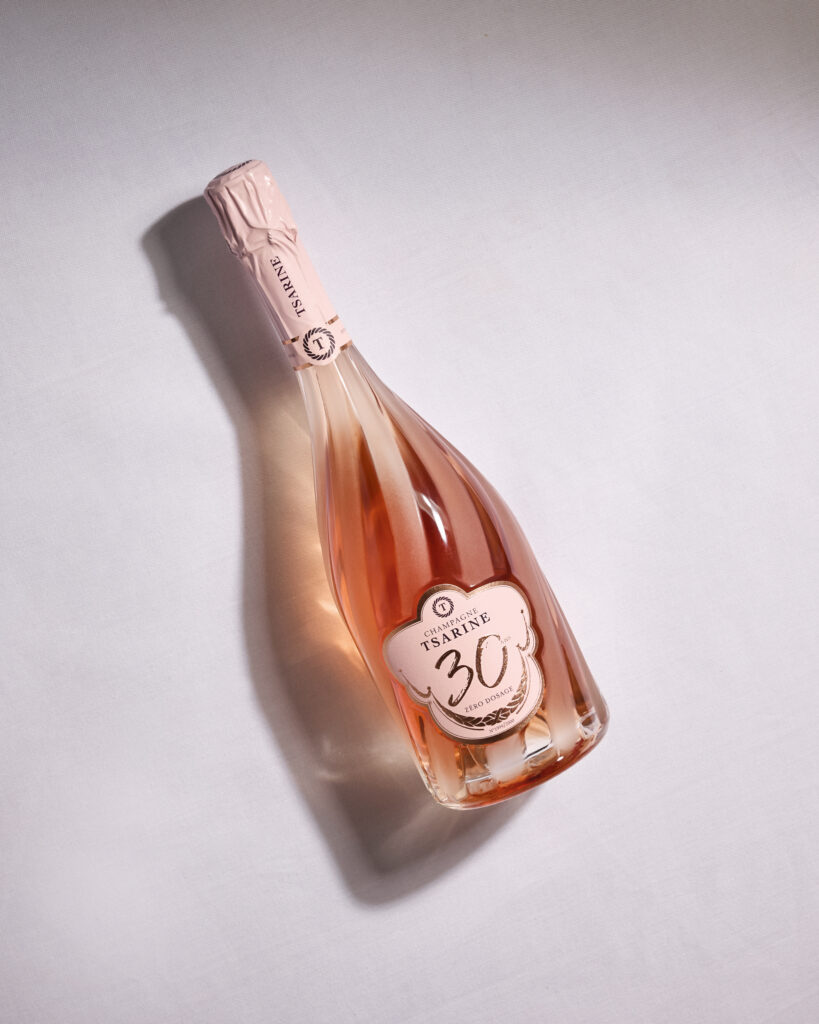
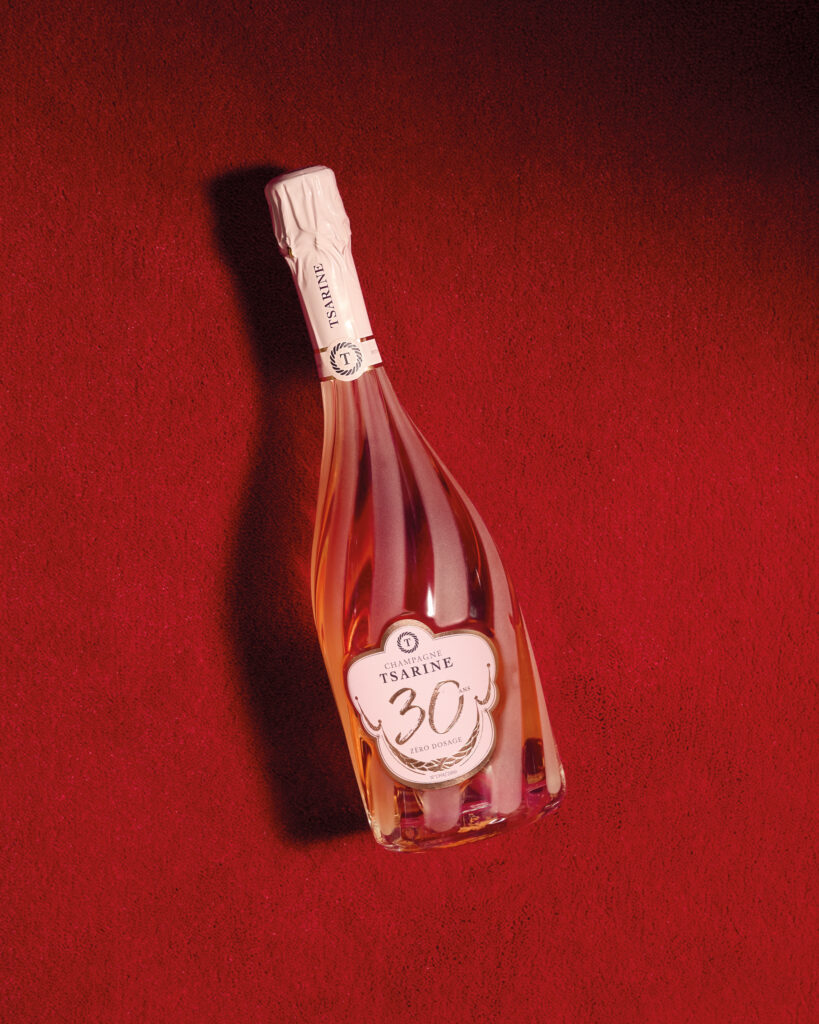
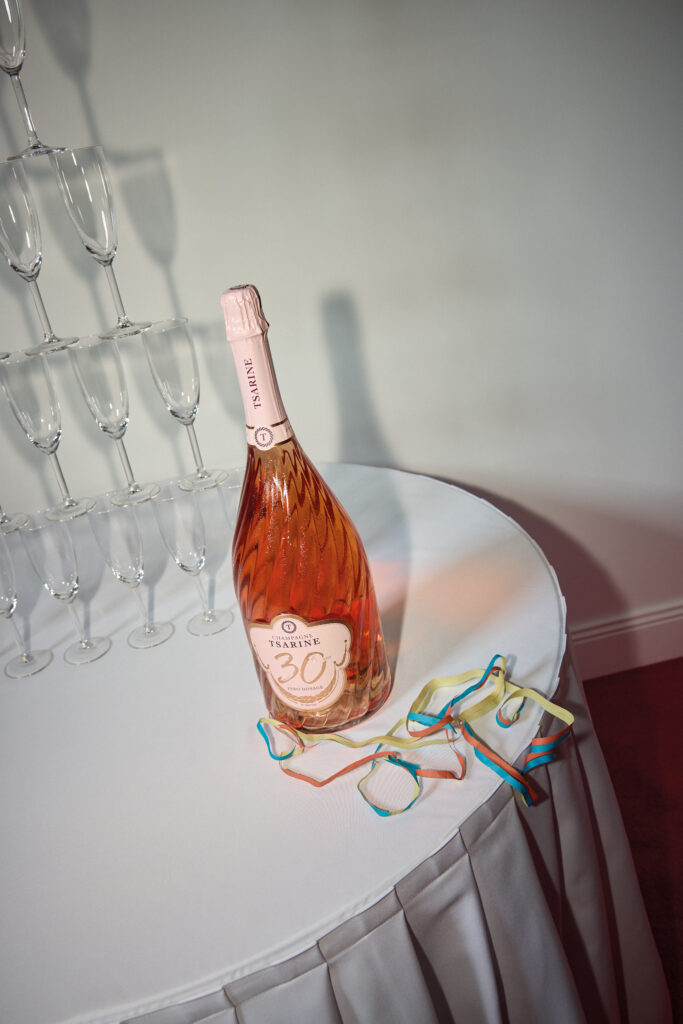
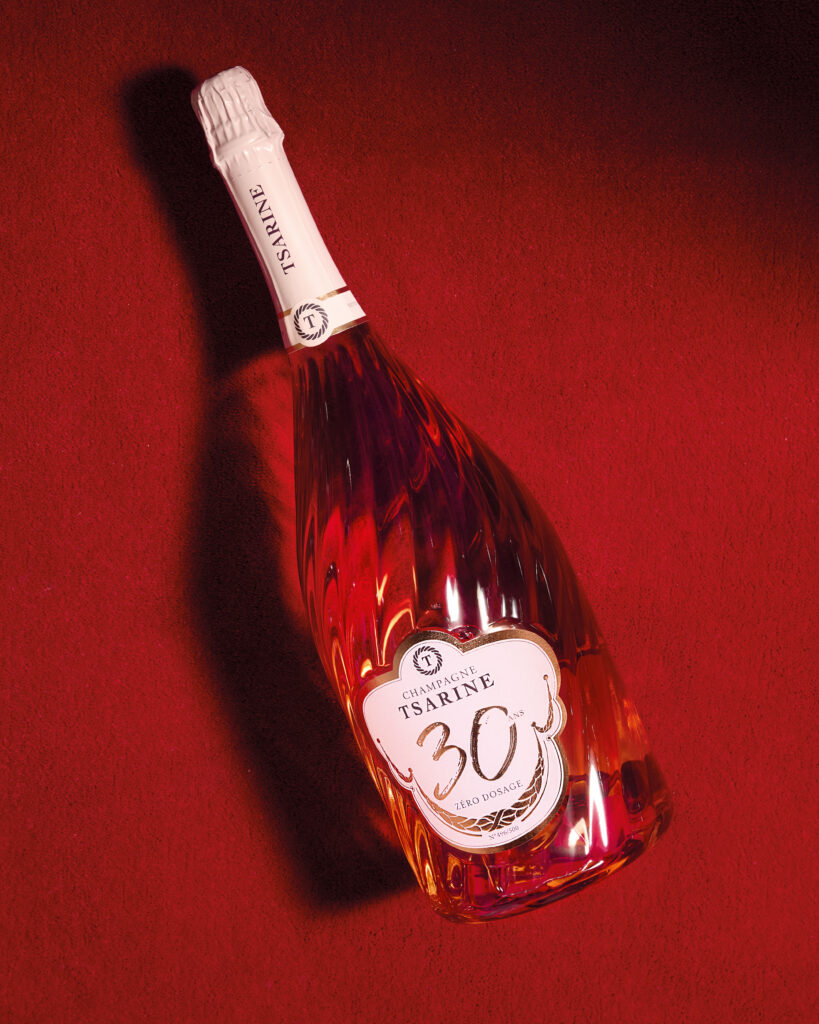
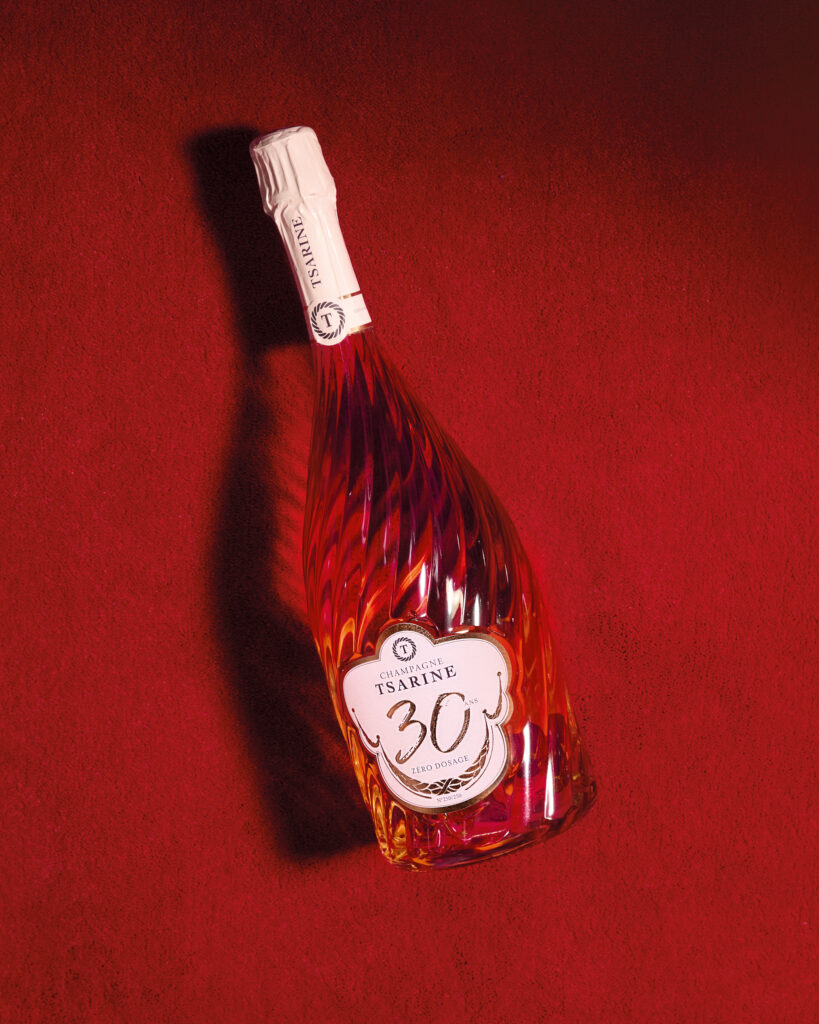
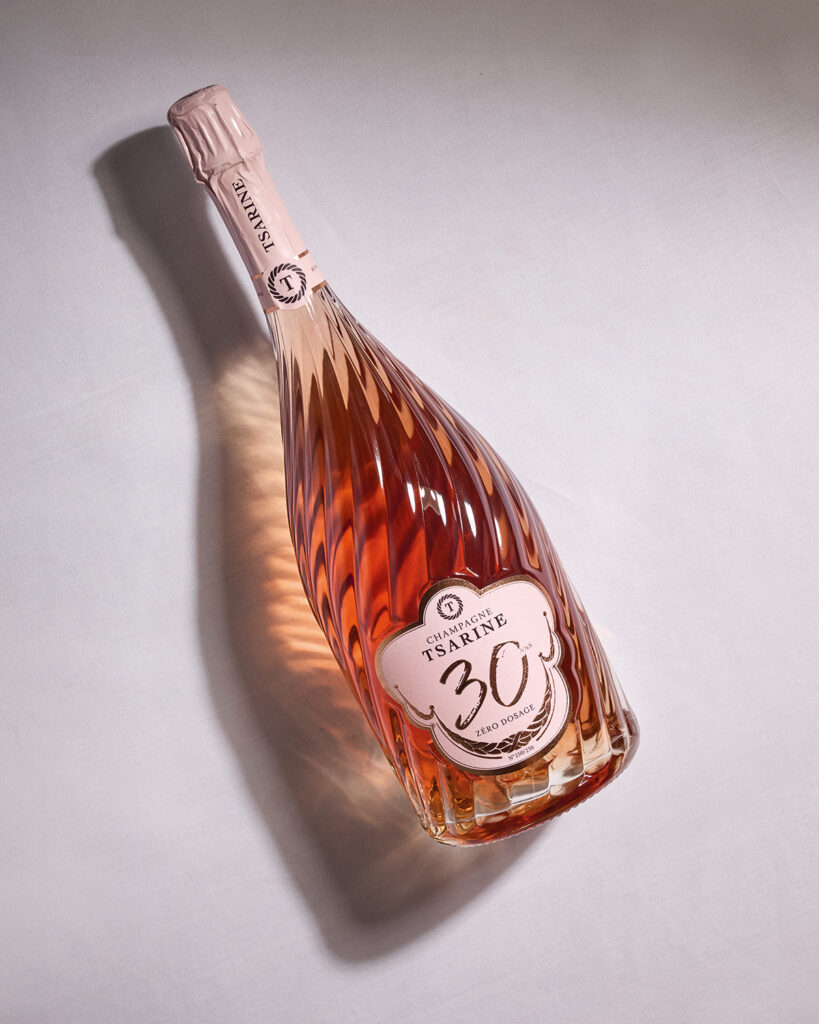
Tsarine belongs to that generation of Champagne houses that emerged in the 1990s, a period when the Champagne region was seeking to break free from certain rigid conventions of representation. Founded in 1996 by Philippe Baijot and now led by Enguerrand Baijot, the house has built its identity around a bottle with twisted lines inspired by a decanter. Here again, the detail is less trivial than it seems. In a region where the bottle often remains a realm of aesthetic stagnation, Tsarine realized early on that the bottle’s silhouette could become a form of expression.
This anniversary edition adds another dimension: music. Violinist Esther Abrami, an ambassador for the House and also born in 1996, composed an original melody inspired by the cuvée and designed the case, which is illustrated with a violin crisscrossed by musical notes. The idea could easily have become merely decorative. Yet it works because it remains secondary; the wine takes center stage.
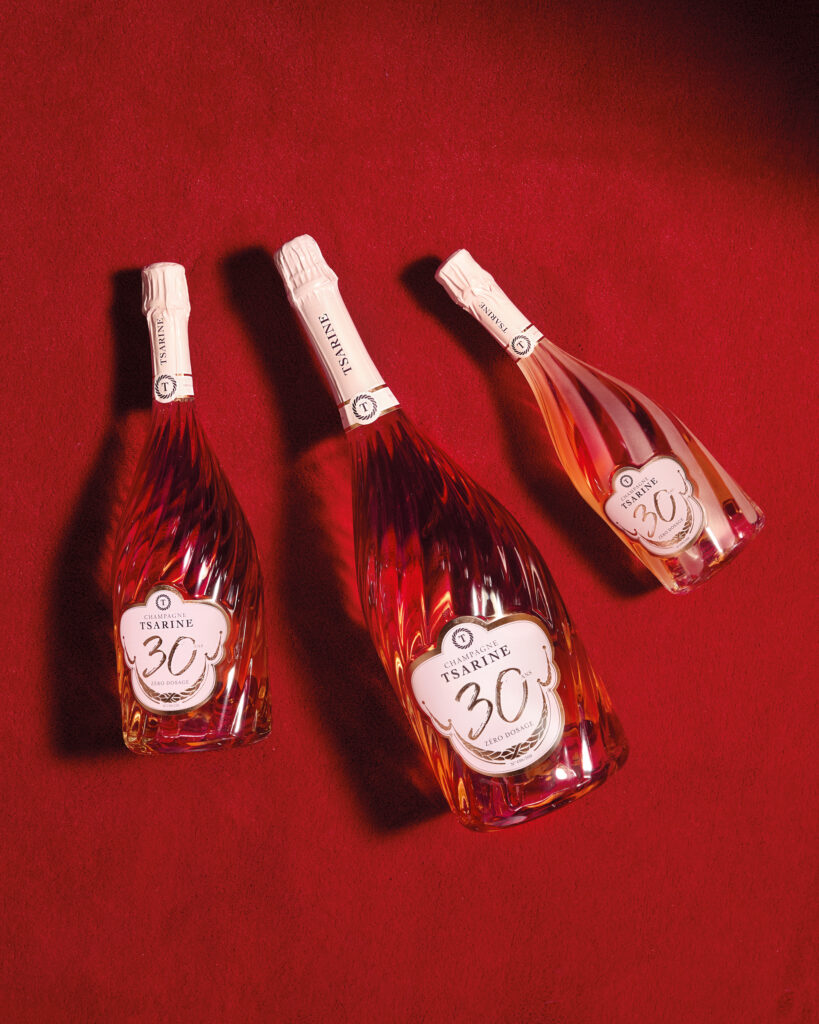
Only 1,800 bottles, 250 magnums, and 500 jeroboams will be produced. This limited quantity serves above all as a reminder of a more fundamental reality of contemporary Champagne: the most interesting cuvées are now often those that embrace a certain degree of technical rarity rather than mass distribution. This is not to create artificial desire, but because precise balances require time, limited production volumes, and a stricter selection of crus.
In a market where many historic wineries today seek to reassure consumers through heritage or visual opulence, Tsarine has chosen a different path: a more unadorned approach to wine. At thirty years old, this is likely less a celebration than a clarification.
Cette publication est également disponible en :

