
In the modern whiskey industry, the concept of terroir remains a subject of debate. Barley is shipped around the world, barrels cross oceans, and global markets sometimes tend to standardize the narratives. Yet certain distilleries remain inextricably linked to a specific place. Old Pulteney falls into this category.
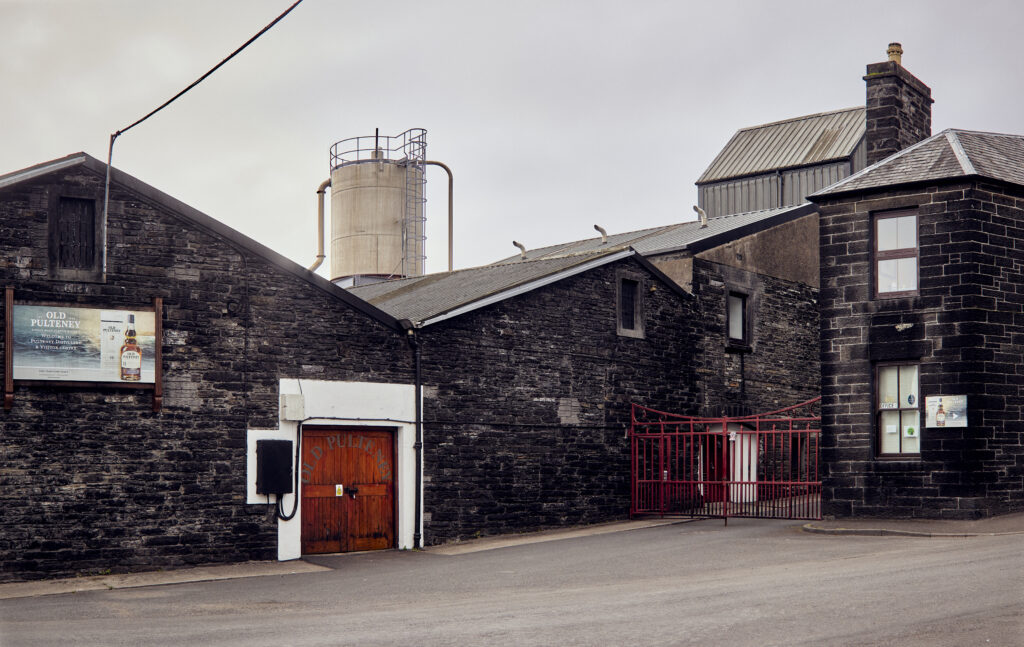
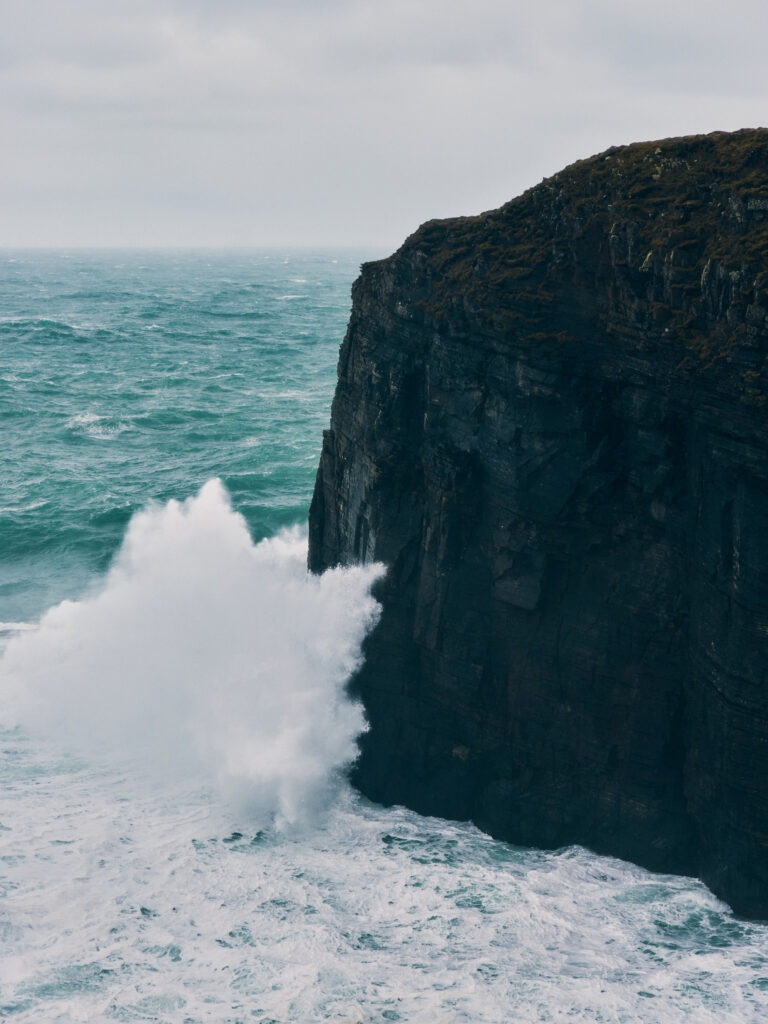
To understand this distillery, you first need to look at a map. Head to Wick, in the far northeast of Scotland. In the 19th century, this port was one of the nerve centers of the European fishing industry. It was there that James Henderson founded the distillery in 1826, right on the North Sea. Two centuries later, this environment remains at the heart of both the brand’s narrative and its production.
This may seem like a trivial detail. It is not.
For several decades now, whiskey has come to tell its story through its barrels. Bourbon, sherry, port, Sauternes—the casks have become key differentiators. Old Pulteney champions a different philosophy. Its identity stems not solely from the wood, but from the interplay between the cellars and the coastal climate.
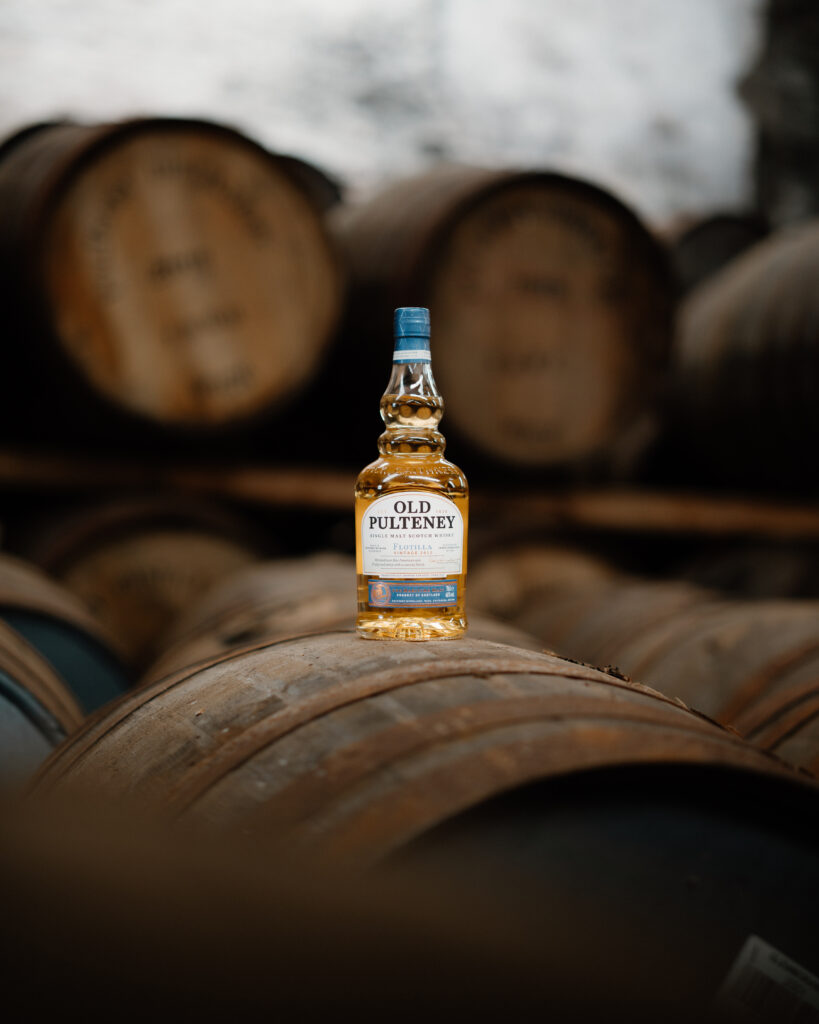
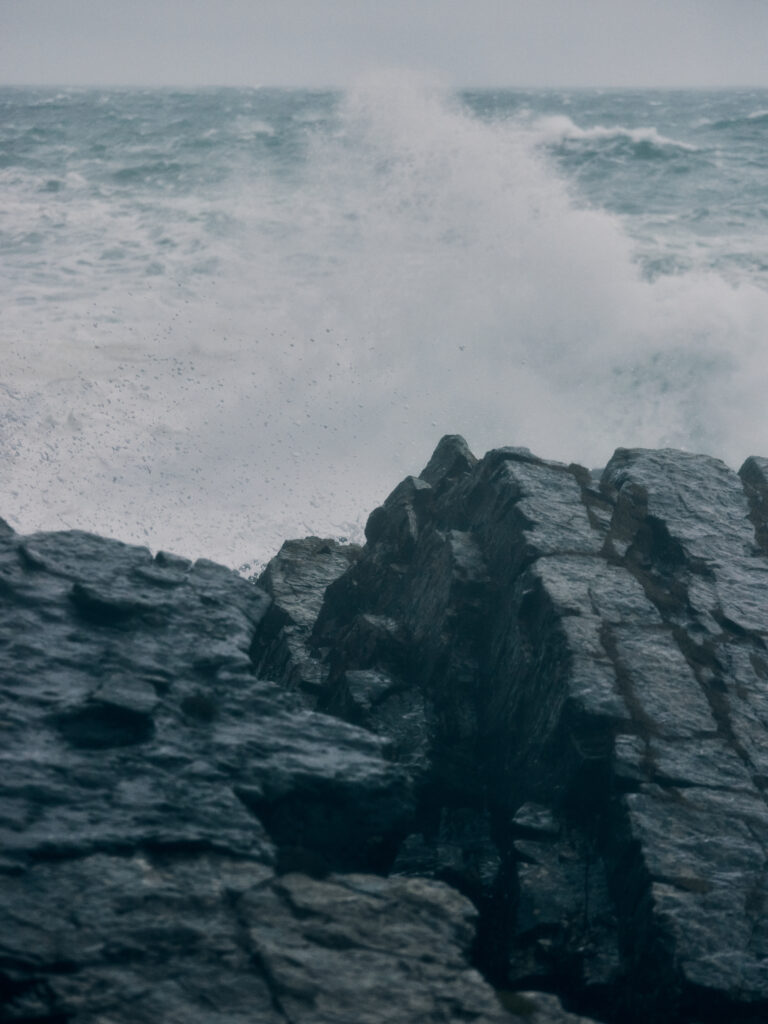
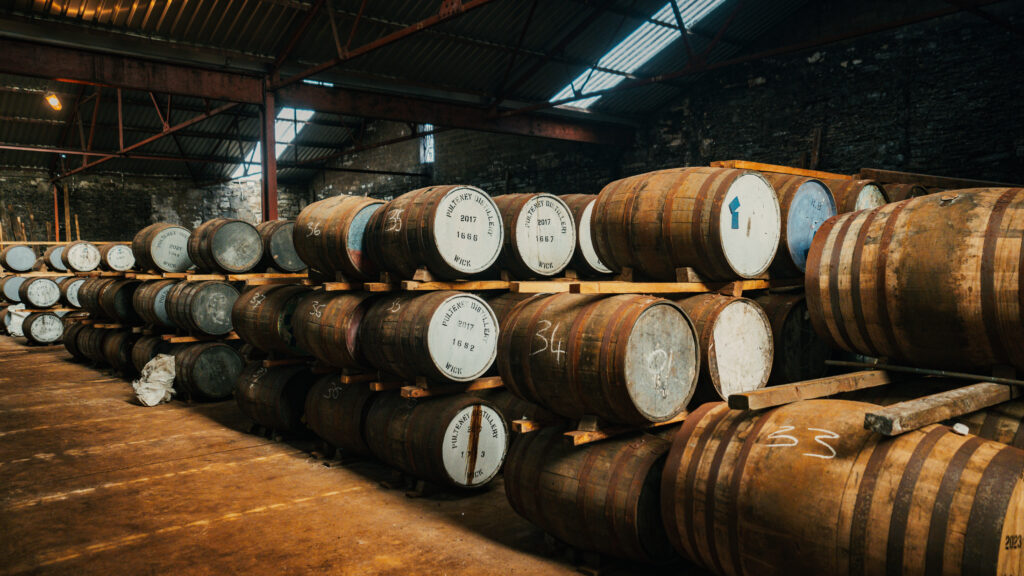
The technical documents describe warehouses exposed to the sea breezes of the North Sea. Over the years, the barrels age in an environment where salty air, humidity, and climatic variations contribute to the spirits’ aromatic character. The distillery thus boasts a signature profile characterized by salty freshness, iodine-like nuances, and a recurring mineral edge.
This concept of “Maritime Malt” is not merely a marketing slogan; it forms the backbone of the entire range.
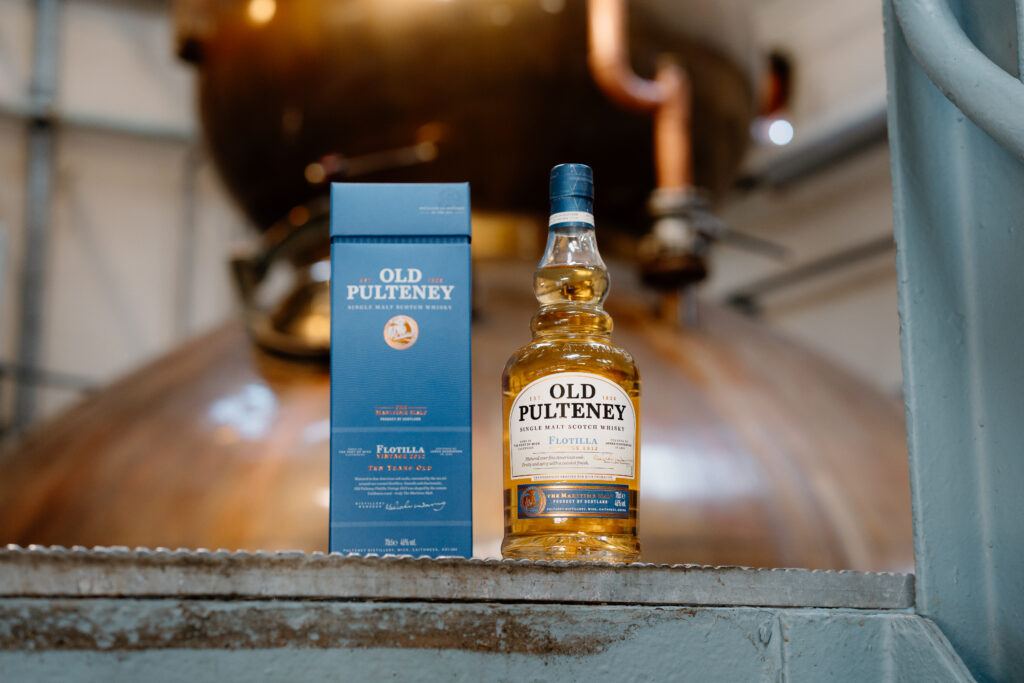
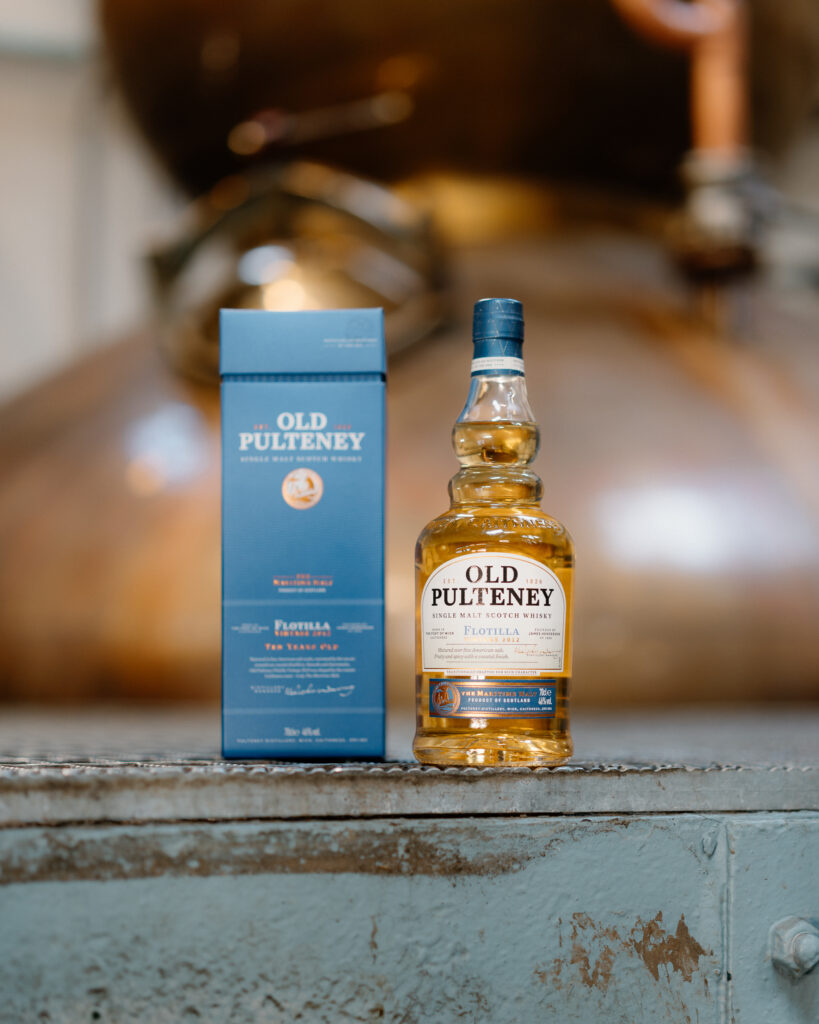
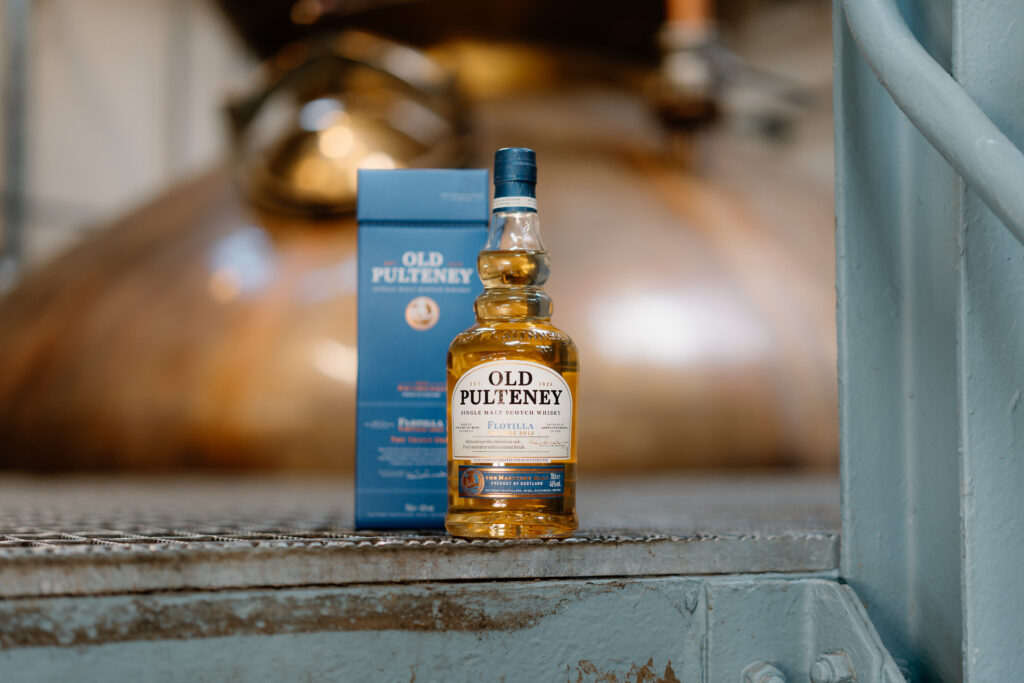
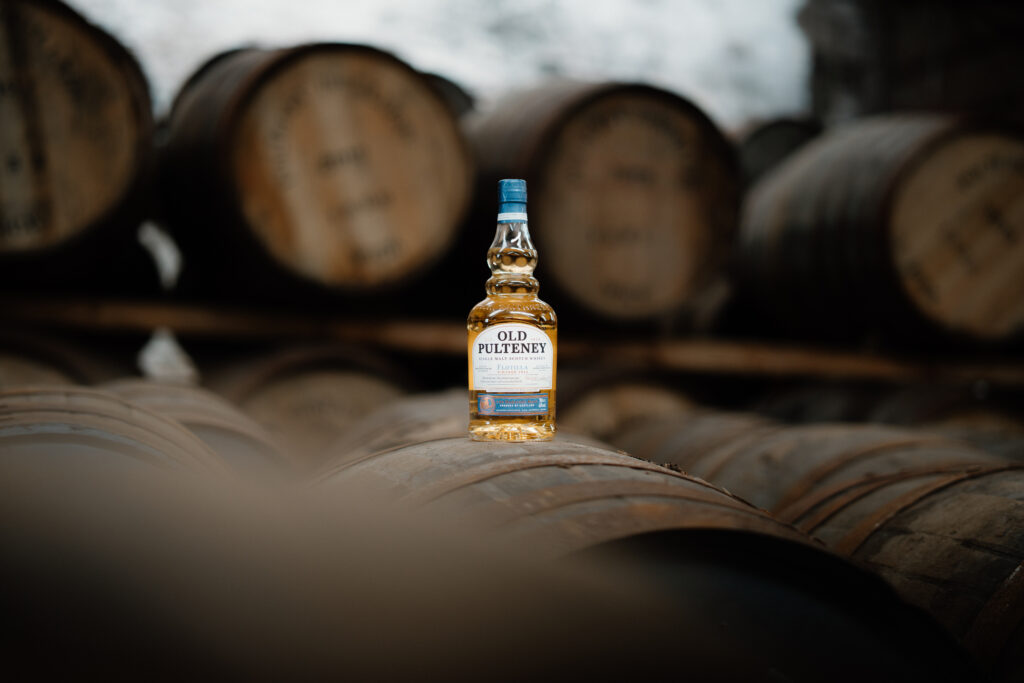
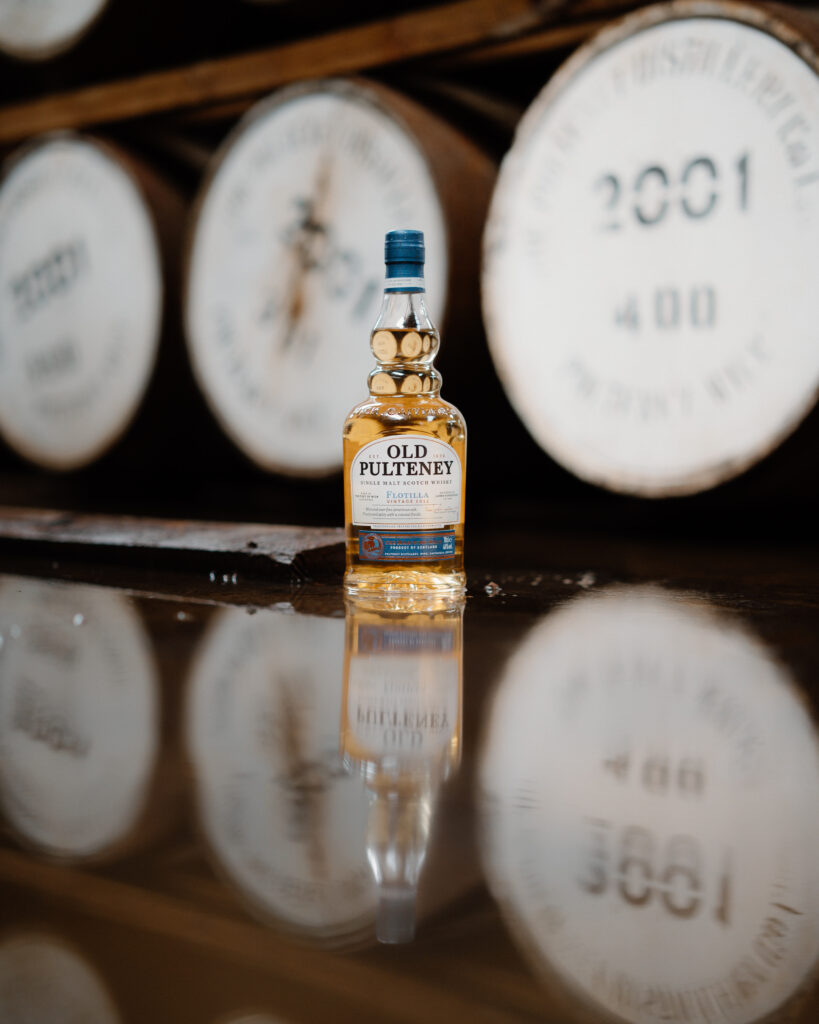
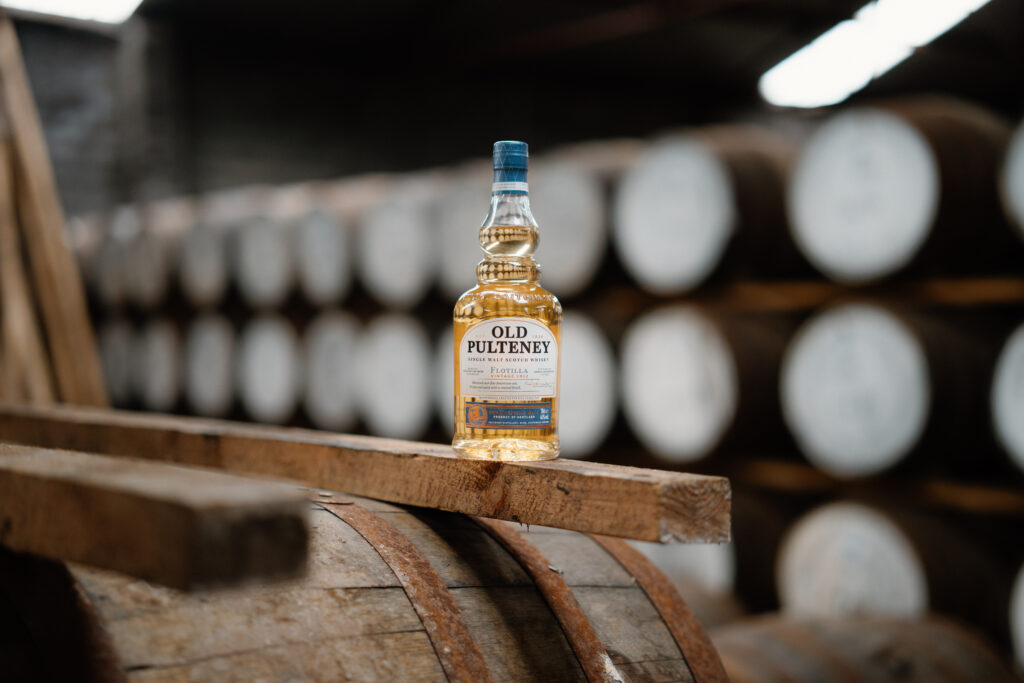
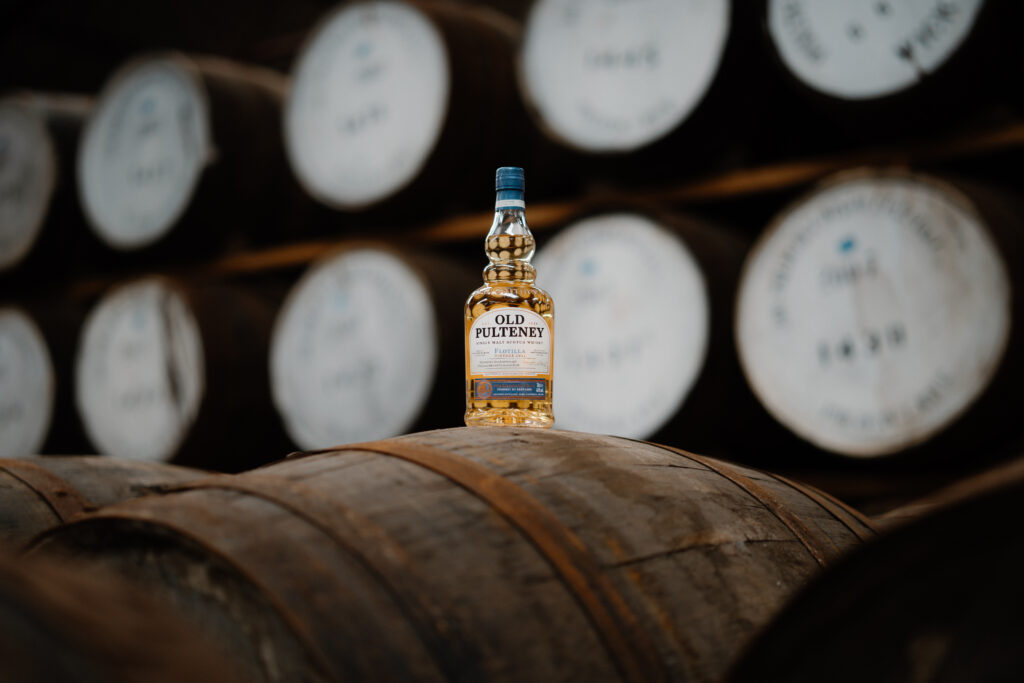
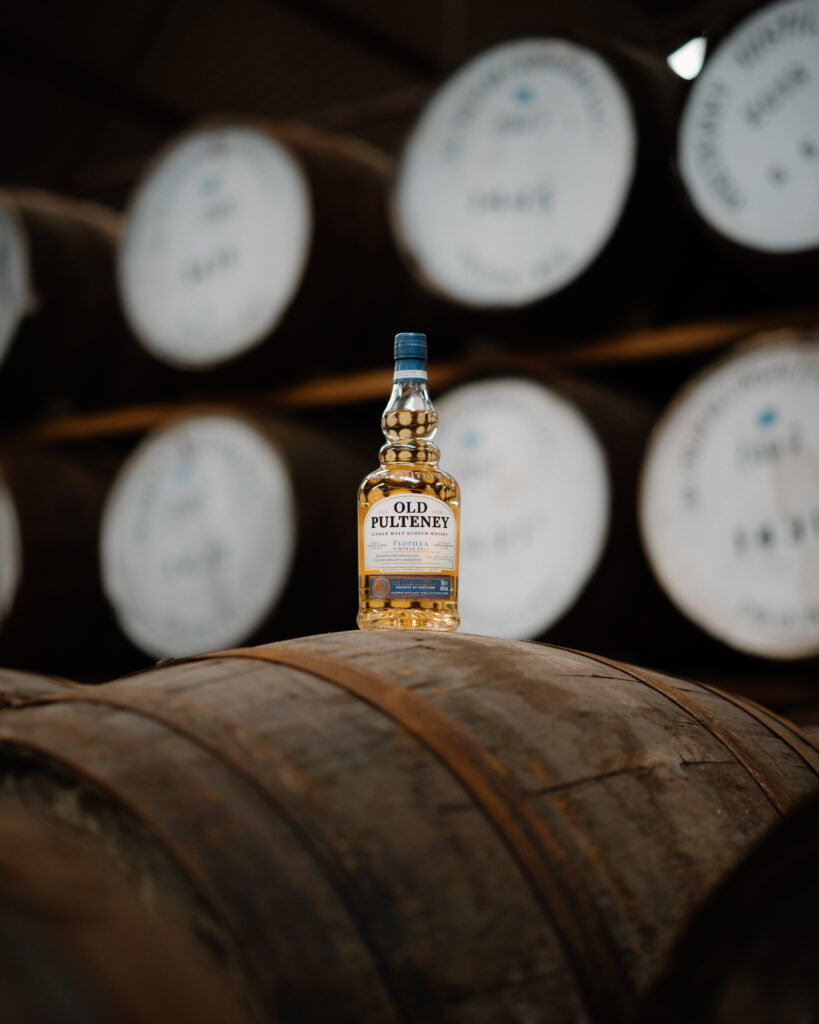
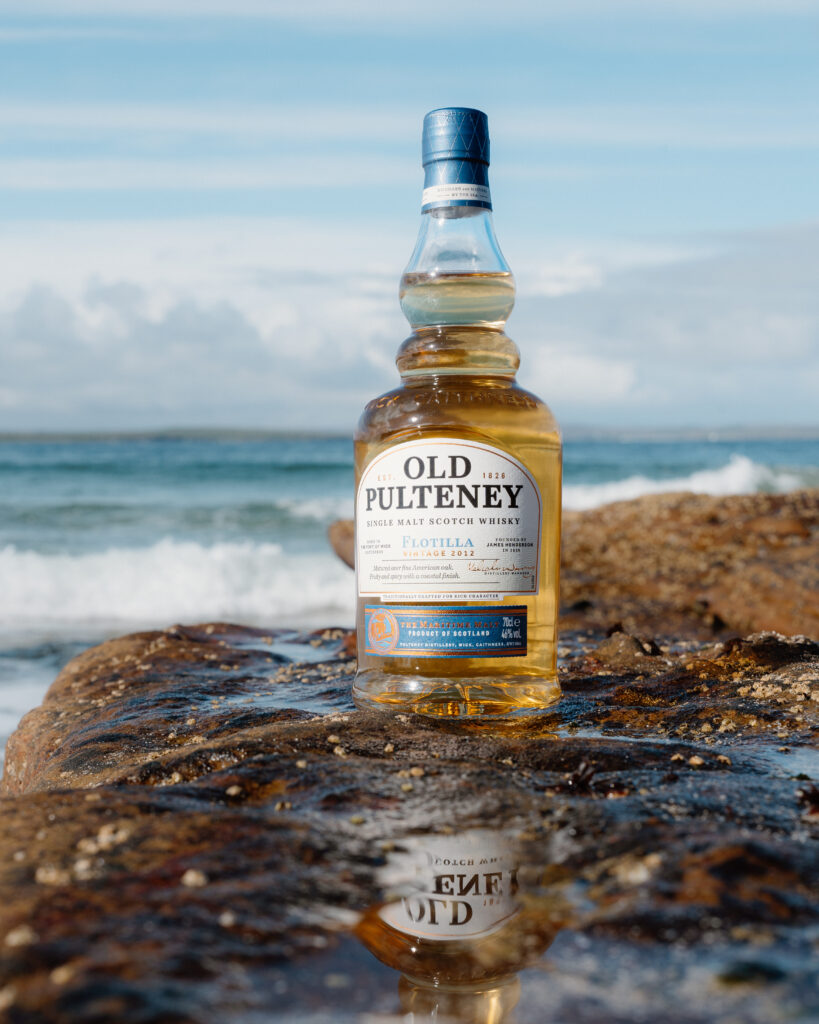
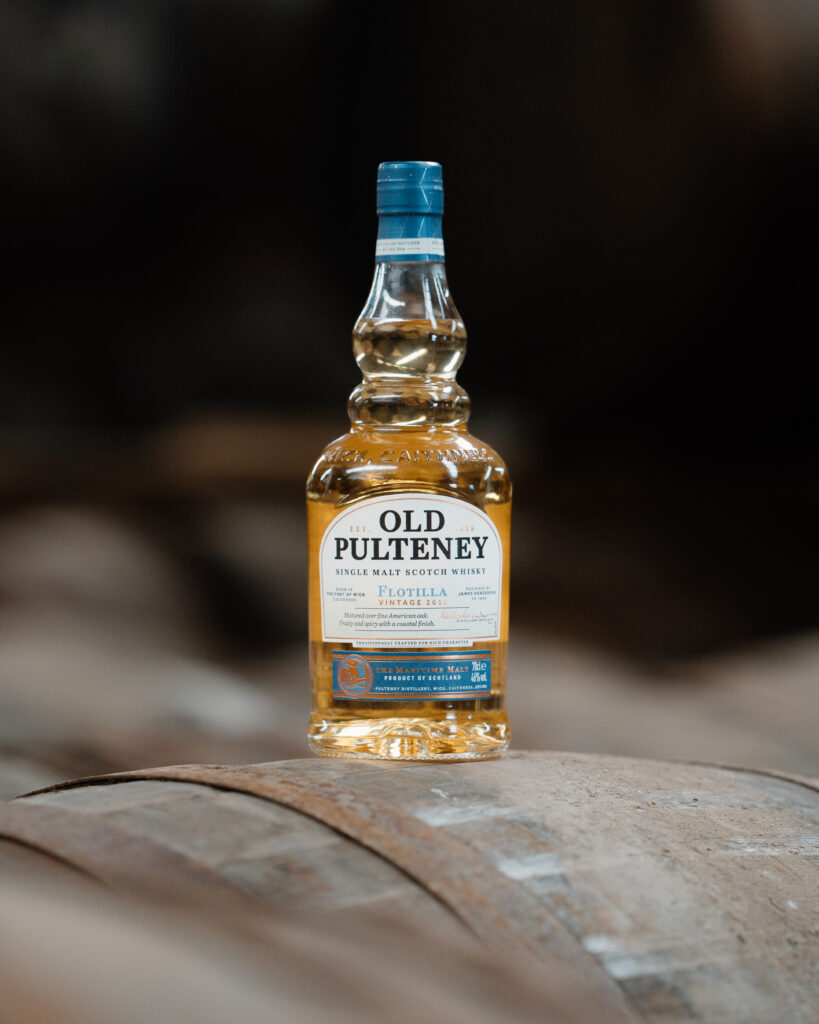
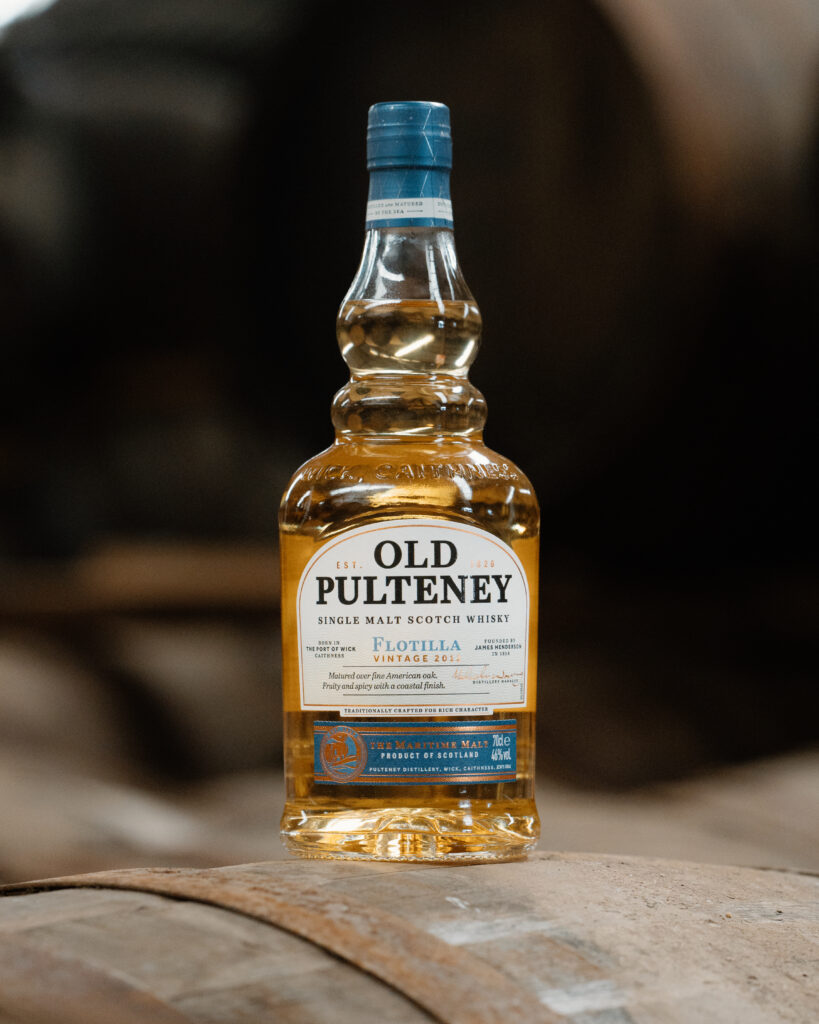
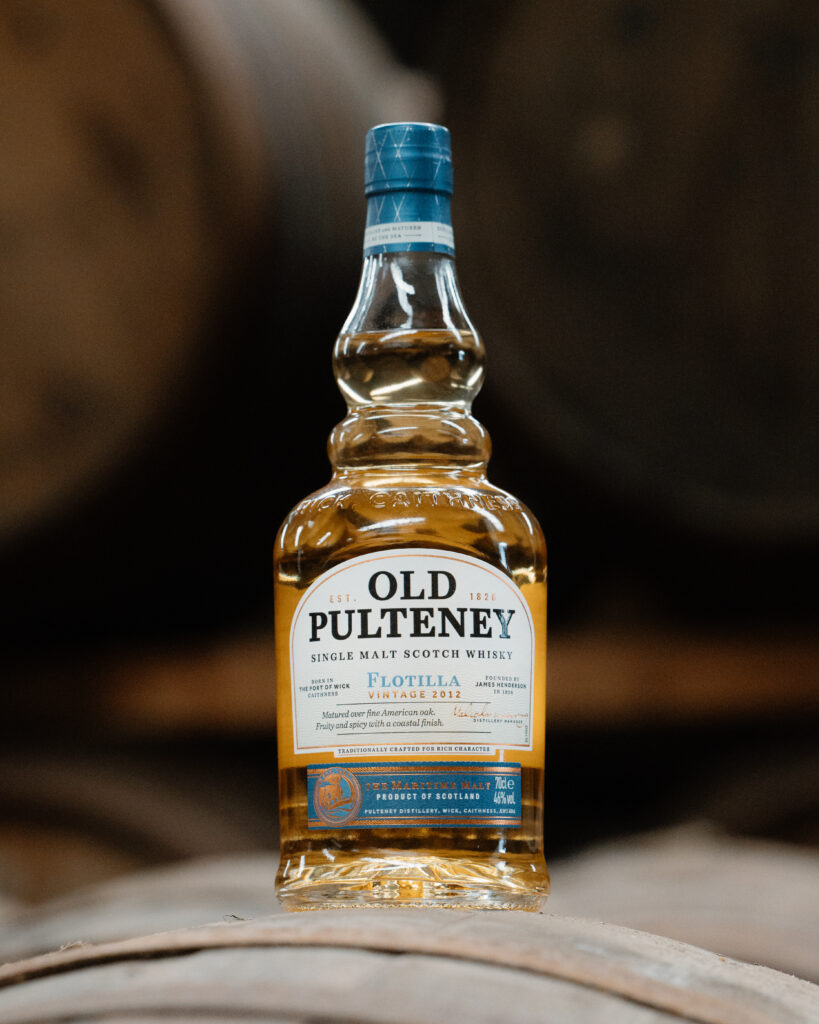
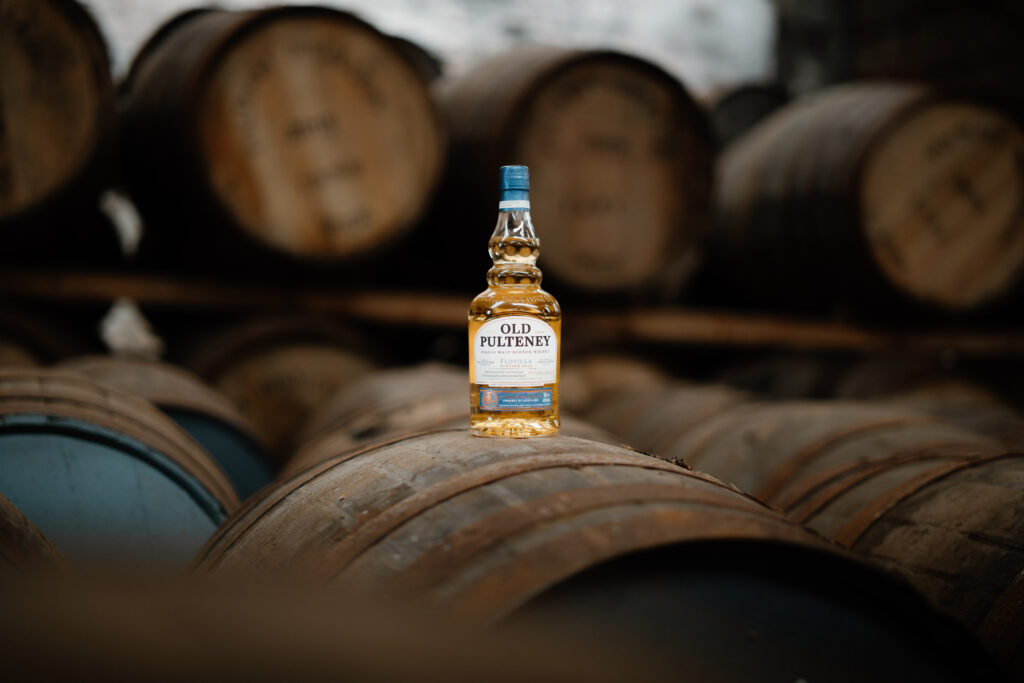
The 2012 Flotilla cuvée, crafted exclusively in ex-bourbon American oak barrels and aged in the coastal cellars of Wick, stands as the most direct expression of this identity. The choice of cask is deliberately simple. The goal is not to add an extra layer of aroma but to let the relationship between the spirit and its environment shine through.
At the other end of the spectrum, the 18-year-old demonstrates how time acts as a catalyst. Its dual aging in ex-American bourbon barrels and ex-Spanish Oloroso sherry barrels adds more depth, without overshadowing the maritime character that the distillery prides itself on.
What is most interesting, however, is the way Old Pulteney blends its local heritage with contemporary concerns. The report highlights, in particular, its participation in a biomass-fueled district heating system, as well as its prudent management of water resources—going so far as to adjust or suspend production when environmental conditions require it. This decision serves as a reminder that a distillery always depends on its ecosystem before it depends on its market.
Details
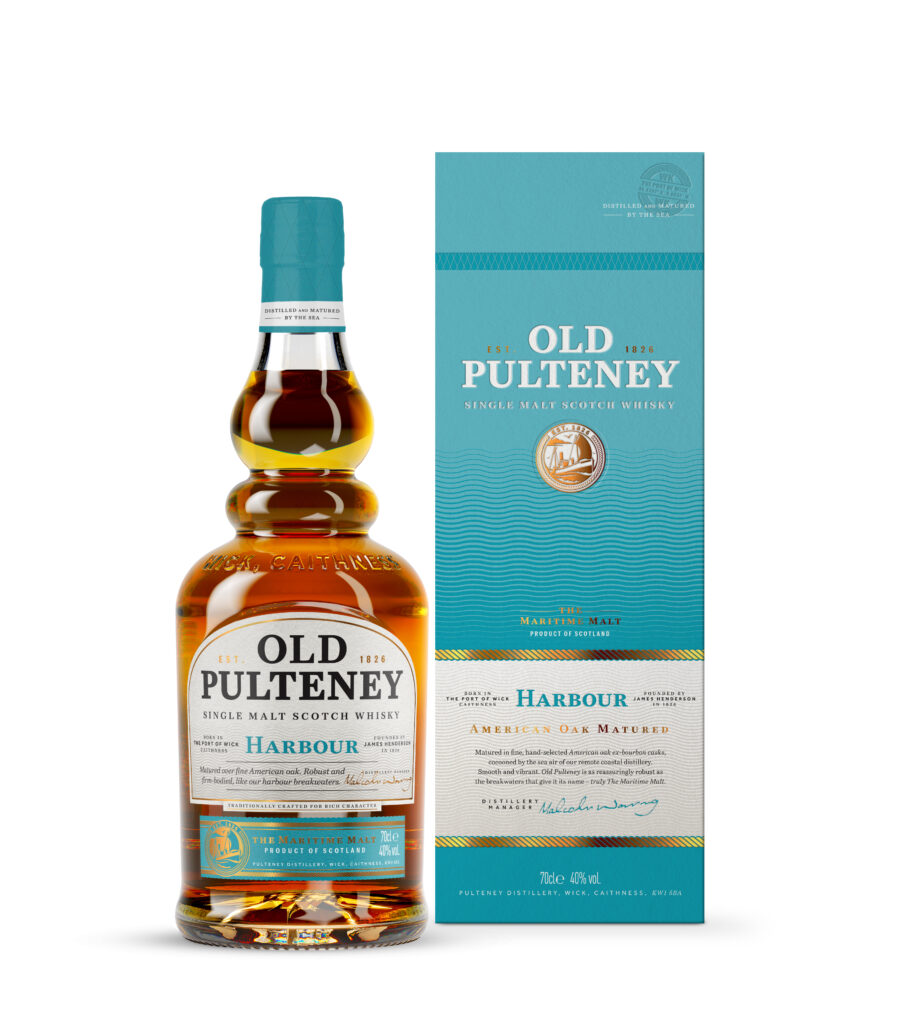
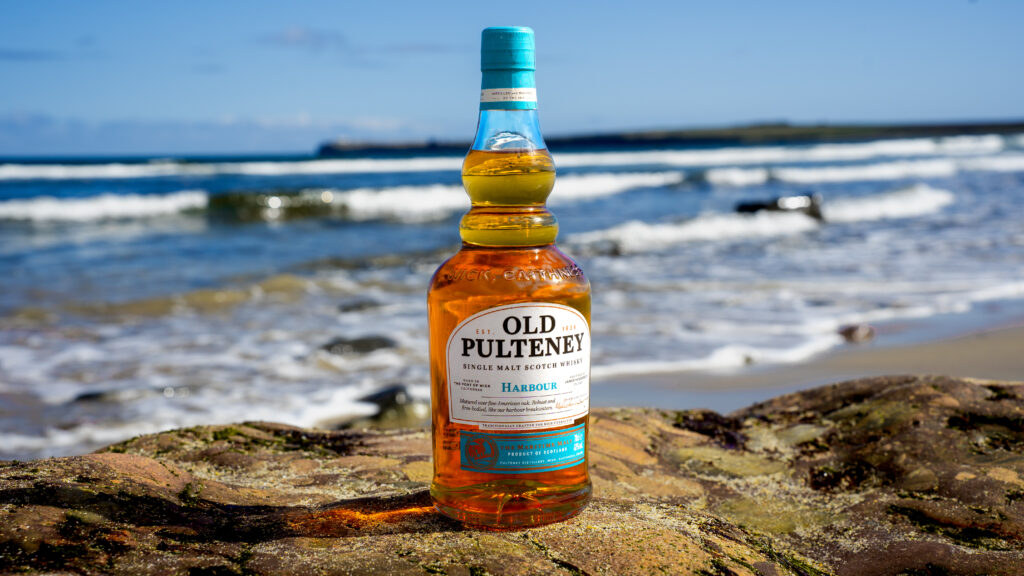
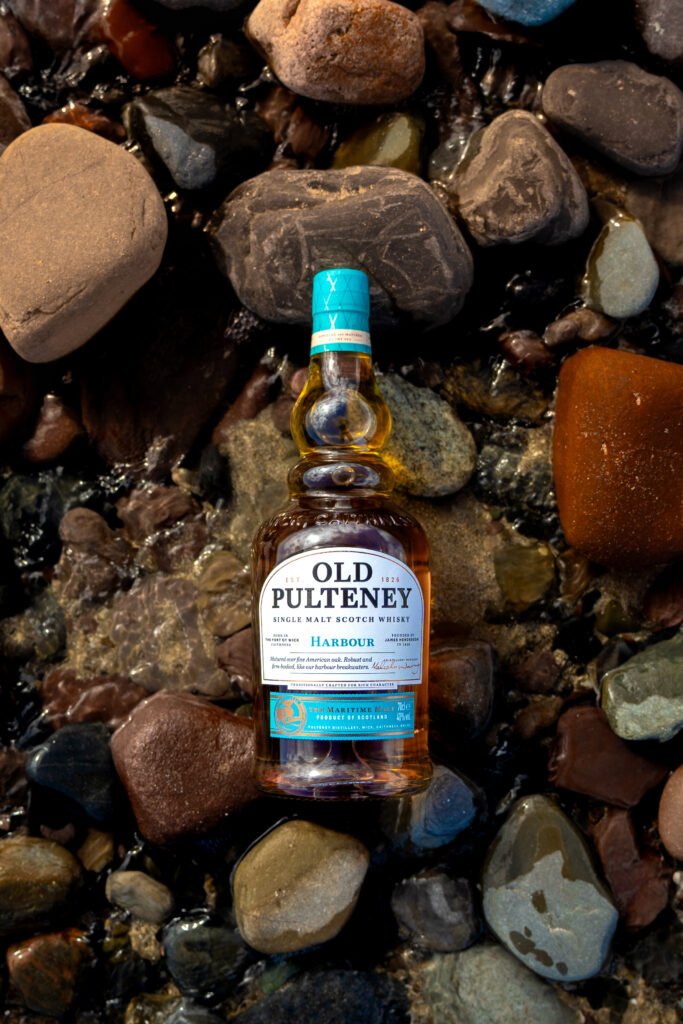
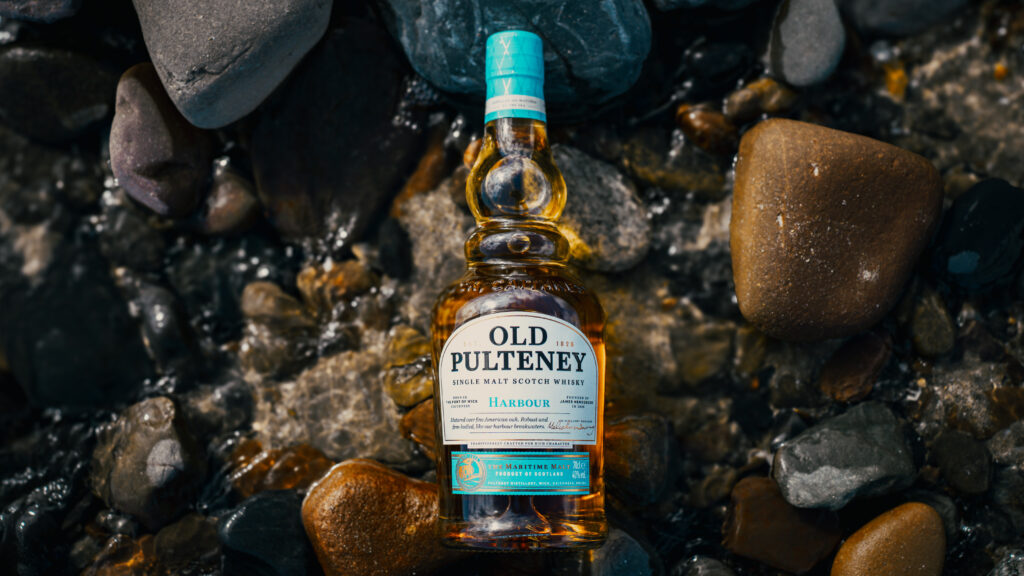
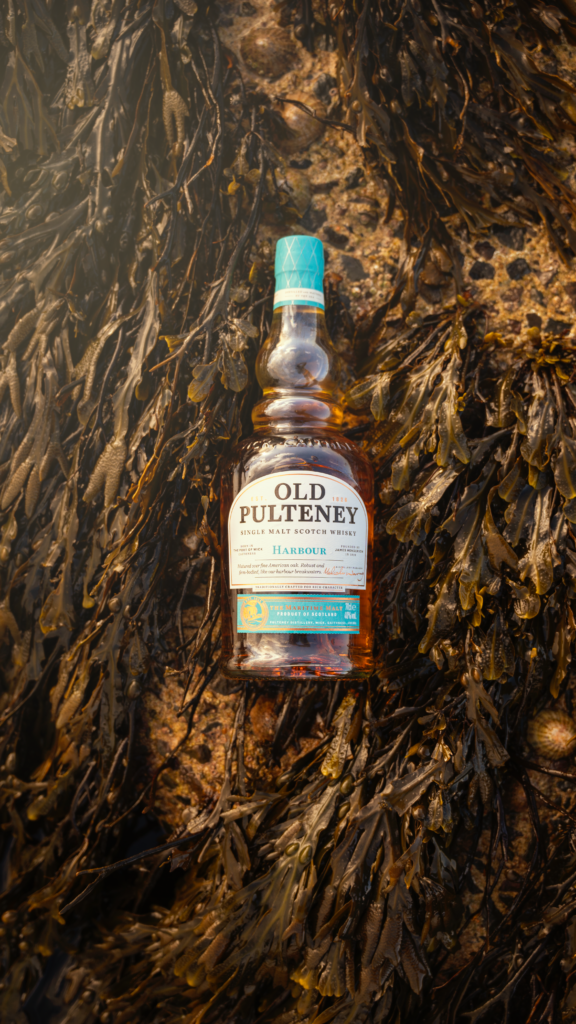
The “Harbour” expression, the new entry-level offering in the range, is a blend of first- and second-fill bourbon casks. The English product sheet even specifies the use of several types of casks—first-fill, refill, re-charred, and second-fill—combined to create an approachable profile while retaining the brand’s signature saltiness.
Ultimately, the real question raised by Old Pulteney goes beyond whiskey. In a world where everything seems to be reproducible, optimized, or standardized, certain products remain tied to a specific landscape. Wick isn’t just a backdrop—it’s an integral part of the final product.
At a time when most industries are seeking to break free from geographical constraints, Old Pulteney reminds us that a location can still be a competitive advantage—not because it’s spectacular, but because it’s impossible to move.

Cette publication est également disponible en :

