
SLOW TOURISM : DISCOVERING THE HACHINOHE REGION IN SLOW MOTION
To truly immerse yourself in Japan, it’s not enough to explore the hustle and bustle of Tokyo’s streets. You also need to get away from the hustle and bustle of the capital and know how to slow down to soak up the Japanese landscape and meet its people. Between sea and countryside, the Hachinohe region offers many opportunities to take your time: cycling or walking along the coast, observing marine or terrestrial wildlife, staying on a farm and discovering local produce, cooking with the locals or sharing their accommodation.
Sustainable mobility: nature and soft mobility
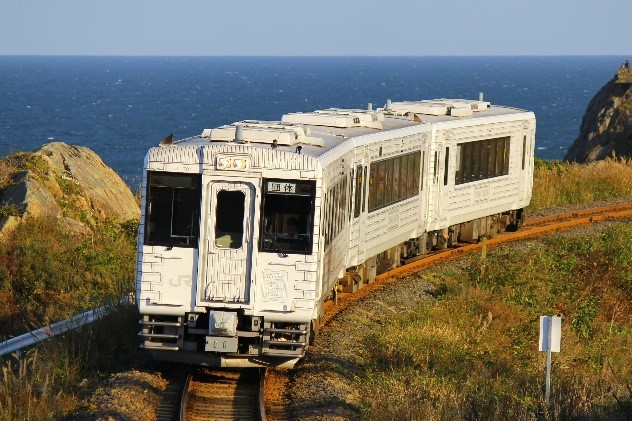
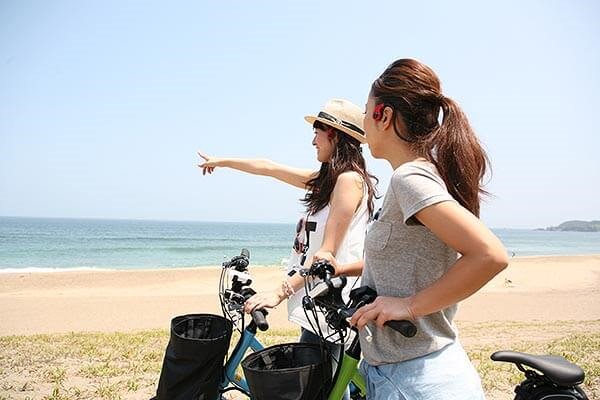
To discover the Hachinohe region, and in particular the Tanesashi coastline with its breathtaking panoramic views of the Pacific, there are numerous soft mobility options available to visitors. Of course, the coast can be explored on foot, with Tanesashi marking the start of the Michinoku Coastal Trail, which runs 1,000 km down to the Pacific Ocean. But cycling enthusiasts can also discover the region by bike, thanks to the many signposted cycle paths. Since last year, a new a new bicycle rental service These bicycles offer electric assistance, as well as a pre-recorded audio navigation system, so that visitors can easily discover the region on their own and at their own pace.
For those who want to avoid the car, a tourist bus also runs the length of the Tanesashi coast, stopping at most of the remarkable sites. Nicknamed Umineko “or “sea cat”, it refers to the black-tailed gulls that populate the coast in abundance. Tickets cost just 100 yen (~ €0.80) and the line operates all year round. The last gentle option is the Tohoku Emotion This tourist train runs along the coast from Hachinohe to Kuji, offering superb ocean views through its large panoramic windows. Onboard, you can enjoy cuisine using only products from Tohoku. The interior design pays homage to the styles and materials of Northern Japan, for a totally immersive experience.
Going green: foraging and agrotourism
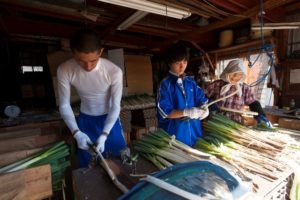
Some communes in the Hachinohe region are renowned for their agriculture. In Gonohe and Nanbu, several farms have decided to open their doors toagrotourism to introduce travelers to the Japanese rural way of life. Various programs have been built around these initiatives to promote sustainable agriculture throughout the region. Trying out life on a farm is a new experience for many Japanese too.
During a stay, visitors can learn to harvest the various local crops and plants: garlic, shiso, rice, persimmon, apple, plum and other fruits. They can also help look after the animals, especially the horses, which are very important in the region, both for their help in the fields and for their meat. The experience continues at meals, which are prepared together according to local recipes using produce harvested by the travellers themselves.
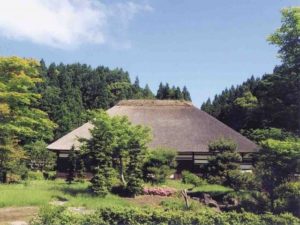
Some Gonohe farms (Furusato no Ie or Otomizugoya) welcome tourists in traditional local houses, some over 100 years old. Their local architecture, called Nanbu Magariya, implies that the horses lived under the same roof as the farmers, partly because of the harsh winters of northern Japan, but also because of the strong connection of the Nanbu clan living in the area with their horses. These houses have now been restored to share their history and heritage with visitors.
Enjoy the landscape and local wildlife
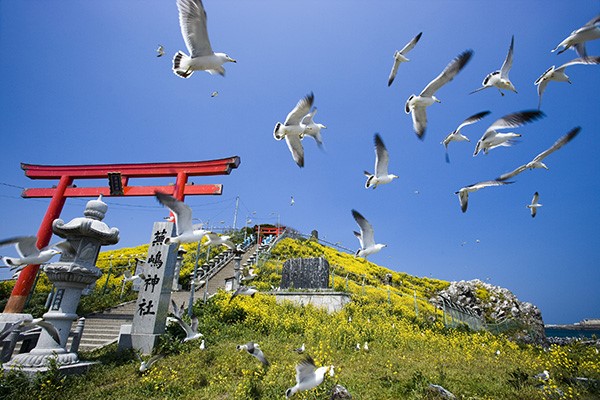
Birdwatching is a popular activity around Hachinohe. The stars of the region are the black-tailed gulls. One of the best ways to see them up close is by sea: the Hayabusa ferry which departs from a small fishing port next to the town of Hachinohe, offers a panoramic cruise in Hachinohe Bay and along the Tanesashi coast. On board, you can admire the small island of Kabushima and its perched temple, a sanctuary for a large colony of the famous gulls. On a clear day, Mount Iwaki, the highest point in Aomori prefecture, or the Hakkoda mountains to the south of Aomori can be seen in the distance.
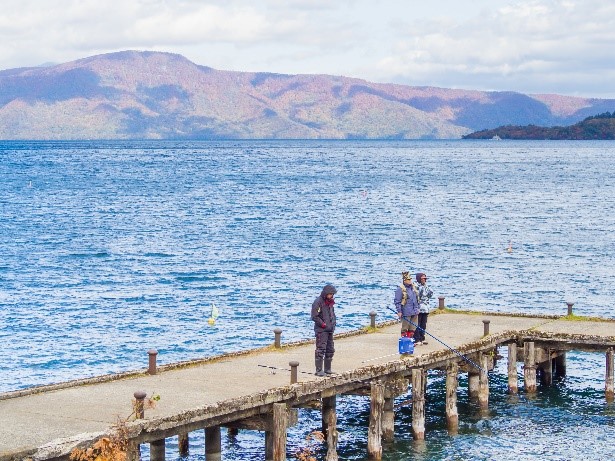
Fishing is another of the region’s prime occupations. Hachinohe is particularly well known for its fish-filled waters and abundant seafood. The coast around Hachinohe is full of small ports that are ideal spots to try and catch mackerel, sea bass, halibut and many other fish. River fishing is also possible at Oirase, a spot renowned for its rainbow trout, char and Atlantic salmon. Not far away, Lake Towada, a vast crater lake surrounded by mountains and forest, offers an idyllic setting to try your hand at silver trout.
Ateliers chez l’habitant: meeting & sharing
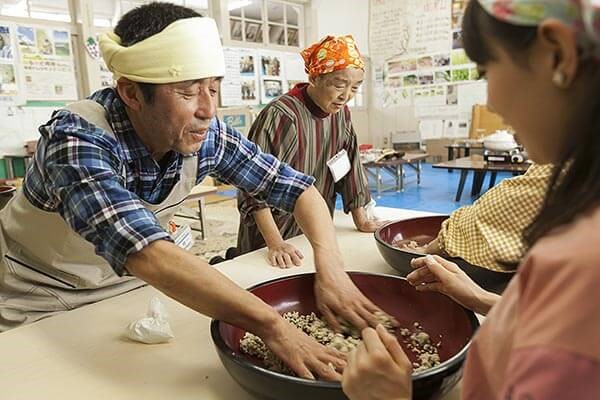
Many initiatives exist in the Hachinohe region to offer a moment of sharing between locals and visitors. Cooking is a particularly authentic way of passing on local history and traditions, and today you can take part in many culinary workshops run by local people.
In the small town of Nango, a 100-year-old elementary school, closed in 2002, has recently reopened as a welcome and exchange center, the Yamo no Gakko. Yamo no Gakko (or “mountain school”), offering a full range of workshops where travellers can get to know the locals, learn more about the wisdom of those who once inhabited the region, as well as try their hand at making soba or buckwheat noodles, charcoal, tofu or miso.
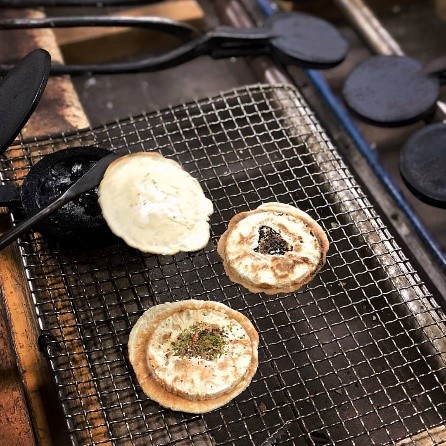
Not far away, near the town of Takko, at the foot of the Okubo forest, lies the Tapukopu village. It consists of five traditional thatched-roof houses, the oldest of which is 350 years old. A stroll through Tapukopu not only gives you a good idea of the rural life of yesteryear, but you can also try your hand at various workshops: inside the houses, visitors can make their own Nanbu Senbei, typical local cookies baked in cast-iron moulds and flavoured with different seeds or spices.
Photo credits: ©Visit Hachinohe
Cette publication est également disponible en :

