
Michelin-starred chef Guy Martin brings contemporary art to Le Grand Véfour with artist Claudine Drai
Le Grand Véfour, a jewel of 18th-century decorative art and a mecca of Parisian gastronomy, opens its doors to contemporary art. Beneath the arcades of the Palais Royal, whose gardens are home to works by contemporary artists Buren and Paul Bury, the Michelin-starred restaurant Le Grand Véfour is an emblematic address in the capital. Chef Guy Martin, who has been at the helm of this prestigious establishment for over 25 years, wanted to give his restaurant, with its sumptuous Second Empire decor that has made its reputation, a renaissance, by inviting contemporary artist Claudine Drai to recreate the 1st floor salon, which until now housed engravings, drawings and watercolours by Cocteau, Colette, Foujita, Buffet and Chagall.
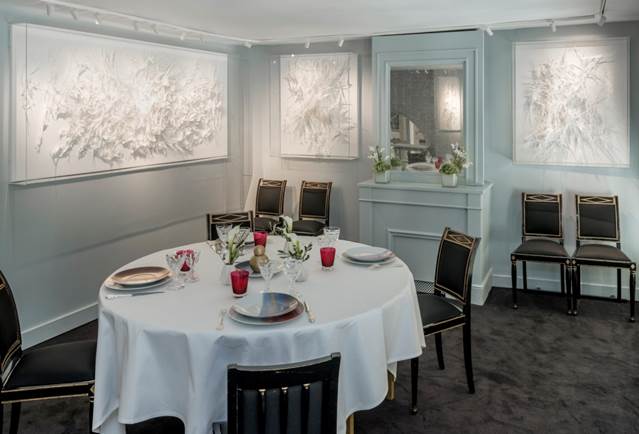
A gastronomic restaurant steeped in history in the heart of Paris
For more than 200 years, Le Grand Véfour has been a mecca for gastronomy and the political, artistic and literary life of Paris. Over the years, it has played host to Napoleon and Josephine, as well as Victor Hugo, Balzac, Colette, Jean Cocteau, Simone de Beauvoir, Jean-Paul Sartre and Jacques Brel… Restored to its Second Empire décor, the restaurant boasts sculpted woodwork and painted canvases mounted under glass. In 1991, chef Guy Martin took over the reins of the restaurant’s kitchens, before becoming its owner ten years later. Since then, he has been a virtuoso at devising inventive and cheerful recipes, earning him some of the most prestigious national and international awards. He was voted Chef of the 21st Century in Japan and ranked among the world’s top seven chefs. The Gault & Millau, Champérard and Pudlowski Guides have all already named him Chef of the Year. Finally, for the second year running, Le Grand Véfour is ranked among the world’s top twenty restaurants, as part of the “EricVerdier-Culture & Goût” award. Deeply moved by Claudine Drai’s world, which overwhelmed him from their first meeting in 2015, Guy Martin decided to entrust the artist with the restaurant’s 1st floor private room. Far more than a commission, and more than a choice from among the artist’s creations, Guy Martin offers total freedom to Claudine Drai, who imagines the space as a perennial work of art.
From Claudine Drai’s perfume to Guy Martin’s flavors
Claudine Drai’s works combine paper, bronze, perfume, words and light. In 1994, she undertook her first research into the emotions and imaginary world of perfume, devoting herself to writing texts and integrating olfaction into her creations, which she continues to do to this day. In her exhibition at the Galerie Jérôme de Noirmont and the Centre Pompidou, she incorporated the sensations of fragrance as materials in her plastic universe, alongside paper, silk, light and words. On this subject, she writes: ” There are emotions deep inside that need to find the material that resembles them, whether visible or invisible, in order to appear. Perfumes, light and space are experienced as emotions that reveal themselves, as a sensitive story alongside the story of the gaze. ”
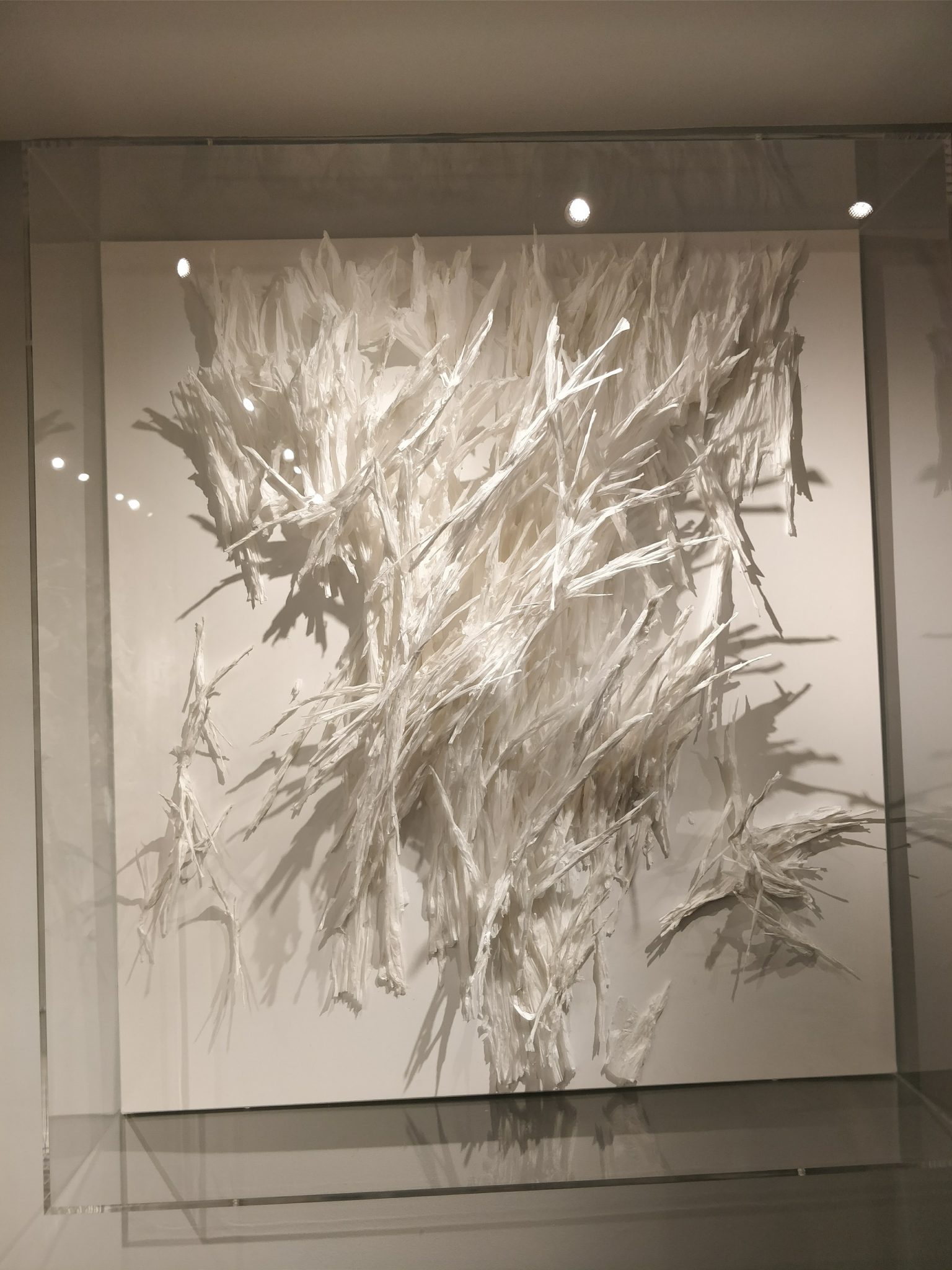 For Claudine, there’s a connection to Guy Martin ‘s soul that has entered Claudine’s world. “Cooking is an ephemeral work of art. It’s a kind of art. It’s a living experience of eating.” Claudine Drai
Guy Martin compares his cooking to contemporary art. Like a noble material in perpetual motion. When they met in 2015, Claudine Drai experienced the abyssal, infinite mirror, the immaterial, spiritual space of Guy Martin’s flavors as a revelation: ” Flavors, textures, colors, lines, shapes, spaces, sensations draw the skin around the body, and the skin is also inside: the body also dreams, emotions liberate time lived from matter, traces of honey and citrus. Shards of stars or glaciers, the milky whiteness tears at the depths of eternalized ephemeral time. The world unravels where it invents itself “writes Claudine Drai.
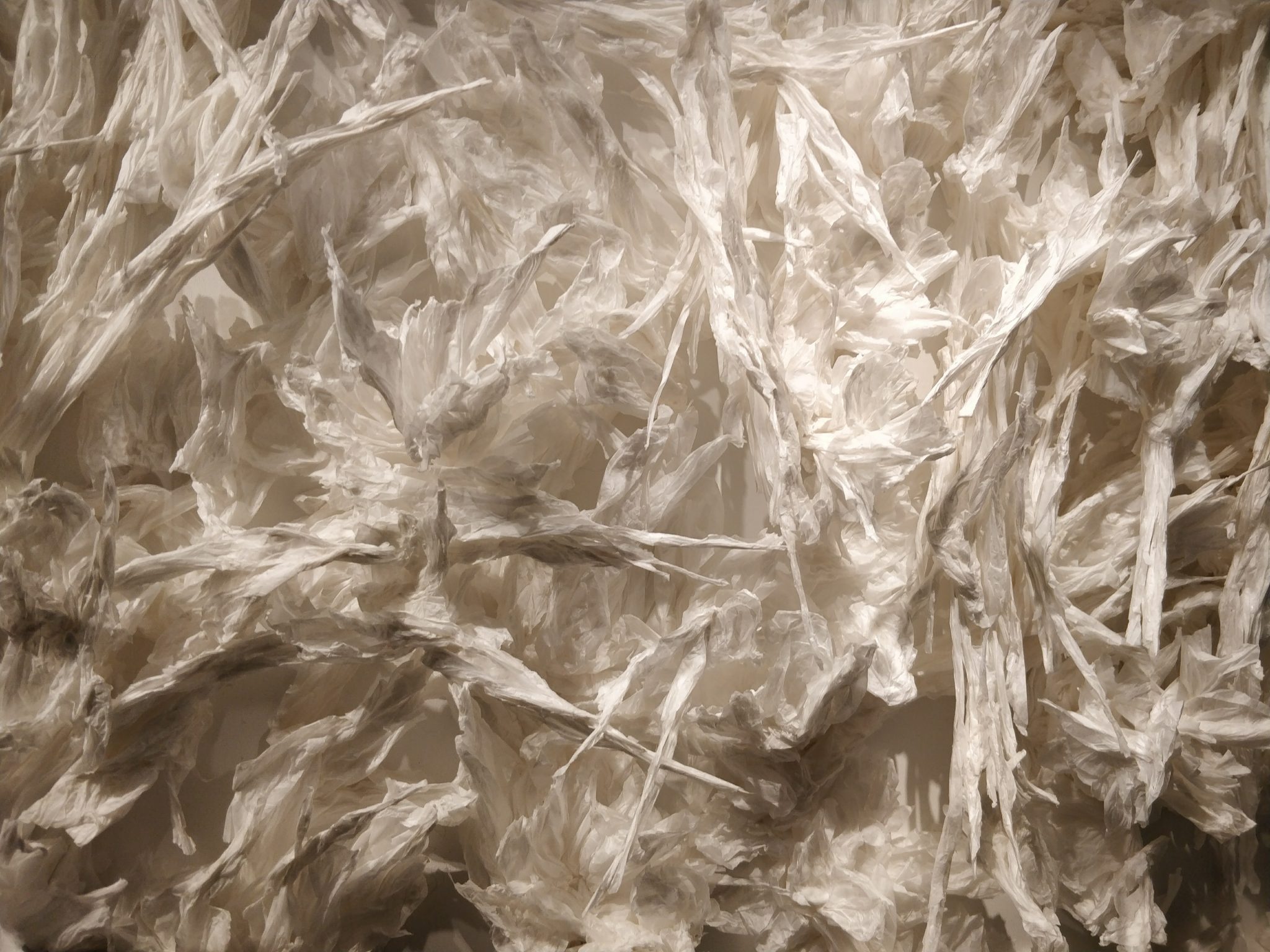 For them, the transition from Claudine Drai’s perfume to Guy Martin’s world of flavors was a natural one.
A walk through the gardens of the Palais Royal is an invitation to contemplation, beauty and harmony. Pushing open the door of Le Grand Véfour, the visitor is under the poetic spell of nature, in thrall to its power and life. Composed of several fragments of silk paper on canvas, in different formats, Claudine Drai’s work is an ode to nature.
” Claudine Drai’s work is both real and unreal. It’s an out-of-place world. Intimately affected by her universe, I never doubted that Claudine Drai would interpret Petit Salon. It was obvious to me, and the end result is beyond words. “says Guy Martin.
Cette publication est également disponible en :

