
Vines have been grown in the region since Roman times. First planted in Saintonge as early as the 3rd century, vineyards then spread to Aunis and Angoumois. Then the town of Cognac and the ports along the Charente acquired great renown in the wine trade, particularly to northern Europe. While the precise origin of Pineau des Charentes is uncertain, it is a fact that Cognac brandy has traditionally been used as a base for mutage in the region’s wines and musts. Pineau des Charentes thus shares its history with Cognac, and is worthy of a legend… In 1589, during a bumper harvest, a Charente winegrower inadvertently poured grape must into a barrel containing Cognac brandy before storing it in the winery… A few years later, he rediscovered this barrel and its marvellous beverage, clear and sunny: Pineau des Charentes was born! Since then, winegrowers have followed the same traditions and know-how to produce this unique, high-quality product. At first, Pineau des Charentes was reserved for special family occasions: it was drunk at all the festivities in the Charentes region, but for a long time its consumption remained confidential and regional. Today, the reputation of France’s first Appellation d’Origine Contrôlée liqueur wine extends far beyond the borders of France.
An Appellation d’Origine since 1935, Pineau des Charentes became an Appellation d’Origine Contrôlée on October 12, 1945. The appellation area extends over the Cognac vineyards, essentially covering Charente-Maritime and Charente (and a few communes in Deux-Sèvres and Dordogne). This appellation area benefits from a unique geographical location and climate: where the land meets the ocean, with mild winters and high rainfall, and sunny summers that favor good grape ripening. Pineau des Charentes is a liqueur wine. It is made by blending grape musts with stale Cognac eau de vie, distilled at least a year earlier. Grape musts and eau de vie de Cognac must come from the same vineyard.
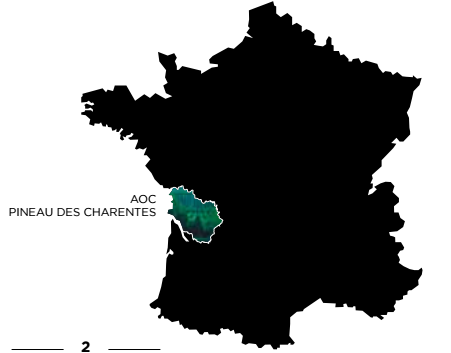
Pineau des Charentes was the first French liqueur wine to obtain its AOC on October 12, 1945. White Pineau is aged for at least 18 months, including 12 months in wood. Pineau rosé or red is aged for at least 12 months, including 8 months in wood. Vieux and Très Vieux Pineau des Charentes benefit from extended aging, of at least 5 and 10 years respectively.
DEVELOPMENT STAGES
VENDANGES
These take place over a month or so, starting at the end of September.
PRESSURAGE
The musts are obtained by pressing the harvest. Whilst the whites are pressed immediately after harvest, the reds are first macerated for several hours to extract the color from the grapes.
MUTAGE
After pressing, the grape musts are mutated with Cognac brandy of at least 60% strength and at least one year old. This mutage phase interrupts the must fermentation cycle. At the end of the production process, Pineau des Charentes will have an alcoholic strength of between 16% and 22%.
AGEING
Aging must take place in oak barrels, giving Pineau des Charentes the tertiary aromas typical of wood ageing.
BOTTLING
This takes place in the region of production.
UN PINEAU, DES PINEAU: THE ART OF VARIETAL TASTING
LE PINEAU DES CHARENTES BLANC
Ugni blanc, Folle blanche, Colombard, Sémillon, Sauvignon, Montils, Meslier Saint-François, Jurançon blanc, Merlot blanc, Merlot noir, Cabernet Sauvignon, Cabernet franc.
AGEING
18 months minimum, including 12 months in oak barrels.
ALCOHOLIC DEGREE
Usually 17 to 18%.
EYE
Straw yellow to old gold with deep reflections.
NOSE
Intense and elegant, with a beautiful complexity, notes of lime blossom and vine blossom mingle with an aromatic palette of fresh fruit (peach, plum, fig), dried fruit (almond, prune, quince paste), with a hint of vanilla and honey.
PALATE
A clean attack followed by a sensation of fullness and generosity that expresses great aromatic richness. A fine, delicate wine.
Pairings
The floral aromas of white Pineau des Charentes go perfectly with sauces, poultry, white meats and fish, and as a dessert with pineapple tart.
LE PINEAU DES CHARENTES BLANC VIEUX ET TRÈS VIEUX
AGEING
5 years minimum in oak barrels for Vieux Pineau blanc, 10 years minimum, still in oak barrels, for Très Vieux Pineau blanc. Ageing in wood gives Pineau an incomparable aromatic power and special organoleptic characteristics: this is rancio.
EYE Old gold, amber to brown highlights.
NOSE AND MOUTH
Honey, vanilla, prunes, cinnamon and hints of walnut.
ACCORDS
Ideal with foie gras or blue-veined cheeses, it is also a fine accompaniment to scallops, mussels, sea bass and other fine fish.
LE PINEAU DES CHARENTES ROSÉ ET ROUGE
GRAPE VARIETIES
Cabernet Sauvignon, Cabernet Franc, Malbec and Merlot noir.
AGEING
12 months, including at least 8 months in oak barrels.
ALCOHOLIC DEGREE
Usually 17 to 18%.
EYE Pale pink to deep red, mahogany, rosé or intense red, coppery with brown highlights.
NOSE
Light and elegant, characterized by notes of freshly picked black fruit, such as raspberry, blackcurrant and cherry. The nose is intense and generous: an explosion of freshly picked black fruits (blackcurrant, blackberry or morello cherry), enhanced by notes of sweet spices, licorice, cinnamon and vanilla. PALATE Supple attack, generous and powerful red fruit notes, excellent aromatic persistence.
Pairings
Rosé or red Pineau goes well with game, fresh goat’s cheese or ewe’s milk cheese, and also enhances the flavors of melon, quetsch tart or sorbet.
LE PINEAU DES CHARENTES ROUGE ET ROSÉ VIEUX ET TRÈS VIEUX
AGEING
5 years minimum in oak barrels for the Vieux mention, 10 years for the Très Vieux Pineau des Charentes.
EYE
Rosé, amber, tiled highlights.
NOSE AND PALATE
Woody notes, prune aromas and chocolate notes. Excellent aromatic persistence.
Pairings
The great finesse of rosé and red Vieux and Très Vieux Pineau des Charentes is perfectly expressed with fruity cheeses (Ossau-Iraty, Gouda…) and chocolate desserts.
APPRECIATE
Enjoy it chilled, between 8 and 10°C, in a tulip-shaped glass that brings out its color and bouquet, and expresses all its aromatic richness.
STORE IT
Once bottled, it no longer evolves. There’s no specific benefit to cellaring it, but no harm either, as long as it’s stored upright. After opening, a bottle of Pineau des Charentes should be stored upright, tightly corked, in the refrigerator.
WHICH PINEAU TO TASTE? As an aperitif
Young Pineau des Charentes.
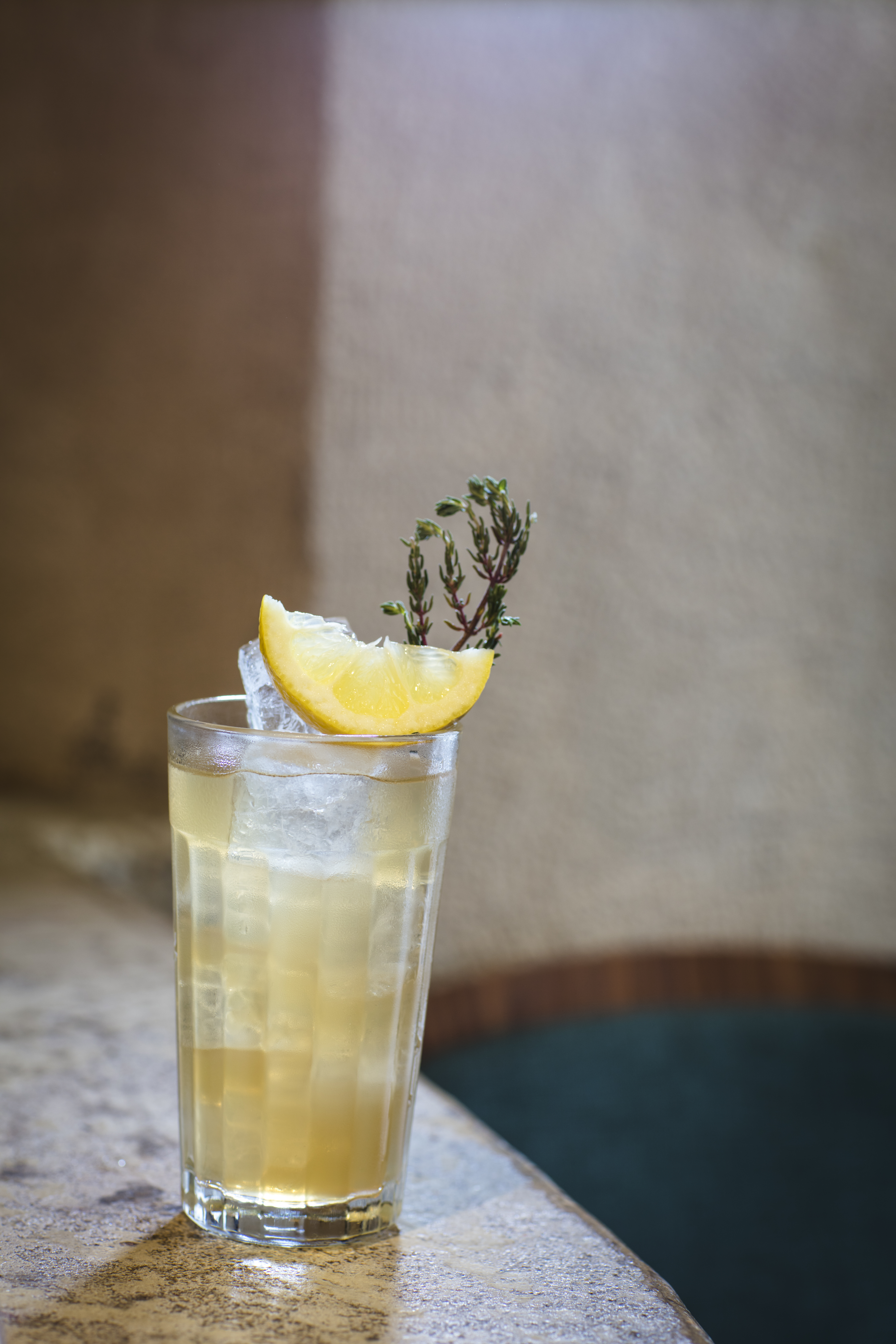
EN COCKTAIL
Pineau des Charentes pairs well with fruit juices, or with tonic and a few mint leaves.
AT THE TABLE
Young white Pineau goes well with melon, while strawberries go well with a young red. Foie gras, goat’s cheese or blue-veined cheese are great accompaniments to a Vieux or Très Vieux Pineau des Charentes Blanc. Chocolate desserts go perfectly with a Vieux or Très Vieux Pineau des Charentes Rosé.
AT THE END OF A MEAL, AS A DIGESTIVE
Pineau Vieux or Très Vieux.
Cette publication est également disponible en :

