
The creation of a modern masterpiece:
The launch of the Rolls-Royce Phantom on January 1, 2003 was much more than the presentation of a new car in the high-luxury segment: it heralded the 21st-century rebirth of one of the world’s most prestigious luxury car brands, and provided the first glimpse of a true masterpiece that quickly established itself as the quintessence of automotive excellence.
Over the preceding five years, designers, engineers and craftsmen within the BMW Group worked in the greatest secrecy to create the brand’s flagship model and the state-of-the-art production unit at the Goodwood site in southern England. The success of this project, the first of its scale in the automotive industry, was all the more remarkable in that this is a brand with a rich history of great successes (albeit with a few periods of uncertainty) for which expectations were commensurate with its reputation.
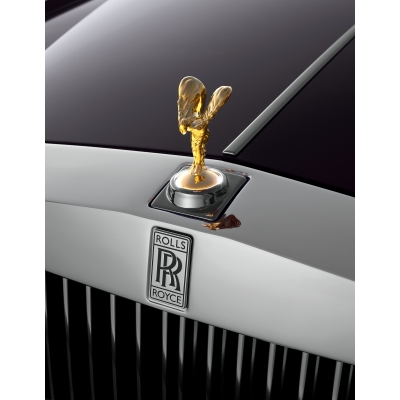
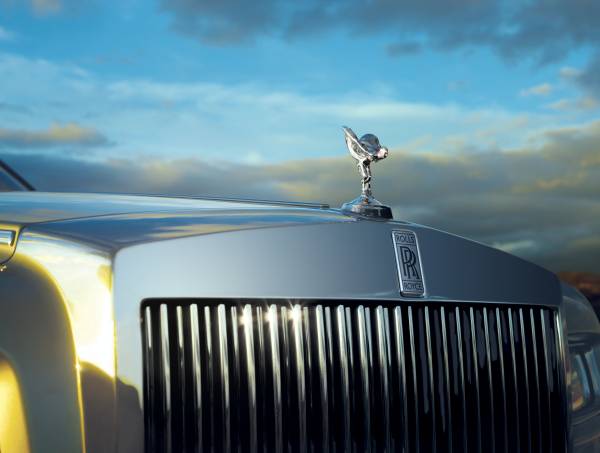
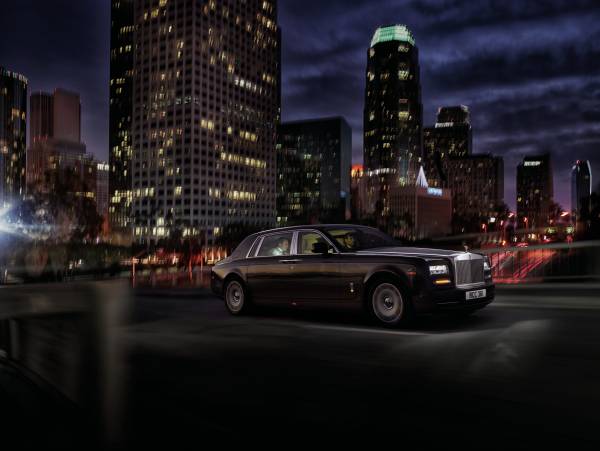
Since its launch, the Rolls-Royce Phantom has proved itself worthy of the “Spirit of Ecstasy” figurine that adorns its hood. From the “Pantheon” grille to the wide rear overhang, its silhouette is in the purest Rolls-Royce tradition. Every line underlines the confidence and elegance of a car like no other.
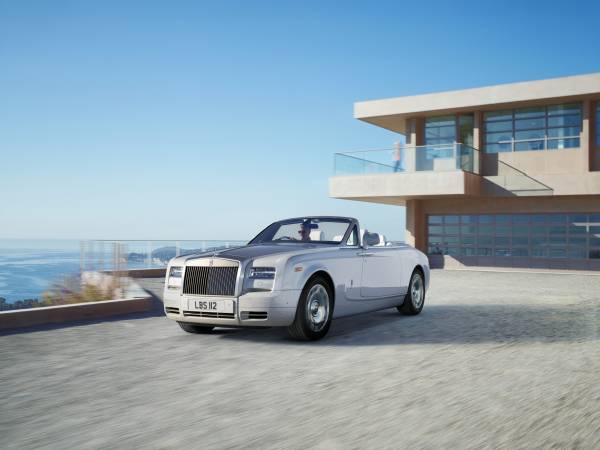 Imposing, the Phantom surprises its drivers with its agility and precision of movement, while its ride was described by the company, at the time of its launch, as “designed to slow down the pace”. The sensation of gliding, which can give the impression of flying on a magic carpet, characteristic of the brand across all generations, and the legendary agility (the famous concept of “waftability”, also characteristic of the brand) thus regain a prominent place in the company’s dictionary.
The body rests on a truly revolutionary lightweight aluminum chassis, powered by a jewel of technology, a V12 direct-injection gasoline engine mated to a six-speed automatic transmission. A stunningly beautiful interior completes this model of engineering excellence, featuring sumptuous hand-stitched leathers, precious wood veneers and meticulous attention to detail that underscore the car’s unique character.
The Phantom went on to be offered in a variety of models, starting with the Phantom Extended Wheelbase in 2005. In 2007, the Phantom Drophead Coupé became the new benchmark for open-air luxury cars, while the Phantom Coupé, Rolls-Royce’s exceptional grand touring model, joined the range in 2008. All these models receive a warm welcome.
A new world: the essence of the Phantom Series II range
Today, Rolls-Royce introduces the Phantom Series II, a range of luxury cars that have been carefully redesigned and now benefit from cutting-edge technologies, enhancements to an already unrivalled powertrain and a gain in connectivity that reflects the fast-moving world we live in.
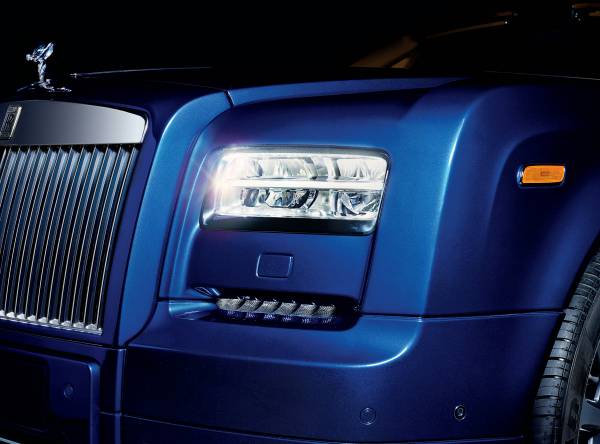
The Phantom’s new front end, modern and striking with its redesigned bumper and rectangular headlamp surrounds, vividly underlines the very nature of the significant changes that lie beneath the surface. The new design allows the integration of new technologies, such as the bend lighting function, which directs the headlight beam in the direction of the vehicle’s travel, providing better illumination of the road when cornering. Adaptive headlamps, meanwhile, automatically adjust the width of the beam projected onto the road according to the vehicle’s speed – all with perfect ease.
The Phantom’s already exceptional powertrain has been further enhanced. The addition of a new 8-speed automatic gearbox and rear differential is the perfect complement to the direct-injection V12 engine, optimizing already exemplary dynamics and contributing to the magic carpet feeling that characterizes Rolls-Royce models. Fuel consumption is down by up to 10% in the combined cycle, and CO2 emissions are down from 388 to 347 g/km (from 388 to 349 g/km for the Phantom Extended Wheelbase model).
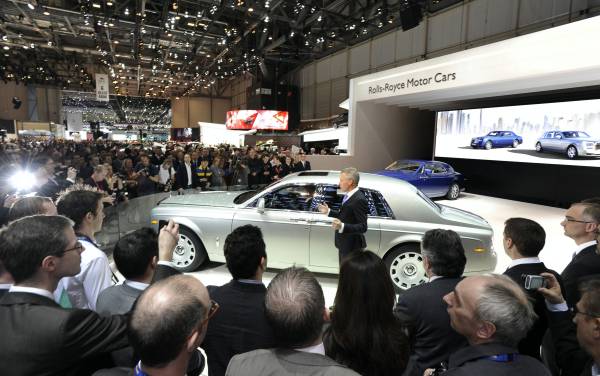
Ease: this is perhaps the term that best characterizes the Phantom driving experience, for both driver and passengers. Optimization of the user interface and the addition of new driver assistance technologies have thus led to the development of a new electronic platform for the Phantom Series II range. The satellite navigation system, for example, has been fully updated with functions including 3D maps reproducing the terrain’s topography, guided tours describing the region’s main sites and points of interest, and personalized itineraries.
Audiovisual content, satellite navigation maps and driver information are displayed on the Phantom’s center console screen, now 8.8 inches wide, framed by eight chrome-plated programmable quick-access keys offering optimized access to key functions. Front, rear and Top View cameras help to improve vehicle handling, particularly when driving in tight urban spaces. For example, when reversing into a parking space, the planned reversing path is automatically displayed on the screen.
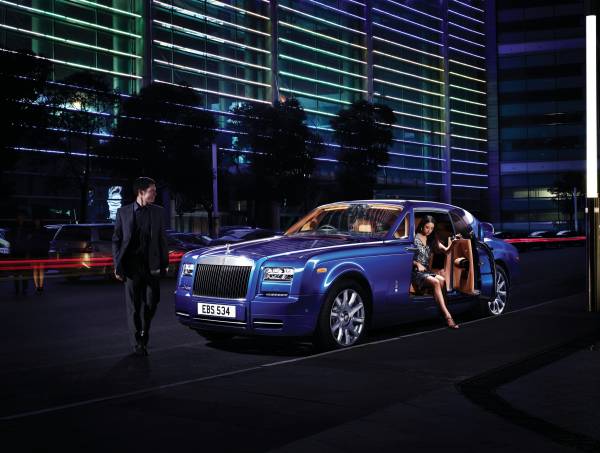
These important changes add to the reputation that the Phantom has built with pride since the rebirth of the Rolls-Royce brand in 2003. The 21st century is a new world. But it’s a world in which the Rolls-Royce Phantom range will continue to occupy a prime position for many years to come.
The design:
“You could compare the Phantom to a well-known piece of classical music. Over time, different interpretations can be made of it, but for the most part, the melody we know well remains the same.” Ian Cameron – Design Director, Rolls-Royce Motor Cars
Like a rousing piece of music, the Rolls-Royce Phantom continues to charm audiences. The familiar melodies – classic design elements found in every generation of models – are revisited by an orchestra of craftsmen working at Rolls-Royce’s Goodwood headquarters, and it’s the attention to detail that delights the senses in every car.
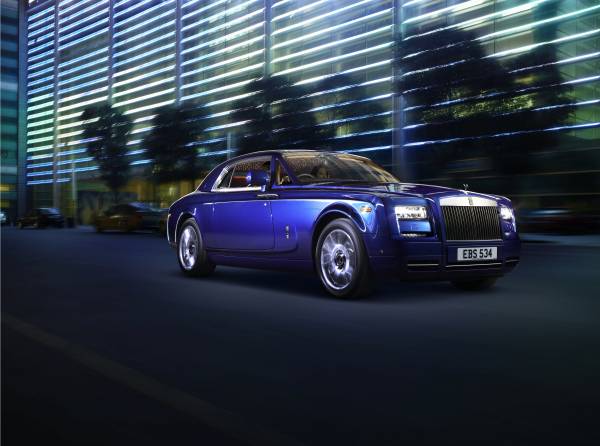
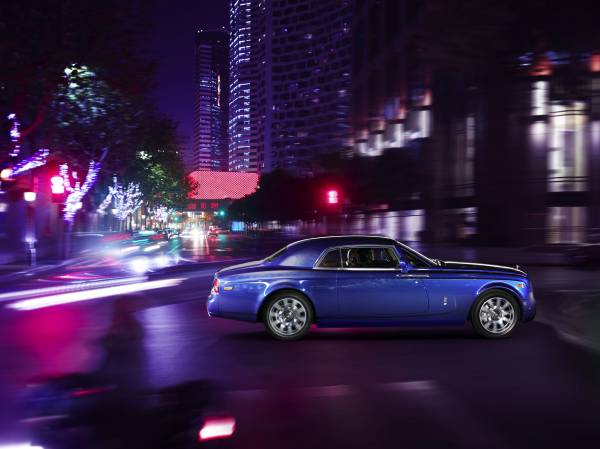
Familiar themes include the famous Spirit of Ecstasy figurine that proudly adorns the Pantheon grille, letting its dress flutter in the wind, and the profile of all Phantom models, which features a long rear overhang and a classic two-to-one wheel-to-ground clearance ratio.
The steering wheel, with its slender insert, is reminiscent of the elegantly multi-functional Phantom II and III, while the domed air intakes and organ-register knob-shaped pistons are another distinctive feature inherited from past masterpieces.
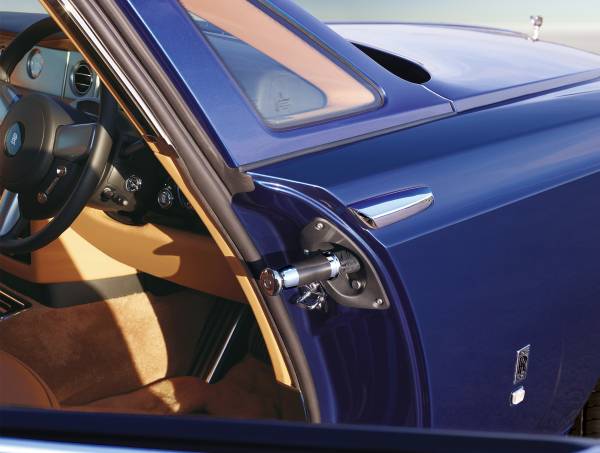
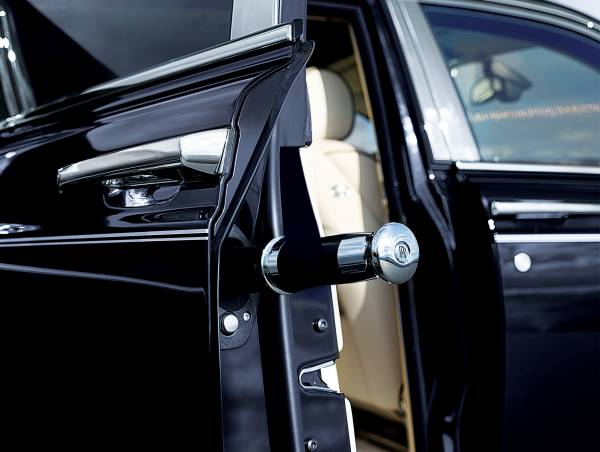
However, the design elements of the 21st century also charm buyers and those for whom the sight of a Rolls-Royce is always a moment of rare happiness. These include the Rolls-Royce monogram with its two interlocking R’s, which adorns the hubcaps while remaining upright at all times, and the doors, which close smoothly and house Teflon-coated umbrellas for maximum comfort when getting out of the car, whatever the weather.
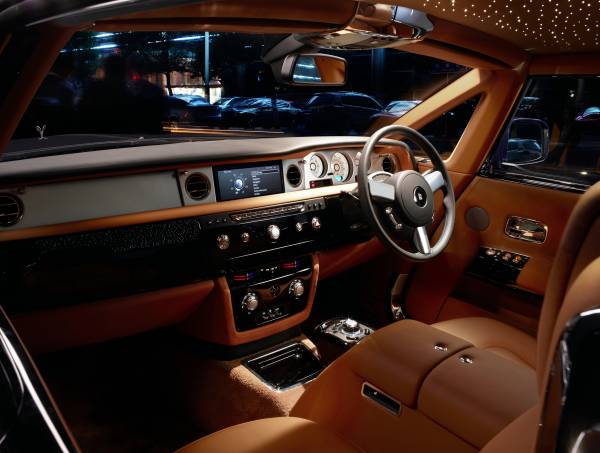
Almost ten years after its launch, the design team responsible for creating this modern masterpiece is still at Rolls-Royce. And as Ian Cameron, Rolls-Royce’s Design Director, intended, the updating of this 21st-century classic had to meet one overriding requirement: to create a harmonious, timeless design to house cutting-edge technological innovations.
The modernized front end of Phantom Series II models is perhaps the change that best reflects what’s going on under the hood. Behind the new rectangular headlamp surrounds and a redesigned bumper are fully LED headlamp units. The stylistic signature of these headlamps, however, remains the simple central line, both racy and expressive, permanently lit, a feature reminiscent of the Rolls-Royce luminous design at the rear. With the elegance of simplicity, and a concern for balanced proportions, this line is integrated into the center of the Phantom’s four-compartment light clusters.
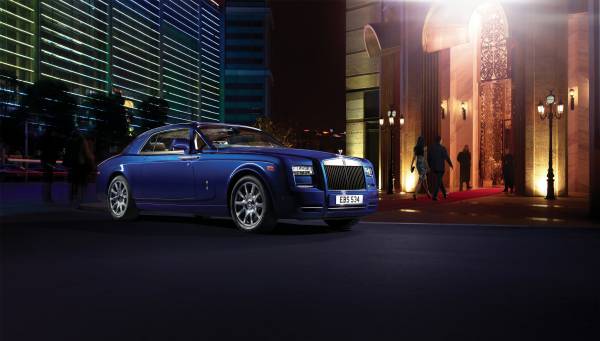
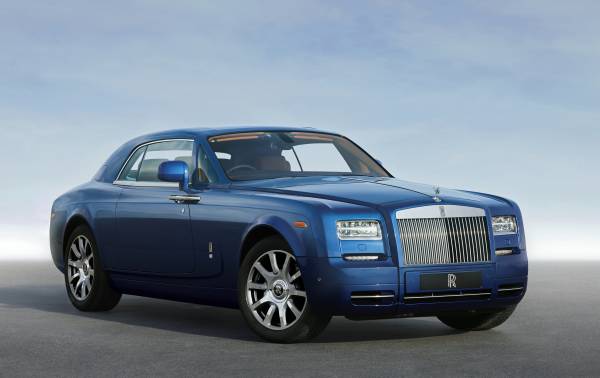
Phantom Coupé and Drophead Coupé models now feature a one-piece grille surround, with softer, more contemporary lines that curve to form sculpted wings, while Phantom Sedan boasts a new rear bumper incorporating a bright stainless steel insert.
Phantom Sedan and Extended Wheelbase models feature a new R-R monogram on the front fender with turn signal, while three new wheel options are offered, including a lacquered, semi-matt and gloss version, adding to the 21-inch wheel range, the most varied ever offered as standard for a production car.
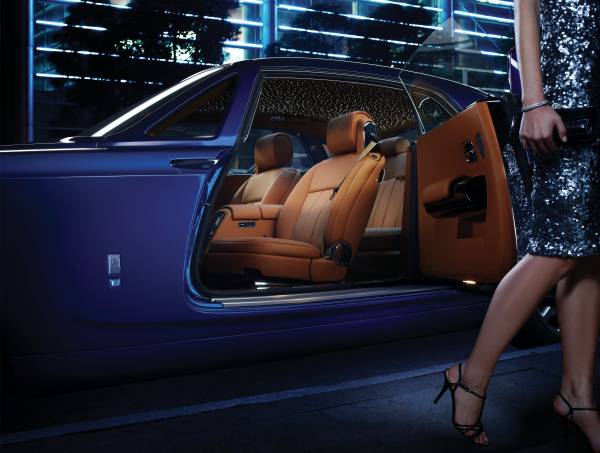
“The result is undeniably modern, while still incorporating traditional design elements. The silhouette is familiar, but seen in a new light.” – Ian Cameron
The interior:
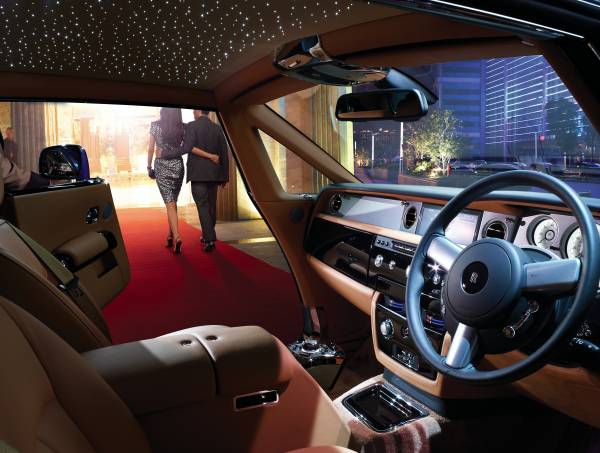
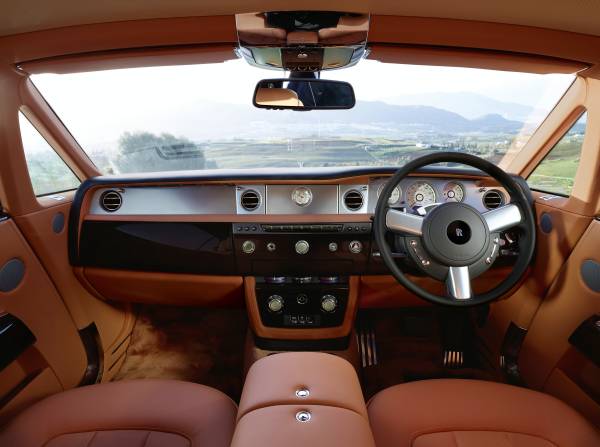
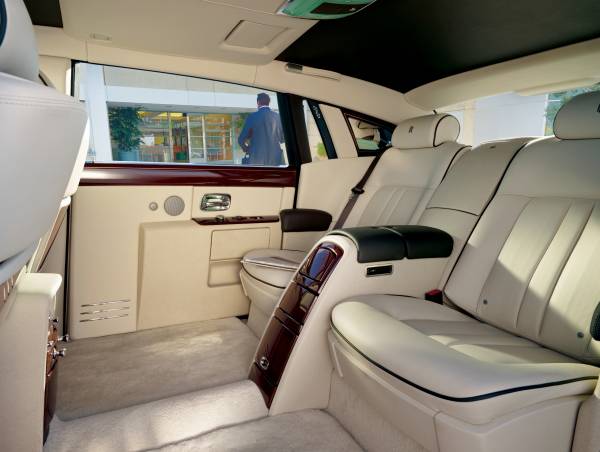
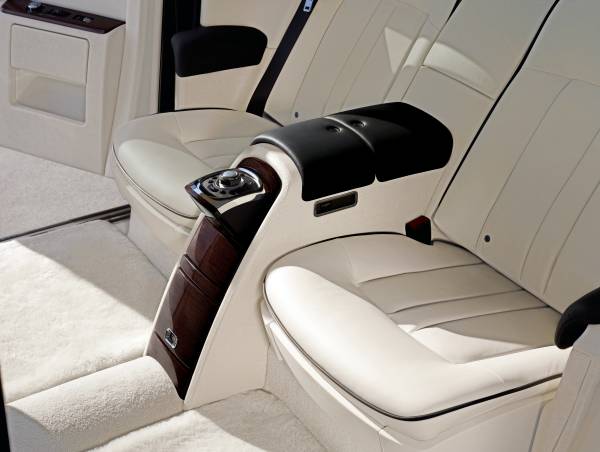
The simplicity of the design and the use of exceptional materials contribute to the timelessness of Phantom models, where fingers touch only wood, chrome or leather surfaces, and feet lose themselves in soft lambswool carpets.
The best place to experience Phantom luxury is in the rear seat of the Phantom Sedan, where passengers are raised by 18 mm to enjoy a prime view of the curves from the hood to the Spirit of Ecstasy. The reduction in the number of grooves on the upholstery, from five to three at both front and rear, lends an extra modern touch to the sumptuous natural grained leather, and the seats of the Drophead Coupé and Coupé models are also equipped with grooves in their Phantom Series II version.
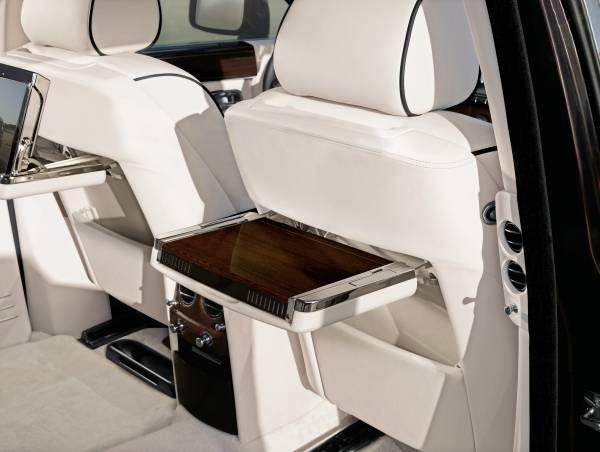
Designed to offer an oasis of calm, Rolls-Royce interiors are the ideal environment for relaxing and unwinding in pleasant silence. But they can also be transformed into a genuine leisure space. The Phantom Sedan’s “cinema” configuration now includes two additional screens for rear passengers. Inserted in the heart of shelves with precious wood veneer, these screens are connected to a multimedia player integrated into a compartment at the rear of the center console. The presence of AV sockets, a 6-disc DVD player housed in the lower glovebox and a USB port on the center console means that occupants can watch different media wherever they are seated, in the rear as well as the front.
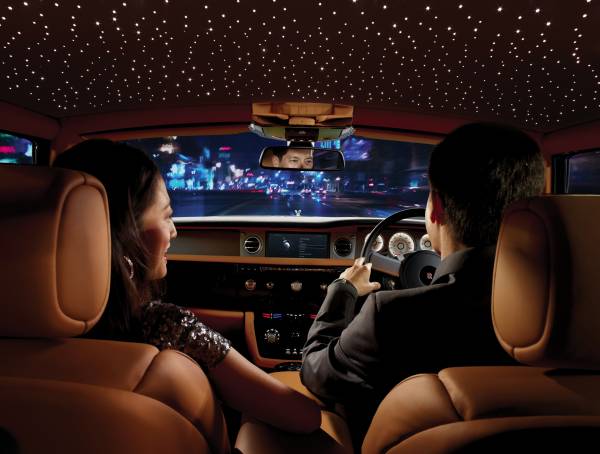
The Harman LOGIC7TM surround sound system turns every journey into an authentic cinematic experience. Seven speakers specially designed for the car and its interior are installed, including subwoofers placed in the resonance boxes created by the space created by the Phantom’s double floor. A nine-channel amplifier of exceptional sonic clarity allows the distance between instruments, sound effects and dialogue to be varied with great precision, giving the impression of being able to choose one’s place in a concert hall.
At the touch of a button, the Phantom’s elegant analog clock swivels to reveal the new central control screen. The screen’s width has been increased from 6.5 to 8.8 inches, and its resolution has been enhanced to deliver a sharper image. A “split menu” provides more intuitive access to the various functions.
A new, elegant chrome-plated control system, discreetly concealed within the center console and rear seat center armrest when in standby mode, offers key functions such as menu navigation, a telephone and a navigation system providing easy access to infotainment functions.
Eight quick-access keys are now available below the display. Programmable, they provide access to the desired information by simply pressing their chrome surface, offering quick access to satellite map navigation, passengers’ favorite TV channels, pre-recorded radio stations or the Phantom’s phone menu.
All Phantom range models now benefit from optimized interfaces for improved interaction with wireless technologies. Finding a restaurant, reserving a table, getting to your destination – all this is now possible thanks to the enhanced functionality and interconnectivity of the new Phantom range satellite navigation system. Other enhancements to navigation functions include a guided tour feature: on the way to Rolls-Royce’s historic headquarters near the English city of Chichester, the driver can choose to listen to a 45-minute guided tour to discover the area in Roman times.
On the Phantom Series II range, the phone holder has been replaced by a standard holder for smartphones, enabling direct connection to the car’s system. The central niche now also houses a USB port, an Aux-in plug and a 12V socket. In addition, music files can be copied directly to the vehicle’s hard drive via an additional USB port in the glove compartment.
Lighting in a new light – new LED technology
Rolls-Royce, with its long tradition of technological innovation, is now the first carmaker to offer LED headlamps as standard equipment on all Phantom models. In addition to using less energy from the engine, they emit a characteristic white light that provides better visibility on the road, helping to prevent driver fatigue during long journeys on poorly lit roads.
The new light clusters feature four compartments framed by a bevelled insert in polished stainless steel. An elegant, permanently lit LED light bar runs through the center of these blocks, forming the Phantom’s position light unit. The LEDs in the two upper compartments form the low beam, while the two lower compartments house the high beam. Rectangular turn signal lights stand out below these light blocks.
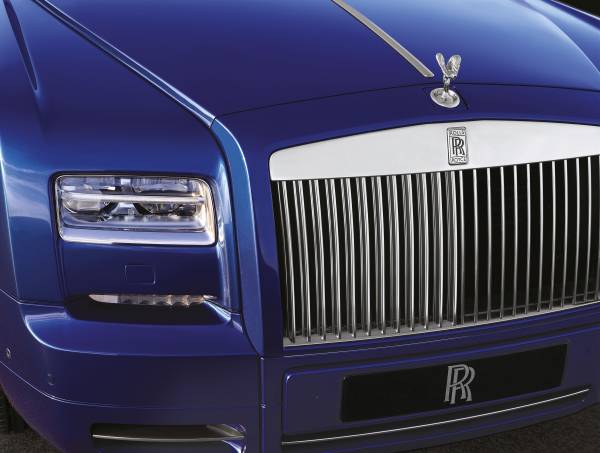
The use of LEDs makes it possible to implement technologies that give greater control over the direction of the light beam, including a cornering light function and adaptive headlamps. The former uses electronically-controlled reflectors located in the upper and lower compartments, providing better illumination of the road when cornering. The illuminated portion of the road is increased thanks to reflectors that swivel by up to 15° in direct response to the steering wheel angle.
Adaptive headlamps automatically change the beam width according to driving conditions. At speeds below 50 km/h, the light beam is wider, providing a better view of cyclists and pedestrians. Between 50 and 120 km/h, the light cone is projected further out and at an angle to illuminate any hazards on the driver’s side, while above 120 km/h, on freeways, the light beam is projected further out and with greater intensity. In adverse weather conditions, if the wipers have been on for more than two minutes, the low-beam headlamps switch on automatically.
Another improvement is the ability to activate the adaptive lighting function at will. This is done directly by means of a control knob, instead of a switch under the hood. This new feature makes it possible to change settings according to the side of the road on which the car is to be driven, for example when the driver is travelling from England to France. The result is greater comfort for those who have to cross the border.
Camera system:
Owning and driving a Phantom model should be a breeze, as should maneuvering around town in tight spaces. A new camera system is now standard on all Phantom Series II models. The system comprises five cameras in various locations: two on the curves of the front bumper, two under each exterior mirror, and one on the trunk door.
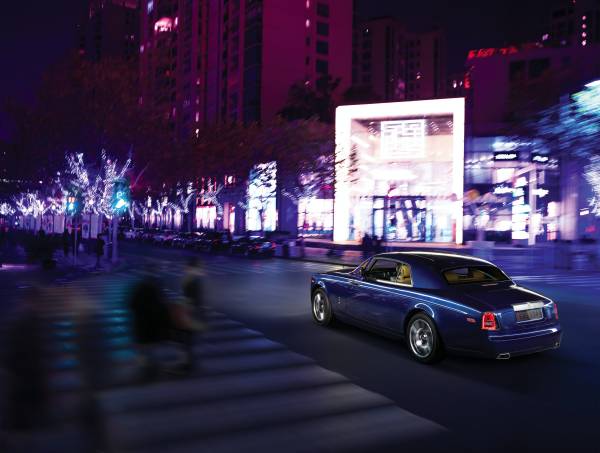
All these cameras provide panoramic vision at blind junctions, spot obstacles on the ground and predict the reverse trajectory during parking maneuvers. The latter is automatically displayed on the central control screen when reverse gear is engaged; the system calculates and displays the optimum trajectory, pointing out any obstacles, thus avoiding scratches and wheel impacts and preserving the value of the customer’s investment and the beauty of the car.
In addition, all Phantom models feature six buttons on either side of the center console’s function keys: the right-most button allows the driver to immediately display the view from the two cameras at the front of the car, thus detecting the presence of an object.
Engineering excellence:
The Phantom still houses the exclusive aluminum chassis designed by the Rolls-Royce engineering team that is responsible for its outstanding driving performance. Strong, light and as rigid as a Formula 1 car, this chassis is also offered in a reinforced “dynamic pack” version with support bars, available for the first time as an option for the Phantom Sedan.
Embodying Rolls-Royce’s characteristic blend of cutting-edge technology and meticulous craftsmanship, each chassis is entirely hand-welded, then finished with great care, as if it were a precision instrument. Every morning, qualified welders carry out a 300 mm test to check the impact of the atmosphere on the material they are working with. Over 200 cast aluminum caissons are extrusion-welded together to form the chassis, whose precision is controlled to the nearest millimeter by laser. Finally, the entire structure is placed on the automotive industry’s largest computer-controlled machining platform, where it undergoes extremely precise machining in every problem area.
Extreme precision is probably the best word to describe the way Phantom drivers turn. However, this high level of maneuverability is not at the expense of Rolls-Royce’s famous magic carpet ride. In fact, thanks to its double insulated floor, the chassis only enhances cabin comfort by eliminating noise, vibrations and jolts.
The induced safety improvements are complemented by other devices controlled by the Phantom’s ISIS (Intelligent Safety and Information System). This intelligent safety and information system gathers data from sensors located all around the car, and in the event of a collision, performs up to 4,000 calculations per second to determine the severity of the impact and trigger safety devices where appropriate. These include intelligent braking and driver assistance systems such as Dynamic Stability Control, Dynamic Traction Control and seatbelt pretensioners.
The Phantom’s safety features are rounded off by a modification to the front door storage bins. Slightly smaller than before, they now feature a shock-absorbing device to distribute forces more evenly in the event of a side impact at an angle of 30°.
Powertrain and suspension:
“The question for my team was how to further improve a powertrain that was already close to perfection in terms of both dynamic performance and outstanding driveability” – Helmut Riedl, Engineering Team Manager.
Under the hood of every Phantom model is a hand-assembled, naturally-aspirated 6.75-liter V12 engine. A true jewel of technology, this direct-injection gasoline engine develops 720 Nm of torque, with more than 540 Nm available from 1,000 rpm. Torque remains very stable between 1,000 and 3,000 rpm, a major advantage for easy city driving. The new Phantom accelerates from 0 to 100 km/h in 5.9 seconds and, where permitted by local legislation, reaches an electronically limited top speed of 240 km/h (250 km/h for the Coupé version).
The Phantom’s power reserve indicator is one of those Rolls-Royce features that’s sure to please. On the road, it simply shows the driver the impressive reserve of power at his disposal, whether he needs it or not. More generally, however, the performance of Phantom models is best measured by their natural ease of movement.
For the Phantom Series II range, Rolls-Royce has enhanced the powertrain by introducing a new 8-speed ZF automatic gearbox on all models, whose electronic control system channels the extraordinary power developed by the V12 engine. The higher ratio of the new rear differential compensates for the lower ratios of some of the gears in the new 8-speed gearbox, providing greater agility and glide at the same speed, while reducing fuel consumption.
The result: unparalleled peace of mind. Gear changes are made more smoothly thanks to better adaptation of the ratios to the vehicle’s speed, and efficiency is enhanced, from energy production to wheel drive. Fuel consumption is reduced by up to 10% in the combined cycle, and CO2 emissions are down to 347 g/km from 385 g/km.
This optimized powertrain is complemented by a double-wishbone front suspension whose optimized settings help minimize vibrations felt at the steering wheel, while at the rear, a full multi-link suspension with anti-dive and anti-dive geometry provides greater stability under hard acceleration or braking.
Spring-loaded shock absorbers and anti-roll bars maintain occupant comfort without compromising the vehicle’s agility, while self-regulating pneumatic struts compensate for the car’s different loads, constantly adapting as the fuel weight decreases. As a result, the driver can tackle bends with extreme precision, while passengers enjoy unrivalled comfort.
Craftsmanship:
60 pairs of hands and more than 450 hours are needed to design, assemble and finish each Rolls-Royce vehicle. Rolls-Royce’s Goodwood headquarters employs almost 1,000 people, including craftsmen in the wood and leather workshops, who build the world’s finest cars. Only the paint shop is equipped with two robots, ensuring an irreproachable quality of finish. Only the noblest materials are used, and they are meticulously prepared to reveal their full beauty.
 Painting:
Rolls-Royce continues the great tradition inherited from the coachbuilders of several centuries ago: each Phantom is covered with at least five coats of paint and clear coating, seven coats if the car is two-tone. Between each coat, the paint shop technicians sandblast the sheet metal by hand. Once the final coating has been applied, the body is carefully hand-polished for five hours to achieve the same lustrous finish as a concert piano. The Bespoke program allows you to choose any conceivable body color. This feature was originally offered via the Phantom iPad application, enabling the user to photograph the color of a favorite tie or lipstick and apply it to a virtual car. In true Rolls-Royce tradition, it’s also possible to apply one or two body lines – always by hand. Each of these lines, five meters long, requires 3 hours’ work with top-quality brushes made of squirrel and ox hair.
 Wood:
Wood:
Wooden components draw on the skills of cabinet-makers and marine carpenters, and combine them with modern technology. Depending on specifications, each Phantom vehicle can contain up to 43 wooden elements, each of which can be designed from 28 pieces of wood. These are separated by thin sheets of aluminum, giving them greater strength and resistance to splintering on impact. These multiple layers are then compressed together, shaped and hand-finished before craftsmen cut and apply the corresponding veneers, which are then meticulously treated, lacquered, hand-polished and enhanced. The veneer elements on a single car all come from the same trunk, and are carefully selected and arranged so that the grain details appear to be reflected throughout the interior.
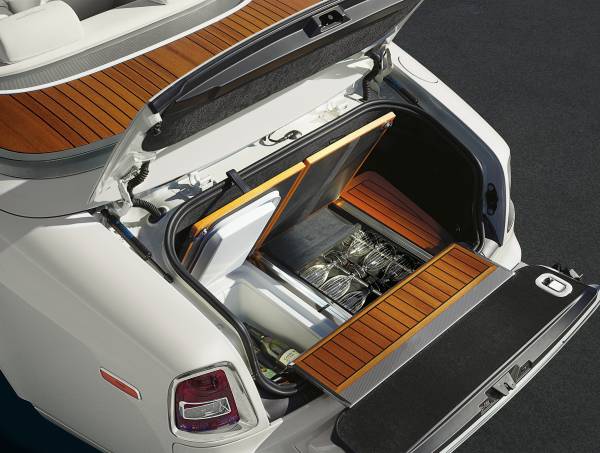
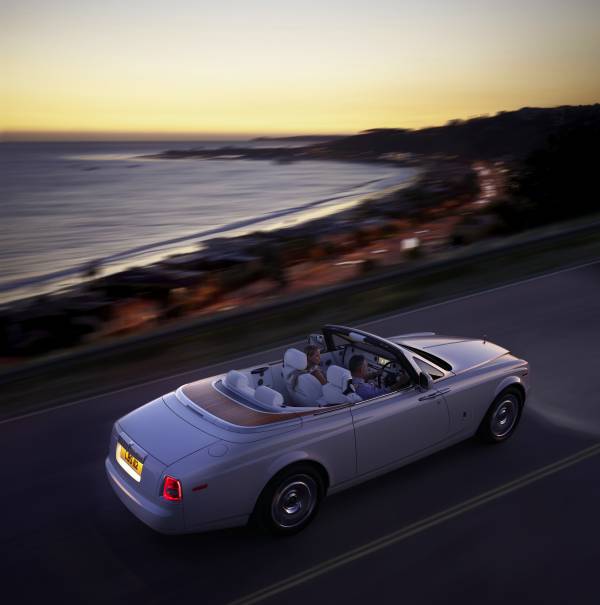
Inspired by the J-Class yachts of the 1930s, the Phantom Drophead Coupé’s splendid teak cladding is a perfect example of the alliance between Rolls-Royce traditions and the best of engineering. Teak is chosen for its robustness and resistance to moisture and decay. However, cutting-edge techniques have been developed to maintain a rough, natural finish, the aim being to achieve a finish that resembles the appearance of freshly felled wood. Each trim, which consists of over 30 pieces of wood, is engraved with precisely traced grooves and protected by a specially formulated blend of oils. As with all the woods and veneers used by Rolls-Royce, a team of specialists carefully selects the suppliers.
 The leather:
Rolls-Royce uses only the finest, hand-selected skins from Alpine bulls. Living in a healthy environment and roaming vast pastures free of thorn bushes and barbed wire, these beasts produce leather that is far less marked than elsewhere. The leather is then pigment-dyed to obtain a deep, uniform color and preserve the suppleness, natural feel, softness and characteristic grain of Rolls-Royce leathers. Each of the 450 pieces of leather that make up the interior of a Phantom is laser-cut before being hand-sewn by the craftsmen working in the company’s workshop.
The Bespoke range:
Rolls-Royce customers expect their cars to be as personal as their owners’ fingerprints. The Bespoke service is designed to meet this high standard. More than eight out of every ten Rolls-Royce Phantom models delivered to customers around the world in 2011 included elements of personalization, whether it was a customized body color, veneer, inserts or beltline, or a design completely revisited to suit the customer’s tastes.
In 2011, for example, Rolls-Royce designed a car for a Middle Eastern customer, the headrests of which featured a splendid and extremely complex hawk motif, requiring 40 hours of work, 11 different thread shades and over 21,000 stitches.
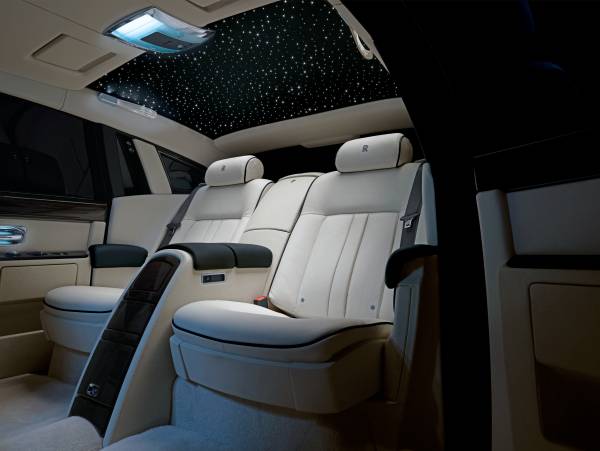
Perhaps one of the most requested and enchanting Rolls-Royce Bespoke features is the “starlight” headliner, whose leather incorporates more than 1,600 tiny pieces of fiber optics, hand-inlaid to create a veritable starry sky inside the Rolls-Royce Phantom Sedan or Phantom Coupé models.
Phantom Series II highlights:
The Phantom’s modern, striking new front end underlines the very nature of the significant changes that lie beneath the surface:
The new front end features LED light clusters framed by a rectangle, in-line blinker lights and a redesigned bumper. Rolls-Royce is the first carmaker to offer LED headlamps as standard, with cornering light function and adaptive headlamps for improved road illumination
The Phantom Drophead Coupé and Phantom Coupé feature a new one-piece grille surround, available as an option in tinted versions
Three new models complete the
wheel range Redesigned, the new rear bumper of the Sedan version features a bright stainless steel insert. New upholstery with fewer grooves is offered across the range.
The new range is exceptionally easy to drive thanks to its enhanced assistance systems, connectivity and infotainment systems:
Fully updated satellite navigation system with 3D map display and terrain topography, satellite views, guided tours, descriptions of the region’s main sites and points of interest, and customized itineraries
Larger central control screen, surrounded by eight chrome-plated buttons for easy access to key functions
New chrome-plated control knob, surrounded by quick-access buttons for key functions such as menu, navigation and telephone.
On-board camera system for enhanced driving assistance, including Top View camera, display of the planned reversing path and simultaneous display of images taken by the two front cameras
Smartphone holder, 12V socket and USB port on center console; hard drive with large music storage capacity, accessible via additional USB port in glove compartment
The new range reaches new heights of engineering and performance perfection:
New 8-speed automatic gearbox with rear differential complements the unrivalled direct-injection V12 engine, enhancing performance and adding a new level of serenity to the Phantom driving experience.
10% reduction in fuel consumption; CO2 emissions down from 385 to 347 g/km
Improvements to the Phantom’s lightweight aluminum chassis with support bars as part of the “dynamic package” first offered as an option for the Phantom Sedan, including stiffer suspension, visible exhaust, wider steering wheel rim, alternative gearbox adjustment and more linear braking characteristics.
Smaller front door pockets to accommodate a shock absorber that distributes forces more evenly in the event of a side impact at an angle of 30°.
A heritage: the story of a brand of excellence
Rolls-Royce Motor Cars was founded in 1904 following the historic meeting of aristocrat Charles Stewart Rolls and Henry Royce in Manchester, England. These two men of extraordinary personalities came from very different backgrounds, but shared many traits, including great visionary ability and a passion for engineering.
Henry Royce had built up a solid reputation in electrical engineering and the business world before turning his attention to car manufacturing in the early 20th century. Charles Rolls, on the other hand, was a pioneer in the then-new fields of motoring and aviation. He shared Henry Royce’s practical approach to nuts, bolts and moving parts.
Before the two men met, Henry Royce had launched a car production plant in Manchester. Meanwhile, Charles Rolls was selling cars from a dealership in central London. Both were equally dissatisfied with the quality of the imported models that provided them with a livelihood.
When they met in Manchester – a meeting of two men and two great minds – Charles Rolls was given exclusive rights to sell Royce’s British-built engineering jewels in his London showroom. Rolls-Royce was born.
Sir Henry Royce was a stickler for perfection. He was not prepared to compromise on any phase of the production process. His aim was to create the finest cars, and if that meant buying expensive materials, employing a large workforce and spending a lot of time on quality control, that was no problem.
The result lives up to this visionary claim: the Rolls-Royce models of the early 20th century are marvels of engineering, unrivalled in terms of quality, and the attention paid to the smallest detail underlines their reputation for excellence. Sir Henry Royce chose as his professional motto this famous sentence, and he expected the same from his employees:
Strive for perfection in everything you do.
More than 60 years after his death, these words became the starting point for the development of a new Rolls-Royce model for the 21st century. Unveiled in 2003, five years after development began, the Rolls-Royce Phantom quickly proved itself worthy of Sir Henry Royce’s words, setting the benchmark for automotive luxury.
Over the following decade, and under the watchful eye of the BMW Group, Rolls-Royce reaffirmed its status as a manufacturer embodying the quintessence of automotive luxury. The company now relies on a network of some one hundred dealers worldwide, and is recording significant sales growth. Enjoying good profitability, it is expanding into new markets, notably South America. The Phantom range now comprises four models, and in 2009 a new range – the Ghost – was launched to unanimous acclaim.
The Rolls-Royce name still rhymes with excellence, an excellence based on the cardinal principles laid down by Sir Henry Royce and put into practice through his collaboration with Charles Rolls. Hand-built, the Phantom and Ghost revive the spirit of their illustrious predecessors by combining it with revolutionary technologies and visionary engineering techniques, while continuing to rely on hand-crafted craftsmanship and attention to the smallest detail, delivering on the promise each vehicle makes to its purchaser.
Today, visitors to the new Rolls-Royce Motor Cars headquarters in Goodwood, West Sussex, are still greeted by the famous words of Sir Henry Royce: Strive for perfection in everything you do. A second maxim also catches the eye: Take the best of what exists and make it even better; if it doesn’t exist, create it.
The Rolls-Royce Phantom is hailed as the best car in the luxury segment. However, in a world of rapidly evolving technology, Rolls-Royce cannot stand still. Today, the company is applying its creator’s second maxim to the Phantom range and its four models: Phantom Sedan, Phantom Extended Wheelbase, Phantom Drophead Coupé and Phantom Coupé.
The Phantom Series II features significant modifications and technological innovations on all models. Rolls-Royce can continue to proudly offer the very best cars in the world: exclusive luxury made even better.
Cette publication est également disponible en :

