
Anne-Marie Chabbert is a passionate oenologist who aims to change the way Champagne is consumed, making it a wine in its own right that can be enjoyed throughout a meal. With her “Champagnes à Table” concept, she brings together a great chef and fine Champagnes.
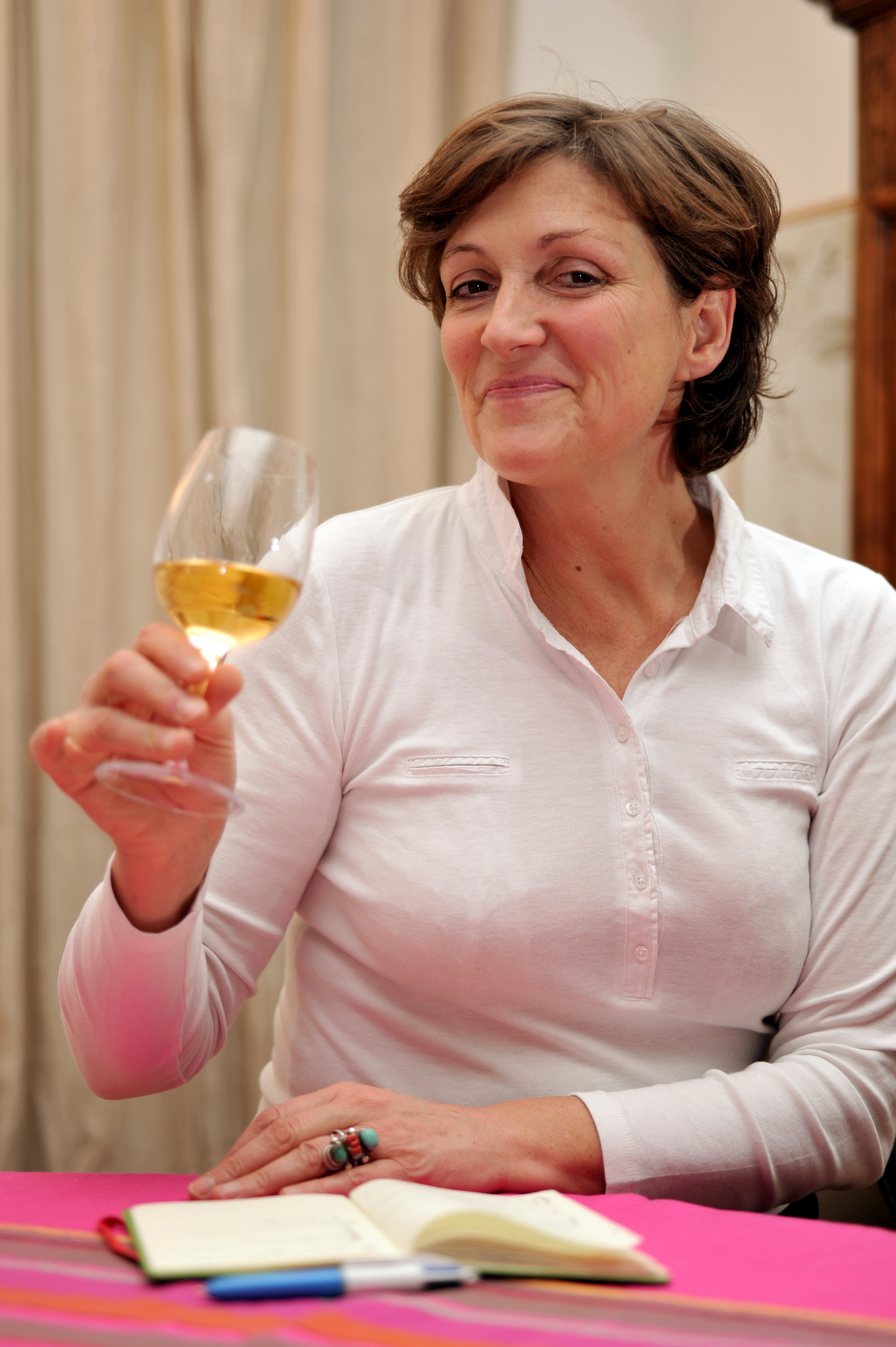
Anne-Marie Chabbert
How does “Champagnes à table” work?
“Champagnes à table” is a vision based on a methodology consisting of a quality charter, specifications and a tasting-selection phase. My vision is that the word Champagne covers a multitude of wine expressions, part of which (2/3) is intended for parties, cocktails, weddings, birthdays, all forms of celebration and entertainment… Price comes into play here, and the Champenois are finding it increasingly difficult to compete both internally and externally (with other Champagnes and other sparkling wines from around the world). The work around “Champagnes à Table” focuses on the remaining third. I classify these Champagnes as WINES in their own right. During my tastings, I assign a rating or one, two or three stars to the cuvée I’ve selected, according to what I call its “Gastronomic Value”, i.e. its suitability for the Table. I validate this classification once I’ve found the dish, or more precisely, the chef’s “little sensory music” capable of setting this selected cuvée to music with a very specific dish. This is exactly what Champagnes à Table is all about. It can’t be improvised.
What’s your background?
I’ve had an atypical career: I’ve done a lot of different things to the “normal” curriculum, first as an oenologist, then as a specialist journalist, then as a Communications Officer for the Champagne interprofession… Finally, I set up my own business, Stratégie des Sens, the first communications agency dedicated to Champagne. Most of the time, you start with the general and go on to the specific, but I did the opposite. At the same time, it gives me a great deal of freedom to decompartmentalize and understand the world of Champagne in all its complex and diverse human, technical and economic dimensions.
How do you go about choosing the Champagnes that go on the table?
The “Champagnes à Table” quality charter finds its legitimacy on the one hand with the founding aspects of the Cuvées (history of the Brand, origin of the grapes, discourse and technical involvement of the “owner” or cellar master, ease and facility in projecting oneself… important elements (which I am often the only one to note) that guide me in carrying out my classification. Then, the second reading grid is made up of a sensory approach to the Champagne “candidate” for “Champagnes à Table”. I establish the wine’s “sensory profile” based on one or two tasting sessions. This profile is submitted not only to the winemaker (cellar master, winemaker), but also to those in charge of communications, marketing, etc., if necessary, so that the descriptors associated with the cuvée are homogeneous, sensible and understood by all in a common language. Once this work has been carried out, I meet with a chef and his sommelier, and together we form a highly complementary trio where each brings his or her own experience, feelings and ideas to build a joint project for an original menu for the cuvées I propose…
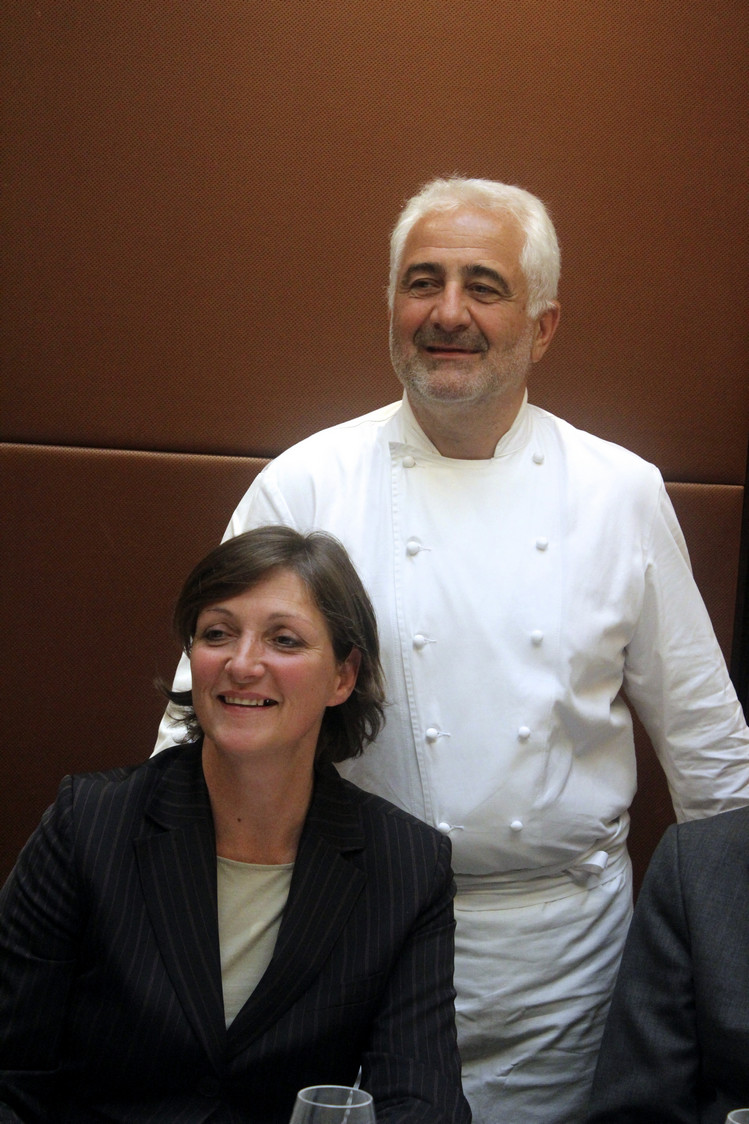
Anne-Marie Chabbert with Guy Savoy
Which chefs and champagne producers have made the biggest impression on you in recent years?
On the wine side, certain brands such as Drappier, Fleury, Moutard, Franck Bonville, Eric Rodez, Agrapart, Dehours, Bourdaire, Alain Bailly, Benoit Lahaye, Françoise Bedel, Ployez-Jacquemart, Mailly… whose cuvées not only honor “Champagnes à Table”, but have made it practically a strategic objective, a territory positioning. A number of sommeliers are paying close attention to this issue. Chefs: I’ve had four great favourites since I started this job: Alain Passard, Sébastien Bras, Olivier Roellinger and, more recently, Amandine Chaignot. It’s not just a question of the man and his cuisine, it’s a much more complex alchemy between people (on both sides), my own experience and sensations, an atmosphere in which I feel at ease and which tells me that Champagnes will be respected for what they are: wines and not bubble-wine labels with all the emotional charge that the word “champagne” carries.
How do you feel about the policy of stigmatizing wine?
It’s a sentiment that’s beyond me, as it speaks to a subject other than oenology and the art of (good) living. Questions relating to human psychology and the problems of alcohol abuse must remain within the circle of specialists in these matters, and tackle the real problem, which is to treat those who abuse alcohol. Driving a car can cause damage to oneself and to others… and yet no government is stopping manufacturers from producing cars!
What are your upcoming projects?
My dream is to train sommeliers & chefs so that the “Champagnes à Table” concept becomes a daily business reality on the finest tables in France and around the world.
www.annemariechabbert.com
Cette publication est également disponible en :

