
With the second phase of Atelier Wempe au:thentic, Patrick Sieroslawski returns to one of the first gestures he learned at the workbench. A ring that nobody normally sees, since it serves to connect other elements, comes to the fore.
The jump ring is learned at the start of a goldsmith’s apprenticeship. A gold wire is bent, wound around a mandrel, then cut: the circle appears at that instant, before being soldered and disappearing into an assembly. Patrick Sieroslawski, head of design for Wempe’s own brand, began his apprenticeship 22 years ago. He says he found this intermediate step appealing enough to make it a jewel in its own right.
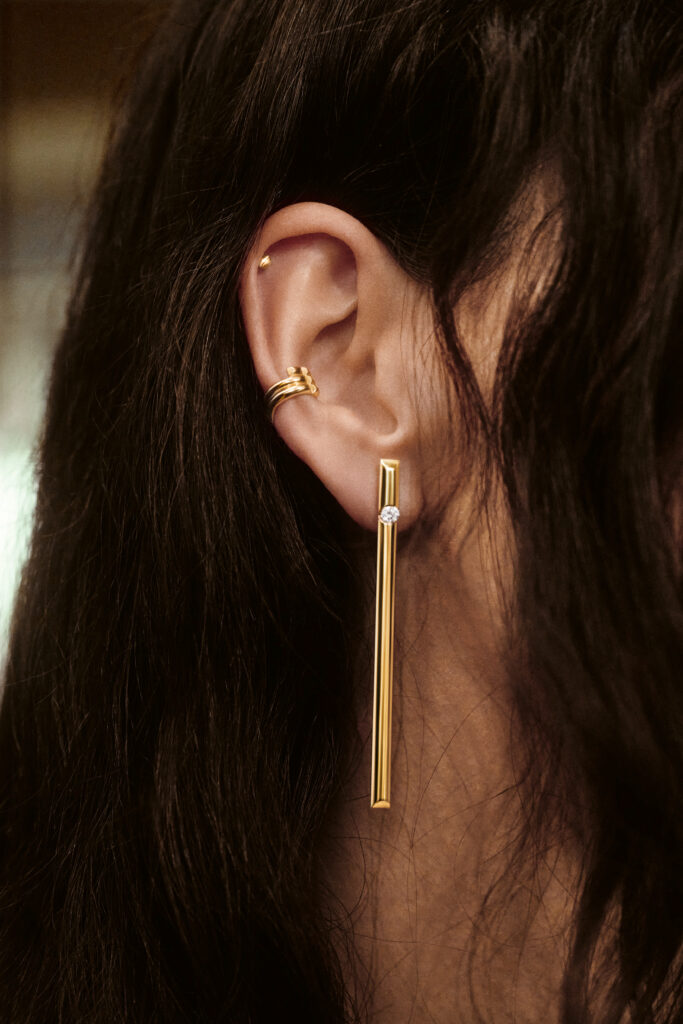
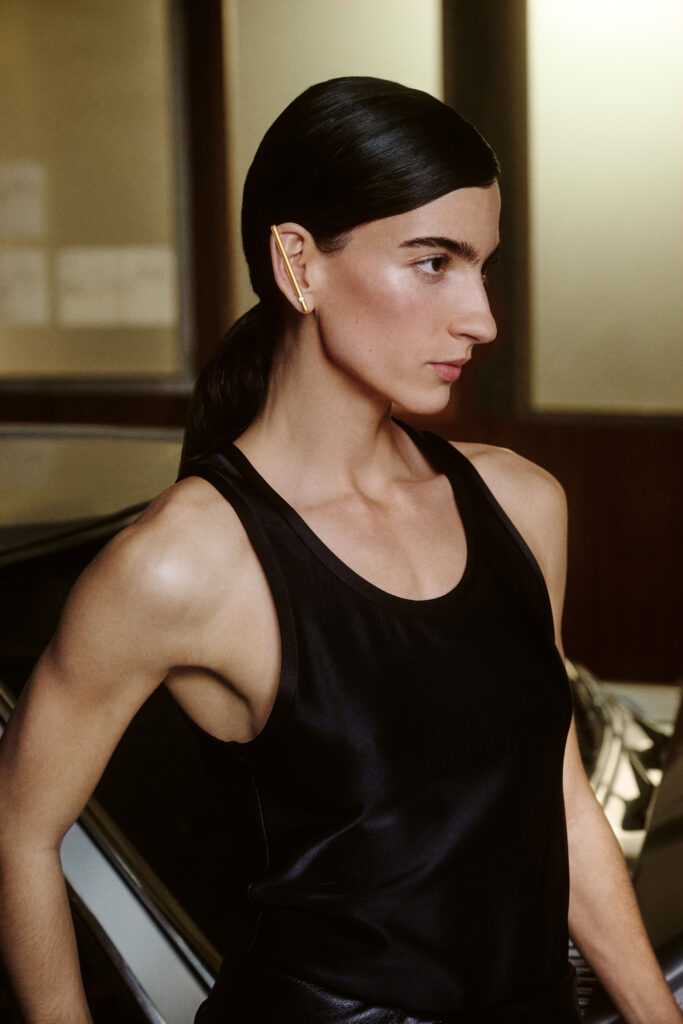
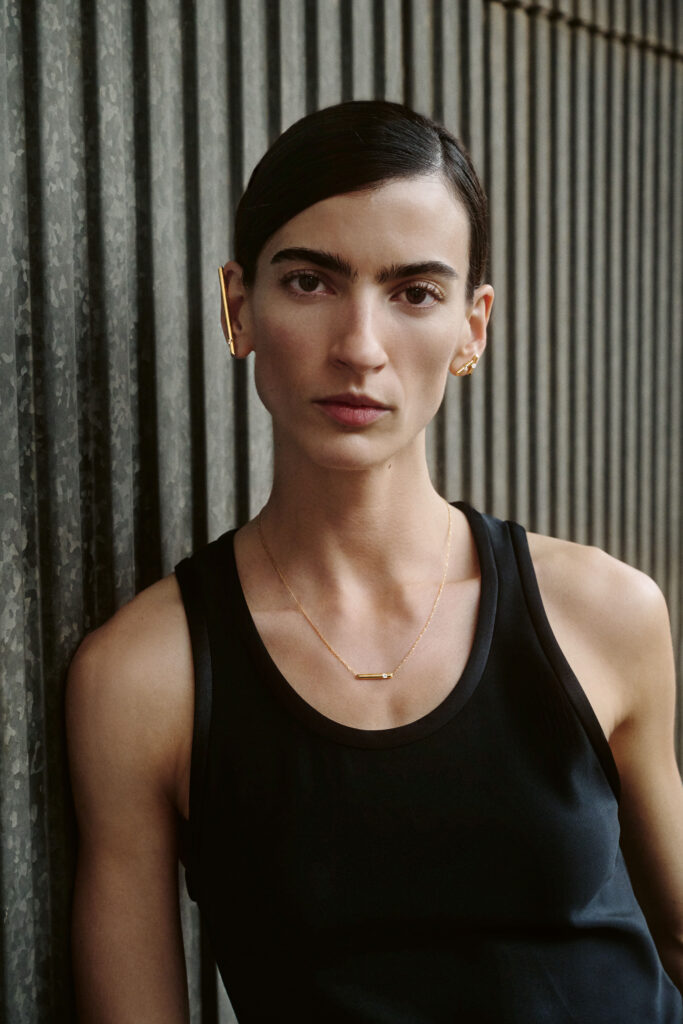
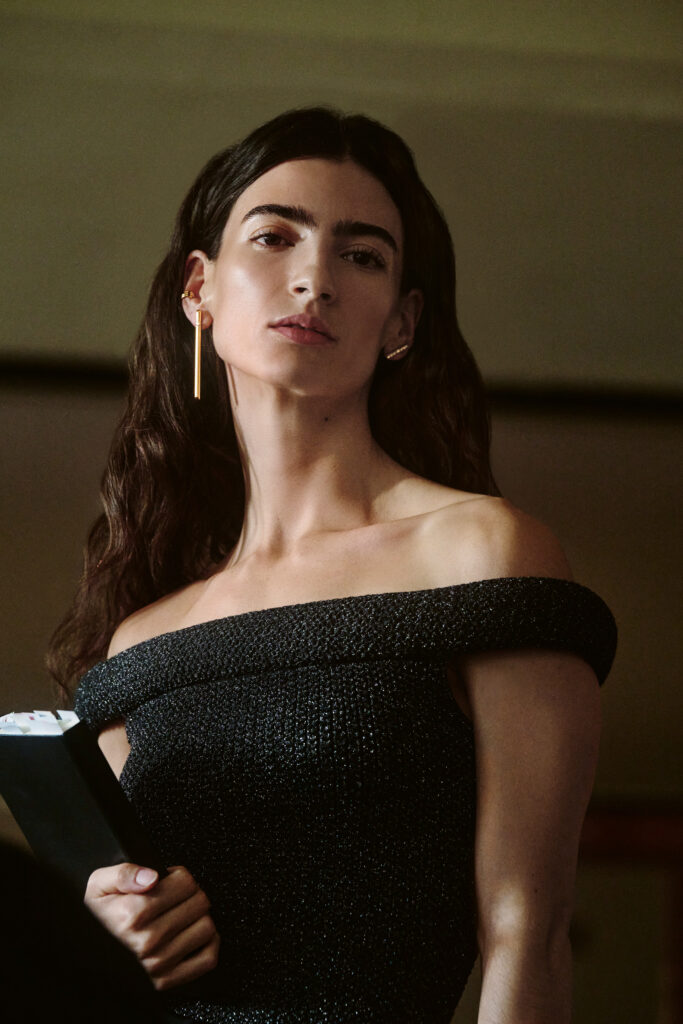
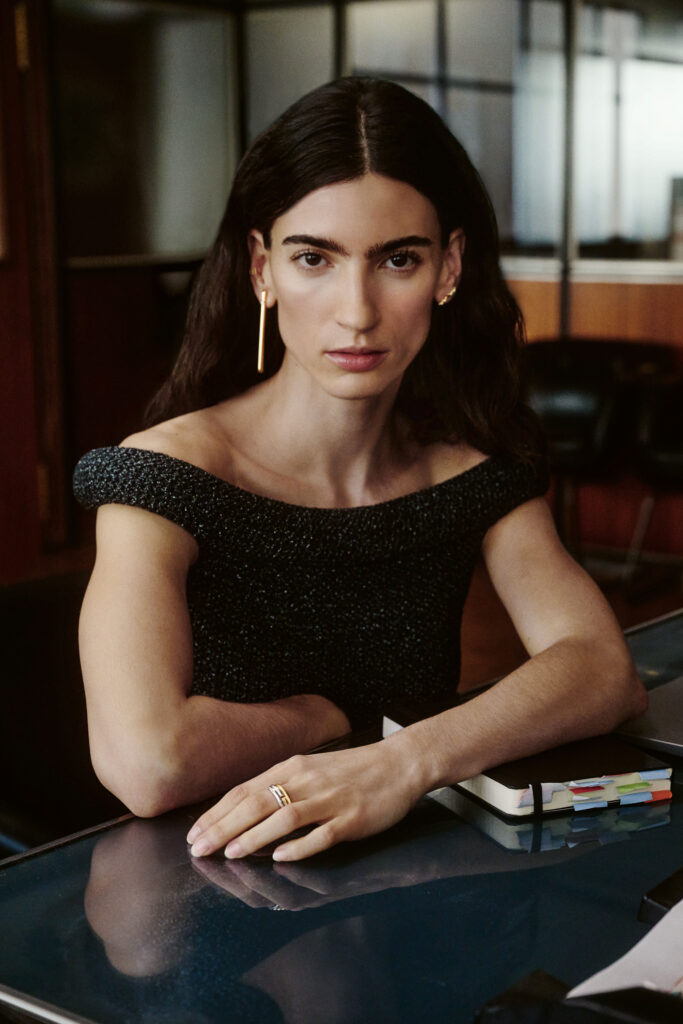
Phase 2 therefore extends the first, which was based on an asymmetric half-circle, sharp edges and a linear structure. It comprises rings, bracelets, pendants and stud earrings, in white or yellow gold, polished or set with brilliant-cut diamonds. The rings, in one or two rows, are designed to nest into one another. The coiled silhouette is found again on the bracelets and pendants. A necklace and studs of varying sizes and lengths add a more linear reading. Each piece combines with the others, and with jewellery that the client already owns.
One motif runs through the whole: a precisely placed notch, recalling the mark of a saw blade in the metal. On a second pair of studs, this notch is detached from the composition and becomes the sole motif of the piece. Sieroslawski explains that he again wanted to make the work visible in each jewel and to link it to the workshop.
That workshop is the one in Schwäbisch Gmünd, in southern Germany, where the Maison states that all pieces are made by hand, from casting to setting. Wempe has held a 50% stake there since 2007 in the manufacturer L.C. Köhler, which also produces the Atelier Wempe 137 and Atelier Wempe By Kim lines as well as made-to-measure pieces. According to the Maison, the workshop combines traditional know-how, computer-aided design and 3D printing.
Atelier Wempe au:thentic was launched in May and unfolds in four phases. Each is meant to gain in technical complexity, with more twists, coils and links, as well as new alloys, new clasps and new setting techniques.
The criterion of judgement is simple: a jewel that takes a connecting element as its subject must be built the way it connects. The rings that nest together and the pieces that combine meet this criterion from phase 2. The notch, a tool mark turned motif, meets it too. It remains to be seen whether the next two phases, announced as more complex, will keep this coherence between idea and construction.


















Cette publication est également disponible en :


