
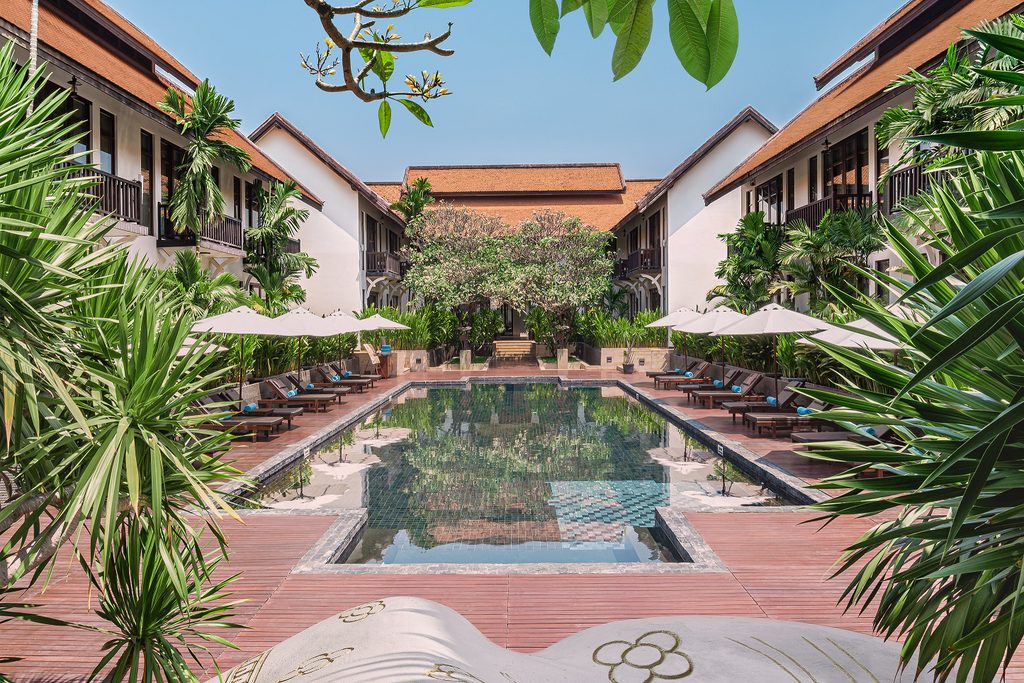
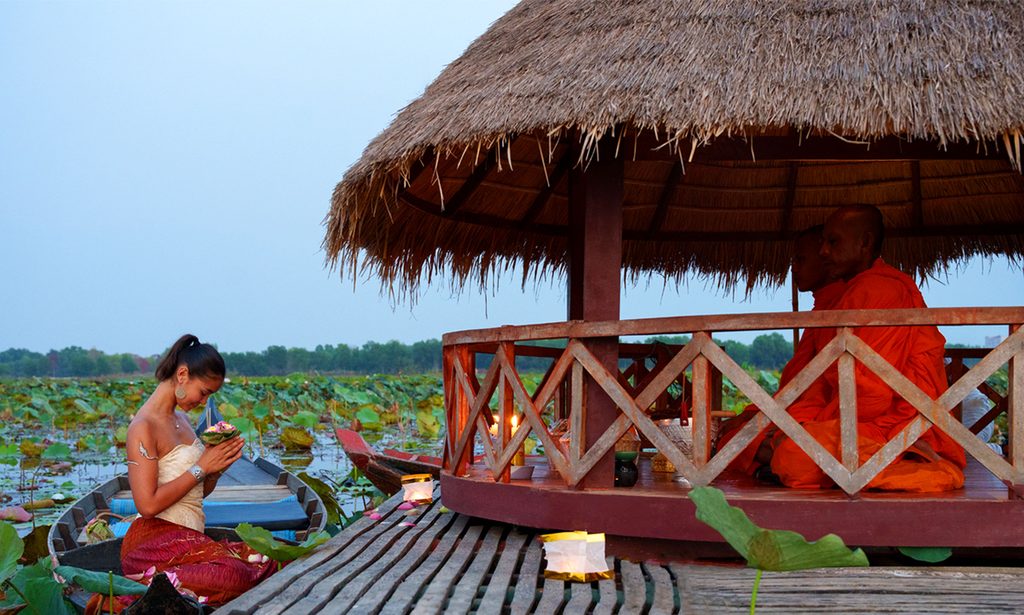
It is not the ruins that have changed at Angkor Wat, but the way of being alone there. Anantara Angkor Resort has designed a package that acknowledges this rare lull and turns it into an experience: from sunrise on the temple’s west causeway to an evening on a lotus farm, beyond the site.
A causeway rediscovered
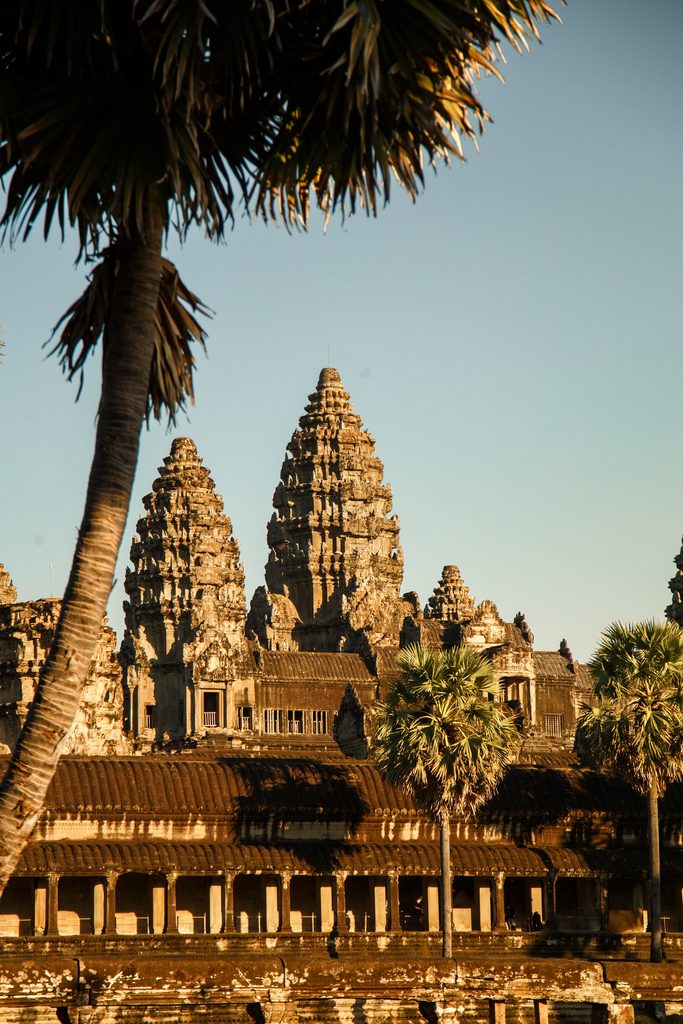
Ordinarily, Angkor Wat’s west causeway fills from six in the morning, as groups of visitors converge to watch the day break behind the temple’s five towers. This year, the flow has thinned. Travellers who still make the trip at dawn discover a view of the moat and the towers that they had not been promised: the almost intact one that the first pilgrims saw, before the site became one of the most photographed monuments in the world.
It is this window, precise and no doubt fleeting, that Anantara Angkor Resort has chosen to inhabit with Angkor and The Lotus, an offer built around two of its signature experiences rather than an accumulation of services. The package does not seek to multiply activities; it organises a single day, from dawn to night, around one symbolic thread.
The lotus as a guiding thread
The chosen motif is not incidental. The lotus has been carved into the stone of Angkor Wat since the twelfth century and remains, in Cambodia, a symbol of rebirth, purity and enlightenment — the three states that Khmer Buddhism associates with the flower that opens each morning after spending the night closed. Anantara makes it the backbone of the day: the private visit to the temple at sunrise opens the itinerary, and an evening devoted to the lotus tradition on a farm outside the archaeological site closes it.
In between, the hotel’s press release puts forward no superfluous luxury: it is the very structure of the package, the rarity of morning solitude and the coherence of the chosen symbol that make up its argument. A way of suggesting that at Angkor, in 2026, true luxury has once again become that of time and space.
A site that still carries 1,300 years of history
Angkor Wat remains one of the largest religious sanctuaries ever built, and its hold on travellers’ imagination does not weaken, even when their numbers temporarily fall. Anantara Angkor Resort, set on the edge of the archaeological park, has built its reputation on this immediate proximity to the temples: it is an establishment conceived as a privileged observation post rather than as a destination in itself.
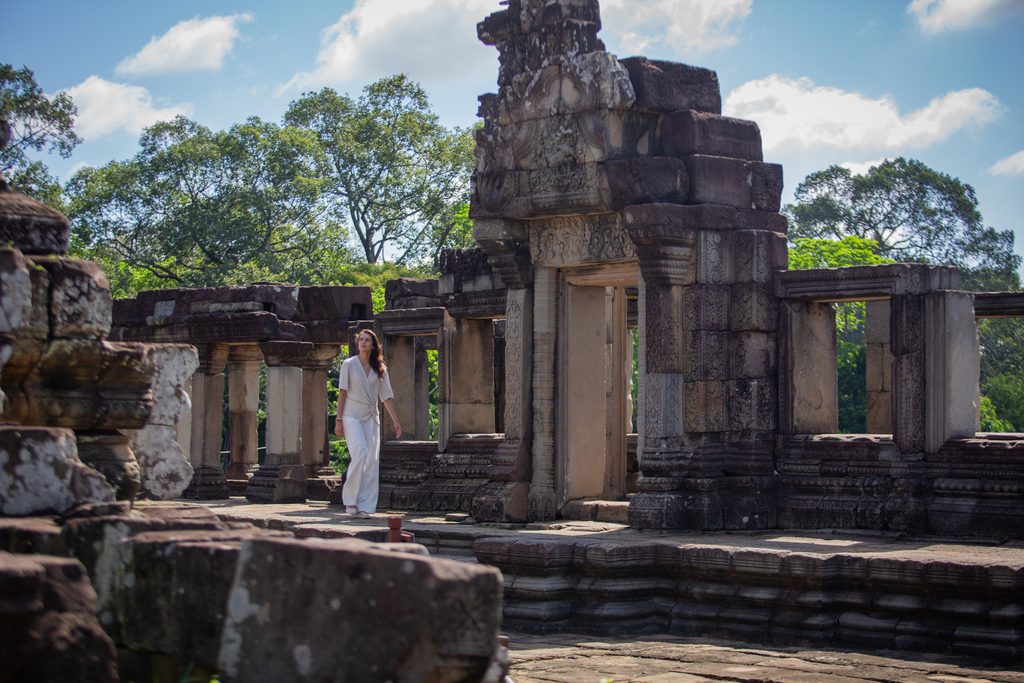
Angkor and The Lotus follows this logic. The package does not sell Angkor Wat — it could not — but a way of reaching it that restores, for the length of a morning, what the place must have offered before the influx of recent decades: silence, the raking light on grey stone, and the possibility of stopping without being jostled.
A window that will not last
Nothing indicates that this lull is permanent, and the hotel does not claim it is. That is precisely what gives the offer its quiet urgency: it does not celebrate an eternal Angkor, but a seasonal, provisional Angkor, to be seized before the west causeway regains its usual crowds. For travellers who have already seen Angkor Wat in a photograph taken at dawn among a hundred other silhouettes, the invitation has something of a second chance.
Also on Luxsure: Anantara Angkor Resort, a luxurious retreat in the heart of Cambodia’s ancient wonders · Badrutt’s Palace, or the art of resisting the ranking · AMAALA wants to reinvent wellness travel. At what scale can we still call… · In New Orleans, the French Quarter owes its face to Spain
Cette publication est également disponible en :


