
A stone’s throw from the Dalmatian coast, three Croatian islands have made a choice that has become rare in the Mediterranean: banning car traffic outright. Silba, Zlarin and Prvić can only be explored on foot, by bike or by kayak.
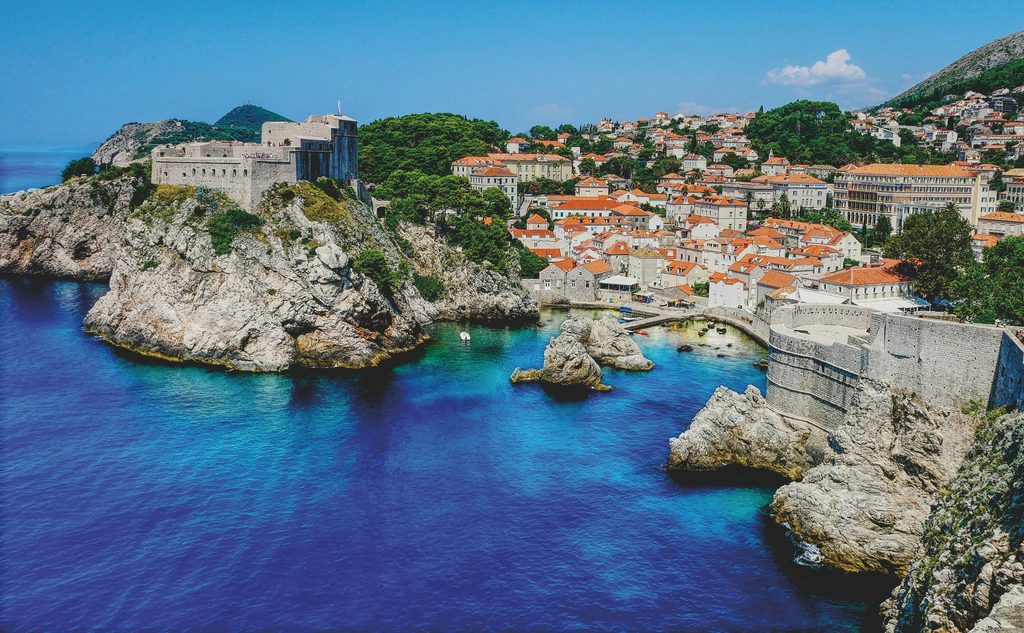
Silba, or walking as the only speed
Nicknamed “the pedestrian island”, Silba has no drivable road. Visitors follow the paths that cross the island to reach wild coves, go paddleboarding or kayaking in translucent waters, and end the day from the Toreta tower, Silba’s emblem, from which the sun can be watched setting over the Adriatic. The absence of engines here is not a logistical constraint but a deliberate choice, which shapes the rhythm of an entire local economy turned towards nature.
Zlarin and the memory of coral
Zlarin owes its renown to a heritage older than tourism itself: that of coral, whose harvesting and processing the island lived from for a long time. A coral museum preserves this memory, and craftsmen continue to perpetuate a know-how of cutting and setting handed down from generation to generation. Pine-lined paths, passable by bike, lead to unspoiled coves where snorkelling makes it possible to explore seabeds sheltered from any heavy maritime traffic.
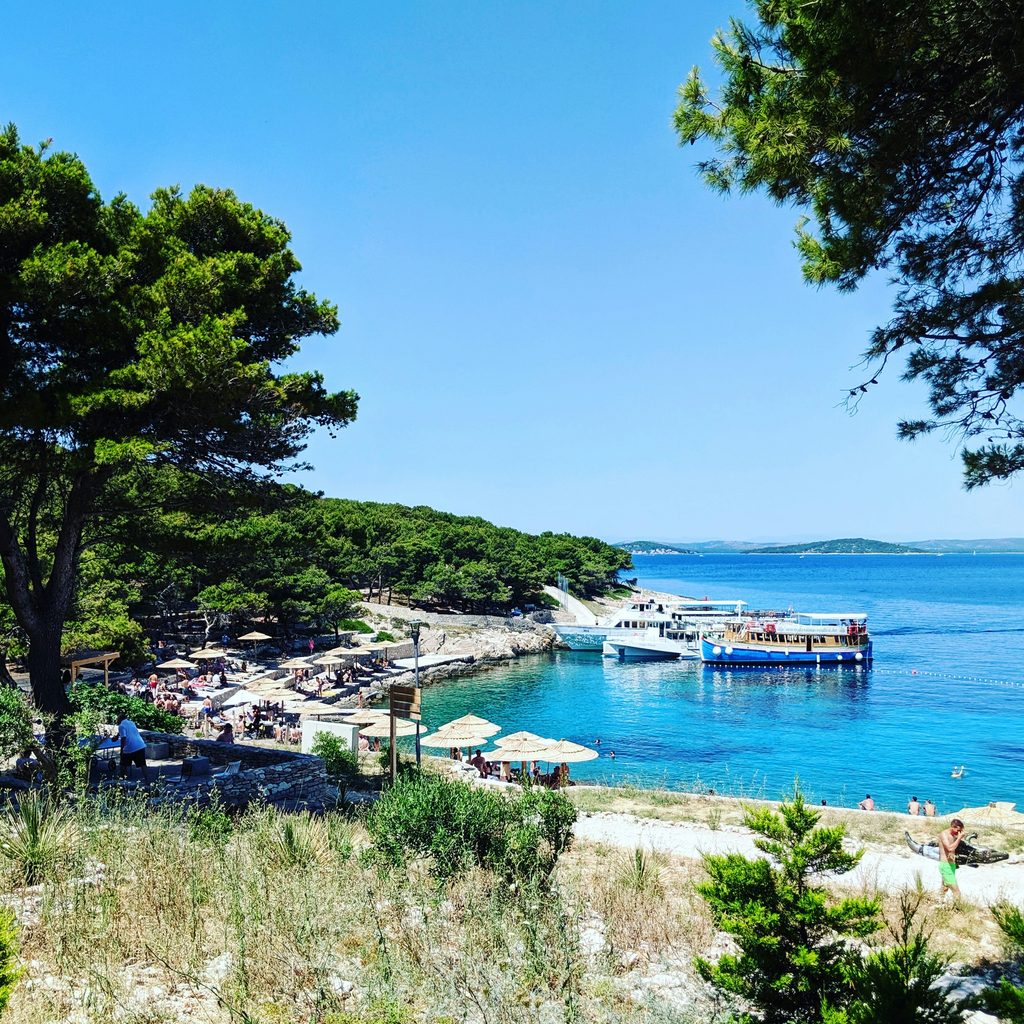
Prvić, between historic villages and an inventor’s memory
More secluded, Prvić is made up of two villages, Prvić Luka and Šepurine, linked by lanes that the absence of cars makes entirely walkable. The island is home to a memorial centre dedicated to Faust Vrančić, an inventor and lexicographer from the island, whose 17th-century work on mechanisms and suspension bridges continues to attract a public curious about the history of technology. The hiking trails that encircle the island offer panoramas over the Šibenik archipelago, the logical starting point for anyone wishing to extend the exploration to the neighbouring islands.
Another definition of island luxury
What these three islands have in common goes beyond the mere absence of asphalt: they embody a definition of travel in which slowness is not endured but sought. At a time when slow tourism is becoming a selection criterion for a growing share of travellers, the rarity of these destinations owes less to their beauty — Dalmatia has no shortage of it — than to their ability to impose a friction: that of having to walk, cycle or paddle to reach each cove, each village, each viewpoint.
This friction changes the very nature of a stay. Without a car, the distance between two points is no longer measured in minutes of travel but in physical effort and available time: a beach forty minutes’ walk away is no longer a simple stop on an itinerary, it becomes a destination in itself, chosen rather than passed through. The scale of these islands — small enough to be crossed entirely in a day, large enough to leave room for genuinely isolated areas — partly explains why this model has been able to survive here where other destinations have, over the decades, yielded to the pressure of the automobile.
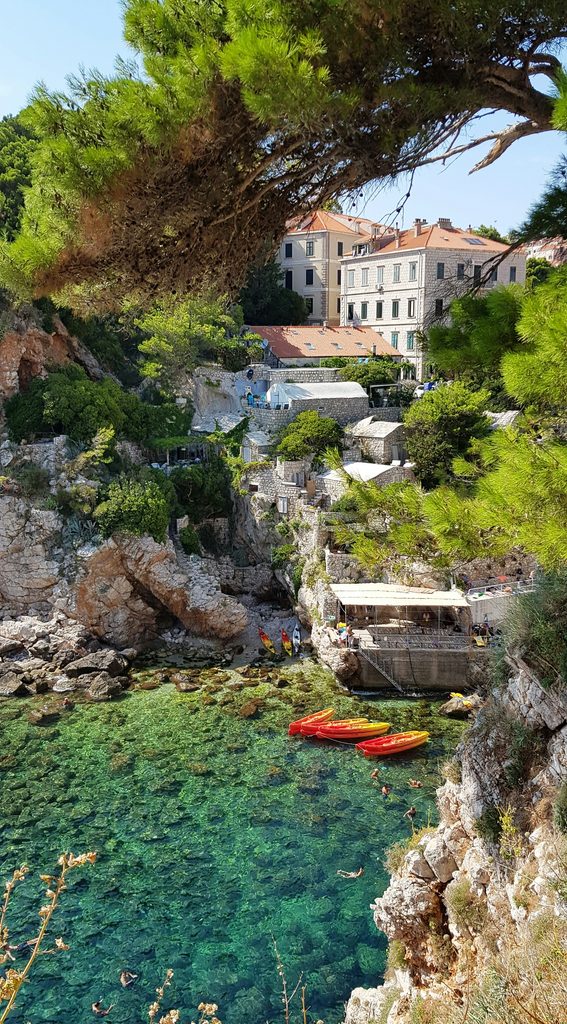
Three scales for a single idea
Silba, Zlarin and Prvić are nonetheless not alike. The first bets on landscape and swimming; the second on the memory of a craft, coral, that could have disappeared with the industrialisation of fishing; the third on a built and scholarly heritage, embodied by the figure of Faust Vrančić. This diversity suggests that the absence of cars is not, on its own, a tourist argument: it works as a framework within which each island has been able to preserve a distinct identity rather than converge on a standardised seaside offer.
Silba, Zlarin and Prvić can only be reached by sea from the Dalmatian coast; once ashore, no motor vehicle circulates there, with the exception of emergency services.
Faced with the tourist pressure weighing on the busiest Mediterranean destinations, these three islands sketch an alternative model in which the preservation of natural heritage and the quality of the travel experience merge. It remains to be seen whether this rarity can withstand the growing appeal it arouses, without losing precisely what gives it its value.
Also on Luxsure: Cape Town, then Shamwari: Kerzner’s City & Safari itinerary · Guanajuato, where weddings are celebrated between colonial baroque and old silver mines · Explora Journeys rejects the idea of a single Caribbean · Hermitage Monte-Carlo reworks its suites and opens a bar beneath its dome
Cette publication est également disponible en :


