
He could have played the respect card, thoughtfully referencing the sailor top and the bustier corset, and reassuring a house in the midst of a generational transition. Duran Lantink, however, chose to 3D-print the Gaultier legacy, to distort it, to transform it. For his haute couture debut, the designer’s designated successor isn’t preserving the archive—he’s bringing it to life.
When a designer takes over a fashion house that still bears the name of its living founder, two temptations lie in wait. The first is affectionate pastiche—that cautious imitation that reassures customers and shareholders but turns the brand into a static museum. The second is a clean slate—a dramatic break that creates a buzz for a season before severing the house from its own roots. Duran Lantink, appointed permanent creative director of Jean Paul Gaultier in the fall of 2025, presented his first haute couture collection during Paris Haute Couture Week in the summer of 2026. He chose neither path. He invented a third, more uncomfortable, more interesting path: one that treats the archive not as a collection to be preserved behind glass, but as raw material to be reworked.
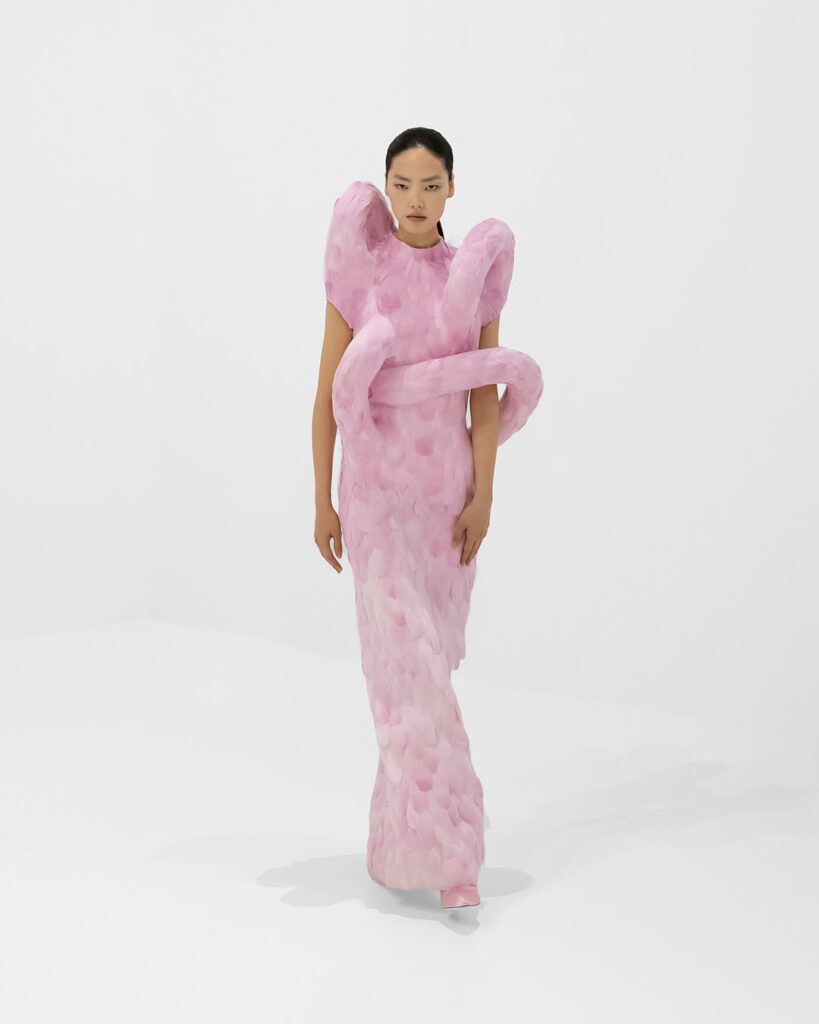
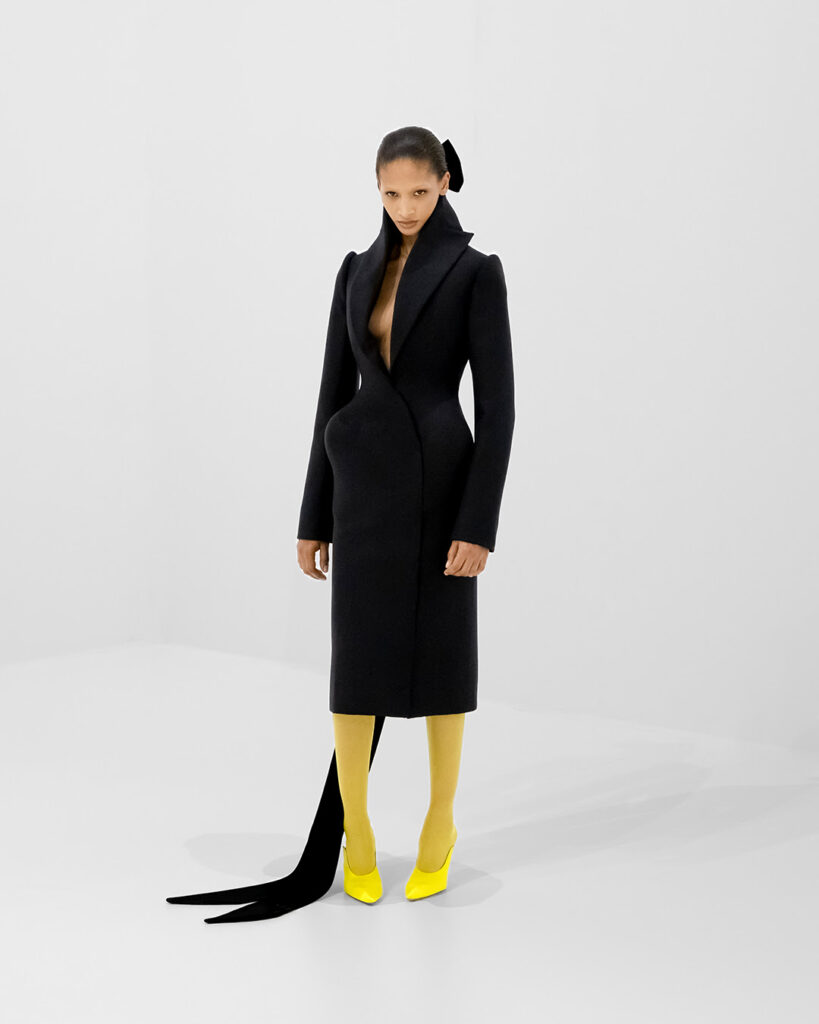
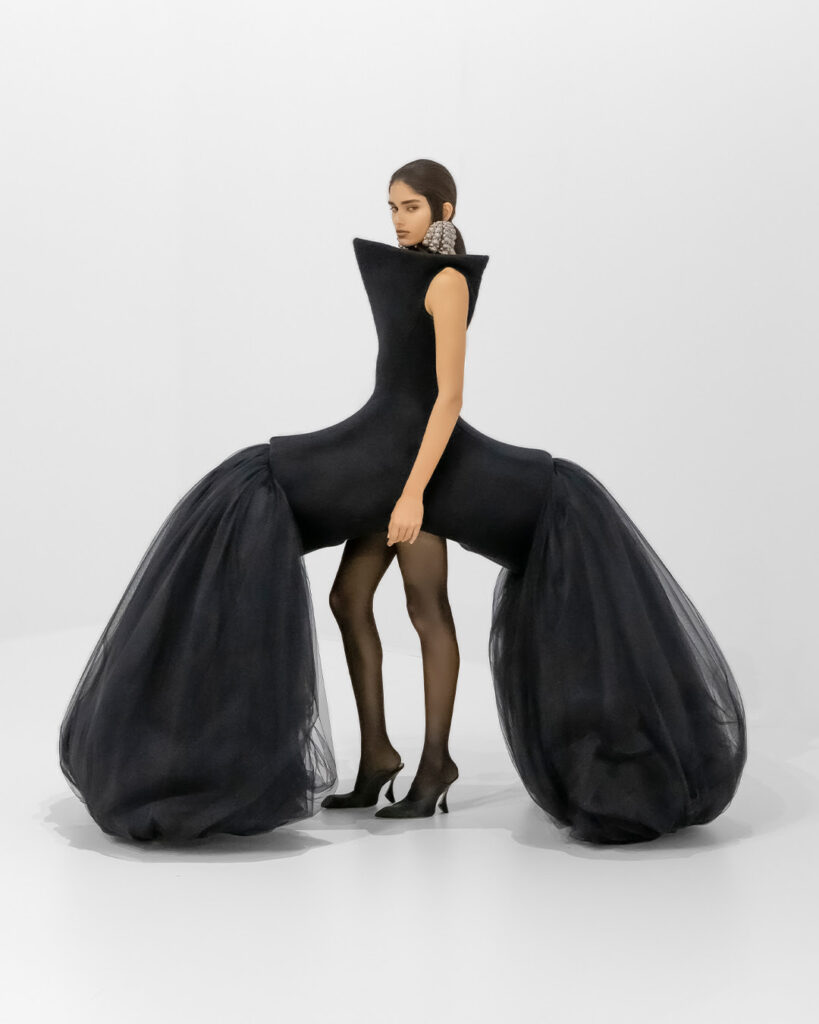
The collection, which the fashion house presented under a concept akin to “Tech Couture,” is based on technology that is anything but ornamental. Flexible TPU and PA12, both 3D-printed, form exoskeletons that structure the silhouettes from the inside, amplifying the shoulders to extreme volumes and shaping collars and necklines into almost mineral-like structures. Pieces with cutouts and tubular structures that seem to have grown directly from the body rather than having been sewn onto it coexist with the brand’s most recognizable hallmarks: impeccable tailoring and the corset, which has been a signature element since the 1980s. Nothing is discarded. Everything is reconfigured.
What is striking about the reported intentions behind this collection is the dual lineage it draws upon. On the one hand, the opulent silhouettes of Louis XIV and Marie Antoinette, reimagined through a decidedly contemporary lens—the court as a laboratory for theatrical fashion, long before the fashion industry coined the term. On the other, a more intimate reference to the history of the house itself: the costumes Jean Paul Gaultier designed in 1985 for choreographer Régine Chopinot, revived here as graphic silhouettes and sculptural volumes. The archive references the archive. The gesture is not that of an heir respectfully leafing through a catalog, but that of a reader who underlines, crosses out, and annotates in the margins.
This approach to heritage is not merely a creative stance: for Lantink, it is also a continuation of his method. The Dutch designer has made a name for himself through his unapologetic upcycling—a practice in which pre-existing garments become raw materials rather than finished products. Applied to the Gaultier archive, this approach takes on an additional meaning: it refuses to freeze into an untouchable icon what was, at its origin, itself an act of subversion. Gaultier has never been a designer who sought reverence. He turned the corset into streetwear, blurred the lines between masculine and feminine long before fashion turned it into a marketing ploy, and dressed Madonna in a conical bra that became an icon. Distorting this legacy rather than painstakingly polishing it up is perhaps, paradoxically, the most faithful way to perpetuate its spirit.
One question remains unanswered by this first couture collection—and it goes beyond the specific case of Gaultier: What becomes of a fashion house’s archive when its new custodian is less interested in preserving it than in deconstructing it to see what still holds life within it? Somewhere between a museum and a laboratory, Duran Lantink has just chosen his side. Time will tell whether the haute couture clientele—accustomed to the reassuring familiarity of rituals—will follow him that far.
Cette publication est également disponible en :

