
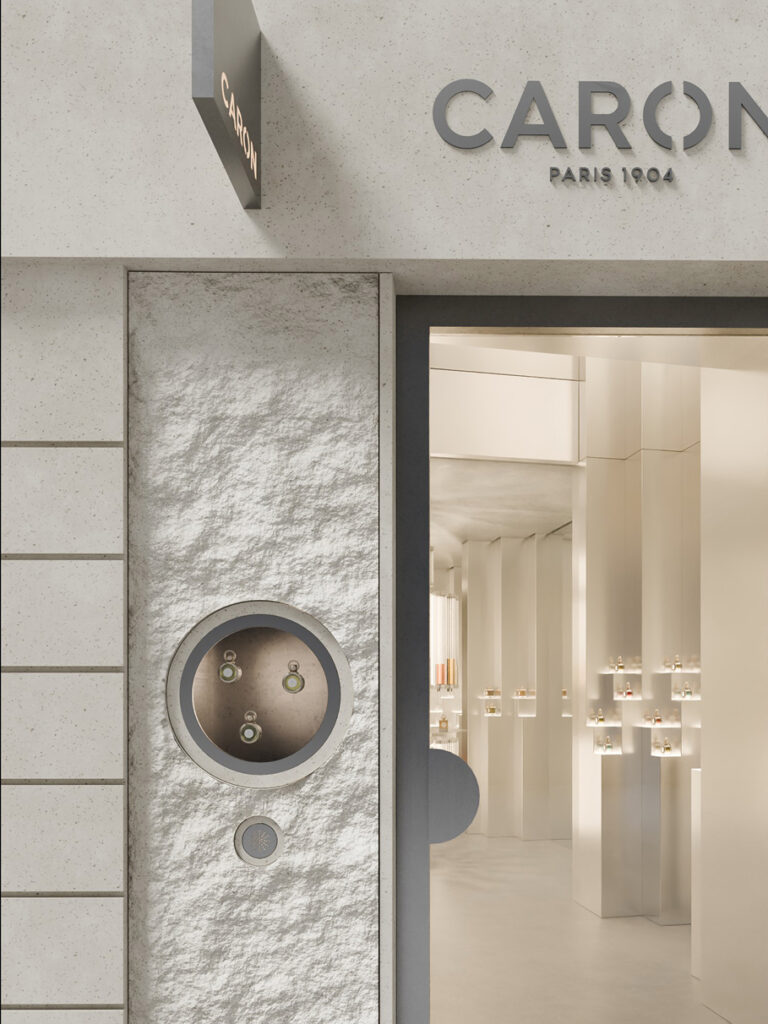
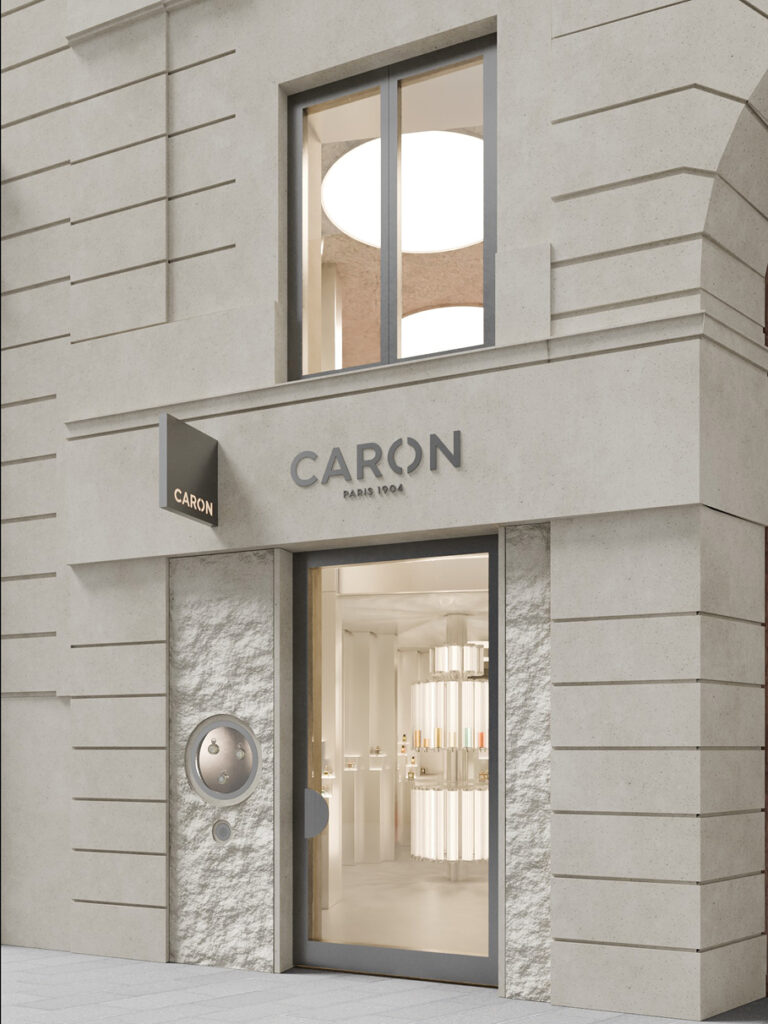
In Paris, perfume boutiques generally take the same approach: they maximize reflective surfaces, create a sense of depth, and allow customers to visualize themselves in the space before they’ve even smelled anything. Caron has just opened at 332 Rue Saint-Honoré and has taken the opposite approach.
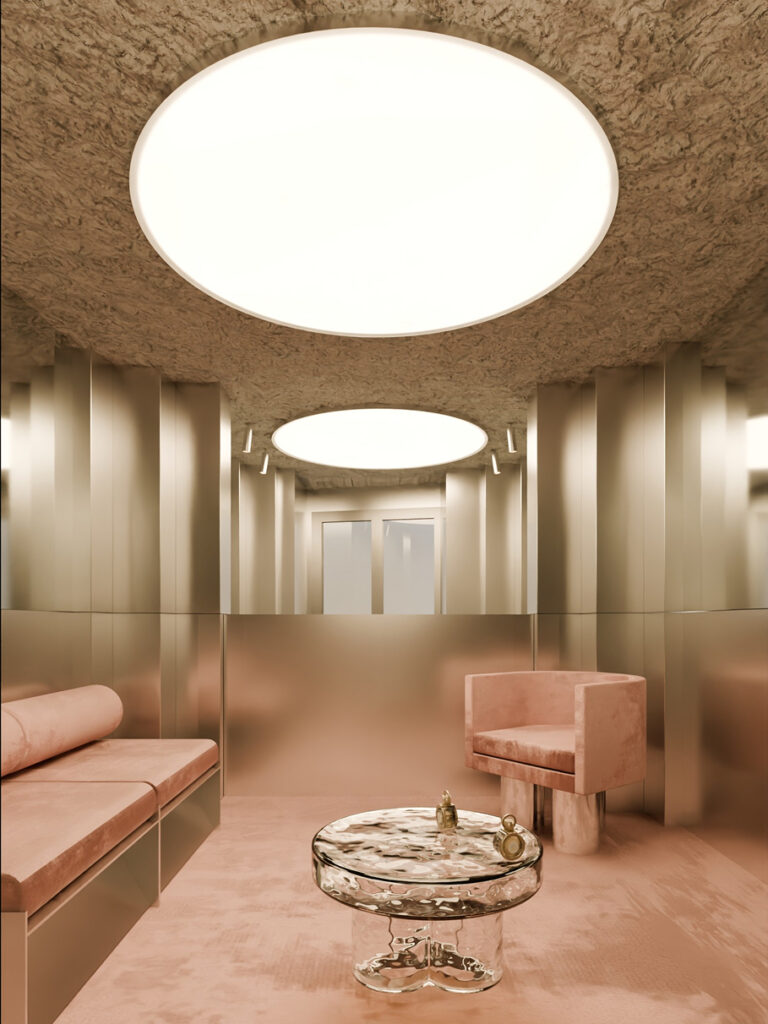
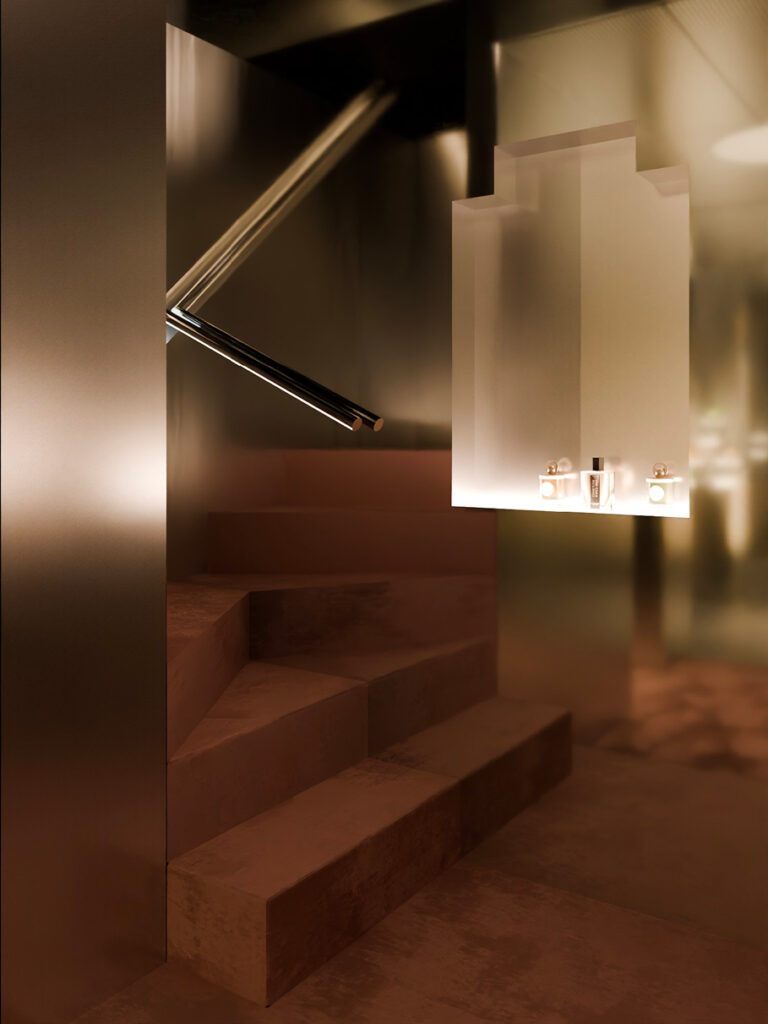
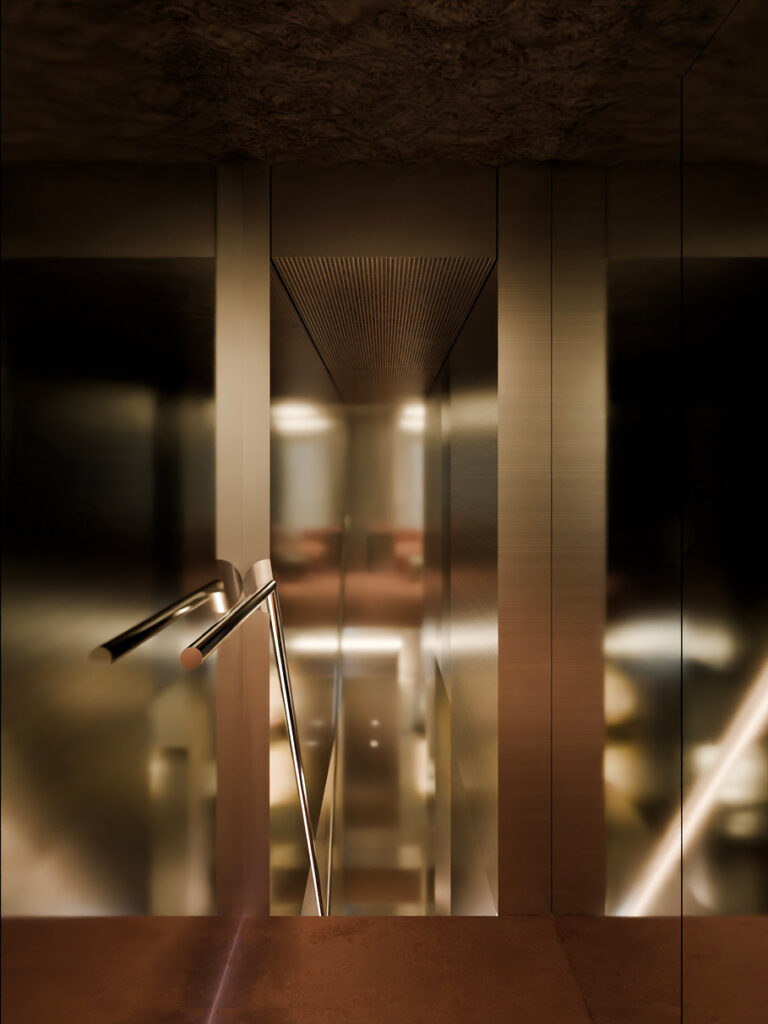
No clear mirrors. Reflective metal surfaces, yes—but designed to cast a diffuse glow rather than a reflection. The reflection remains, but it does not reproduce a portrait. It conveys a presence. This is an architectural choice, embraced as an editorial decision: what we perceive here is not an appearance; it is what we project. The distinction is subtle in other contexts. In a fragrance space, it redefines the relationship between the object and the person who chooses it.
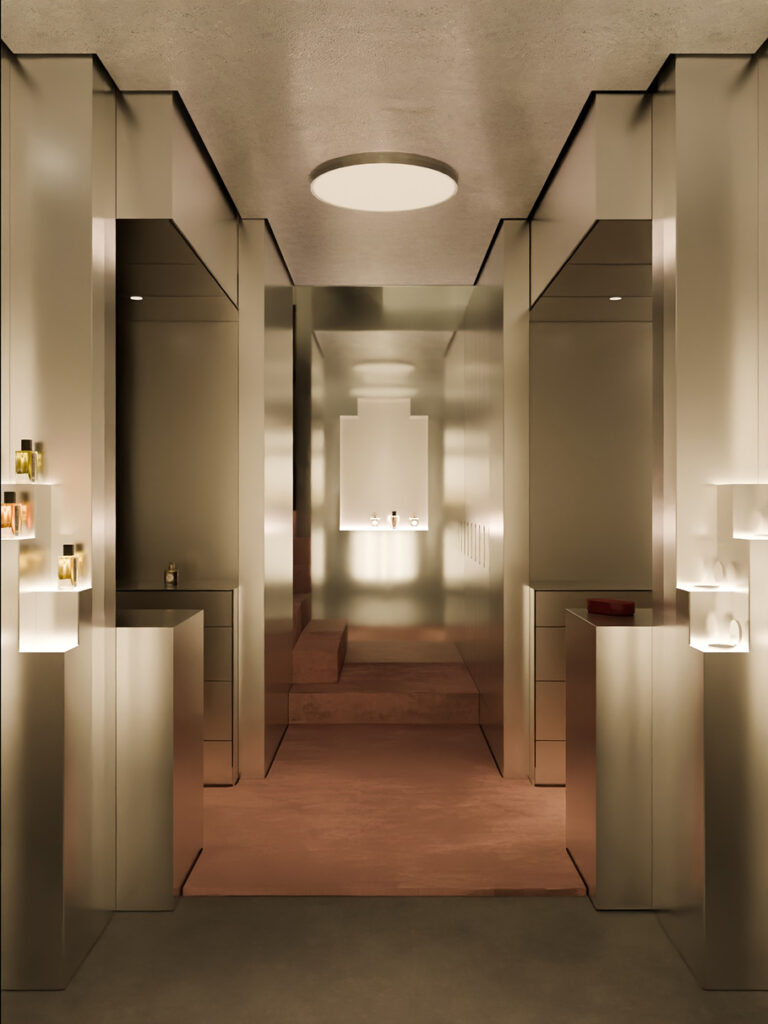
The London-based firm Casper Mueller Kneer Architects, responsible for the design, practices an architecture of “deindustrialization of the gaze”—spaces conceived outside any demonstrative logic, in their own words. Their approach for Caron is based on four formal principles: repeated geometry, the interplay of light, the use of metal and concrete, and a central structural element. These are tools for spatial deceleration. The store cannot be taken in all at once. It is discovered over time, layer by layer, through a process of multiplication that creates depth and continuity without ever forcing the revelation.
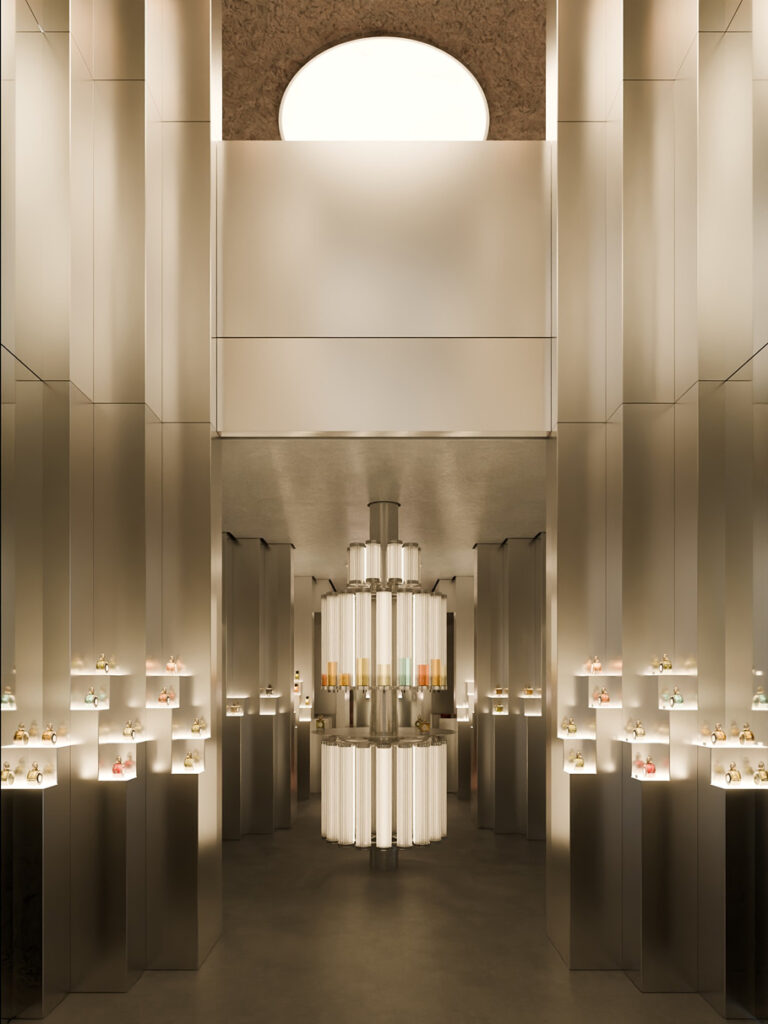
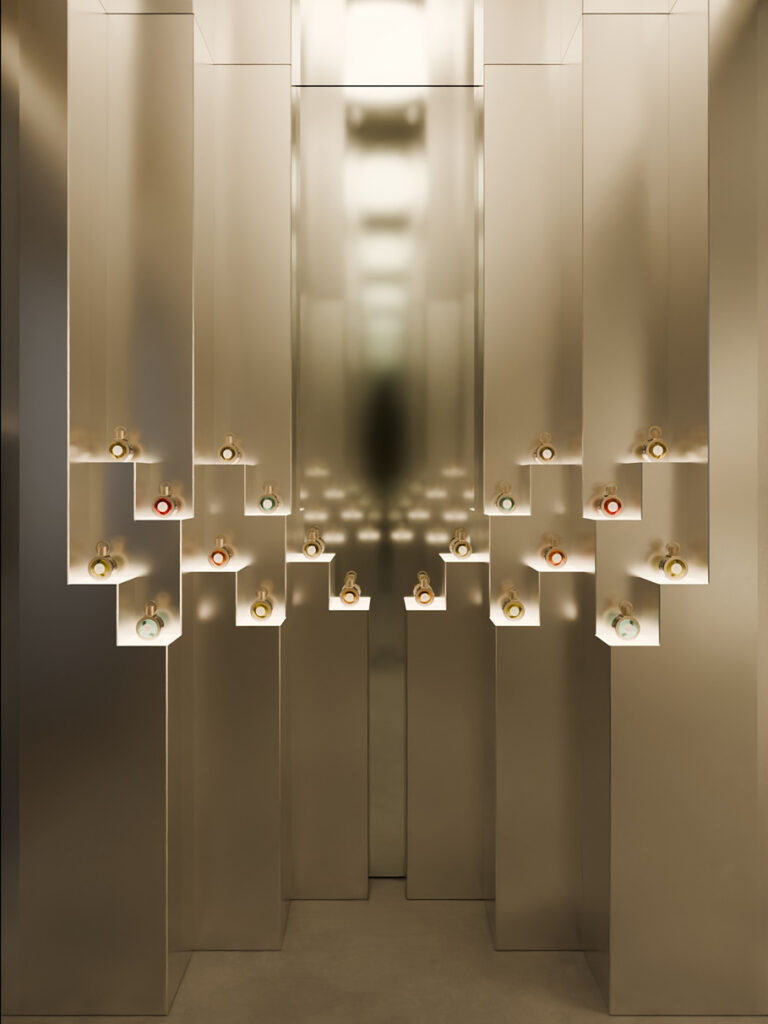
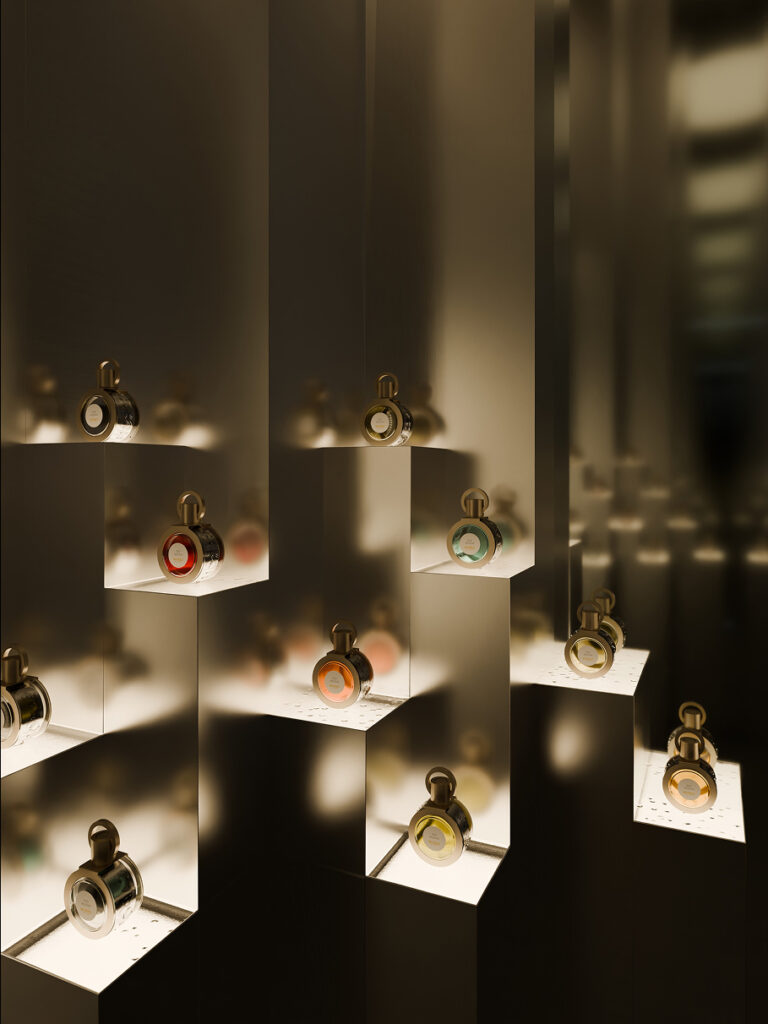
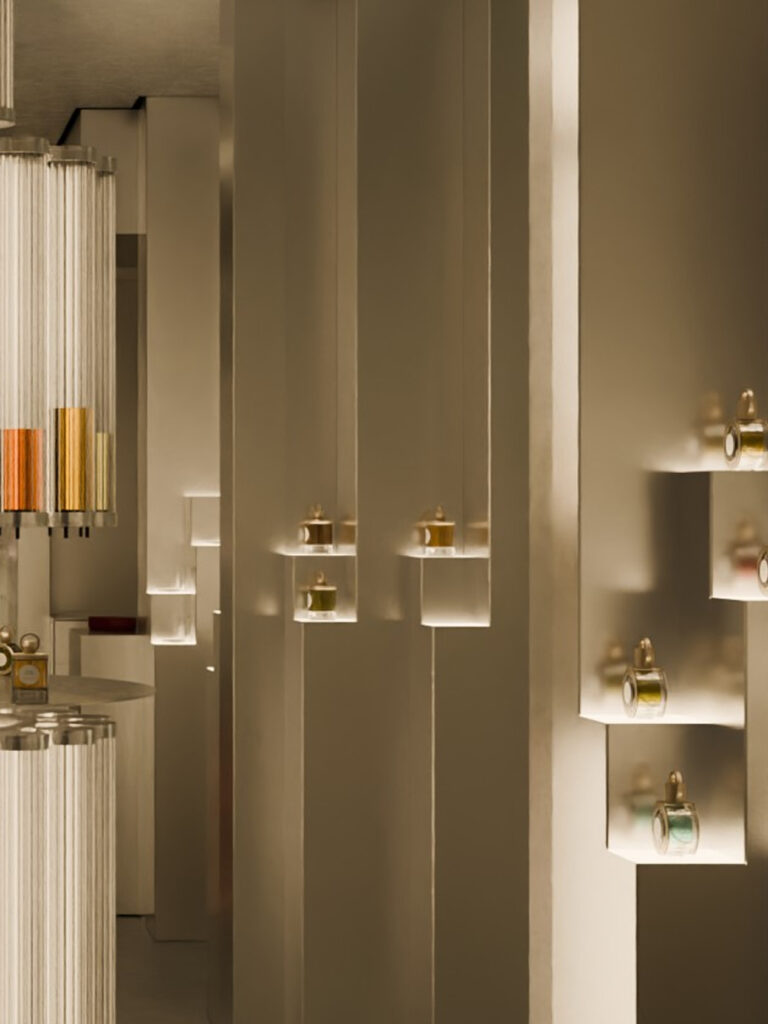
From the street, the window frames the interior without revealing it fully. You can see shapes, lines, and a carefully arranged play of light—but not the whole picture. This partial visibility is intentional. Inside, the bottles are arranged on vertical displays at eye level, creating a direct, face-to-face relationship. “I wanted the product to be at the same level as the person,” explains Olivia de Rothschild, the House’s Artistic Director. The concept is simple, yet it stands in stark contrast to the typical presentation of luxury perfume—often elevated, staged, and treated like a relic. Here, the object is within reach, in the most literal sense.
Details · The Fountain
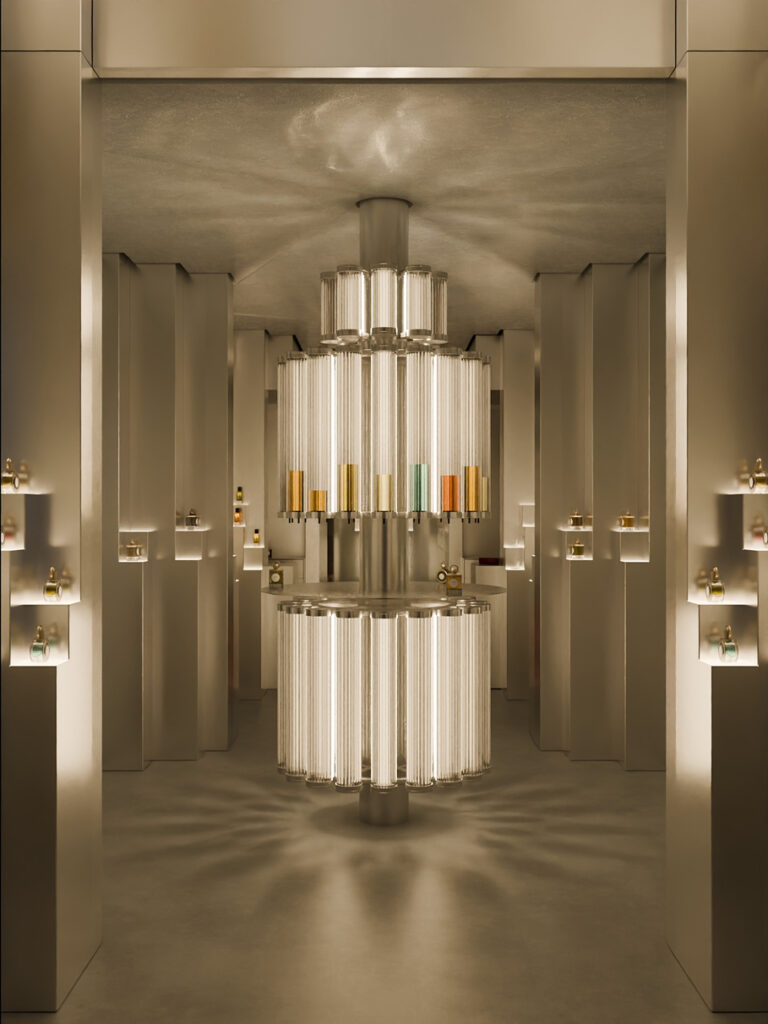
The centerpiece of the store is a monumental fountain reimagined in a contemporary style, inspired by vintage Art Deco light fixtures. With its verticality and central position within the space, it serves as an architectural focal point—the room is organized around it. Its integrated lighting reveals the structure: cool metal, warm glass, an almost mechanical aesthetic. Its function is not merely decorative. The fountain allows for the refilling of bottles, a long-standing practice at Maison Caron, here transformed into a central, public ritual. “It’s an object that speaks to transmission, to the passage of time,” says Olivia de Rothschild. What the fountain embodies is continuity: between a creation and the person who wears it, between an empty bottle and the same bottle refilled, between a house founded in 1904 and a boutique opened in 2026.
Caron also classifies its fragrances by “Vibes”—states of being rather than olfactory families. This initiative is significant in a market where the niche fragrance industry has overwhelmingly adopted the vocabulary of botany and chemistry (top note, accord, extraction). By replacing technical terminology with a description of a state of being, Caron is making a positioning choice as much as an editorial one: perfume as a felt intensity, not as a composition to be deciphered.
What this boutique reveals about Caron is that the House—founded over a century ago, yet low-key in recent decades—has chosen to return to the center of the olfactory conversation not through spectacle, but through restraint. Removing the polished mirrors, leaving the space empty, and placing the fountain back at the center: these are all decisions that signal a rejection of the sensory excess that has become the norm in Parisian luxury retail. It’s a risky gamble, precisely because it’s so understated.
The boutique that Casper Mueller Kneer Architects designed for Olivia de Rothschild isn’t meant to impress. It’s meant to slow things down. In a neighborhood where every square meter of storefront is a statement of intent, this may be the boldest statement of all.
Cette publication est également disponible en :

