
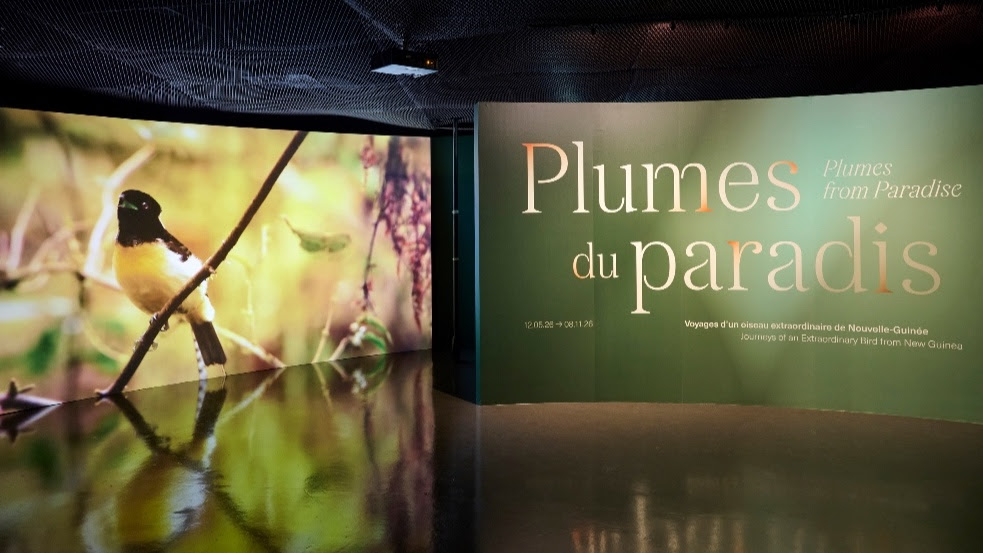
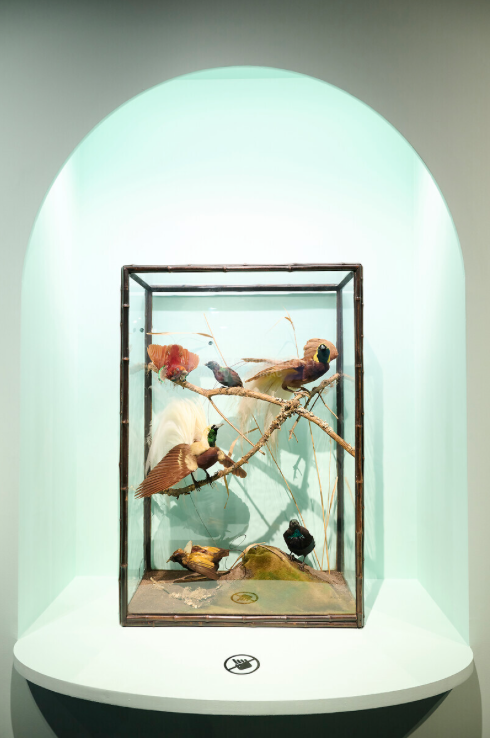
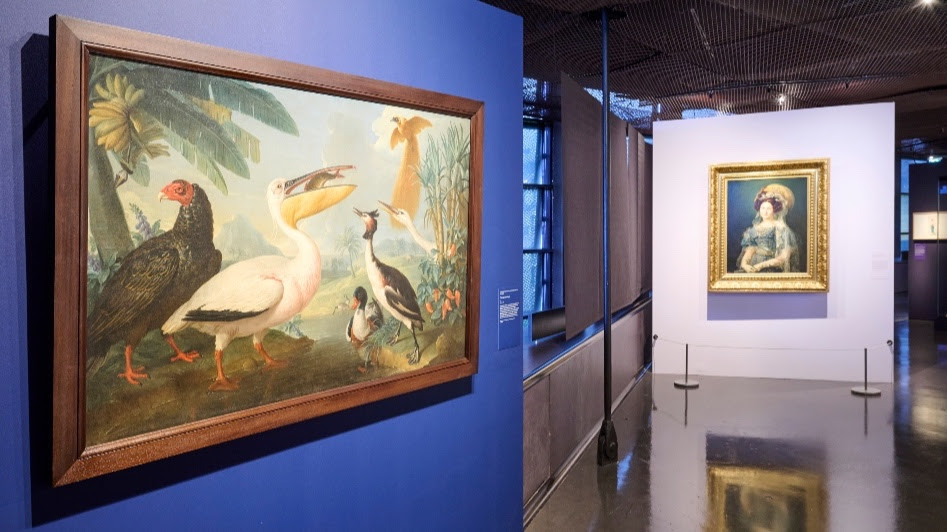
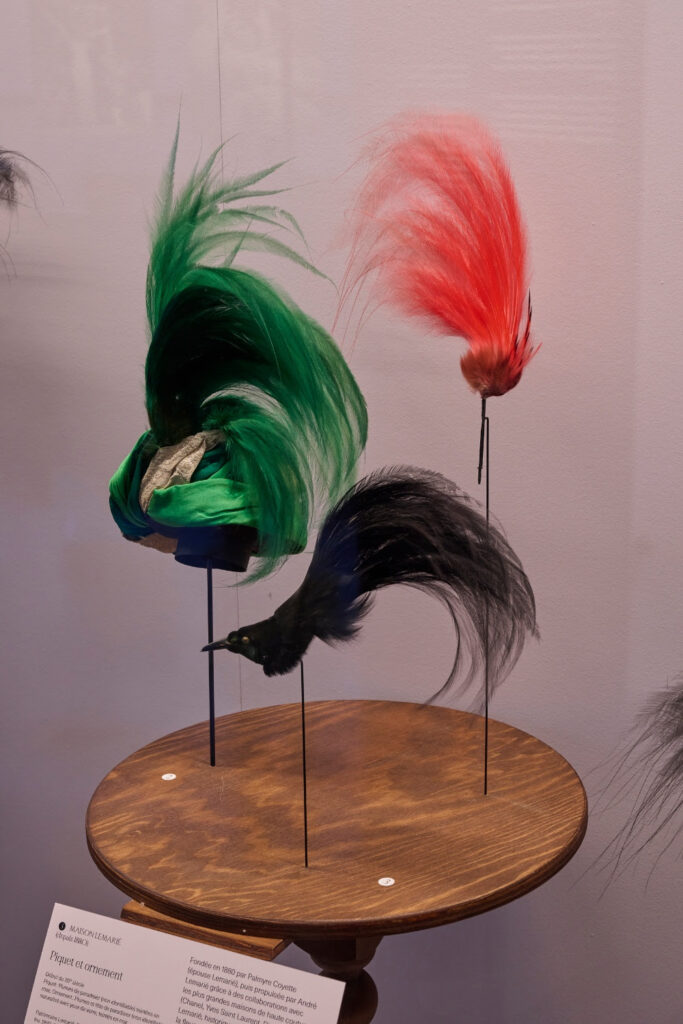
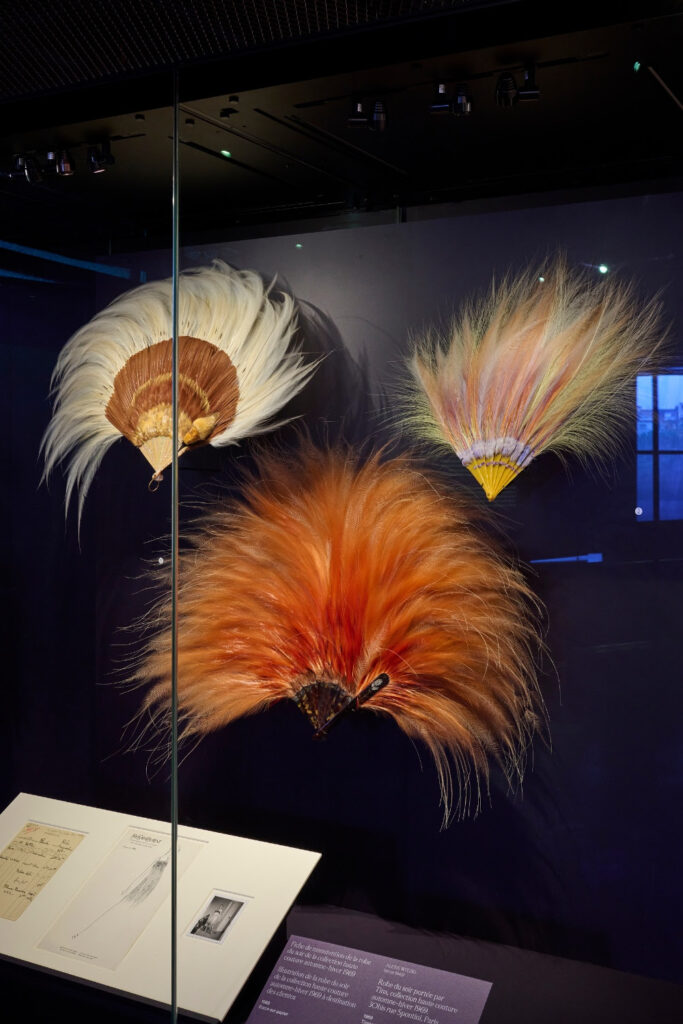
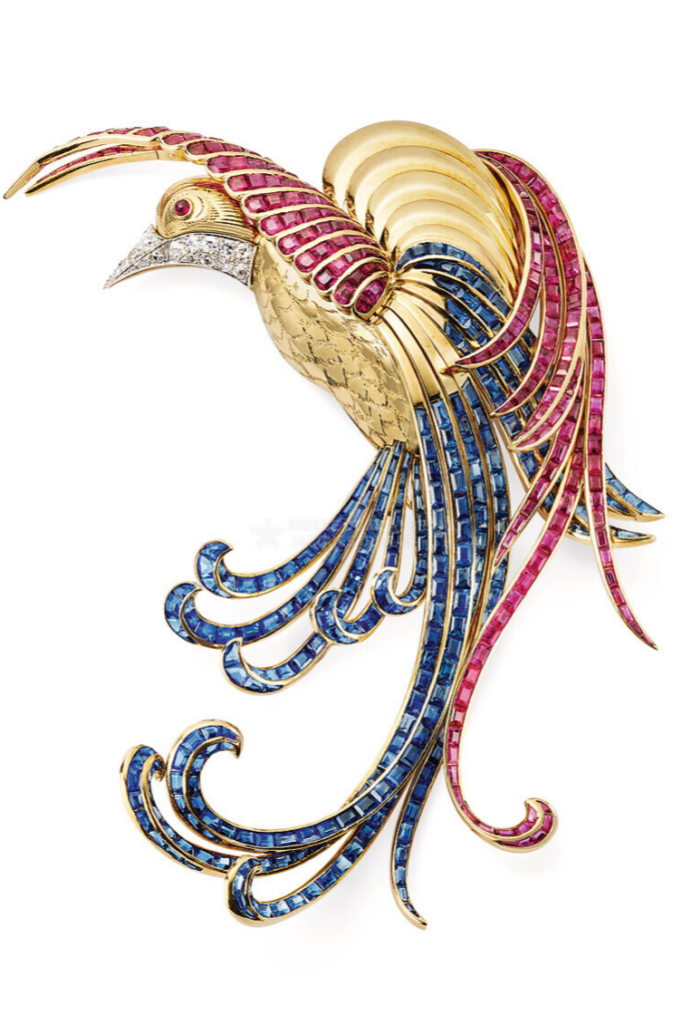
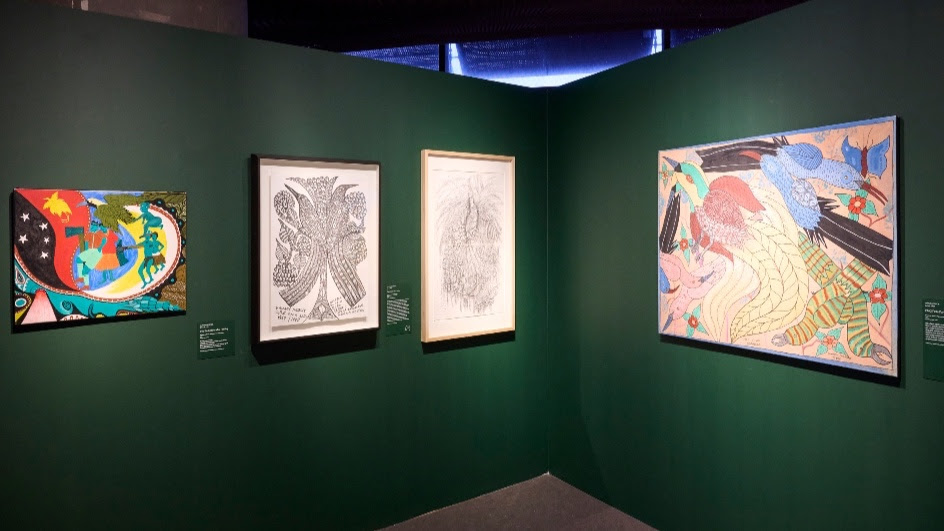
In Paris, birds of paradise rarely make their way into the city through biology. They arrive through fashion, fantasy, or ornamentation. A feather on a Belle Époque hat. A natural history display case. A tropical image simplified to the point of becoming mere decor. The exhibition *Feathers of Paradise: Journeys of an Extraordinary Bird from New Guinea*, on view at the Musée du Quai Branly–Jacques Chirac from May 12 to November 8, 2026, takes a different approach: that of circulation. Not only the circulation of species, but also that of narratives, materials, beliefs, and power dynamics.
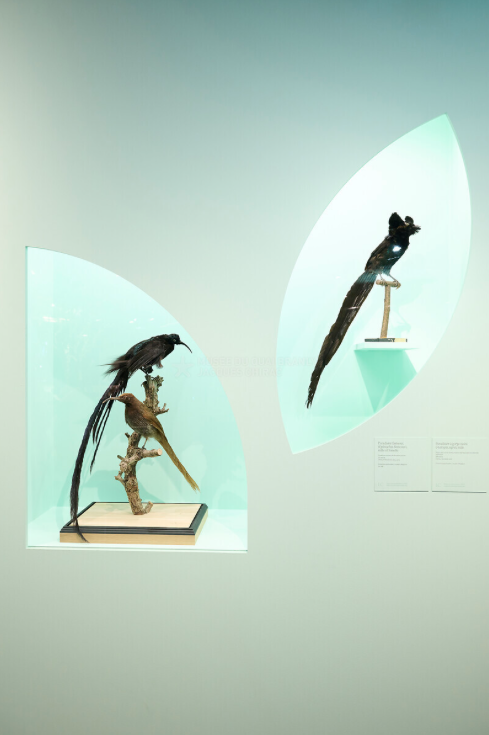
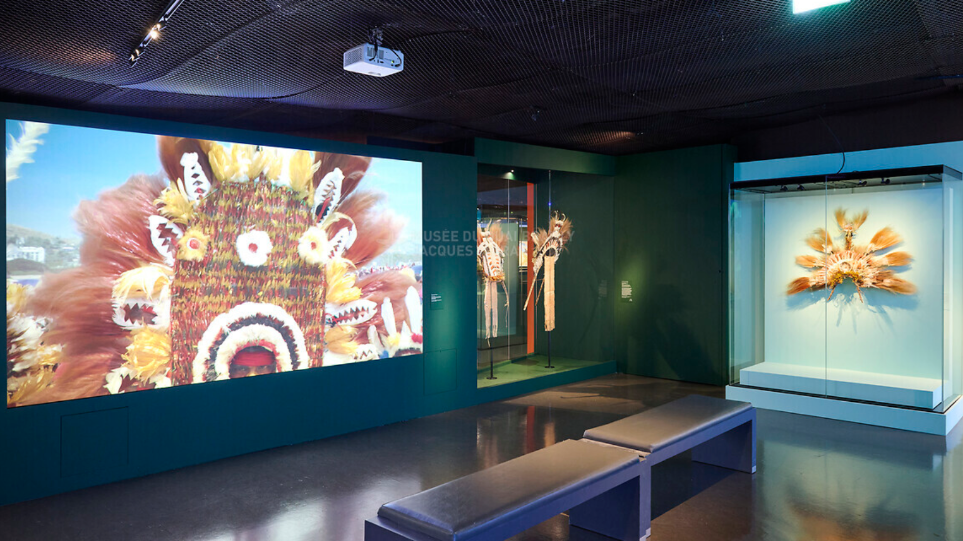
The subject could easily veer into the realm of the exotic. The curators prefer a more nuanced, almost geopolitical interpretation. Paradise birds—forty-five species found primarily in New Guinea, certain islands of eastern Indonesia, and eastern Australia—are presented here as cultural actors in their own right. The exhibition also notes that, in several Papuan societies, the bird is not viewed as merely a living creature but as a mediator between humans, ancestors, and territories.
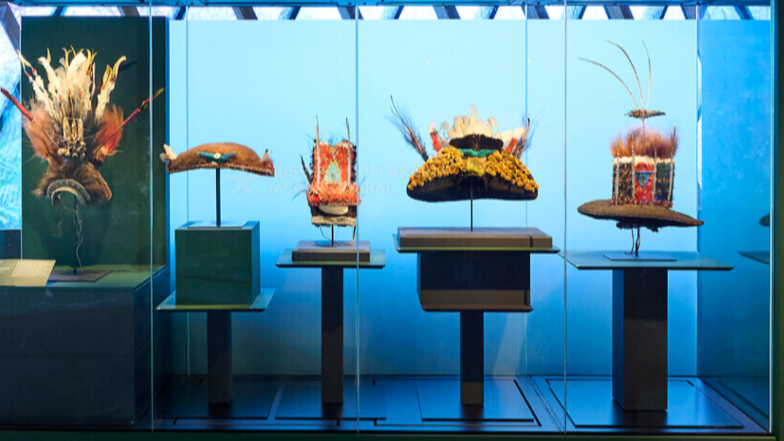
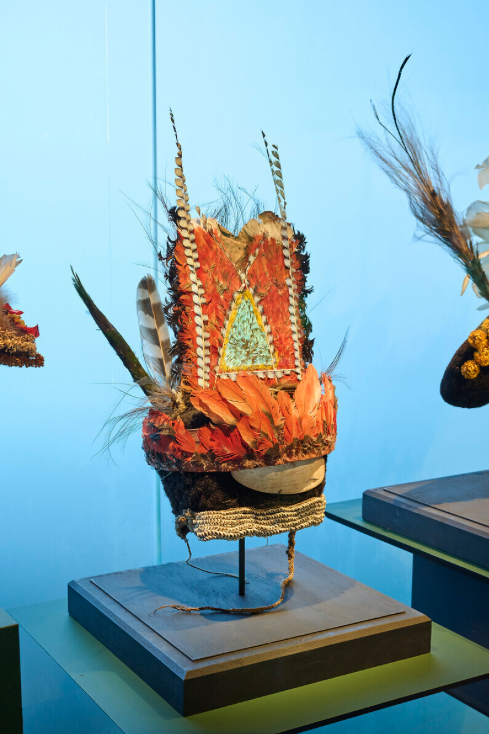
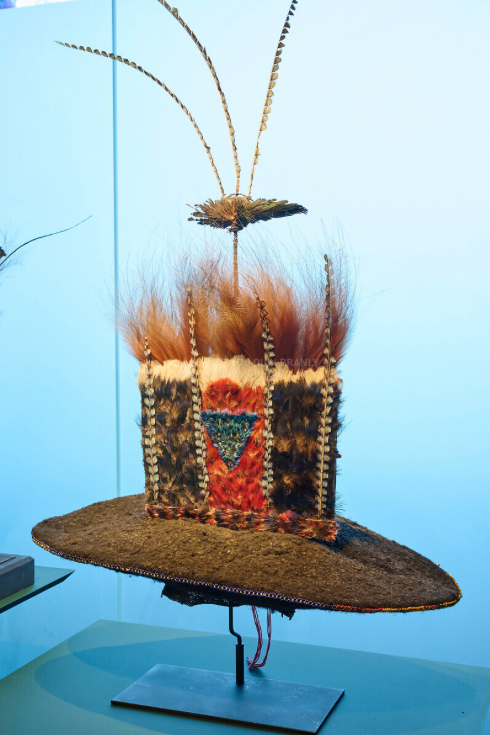
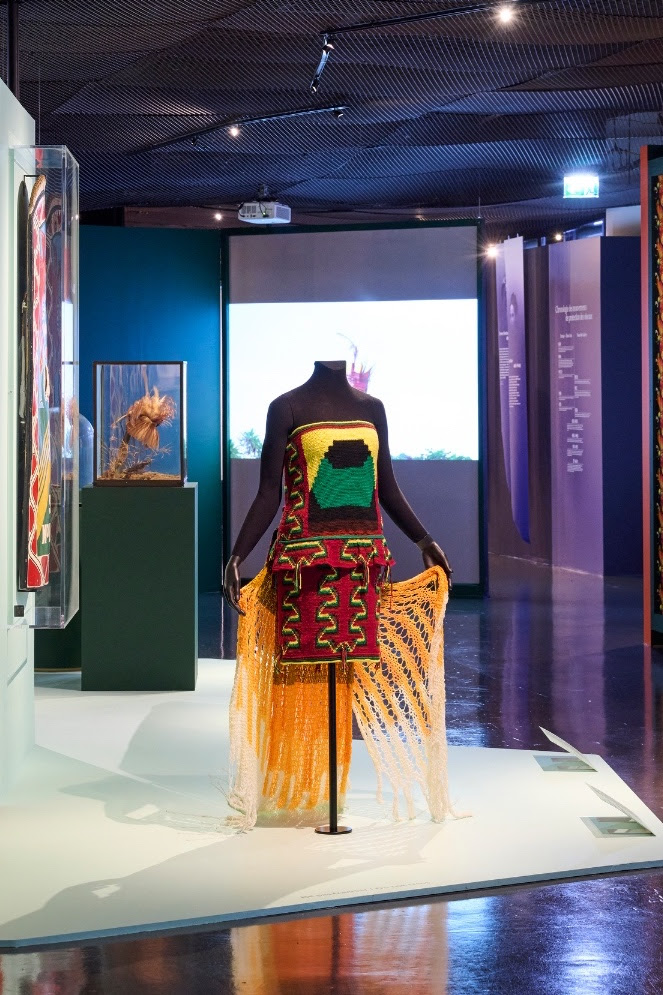
This is likely where the exhibition finds its balance: in its ability to shift the Western gaze. For the bird of paradise is not presented as a spectacular zoological curiosity but as a social form—a relational entity. The headdresses of the New Guinea Highlands, crafted from feathers, shells, pigments, oils, and plant fibers, reflect both hierarchies and alliances. Some headdresses require weeks of preparation; others involve the lending of feathers between clans, revealing systems of reciprocal obligations more complex than mere ceremonial use.
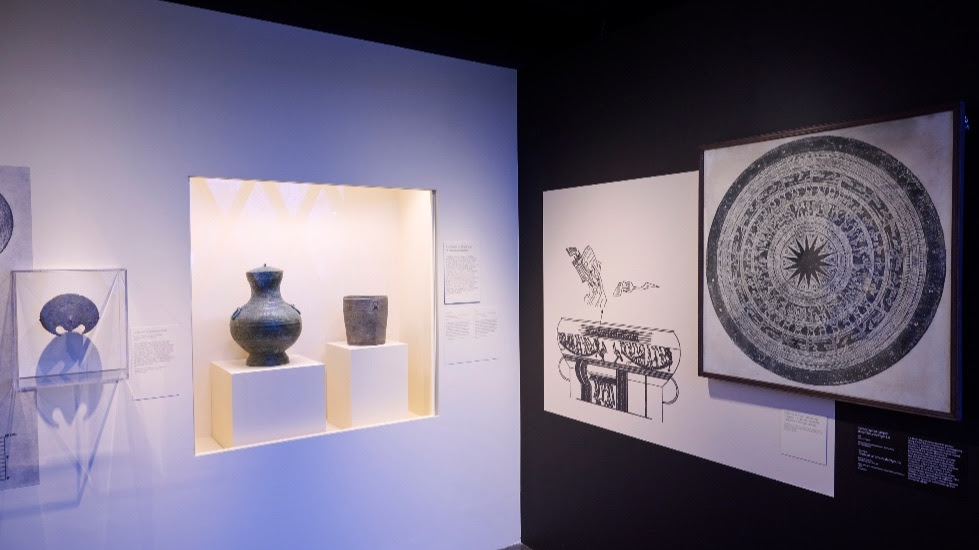
The narrative becomes particularly compelling when it connects this local symbolic economy to the major Asian and, later, European trade networks. As early as the fifth century, bird-of-paradise feathers and skins were traded between the Moluccas, Java, China, India, and later the Ottoman and Persian worlds. The exhibition meticulously documents this shifting geography: the monsoon winds, the stopover ports, the trade for ceramics, glass beads, or textiles, all the way to the 19th-century Nepalese crowns, where the plumes of the great emerald bird-of-paradise became symbols of sovereignty.
The discussion thus takes on a very contemporary resonance. Behind the aesthetic fascination lies a global history of the extraction of living organisms. At the turn of the 20th century, the intensification of the trade in feathers for Western fashion led to massive overexploitation of species and contributed to the emergence of the first animal protection movements. Looking at these archives, it’s impossible not to think of today’s dynamics surrounding rare materials: exotic leather, precious woods, critical minerals, or industrially produced cashmere. The luxury industry changes its vocabulary faster than it sometimes changes its underlying logic.
The exhibition, however, avoids a simplistic analysis. Instead, it shows how the desire for possession developed in successive layers: scientific fascination, colonial imagination, the pursuit of prestige, and the appropriation of clothing. The section devoted to contemporary research on the ultra-black, iridescence, and biofluorescence of feathers even prompts an unexpected reflection on the materiality of color. Some feather barbules absorb light almost entirely; others produce three-dimensional optical effects perceptible only from the female’s angle of view during courtship displays. At a time when contemporary fashion is increasingly incorporating technical textiles and photonic surfaces, these biological structures appear less as natural curiosities and more as advanced forms of design.
We should also commend a curatorial choice that has become rare: the decision to make room for silence and ambivalence. The museum does not seek to transform the bird of paradise into an immediately consumable universal ecological symbol. It embraces contradictions. The bird is at once a source of wonder, a medium of exchange, a ceremonial symbol, a global commodity, and the national emblem of Papua New Guinea since its independence in 1975.
In many contemporary exhibitions devoted to living things, moral judgment often takes precedence over observation. *Feathers of Paradise* takes the opposite approach. First, observe. Then understand how a single feather can contain an entire cosmology, only to become a fashion accessory in London or Paris. In between, there are sea routes, empires, anthropologists, taxidermists, seamstresses, and collectors. A history of the human gaze, in short.

Cette publication est également disponible en :

