
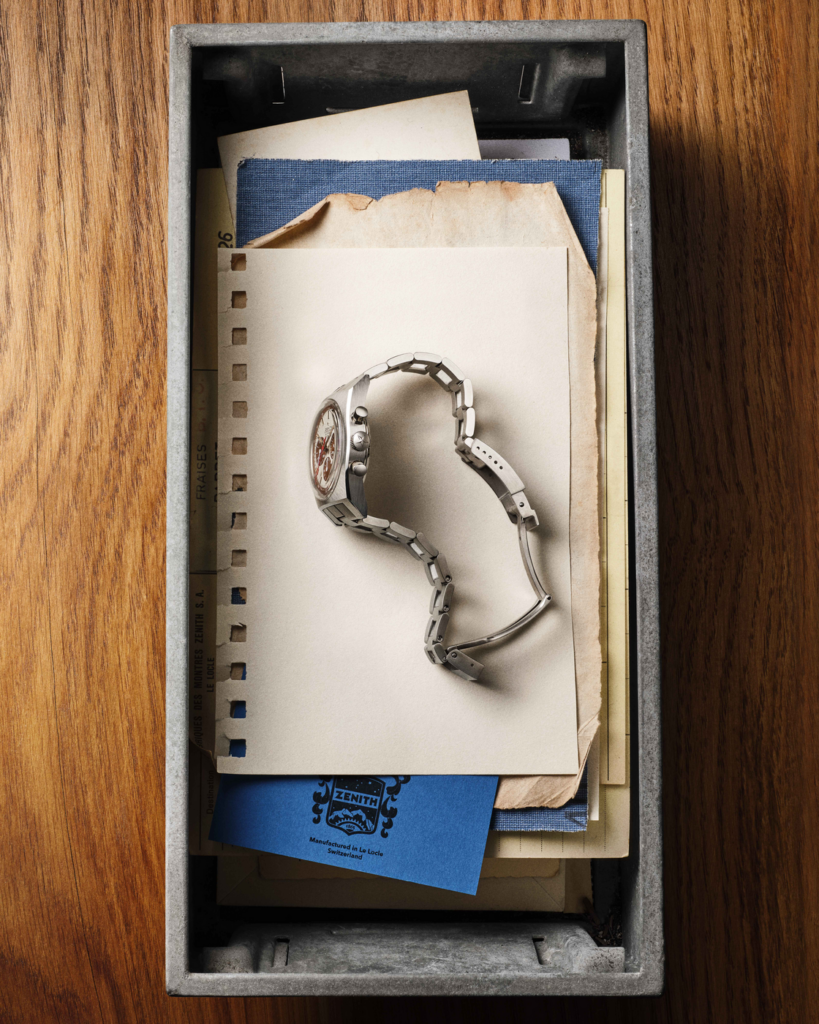
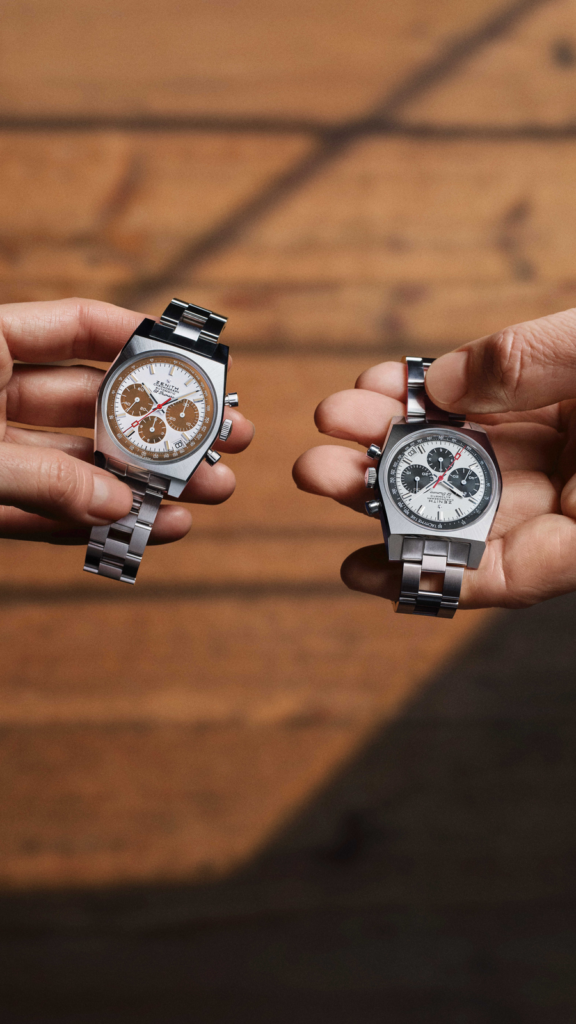
Before automatic movements, the chronograph required a daily ritual: manual winding. In 1969, the El Primero caliber shifted this ritual into a new era—that of integrated high-frequency movement. With the CHRONOMASTER Revival A384 Tropical, ZENITH returns to this pivotal moment—not out of nostalgia, but through careful observation of a phenomenon long considered accidental: the patina of so-called “tropical” dials.
This is no trivial matter. In recent years, the secondary market has come to value the controlled signs of aging—such as slight oxidation, darkened lacquer, and materials that have become more complex under the influence of ultraviolet light—more than immaculate perfection. What was once considered a flaw has now become an aesthetic language in its own right. Here, ZENITH has chosen not to reproduce an antique watch, but to recreate the visual memory of its aging. This is an important distinction.
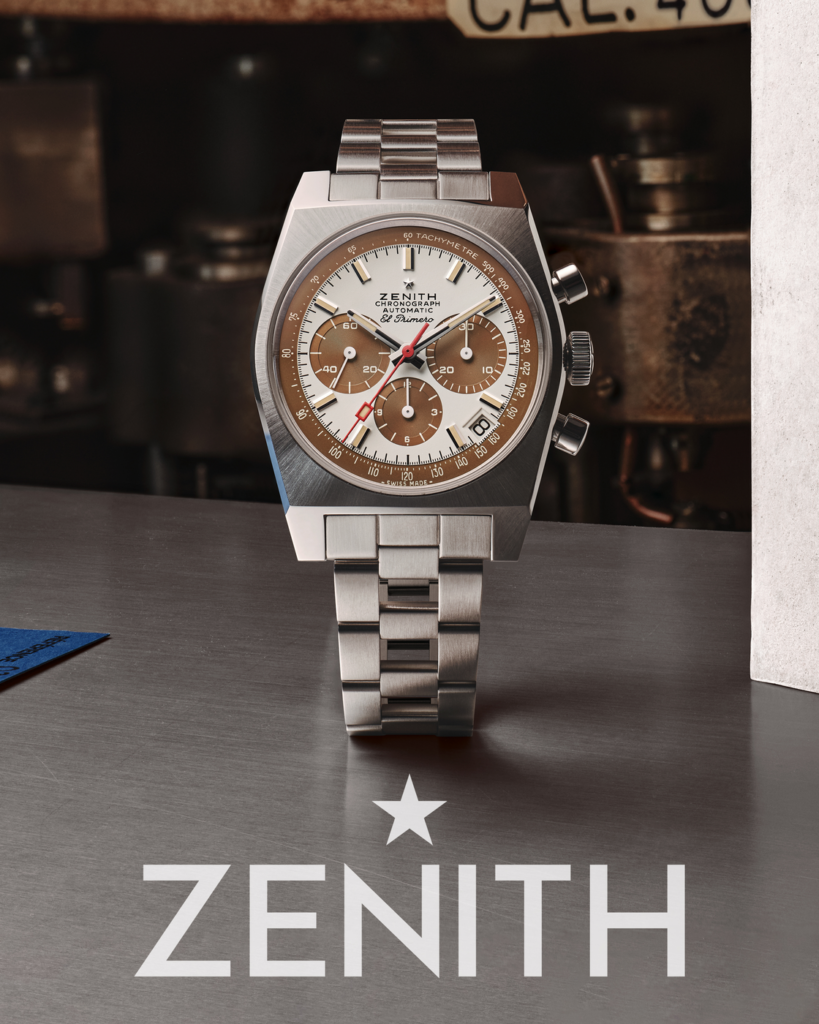
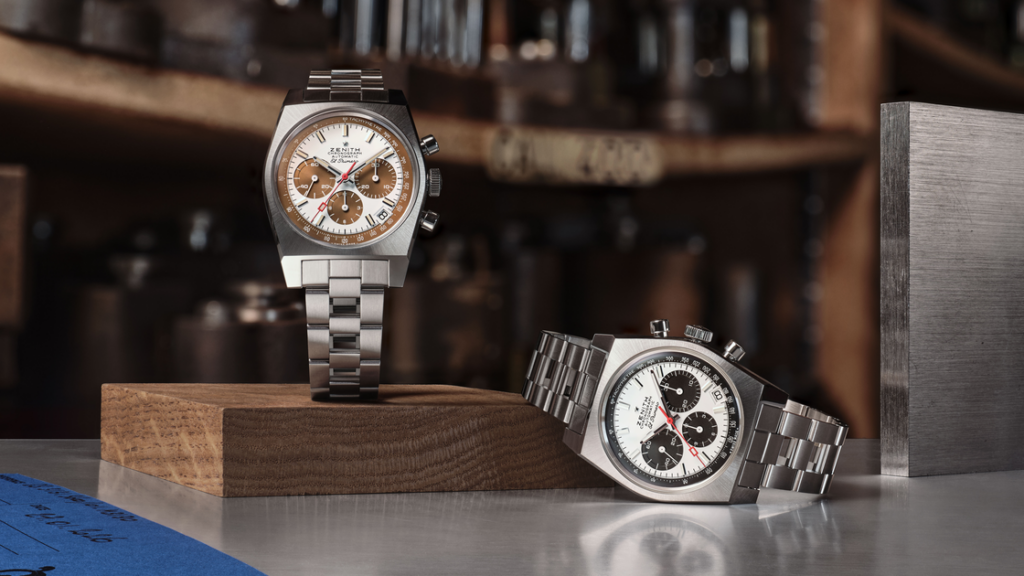
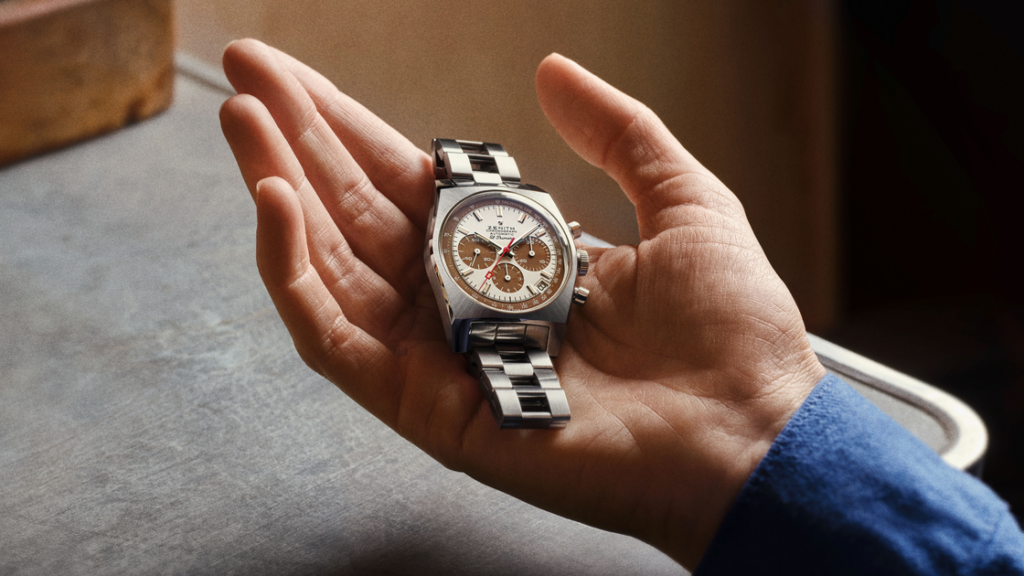
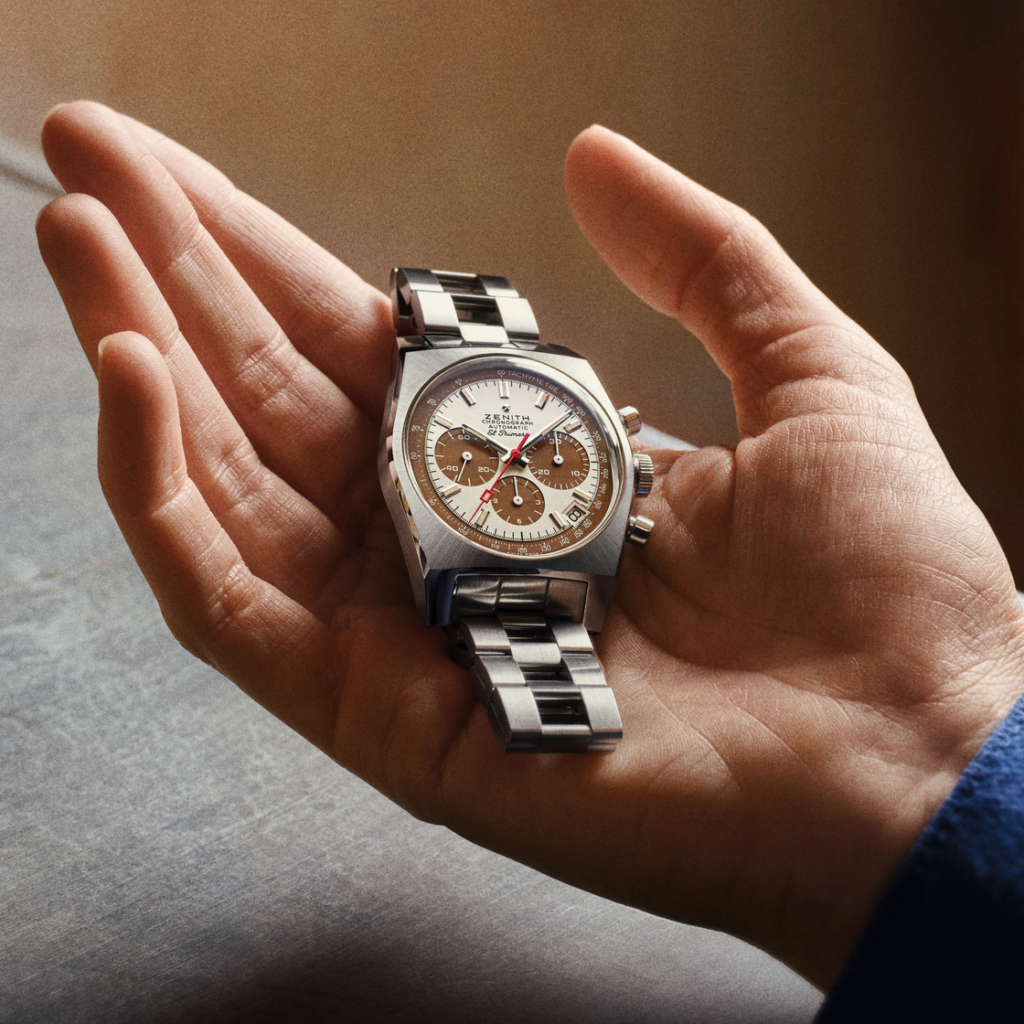
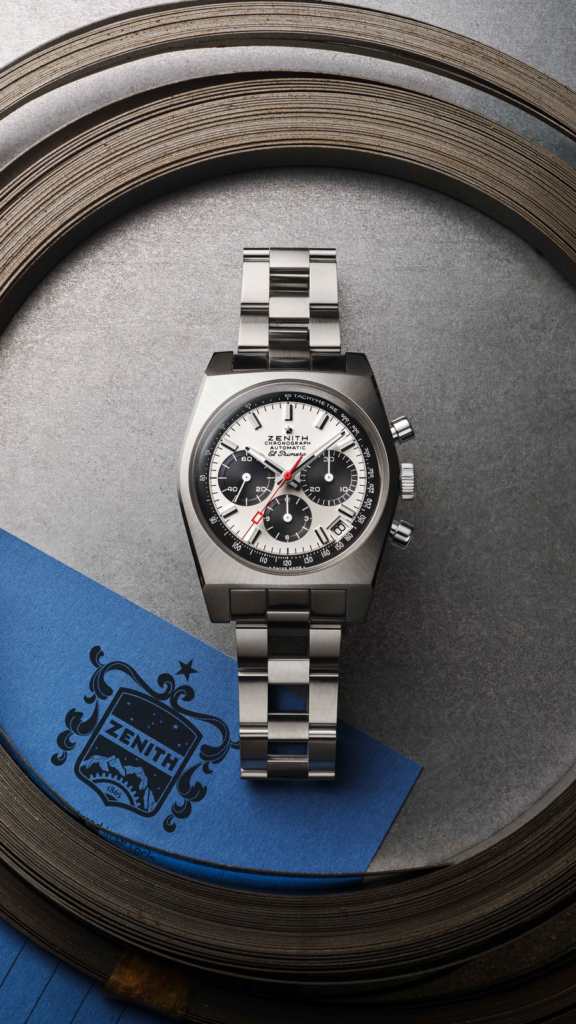
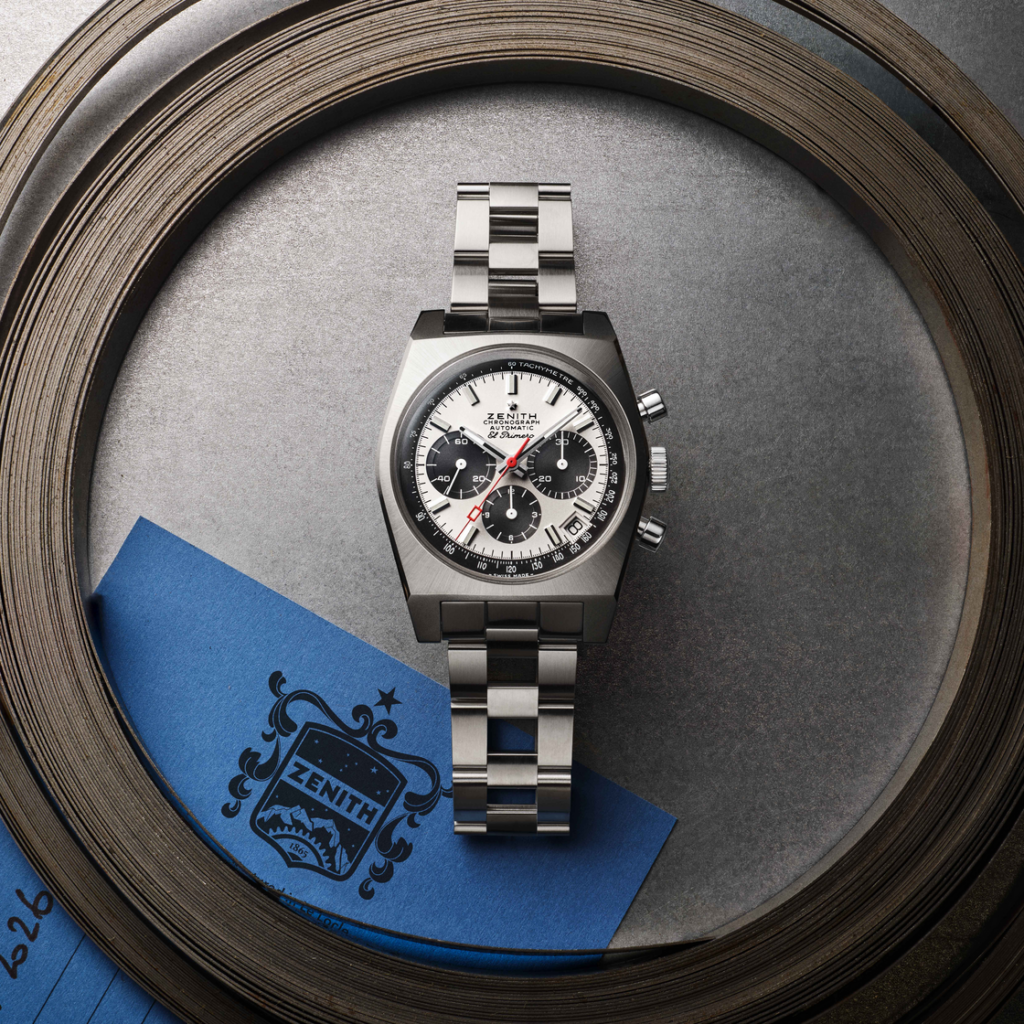
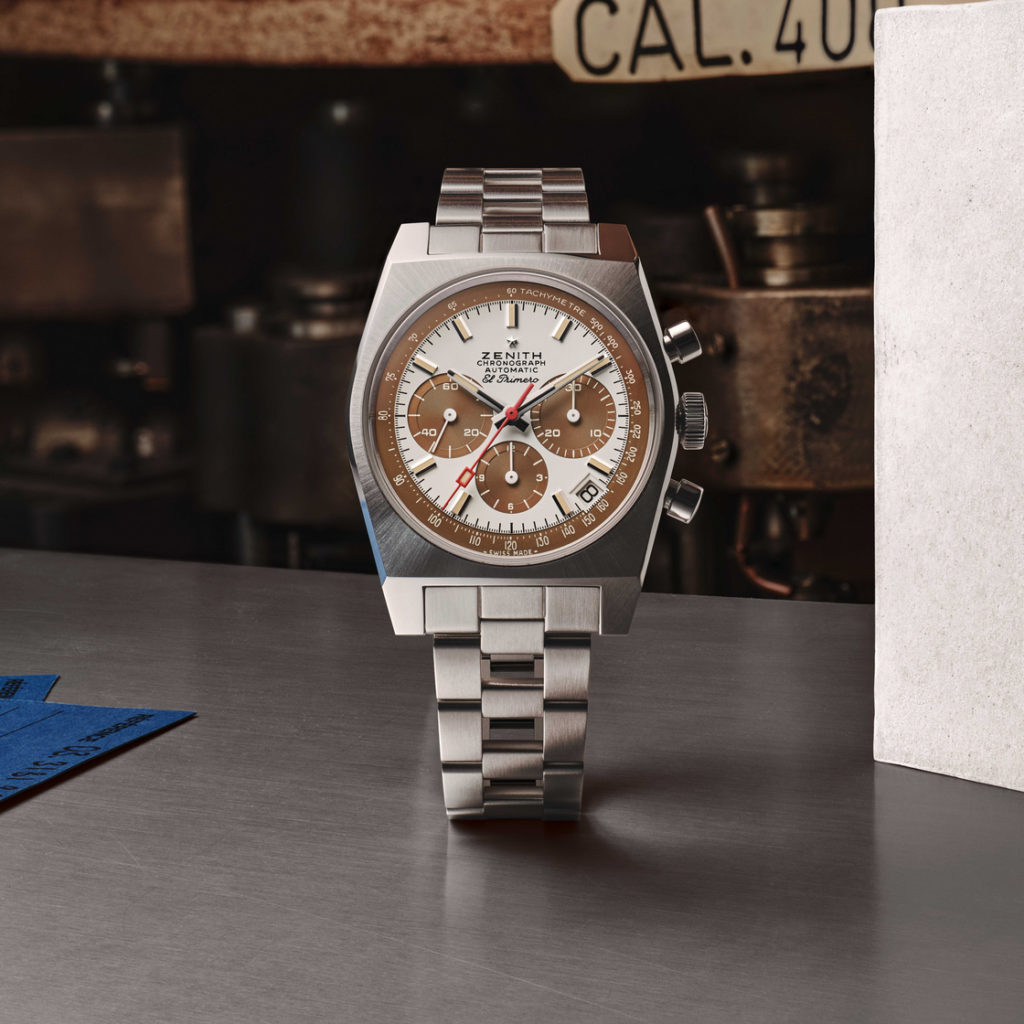
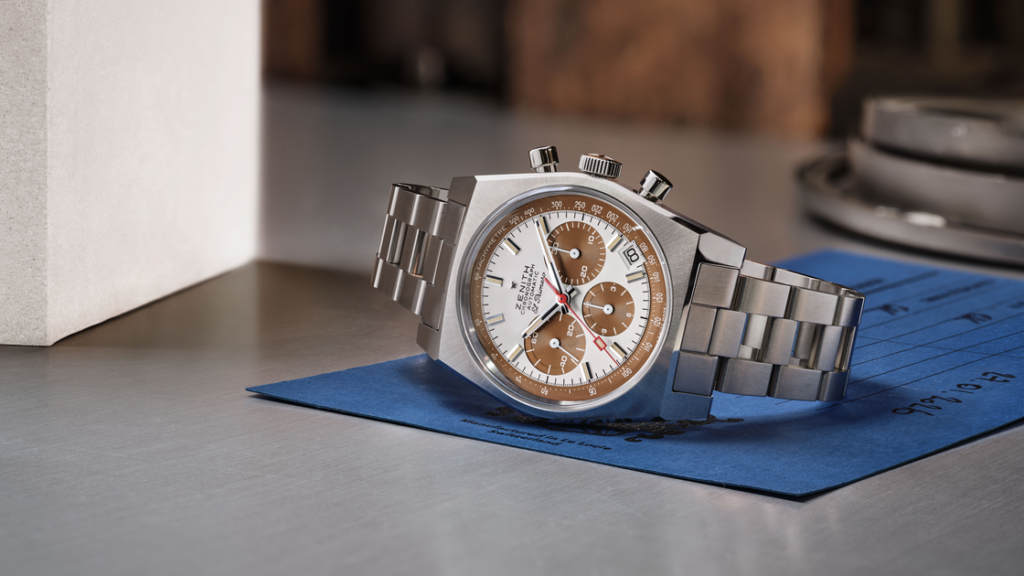
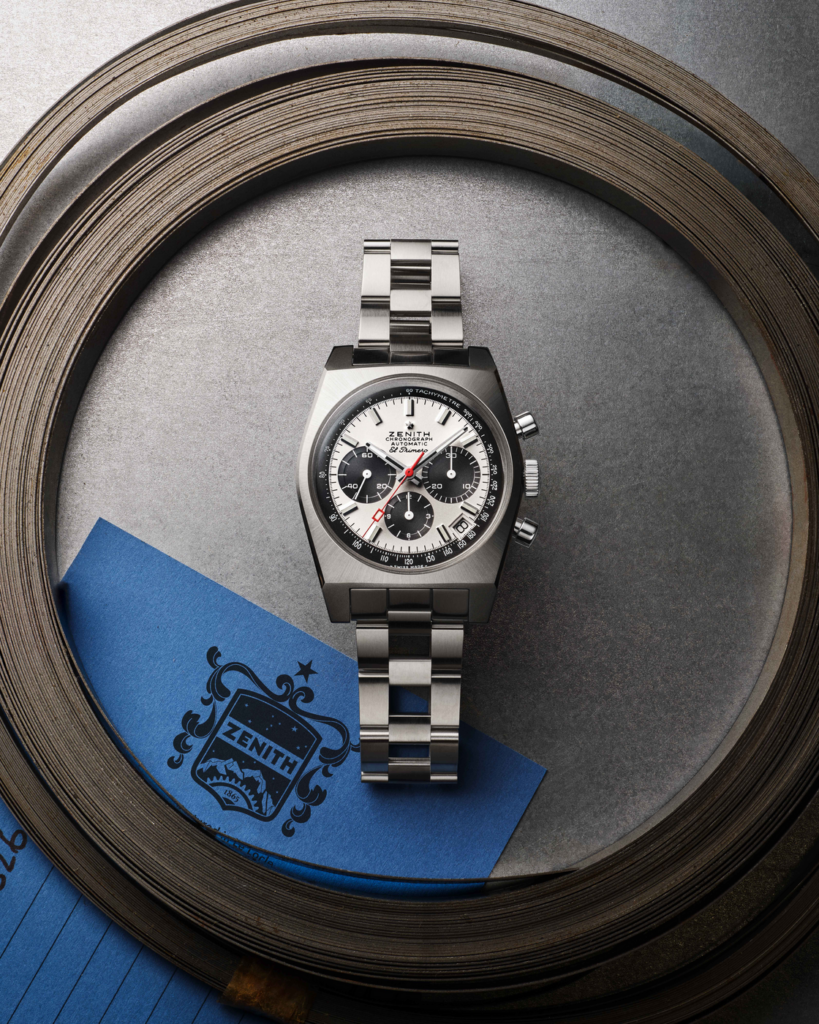
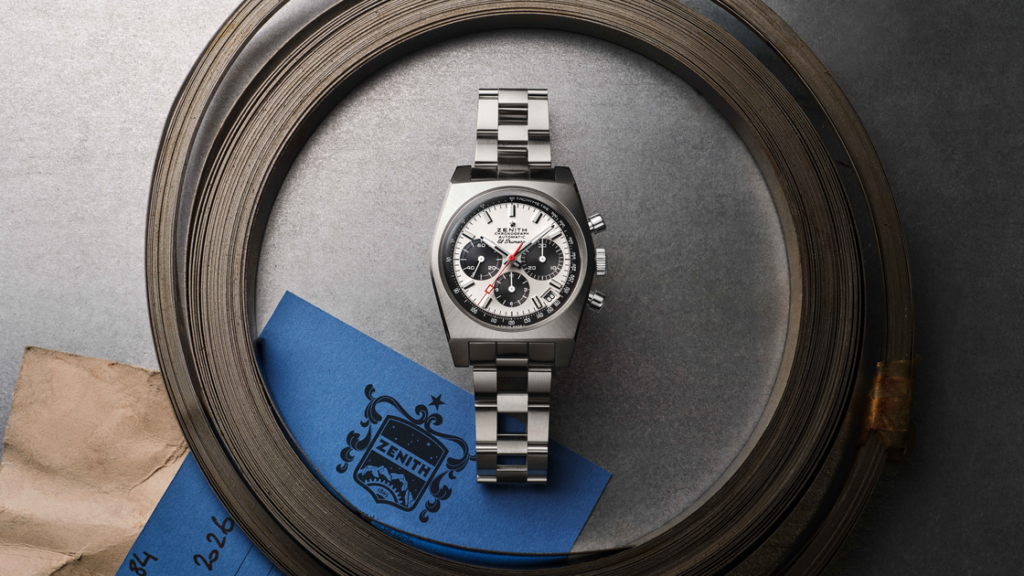
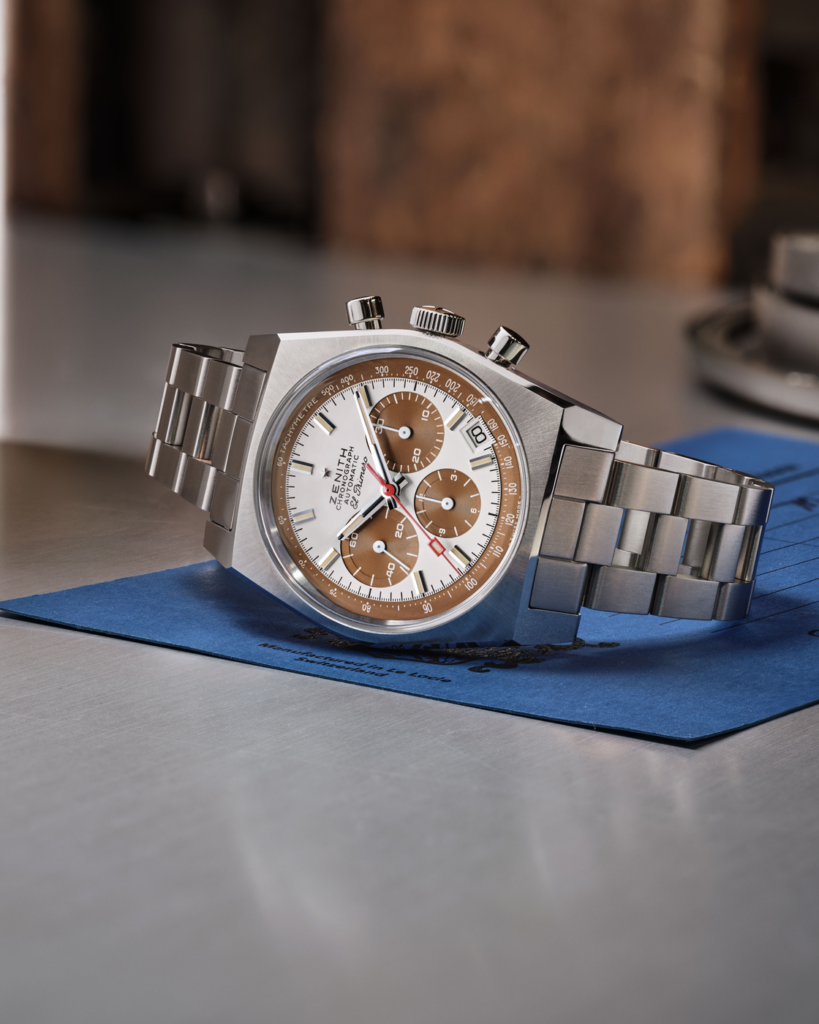
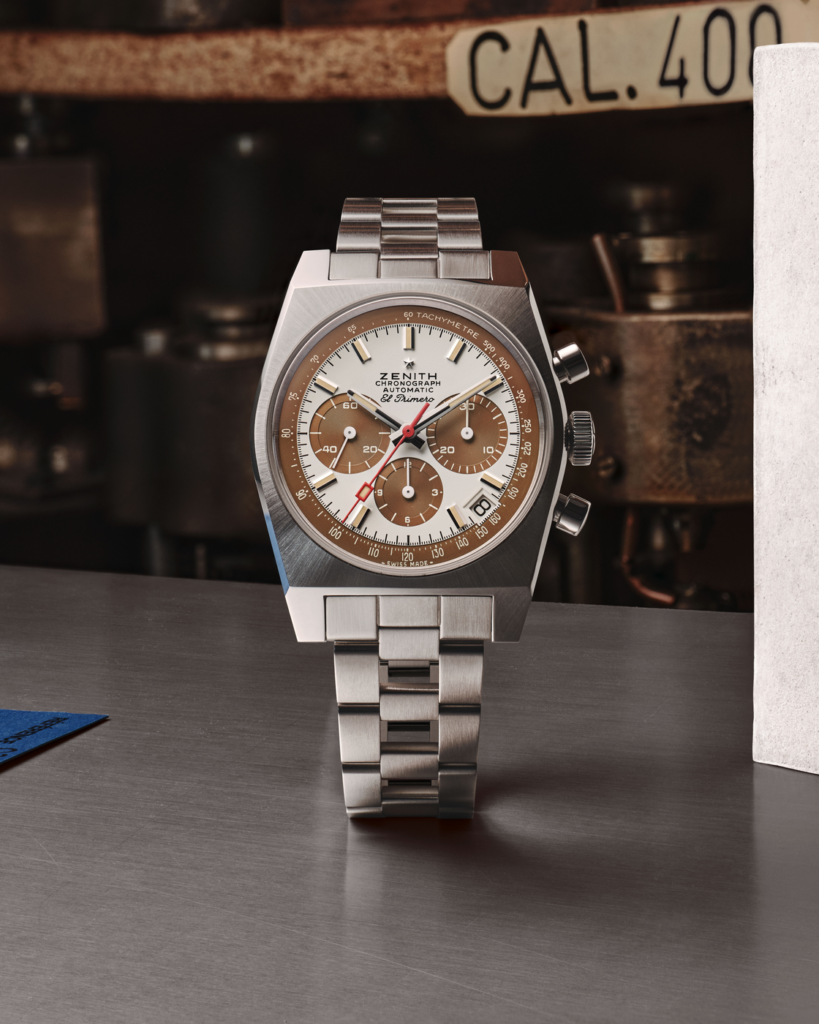
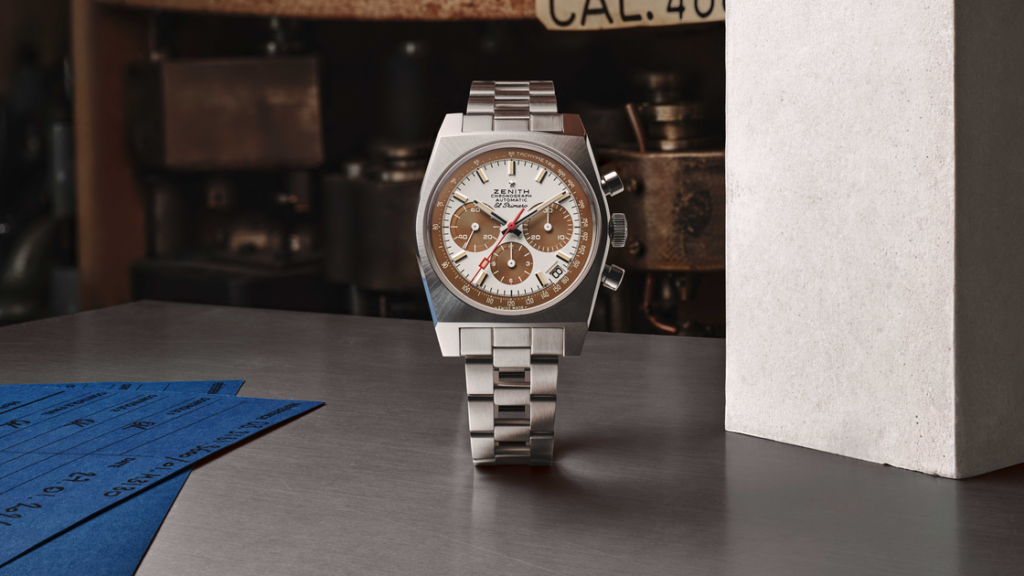
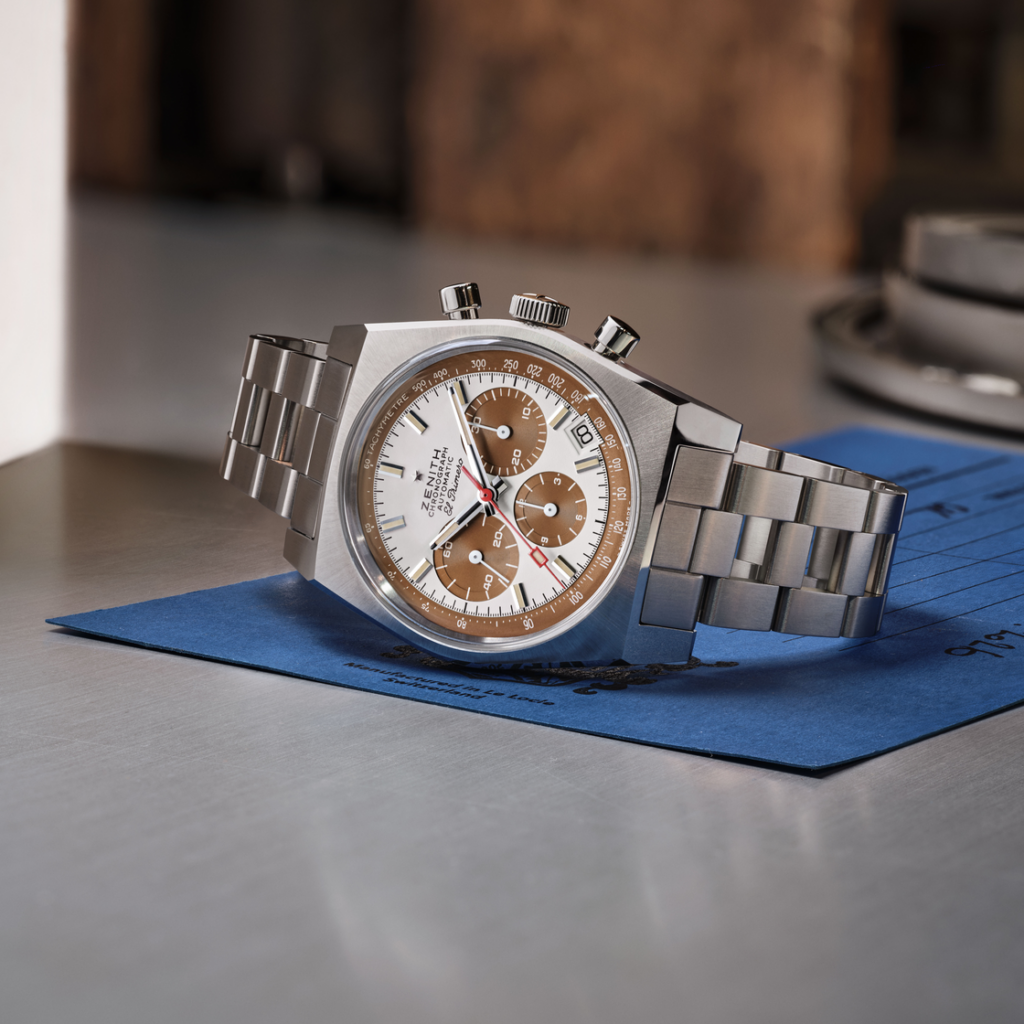
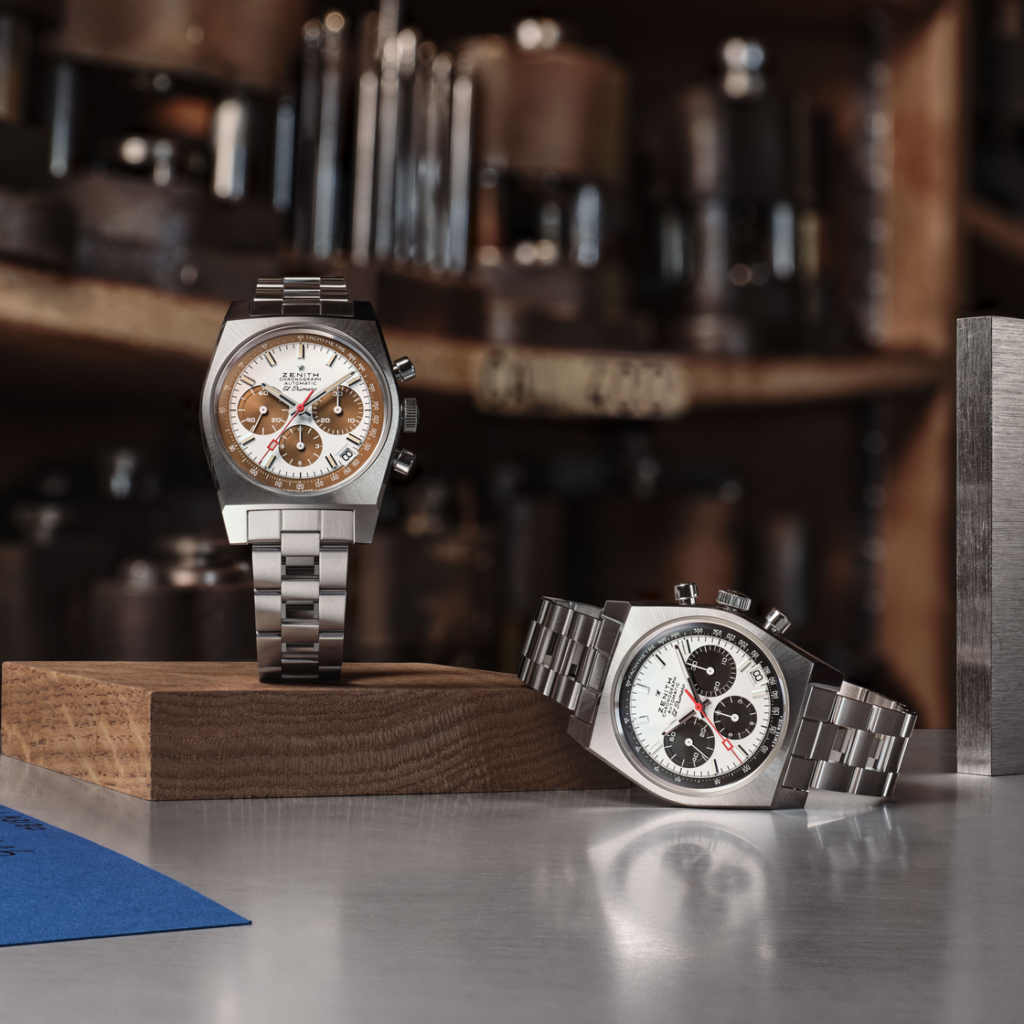
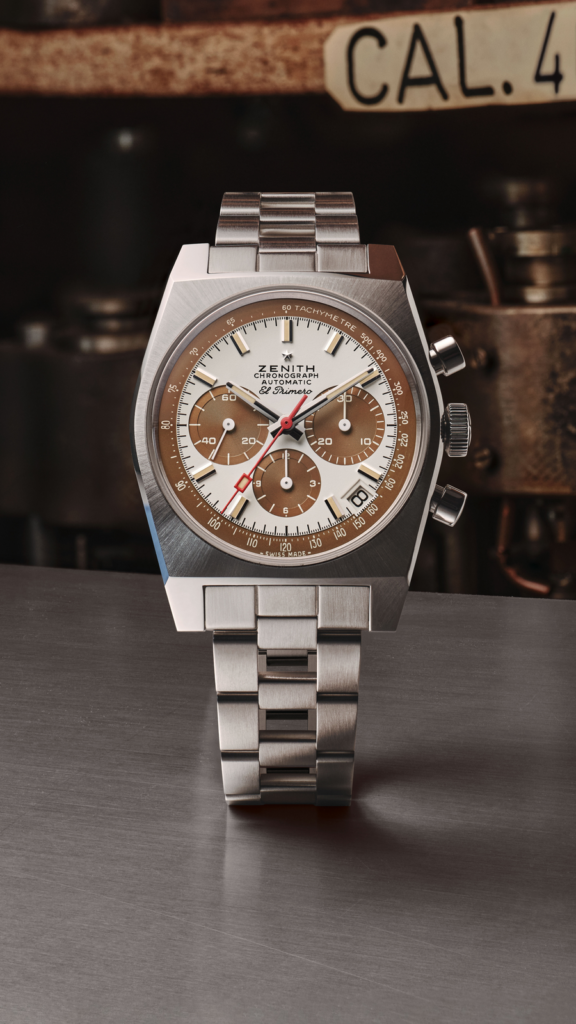
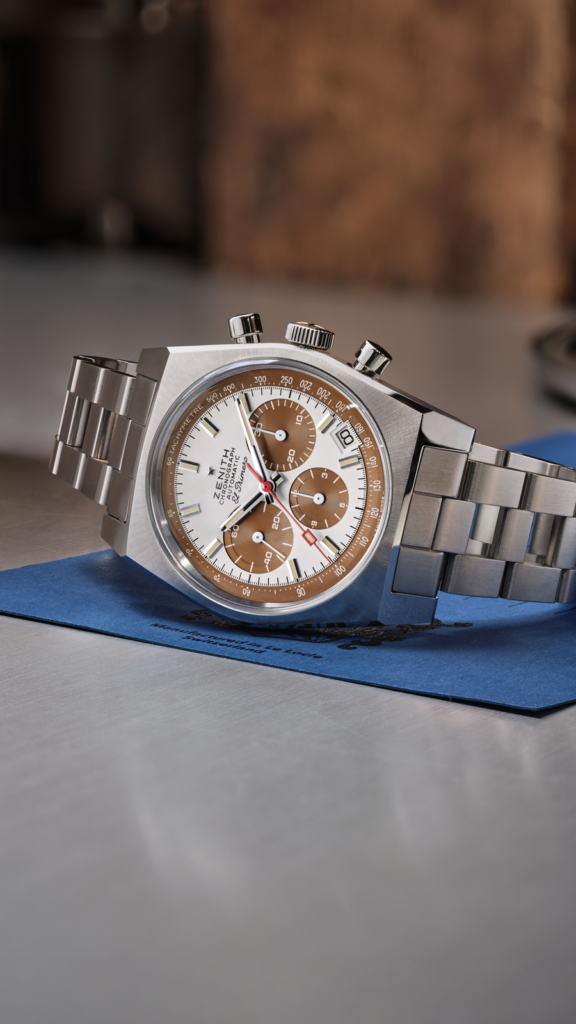
The watch replicates the exact proportions of the original A384: a 37-mm barrel-shaped steel case, directly derived from the 1969 blueprints, featuring pump-style pushers and alternating polished and brushed surfaces. At a time when case diameters are often increasing to make a statement, this more restrained size almost serves as a silent manifesto.
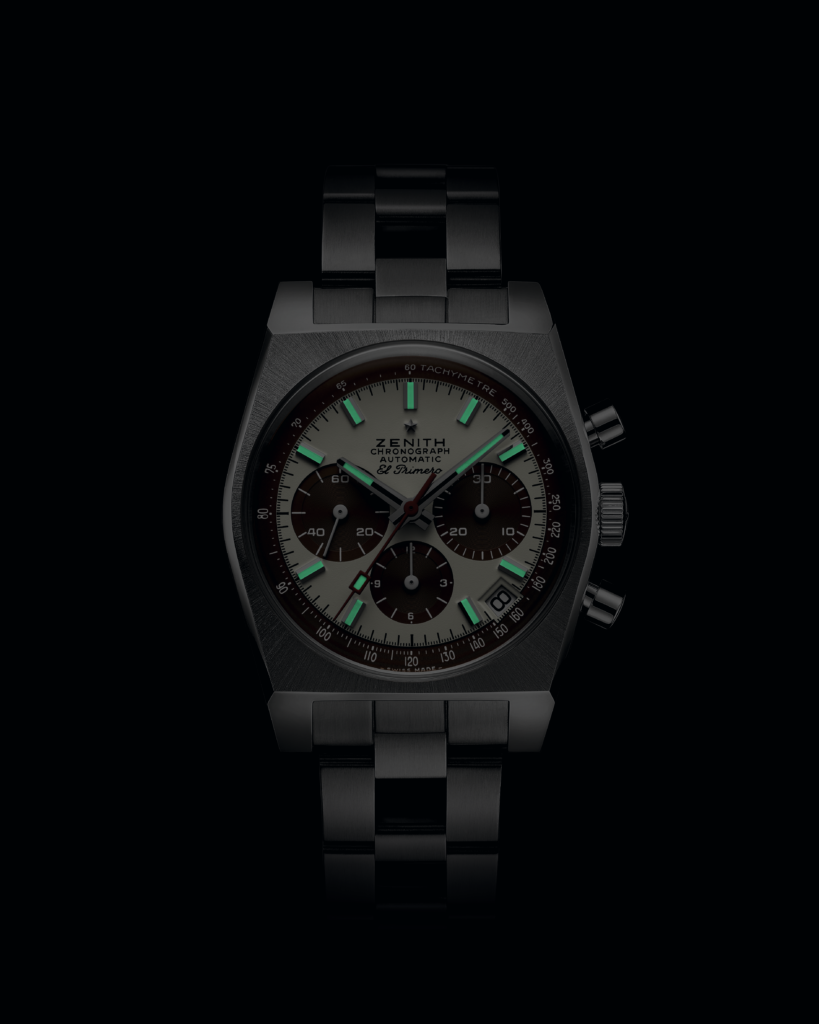
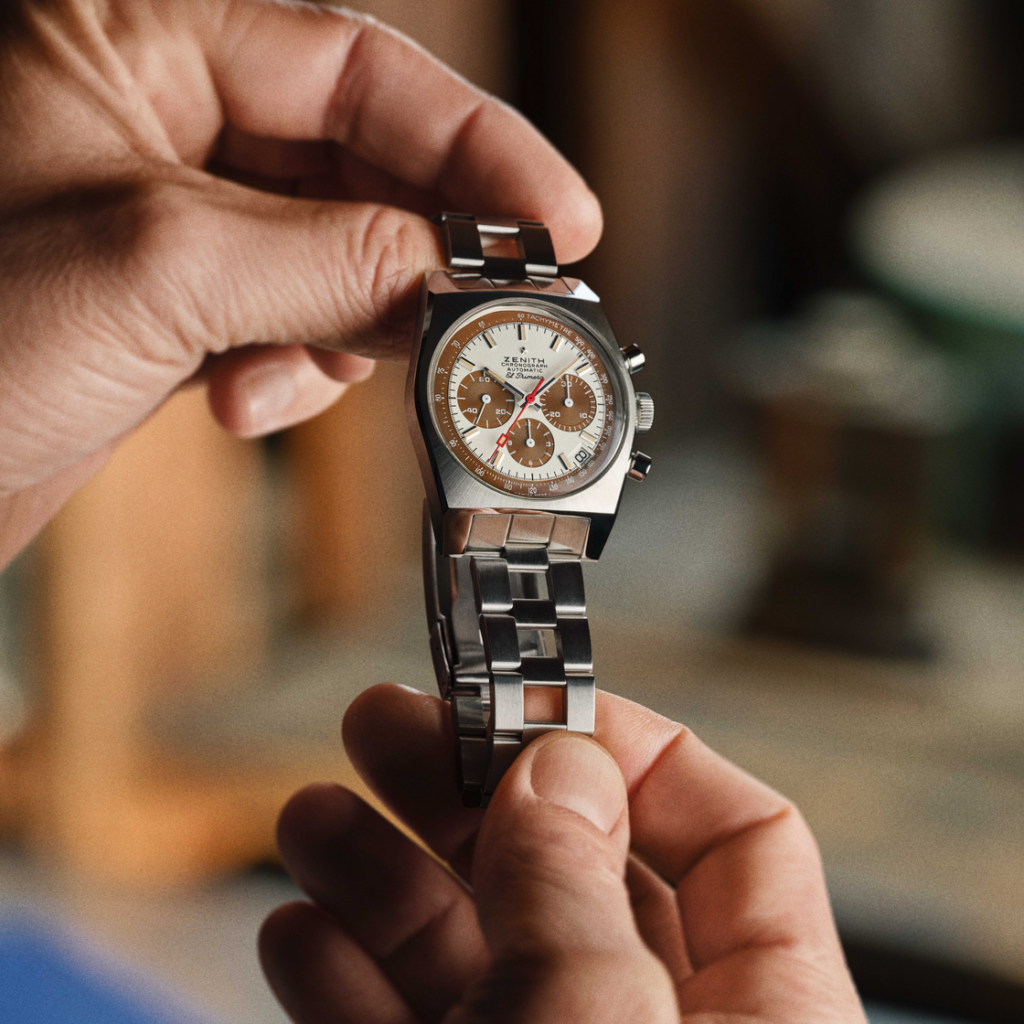
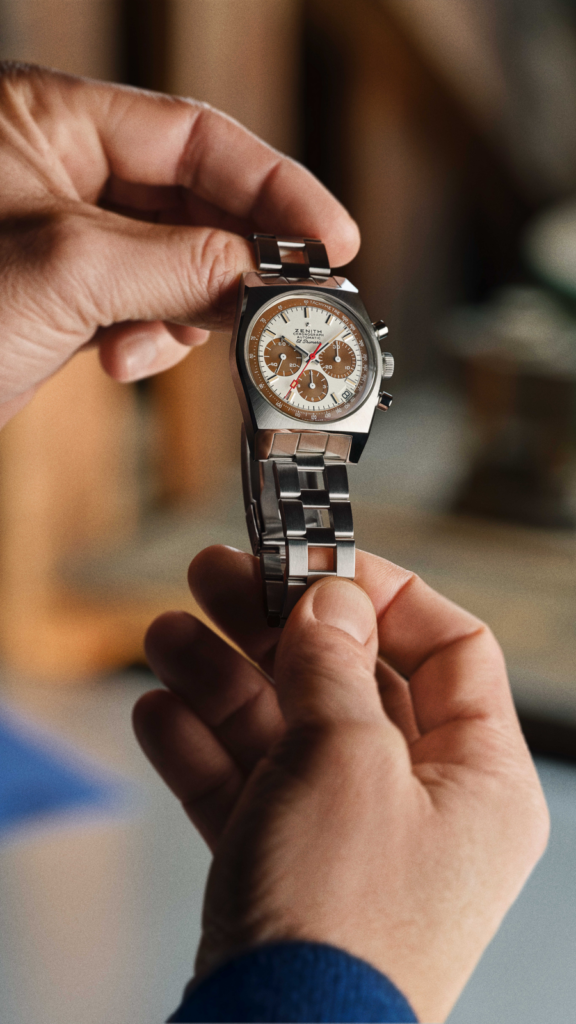
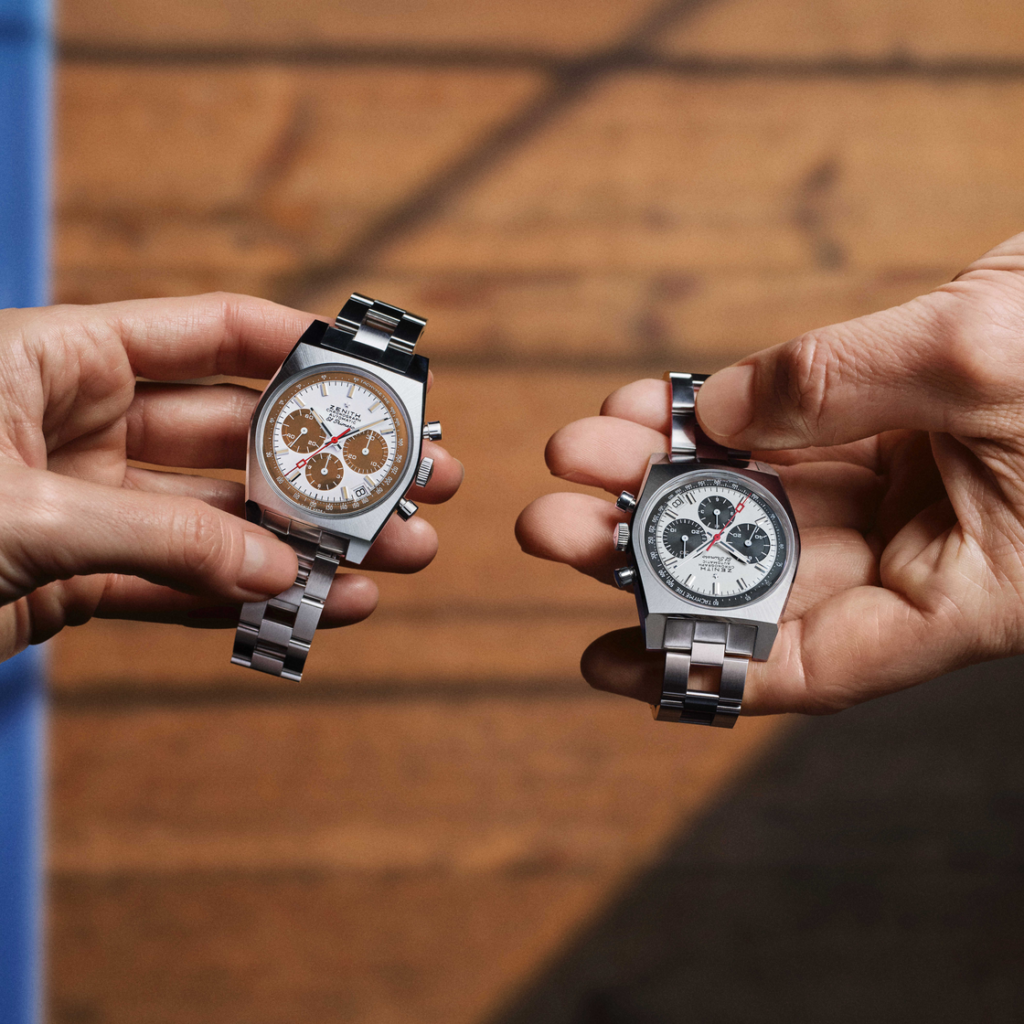
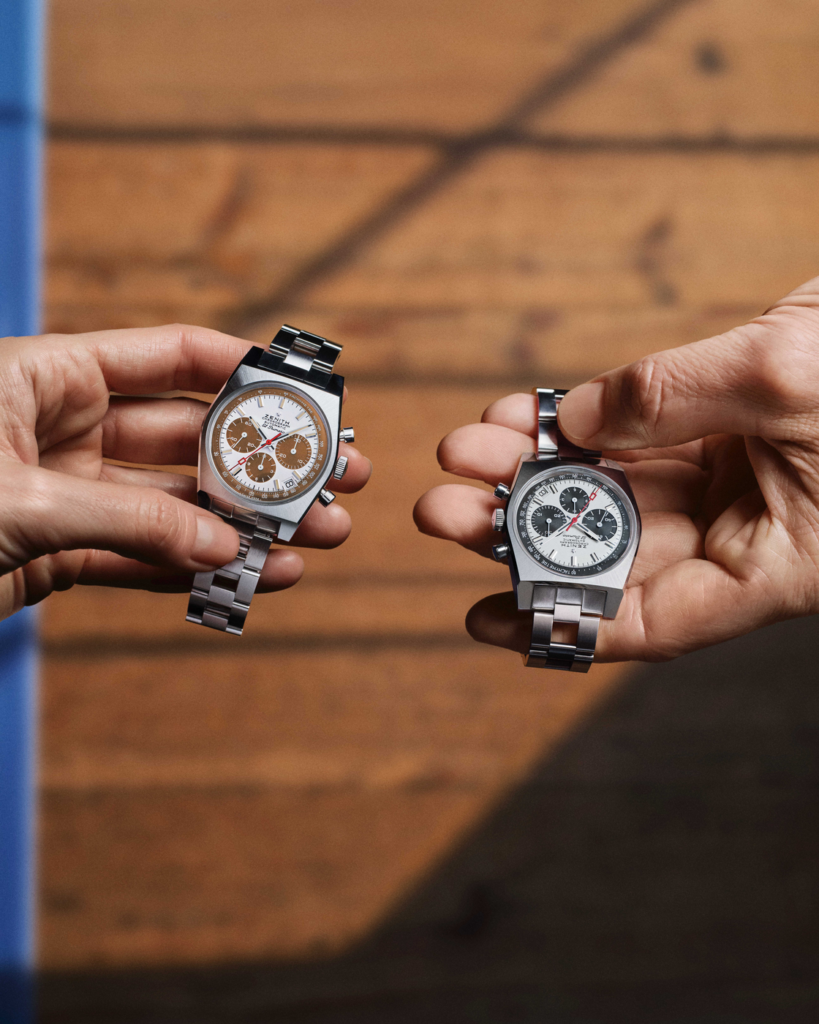
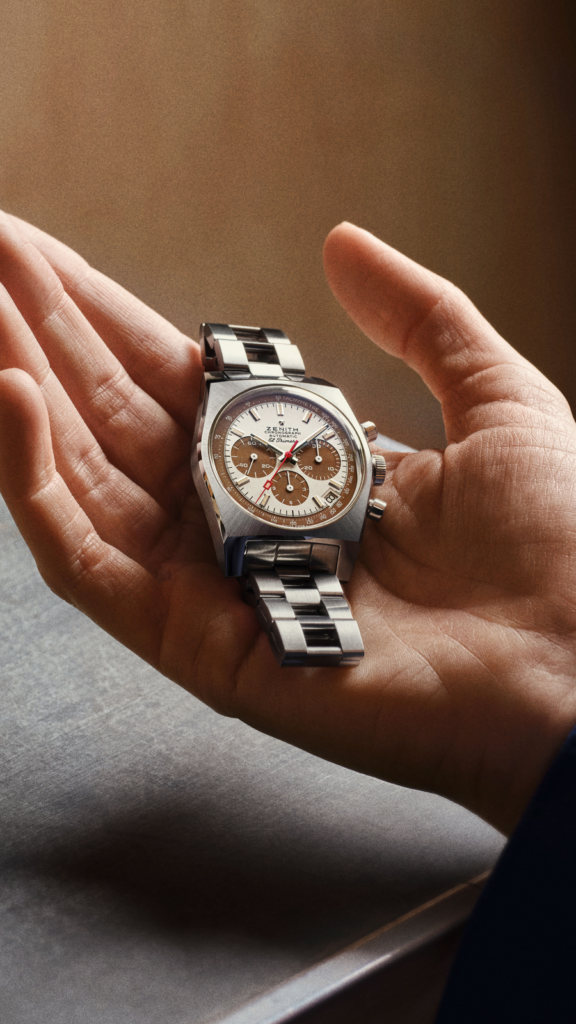
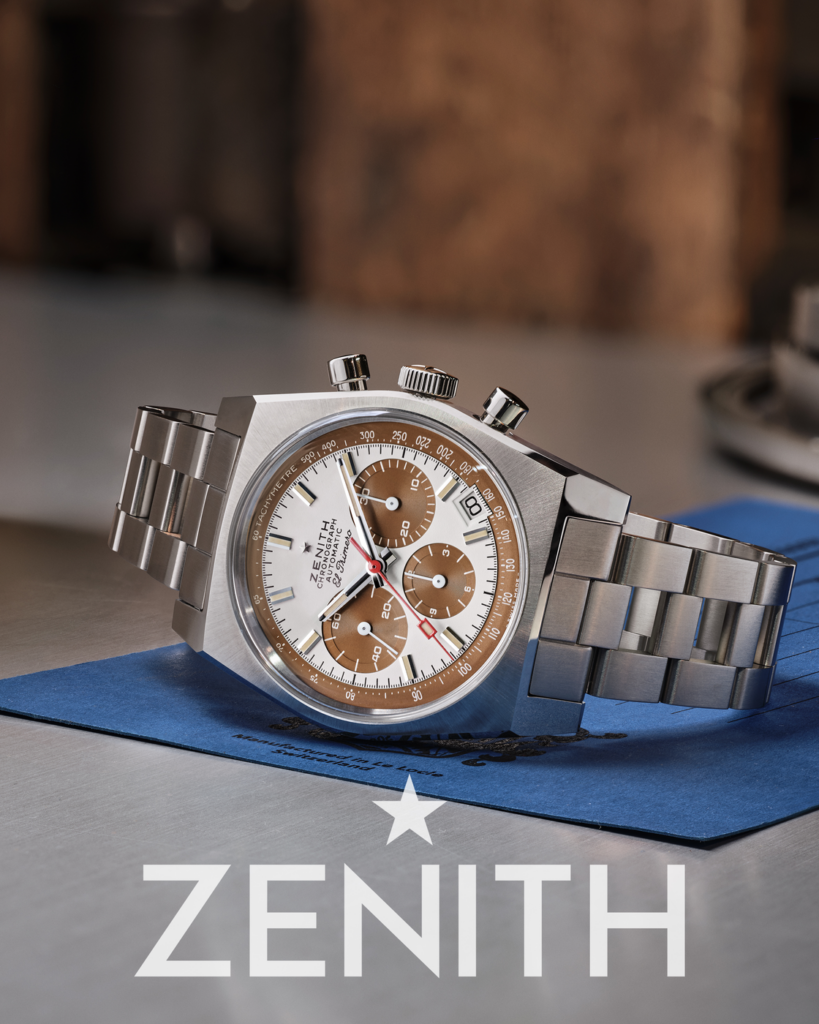
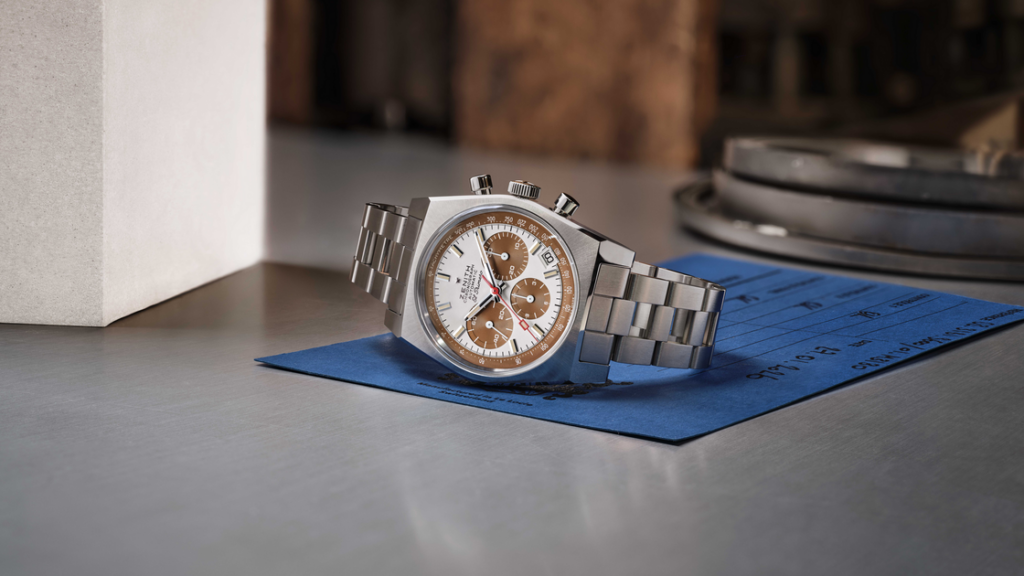
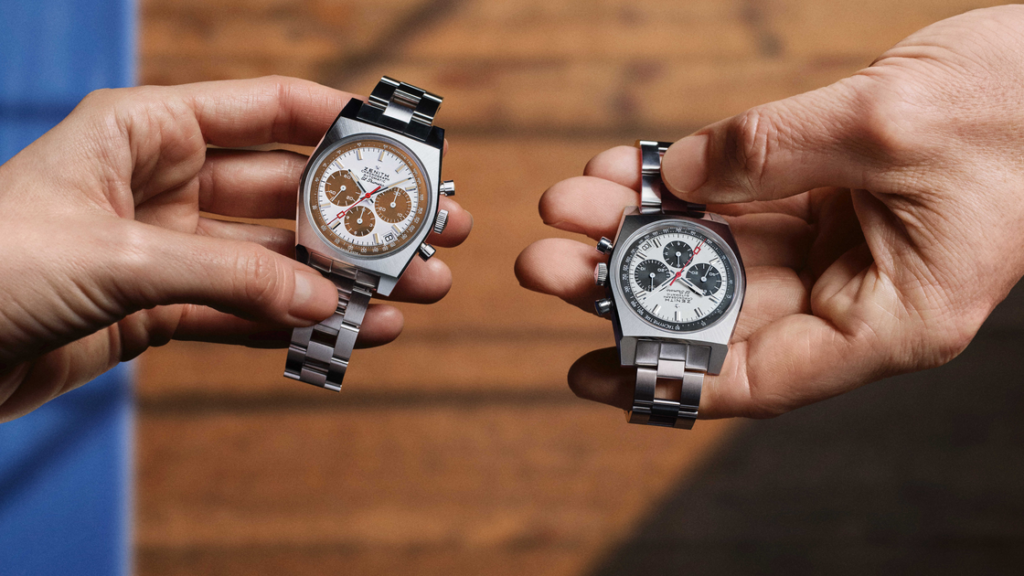
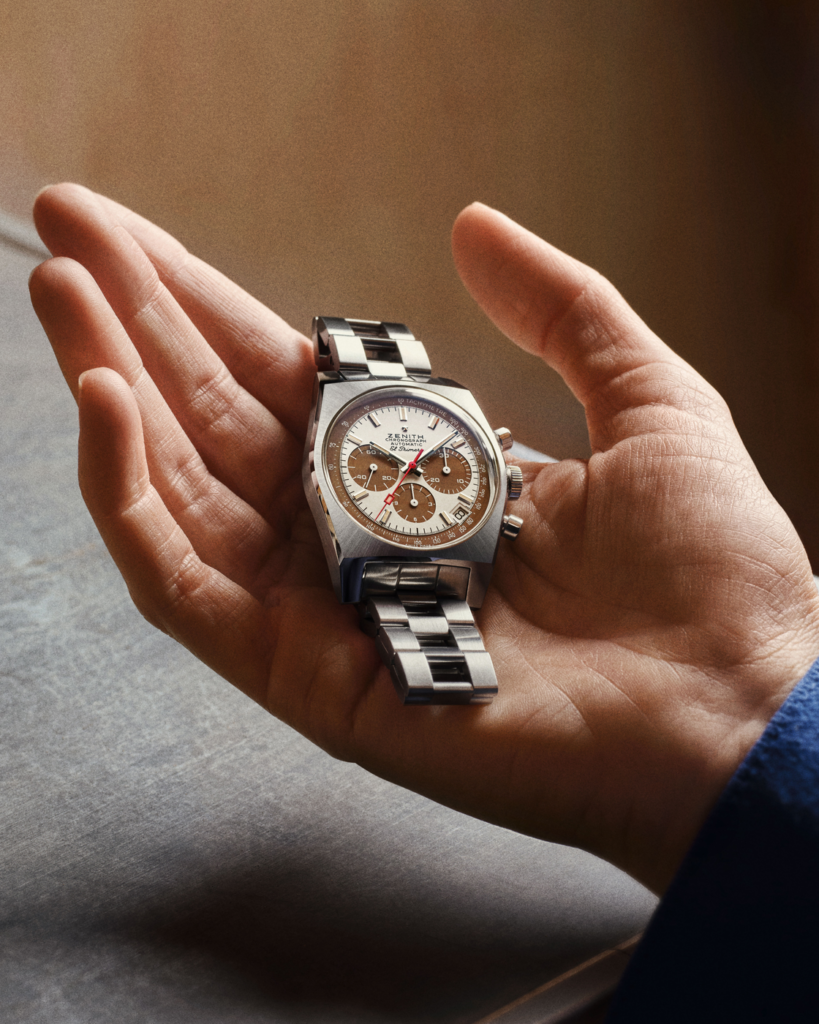
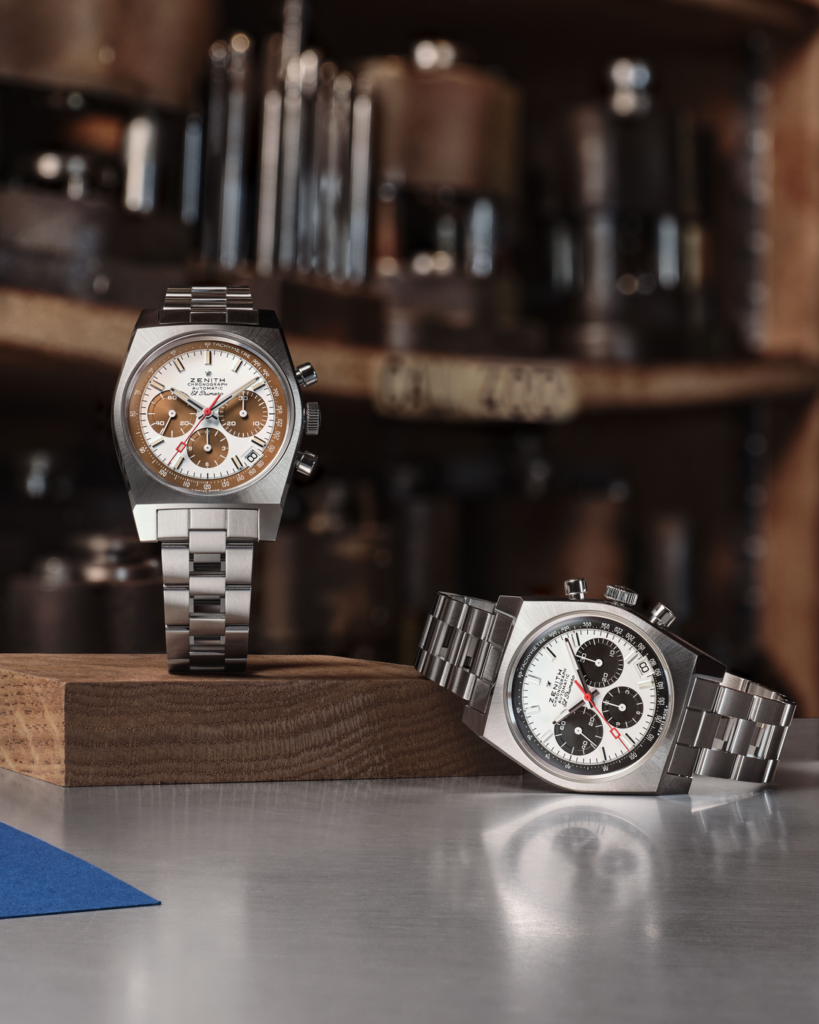
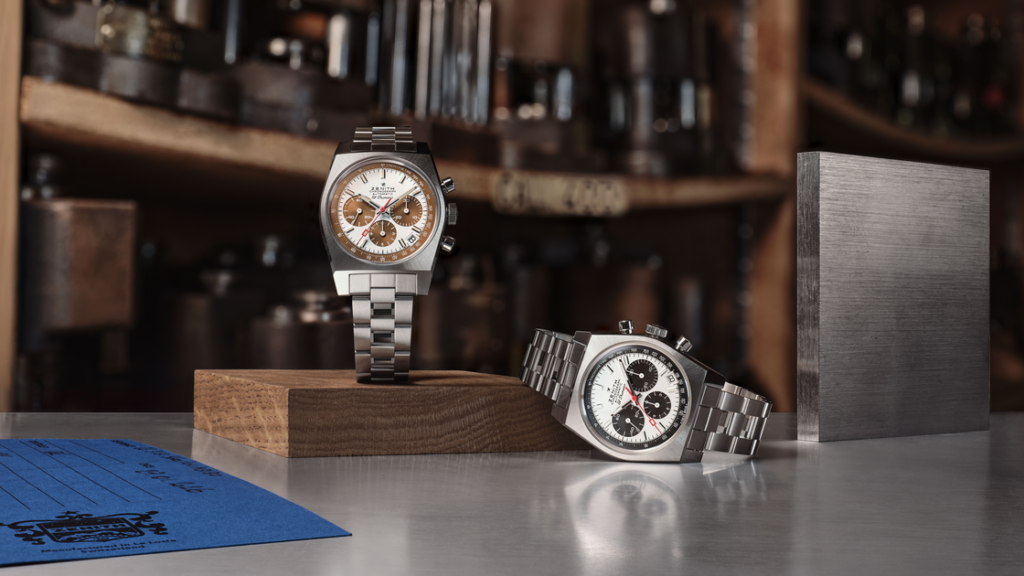
The dial rests on a white lacquered base featuring three deep brown sub-dials in a configuration known as “chocolate panda.” The term might seem trivial; yet it reveals a precise study of optical depth. The applied faceted hour markers and hands are treated with “aged radium”-tinted Super-LumiNova, replicating the chromatic ambiguity of vintage pieces without replicating their material limitations. A red central hand breaks this almost sepia-toned balance. It serves as a reminder that the El Primero remains, first and foremost, a timekeeping instrument rather than merely a collector’s item.
Beneath the dial, the El Primero 400 caliber continues this tradition of continuity. A direct descendant of the 3019 PHC introduced in 1969, this integrated automatic movement beats at 36,000 vibrations per hour—or 5 Hz—enabling a readout accurate to one-tenth of a second. Comprising 278 components and featuring a fifty-hour power reserve, it remains one of the few historic movements to have stood the test of time without compromising its mechanical identity.
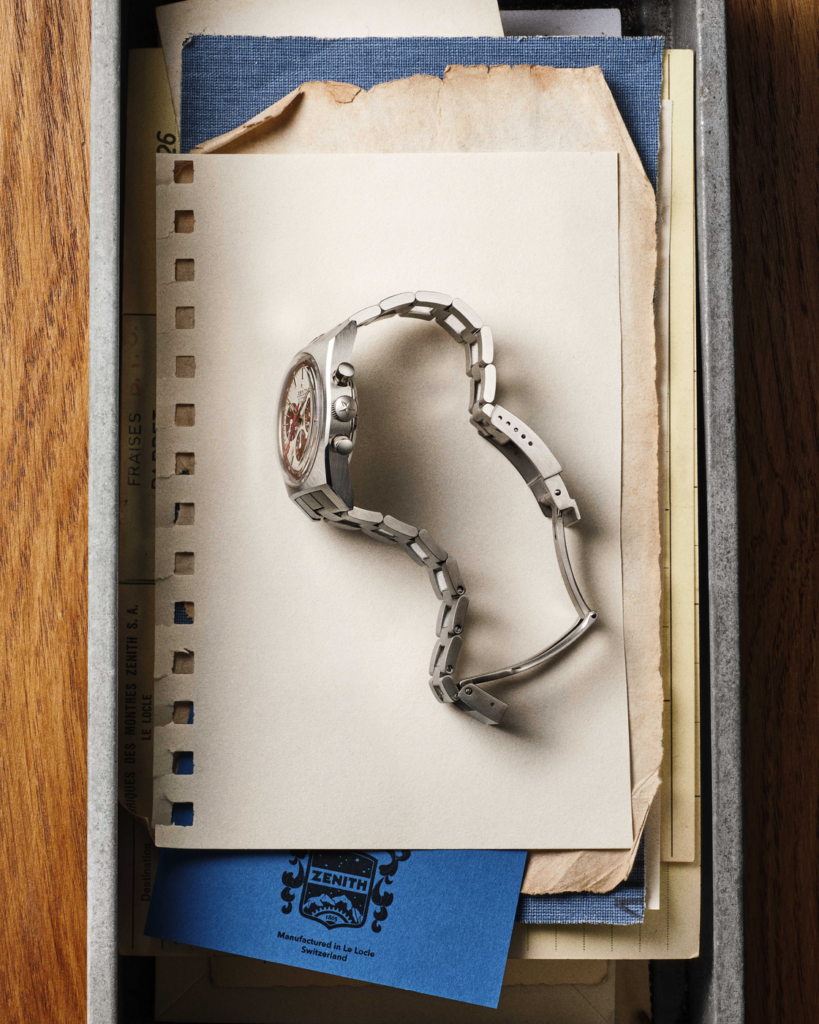
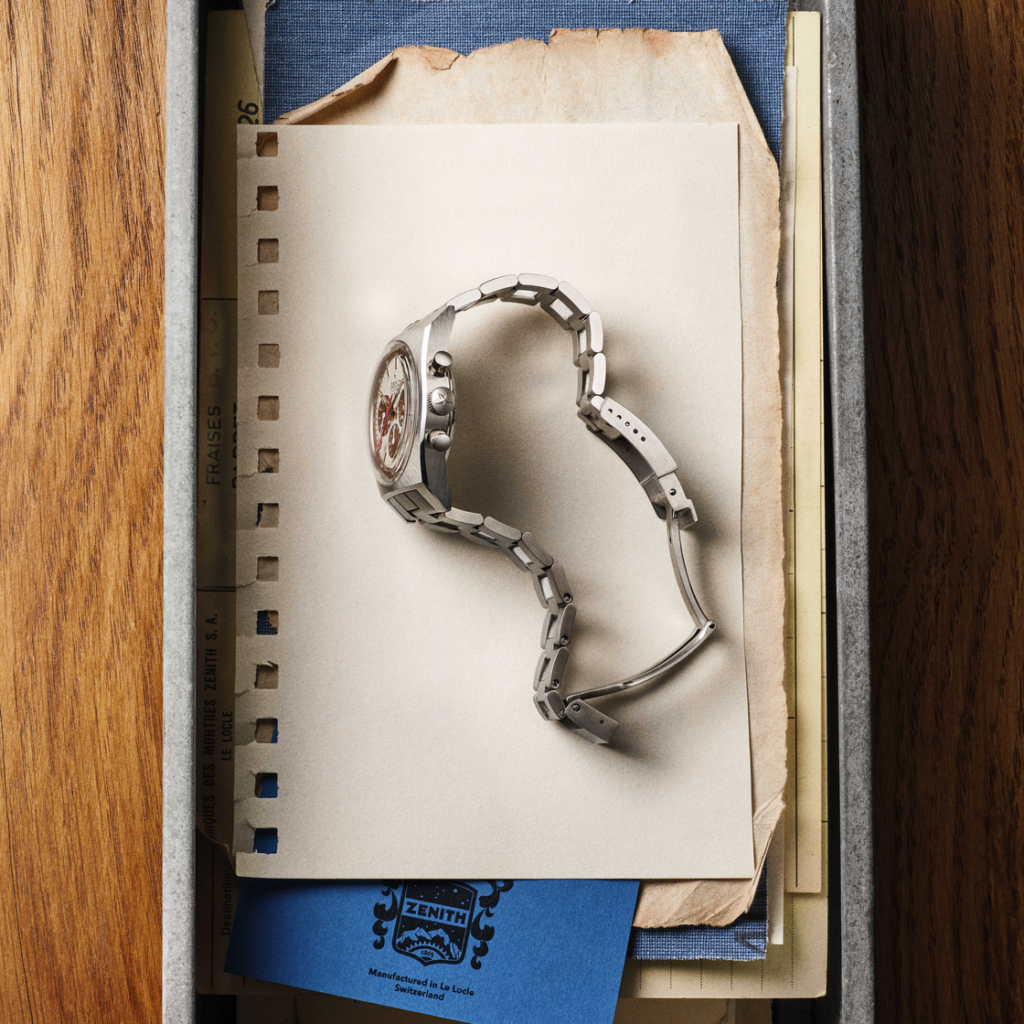
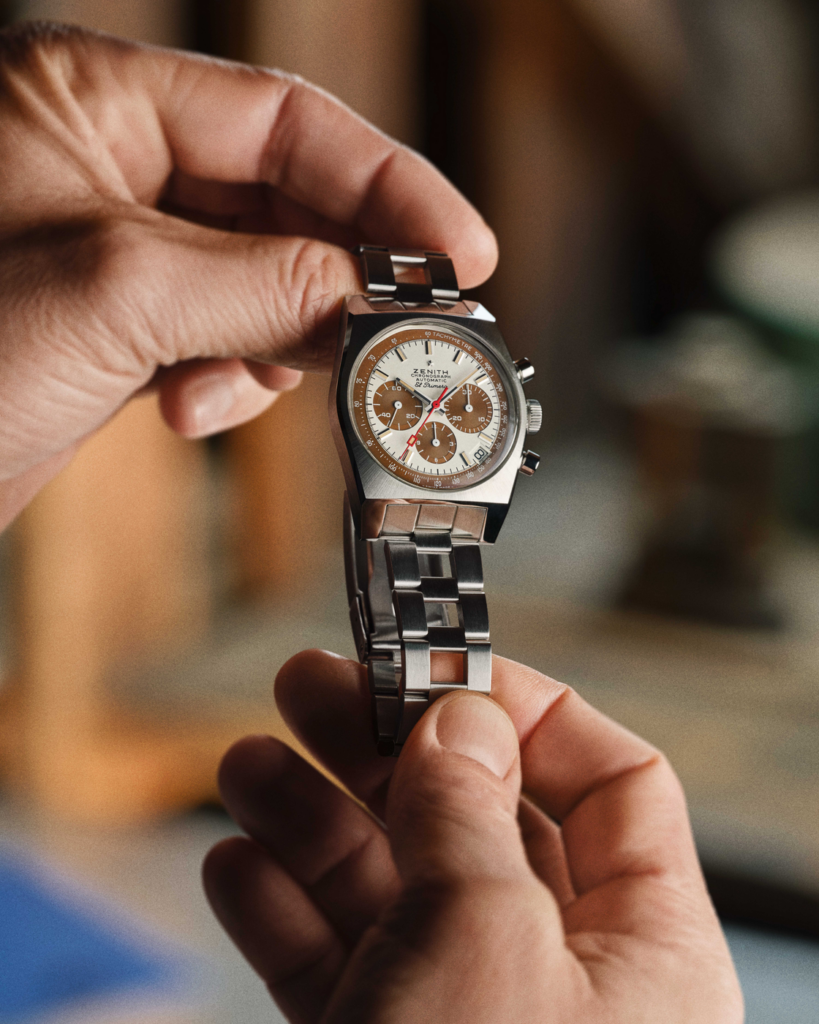
A telling detail: ZENITH also retains the “ladder” bracelet originally developed by Gay Frères. Its openwork design was not intended as a stylistic effect but as a functional solution for comfort and lightness. Even today, this design gives the watch a distinctive, airy feel on the wrist—almost more akin to a piece of technical jewelry than to a simple contemporary metal bracelet.
The CHRONOMASTER Revival A384 Tropical ultimately says something broader about contemporary watchmaking: today’s era no longer seeks merely faithful reissues, but objects capable of encapsulating multiple time periods at once. The past, of course. But also the way that past has lived, aged, and changed color in the light.
At ZENITH, this patina is no longer a matter of chance. It has become a method.

Cette publication est également disponible en :

