
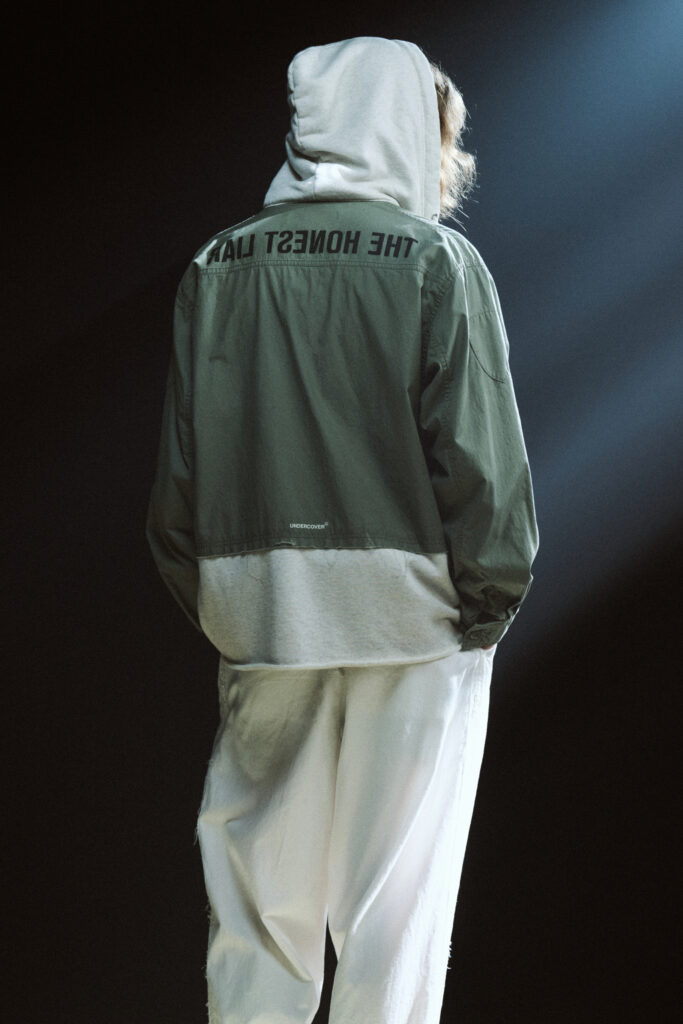
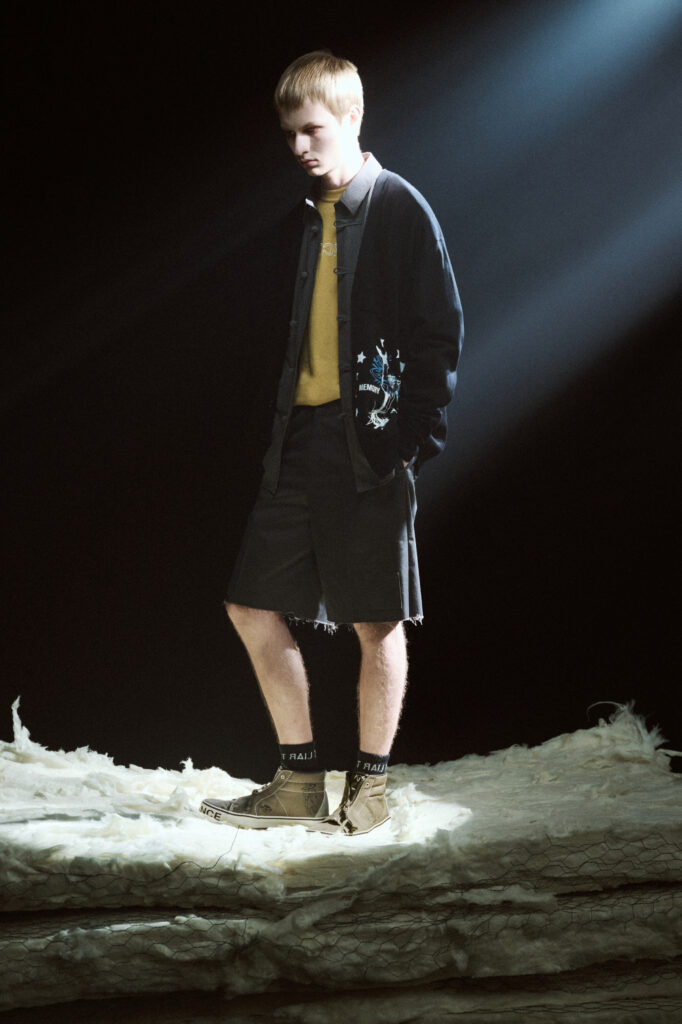
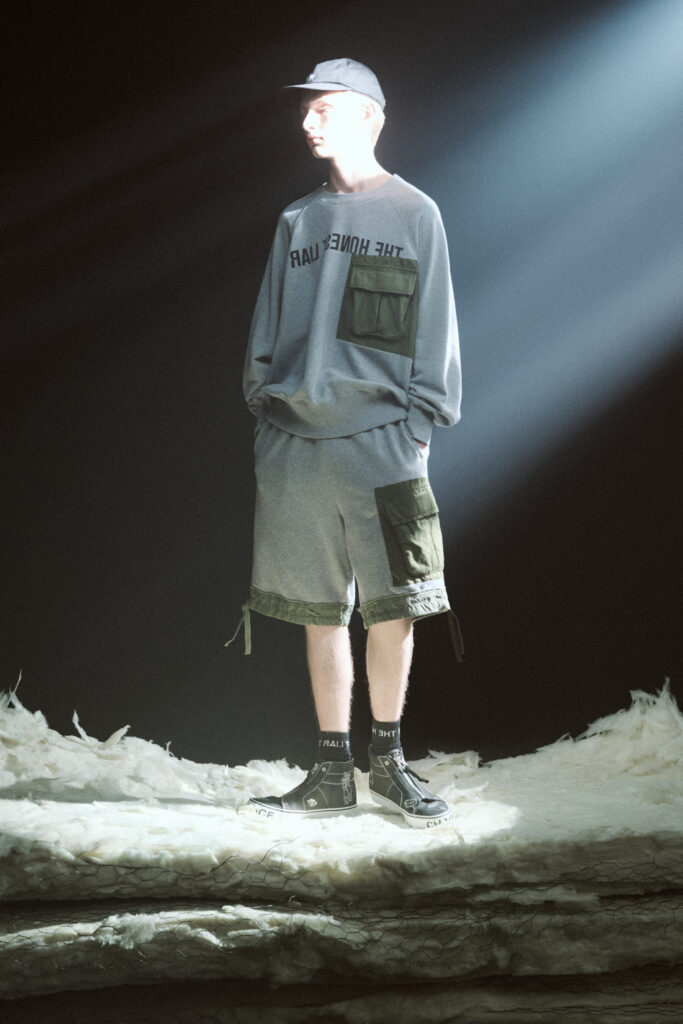
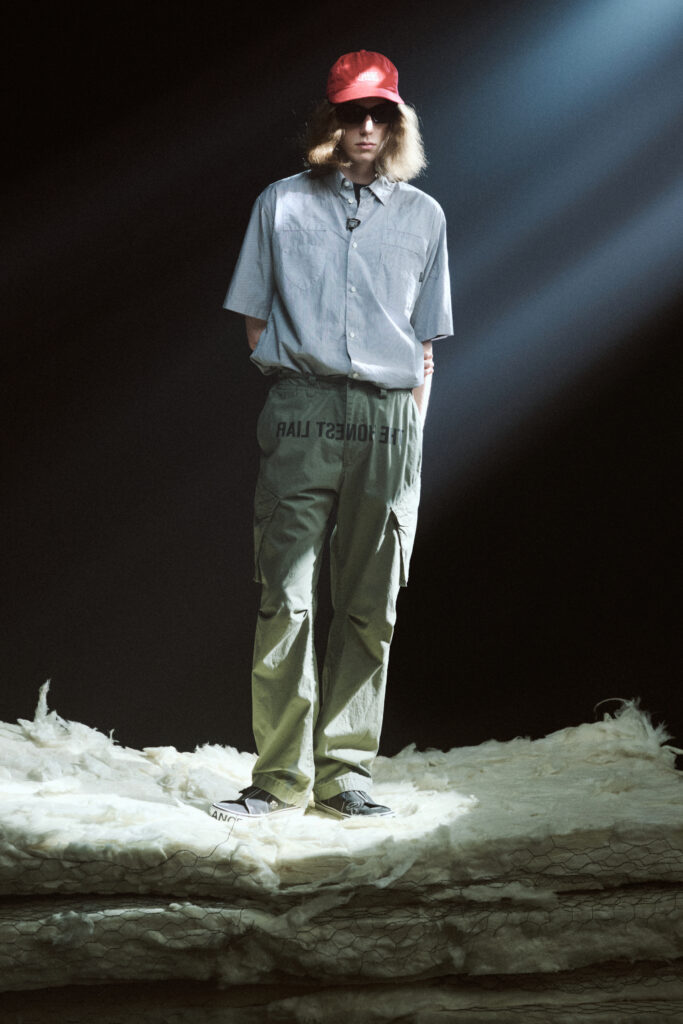
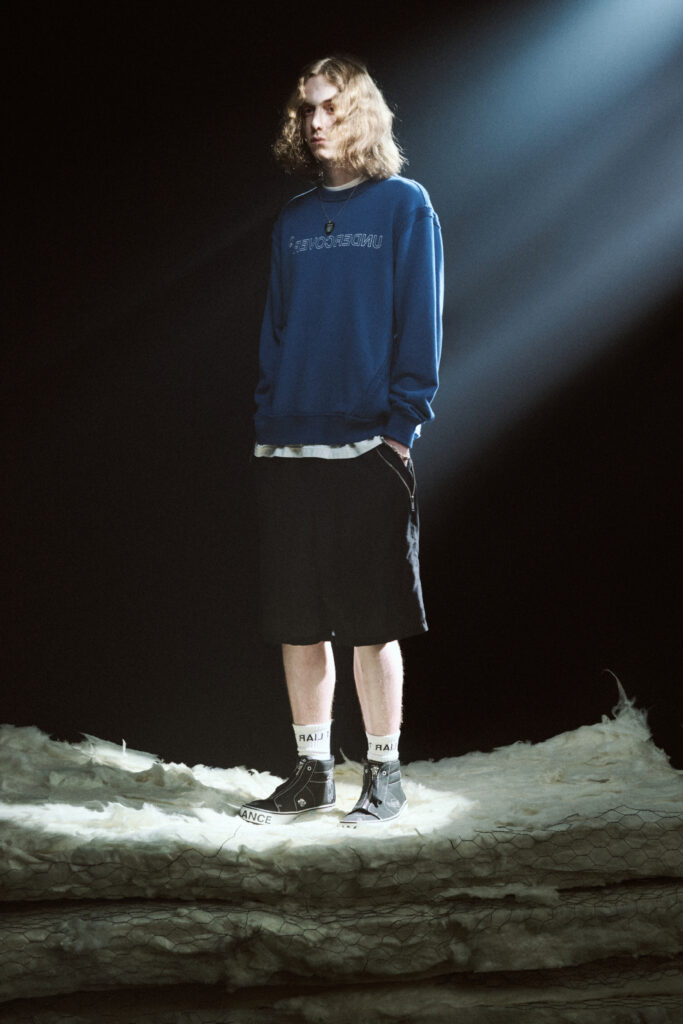
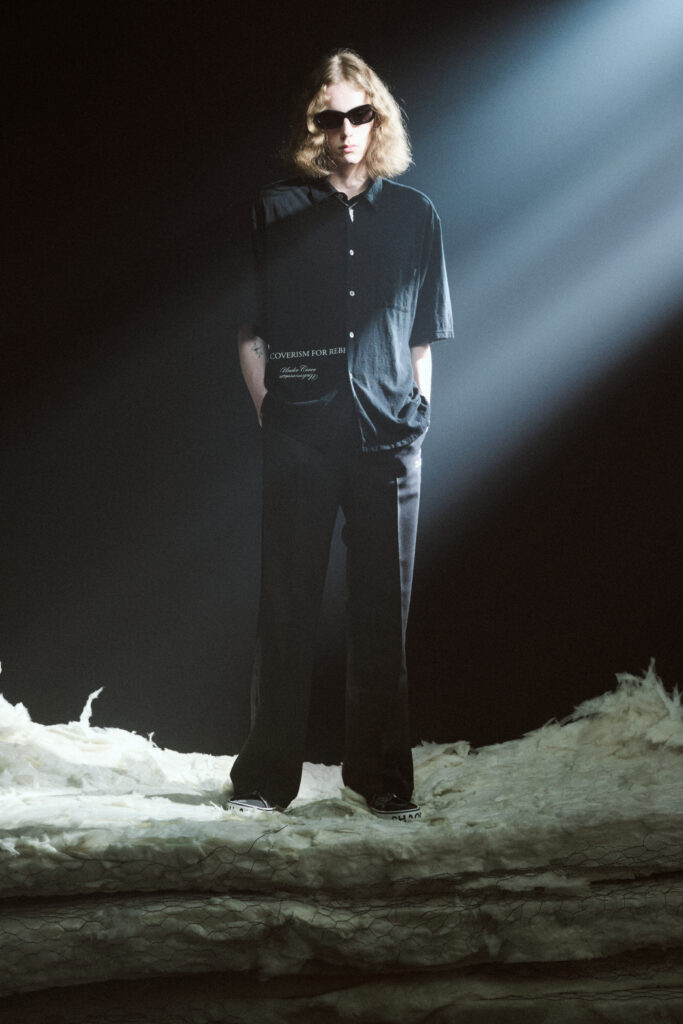
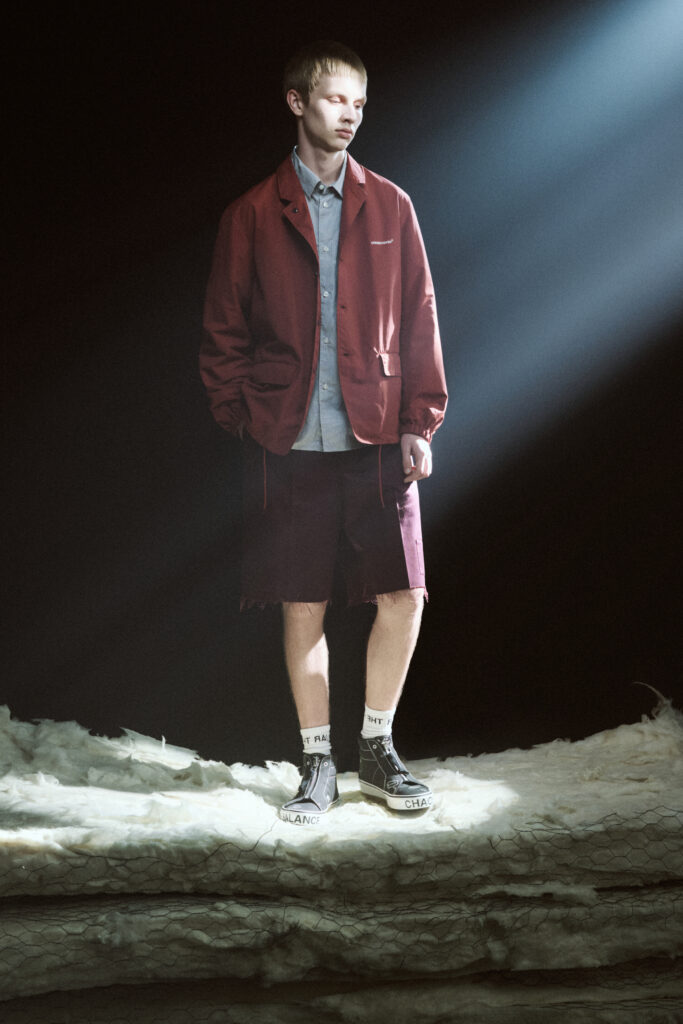
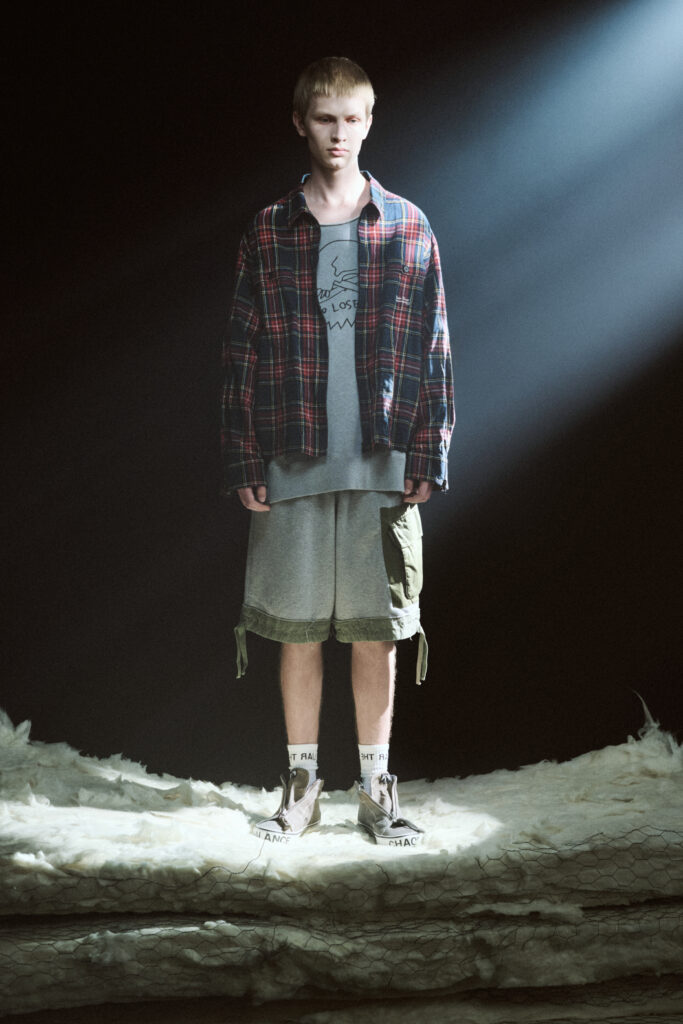
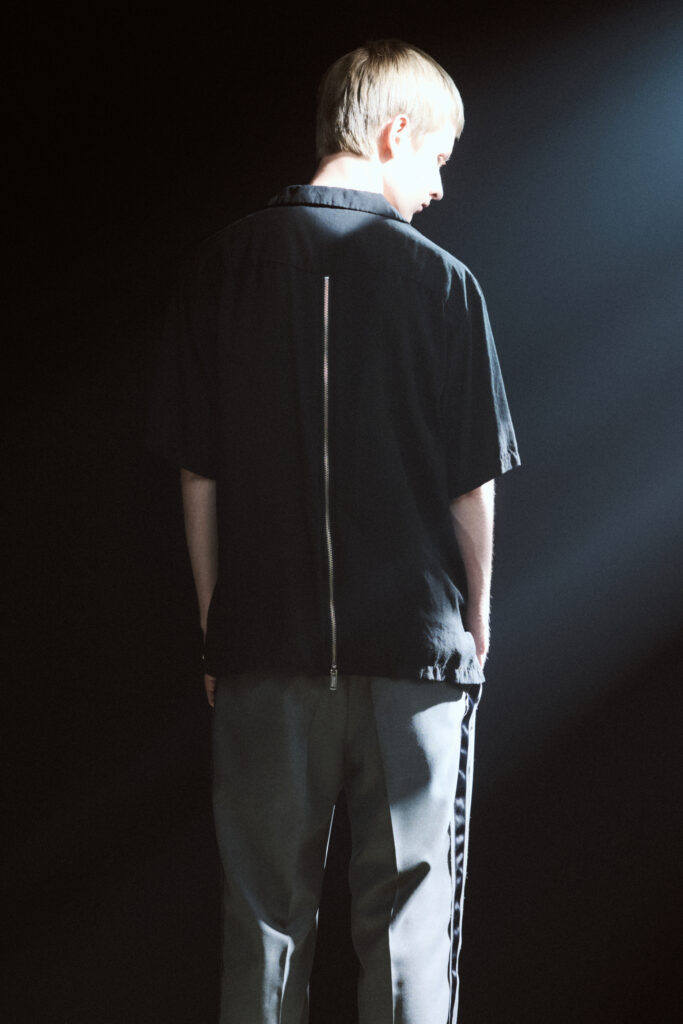
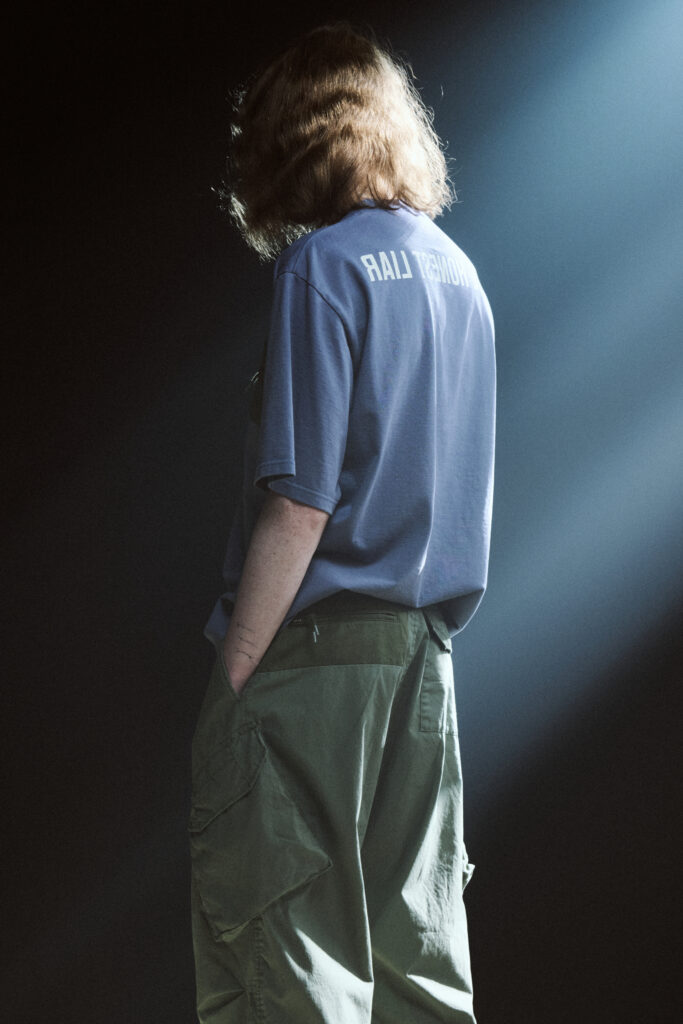
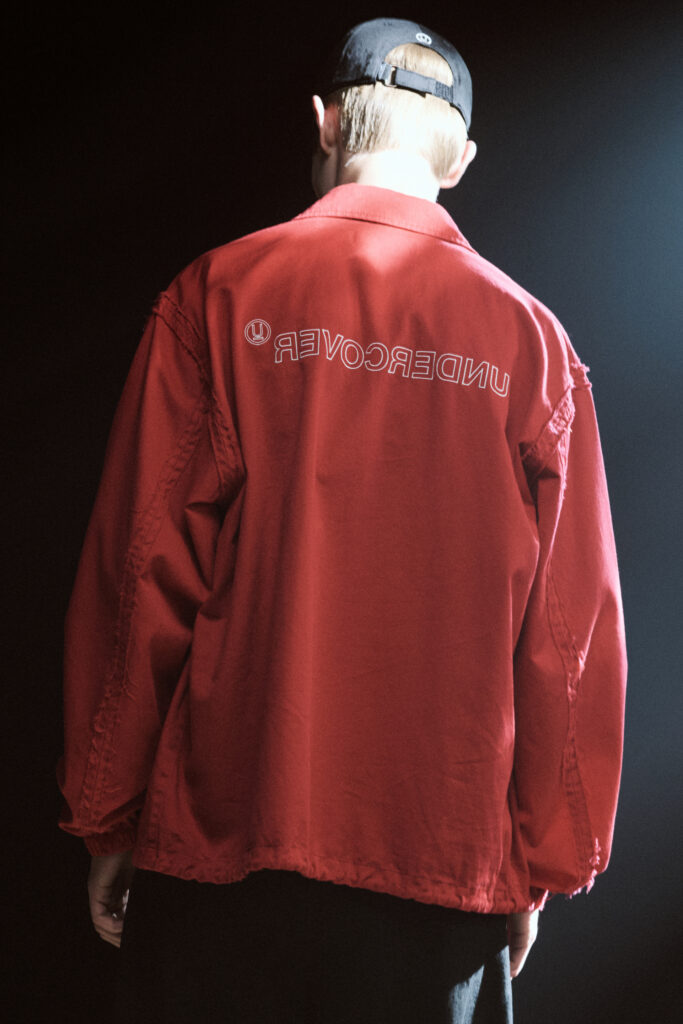
Jun Takahashi doesn’t resolve UNDERCOVER’s central contradiction—he embodies it. The Pre-Spring 2027 collection returns to the brand’s founding obsession: making visible what lies hidden in the ordinary, and rendering strange what claims to be luxury. Seams are exposed. Logos are inverted. It’s a lesson in grammar for the industry.
Value lies in the action, not in the material
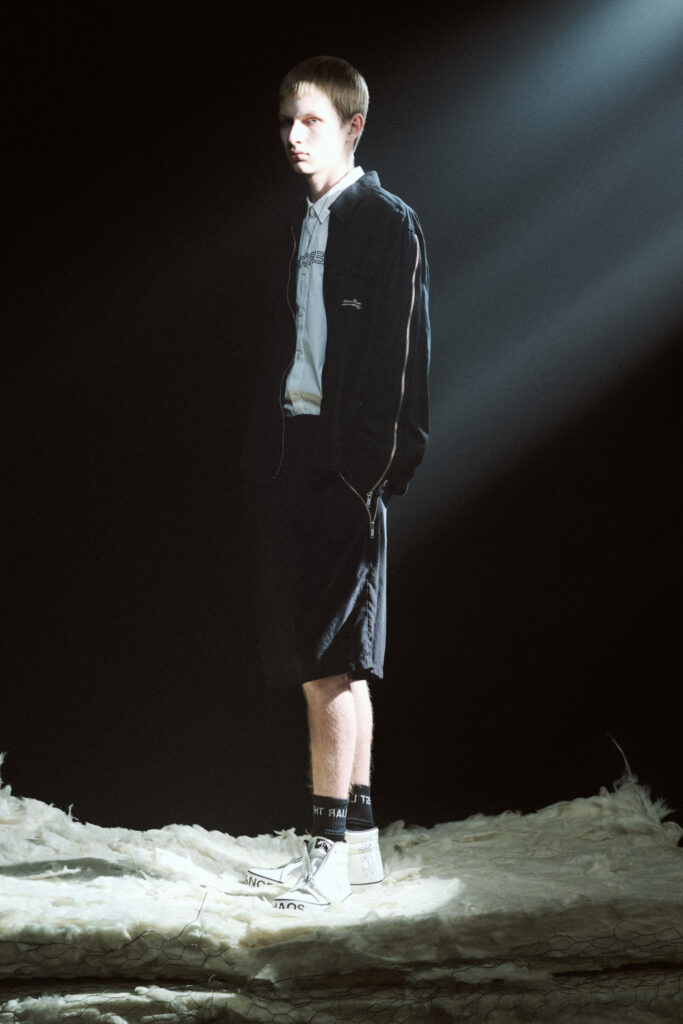
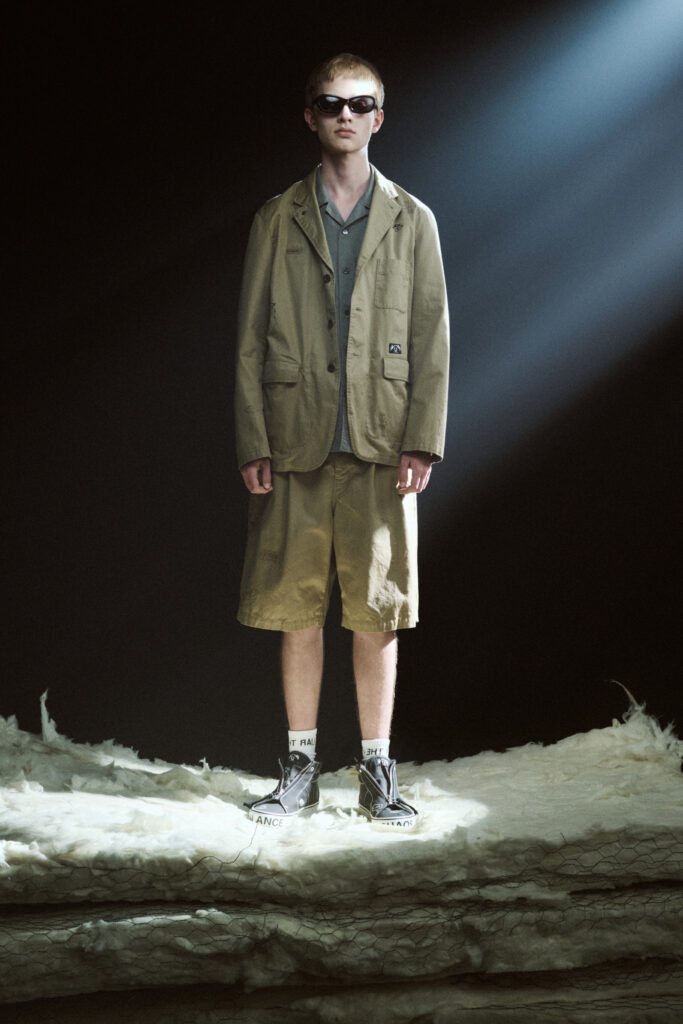
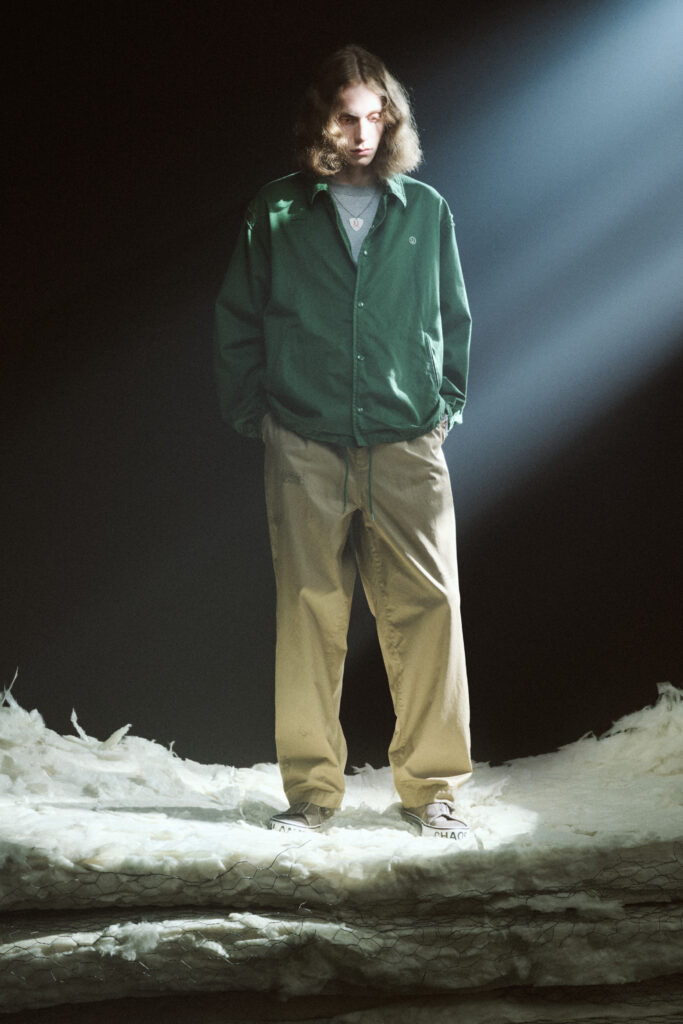
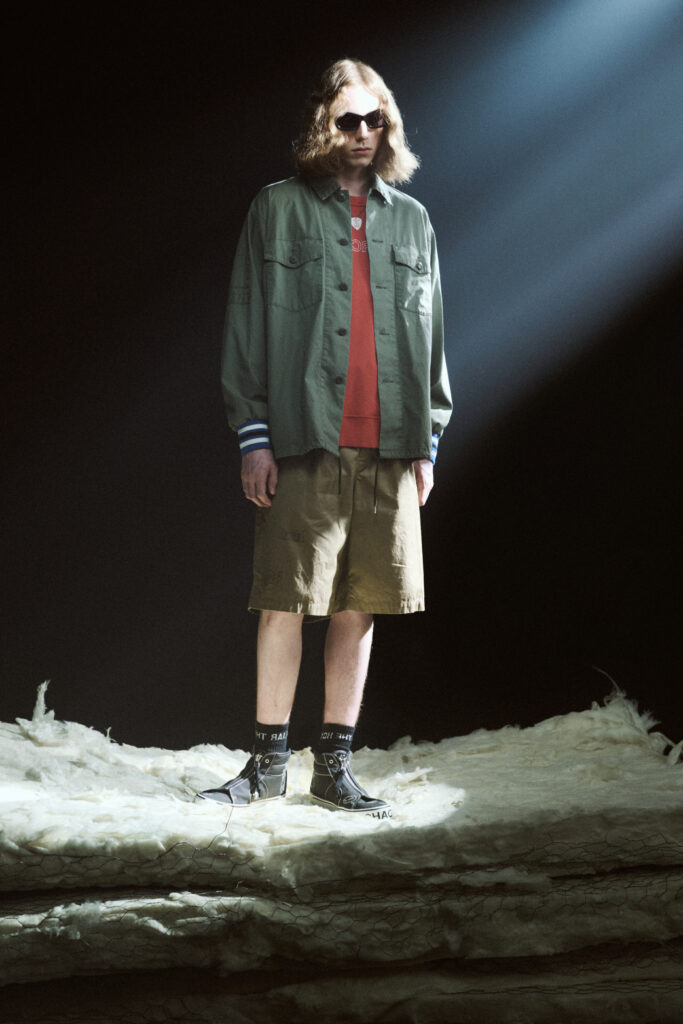
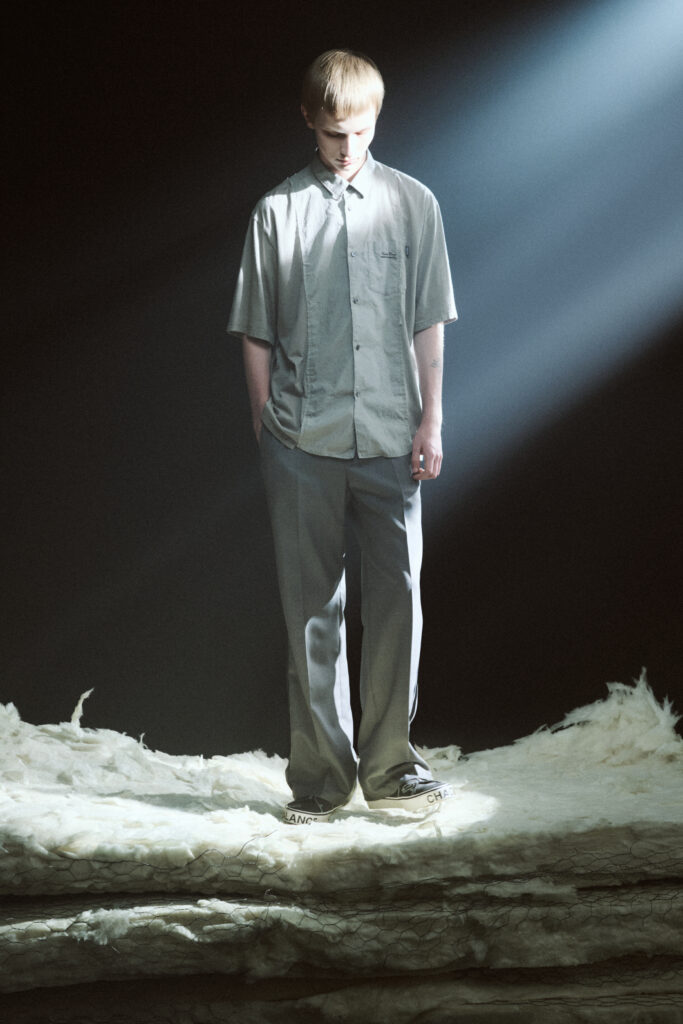
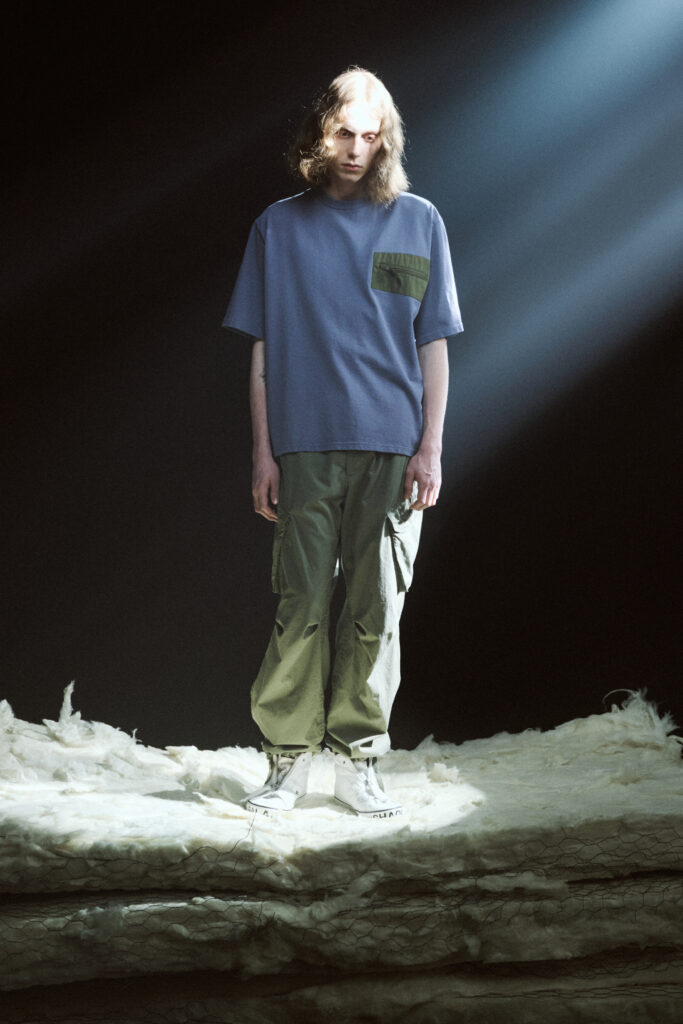
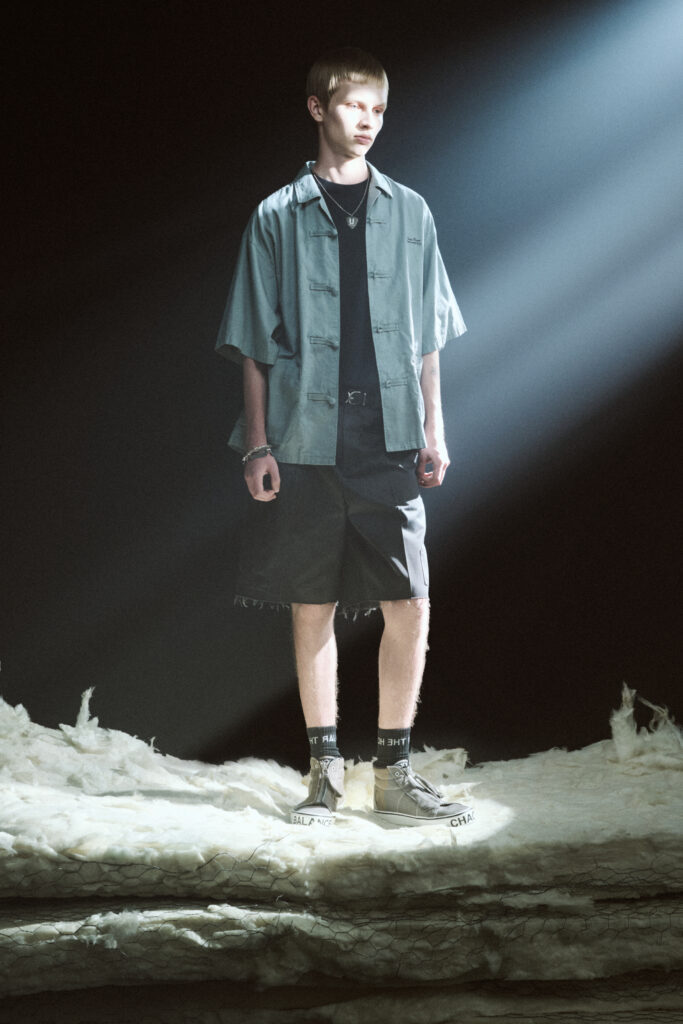
There is a form of radical honesty in the deliberate choice of ordinary fabric. Fashion houses have long based their legitimacy on the rarity of materials—silk, cashmere, Grand Ducal canvas. UNDERCOVER Pre-Spring 2027 overturns this assumption: the fabrics are humble, sometimes almost industrial, and that is precisely where their appeal lies.
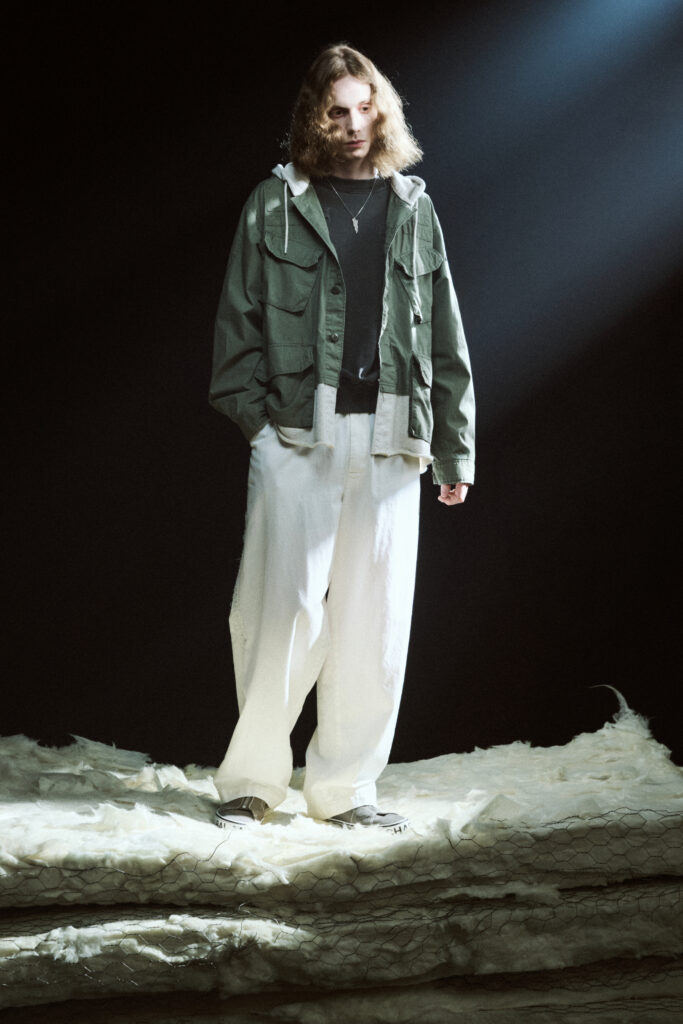
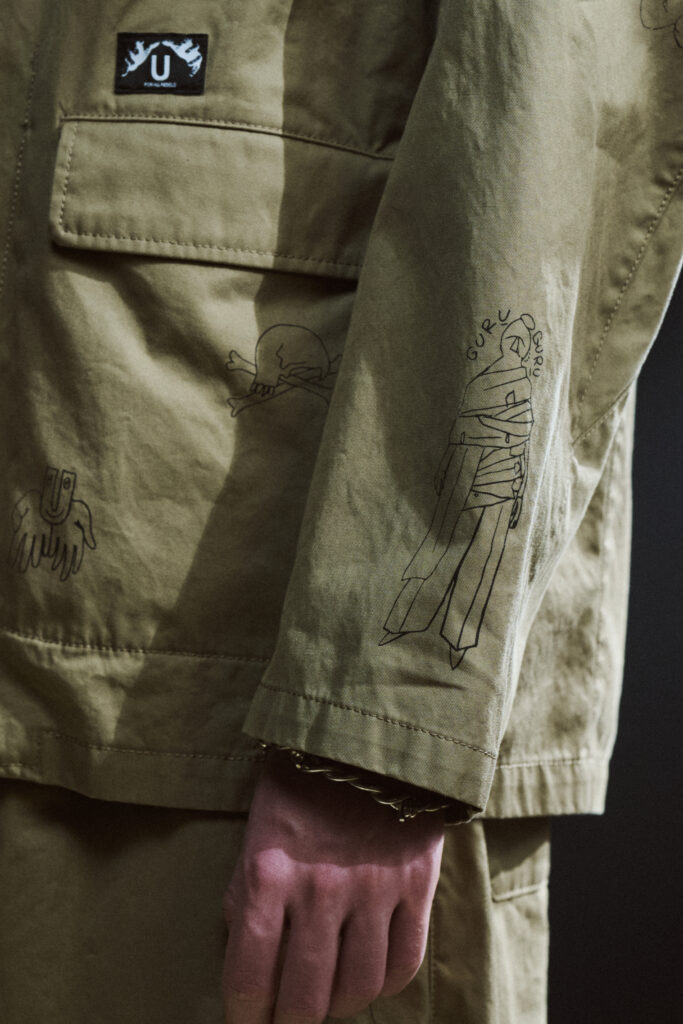
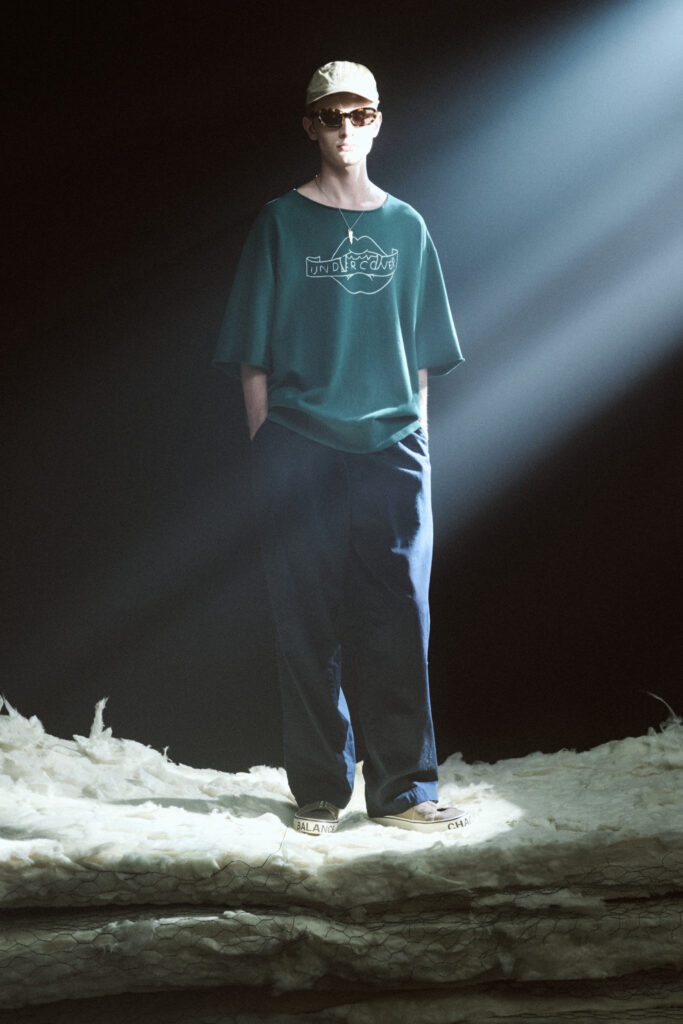
What Takahashi is saying with this collection—as he has said, in other ways, ever since the house was founded—is that the value of a garment lies in the craftsmanship that went into it, not in the materials it’s made of. The exposed seams are not a sign of incompleteness. They are the signature.
Deconstruction as a Legacy
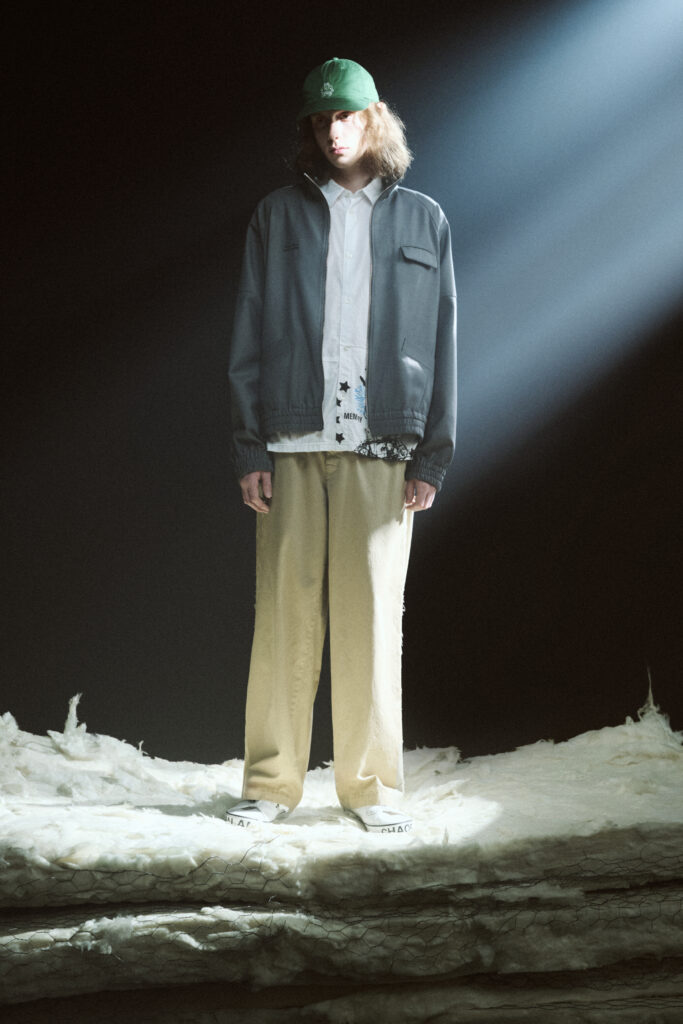
Deconstruction isn’t a recent invention. It has been a recurring trend in fashion ever since Comme des Garçons exposed the lining in the 1980s. But UNDERCOVER takes a different approach: whereas Kawakubo works from a place of abstraction, Takahashi works from a place of narrative. Every garment in this collection seems to have a past life—something has been cut, turned inside out, or assembled differently.
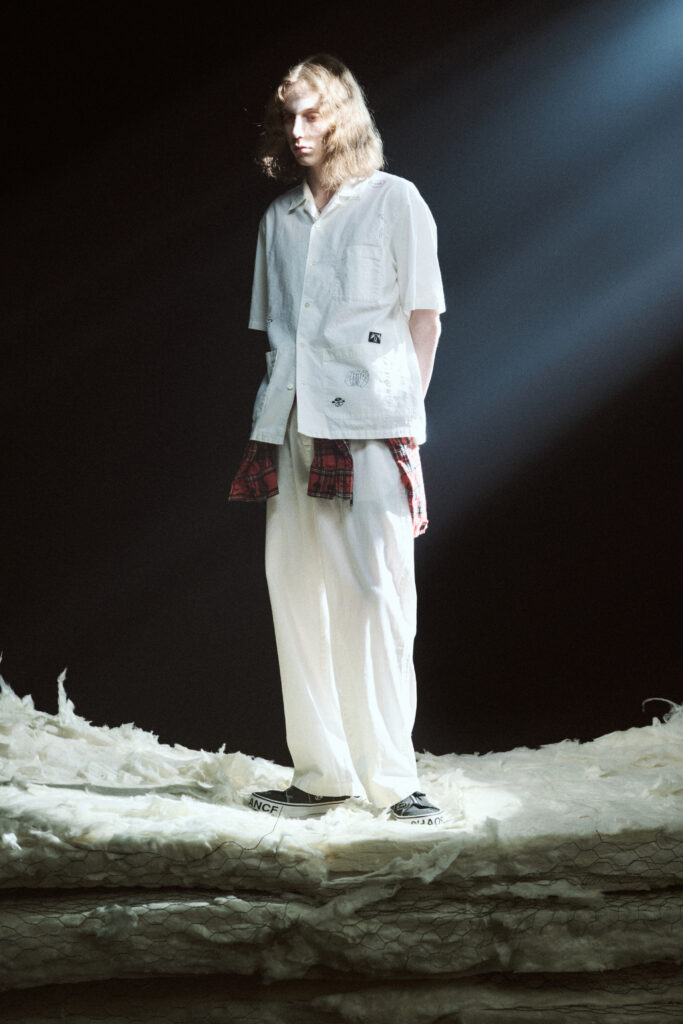
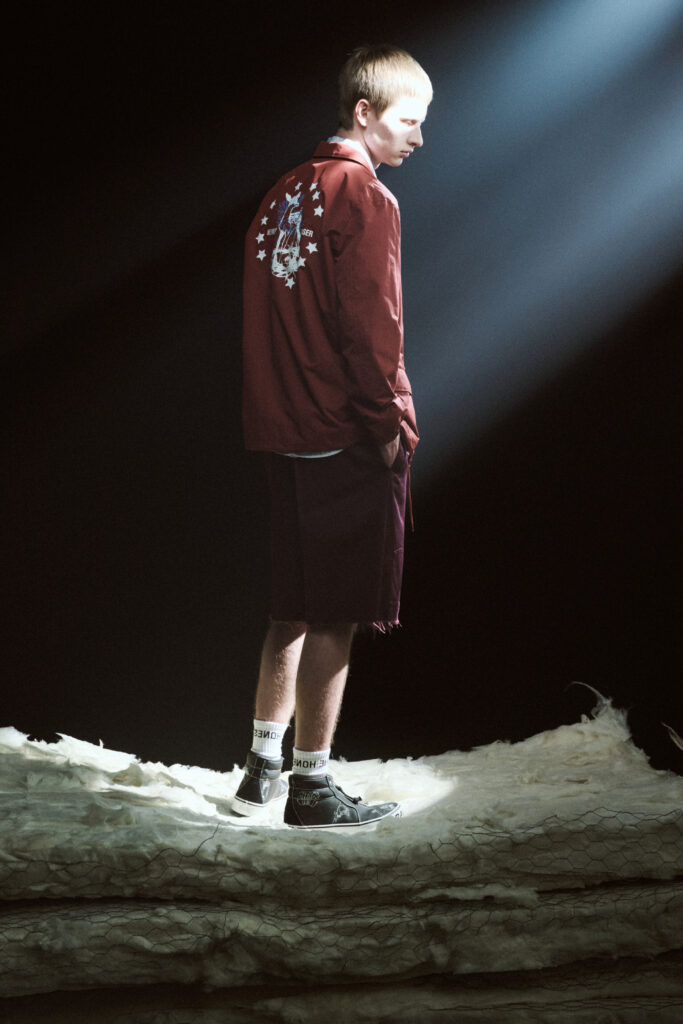
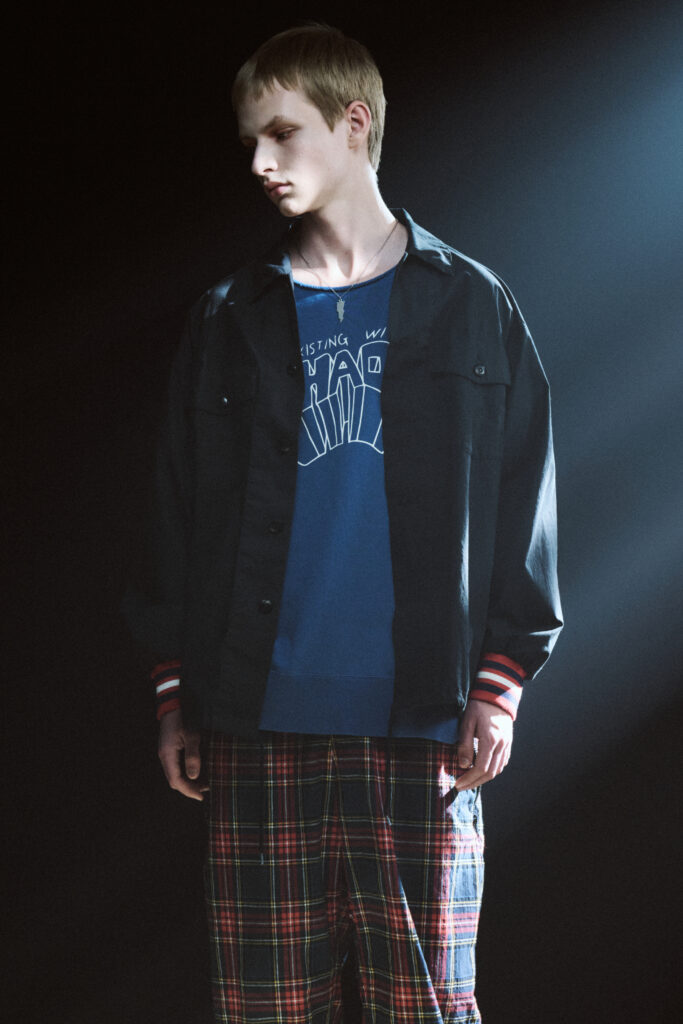
The hybrid silhouettes—part tailoring, part workwear—exude a productive tension. They do not seek to belong to any one category. The hand-drawn graffiti on the collection’s most architecturally structured pieces introduce a human sense of time—they are traces, not patterns. The difference matters.
The Reversal of the Logo: A Silent Political Gesture
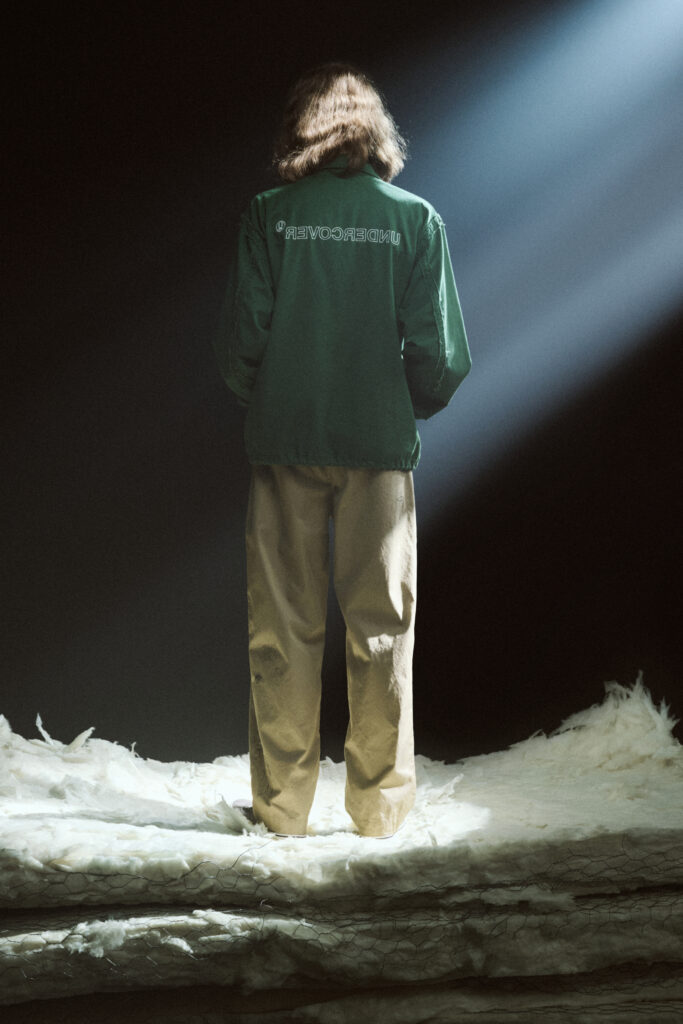
Flipping one’s own logo means refusing to turn it into an object of desire. In an industry where the monogram has become a safe haven—visible, recognizable, reassuring—UNDERCOVER chooses the anti-signal. This isn’t minimalism: it’s subversion. Those who recognize the brand without seeing the logo belong to a different community than those who buy to be seen.
This is a distinction that Takahashi has always cultivated, from the brand’s early days in Tokyo to its international recognition. UNDERCOVER’s clientele doesn’t expect to be understood at first glance. They prefer a second look.
The question that remains
UNDERCOVER Pre-Spring 2027 does not seek to seduce. It seeks to resist—the ease of spectacle, the logic of instant recognition, and the temptation to turn subversion into a marketable aesthetic. This paradox is insoluble, and Takahashi knows this better than anyone. Perhaps that is why he continues to turn it into clothing rather than manifestos.
























Cette publication est également disponible en :

