
A sun-dried cotton shirt, a shawl draped over the shoulders, a tulle veil that barely stirs, a pair of satin pajamas kept for oneself. With Les Eaux, Maison Guerlain takes the L’Art & La Matière collection into a realm that is more intimate than spectacular: that of textiles, the feel of fabric against the skin, and the moments that become attached to clothing. In 2026, the House introduces five compositions conceived as “skin fragrances,” united by the softness of white musks.
The proposal is interesting because it slightly shifts the focus of L’Art & La Matière. This collection, typically associated with the raw materials of perfumery, now opens up to another form of material: no longer just the ingredient, but the tactile experience. Guerlain describes Les Eaux as an ode to the textiles that adorn the skin and accompany our emotions. The idea is not to scent a fabric, but to translate a tactile sensation into a scent: softness, freshness, transparency, smoothness, and lightness.
The line features five fragrances: Eau de Cashmere, Eau de Lingerie, Eau de Coton, Eau de Popeline, and Eau de Tulle. Four of them are eaux de toilette; Eau de Tulle stands out as an eau de parfum. On Guerlain’s official website, each bottle in the collection is available in a 100-ml size, with medium intensity, and is priced at 215 euros in France.
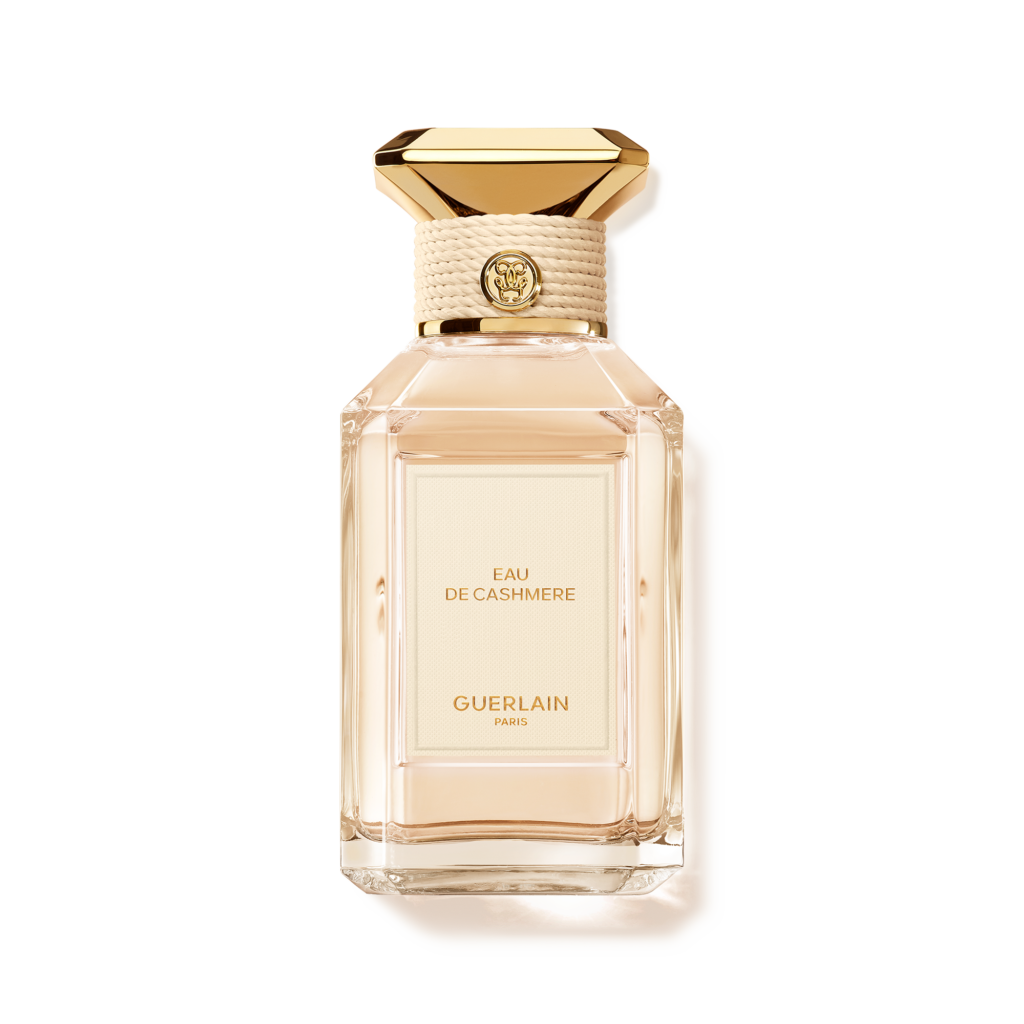
Eau de Cashmere explores the enveloping fragrance profile. The scent evokes a beige cashmere shawl, skin warmed by iridescent woody notes, and a cocoon of white musks. The textile quality lends a sense of warmth: something soft, yet not sweet; protective, yet not heavy.
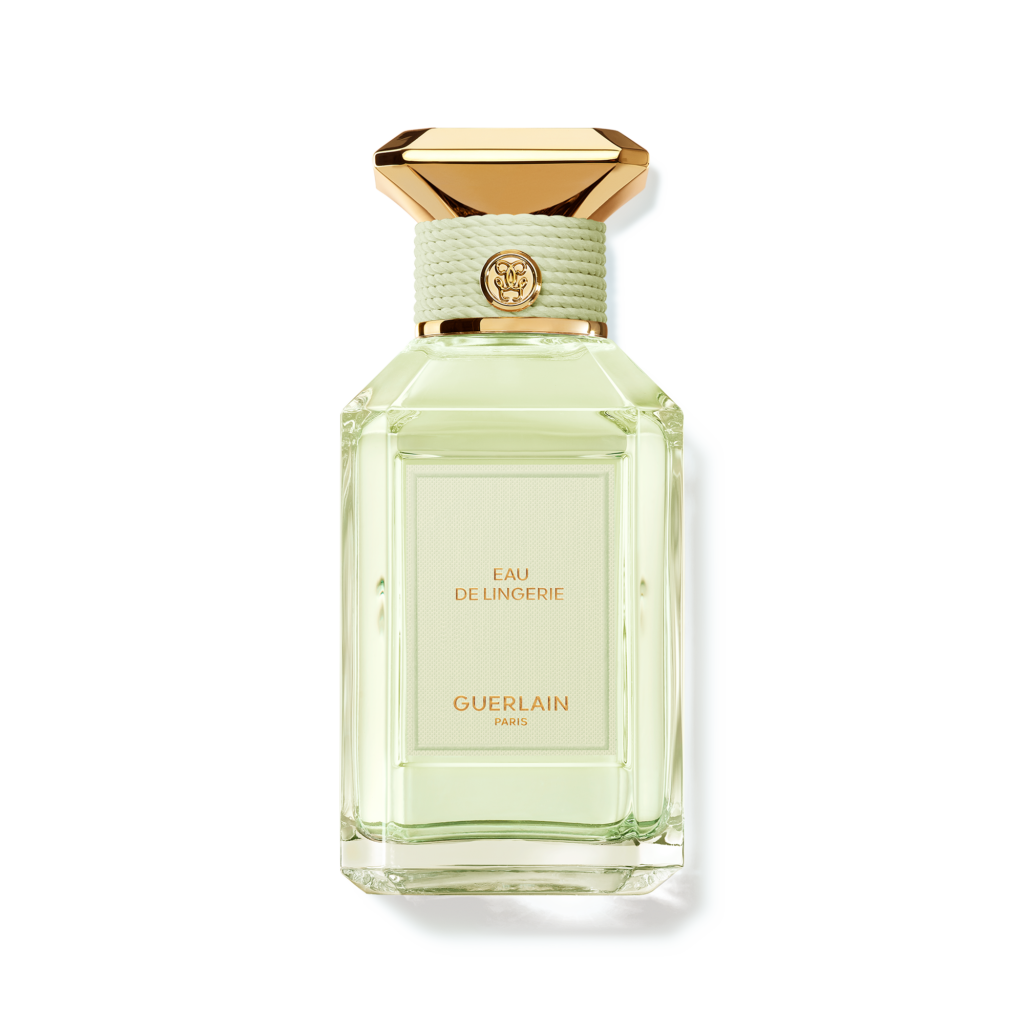
Eau de Lingerie embodies a more subtle connection to the body. Guerlain describes it as airy and floral, with notes of iris, vanilla, and white musks. The name might suggest easy imagery; the composition, however, steers it toward a more subtle, almost private sensuality. It is a fragrance that does not seek a visible trail, but rather the impression it leaves at close range.
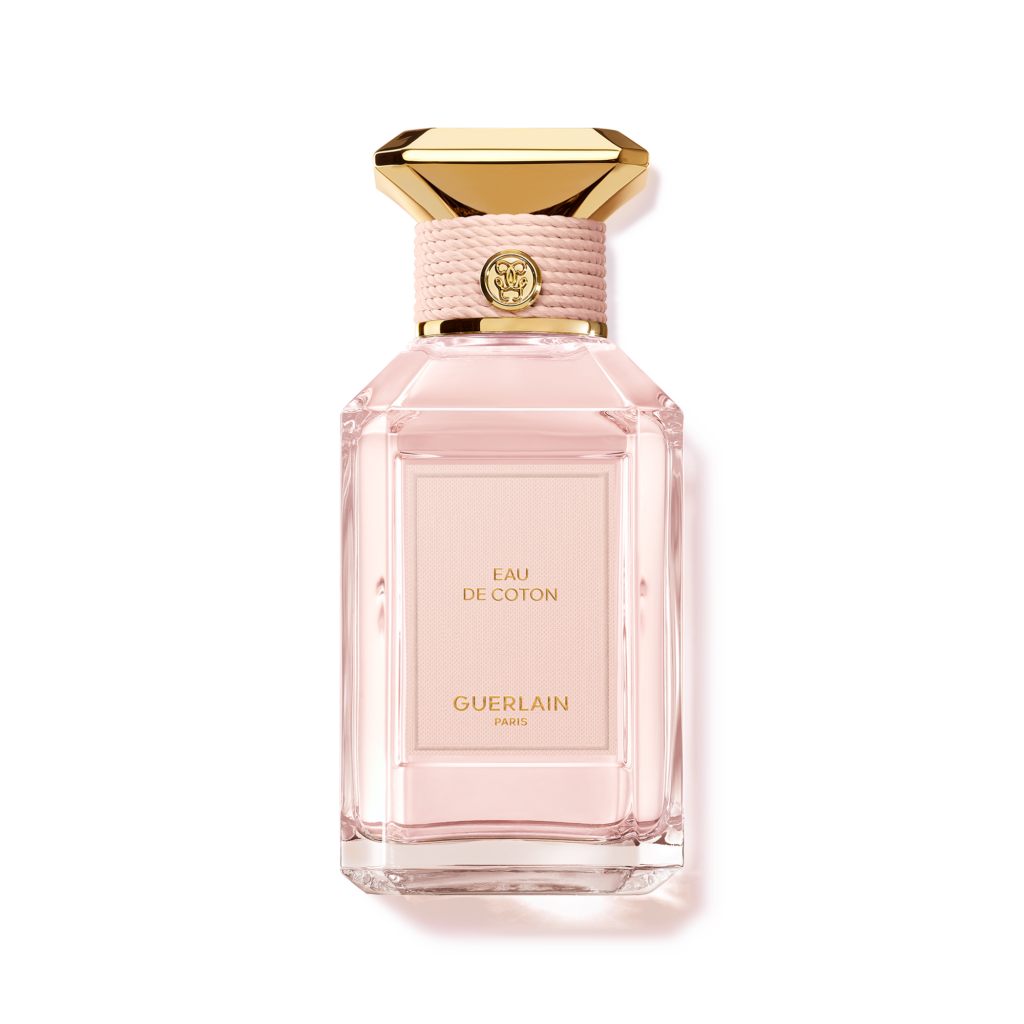
Eau de Coton embraces a clean, crisp aesthetic. The press release describes a pastel pink cotton T-shirt dried by the sun and wind, with joyful, immaculate notes that blend almond and orange blossom in a trail of soft, musky scents. Here, cotton is not an abstraction of generic cleanliness; it becomes a precise image—that of a washed-clean freshness, yet still bathed in light.
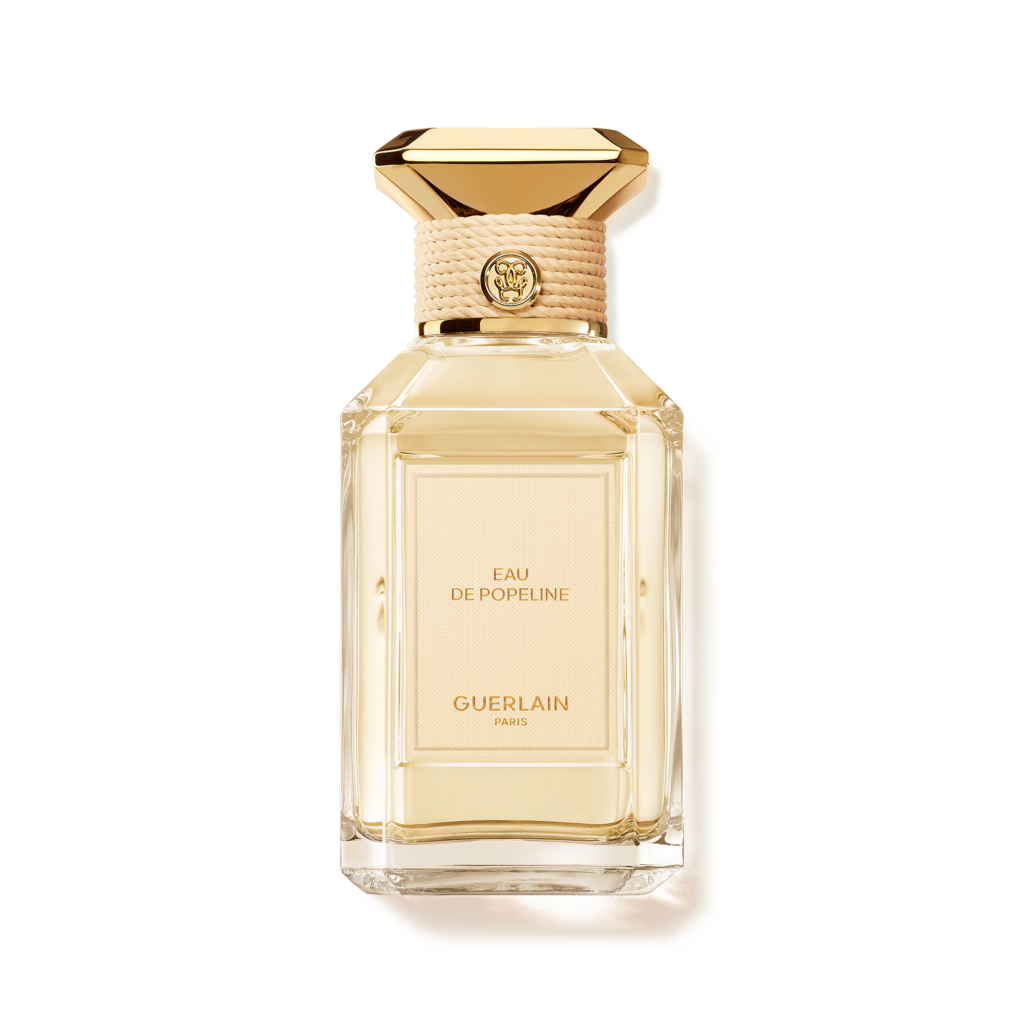
Eau de Popeline evokes a more childlike sense of nostalgia. With sunny, powdery notes of mimosa, apricot, and white musks, the fragrance exudes a supple softness, evoking yellow poplin and childhood memories. Guerlain notes thatEau de Popeline is also available in a Bee Bottle format under the name Petit Guerlain.
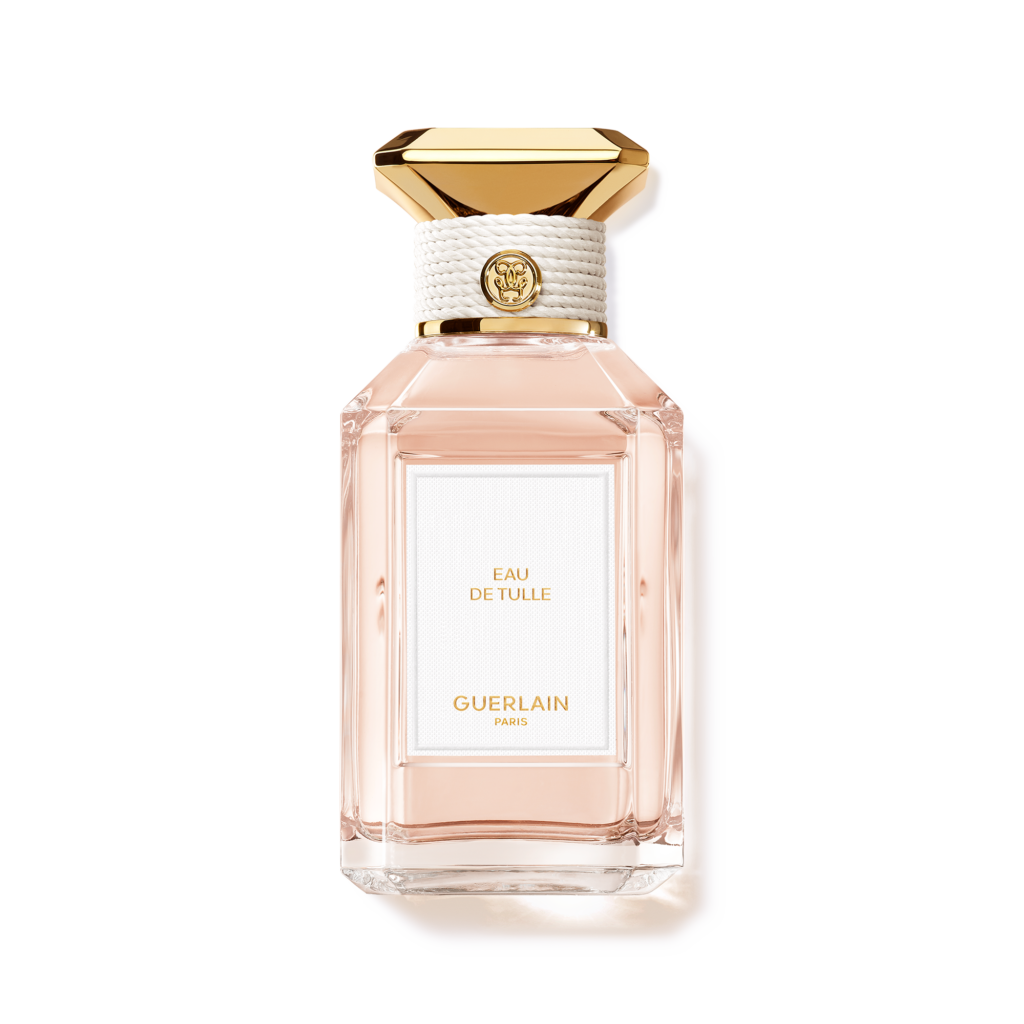
Finally, Eau de Tulle shifts the collection toward ritual. Inspired by the world of weddings, it combines notes of sugared almonds, orange blossom, and white musks. It is the only eau de parfum in this series, which gives it a symbolic depth as well as an olfactory one. Tulle is not merely a fabric; here, it embodies the idea of a moment suspended in time, of joy held within an almost transparent fabric. Guerlain’s official product sheet confirms its inclusion in the L’Art & La Matière collection and its 100 ml size.
The bottle contributes to this textile-inspired aesthetic. Guerlain reimagines the iconic L’Art & La Matière packaging by pairing each fragrance with a pastel shade: bridal veil white, almond green satin, poplin yellow, cotton pink, and cashmere beige. The label features a textured finish reminiscent of fabric, the neck is wrapped in a cotton cord, and the cap retains a ceramic-like matte finish. This attention to surface detail is essential: the collection does more than simply name materials; it seeks to extend the perception of them into the object itself.
In a fragrance market dominated by sillage, intensity, and instantly recognizable signatures, Les Eaux takes a more understated approach. The line speaks less of conquest than of intimacy. It appeals to a contemporary sensibility for “second-skin” fragrances—compositions worn like an invisible lining rather than as a statement. Marie Claire US, in its launch analysis, highlights the central role of white musks in this collection and quotes Delphine Jelk on their ability to recreate the softness and warmth of the skin.
With Les Eaux, Guerlain does not seek to incorporate textiles into fragrance merely as a decorative motif. Instead, the House offers a language of touch. Each composition becomes a way of expressing how a fabric accompanies a moment: the enveloping warmth of cashmere, the secret allure of lingerie, the freshness of cotton, the softness of poplin, and the ceremonial transparency of tulle. Perfume thus rediscovers an almost primal function: to preserve on the skin what memory cannot always retain.
Cette publication est également disponible en :

