
There is a Roman way of achieving elegance without trying too hard. It has less to do with making a statement than with subtlety: a jacket that follows the body’s contours, a shoulder that doesn’t feel heavy, a construction that functions without drawing attention to itself. With the Soffio blazer, unveiled in Rome on April 1, 2026, Brioni continues this vision of tailoring where the structure doesn’t disappear, but becomes almost imperceptible. The name, borrowed from Italian, means “breath of air.” The concept might seem fragile; it becomes intriguing when translated into the garment’s construction.
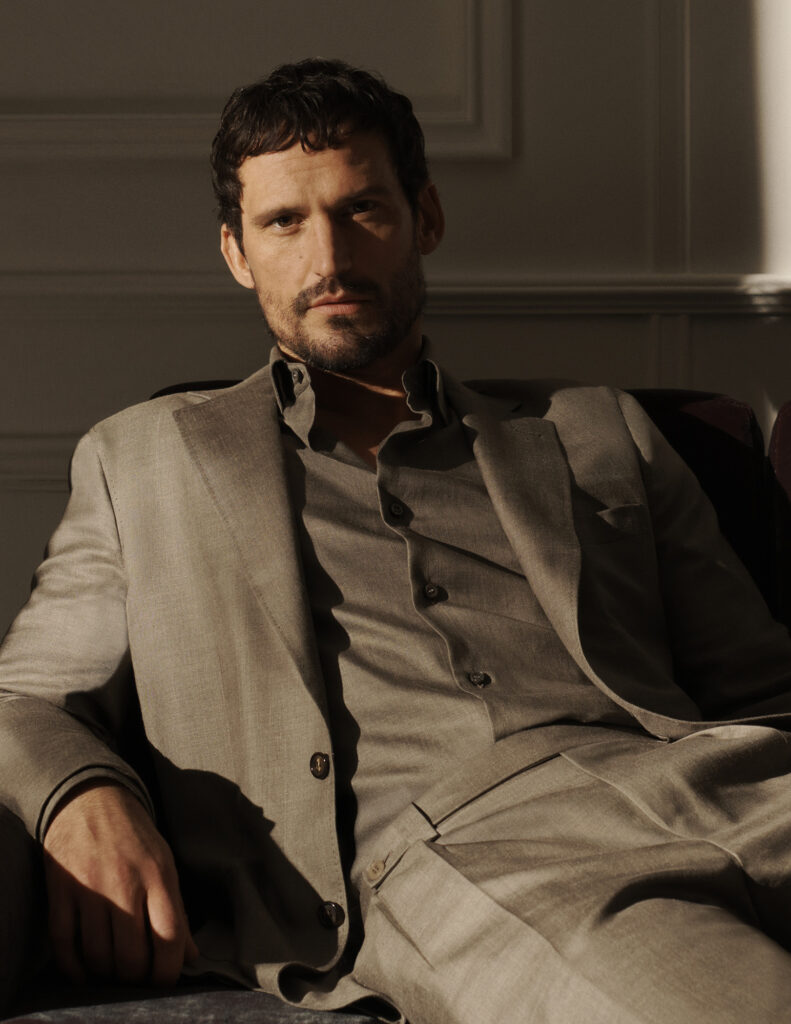
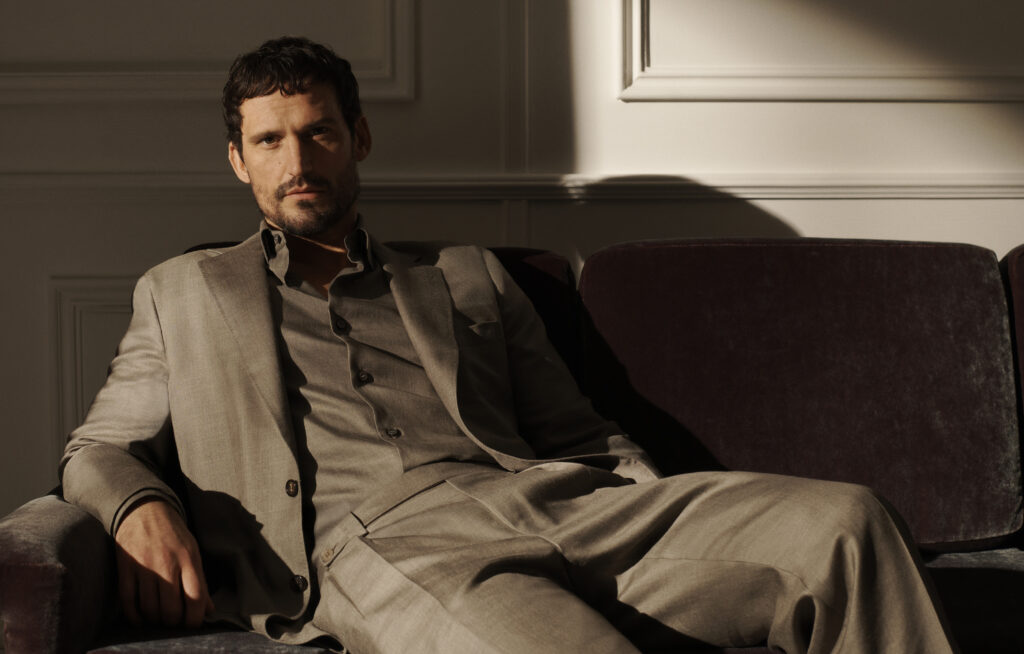
The Soffio blazer is based on a completely unstructured design, reduced to a single layer of fine fabric. This technical choice changes the way we relate to the garment. Whereas the traditional jacket often defines the silhouette through interlining, shoulder construction, and fit, Soffio pursues a different approach: providing support without stiffness, guiding the form without constraint. Brioni isn’t talking here about a floppy, casual look, but rather a carefully crafted lightness—one that actually requires a great deal of craftsmanship to avoid looking contrived.
This research is rooted in the House’s history. Founded in Rome in 1945 by master tailor Nazareno Fonticoli and Gaetano Savini, Brioni established itself in the postwar period as one of the leading names in Italian men’s tailoring. The House officially notes that in 1952, at the Sala Bianca of the Palazzo Pitti in Florence, it presented one of the first men’s fashion shows in modern fashion history. Kering, Brioni’s owner, also highlights this pioneering role in the emergence of “men’s haute couture,” characterized by more fluid silhouettes and an elegance that is less rigidly British and more fluidly Italian in its movement.
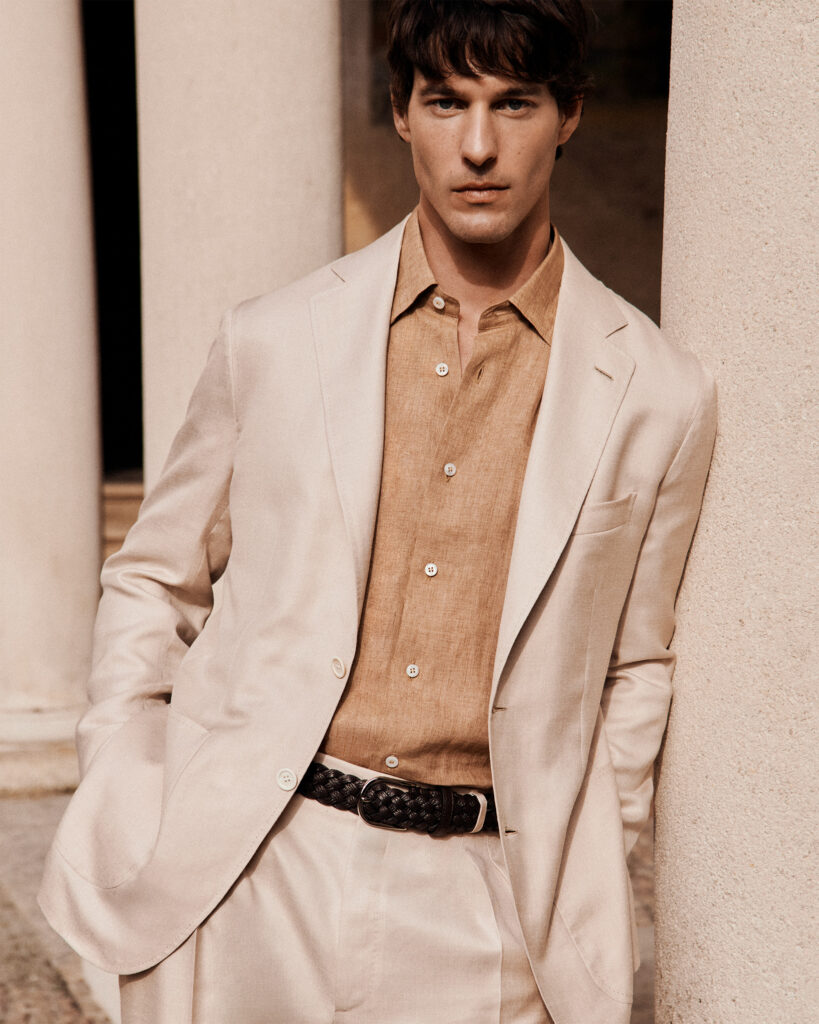
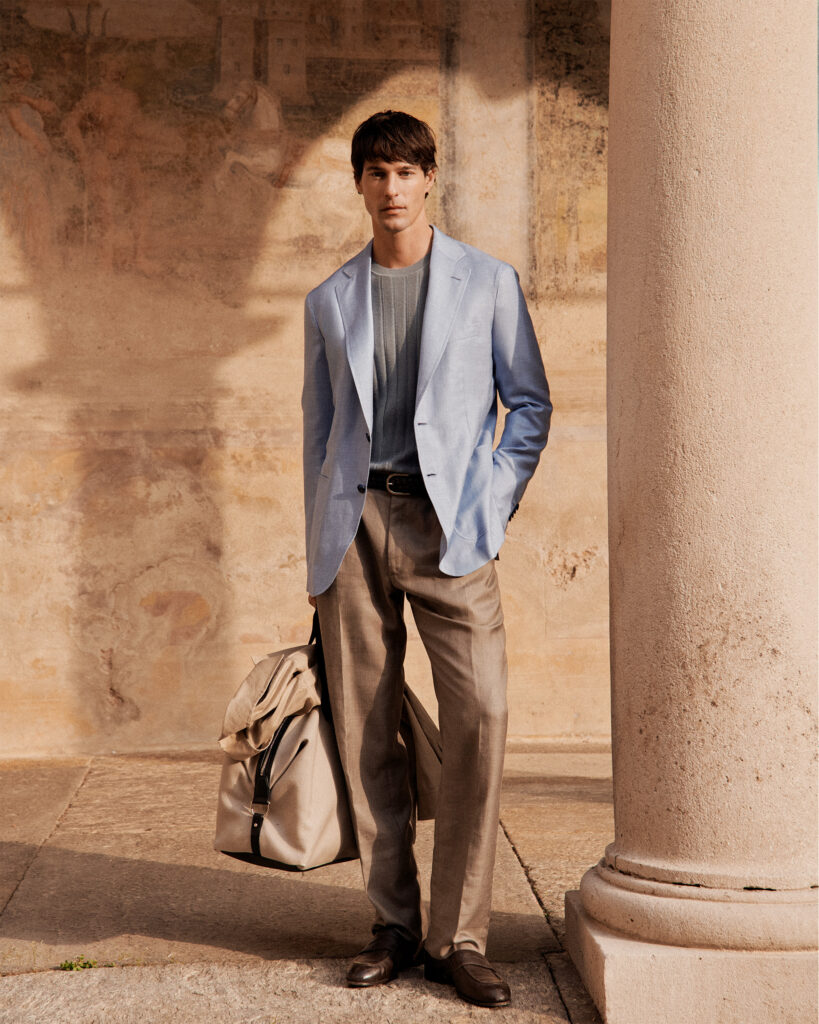
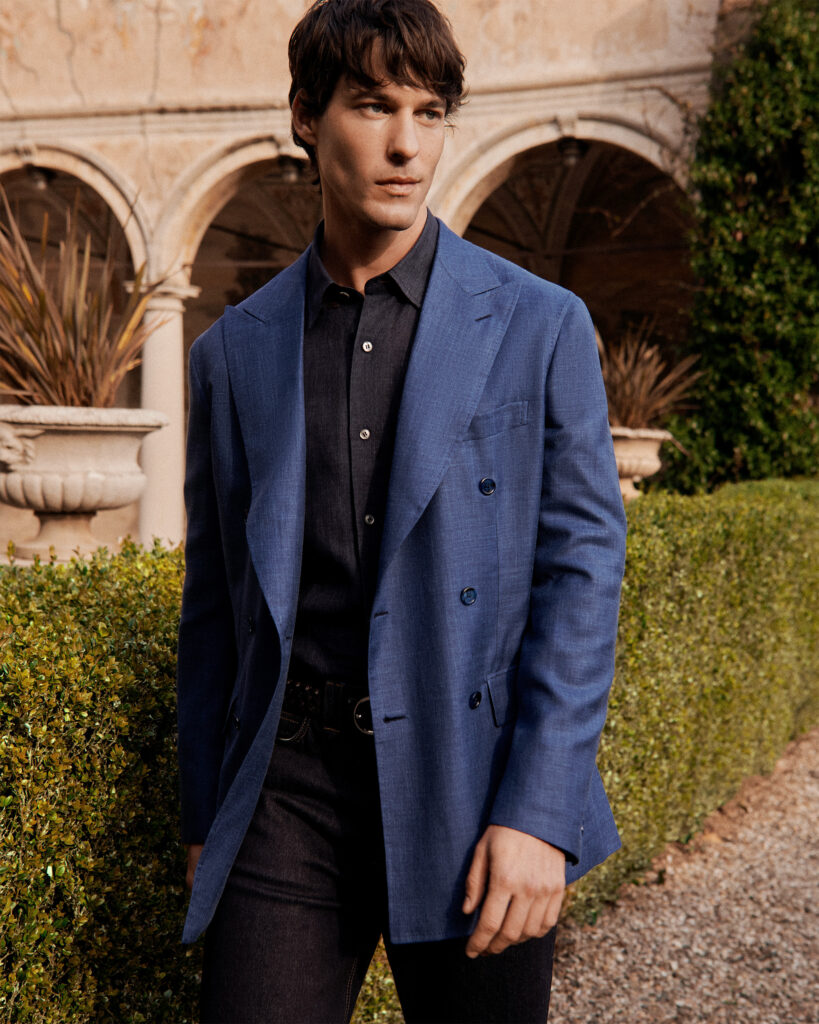
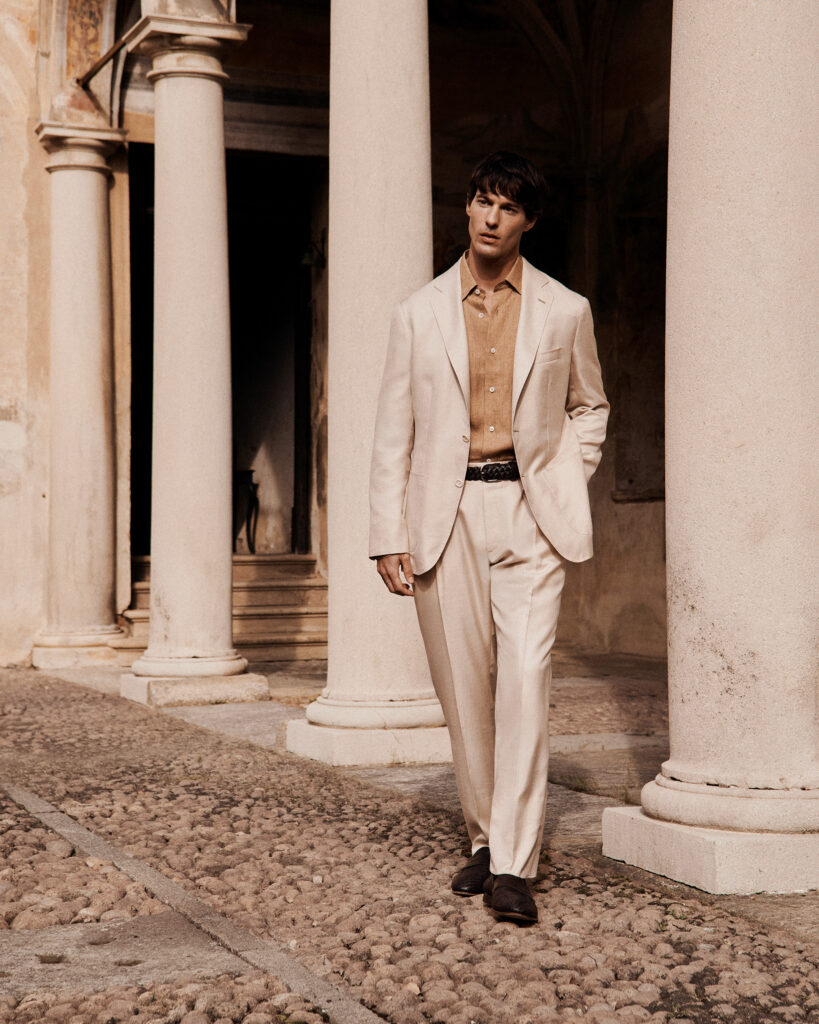
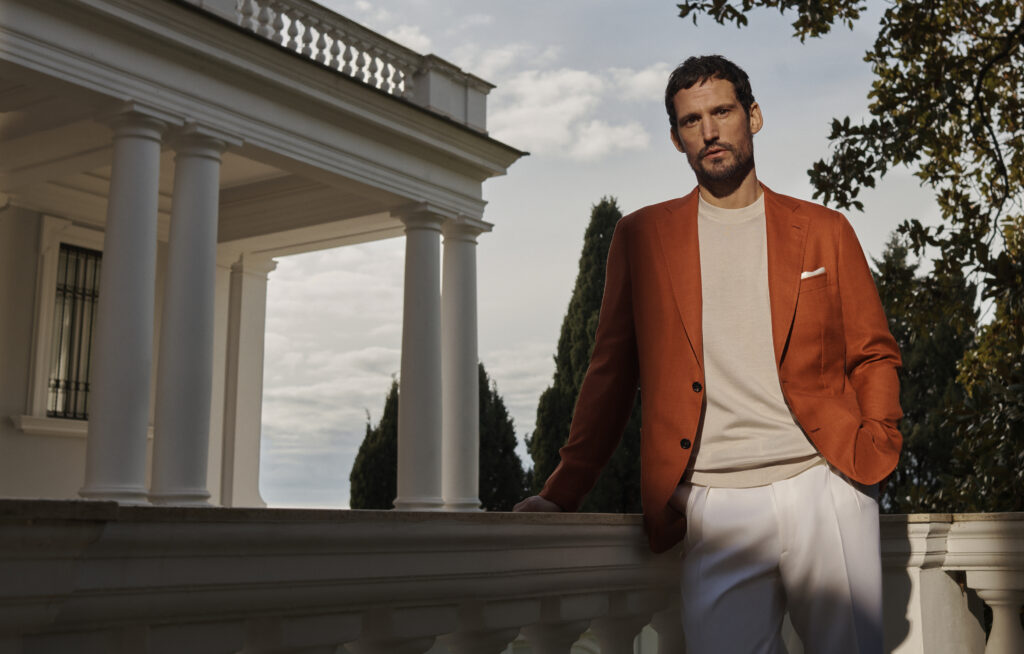
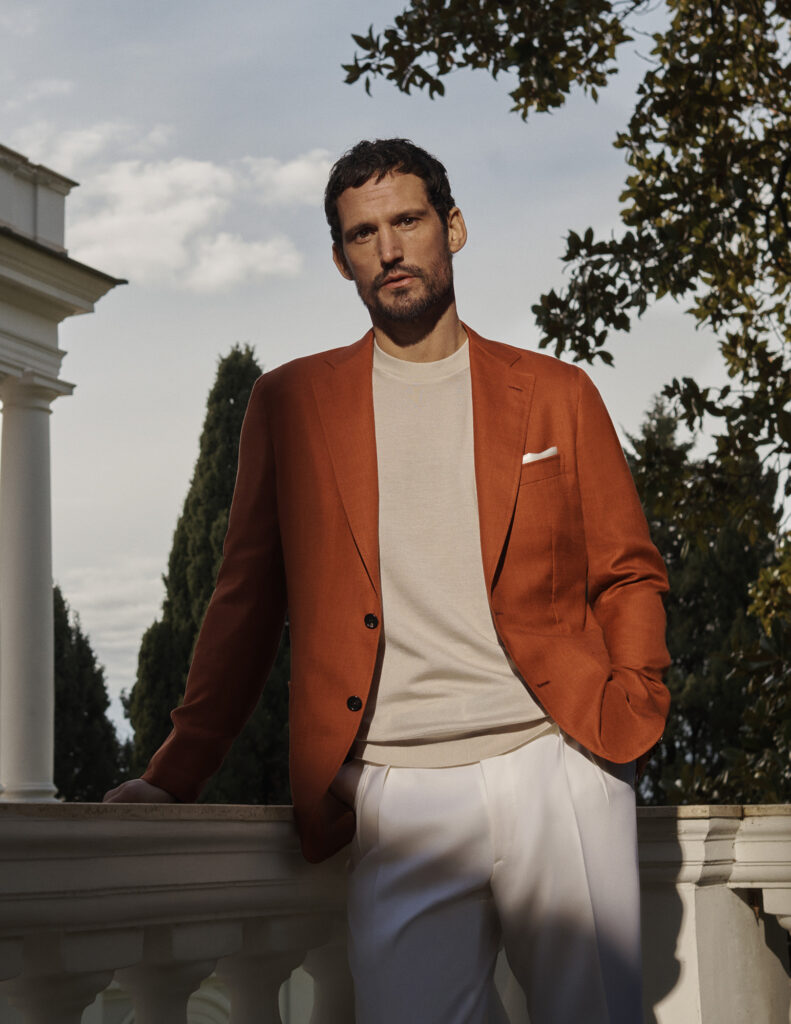
The Soffio blazer is crafted from several materials, including Zefiro, a blend of silk, cashmere, and linen. The choice is deliberate: silk provides fluidity, cashmere offers a soft feel, and linen ensures breathability and a touch of dry irregularity. The garment is therefore not merely lightweight by being stripped down; it achieves its lightness through a balance of fabrics. The press release emphasizes how each version preserves the fluidity while maintaining the garment’s depth. On the official online store, Brioni features Zefiro versions in sky blue, beige, taupe, and brick red.
The details reveal a great deal about the garment’s positioning. “Kissing” buttons, fine hand-stitched topstitching along the lapel, shoulders light enough to seem to blend into the body: the jacket belongs to the realm of sprezzatura—not as carelessness, but as mastery made invisible. This is a crucial distinction. Sprezzatura is not the absence of effort; it is the art of not revealing that effort. In the contemporary men’s wardrobe, saturated with images of comfort, Brioni reminds us that lightness can still be a matter of construction.
What’s at stake with Soffio, then, goes beyond the release of a new piece. The blazer reflects a broader shift in men’s tailoring: less formal rigidity, more freedom of movement; less of a suit-as-armor, more of a jacket-as-a-second-skin. The Brioni man no longer necessarily needs a shoulder that asserts his authority. He seeks a garment that accompanies him through a long day—from a business trip to a dinner, from an office to a hotel lounge—without losing the precision of tailored craftsmanship.
The success of a blazer like this is measured by what it doesn’t show. A fine weave, a supple shoulder, a clean silhouette, a breathable fabric: nothing spectacular on the surface. But it is precisely in this understated elegance that Brioni continues to assert its uniqueness. Tailoring is no longer just a matter of visible structure. It has become an experience of wearing, almost a sensation. A garment that does not seek to impose a presence, but rather to let the body find its own.
Cette publication est également disponible en :

