
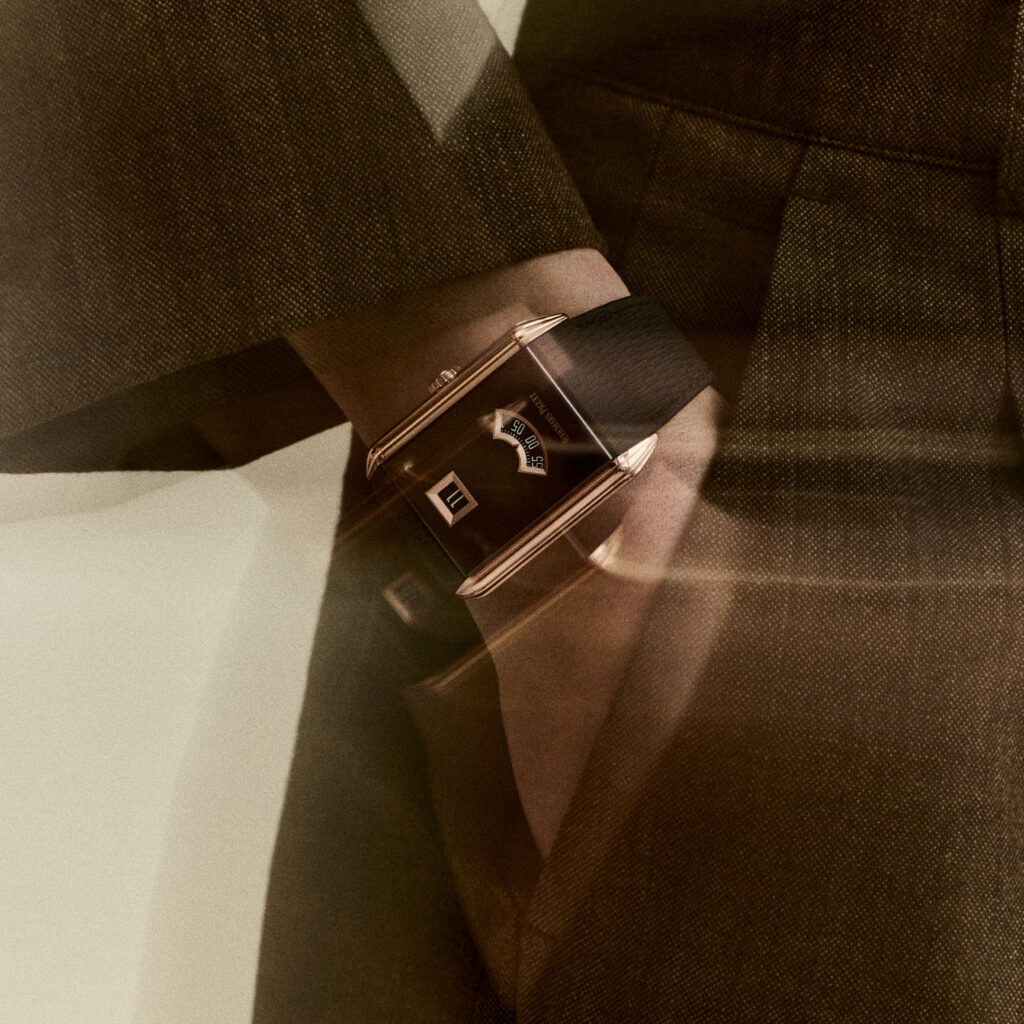
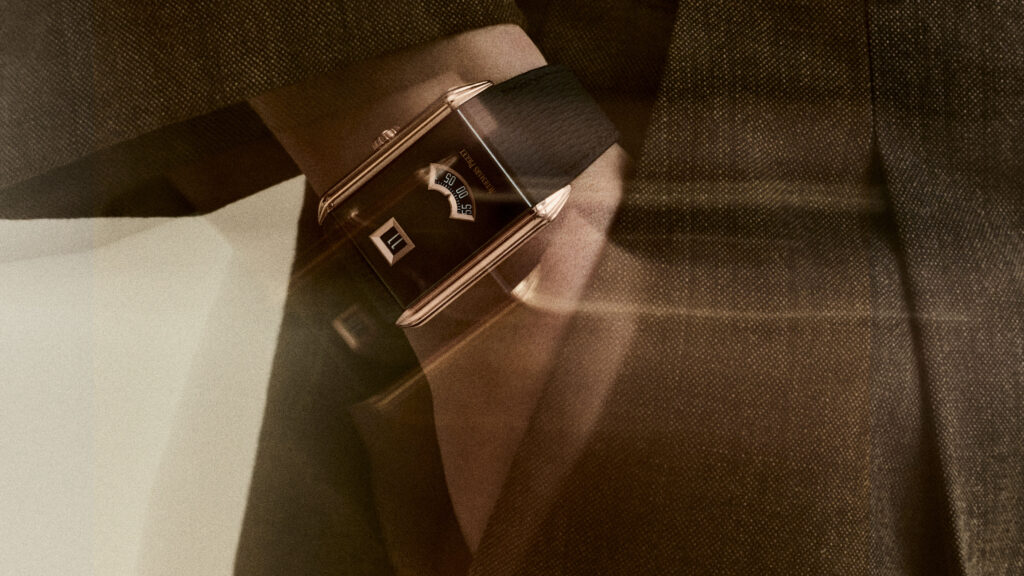
Some watches seek to showcase their mechanics. Others prefer to create a sense of tranquility around a single number. With the Neo Frame Jumping Hour, Audemars Piguet returns to an almost architectural form of time display: two windows, a rectangular case, a black PVD-coated sapphire dial, and that age-old idea that time may not slip by, but rather shift.
Unveiled in Le Brassus in February 2026, the timepiece draws inspiration from a 1929 model, the pre-production 1271, now housed at the Audemars Piguet Atelier Museum. This connection is not merely decorative. It refers to a specific moment in the history of design: Streamline Moderne, a late offshoot of Art Deco, inspired by the aerodynamics of ocean liners, trains, and high-speed vehicles. Britannica notes that Art Deco emerged in the 1920s and 1930s through geometric, stylized forms and the use of manufactured materials; the streamlined silhouette, for its part, became one of the visual hallmarks of this industrial modernity.
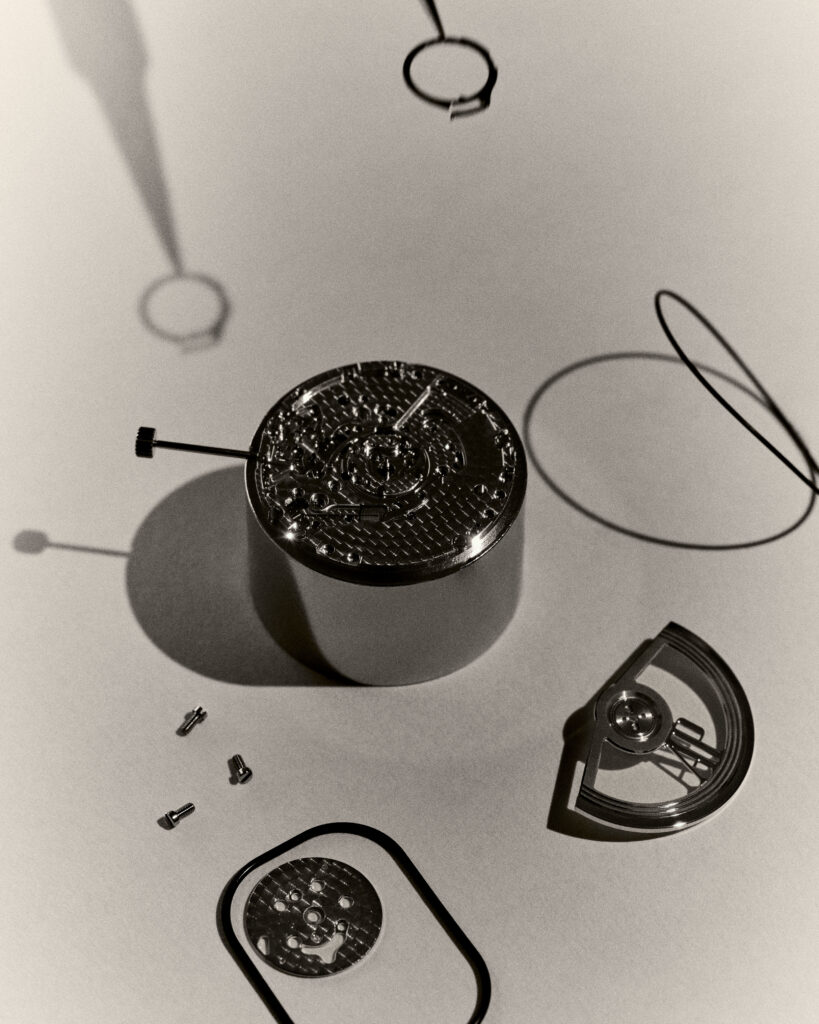
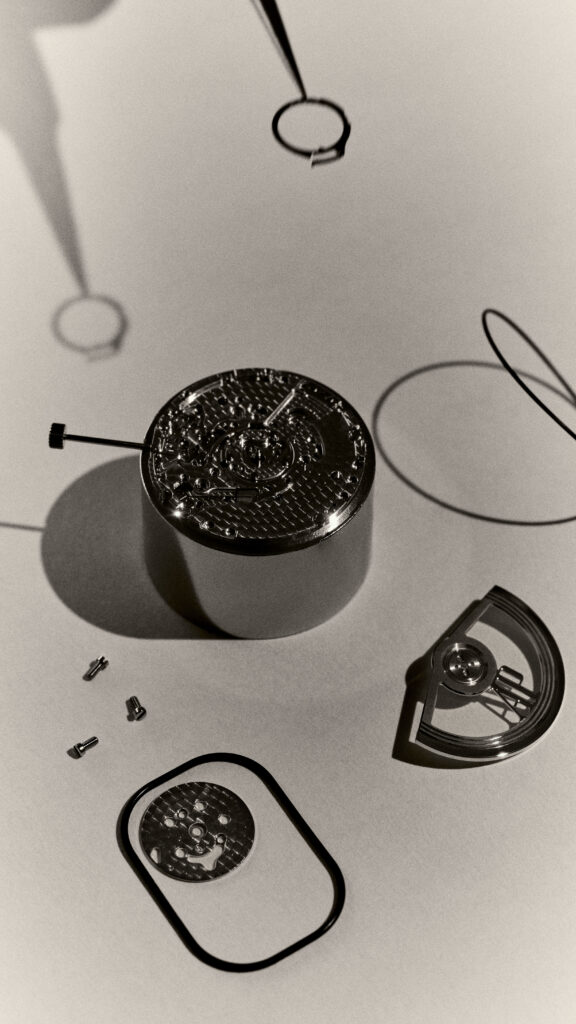
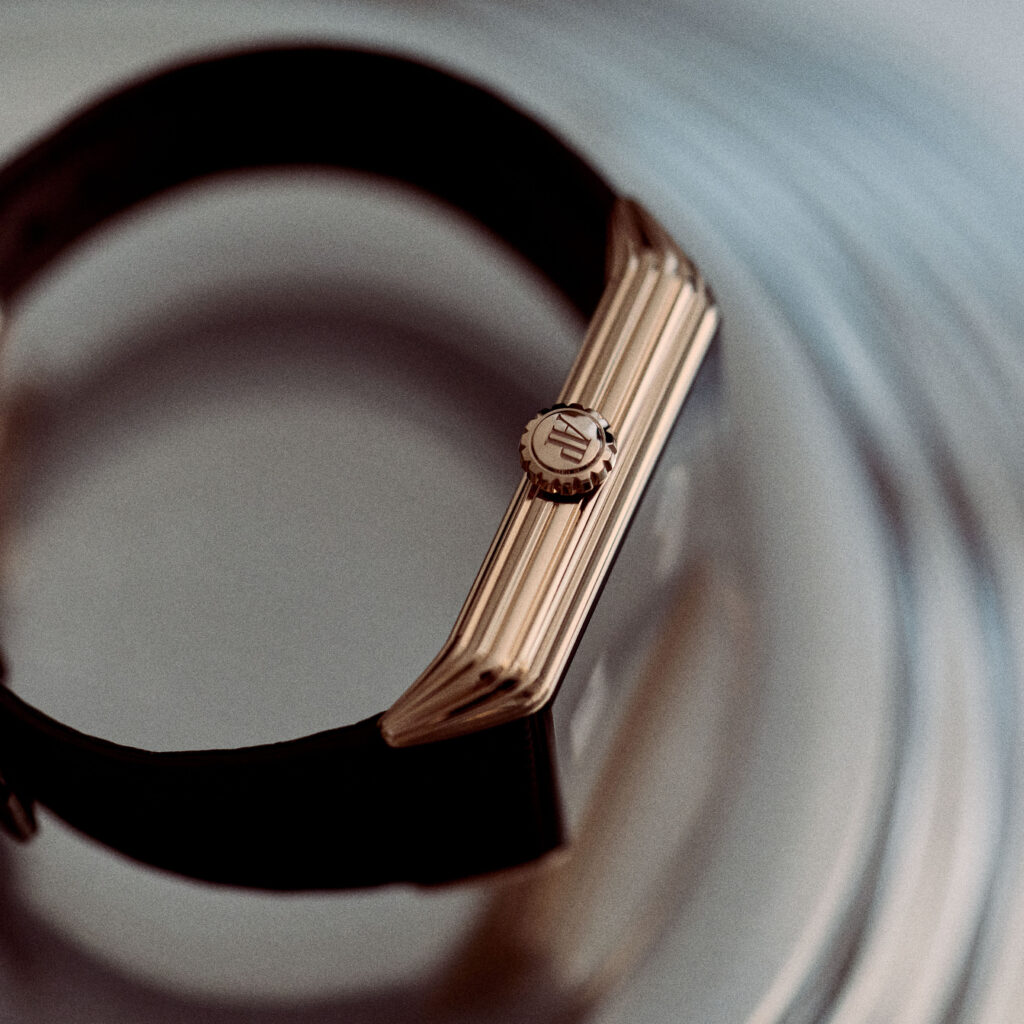
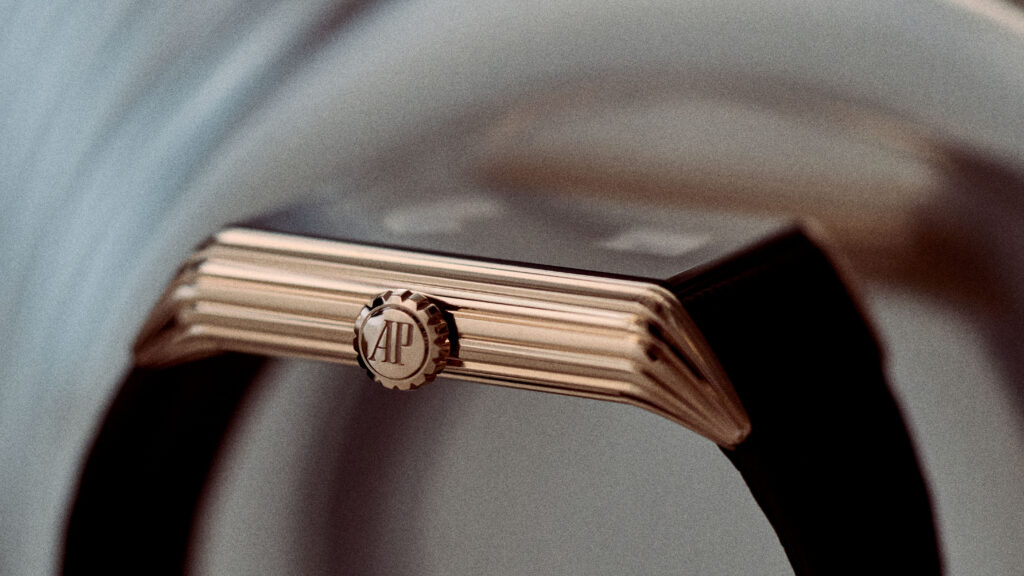
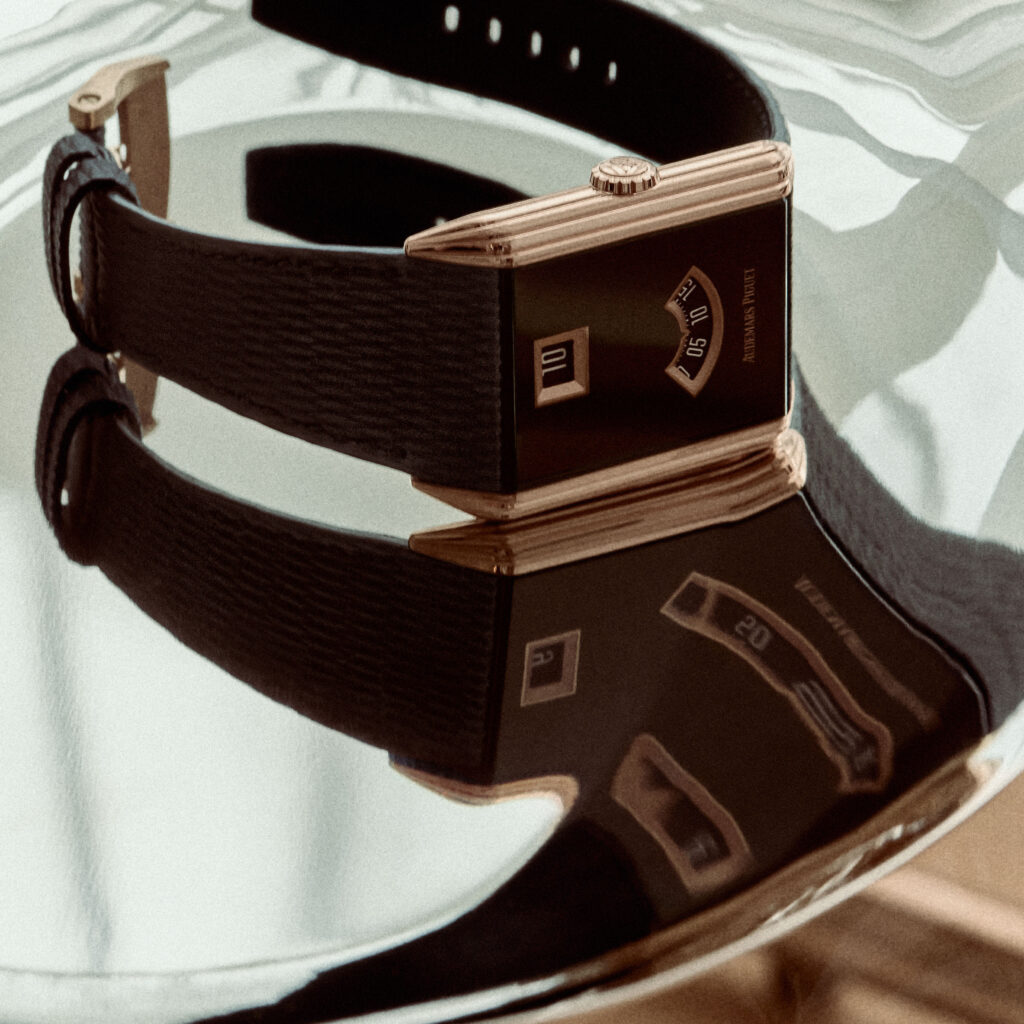
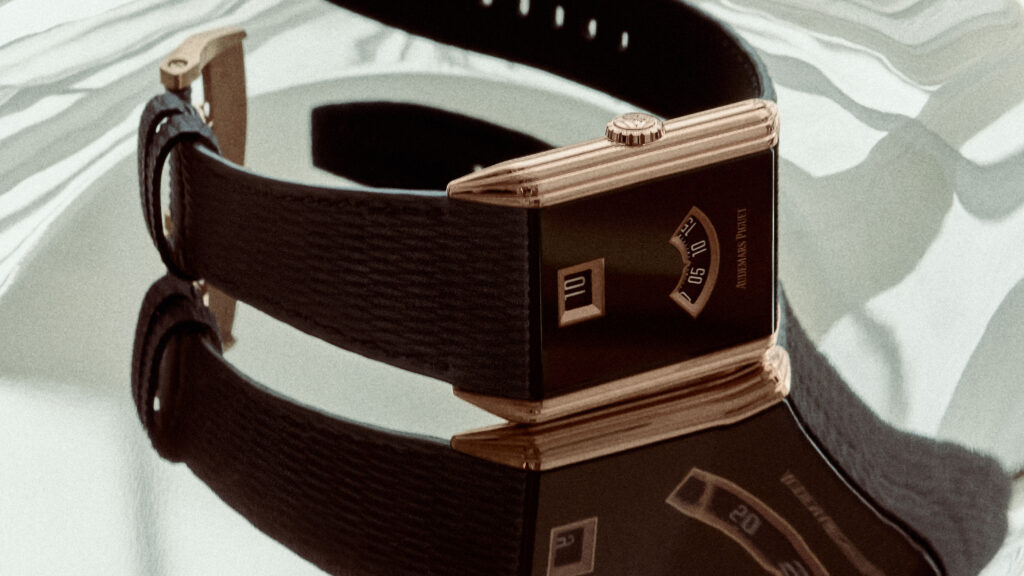
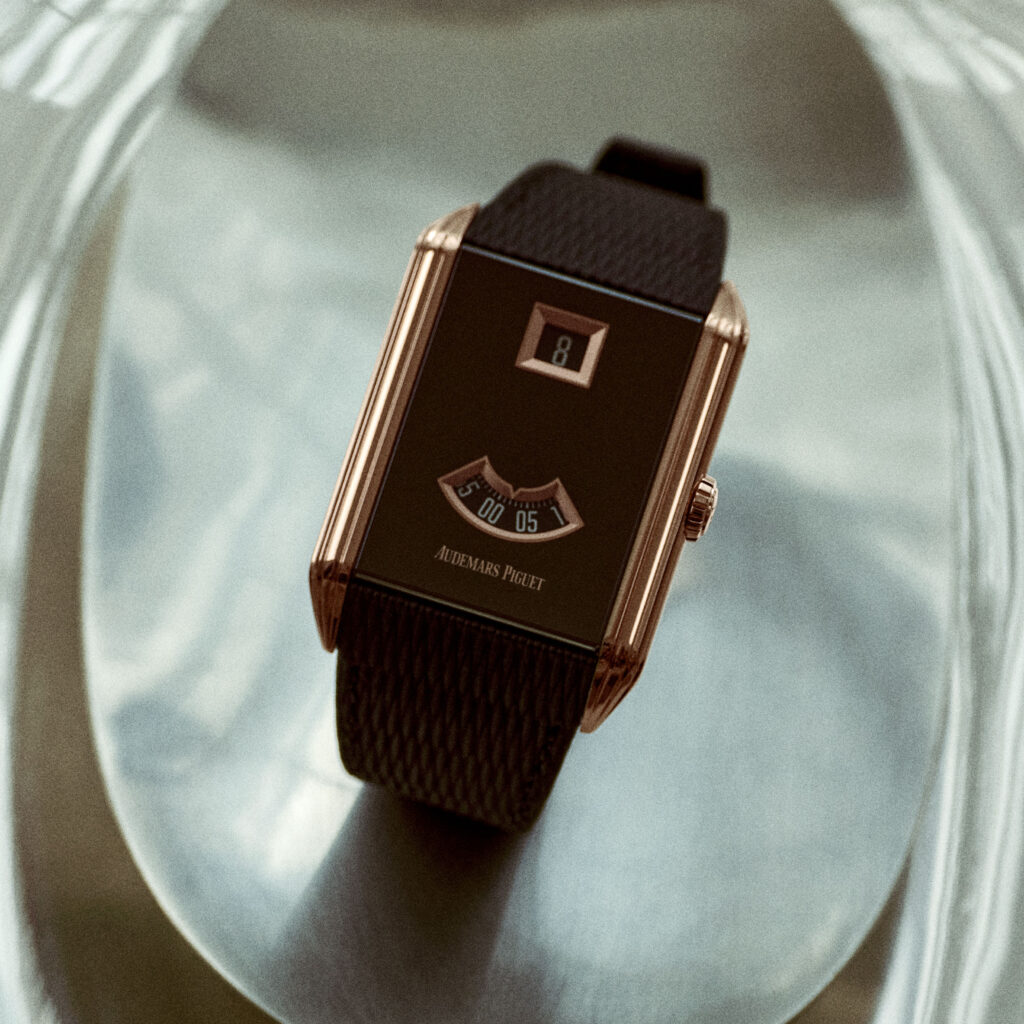
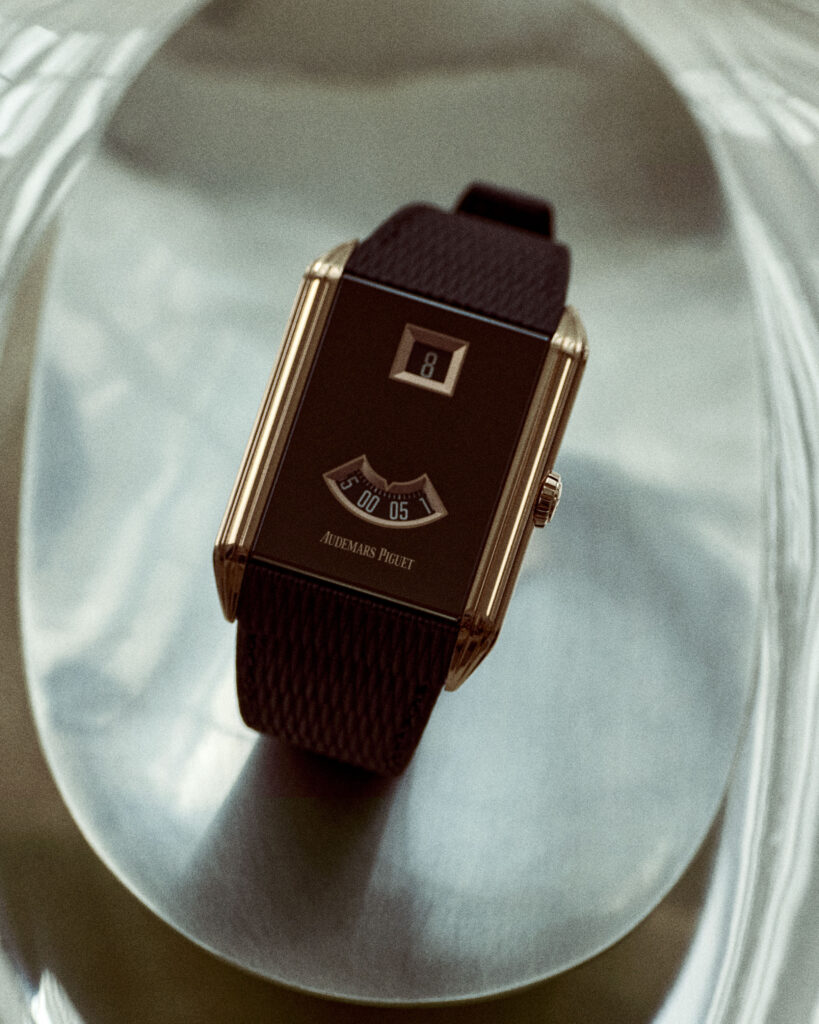
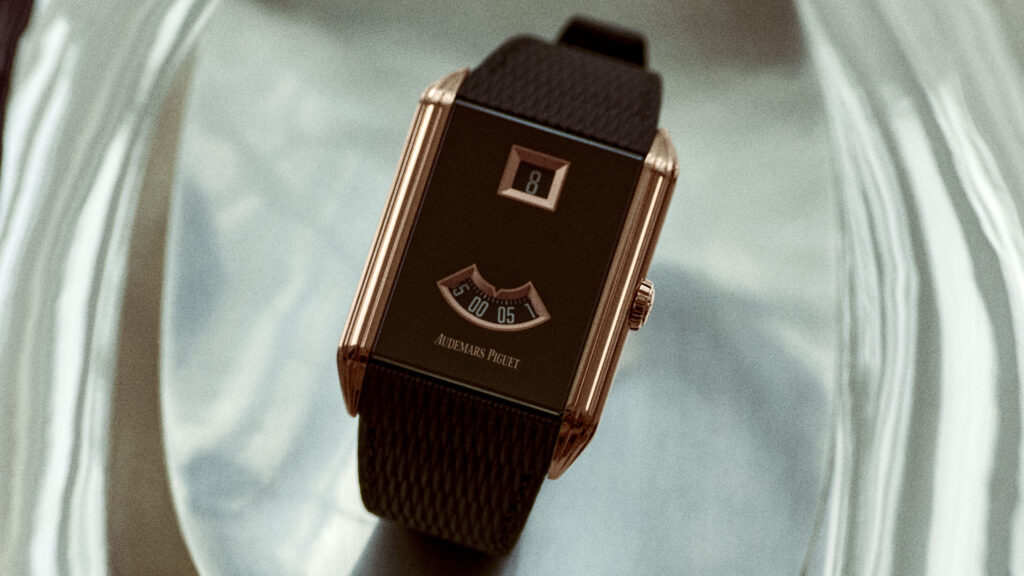
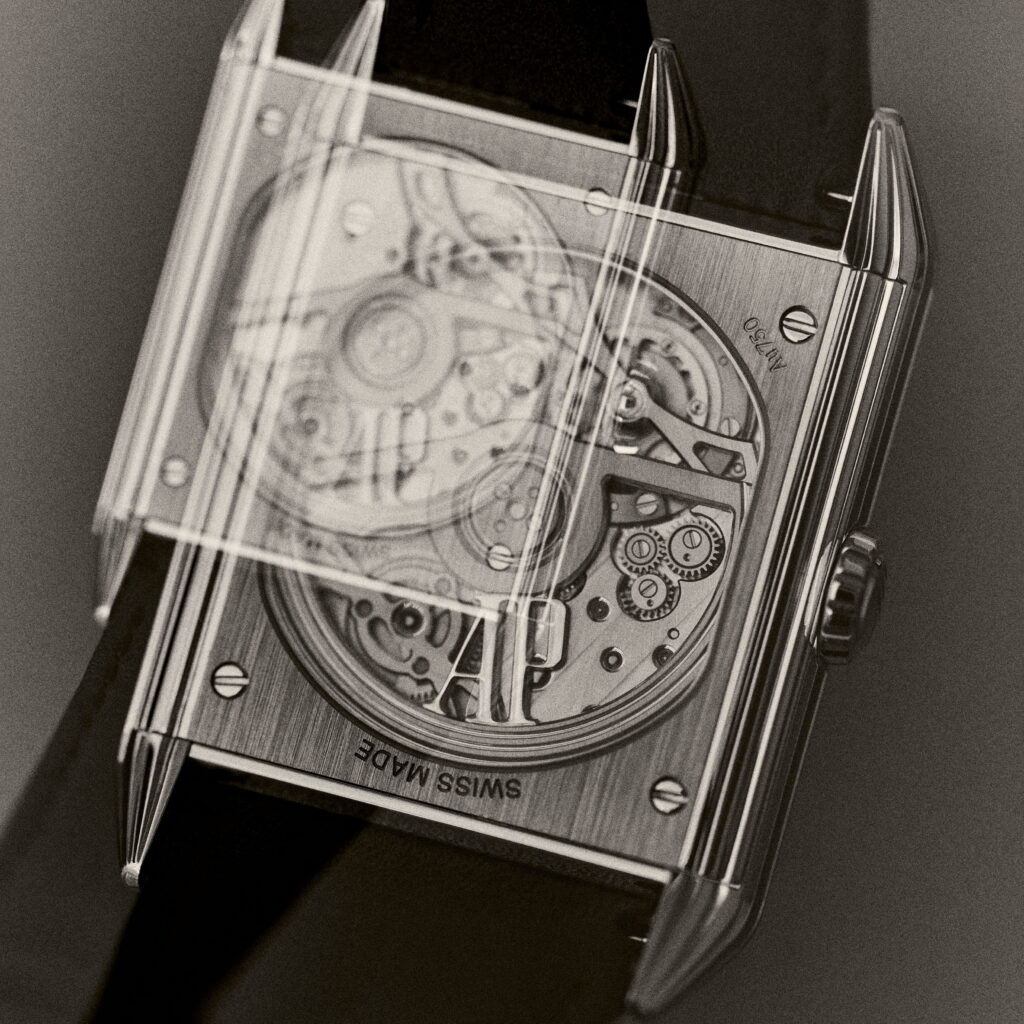
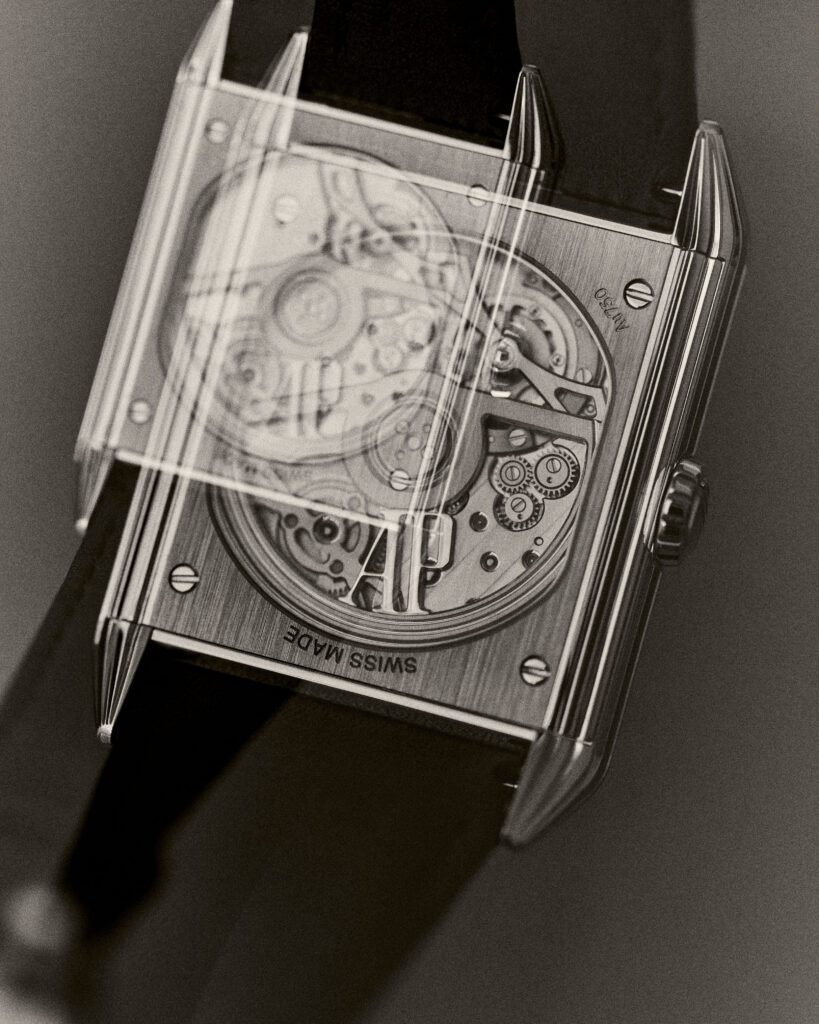
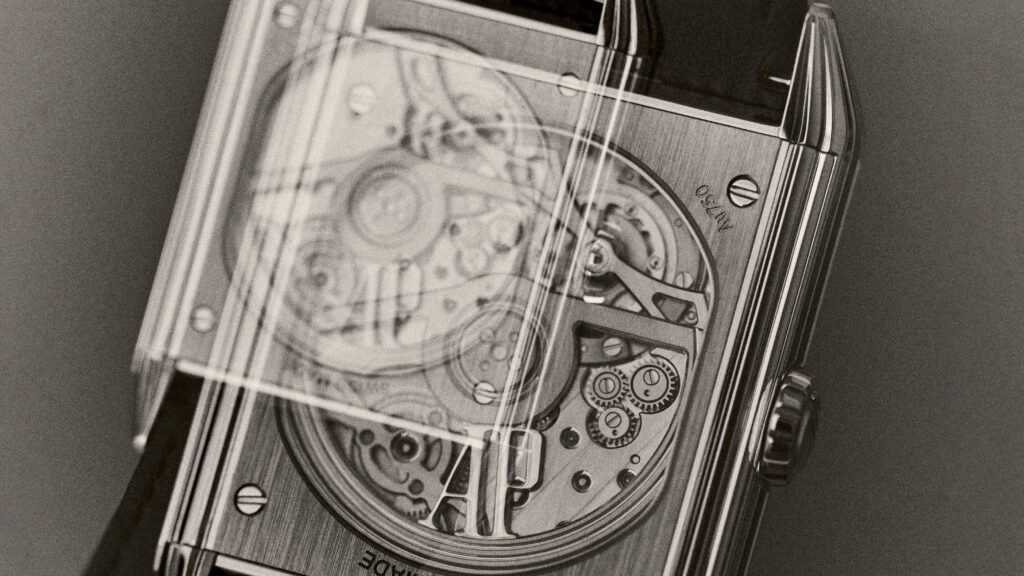
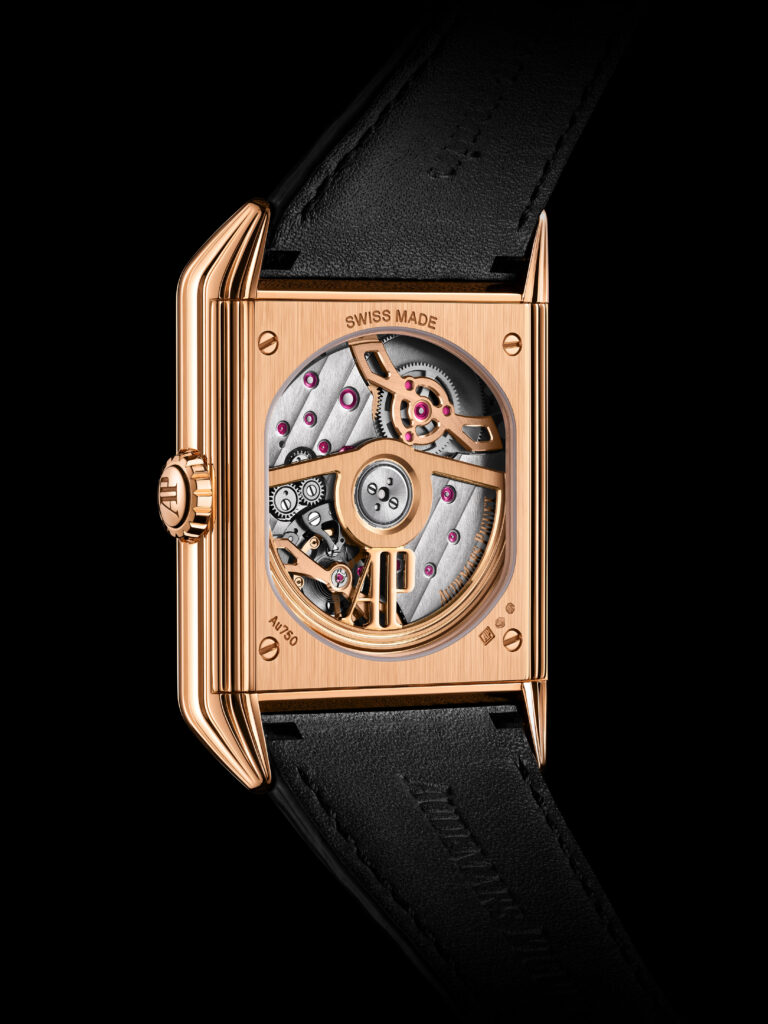
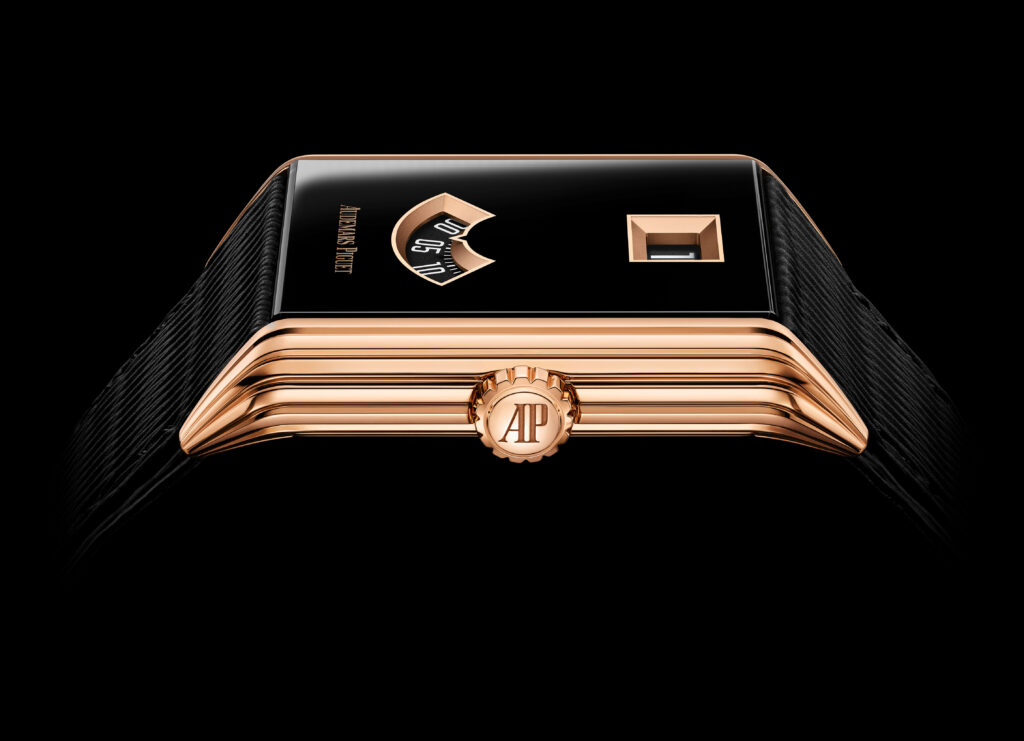
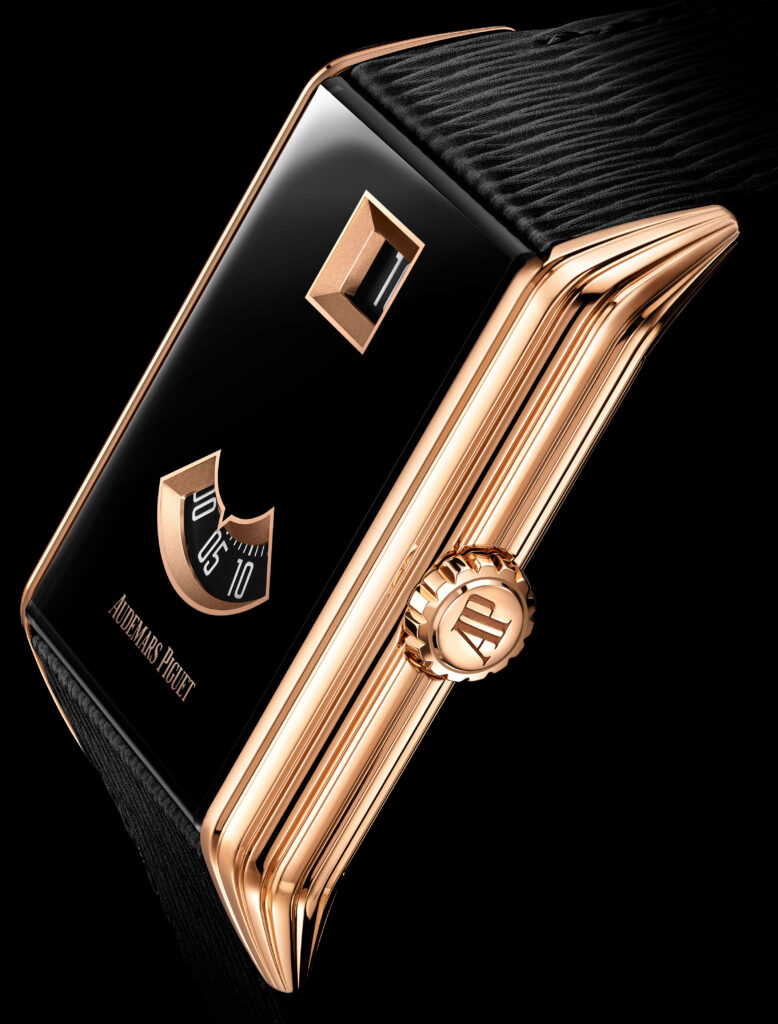
The case, crafted from 18-karat rose gold, measures 34.6 x 34 mm excluding the lugs, with a thickness of 8.8 mm. On either side, eight vertical flutes extend from the case middle to the lugs. This detail might seem ornamental, but it is primarily structural. It lends this rectangular shape a sense of latent movement, as if the watch were designed to cut through the air rather than simply adorn the wrist. The same design language is found on the case back, the crown, and the oscillating weight in rose gold, all CNC-machined and then adjusted with the precision required to align the lines between the case back and the lugs.
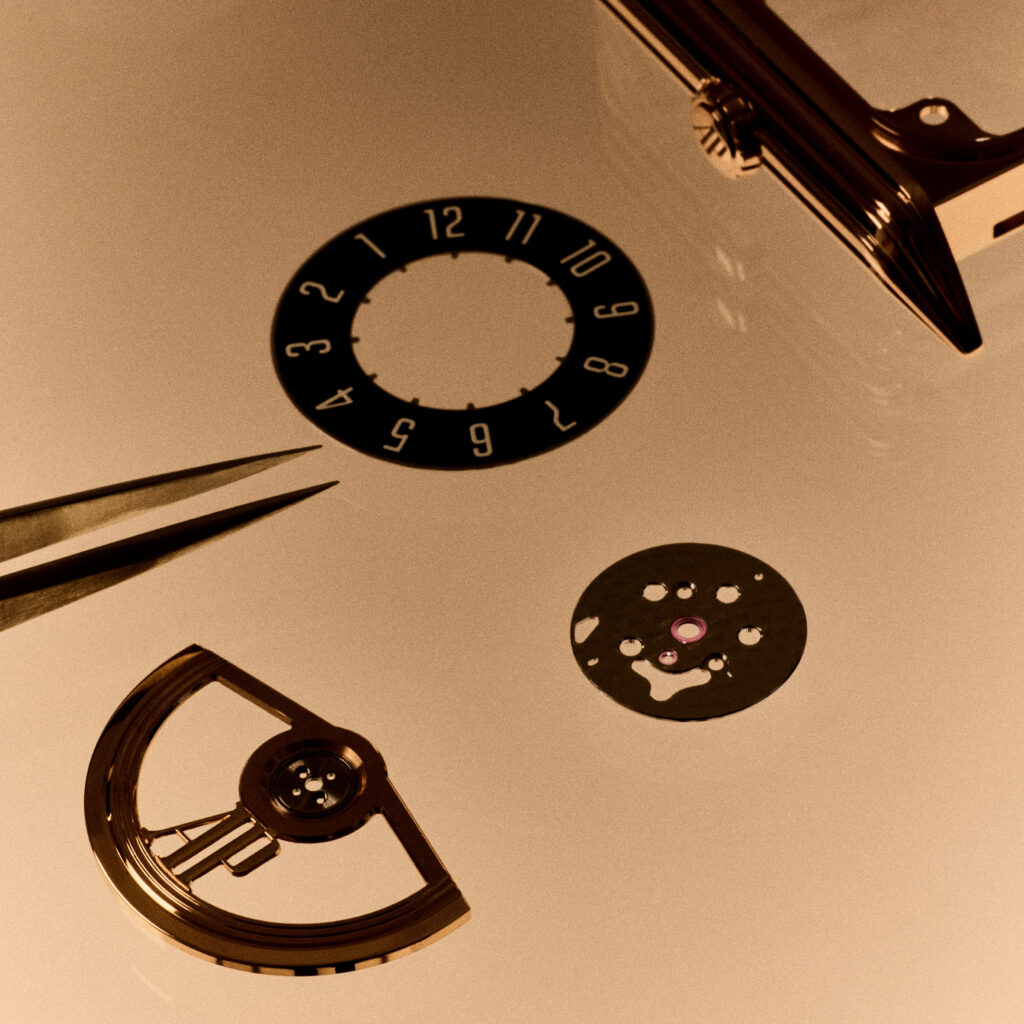
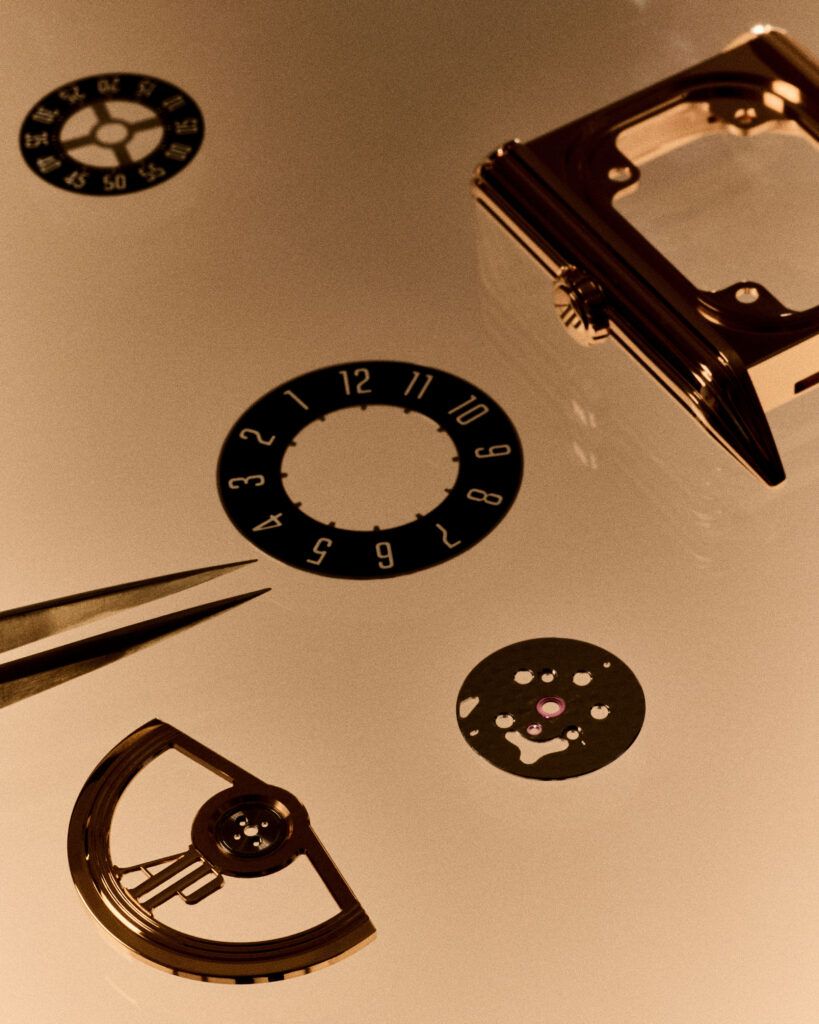
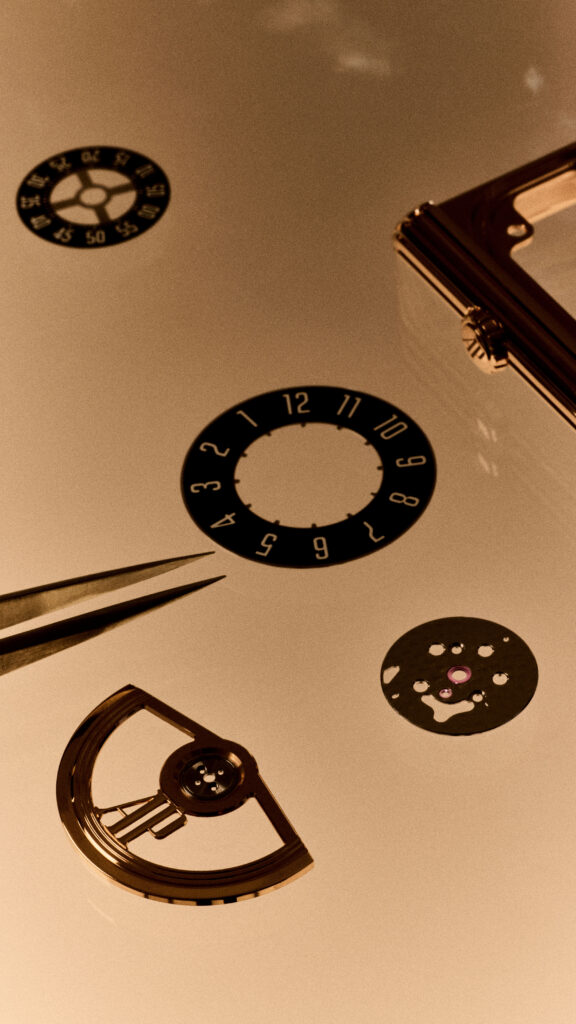
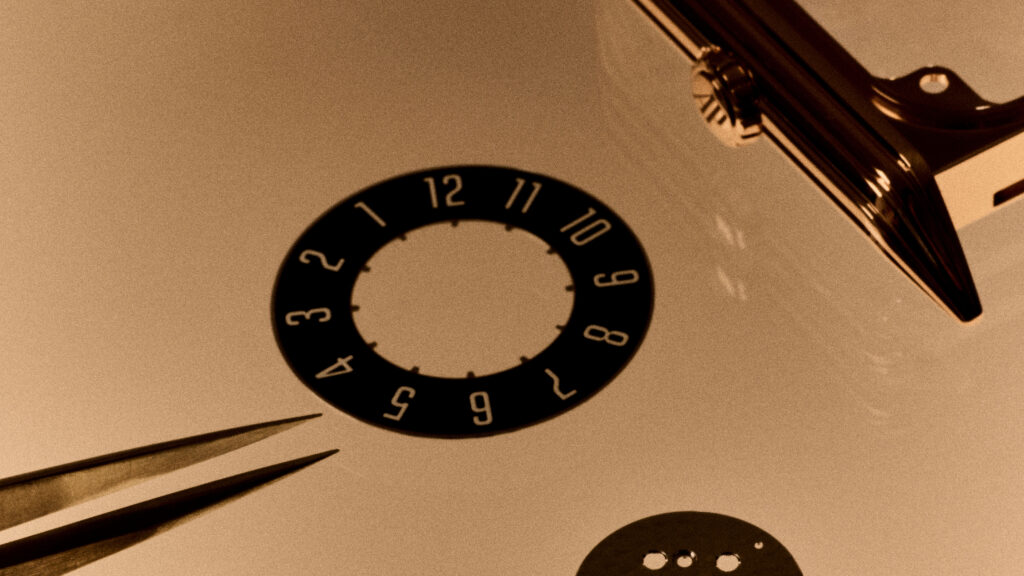
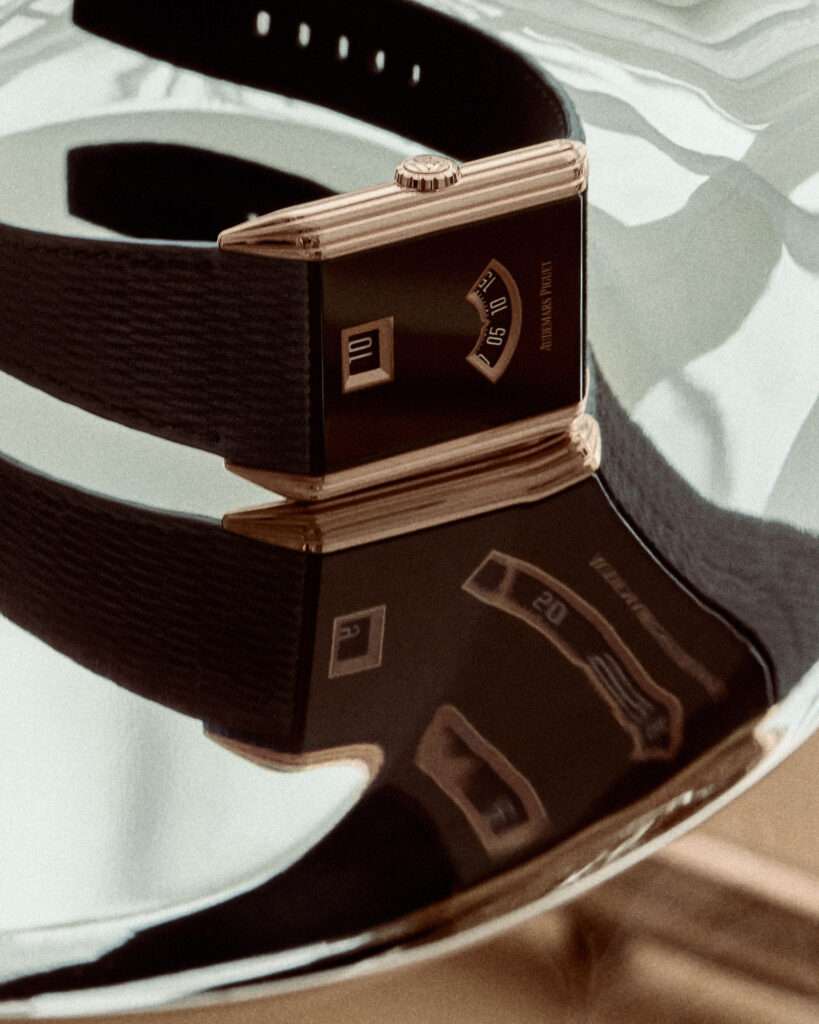
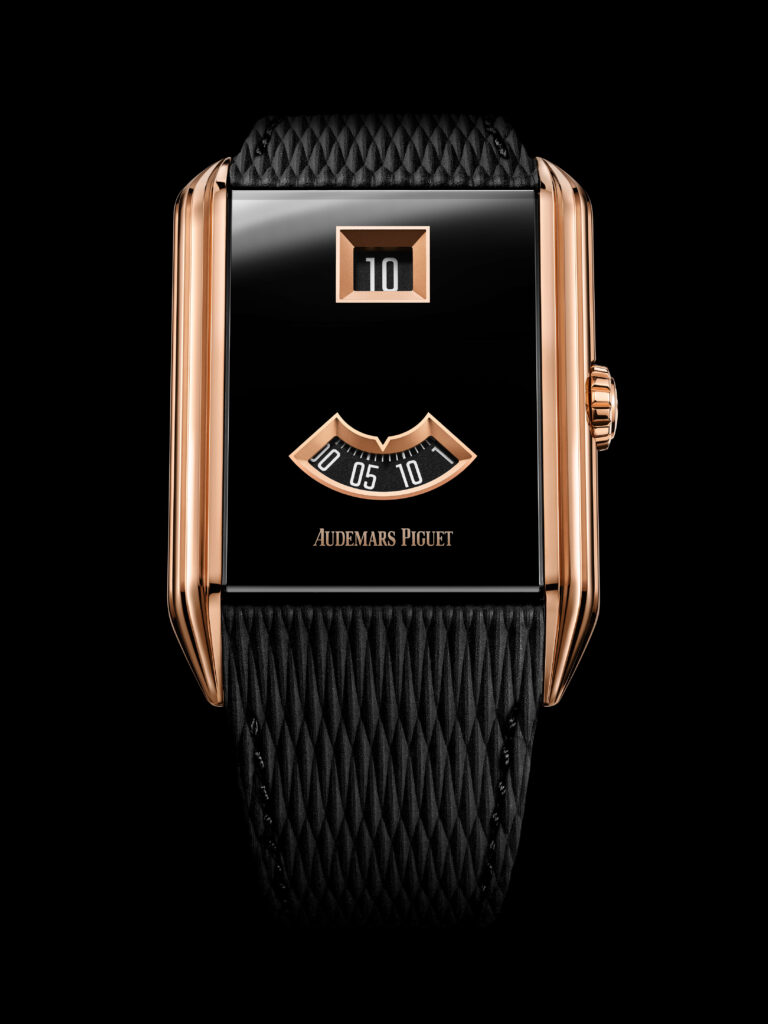
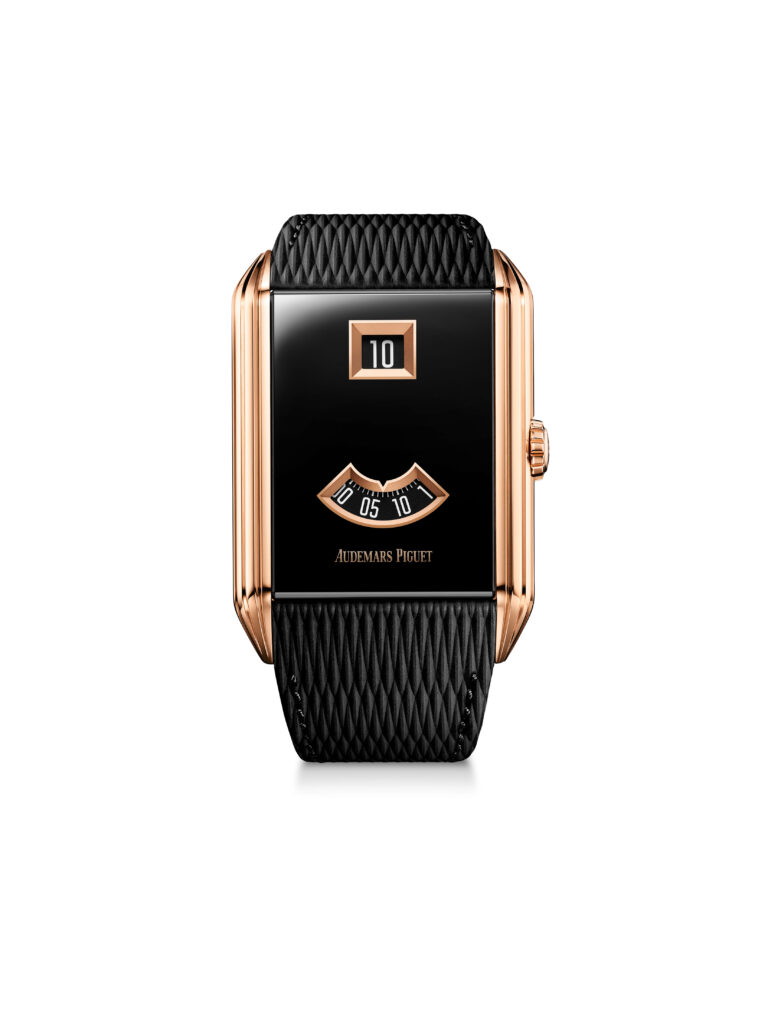
The dial represents one of the technical challenges of this model. The 1929 prototype used a metal plate, made of gold or platinum depending on the variant. The Neo Frame replaces this design with a black sapphire crystal treated with PVD. Two apertures reveal the jumping hour and the sweeping minutes, printed in white on a black background and framed by gold-toned, micro-beaded bevels. The absence of a bezel and metal at the 12 o’clock and 6 o’clock positions forced Audemars Piguet to rethink the water resistance system: the dial plate is glued to the sapphire crystal and then screwed to the case middle to achieve a water resistance of 20 meters. On the surface, this change seems unremarkable. Yet it lies at the heart of the matter: giving sapphire a role that metal once played.
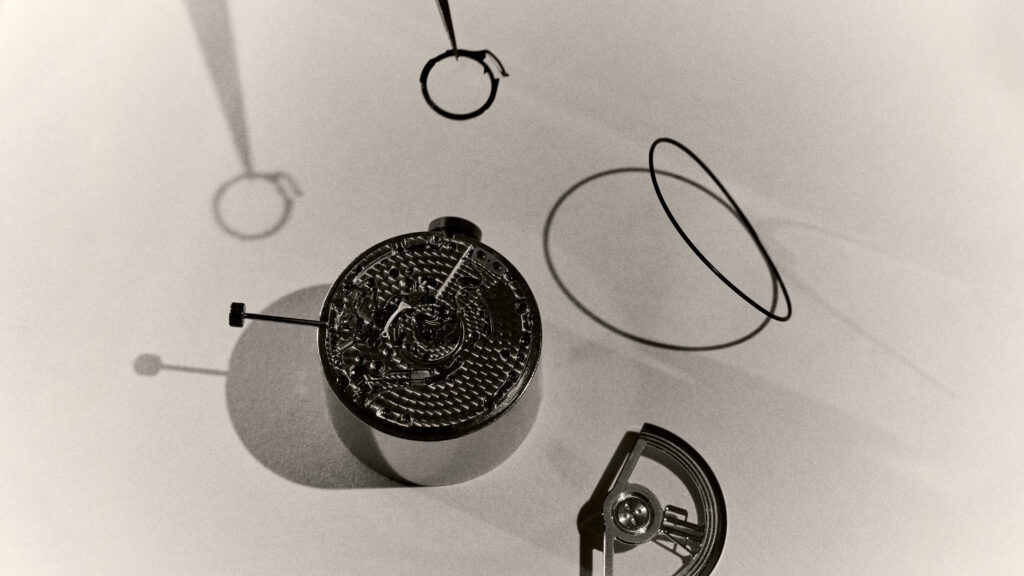
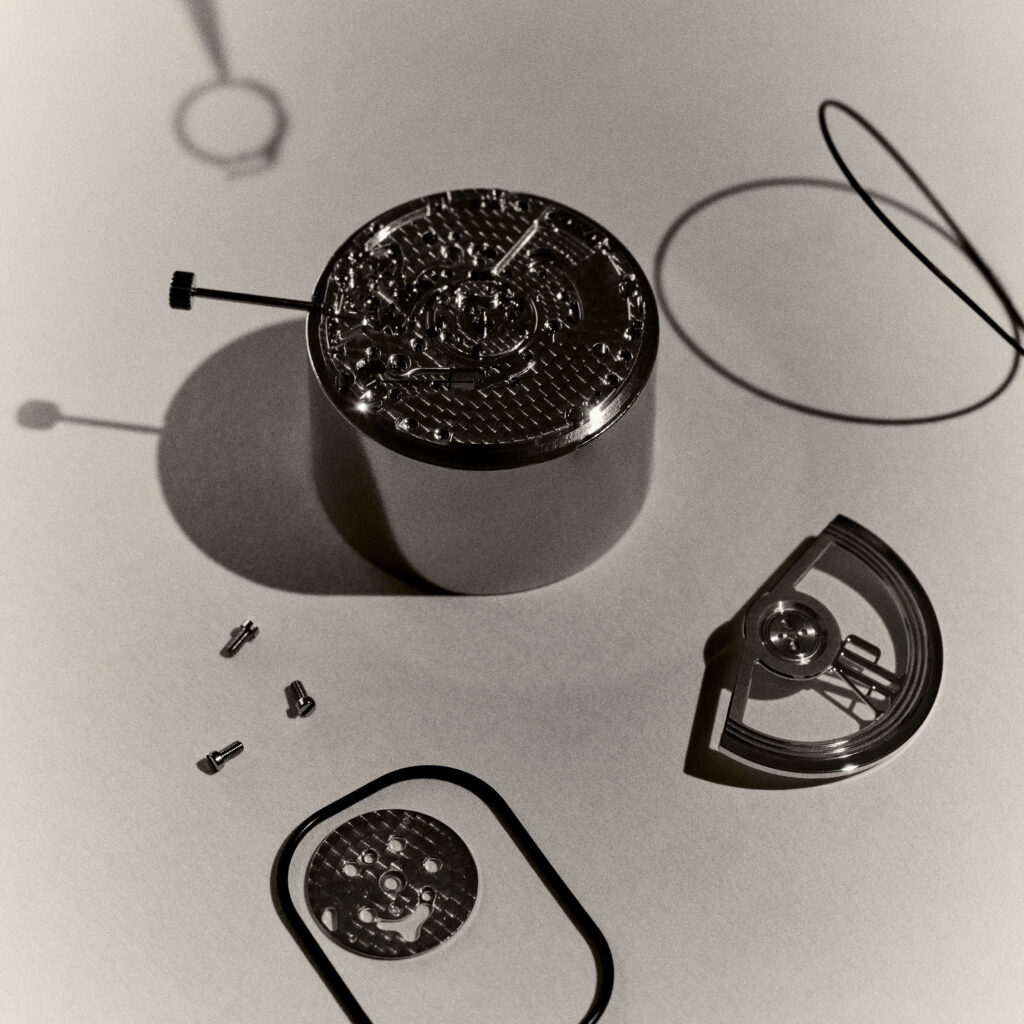
The watch introduces the Caliber 7122, the Manufacture’s first automatic movement with a jumping hour. Developed in-house based on Caliber 7121—known for powering the Royal Oak “Jumbo” models—it combines an instantaneous hour jump with a continuous-running minute hand. The movement comprises 293 components and 43 jewels, beats at 4 Hz (28,800 vibrations per hour), and offers a 52-hour power reserve. These specifications are confirmed by the official Audemars Piguet data sheet for the Neo Frame.
The complication itself has a history that predates the wristwatch. The jumping hour first appeared around 1650 in night clocks, before being adapted for pocket watches in the 18th century. Starting in 1890, the minute display also shifted to a disc visible through a window. During the interwar period, this design proved particularly well-suited to wristwatches: the solid dial protected the still-fragile mineral crystal. Between 1924 and 1951, Audemars Piguet sold 347 timepieces with a jumping hour, including 135 with double windows. The 1271 prototype, released in 1929 and 1930, was produced in a limited run of just fourteen pieces, available in four variations, including a single platinum model.
This is where the Neo Frame becomes interesting beyond its reference to the past. It does more than simply revive a form. It addresses the historical fragility of the object using the Manufacture’s contemporary techniques: a visible sapphire crystal, an automatic movement, a titanium hour disc, a copper-based alloy minute disc, and a patented shock-absorption system that mechanically prevents the time from jumping in the event of an impact. At Audemars Piguet, nostalgia is not treated as a mere image. It becomes an engineering challenge.
Sébastian Vivas, director of the Audemars Piguet Museum and Heritage, aptly sums up this reversal: “Originally, glass was so fragile that it had to be protected by metal. Today, it’s made of sapphire, and it’s the sapphire that covers the watch. ” This statement says a great deal about the era: protection becomes the surface, constraint becomes language, and the archive becomes a method.
The black textured calfskin strap, developed by the Manufacture’s Design team, extends this interpretation. It sits flush with the sapphire crystal between the lugs and avoids the jarring effect that a watch with an overly literal shape might produce. The Neo Frame is not a retro piece. Rather, it belongs to that rarer category of objects that explore their own history without turning it into a museum piece.
Audemars Piguet, founded in Le Brassus in 1875, remains deeply rooted in the Joux Valley, a region of Switzerland where the history of watchmaking has shaped a culture of mechanical complications. The brand’s official website reminds us that it all began there, in 1875, in the heart of this region with a deep-rooted passion for complex mechanisms. In this context, the Neo Frame Heure Sautante serves as a small manifesto: a watch from 2026 that does not seek to speed up time, but rather to restore its rhythm.

Cette publication est également disponible en :

