
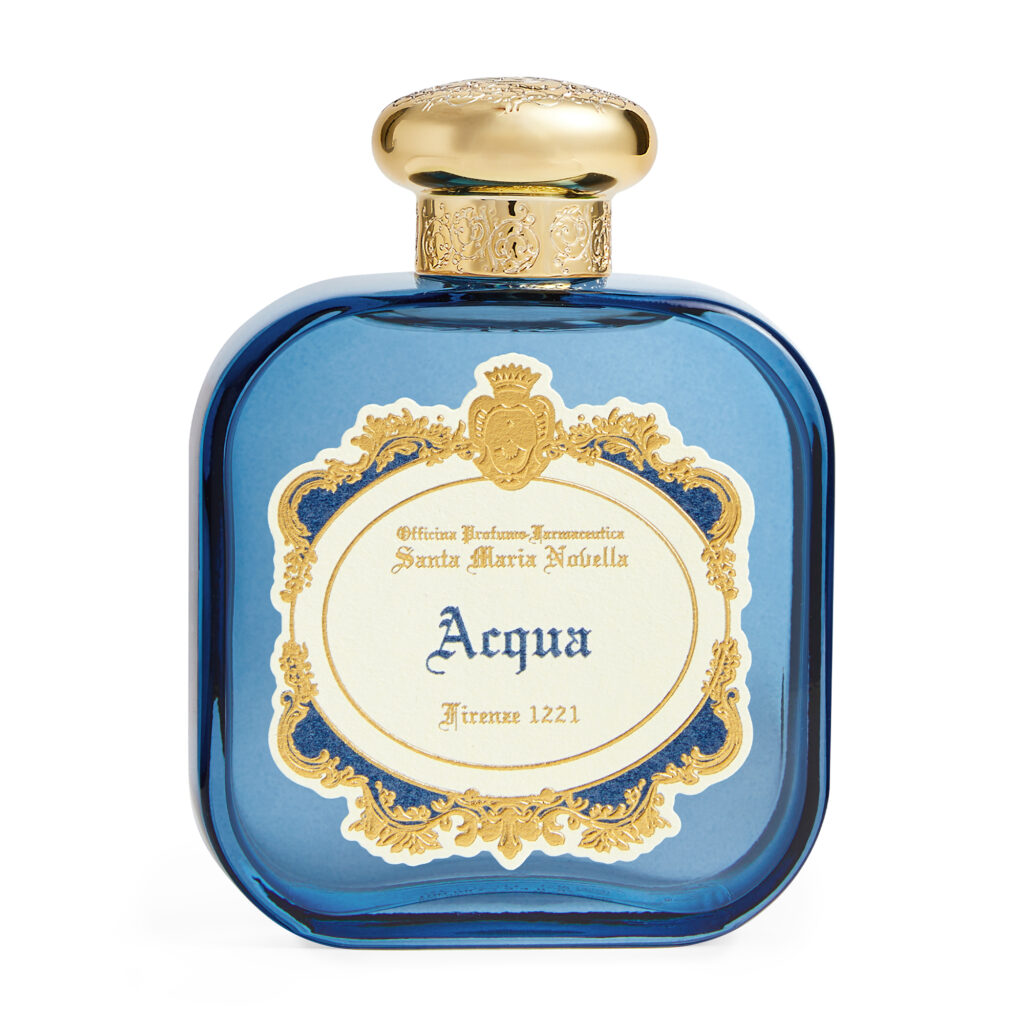
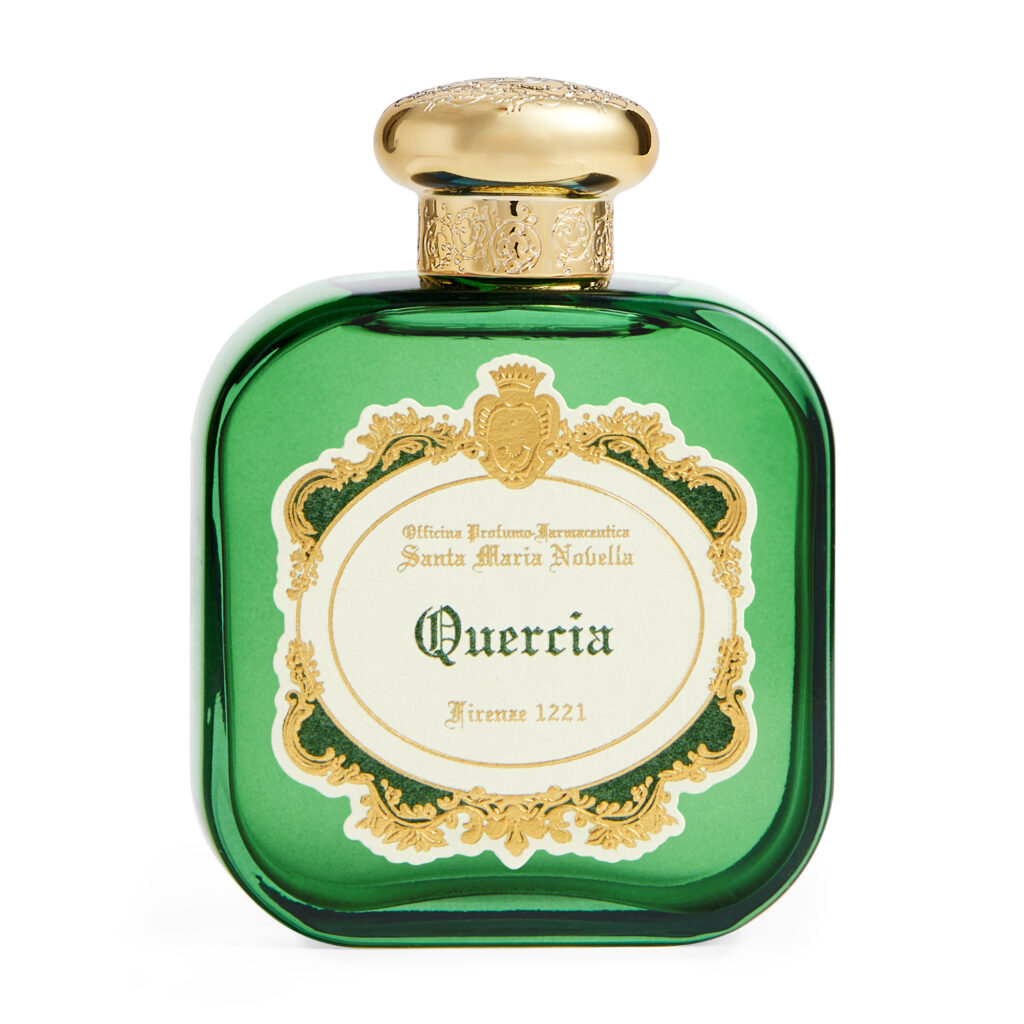
At Officina Profumo-Farmaceutica di Santa Maria Novella, there is a very Florentine way of viewing perfume: not simply as a scent, but as an organized botanical memory. With the arrival of Acqua and Quercia in Shower Gel and Fluid Body Cream, the I Giardini Medicei collection moves beyond the realm of Eau de Parfum to enter a more intimate sphere: that of daily ritual.
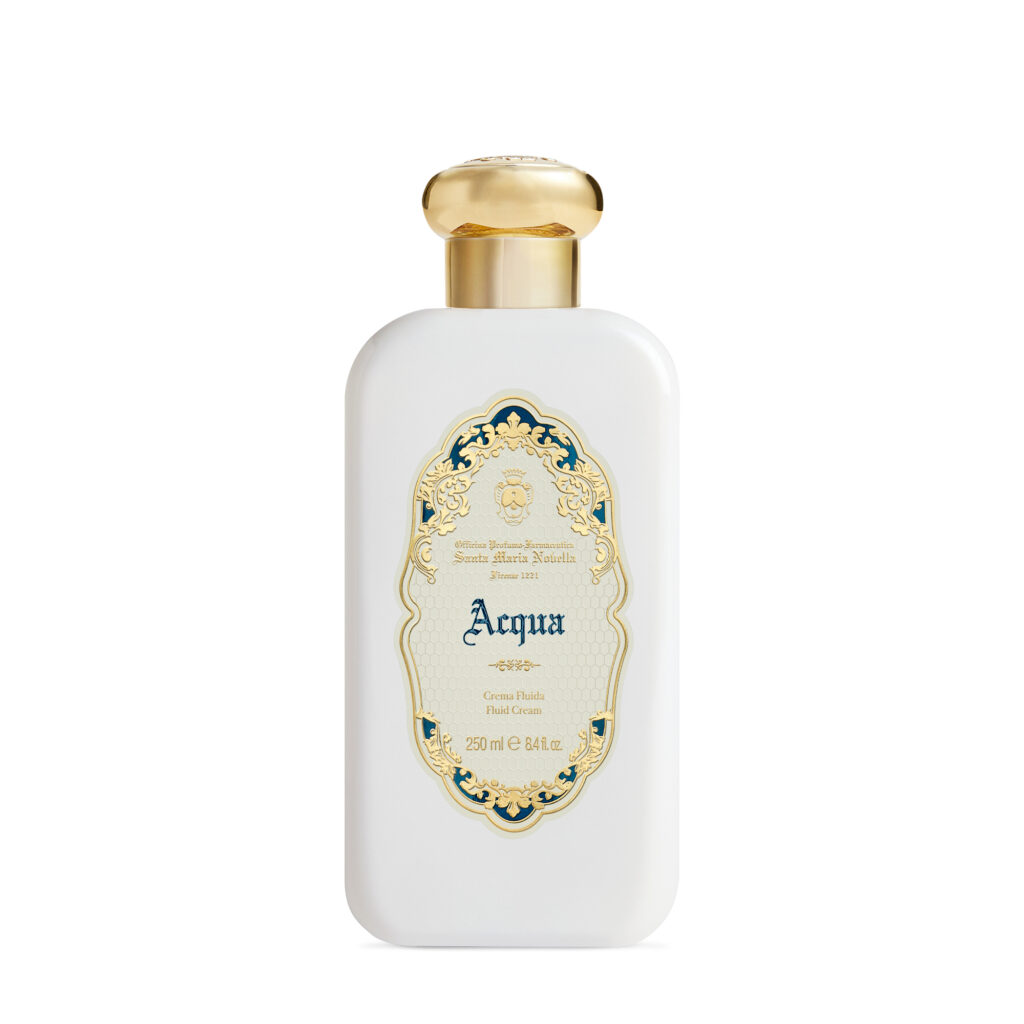
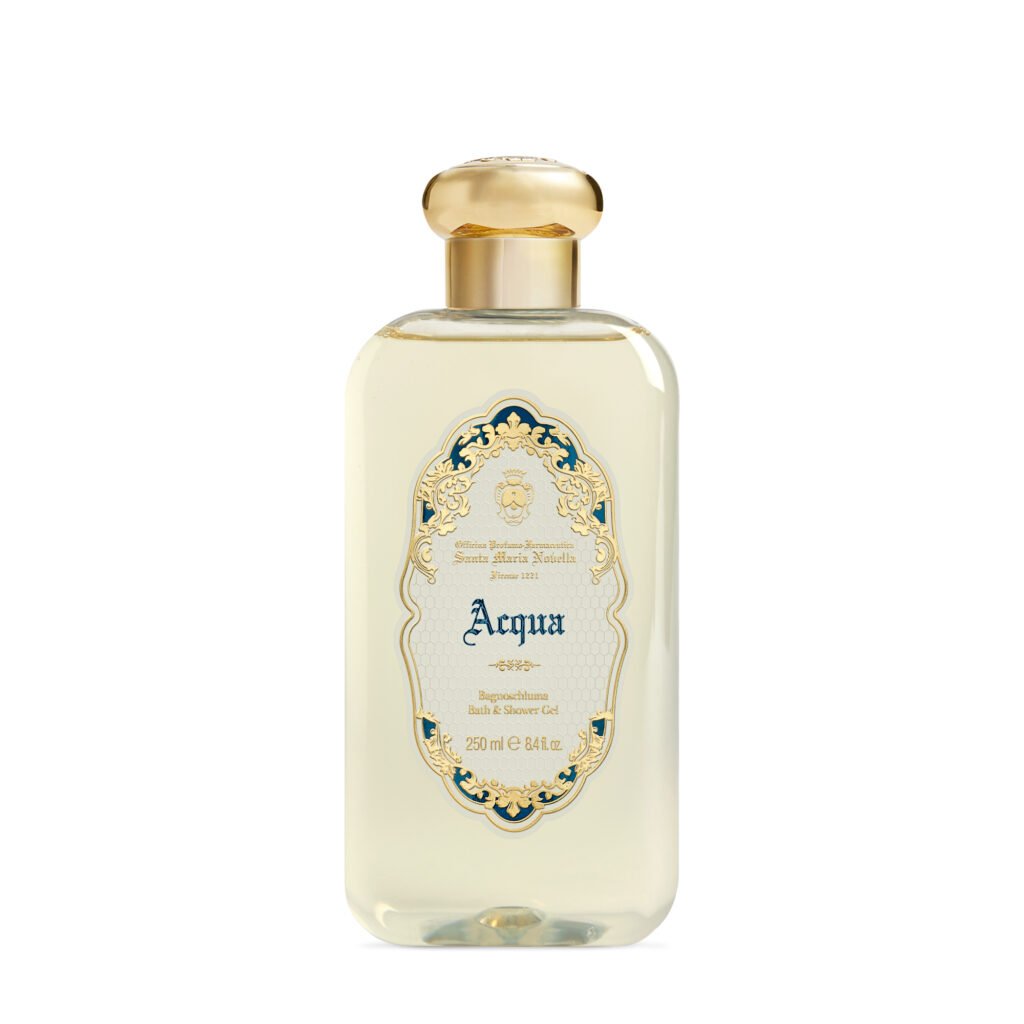
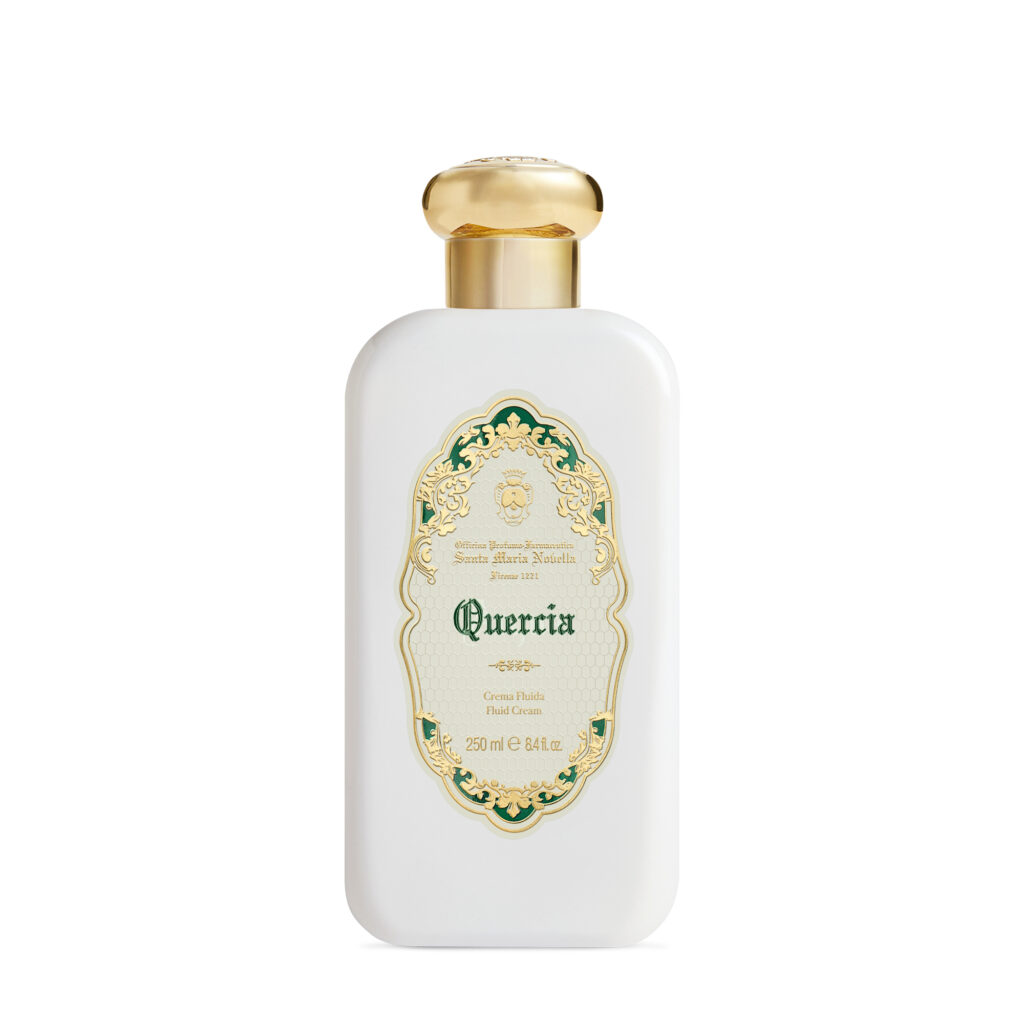
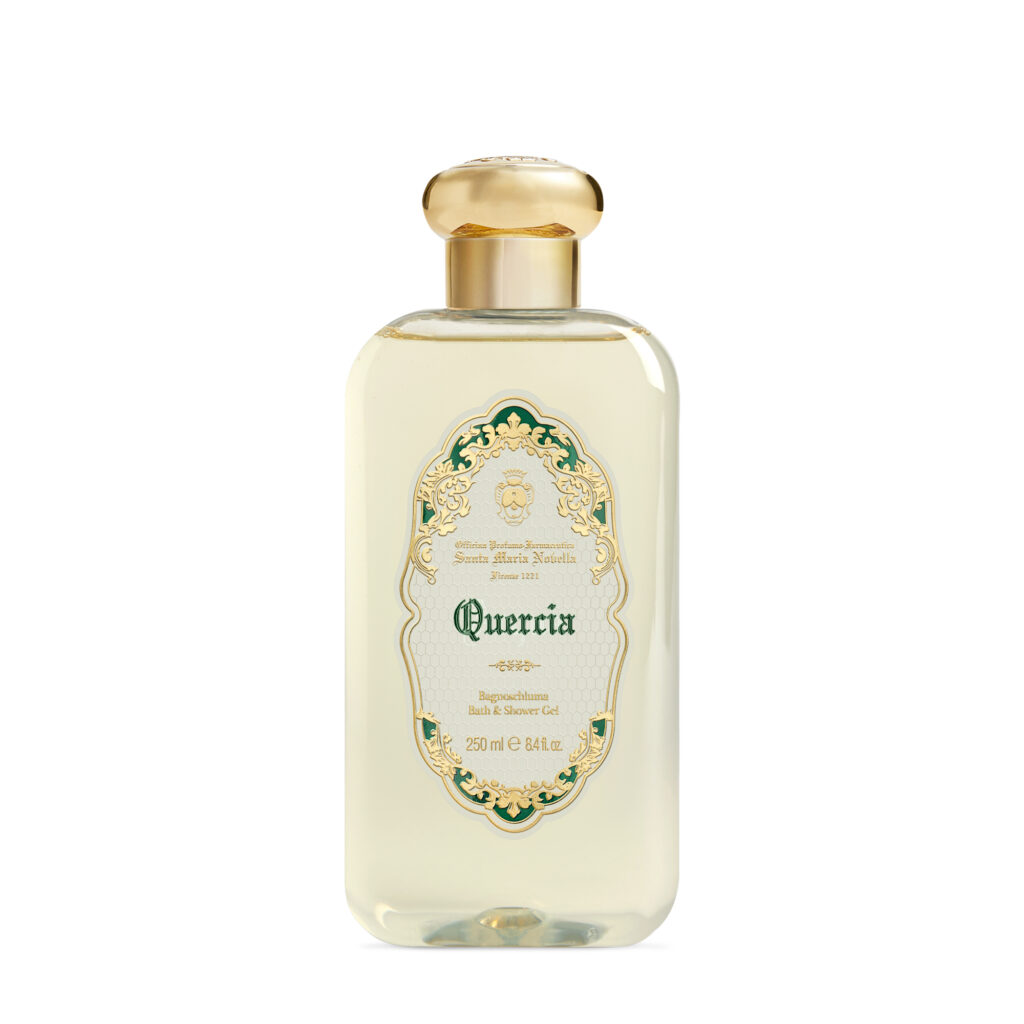
Launched in 2024 with its body care range—featuring Bizzarria, L’Iris, Magnolia, and Gelsomino—the line now welcomes two new fragrances. Acqua and Quercia join the collection in two forms: a Shower Gel formulated with plant-based surfactants, designed to cleanse the skin while respecting its natural balance, and a Light Body Cream made with a base of plant-derived oils and butters, designed to leave the skin supple and smooth.
The process seems simple. But it isn’t quite that straightforward. Transforming an Eau de Parfum into a body care product requires preserving its olfactory structure while adapting it to living elements: the skin, water, the warmth of the bath, and the time it takes for a cream to be absorbed. In the press release, the House emphasizes this continuity: each variation retains the distinctive character of the corresponding Eau de Parfum, but in textures designed for daily use. The fragrance is no longer simply worn; it accompanies a more discreet, almost domestic ritual.
I Giardini Medicei traces its origins to the gardens cultivated under the patronage of the Medici, when Florence regarded botany as a form of knowledge, a collection, and a symbol of prestige. The official Santa Maria Novella website presents this collection as an exploration of the botanical essences and rarities that once filled the Medici gardens, featuring eight Eaux de Parfum conceived as contemporary olfactory narratives. This reference to the Renaissance is meaningful only if it goes beyond decorative imagery. Here, it serves as a reminder that the garden was long a laboratory: a place for acclimatization, observation, and the circulation of plants and their uses.
Acqua and Quercia expand on this interpretation with two almost opposite imagery concepts. Acqua evokes the fluid, light, and flowing element; Quercia, the oak, introduces a more woody, protective verticality. The collection’s official French page describes Quercia through the image of a garden where light filters through the branches of century-old oak trees, with “warm and enveloping” notes. Stripped of its lyrical quality, this description conveys one thing above all: the collection is not solely concerned with flowers, but with the botanical architecture of a garden—its shadows, its trunks, and its air currents.
This shift toward body care is a natural part of Santa Maria Novella’s history. The Officina traces its Florentine roots back to 1221, linked to the Dominican convent of Santa Maria Novella, and today stands as one of the oldest pharmacies still in operation at its original site. Before becoming a perfume house in the modern sense, Santa Maria Novella was a place of preparations, plants, distillation, and practical use. The bath gels and body creams are therefore not an opportunistic expansion; they reconnect with an ancient tradition—that of perfumery applied to the body in its everyday context.
The Bath Gel formula, with plant-based surfactants, creates a light lather upon contact with water and can be used in the bath or shower. The Fluid Body Cream, on the other hand, is based on plant-derived oils and butters, with a texture that absorbs evenly. These elements deserve serious consideration because they shape the experience. A fragrance in the bath does not behave the same way as it does on the wrist. It dilutes, evaporates differently, blends into the steam, and then either disappears or lingers in traces. A cream, on the other hand, helps solidify the connection between the skin and the fragrance.
In a market where the body is often reduced to a promise of immediate hydration or a commercial extension of a fragrance, Santa Maria Novella chooses a more coherent path: extending an existing botanical narrative through understated textures. The product is not spectacular. Rather, it calls for attention to repetition: in the morning, after a shower, before getting dressed; or in the evening, when the fragrance no longer needs to project itself, but simply to linger on the skin.
Perhaps that is precisely what makes these two additions so fitting. Acqua and Quercia do not seek to artificially expand a world; they give *I Giardini Medicei* a longer presence throughout the day. The Medici garden is no longer merely an image of the Renaissance. It becomes a fleeting gesture, a foam, a cream, a patch of skin. A very ancient luxury, after all: taking the time for self-care without turning it into a statement.
Cette publication est également disponible en :

