
At Vhernier, there is a distinctly Milanese way of never saying too much. The jewelry appears simple, almost self-evident, but this apparent simplicity is deceptive: it conceals forms conceived as sculptures, materials chosen for their visual tension, and a sensuality that favors curves over ornamentation. By opening two new boutiques in Beijing and Shanghai, within the Peninsula hotels, the Italian house is asserting a clear ambition: to establish its jewelry language within one of the most pivotal arenas of contemporary luxury.
Announced in Shanghai on April 24, 2026, these two openings mark a strategic milestone for Vhernier in mainland China. Located in two major cities—both economic and cultural hubs deeply attuned to the codes of style—the boutiques invite visitors to discover a world where Italian craftsmanship meets a sculptural approach to jewelry, grounded in the purity of form, comfort, and a sophistication that is less ostentatious than it is understated.
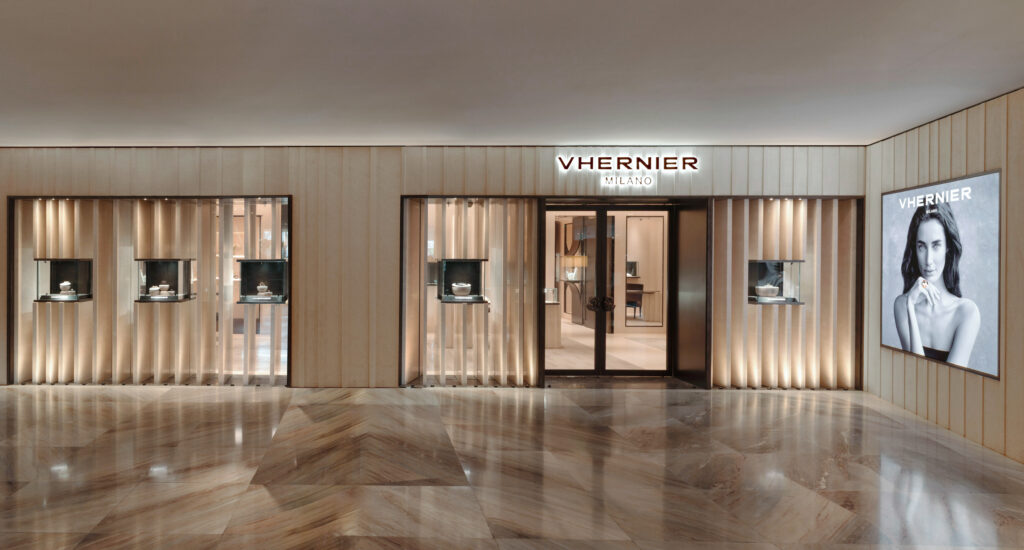
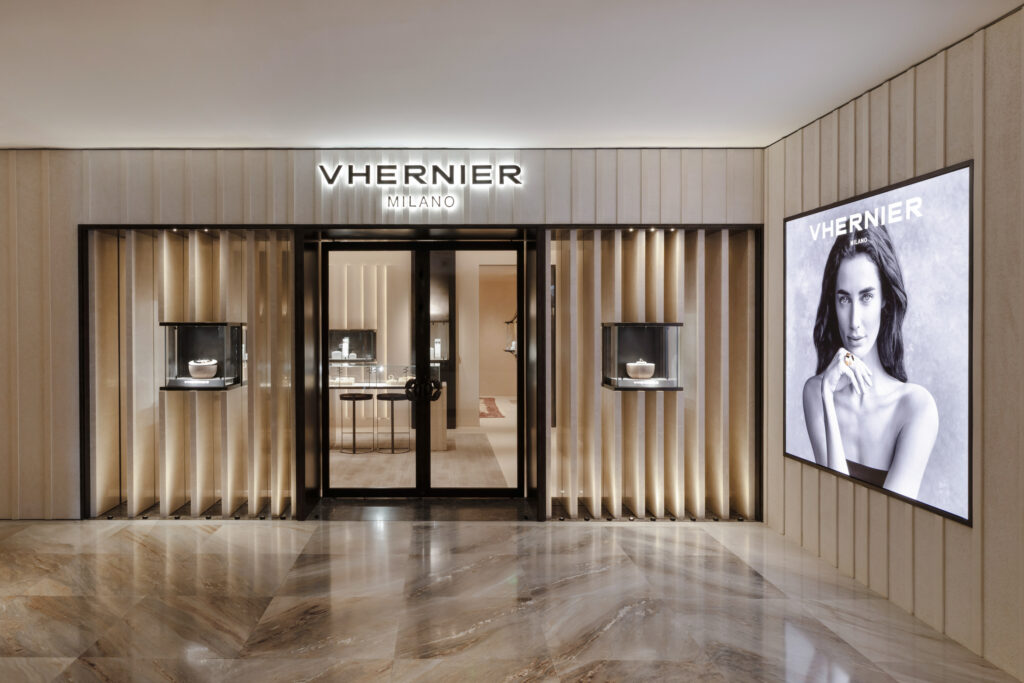
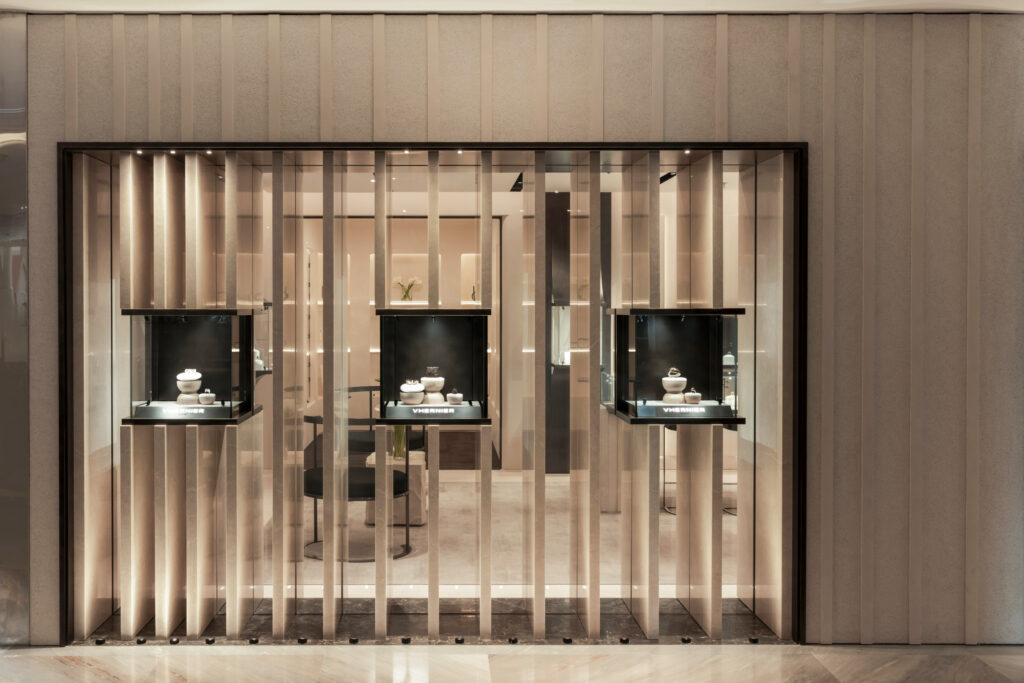
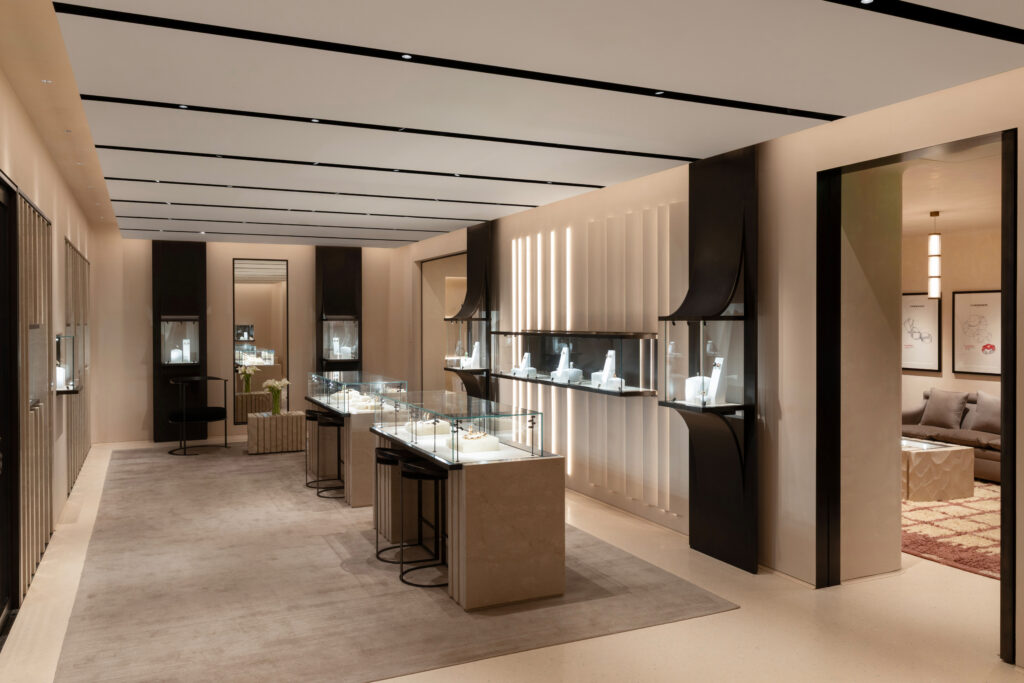
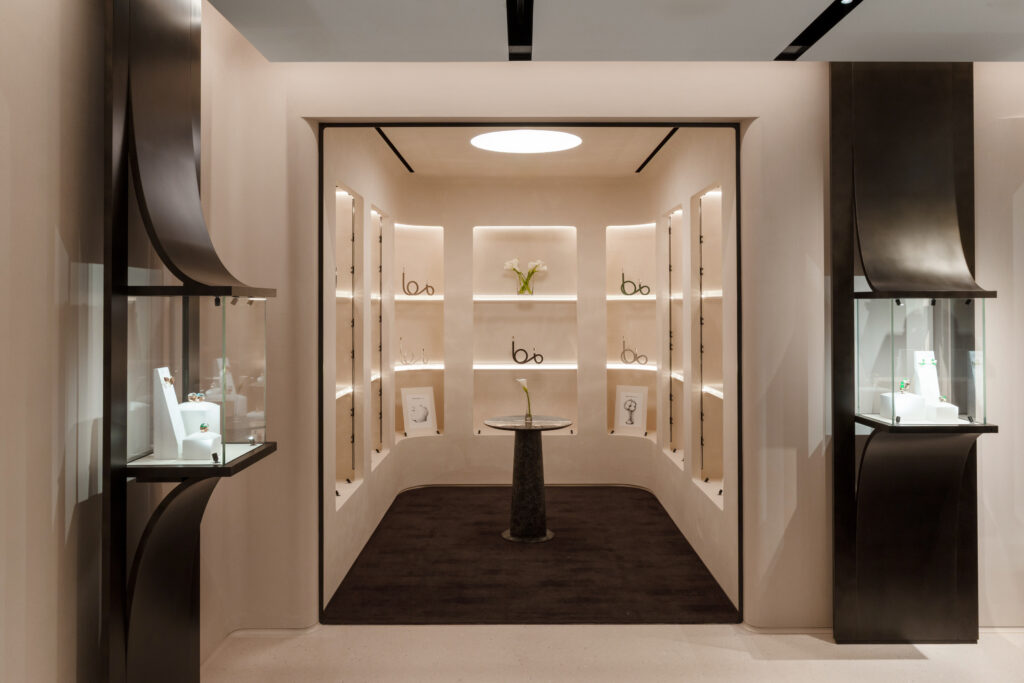
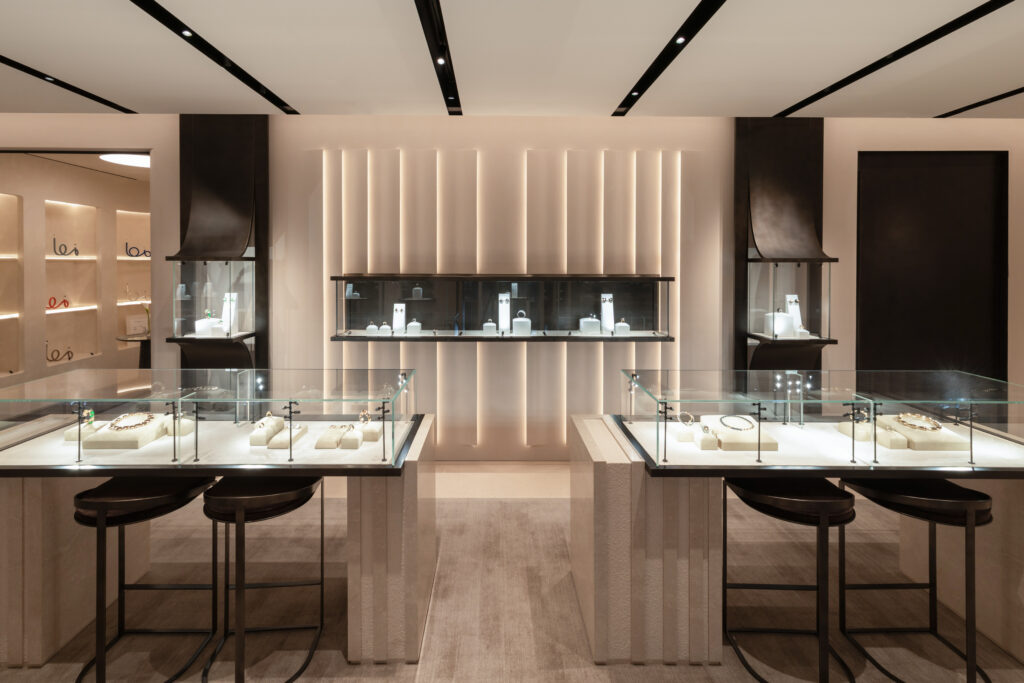
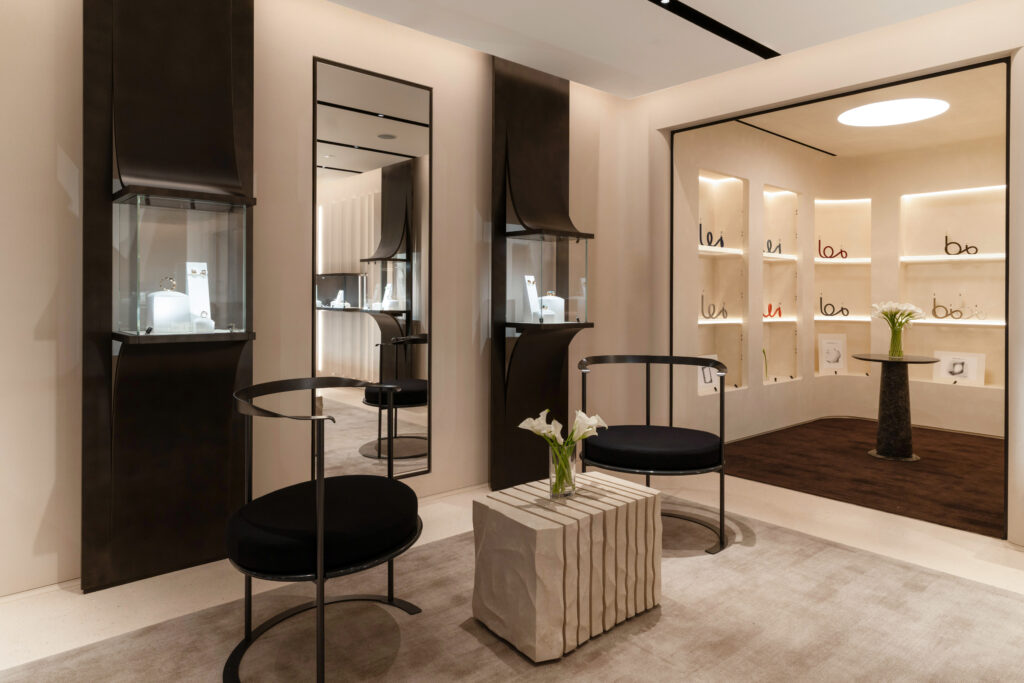
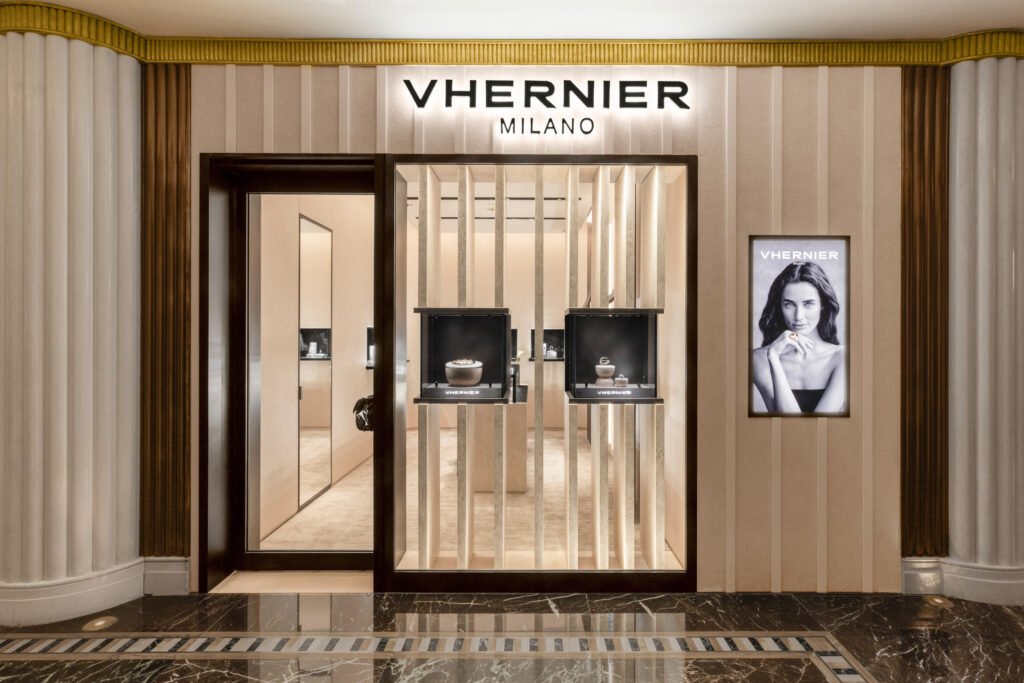
The choice of Peninsula hotels is no accident. These properties embody a certain vision of Asian luxury: understated, international, and attentive to the rituals of service as much as to the spatial experience. For Vhernier, whose identity is rooted in understated lines and the intelligent use of materials, this setting feels like a natural extension. The visuals of the boutiques, presented in the official document, show understated facades punctuated by luminous vertical lines and interiors where the jewelry comes to life in a bright, almost architectural atmosphere.
Each boutique offers a curated selection of Vhernier creations, with a special section dedicated to two iconic collections: Abbraccio and Calla. Abbraccio, with its fluid, enveloping forms in mirror-finished gold, embodies one of the Maison’s most instantly recognizable signatures: jewelry that feels close to the skin, almost tactile, seeming to embrace the body rather than merely adorn it. Calla, for its part, embodies a more essential modernity, characterized by bold volumes and lines reduced to their purest form.
These pieces complement the new Ardis high jewelry collection, presented as resolutely innovative, as well as several of the House’s iconic lines. Freccia and Palloncino, in particular, showcase the Trasparenze technique, a signature craftsmanship through which Vhernier infuses color into its sculptural forms. This technique plays a central role in the House’s aesthetic: it allows color not merely to be applied to the jewelry, but to be integrated into its very depths.
The boutiques also showcase collections featuring two-prong pavé settings, such as Verso, Pirouette, and Tourbillon. Here again, the focus is not on ostentation. Vhernier works with light in a smooth, sensual, almost fluid way. Gold and diamonds are paired with materials less commonly found in the classical world of jewelry: titanium, aluminum, bronze, and ebony. This freedom in the choice of materials speaks volumes about the House. Founded in 1984 and inspired by modern sculpture and the curves of the body, Vhernier has always sought to create a beauty that is structured yet never cold; sophisticated yet never heavy.
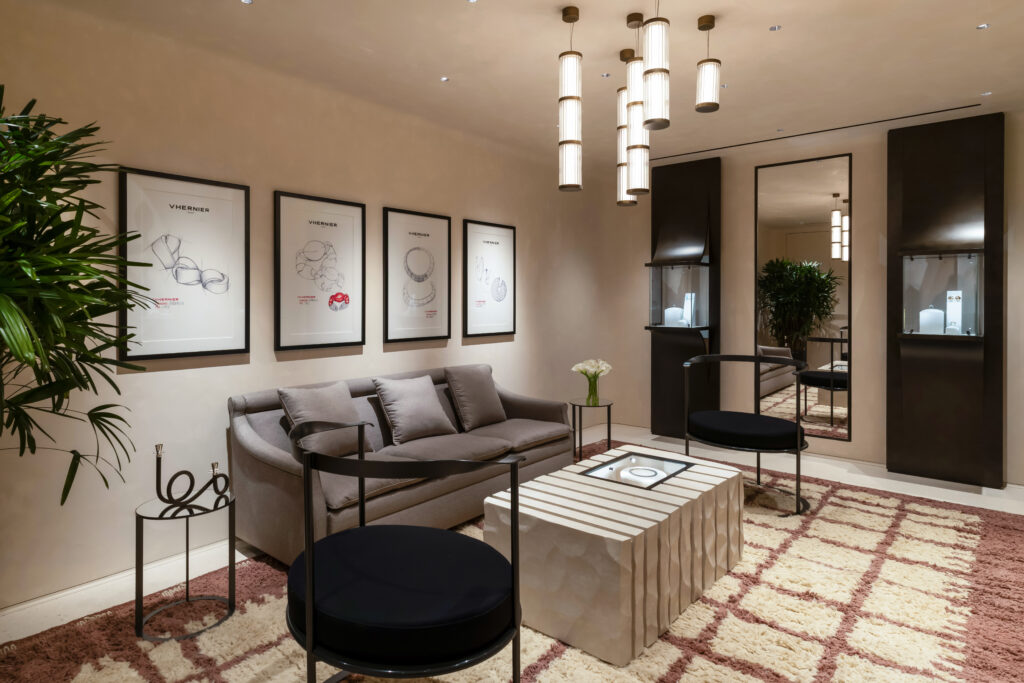
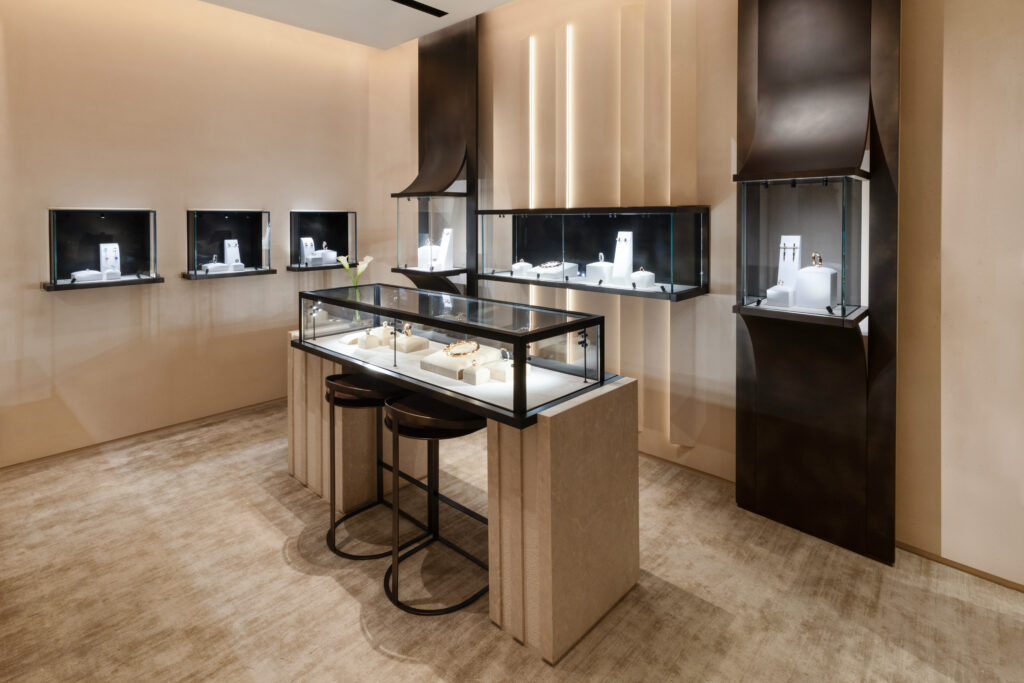
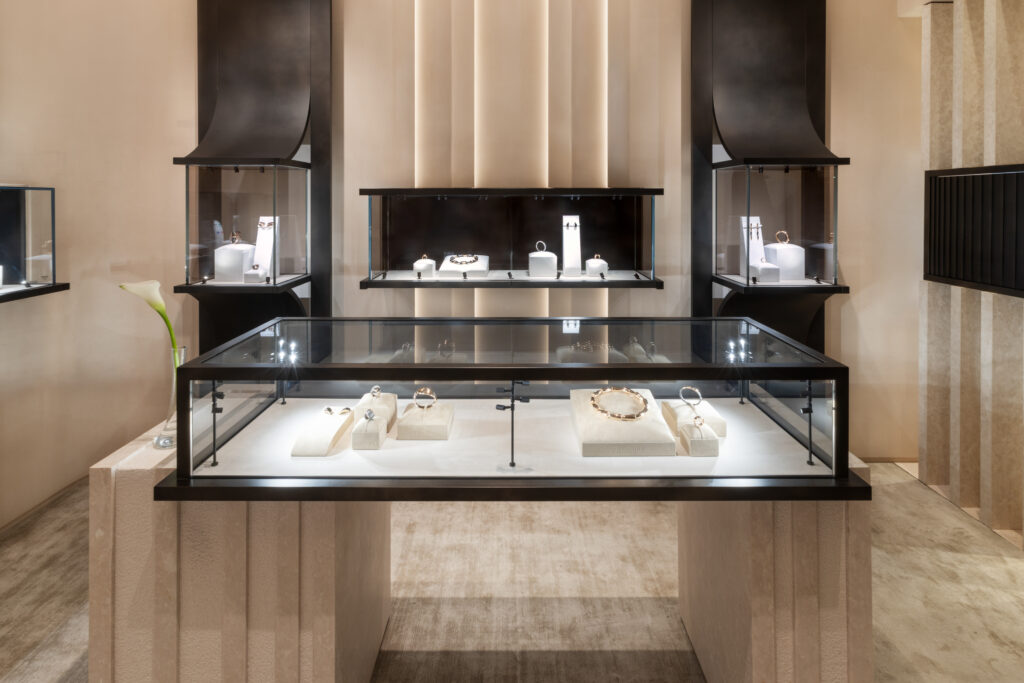
The architecture of both boutiques reflects this philosophy. The concept, developed by Matteo Fraticelli of the New York-based firm FROM Architecture, translates Vhernier’s visual identity into a spatial experience. Clarity, rich materials, balanced proportions: everything seems designed to let the jewelry speak for itself without unnecessary distraction. The Beijing boutique, with a floor area of 130 square meters, offers a more expansive experience, centered around a VIP lounge dedicated to bespoke appointments. The jewelry sketches displayed on the walls evoke the creative dimension of the jeweler’s craft, while the Chinotto armchairs by Milanese architect Luigi Caccia Dominioni introduce a touch of Italian heritage, almost domestic in feel.
Shanghai takes a more intimate, contemporary, and fluid approach. The layout encourages a dialogue between the jewelry and its surroundings, as if the boutique were less concerned with imposing a decor than with creating a flow of the gaze. Whereas Beijing evokes a private residence, Shanghai seems to prioritize movement, exchange, and urban energy.
“Shanghai and Beijing represent a natural step in our growth and follow the recent opening of our Hong Kong store, which has been a huge success with local customers,” said Gianluca Brozzetti, Executive Vice President and General Manager. “These openings demonstrate our commitment to establishing a lasting and significant presence in mainland China.”
This expansion comes at a time when jewelry houses are seeking to forge more direct, cultural, and experiential relationships with local clientele. Vhernier does more than simply open retail locations: it establishes a distinct identity. That of an Italian jewelry house that bears no resemblance to the grand French diamond-dealer architecture or Anglo-Saxon heritage narratives, but which moves forward with a distinct singularity: beauty through volume, simplicity through complexity, boldness through restraint.
“Shanghai and Beijing have an innate sense of style, and their residents have a keen appreciation for elegance and true artisanal craftsmanship,” explains Isabella Traglio, Director of Design and Research & Development. “Some have already had the opportunity to discover our brand during their travels to Milan, Paris, or Dubai, and we are delighted to be able to share our vision of contemporary jewelry with them in their own country.”
Since joining the Richemont Group in 2024, Vhernier has gained additional leverage to accelerate its international expansion without diluting its identity. The brand now operates 20 standalone boutiques in luxury districts, including Milan, Rome, Venice, Capri, Paris, Monte Carlo, Geneva, New York, Miami, Beverly Hills, and Dubai. Beijing and Shanghai therefore do not simply add two locations to a global map: they confirm the establishment of a niche brand among the major international jewelry players.
What is at stake here goes beyond retail expansion. Vhernier brings a rare offering to China: jewelry that speaks the language of design as much as that of luxury. In a market where the most discerning customers no longer seek merely a symbol, but personality, this distinction can become a decisive advantage. In Beijing as in Shanghai, Vhernier isn’t here to make a splash. It’s here to establish a presence.
Cette publication est également disponible en :

