
When summer vacation rolls around, the Mediterranean always beckons. There are countless destinations to choose from, each with not just one, but several distinct identities, where history, the sea, and sunshine are ever-present. Discover the best destinations in the Mediterranean for your next summer vacation.
The Balearic Islands: a destination with many different atmospheres
Unlike other Mediterranean destinations, which all share a unique and consistent identity, each island in the Balearic archipelago has its own atmosphere and history. A trip to the Balearic Islands is therefore an opportunity to choose a destination with many different facets.
Mallorca is undoubtedly the easiest island to explore when visiting this region of Spain. It boasts a wide variety of resorts to suit every taste and budget. But above all, it combines fine sandy beaches, a perfectly preserved historical heritage, a wide range of tourist facilities, and nature reserves that are perfect for hiking and exploring spectacular landscapes, particularly in the Serra de Tramuntana.
In contrast, the smaller island of Menorca welcomes you with a slower, more peaceful pace of life. Its coves are less crowded, and its main attractions are nature and the sea. It is also designated a UNESCO Biosphere Reserve.
Ibiza, perhaps the best known of the islands, is often reduced to its nightlife. Yet this island holds many surprises for those who have let preconceptions cloud their judgment. Its fortified old town, its quiet villages in the north, and its many secluded coves allow everyone to find the atmosphere that suits them best. Beyond its imposing old town, the entire island is dotted with small, more discreet historical monuments that bear witness to a past marked by piracy and the fierce resistance of Ibizan peasants against the many invaders who attempted to settle there. The only ones they couldn’t drive away were the hippies, who give the island its uniquely original atmosphere, a blend of celebration and openness to the world. Today, its ancient history isn’t what draws tourists, but it has shaped a very distinctive culture and a well-hidden heritage.
And finally, Formentera, also a UNESCO World Heritage Site, is an enchanting getaway with crystal-clear waters and fine white sand. It’s a little slice of the Caribbean, steeped in the laid-back Mediterranean lifestyle. Finding a place to stay on the island requires plenty of advance planning and a substantial budget, as hotels are scarce and smaller than elsewhere in the Balearic Islands. But it’s also easily accessible for a day trip from the port of Ibiza, whether on a cruise ship or a simple chartered pleasure boat, and it’s definitely worth a visit.
Crete and its ancient past
As Greece’s largest island, Crete boasts a wide variety of landscapes, each quite distinct from the next, where nature blends with ancient heritage. If you’re a traveler eager to explore ancient history, you’re sure to be captivated by this island.
The western part of the island is home to some of Greece’s most beautiful hiking trails, particularly through the impressive gorges carved out over the centuries. These trails allow you to discover the authentic side of Crete, dotted with small ports and hamlets that are sometimes accessible only on foot or by boat. Swimming breaks take on a special charm here, with secluded coves where you’ll be practically alone as you take a dip in remarkably clear waters.
The numerous remnants of Minoan civilization and the towns marked by Venetian and Ottoman influences tell a fascinating story spanning several millennia. Explore the Palace of Knossos near Heraklion, the Palace of Phaistos, the archaeological site of Gortyna, and the fortress of Rethymno to understand how the Minoan civilization gave way to a Roman one, not without putting up strong strategic resistance. And take advantage of your visits to sample Cretan specialties, where spices play a key role in the fresh, typical ingredients of Mediterranean cuisine.
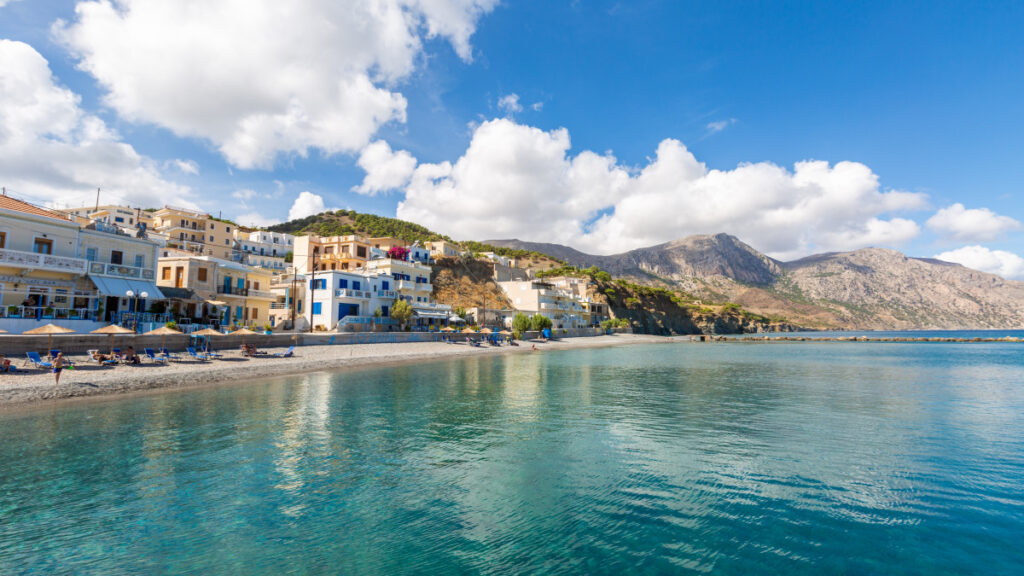
Sardinia, with its strong character
Sardinia is, above all, a place with a strong identity, comparable to that of Corsica, for example. It has its own regional language with Romance and Catalan influences, its own island cuisine shaped by the ubiquitous sheep farming, and its own traditions stemming from the succession of various civilizations.
The island has been inhabited by humans for millions of years, as evidenced by the mysterious nuraghi—stone towers dating back to the Bronze Age—whose exact purpose continues to puzzle archaeologists. These early settlers gave way to a diverse array of civilizations, from the Phoenicians to the Spanish, including the Romans and the Byzantines. This cultural mix is reflected in the well-preserved monuments of the cities of Cagliari, Alghero, and Castelsardo.
Sicily, shaped by volcanic activity
The volcanic island of Sicily is dominated by the imposing presence of Mount Etna, Europe’s tallest active volcano. Its presence has shaped a landscape of dark rock, which has driven the population and most agricultural production to the coastline.
But Sicily is also characterized by the traces left by the Greek, Roman, Arab, Norman, and Spanish peoples who occupied it. In Palermo, Norman and Arab architecture blend in preserved buildings such as the Norman Palace and the Palatine Chapel. In the southeast, cities like Noto, Ragusa, and Modica, on the other hand, showcase the Baroque reconstruction that followed the 1693 earthquake, now a UNESCO World Heritage Site.
The Algarve, with its landscapes ranging from mountains to the coast
Beyond the well-known seaside resorts of this Portuguese region, the Algarve also offers natural landscapes stretching from the sea to the mountains. The lagoons, salt marshes, and islets of the Ria Formosa Natural Park form one of the richest ecosystems on the Iberian Peninsula. Birdwatching is a favorite pastime here for wildlife enthusiasts.
Inland, the Algarve reveals a more rural side, dotted with white villages and orchards. The tranquility of this countryside stands in stark contrast to the hustle and bustle of the lively coastline, especially during peak season. As you drive along the winding roads, you pass through towns like Silves, dominated by its red-sandstone castle dating back to the Moorish period, or Monchique, perched high in the hills, known for its panoramic views where the horizon seems infinitely distant and for its natural pools where you can cool off.
Like many Mediterranean regions, a succession of civilizations has shaped a unique culture. In Lagos, the ancient ramparts, churches, and cobblestone streets serve as a reminder of the city’s role during the era of great maritime explorations to the Americas. In Tavira, on both sides of the river, the architecture reflects a medieval heritage blended with Arab influences.
These Mediterranean destinations share a common promise: a summer where the sea is never far away, but where your journey immerses you in a history spanning thousands, even millions of years, in an atmosphere where traditions, festivities, and the good life coexist in perfect harmony. Not to mention that they all offer a wide range of tourist activities, both on the water and on land, to the delight of every vacationer.
Cette publication est également disponible en :

