
For several seasons now, independent fashion has been seeking to reformulate what “campaign” means. At Matières Fécales, the answer takes the form of an extended family album – but one in which each member works, creates and performs.
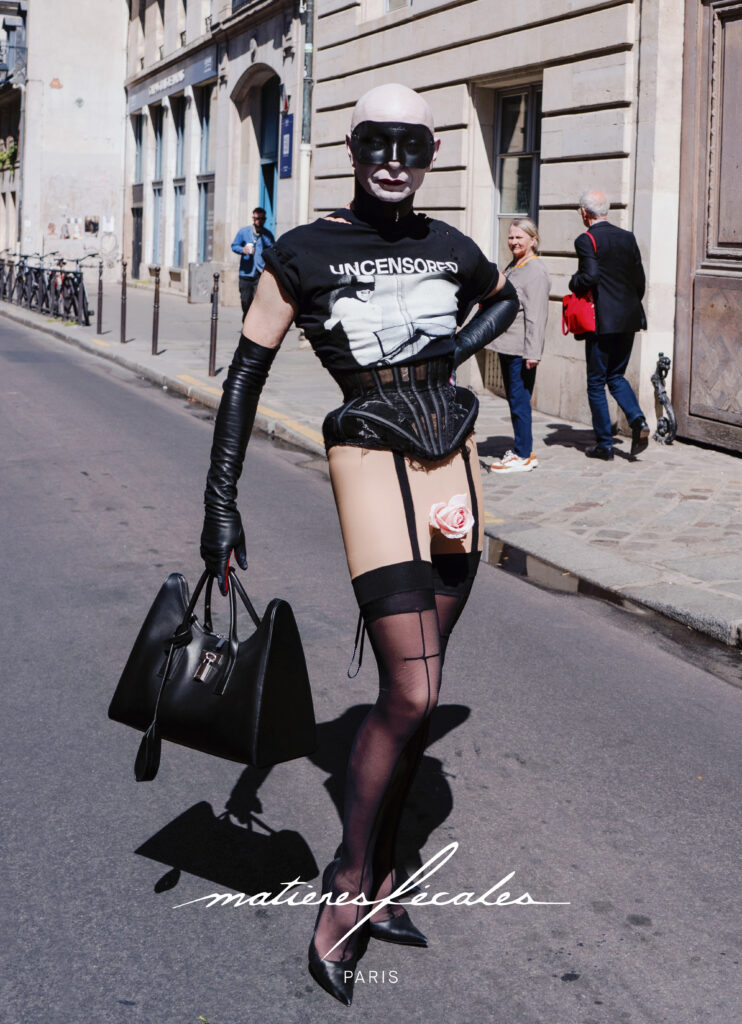
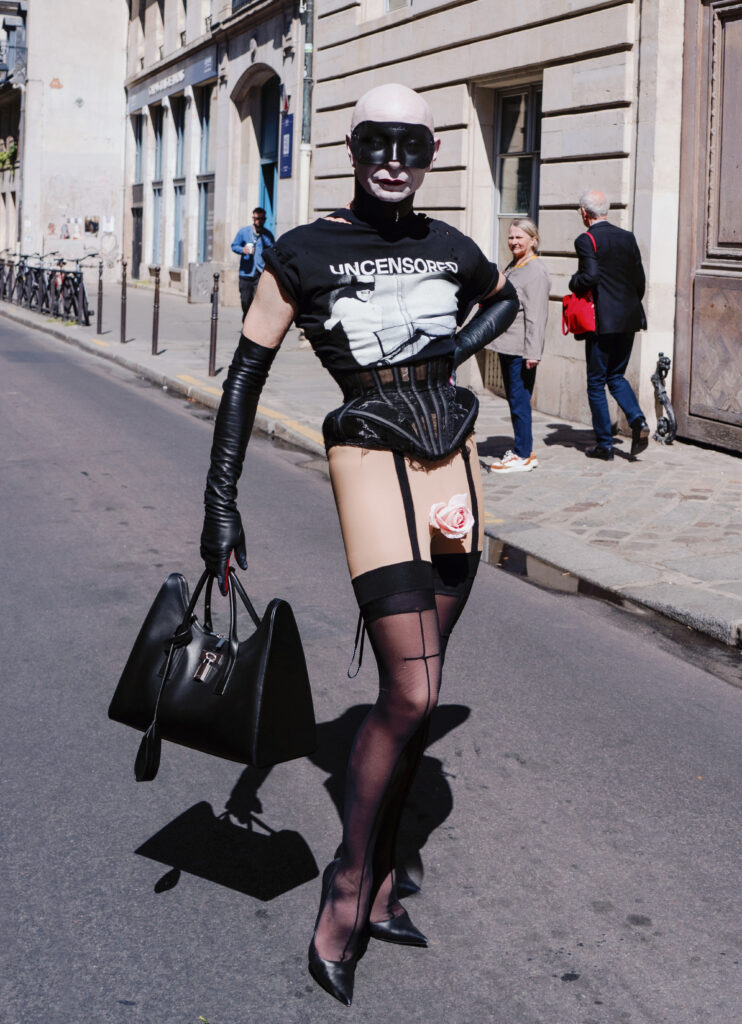
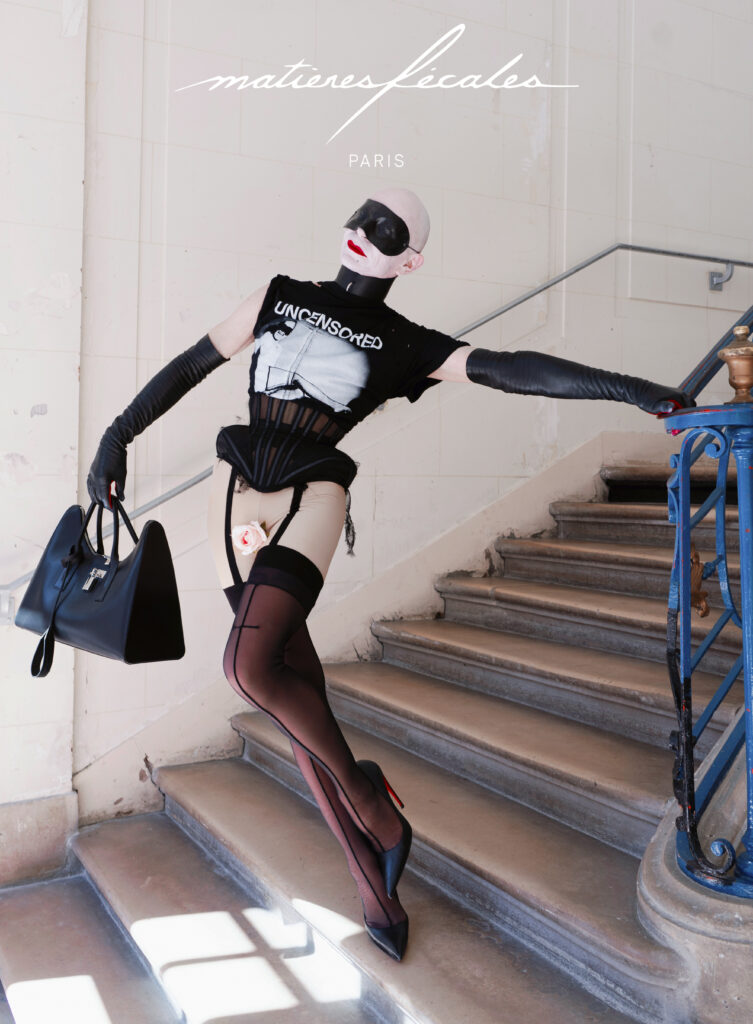
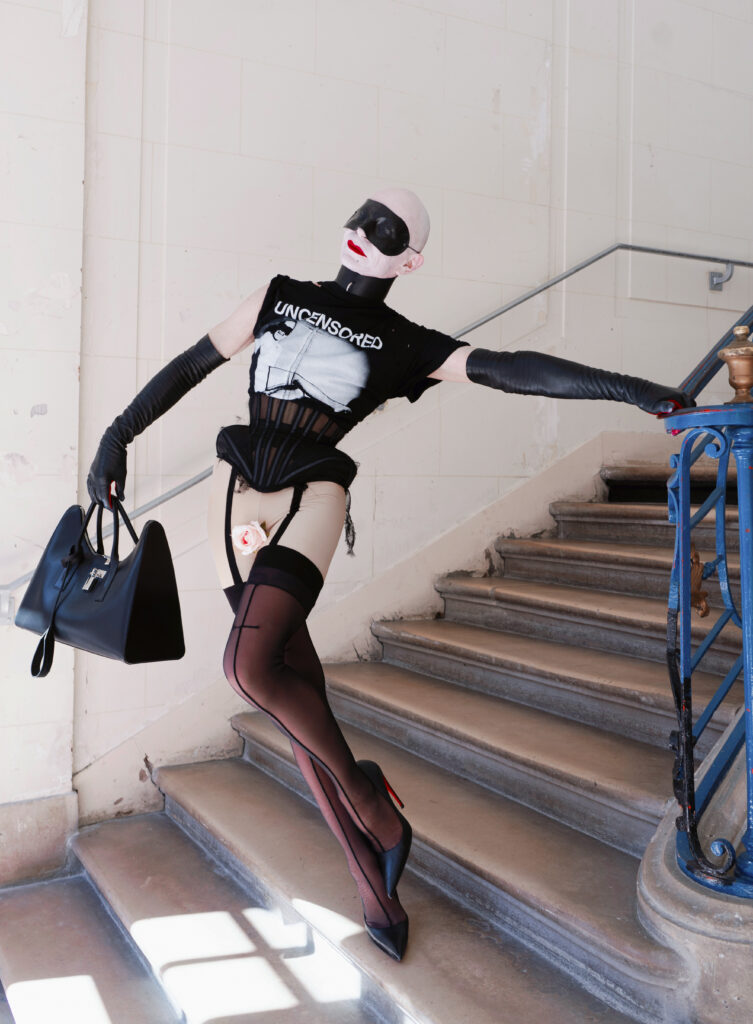
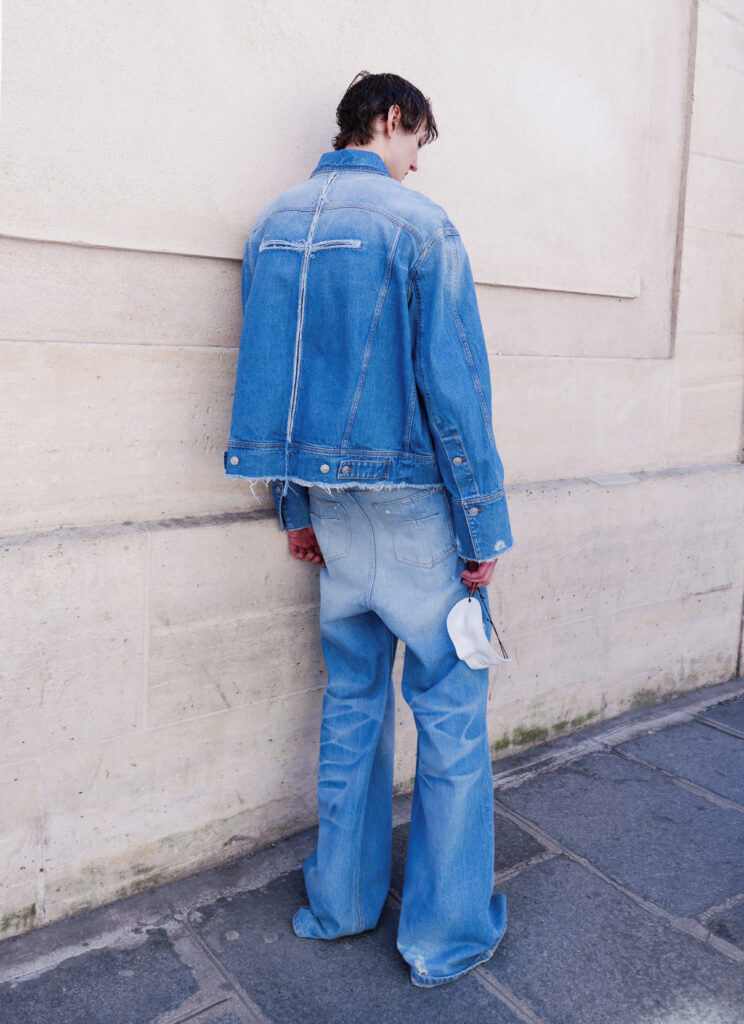
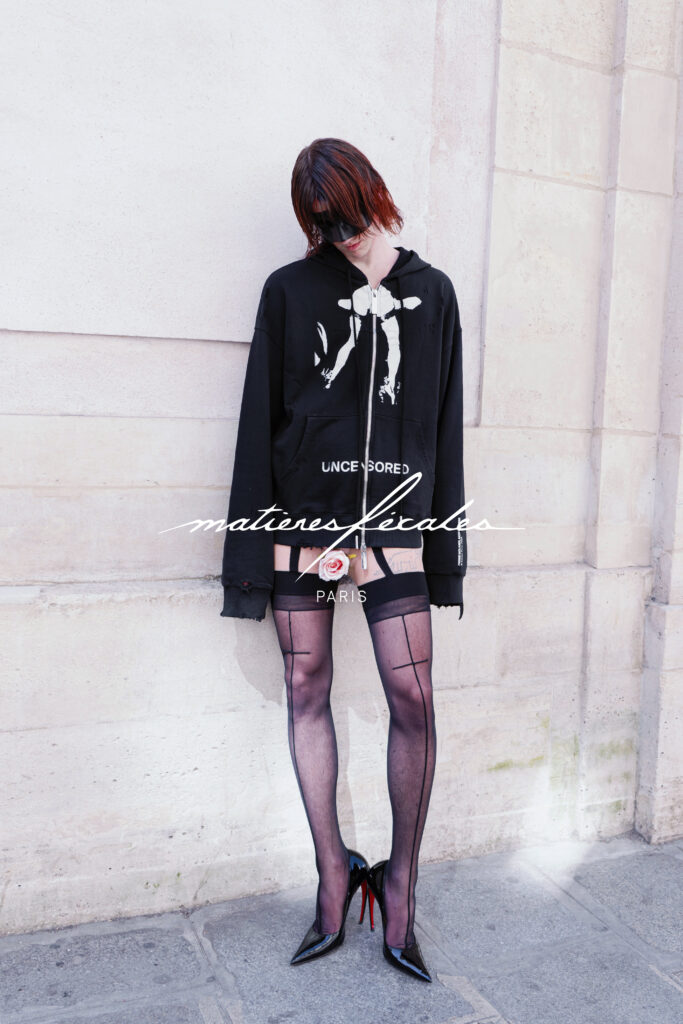
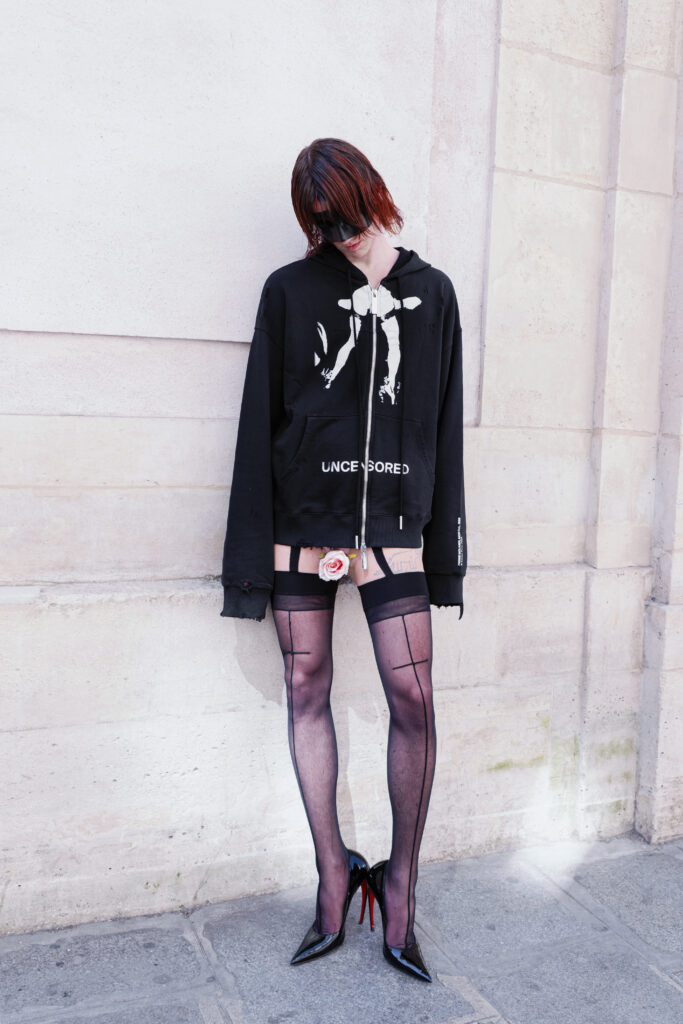
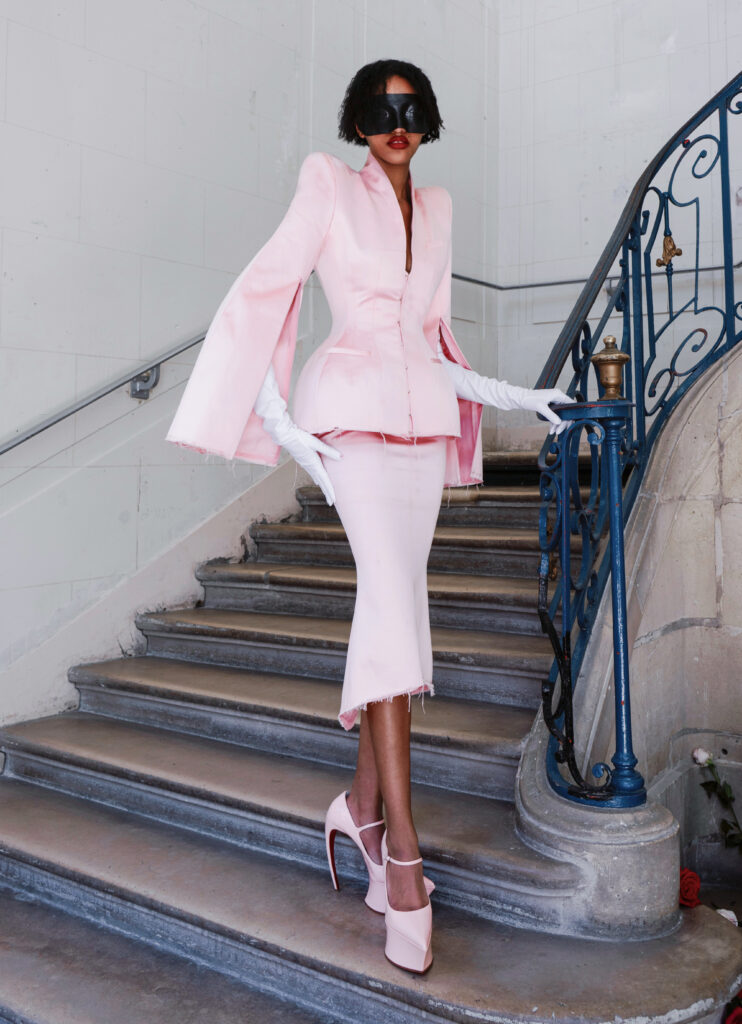
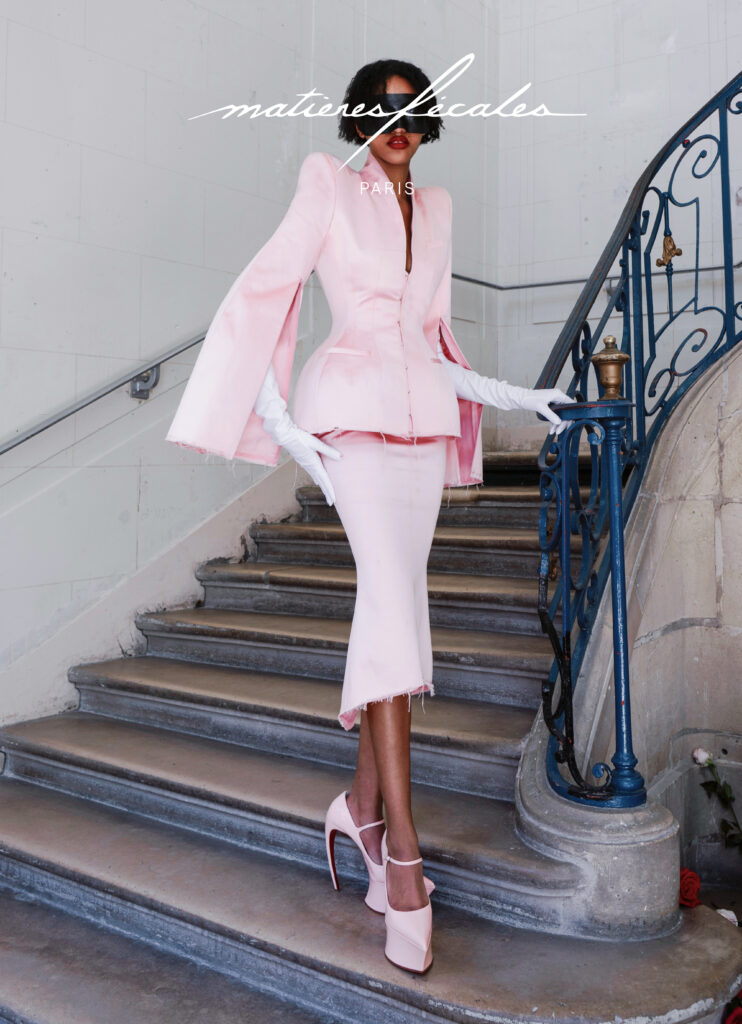
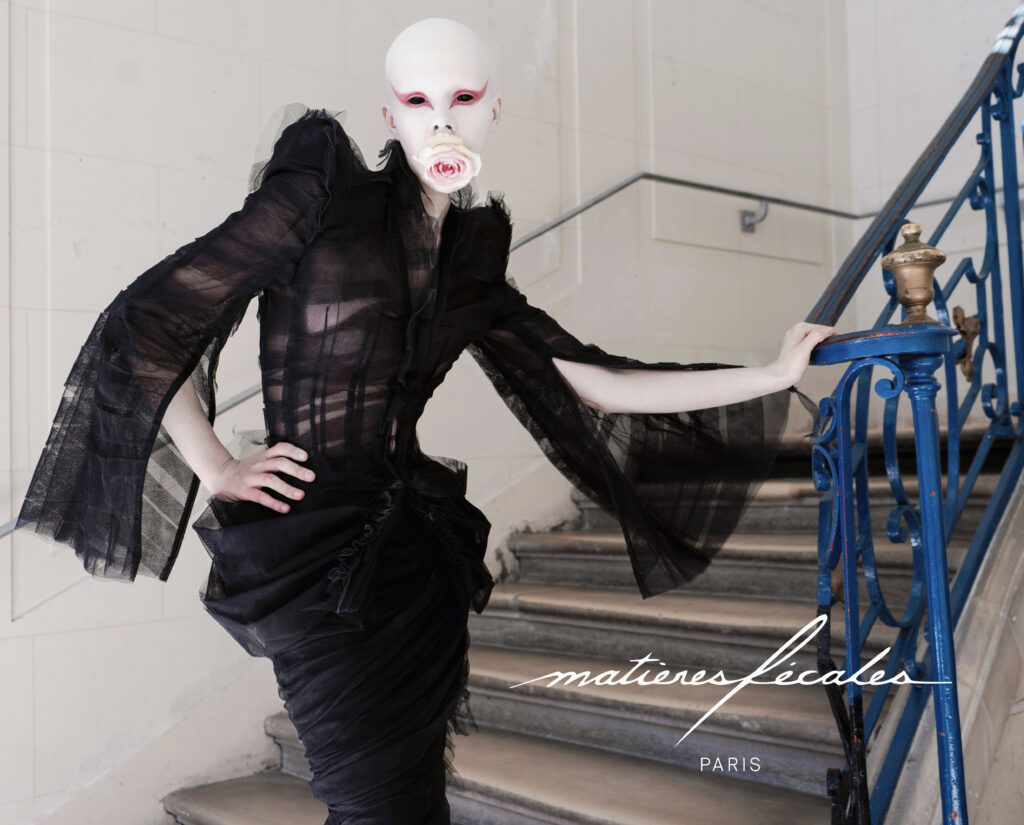
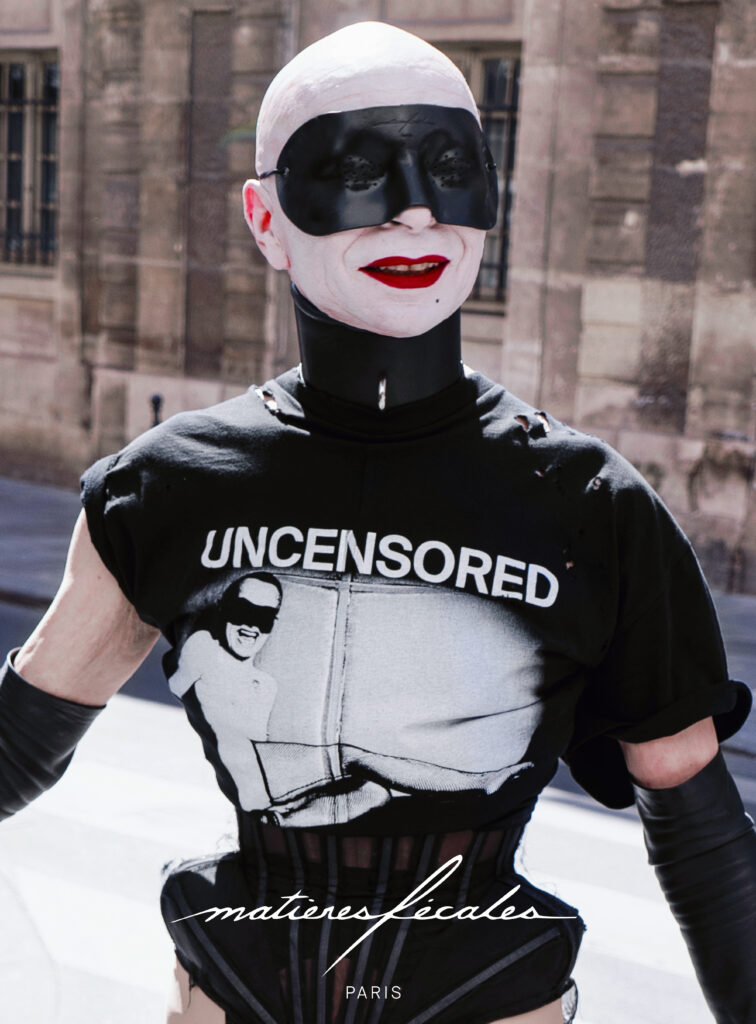
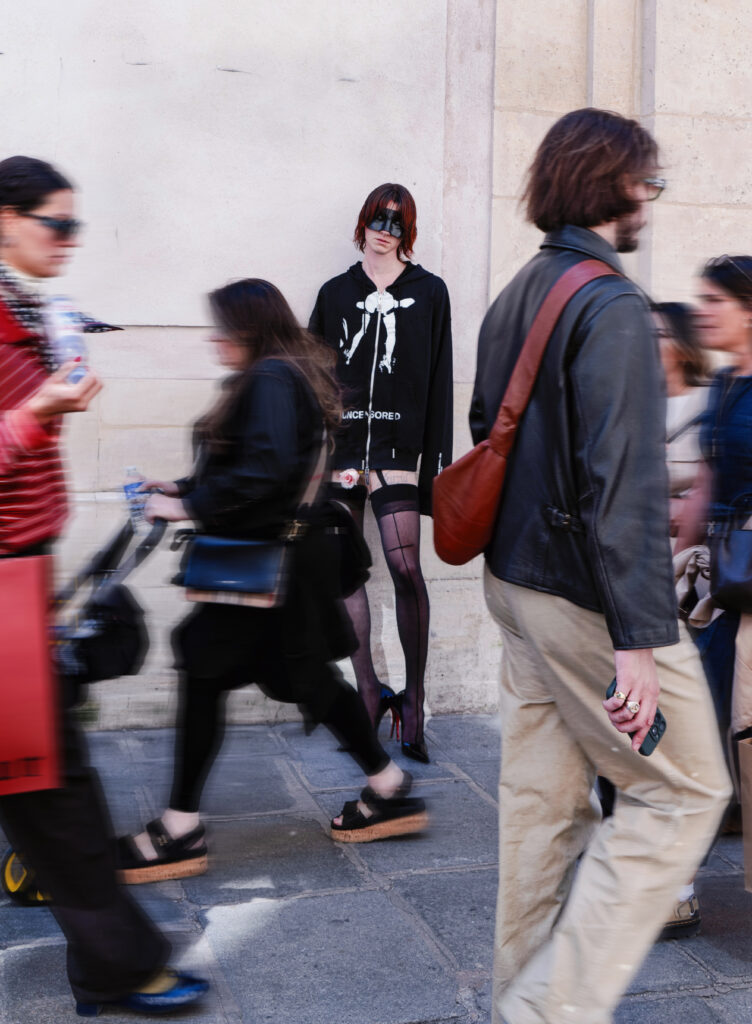
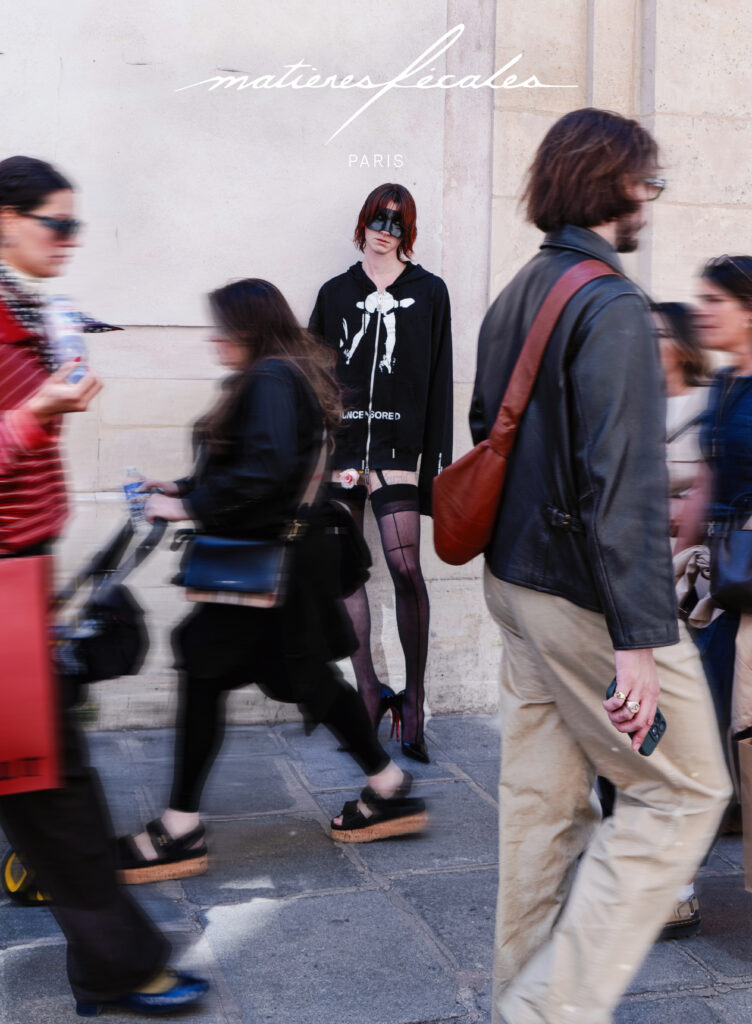
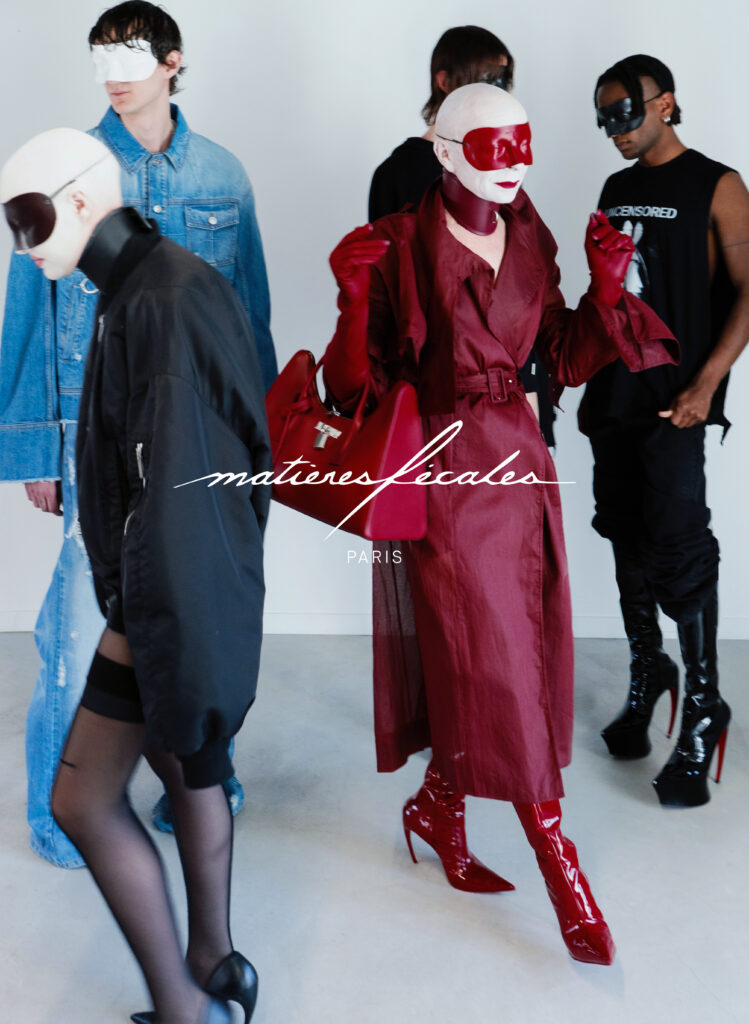
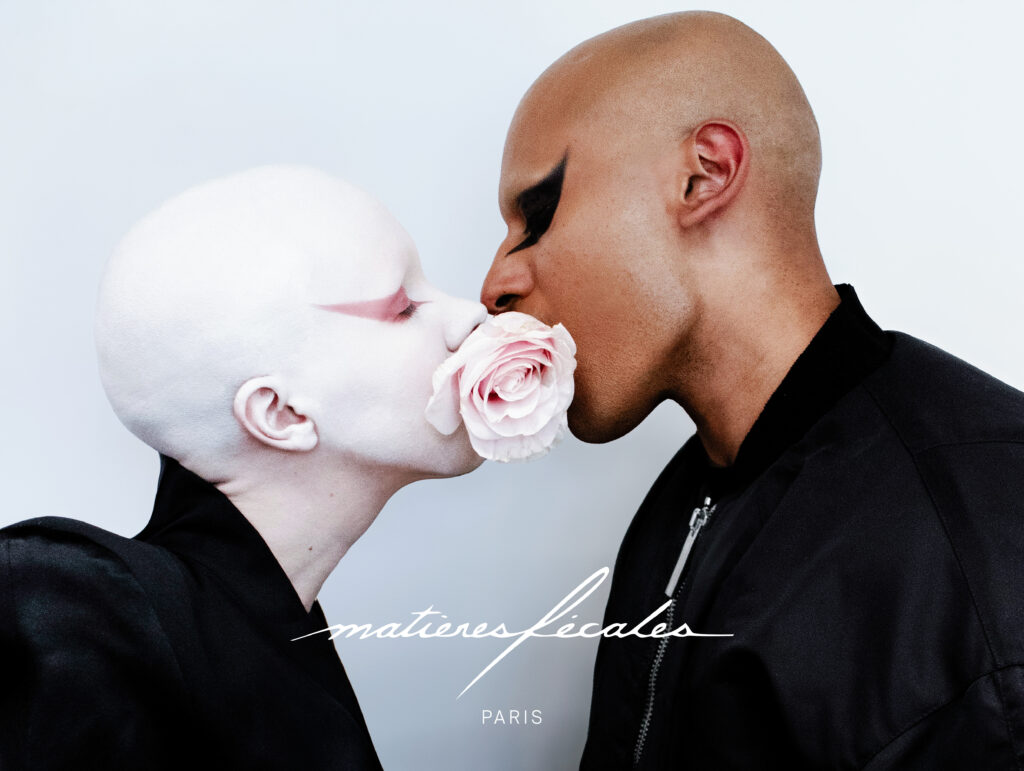
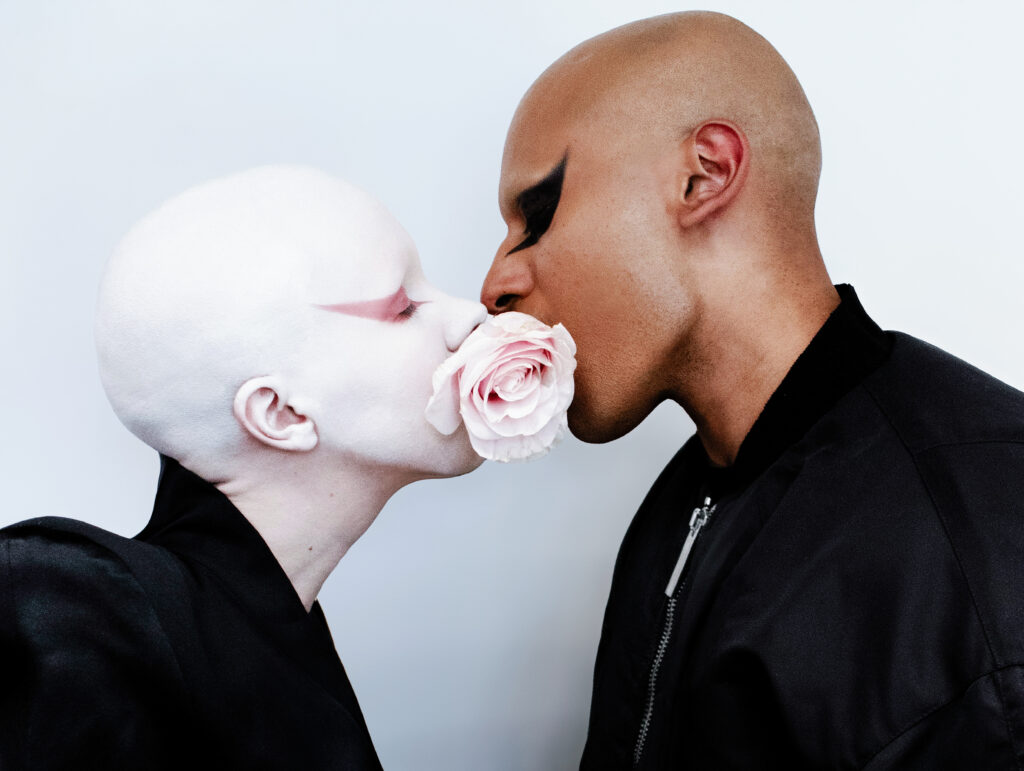
For SS26, Hannah and Steven Raj chose to photograph not models, but the people who populate their daily professional lives. Lola, a Paris-based cabaret performer, has been the atelier’s official muse for several seasons. Jev, on the other hand, develops the collections alongside the two founders – his presence in the image is not casting, it’s documentation. This shift – from model-screen to visible collaborator – says something about the economy of independent design: the boundary between making and representing is systematically blurred.
This approach is by no means new. Since the 1990s, some companies have understood that the most defensible image is the one that doesn’t lie about its origins. What’s different here is the declared intentionality: Hannah and Steven Raj don’t present their close circle as an alternative cast – they affirm it as the raw material of the project. The community precedes the collection; the collection is its translation.
Steven Raj articulated this logic clearly when presenting the campaign: “The idea for the collection began by delving deeply into what beauty means to us. Hannah’s expression of her individuality was the starting point.” The approach thus starts from a singular portrait – that of Hannah – and opens up to a collective dialogue. In this space, the garment becomes an object of transmission rather than projection.
This type of casting has implications that go beyond the symbolic. For an independent house, photographing its collaborators reduces production costs while reinforcing narrative coherence. It’s an economy of authenticity – but a real economy, not just a rhetorical one. It presupposes that the people photographed are legible to the potential buyer: close enough to him for him to recognize himself, distinct enough for him to aspire.
Matières Fécales has been working in this space since its foundation. The name itself is a program: naming the fertilizer before the flower, designating the raw material rather than the polished result. The SS26 campaign follows this thread. What Lola and Jev embody in the image is not window-dressing beauty – it’s process-beauty, the kind that’s built in cabaret rehearsals and development meetings, not in aseptic studios.
The question this choice raises for the coming season: is the market – distribution, trade press, multi-brand buyers – ready to read a campaign as a working document? Or is it still waiting for the fantasized image of a garment worn by someone we’ll never know? The answer will vary from market to market. In Northern Europe and in concept-store circuits, this type of image already works. In the United States, legibility remains more uncertain.
For the moment, Matières Fécales is holding its line. Maybe that’s what consistency is all about: not changing images when you change seasons.
Cette publication est également disponible en :

