
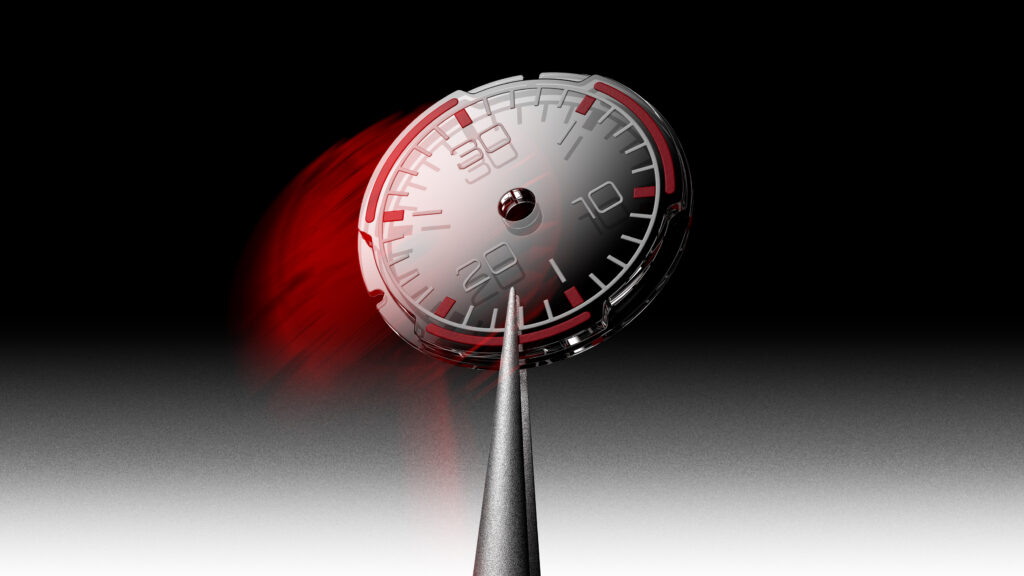
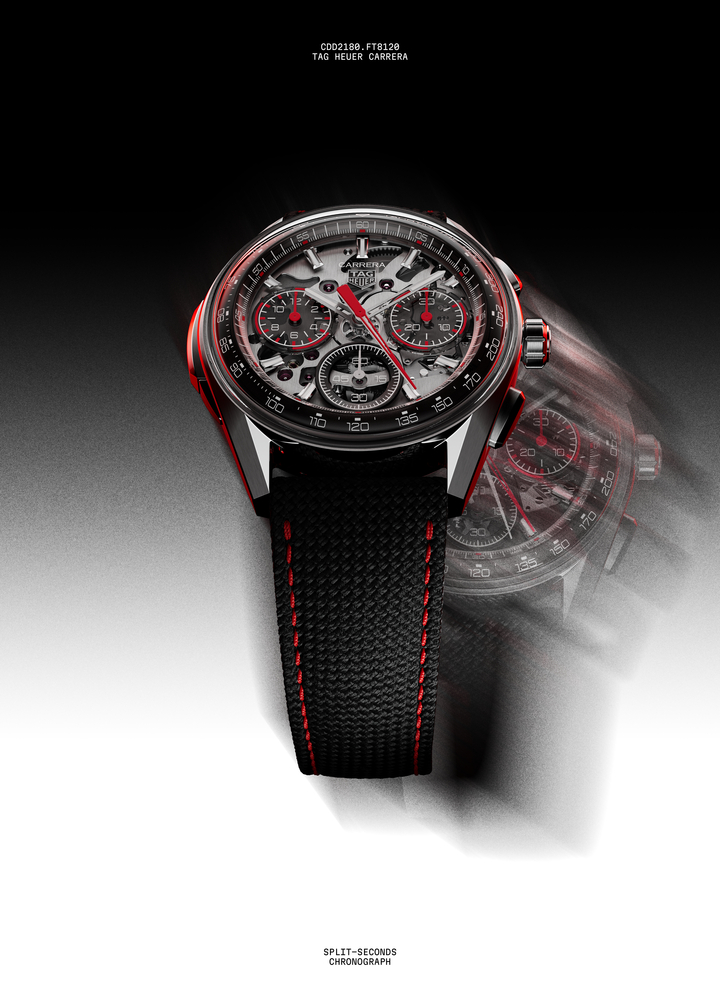
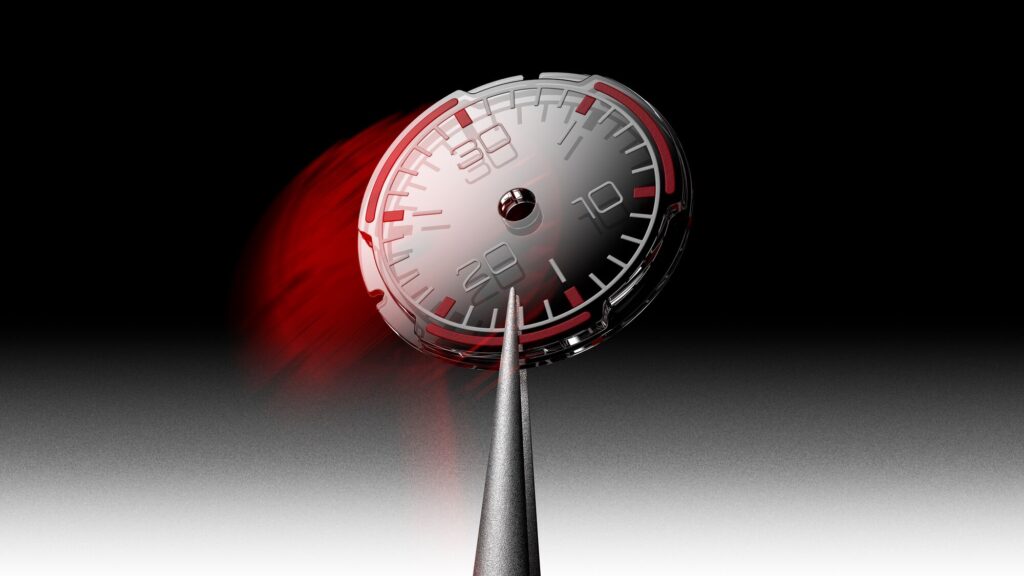
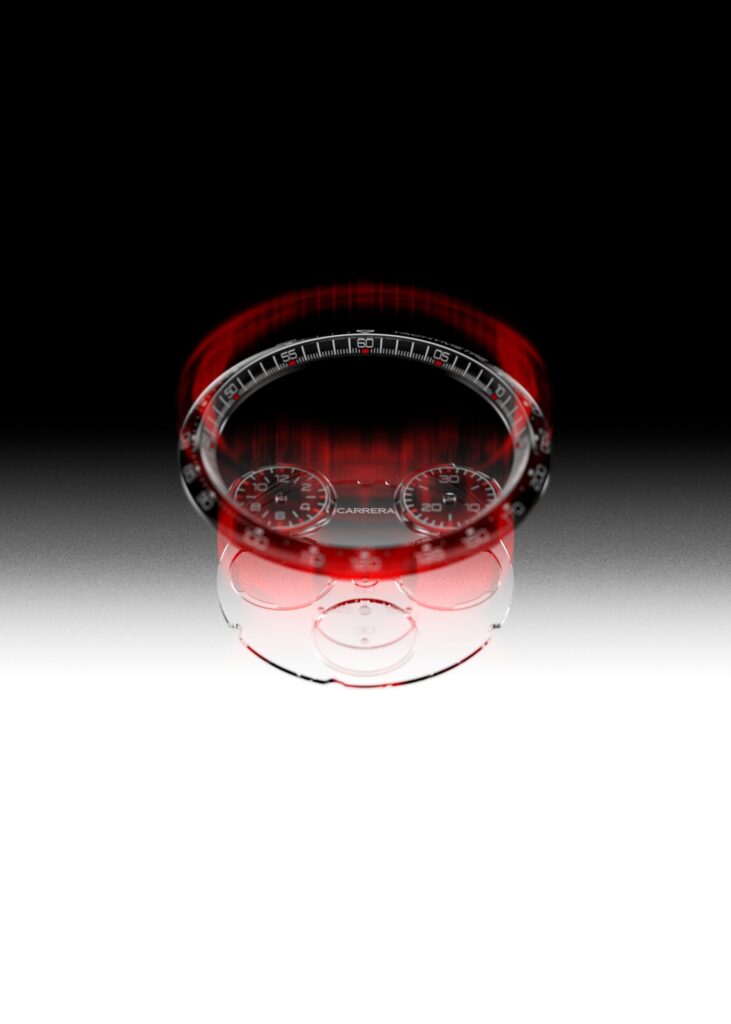
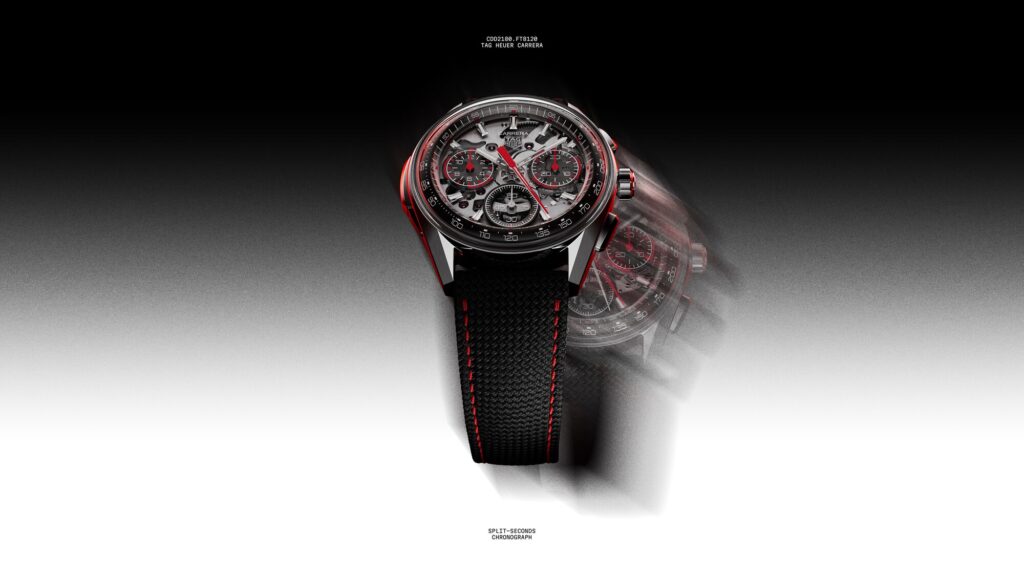
A red needle splits. One continues its course, the other stands still. Time ceases to be linear. It becomes measurable in its deviation.
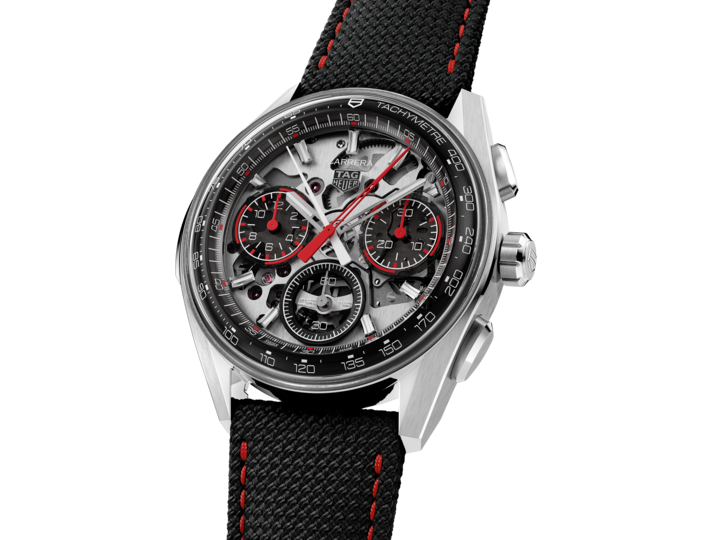
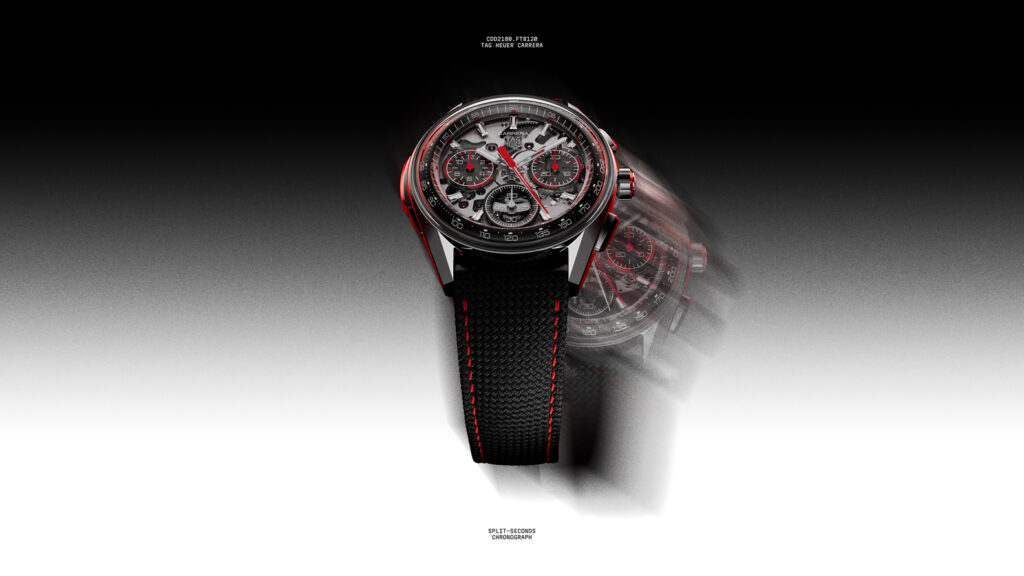
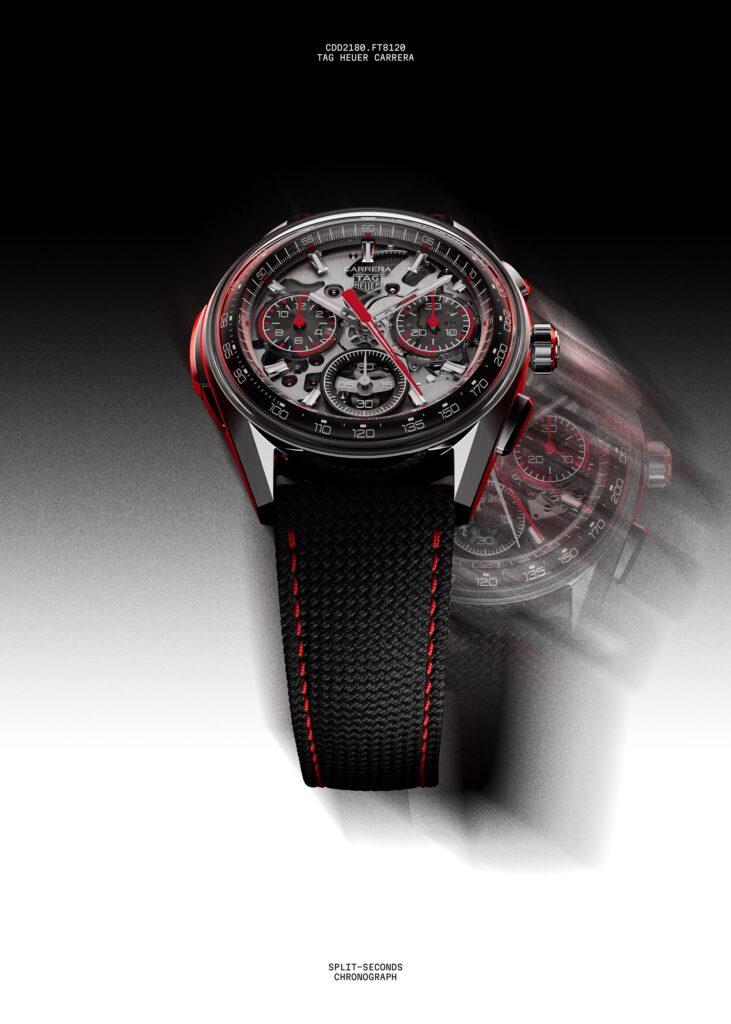
With the Carrera Split-Seconds Chronograph, TAG Heuer introduces to its historic collection a complication rarely seen on this scale: the rattrapante. A mechanism designed to measure simultaneous intervals, long reserved for confidential timepieces due to its mechanical complexity.
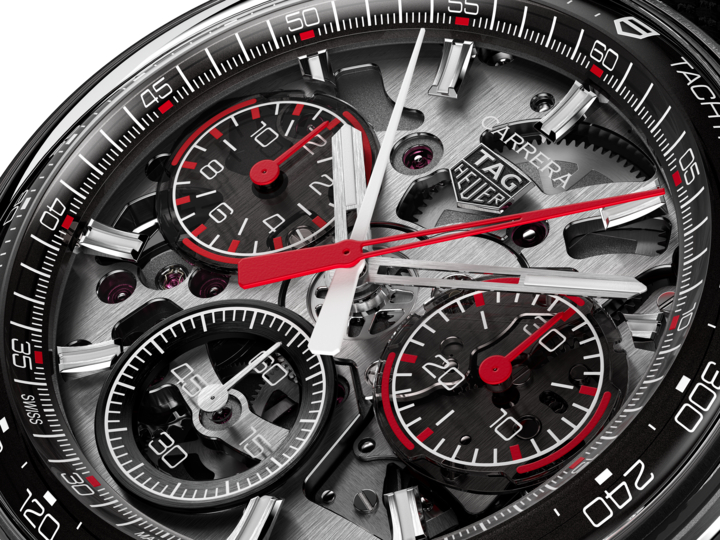
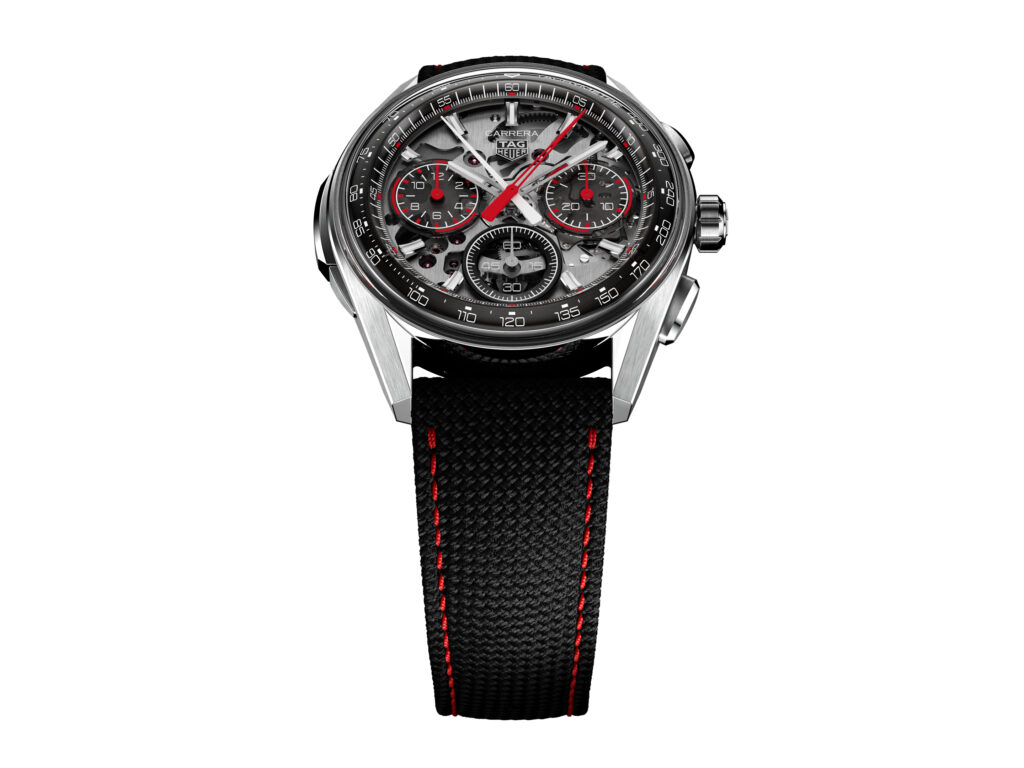
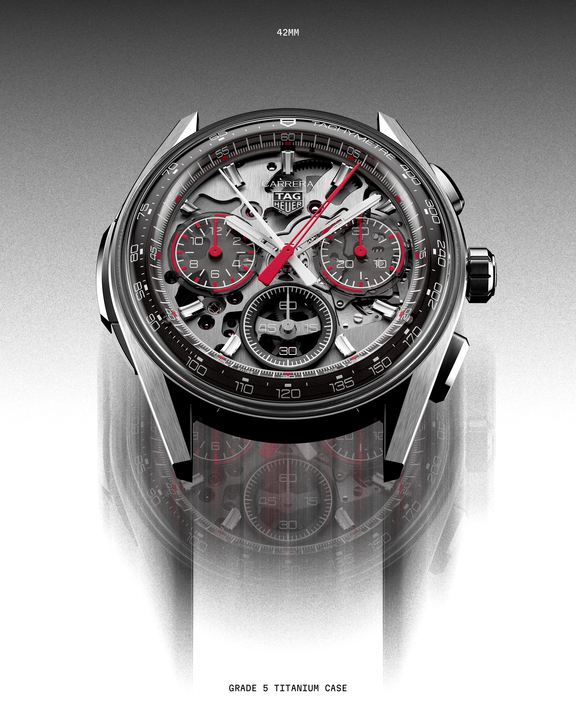
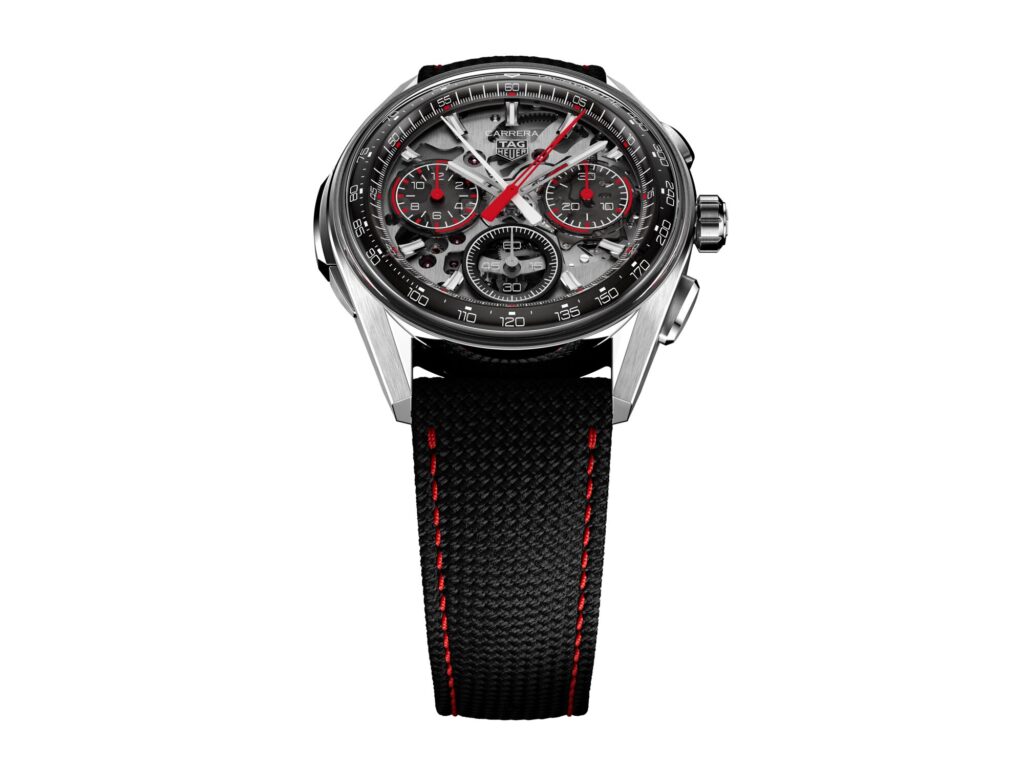
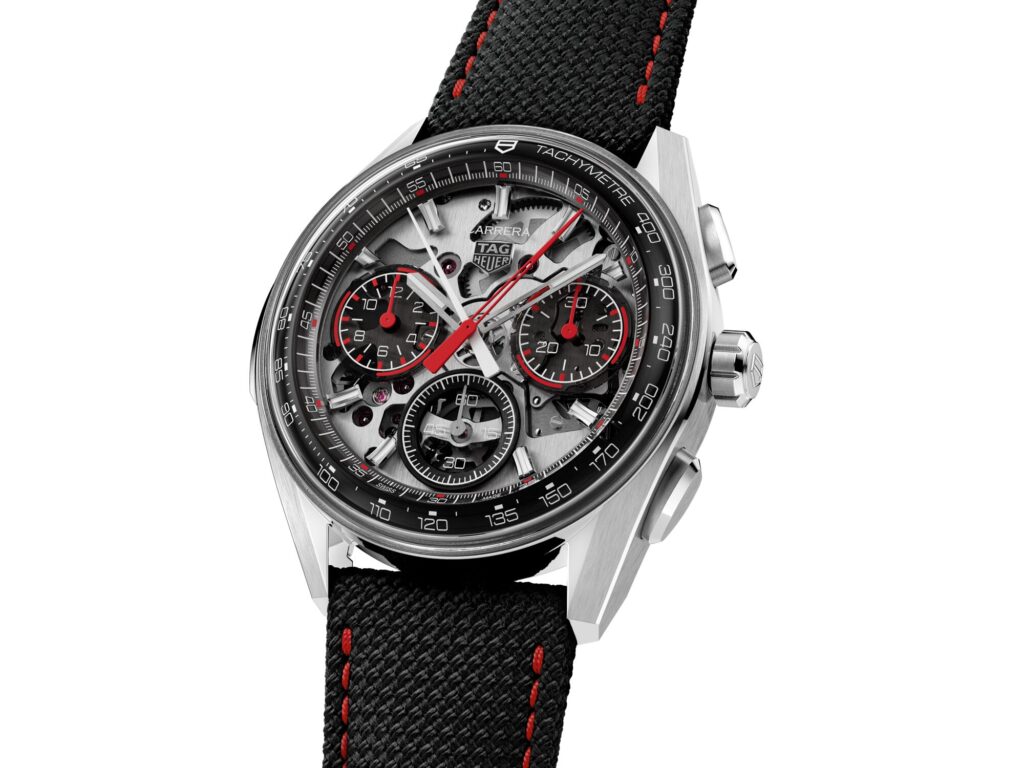
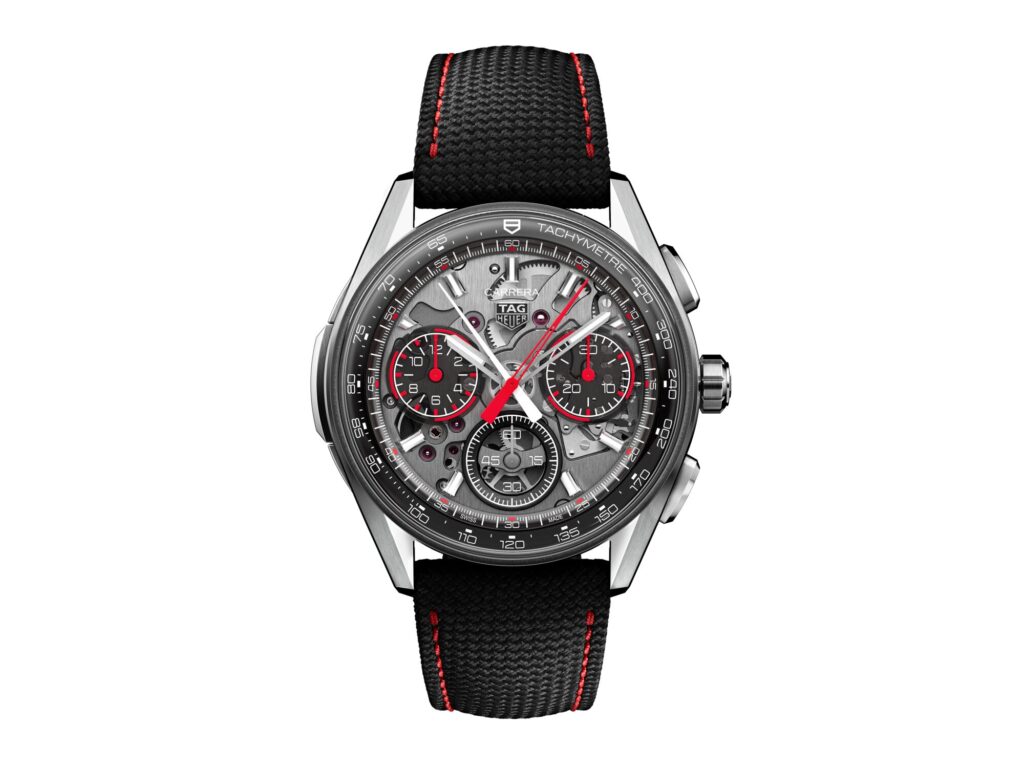
Since its inception in 1963, the Carrera has been built around a principle of legibility and efficiency, directly inherited from the automotive world. The model presented here does not break with this logic. Rather, it intensifies it. The partially openworked dial reveals the architecture of the movement, transforming the reading of time into an observation of the mechanism.
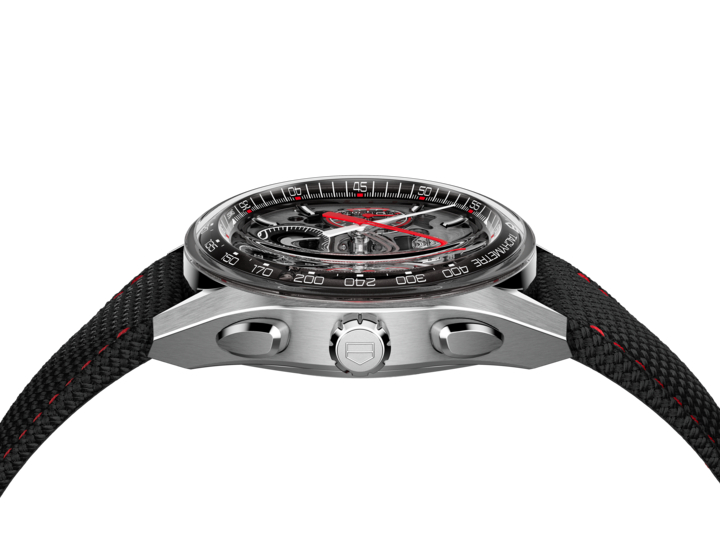
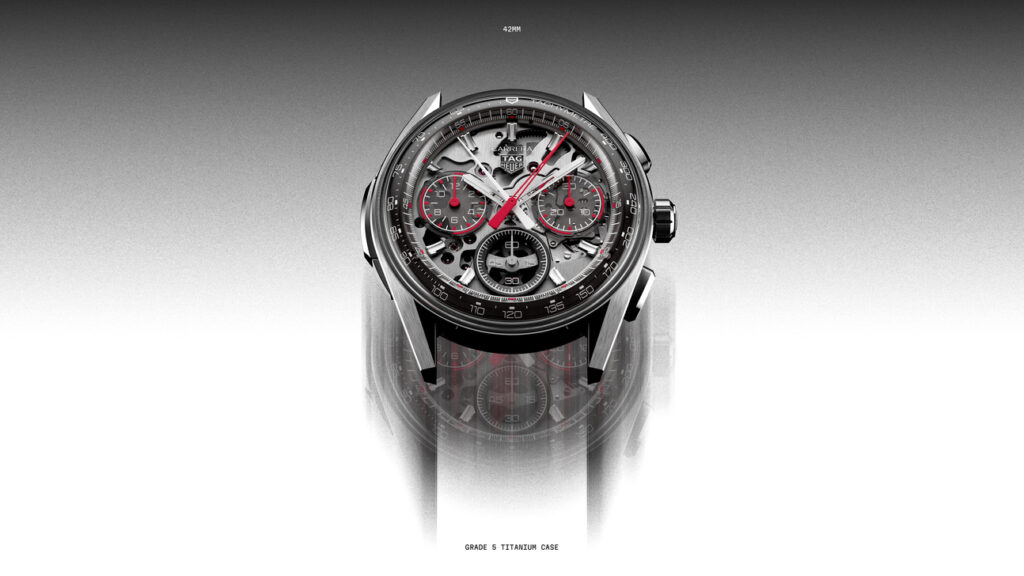
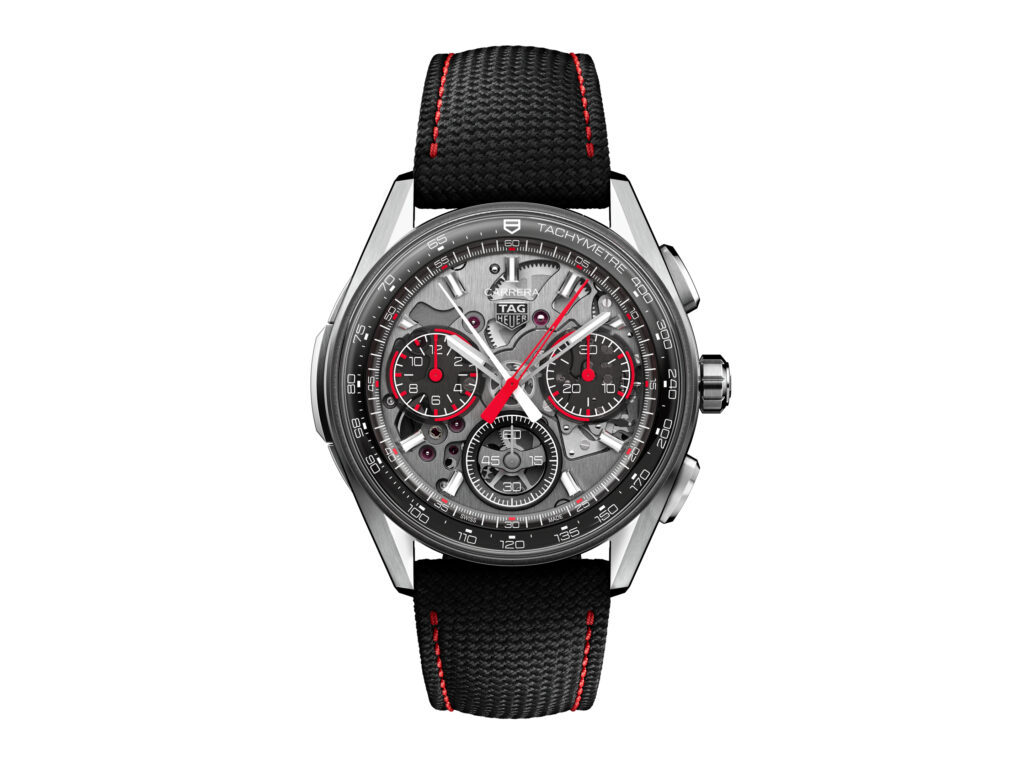
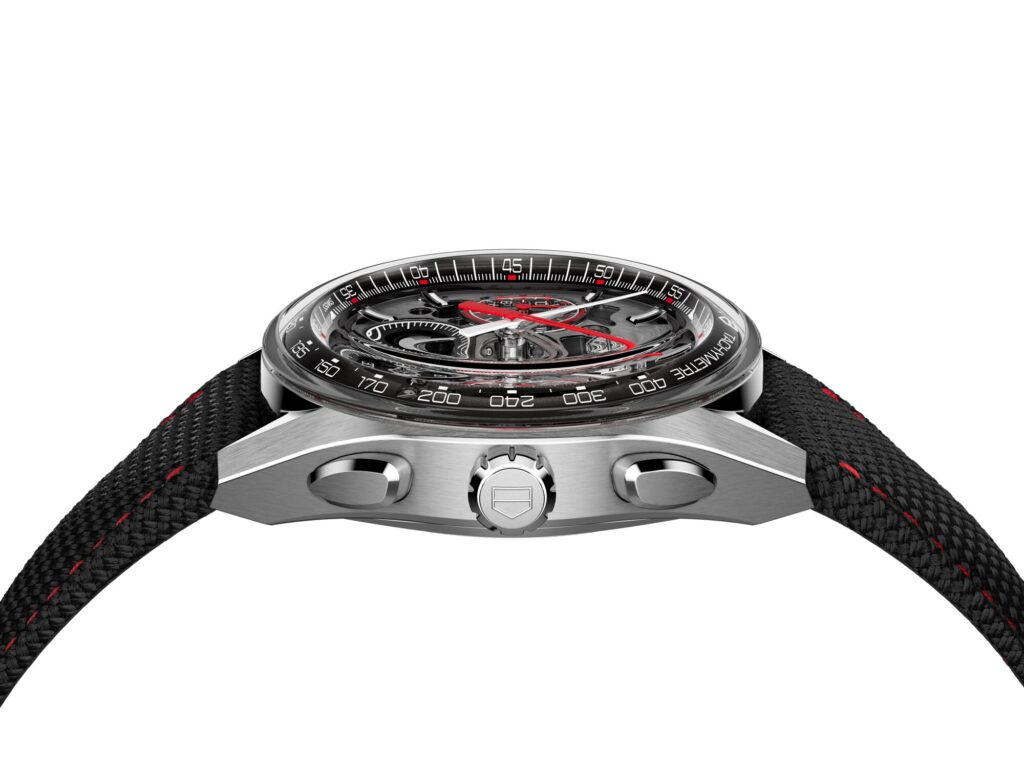
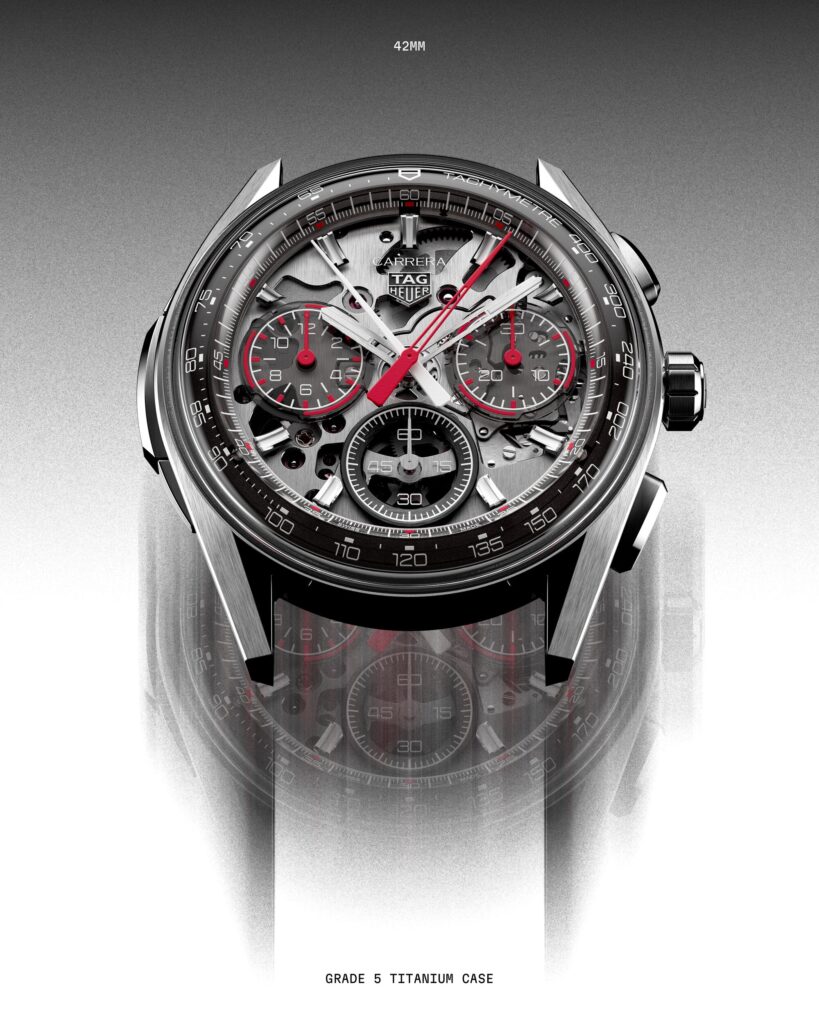
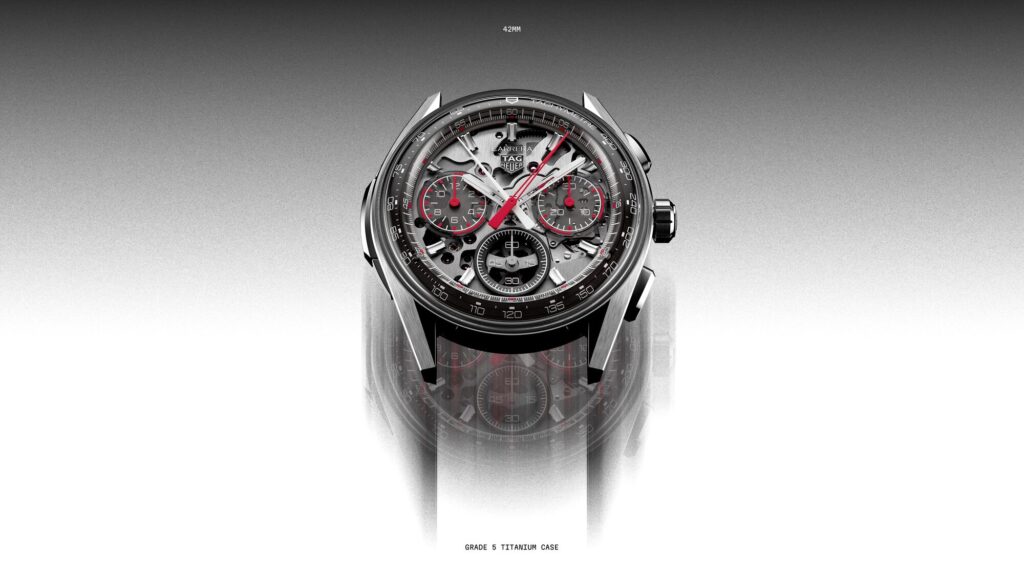
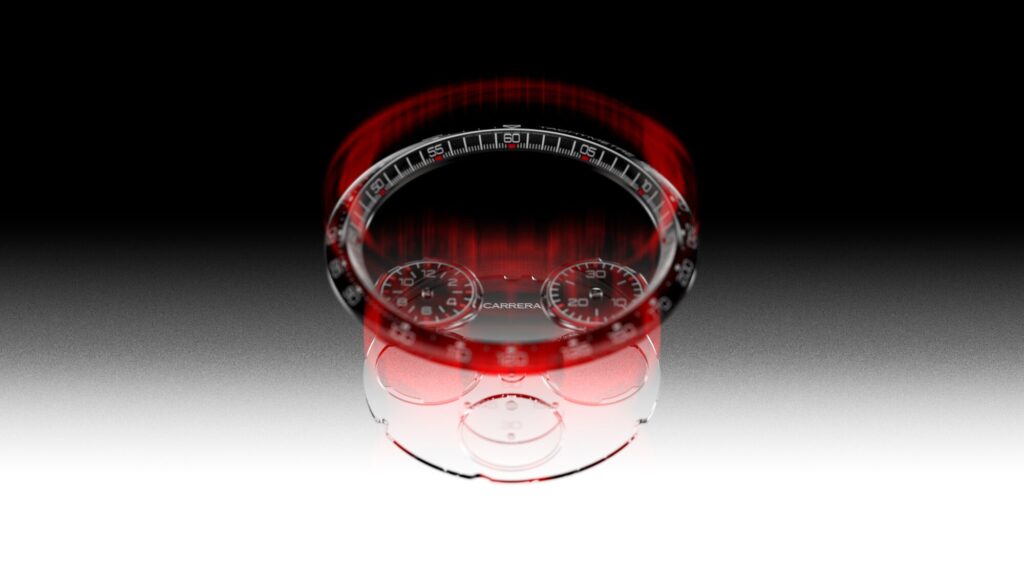
The construction is based on a forty-two millimeter grade-five titanium case, combining polished and brushed surfaces. Lighter than steel, this material absorbs the complexity of the movement without weighing it down. The curved sapphire crystal, known as the “glassbox”, visually extends the dial and reduces the effects of parallax, a functional detail that contributes to reading accuracy.
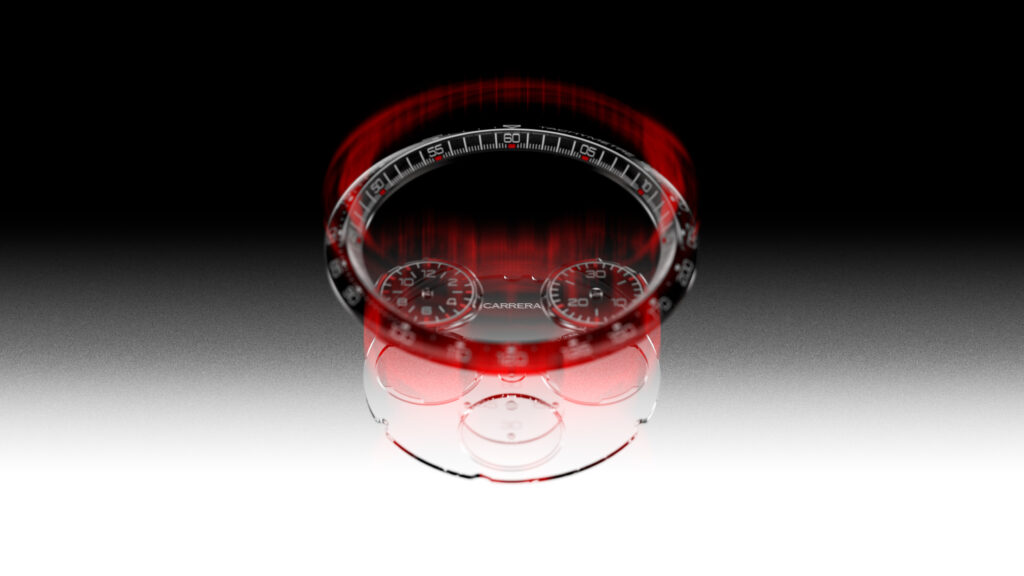
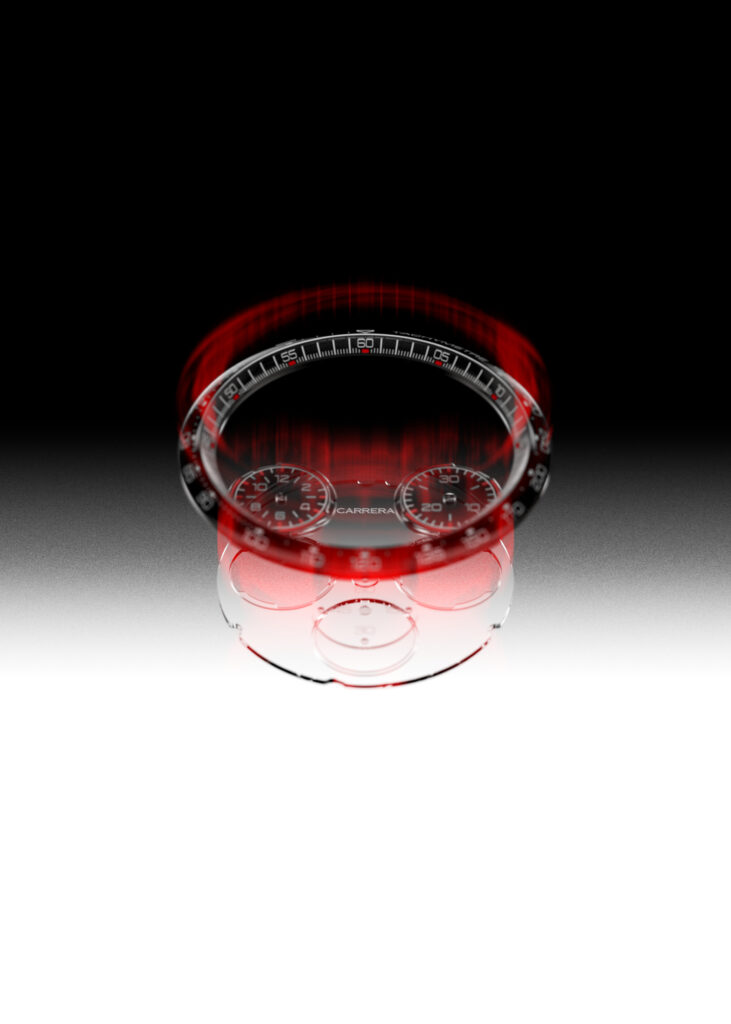
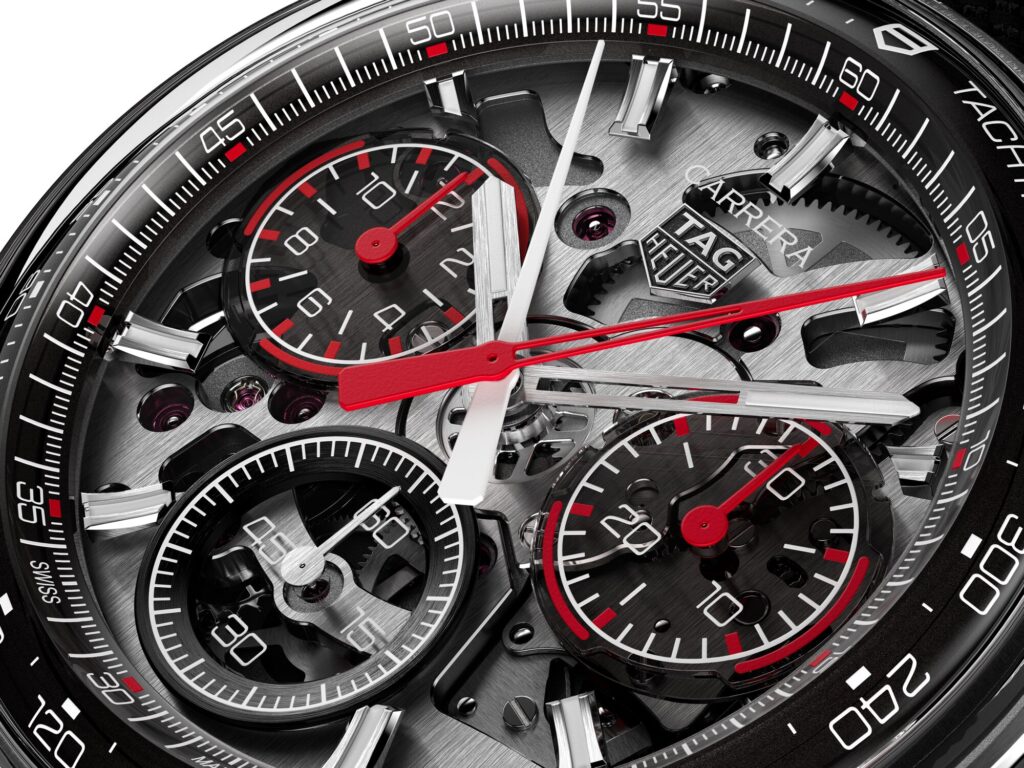
The chronograph display is organized around three counters. At three and nine o’clock, minute totalizers. At six o’clock, the seconds display. The whole is structured by a play of contrasts between translucent surfaces and applied elements. The sapphire crystal dial lets the light filter through to the movement, accentuating the depth of the reading.
But it’s at the heart of the piece that the essential is played out.
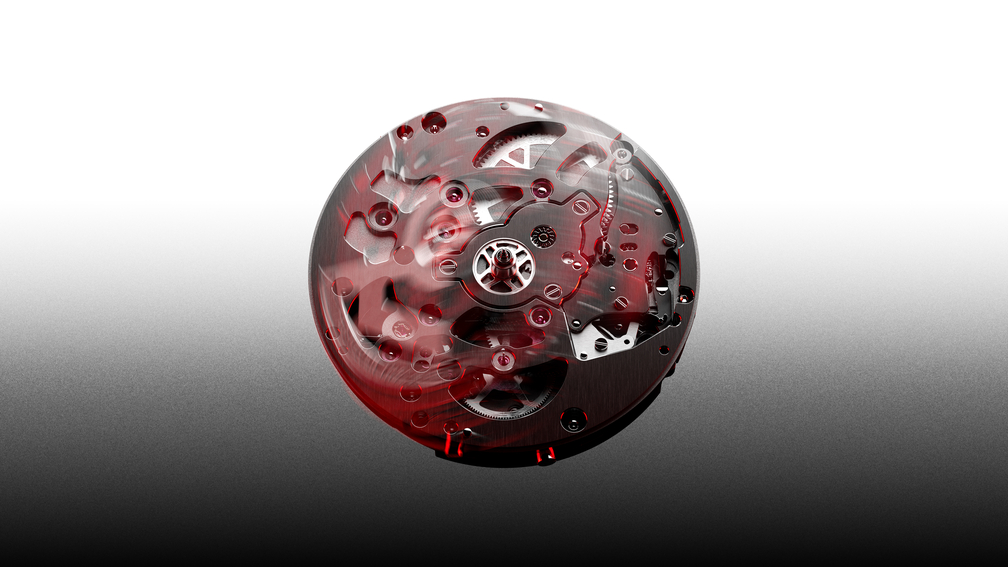
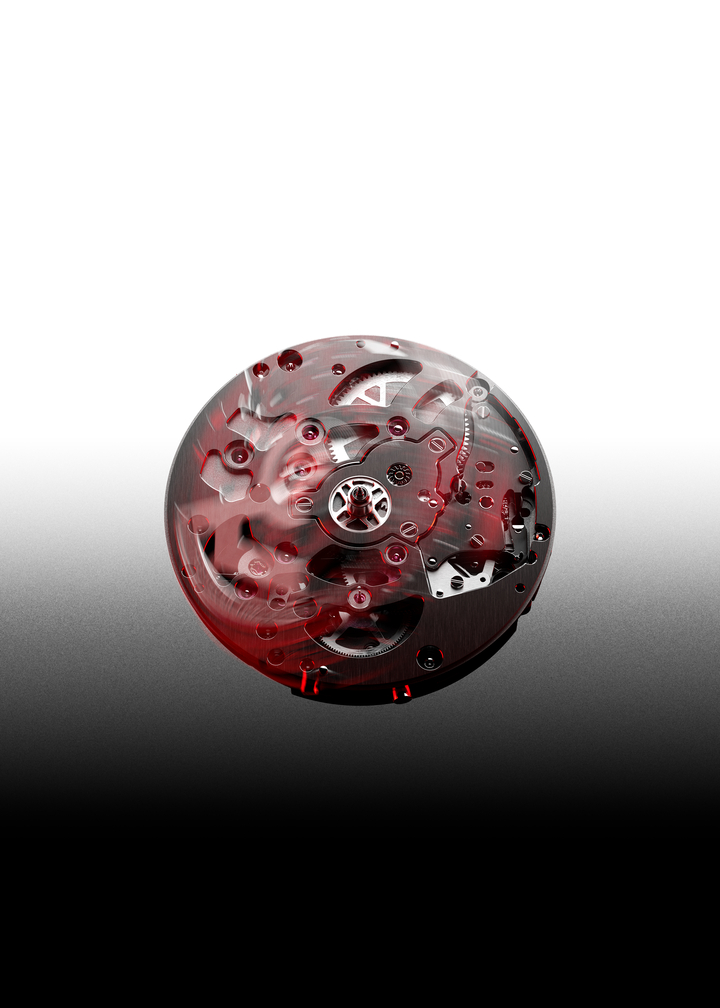
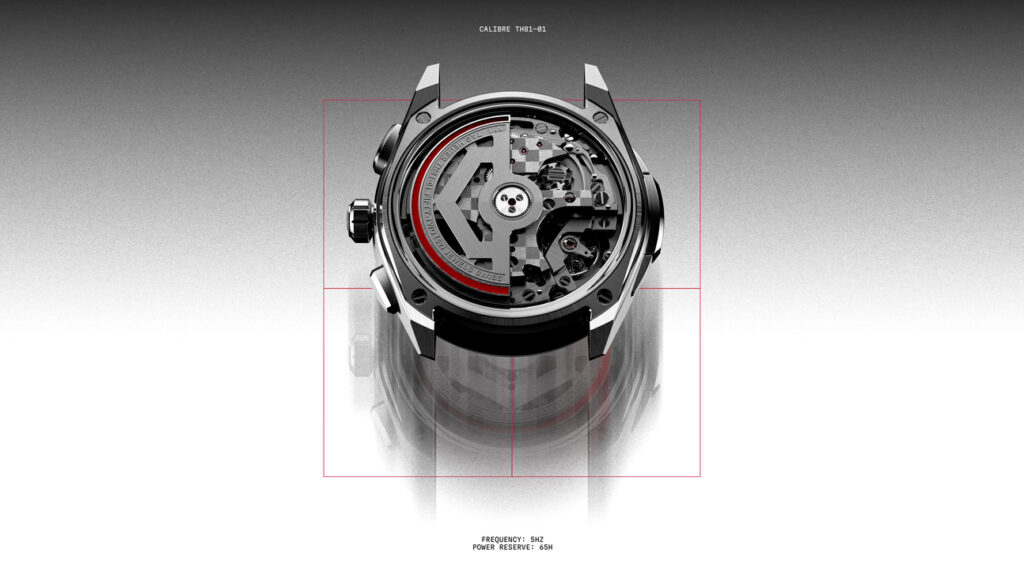
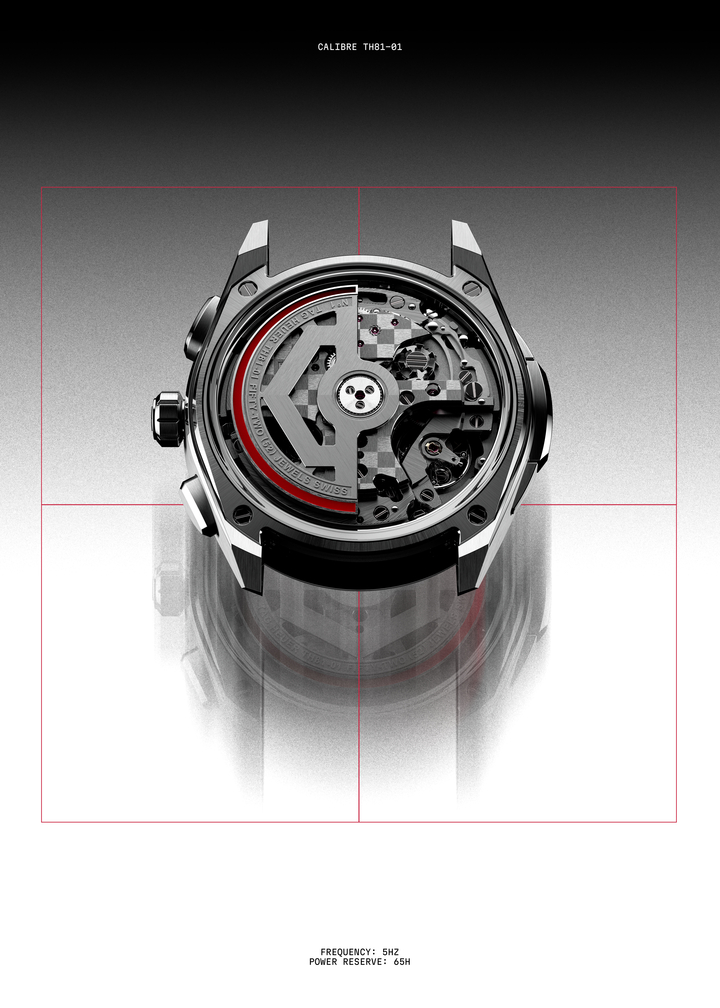
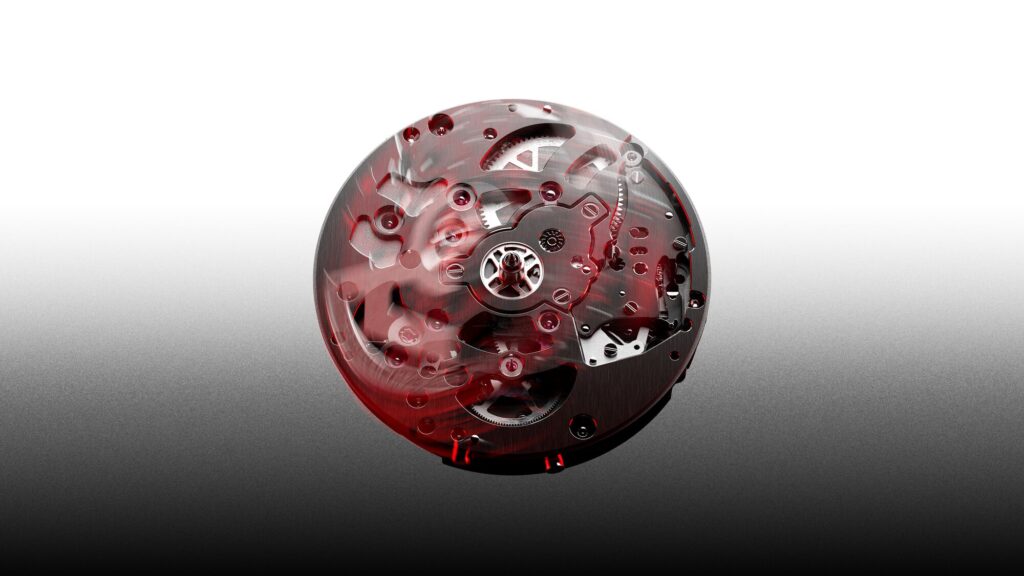
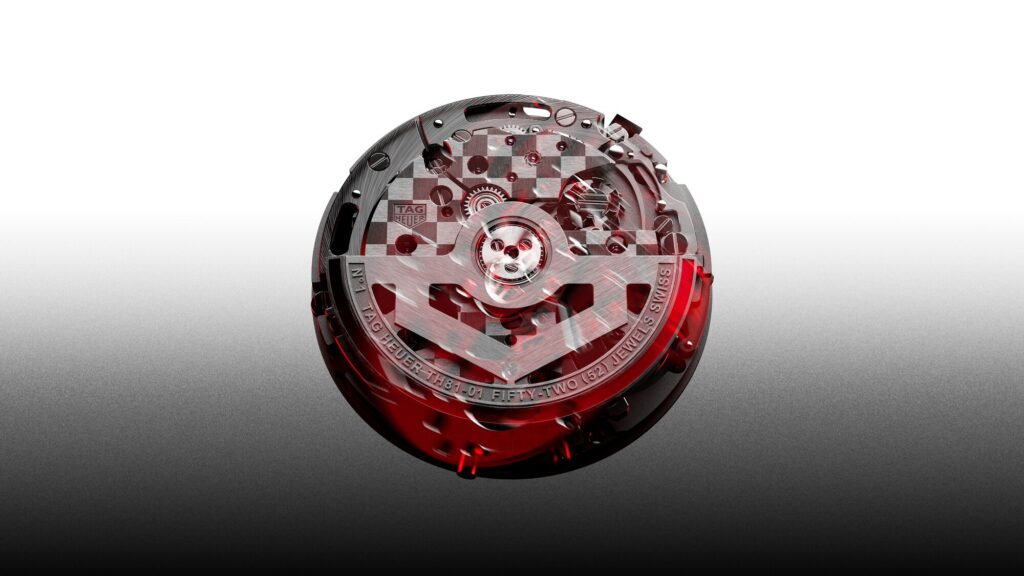
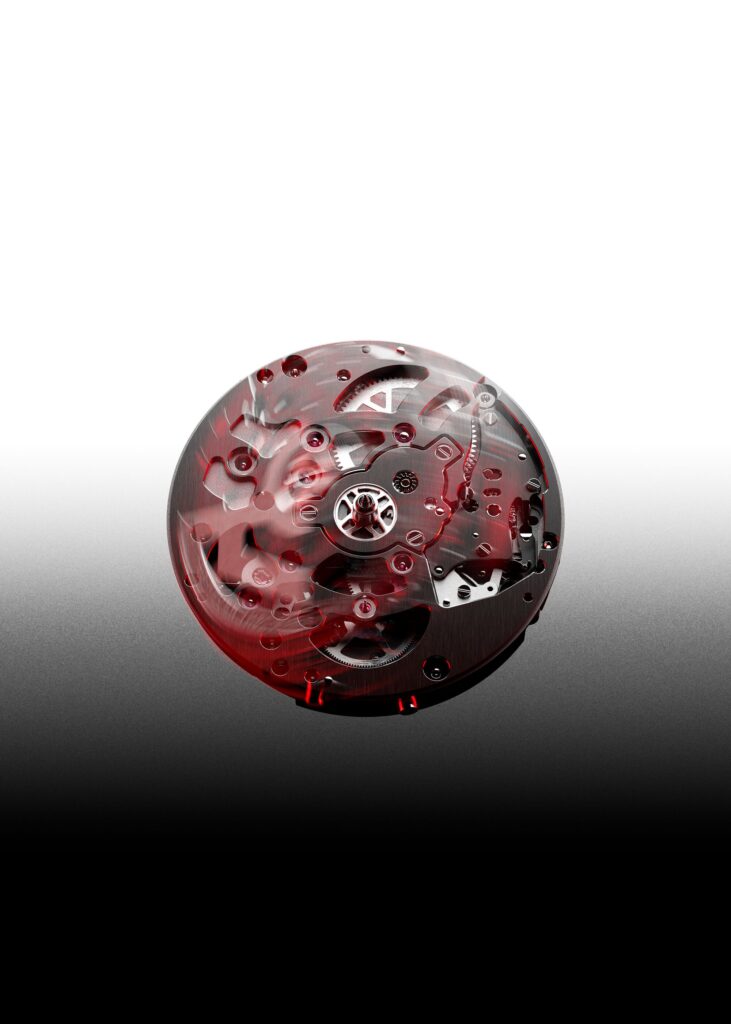
The TH81-01 caliber, developed in collaboration with Vaucher Manufacture Fleurier, features a split-seconds function. This type of chronograph uses a double central hand system to measure intermediate times without interrupting the main timing. One of the hands can be stopped, then restarted to instantly rejoin the other.
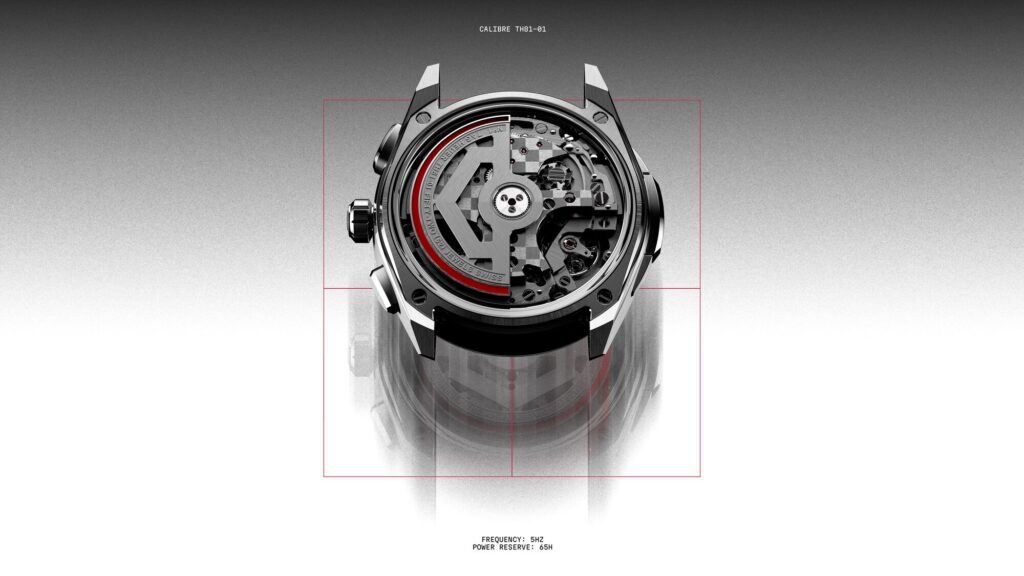
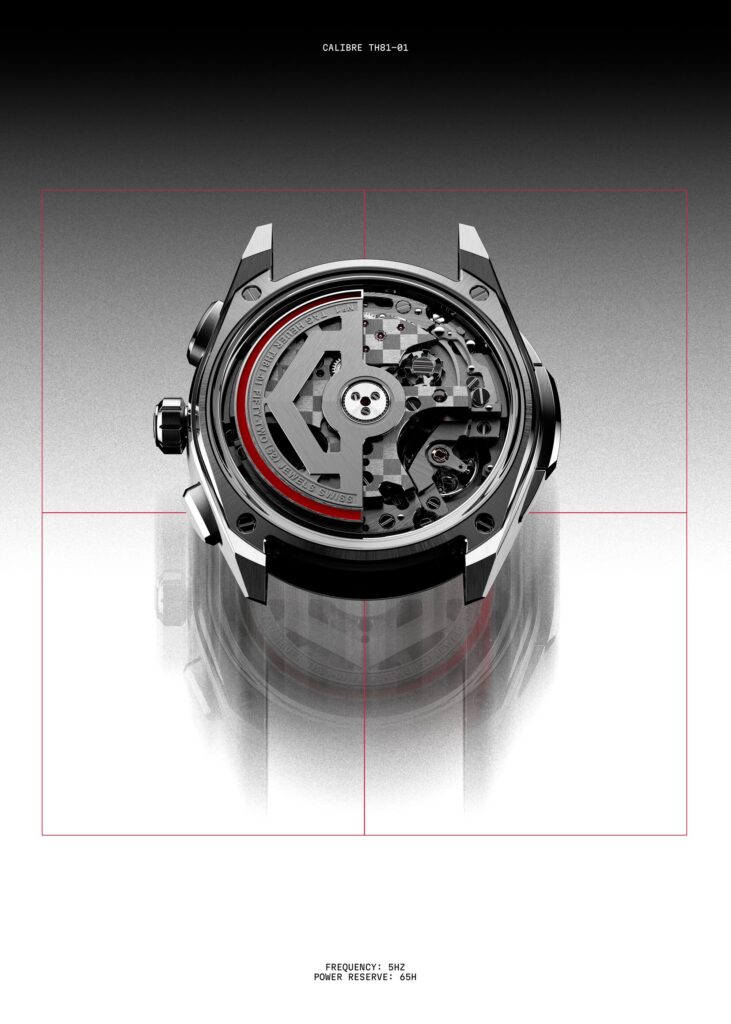
A frequency of five hertz – or thirty-six thousand vibrations per hour – places this movement in a logic of high precision. It enables time to be measured to the nearest tenth of a second, while guaranteeing stable running. The power reserve reaches sixty-five hours, a balance between performance and everyday use.
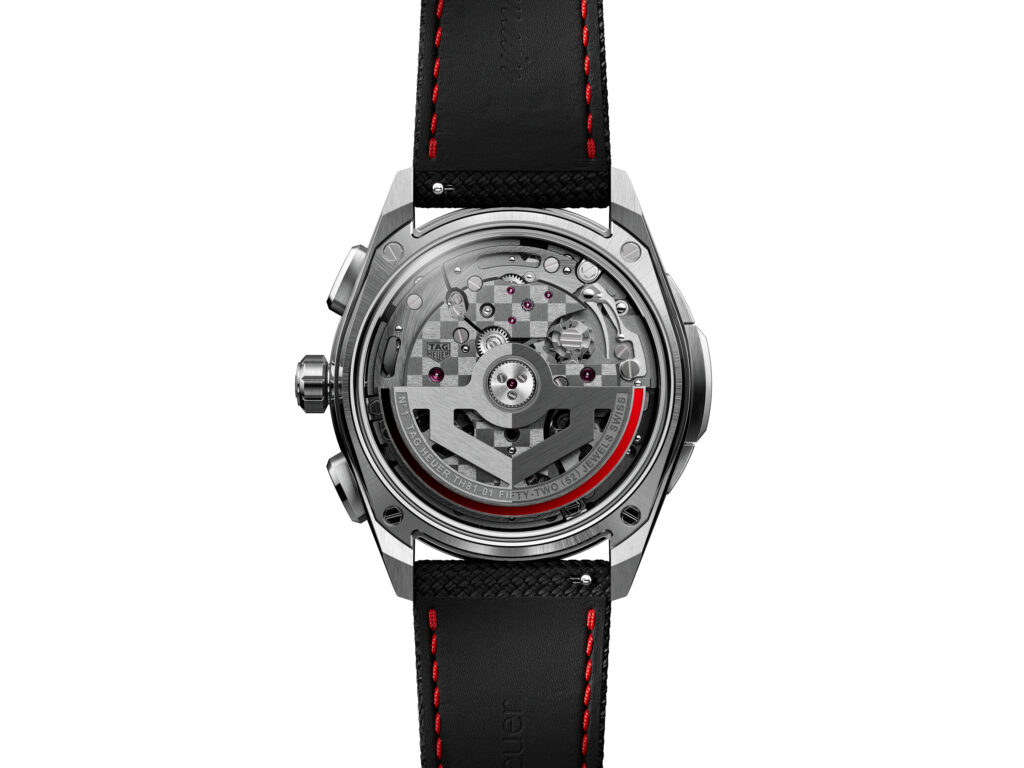
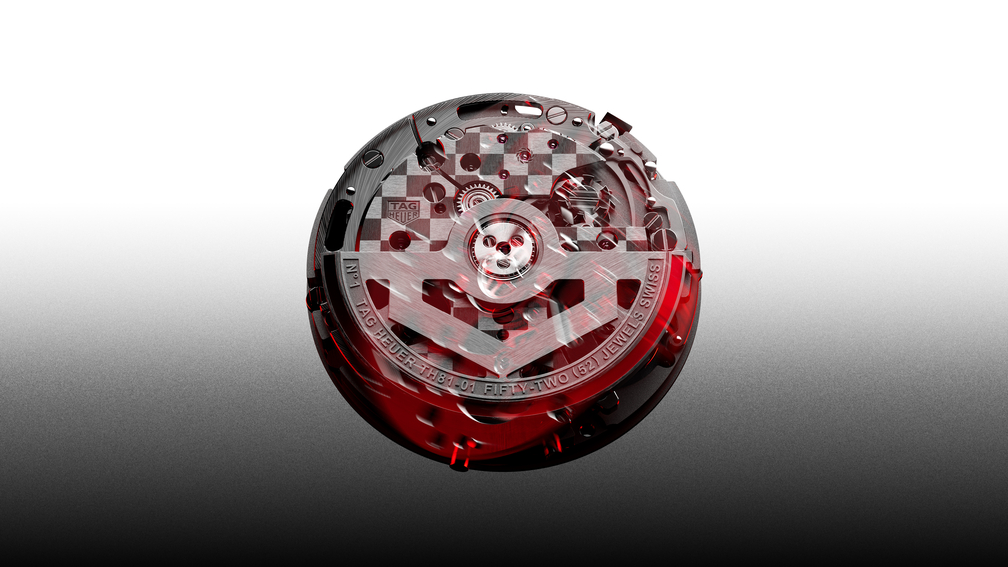
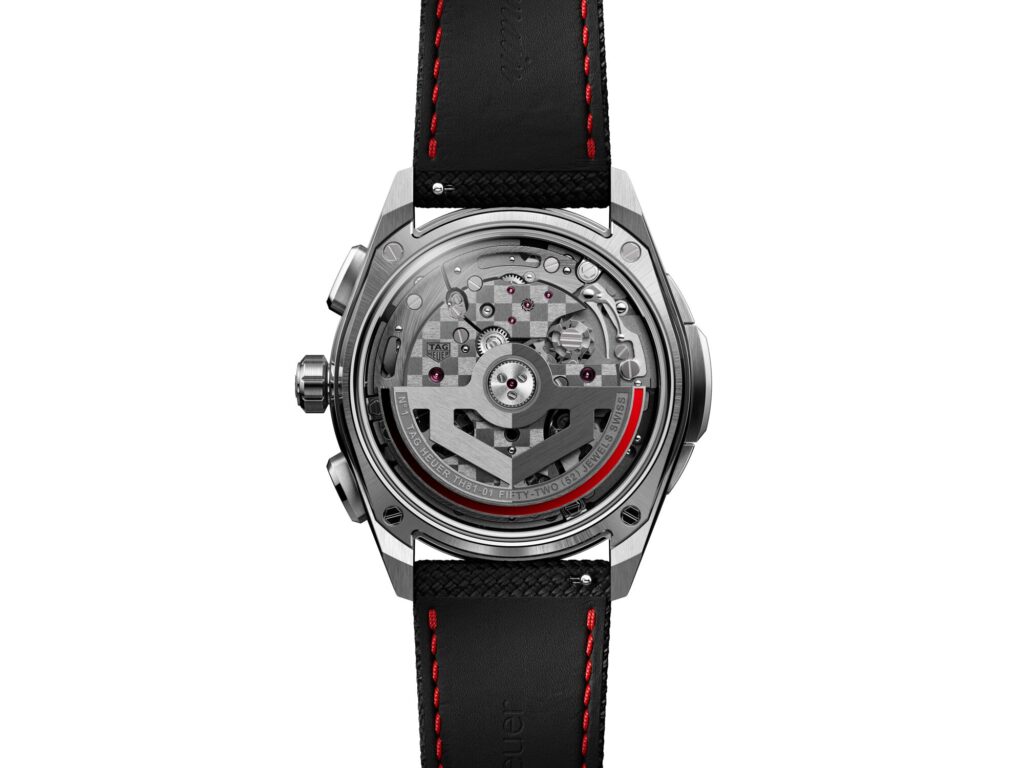
The internal construction exceeds three hundred and fifty components, each finished using several techniques. Beveling, polishing, alternating matt and reflective surfaces: the movement is not just functional, it’s on display. The sapphire crystal caseback provides a complete view of the mechanism, where the oscillating weight, openworked in the shape of a coat-of-arms, extends the visual identity of the Maison.
The pushers play a central role in the experience. Those on either side of the crown activate the chronograph, while a third, positioned at nine o’clock, controls the split-seconds function. This physical dissociation reflects the movement’s internal logic: two temporalities, two commands, a single reading.
Historically, split-seconds belong to a watchmaking tradition linked to sporting and scientific measurement. Its integration into the Carrera is not simply a technical evolution. It reactivates the collection’s DNA, rooted in motor racing and the measurement of deviations.
The Carrera Split-Seconds Chronograph does not seek to simplify time. It reveals its complexity. It shows that measuring is not just a matter of counting, but of comparing, superimposing and dissociating.
In this piece, precision is more than just a number. It becomes a visible architecture.
Cette publication est également disponible en :

