
GETAWAY TO SALIES DE BEARN
The Aquitaine region is full of pleasant surprises. Towns and villages encourage you to question what you’ve learned, and to open your mind to other perceptions. It’s a delightful place to venture, with the notion of discovery in mind.
Culture is omnipresent. The past and the present each know how to take their place and demonstrate their legitimacy. At the same time, gastronomy is a matter of course. Product treasures, quality workmanship, innovative chefs and winemakers, all pay tribute to the French spirit.
For the best introduction to these two axes, we recommend starting your trip in Saliès-de-Béarn. Saliès-de-Béarn is famous for its salt springs. This activity has been documented since Antiquity. ![DSCN0570[1]](https://www.luxsure.fr/wp-content/uploads/2013/08/DSCN05701.jpg "ESCAPE TO THE BASQUE COUNTRY 26") In the 19th century, the spa continued to flourish, thanks to the spa industry. Today, salt undeniably plays a role. Every traveler should be aware that venturing here will be a complete change of scenery. The structure of the town makes this possible. The winding streets, once providing quick access to the saltwater spring, make it easy to lose your bearings. To enhance the experience, simply visit the thermal baths.
In the 19th century, the spa continued to flourish, thanks to the spa industry. Today, salt undeniably plays a role. Every traveler should be aware that venturing here will be a complete change of scenery. The structure of the town makes this possible. The winding streets, once providing quick access to the saltwater spring, make it easy to lose your bearings. To enhance the experience, simply visit the thermal baths.
In an 1889 building designed by A Lagarde, almost anything is possible. The architecture itself is surprising. It is inspired by the Mosque of Cordoba. The two-tone color scheme and a number of interior details add the finishing touch to the invitation to travel and relax. The liquid element completes the sensation. 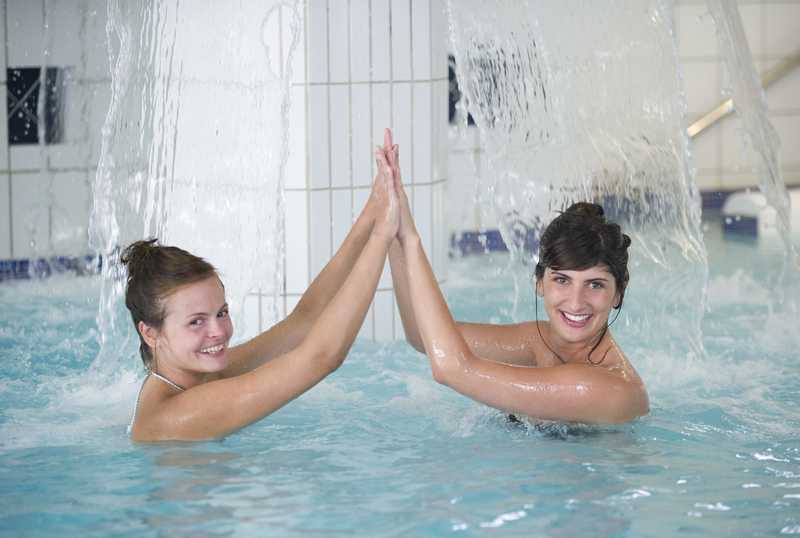 The salinity of the water is ten times that of seawater. The bodies, almost floating above the water, offer themselves to playful experiences. Under the impetus of the complex’s new director, a highly atypical pool is due to be developed shortly. It will enable lovers of the unusual to push back the laws of weightlessness. In quasi-suspension, relaxation should be total.
In addition to thermalism, a spa has been set up. Scrubs with Salies de Béarn fleur de sel, seaweed wraps and a variety of massages rival the highly sought-after beauty treatments.
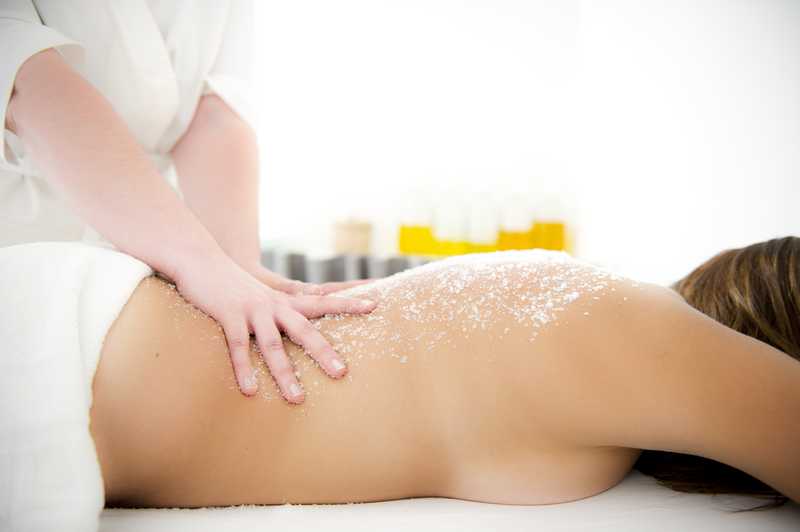 Beyond that, an incredible array of procedures are available to optimize beauty. Hyaluronic acid injections, detox practices, ionizing rooms and a few other splendors…
At the same time, a fitness area has been developed. Aquabike, aquagym, body-bar, pilates and a host of other activities are available. A weight room demonstrates just how important diversity is to the establishment. In fact, top-level athletes come here to increase their recovery capacity and perfect their physical condition.
All these activities could not exist without the omnipresence of salt. After centuries of villagers exploiting the main salt source and setting up various saltworks, 1840 saw the grouping of these into a single enterprise, Salines de Salies-de-Béarn. ![DSCN0533[1]](https://www.luxsure.fr/wp-content/uploads/2013/08/DSCN05331.jpg "ESCAPE TO THE BASQUE COUNTRY 29") Attentive to the need to preserve this excellent quality salt, we extract it in the best possible conditions. In this way, it retains its taste and mineral qualities. These are comparable to those of thermal spring water. Naturally white, this condiment is a treasure. Worthily celebrated every year on the second Sunday in September, it is an integral part of local gastronomy. In fact, it’s an essential ingredient in the production of Bayonne Ham. In the specifications for the Jambon de Bayonne appellation, the origin and quality of the salt are essential. Thanks to this requirement, the PGI or Protected Geographical Indication was established in 1998 and maintained. For this reason, the Consortium du Jambon de Bayonne bought the Salines. This ensures that the quality of the product will be maintained over the long term. The consortium, or INPAQ, is located in Arzaq, in the north-east of Béarn. Here, a complex houses the factory, a ham museum and a store. Here, quality meat acquires its letters of nobility. Upstream, a research center (Pyragena) ensures that the product evolves towards the best.
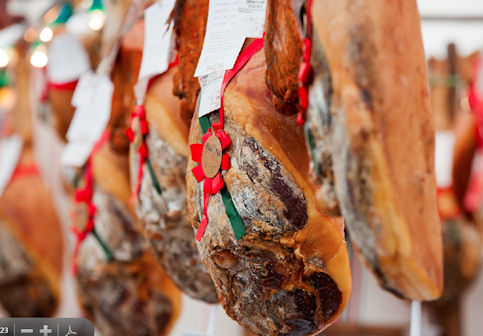
Attentive to the need to preserve this excellent quality salt, we extract it in the best possible conditions. In this way, it retains its taste and mineral qualities. These are comparable to those of thermal spring water. Naturally white, this condiment is a treasure. Worthily celebrated every year on the second Sunday in September, it is an integral part of local gastronomy. In fact, it’s an essential ingredient in the production of Bayonne Ham. In the specifications for the Jambon de Bayonne appellation, the origin and quality of the salt are essential. Thanks to this requirement, the PGI or Protected Geographical Indication was established in 1998 and maintained. For this reason, the Consortium du Jambon de Bayonne bought the Salines. This ensures that the quality of the product will be maintained over the long term. The consortium, or INPAQ, is located in Arzaq, in the north-east of Béarn. Here, a complex houses the factory, a ham museum and a store. Here, quality meat acquires its letters of nobility. Upstream, a research center (Pyragena) ensures that the product evolves towards the best. ![DSCN0536[1]](https://www.luxsure.fr/wp-content/uploads/2013/08/DSCN05361.jpg "ESCAPE TO THE BASQUE COUNTRY 30") Flesh texture, color, quality of fat, smokiness, every detail goes to great lengths to position it as an essential part of French gastronomy. The first process is salting. This preserves the meat and gives it its flavor. Rubbed with Salies salt, then saturated with it, the hams are hung in the resting room. Here, winter drying conditions are recreated, with a low temperature. The temperature gradually rises from 4 to 12 degrees Celsius. This prepares the meat for the next stage, the drying room. In fact, in this other room, 15° will allow the carne to reveal all its nuances.
Flesh texture, color, quality of fat, smokiness, every detail goes to great lengths to position it as an essential part of French gastronomy. The first process is salting. This preserves the meat and gives it its flavor. Rubbed with Salies salt, then saturated with it, the hams are hung in the resting room. Here, winter drying conditions are recreated, with a low temperature. The temperature gradually rises from 4 to 12 degrees Celsius. This prepares the meat for the next stage, the drying room. In fact, in this other room, 15° will allow the carne to reveal all its nuances.
Before being transported to the maturing room, the meaty piece is coated with a mixture of pork fat and rice flour. This breading extends the maturing period without the risk of drying out. After some time, a ‘nose’ tests the flesh using a horse’s fibula. The ham is released for sale once the aromatic objectives have been reached. It used to take around 12 months to produce such a product. Today, the trend is to extend the maturing period, taking the preparation to 18 months.
Stamped with the ‘Bayonne’ seal, it will be sent around the world to raise international awareness of French taste. Presented in the store adjoining the factory, it’s a real eye-catcher. ![DSCN0581[1]](https://www.luxsure.fr/wp-content/uploads/2013/08/DSCN05811.jpg "ESCAPE TO THE BASQUE COUNTRY 31") You can taste it to refine your perceptions and become a real connoisseur.
You can taste it to refine your perceptions and become a real connoisseur.
A visit to the ham museum, evokes the history of a practice, the iconography linked to the perception of the product, and its ambassadors. These included Henri IV, Louis XIV and a number of other famous tasters.
A time for celebration, the Bayonne Ham Fair has been going on for 550 years. A not-to-be-missed event, it begins during Holy Week and ends on Easter Sunday. From March 28 to 31, the city of Bayonne is transformed. Some fifty exhibitors liven up the banks of the Nive. 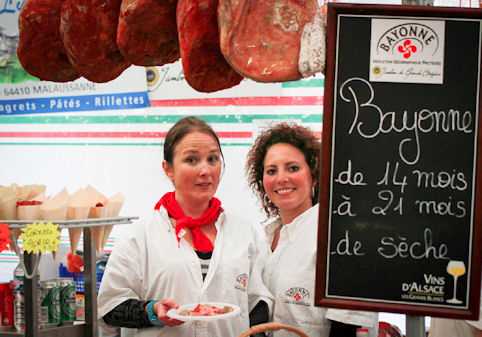 Enthralled by the brass bands, the public discover the many facets of regional gastronomy. Hams and charcuterie, foies gras and succulent wines all compete for visitors’ attention.
  All in all, an unforgettable experience. Definitely worth a try!
Downstream, chefs enjoy creating salt-based recipes. In Salies, the Restaurant de l’Hôtel du Parc is full of pleasant surprises. In this 19th-century establishment, listed as a historic monument, the chef prepares some very tasty dishes. One of his specialties is magret en croute de sel. ![DSCN0506[1]](https://www.luxsure.fr/wp-content/uploads/2013/08/DSCN05061.jpg "ESCAPE TO THE BASQUE COUNTRY 34") The duck is returned, snacked on the spot to encapsulate the flavors and water. In a second stage, it is completely covered with a paste, a mixture of salt and water. Placed in the oven, the paste hardens and becomes a shell. Presented in its salty case, the meat reveals all its potential. The salt crust cooks the meat almost “à l’étouffée”. The flavors of the product are enhanced tenfold.
The duck is returned, snacked on the spot to encapsulate the flavors and water. In a second stage, it is completely covered with a paste, a mixture of salt and water. Placed in the oven, the paste hardens and becomes a shell. Presented in its salty case, the meat reveals all its potential. The salt crust cooks the meat almost “à l’étouffée”. The flavors of the product are enhanced tenfold.
Another of the chef’s talents is the preparation of semi-cooked foie gras.![DSCN0512[1]](https://www.luxsure.fr/wp-content/uploads/2013/08/DSCN051211.jpg "ESCAPE TO THE BASQUE COUNTRY 35") The cooking is admirably mastered. The mellowness of the liver confirms this. Various other dishes are worthy of note. The prices are by no means prohibitive. A wonderful experience!
The cooking is admirably mastered. The mellowness of the liver confirms this. Various other dishes are worthy of note. The prices are by no means prohibitive. A wonderful experience!
The hotel itself is truly unusual. Its charm is undeniable. A mix of typical architecture and contemporary design, it’s a pleasant surprise. 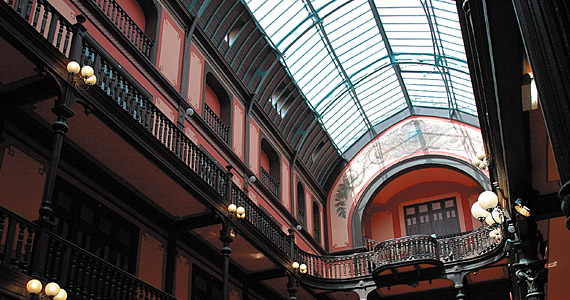 Its style is assertive. The interior layout, particularly in the living room, is a success. Several singular spaces encourage relaxation or discussion. All 51 rooms have been refurbished and offer a relaxing setting.
 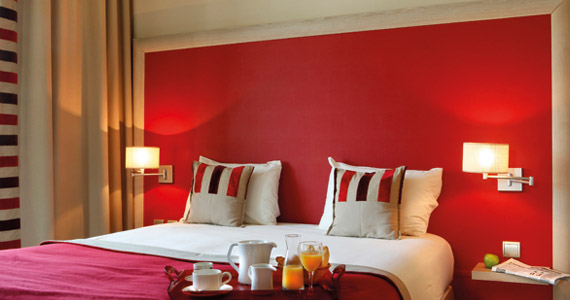 This three-star hotel is the place to be!
A number of festivities will enhance Salies’ appeal. From August 17, the Semaine de la Pelote Basque (Basque Pelota Week) takes place. From 12 to 15/ 09, the Fête du Sel will add another dimension to the town. For further details, please refer to the addresses below,
. www.tourisme-bearn-gaves.com
. Les thermes www.thermes-de-salies.com
. Salines de Salies-de-Béarn http://www.sel-salies-de-bearn.com
. Bayonne Ham Consortium Route de Samadet 64410 ARZACQ
www.jambon-de-bayonne.com/
. Hôtel du Parc*** Boulevard Saint Guily 64270 Salies-de- Béarn 33 (0)5 59 38 31 27
http://www.hotelsalies.com/
Cette publication est également disponible en :

