
The reopening of the first Sandro boutique in the Marais could be read as a simple retail exercise. The project is more interesting when seen as an ageing laboratory: exposed steel, solid oak, stone, antique objects and deliberately domestic lighting make up a space designed to patina rather than to stay new.
At the crossing of rue Vieille-du-Temple and rue des Francs-Bourgeois, Sandro returns to its historic address with a new architectural concept developed by the studio HAOS and the Atelier Franck Durand. The womenswear space extends over one hundred and thirty square metres, while the menswear boutique, located on the same block, occupies ninety square metres.
The system of niches forms the backbone of the project. Clothes and accessories are arranged as in a dressing room, rather than according to the classic codes of a boutique where circulation must immediately steer the visitor towards the product. The declared inspiration blends the industrial movement, the minimalism of Donald Judd, the Shaker world, brutalist architecture, traditional Japanese furniture and references to Hans van der Laan or John Pawson.
The palette is deliberately short: steel, solid oak and stone. Surfaces alternate between roughcast and lacquer. Steel is used with visible assemblies, acknowledged welds and exposed fixings, then covered with industrial paints.
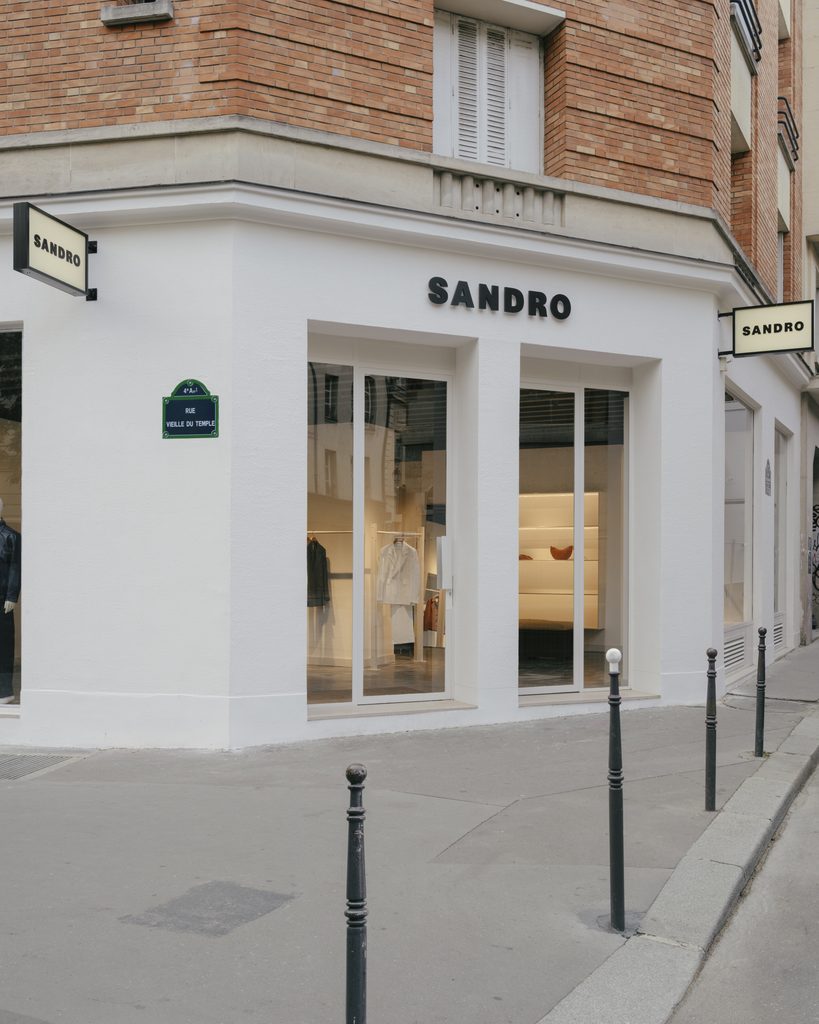
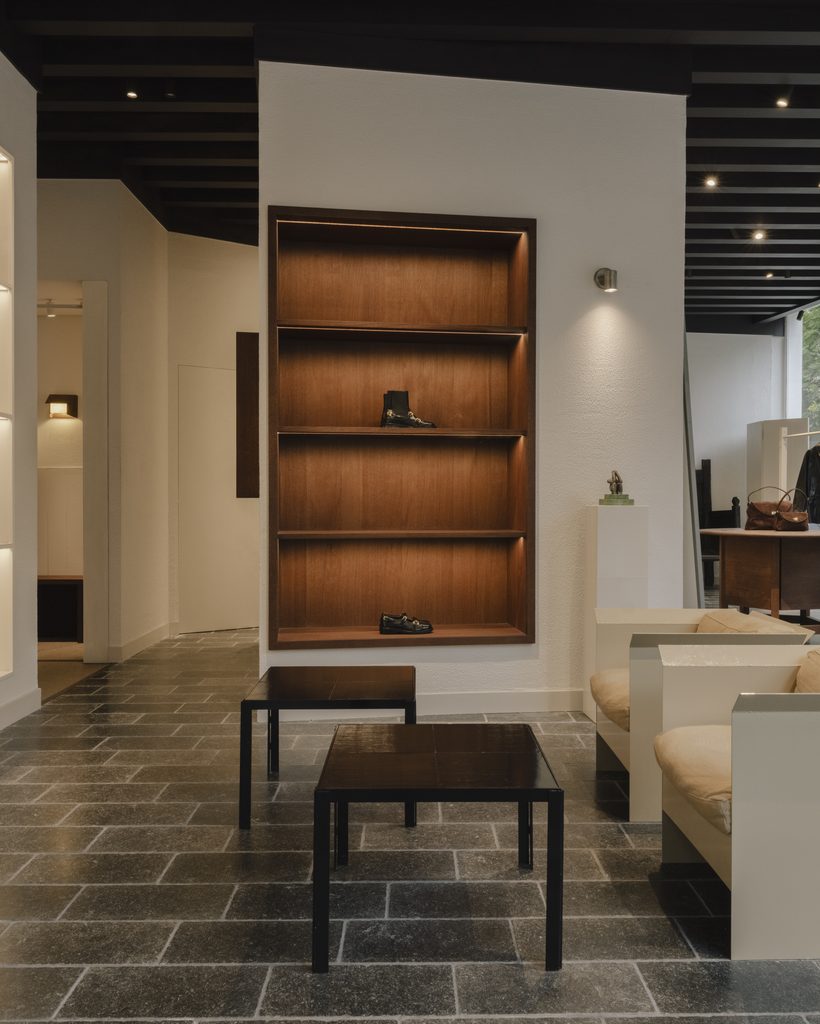
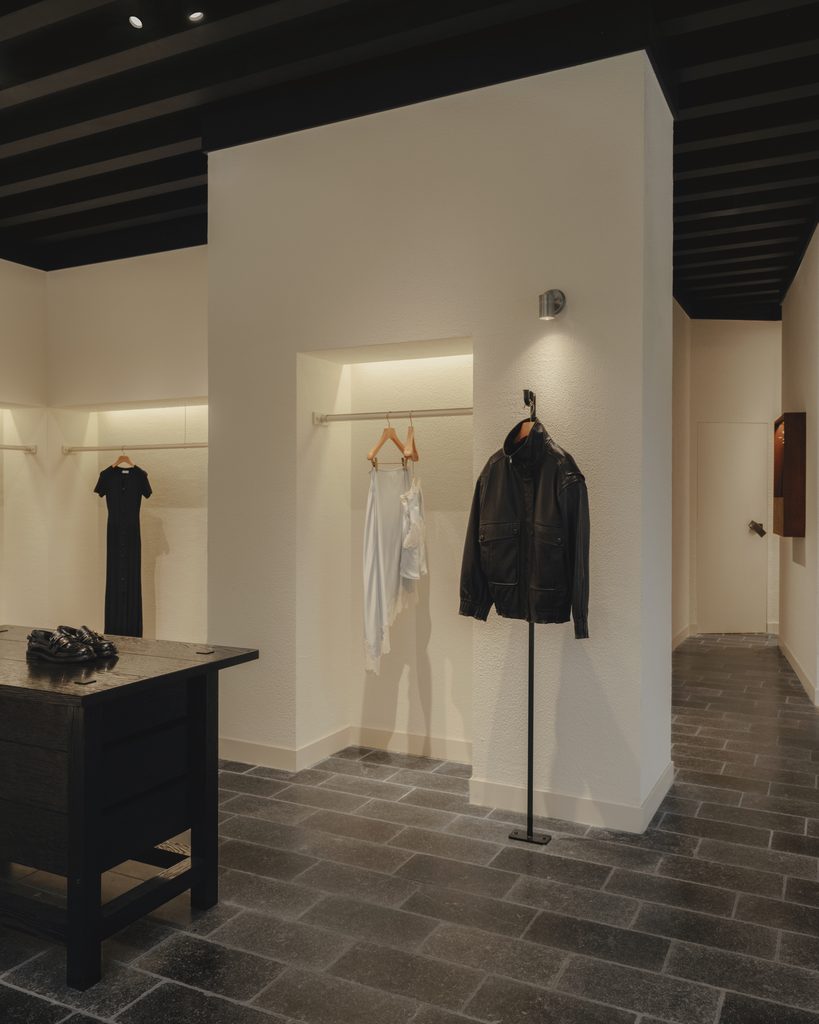
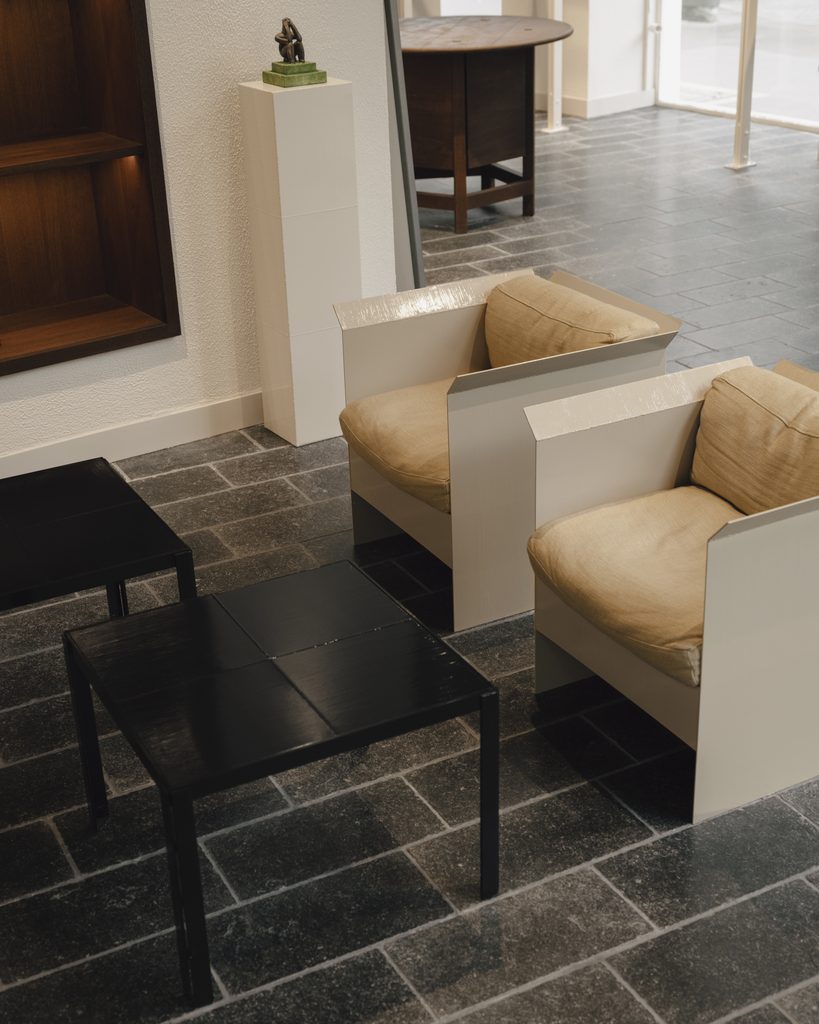
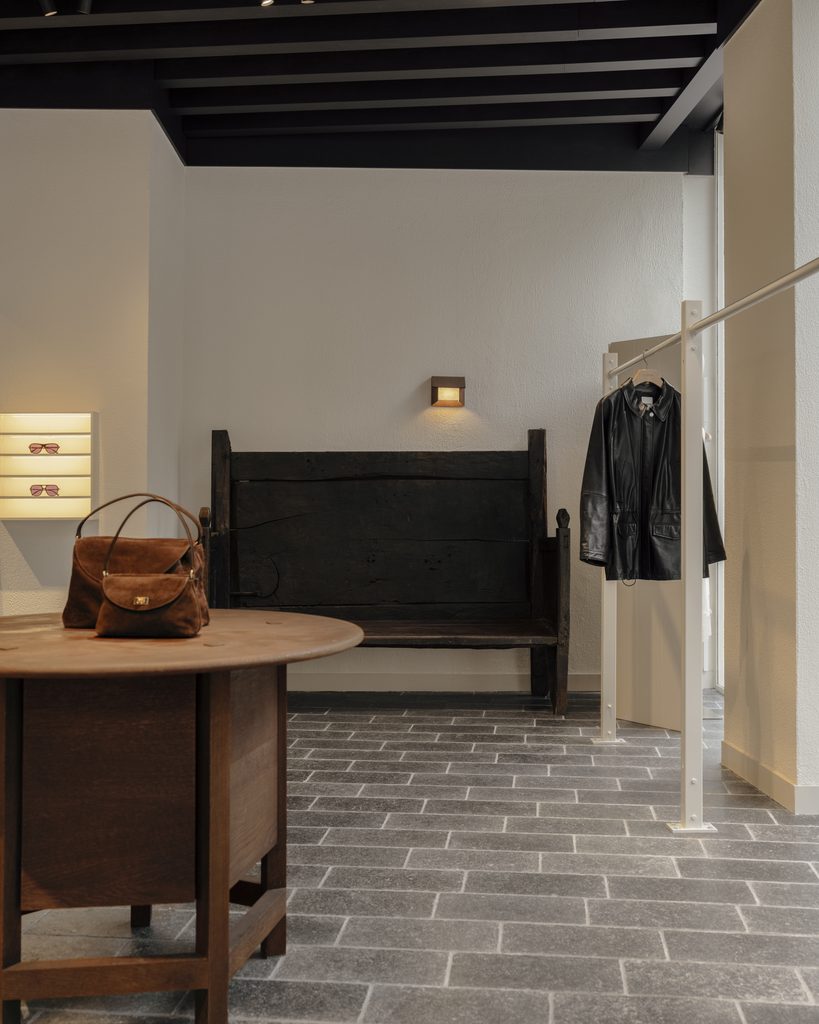
The work on materials extends this logic. HAOS developed prototypes and samples in order to reproduce, in a concept intended to be rolled out more widely, certain qualities associated with artisanal making: controlled irregularity, density of textures, the presence of the hand and the capacity to patina.
The lighting is part of the same strategy. Rather than uniform illumination, the boutiques use visible sources: exposed spotlights, HAOS light fittings in wood and Japanese paper, but also vintage Polish light fittings from the nineteen-seventies.
The cultural dimension plays out in the objects. A seventeenth-century Portuguese chestnut bench has been kept in its heavily patinated state. A wooden figurine hand-carved in Italy in the mid-twentieth century is in dialogue with a piece in steel and wood by the artist Jim Rose.
This choice is consistent with the place. The Marais has become one of the most densely retail-saturated areas of Paris. Reopening Sandro’s very first address here gives the project another scope. The House, founded by Evelyne Chetrite in 1984 and today present in more than seven hundred and fifty points of sale, returns to its starting point at the moment when its network has become global.
Cette publication est également disponible en :


