
For its Summer 2026 collection, the Parisian fashion house is entrusting its diamonds to an FC Barcelona defender. With the World Cup just a few months away, this move goes beyond the campaign: it shifts the narrative of fine jewelry toward the man himself.
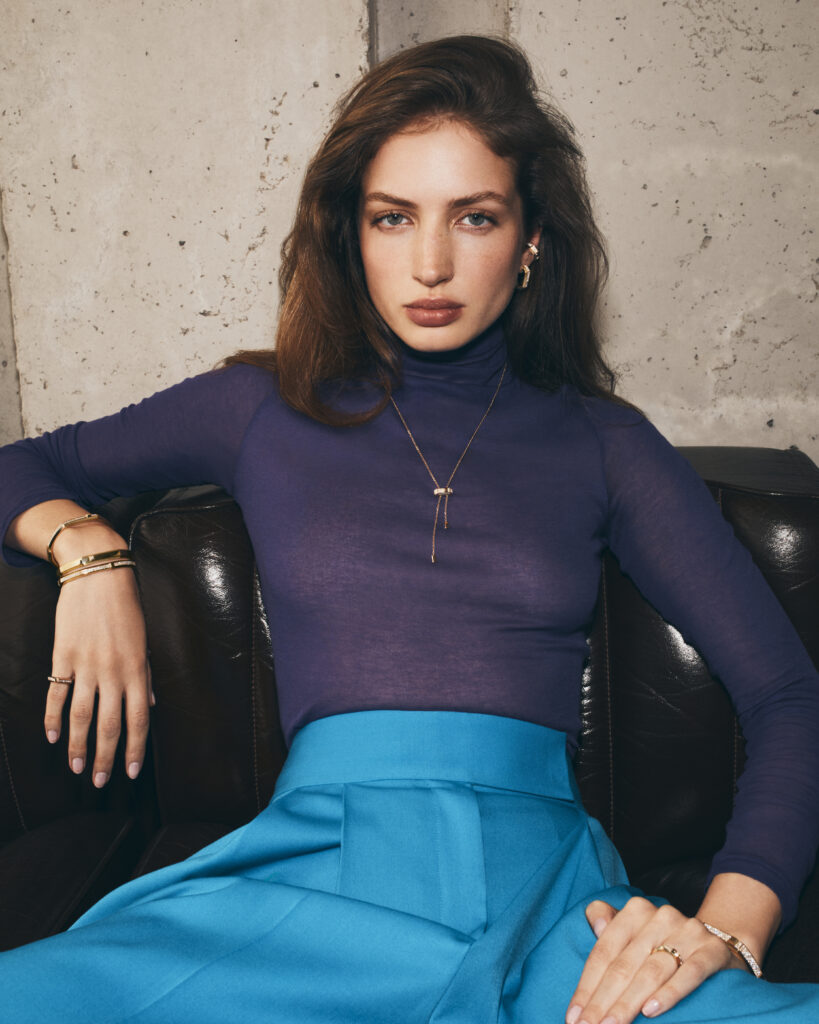
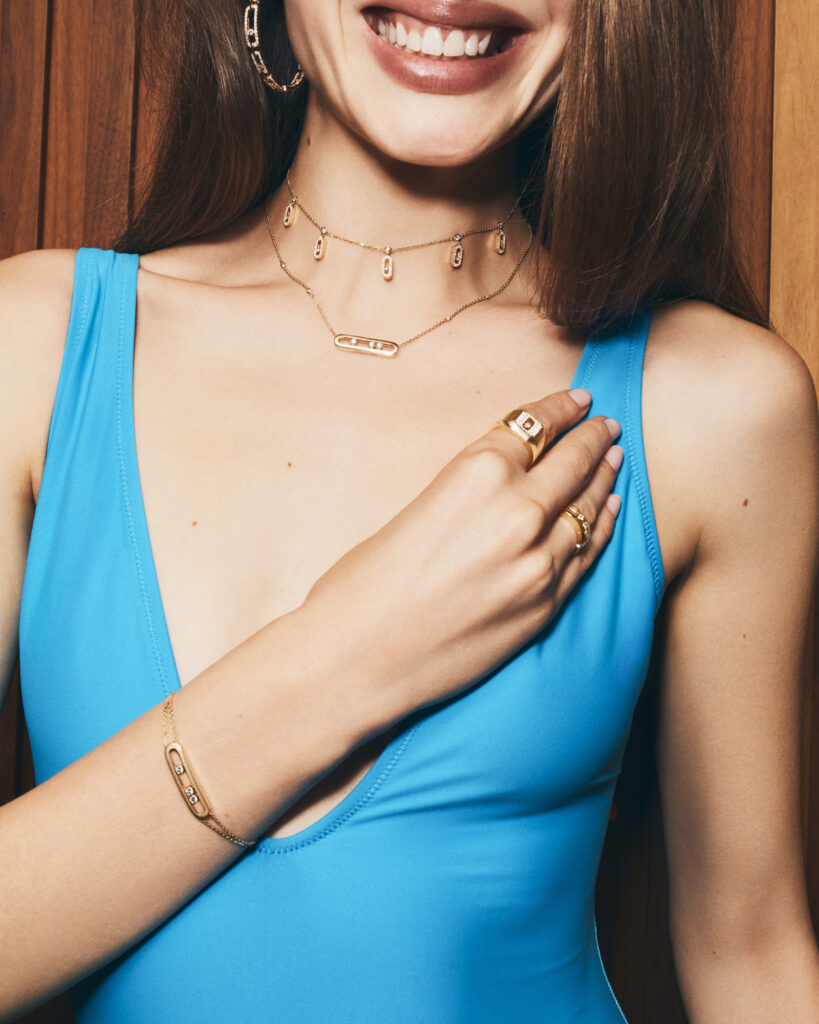
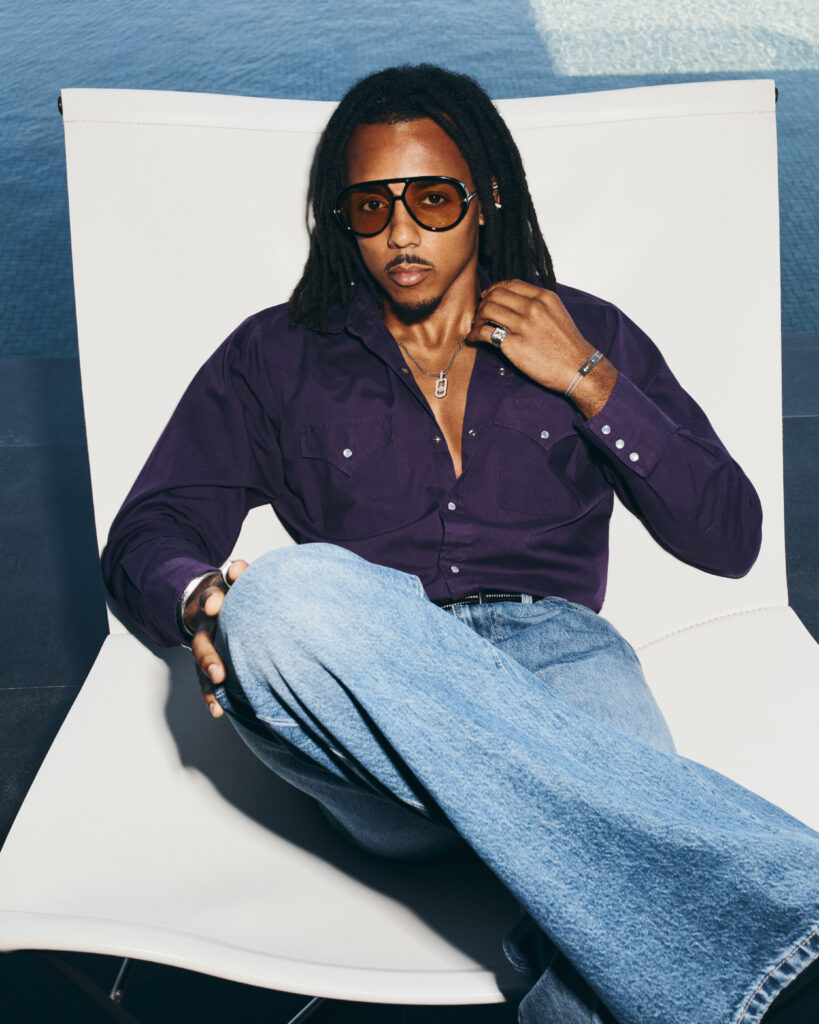
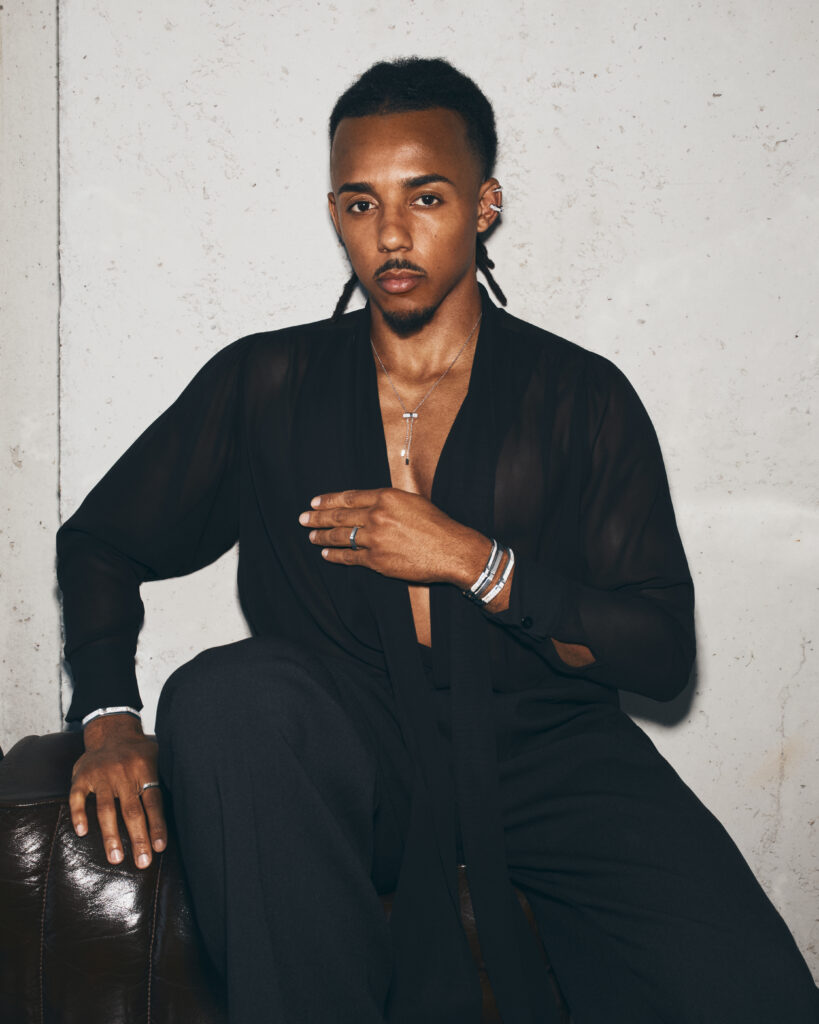
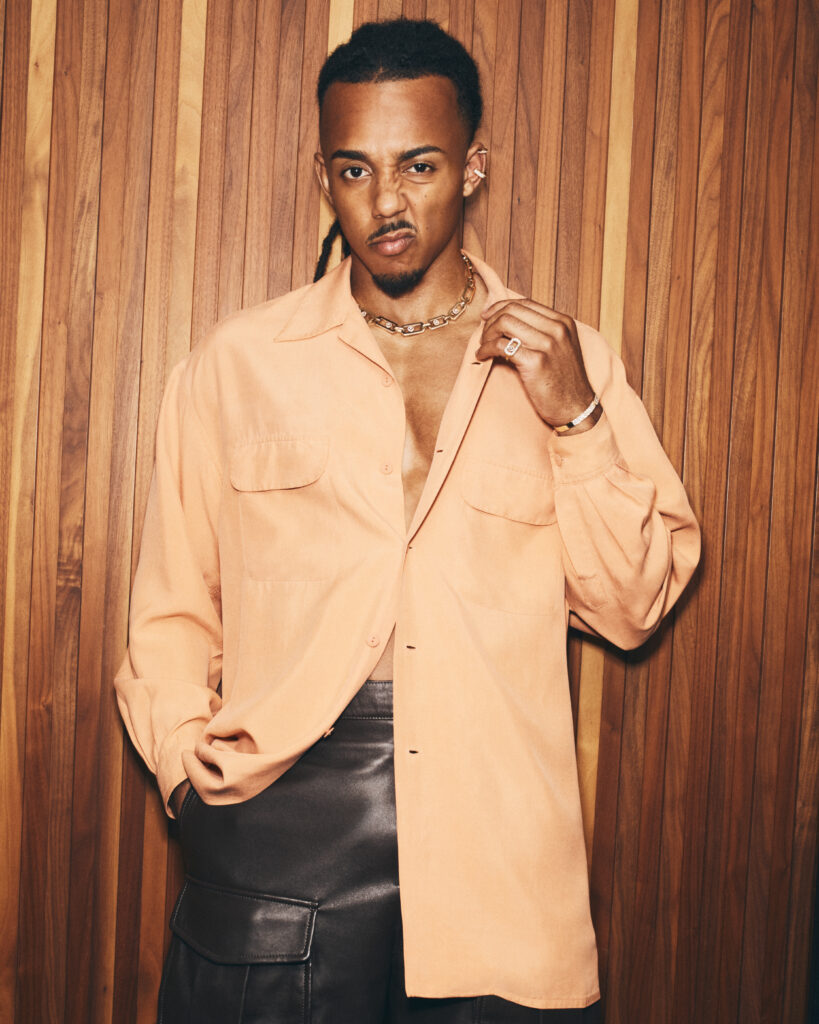
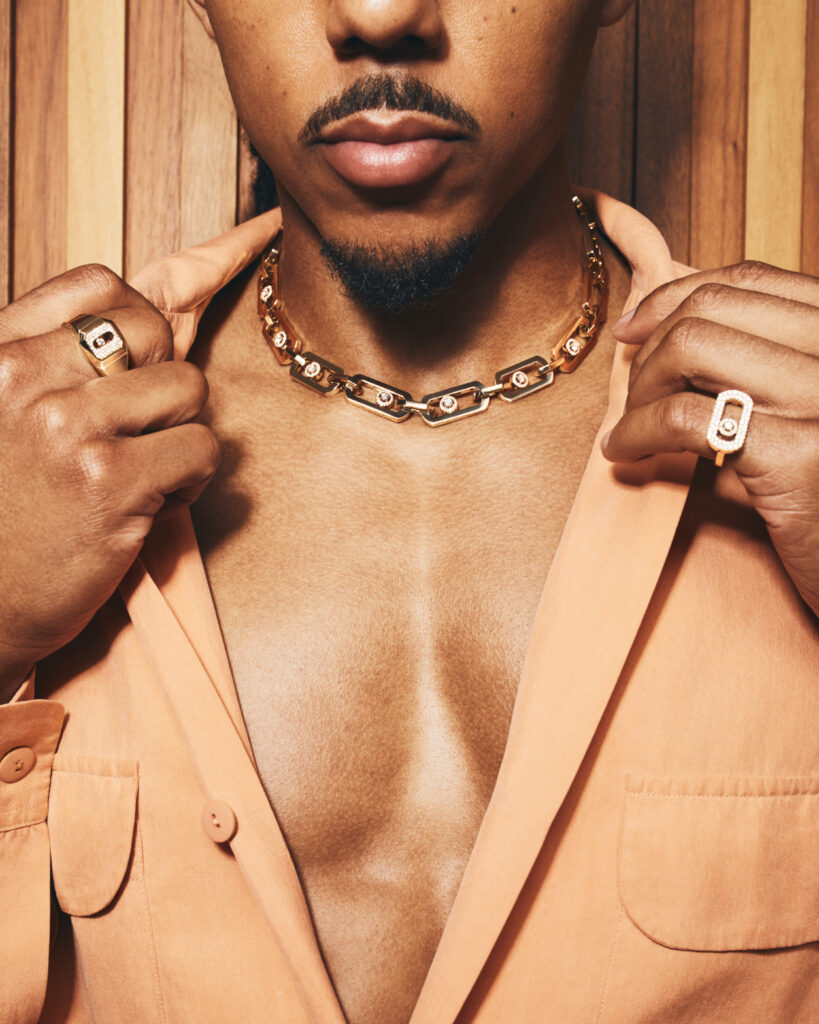
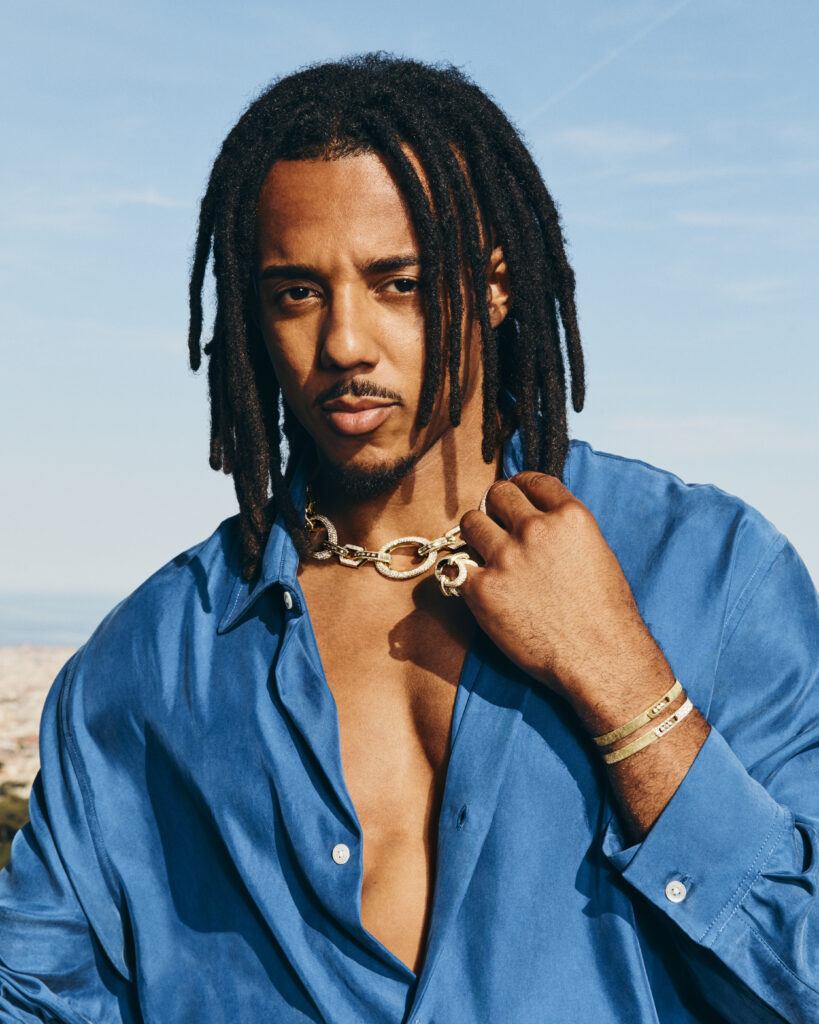
A villa near Barcelona, an unbuttoned shirt, flared jeans, cascading necklaces: Messika’s summer campaign draws its inspiration more from 1970s fashion than from jewelry advertising. In front of the camera of the duo Louise and Maria Thornfeldt, soccer player Jules Koundé wears rings, earrings, and long necklaces without regard to gender norms. The image evokes a certain vision of masculine style—that of Lenny Kravitz, embodying elegant and nonchalant rock ’n’ roll. This isn’t just a styling detail: it’s the campaign’s central theme.
A young company that dares to take a different approach
Founded in 2005 by Valérie Messika, the House has built its legacy over the past two decades on a simple intuition: to free the diamond from solemnity, to make it versatile, almost an everyday accessory. Its design language—the stone that glides, that is never quite fully set, that moves with the body—has established a diamond for daytime wear, freed from the ritual of the jewelry box. Entrusting this aesthetic to a man is therefore not a betrayal, but an extension: if the diamond can be casual, it can also be masculine.
The choice of Jules Koundé is by no means opportunistic. Season after season, the international defender has established himself as one of the most closely followed figures in the fashion world, a regular at runway shows and on magazine covers—where one’s wardrobe matters just as much as one’s list of achievements. By placing him at the center of its campaign, the fashion house isn’t simply recruiting a celebrity—it’s validating a path he’s already embarked upon: that of the athlete who has become a style influencer.
The Diamond as Neutral Ground
That is the cultural issue at stake. Men’s fine jewelry has long been kept to a minimum—a watch, a signet ring, cufflinks—as if gemstones were still the exclusive domain of women’s fashion. The campaign takes the opposite approach without making a point of it: it shows a man adorned with multiple pieces of jewelry, without the image making it seem like a transgression. Here, the diamond becomes a neutral ground, a matter of style rather than gender. It is as much a sociological shift as it is an aesthetic one, and it speaks to a generation for whom fashion no longer has rigid boundaries.
The campaign was photographed in a villa on the outskirts of Barcelona by the duo Louise and Maria Thornfeldt. The stylistic approach—an unbuttoned shirt, flared jeans, and layered necklaces—presents the fine jewelry in a portrait-like setting rather than as a still life in a jewelry box.

The Calendar as an Argument
Then there’s the timing. Launching this campaign as the World Cup approaches means capitalizing on the convergence of two “economies of attention”: that of globalized sports and that of luxury. Today, top-tier soccer players are among the few figures whose image circulates simultaneously across every continent and in every language. For a brand that has built its visibility on high-profile ambassadors, this is a natural fit. Here, the diamond aligns with the soft power of soccer—a vehicle of influence that few industries can still command on this scale.
It remains to be seen whether this shift toward men’s fashion will last beyond a single season, or whether it will be nothing more than a summer trend centered on a single face. The answer will be found less in the next campaign than in the store windows: the day a fashion house designs its men’s lines from the very first sketch, rather than just for the sake of the image.
Cette publication est également disponible en :

