
In manufacturing, transparency is not merely a marketing slogan. It requires a workshop structure in which every decision regarding cutting, finishing, and assembly can be traced back to a single pair of hands. L’ONIRÉE, an independent Parisian fashion house founded in 2026, built its first permanent collection around this principle.
The collection is called Soufflé. Not as a metaphor, but as a method: the pieces that make up the collection—luxury ready-to-wear, produced in micro-batches—are each the work of a single artisan, from pattern-making to finishing. Each piece takes five to ten days to make. A single artisan oversees the entire process, from cutting the fabric to the final stitch.
The material is chosen before the effect
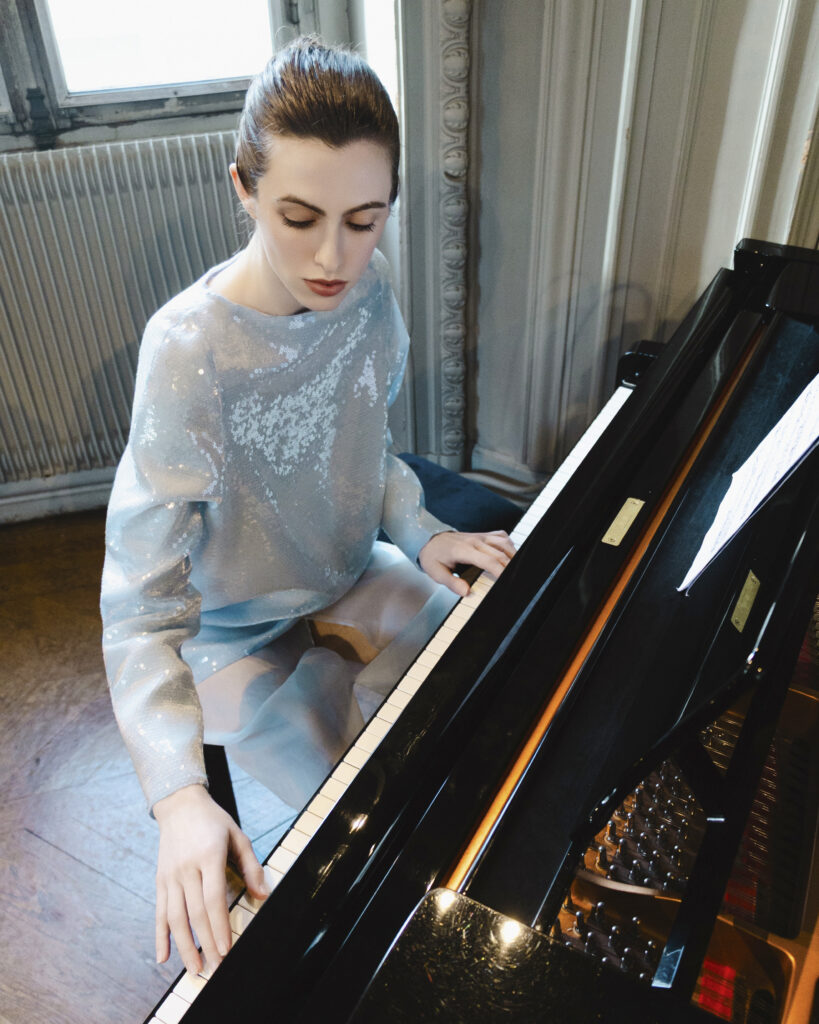
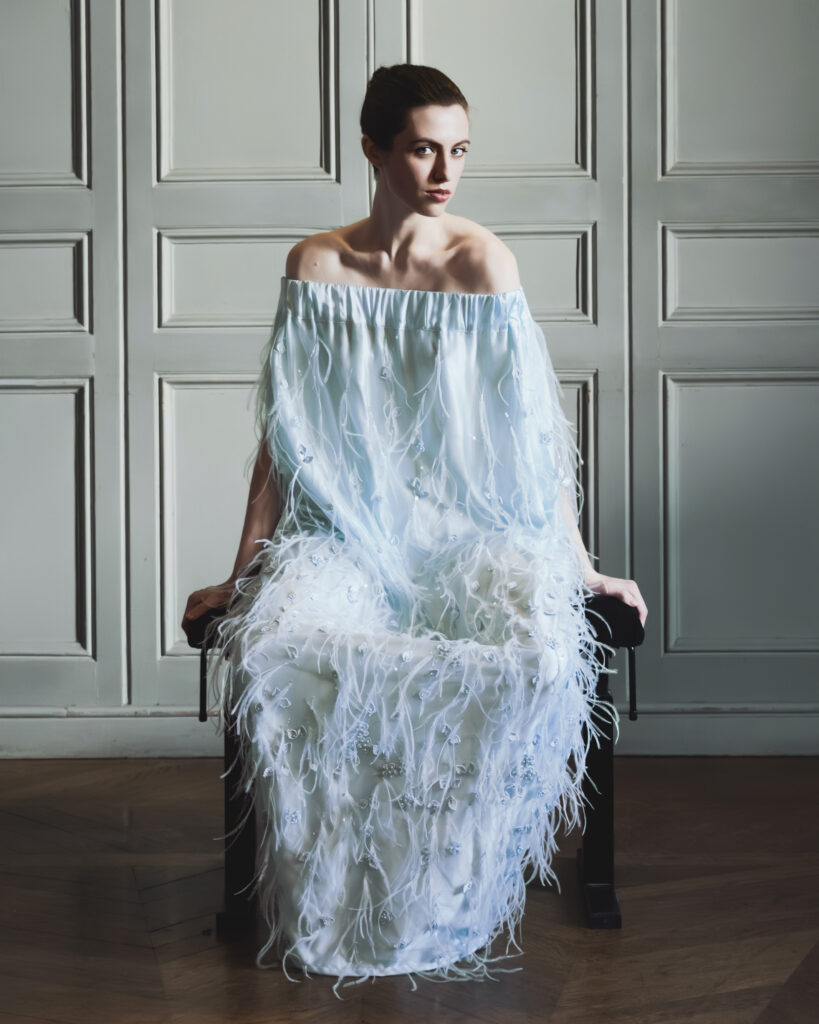
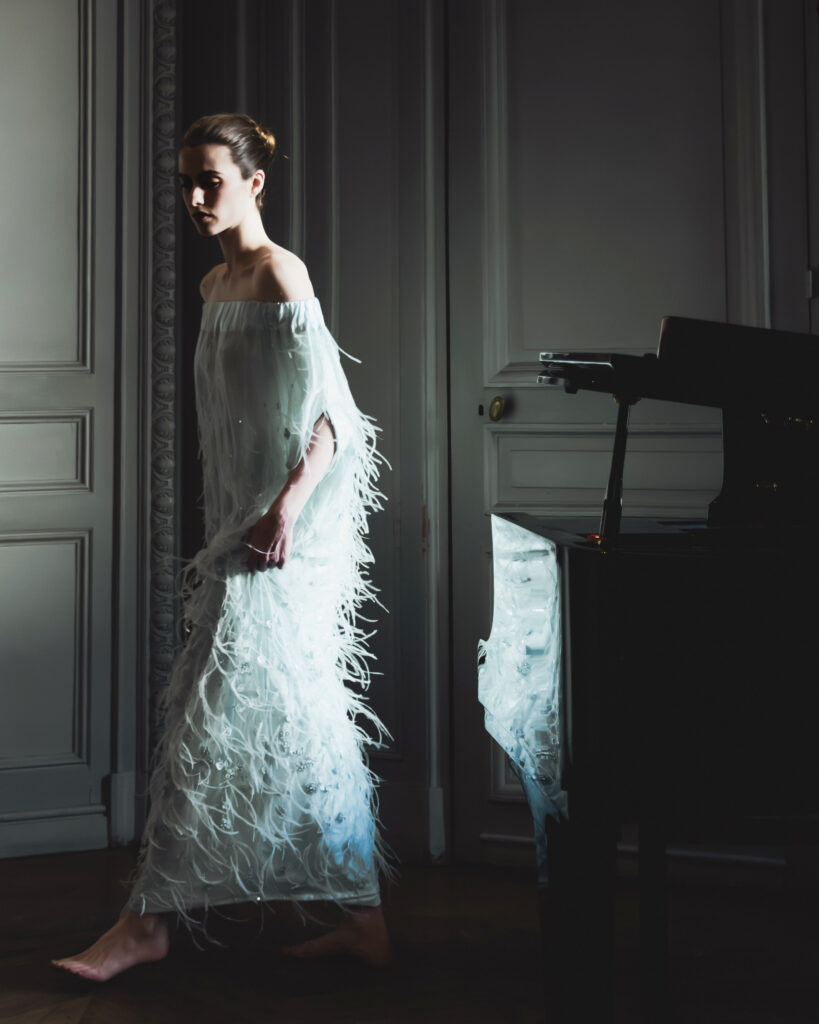
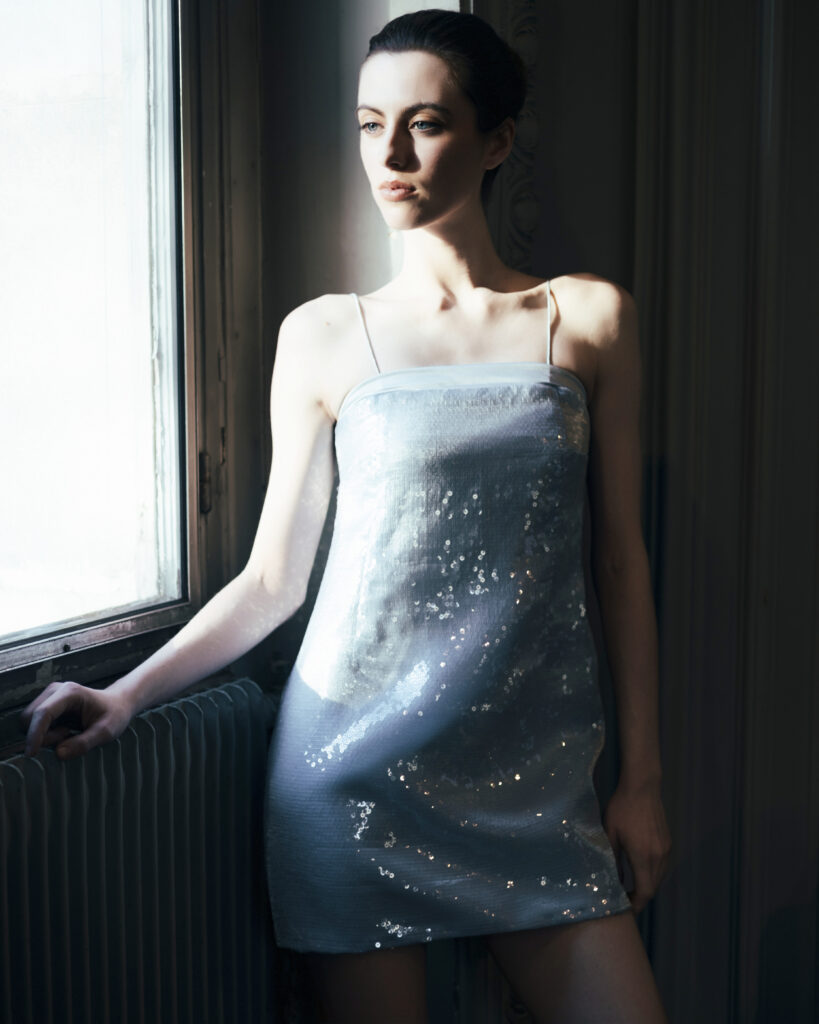
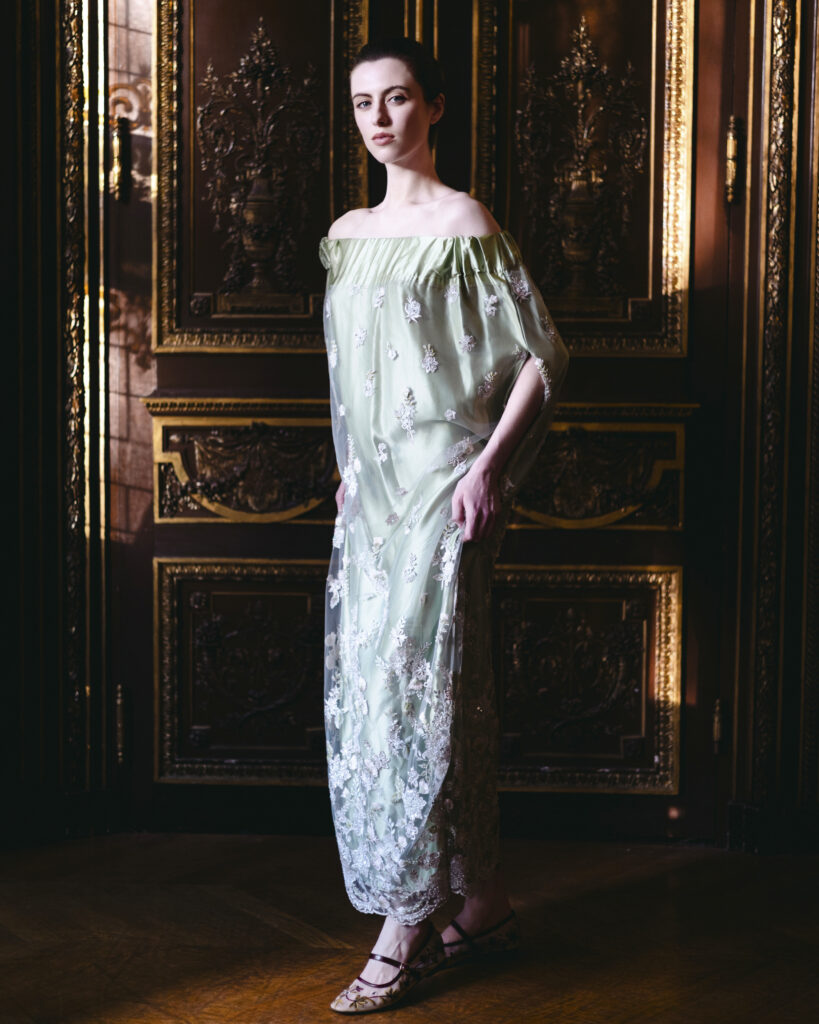
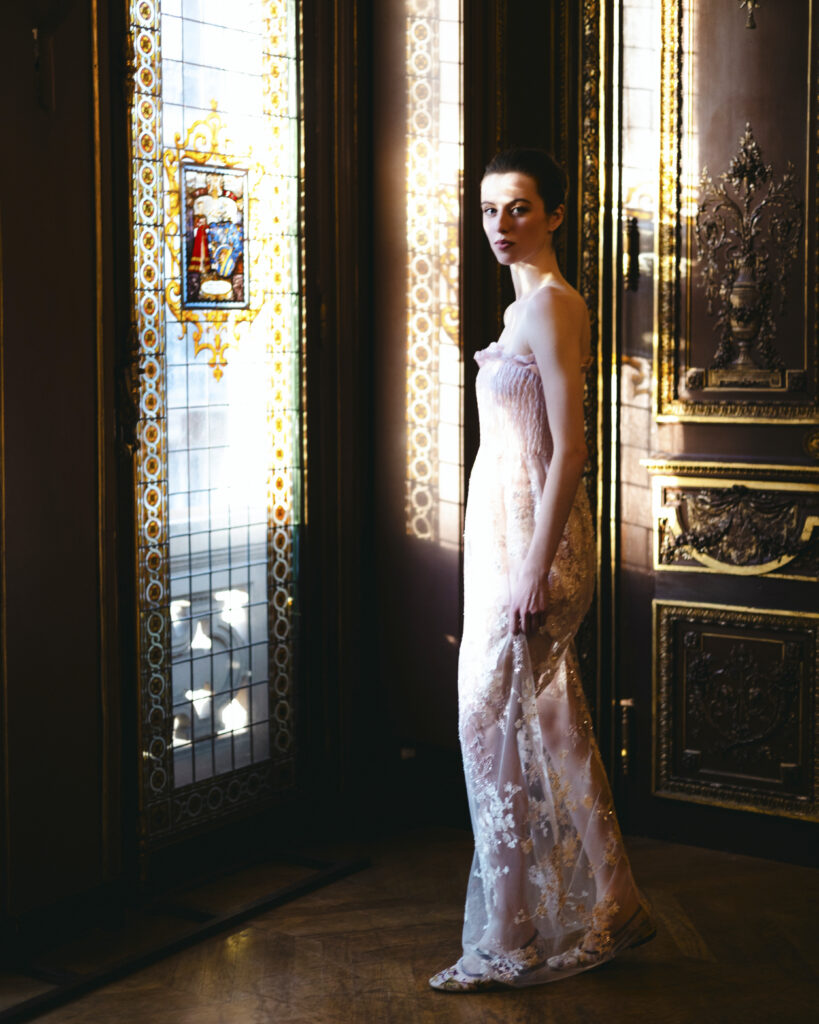
L’ONIRÉE sources its materials from three European suppliers, each selected for a specific fabric property rather than for the prestige of their catalog. Calais lace, whose mesh structure derives its shape from the architecture of the thread rather than the weight of the fabric. A silk satin woven in Como, whose reflective surface reflects the body’s movement without amplifying it. Handcrafted sequins from Spain, whose hand-shaped form produces a diffused luminosity—less reflective surface, more depth.
These materials are tracked individually. Not just in terms of certification of origin, but also in terms of the manufacturing process: we know which garment uses which fabric, which supplier it came from, and in what order it was processed.
Stability vs. Seasonality
The brand’s positioning is as much structural as it is editorial. L’ONIRÉE does not organize its collections by season. The first is called “permanent”—a term that in this context refers less to a fixed catalog than to a philosophy of longevity: pieces designed to endure the time they are in use, not to coincide with a fashion show schedule.
This approach fundamentally changes the very concept of the micro-collection. Whereas a limited edition in traditional ready-to-wear plays on urgency and commercial scarcity, the micro-series here stems from a manufacturing constraint: producing more would require fragmenting the process, delegating, and subdividing. L’ONIRÉE refuses this division.
The question remains open for a firm founded in 2026: how long can this studio-based approach hold up as demand grows? The answer lies with the founder. For now, Soufflé responds in a different way—through the consistency of its work and the endurance of its craft.
The three ingredients of Soufflé
— Calais lace: made on Leavers looms, a technique that produces a three-dimensional mesh fabric. Its lightness is not merely a visual effect but a mechanical consequence of this structure.
— Silk satin, Como: woven in a satin weave (with a minimum of five threads per repeat). The sheen of the surface is a result of the way the threads are arranged, not a finish.
— Handcrafted sequins, Spain: The handcrafted process creates an uneven surface that diffuses light rather than reflecting it uniformly. The visual effect is less about “sparkle” and more about “depth.”
Cette publication est également disponible en :

