
Luxury goods and tourism continue to underpin the high street market
According to the annual study by international commercial real estate consultancy Cushman & Wakefield, Main Streets Across the World, “85% of the 500 or so locations analyzed by Cushman & Wakefield in 65 countries recorded an increase or stability in their rental value, while the global market as a whole saw an annual increase of 0.7%. While the trend is slightly positive, this figure is significantly lower than the growth of around 2% recorded the previous year,” says Christian Dubois, Managing Director of Cushman & Wakefield France.
Various factors may explain this slowdown, such as the worsening geopolitical unrest in the Middle East, the persistence of the Russian-Ukrainian conflict, or the impact of falling commodity prices on certain economies that are highly dependent on these resources (Russia, Colombia). That said, lower energy costs have also helped to keep inflation at very low levels, contributing to gains in household purchasing power and a recovery in consumption in several countries or regional groupings. Finally, the boom in international tourism continued to play a decisive role. “All the more attractive as the euro and yen depreciated sharply, major cities in Europe and Japan were the main beneficiaries of strong tourism, alongside major cities in South-East Asia and Oceania, such as Seoul and Sydney. The windfall represented by the spending of ever-increasing numbers of Chinese visitors remains particularly significant, prompting luxury groups to consolidate their network or increase their presence in the best locations of the world’s main tourist destinations”, explains Christian Dubois.
While demand for luxury goods is one of the main drivers of rental value growth worldwide, the sector’s difficulties have, conversely, weighed heavily on China’s domestic market and Hong Kong’s shopping arteries. Illustrating, among other things, the impact of anti-corruption measures adopted by the Chinese authorities, rental values, for example, fell by almost 14% between 2014 and 2015 in Causeway Bay after the 6.8% decline already recorded the previous year. The balance of power between lessors and lessees has thus shifted to the advantage of the latter, with some brands renegotiating their leases in parallel with the area reductions made by others to improve the profitability of their outlets. The decline in Causeway Bay has enabled New York’s 5th Avenue to consolidate its position as the world’s most expensive shopping thoroughfare, with rental values rising by a further 4% year-on-year. The trend also remained positive in several other major American cities (+23% on Rodeo Drive in Los Angeles, +13% on Union Square in San Francisco, etc.) which, in addition to benefiting from the country’s strong economic growth and despite the rising dollar, also benefited from the increase in the number of foreign visitors.
@shutterstock
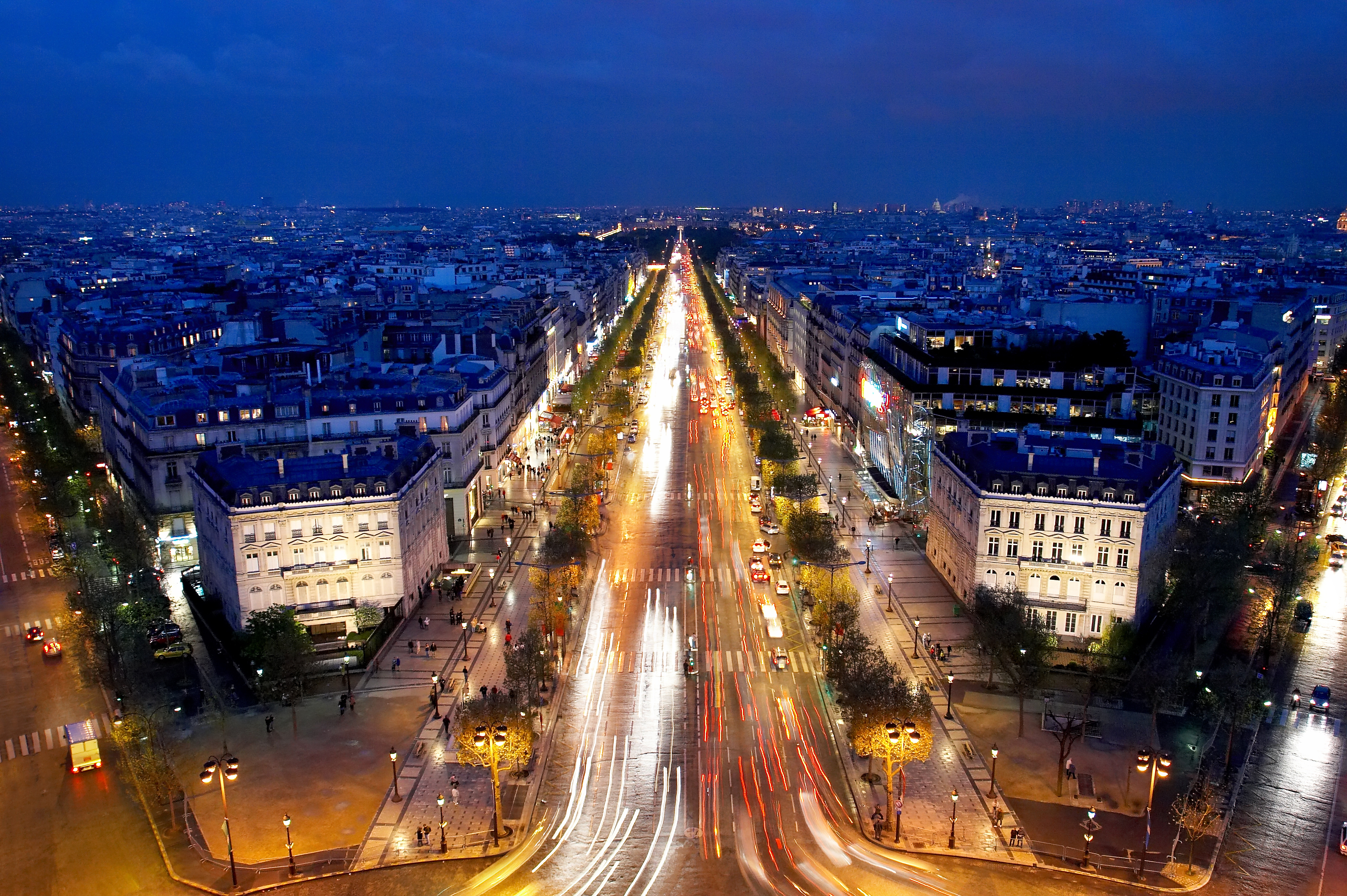
In Europe, the Champs-Élysées remains the most expensive shopping street, ahead of London’s New Bond Street, even though its prime value has plateaued at €18,000/m²/year (ZA) since 2013, and has risen significantly in the British capital. However, this stability applies above all to the even-numbered side – the most expensive – of the avenue. Values have risen sharply on the odd side, with the best locations now trading for over €10,000/m²/year. “The gap with the other side has narrowed thanks to a number of significant transactions, such as the sale of the Best Mountain store to Dubail, following the inauguration a year ago of the Longchamp flagship a few steps away. Together with the recent openings, on the even-numbered sidewalk, of Tiffany & Co and Tag Heuer, these two moves confirm the avenue’s move upmarket; a trend that should soon be accentuated by the remarketings carried out in the wake of major acquisitions, such as Thor Equities’ purchase of the Queen, at n°102” indicates Christian Dubois. In the meantime, the Parisian arteries dedicated to luxury boutiques are likely to see occasional increases in value. The number of new projects in this area is increasing, testifying to the vitality of a market in which the Rue Saint-Honoré is one of the main driving forces. A prime target for new foreign brands (Tory Burch), the scene of the rebirth of historic brands (Paco Rabanne) or the expansion plans of major luxury groups (Alexander McQueen, Dior Parfums), the sector saw its prime value rise by 20% over the year. These groups have also consolidated their position and optimized their network of boutiques in other areas, as in the case of Richemont. Montblanc, for example, has just taken over the Eden Park store at 12 boulevard des Capucines, after selling 7 rue de la Paix to Piaget – another Group brand. “Following the openings of Bucherer, Cartier, TAG Heuer and Omega, this transaction confirms the overflow of the Paris luxury goods market outside its historical perimeter; a trend that could be accentuated by new moves underway in Le Marais, following the openings of Moncler, Givenchy, Fendi, Gucci and Valentino stores on rue des Archives,” continues Christian Dubois.
Other movements testify to the profound changes underway in Le Marais, with the confirmed arrival of Italian food chain Eataly and the continued repositioning of BHV, the multiplication of pop-up stores and the emergence of new brand boutiques (Lipault). Also benefiting from strong tourist numbers, other districts remain real must-sees in the capital’s market. Such is the case of Saint-Germain-des-Près, where news in 2016 will be dominated by the restructuring of the Marché Saint-Germain, offering a new showcase for a number of high-profile brands such as Uniqlo and Nespresso; and boulevard Haussmann, a highly strategic sector whose activity is fuelled by the disposal of strategic locations (e.g. La Halle and Benetton stores) and the pursuit of department store repositioning and expansion projects. However, changes in regulations concerning Sunday opening will undoubtedly be one of the main growth drivers for all the capital’s flagship districts. “Benefiting first and foremost the new international tourist zones, the entry into force of the Macron law will enable the capital to consolidate its position as a major tourist destination. As a result, rental values for the best locations on some of Paris’s main thoroughfares could rise, boosting the interest of international retailers and new entrants,” points out Christian Dubois.
Strong demand from luxury retailers and a shortage of prime space have also driven up rental values in other European metropolises. In London, for example, rental values on New Bond Street rose by 12% year-on-year, enabling this thoroughfare to close the gap with the Avenue des Champs-Elysées. The increase was even more marked on Italy’s two main luxury thoroughfares, with a 25% rise on Via Montenapoleone in Milan and a 26.7% increase on Via Condotti in Rome. But luxury demand is not the only factor driving rental value growth in Europe. Generally speaking, its best locations continued to be the target of a large number of more or less high-end brands seeking to expand outside their home base, whether European (such as Rituals or Harmont & Blaine in Paris) or from other continents (Coach or J. Crew in Paris, Arc’Teryx in London, etc.). This strong demand has also been expressed in some of the markets most affected by the crisis: after several years of decline, rental values in some of the best locations in Spain and Portugal have risen sharply over the last twelve months (+6.1% on Avenida de Liberdade in Lisbon, +10% on Gran Vía in Madrid, +11.8% on Rambla de Catalunya in Barcelona, etc.). The trend is even spectacular in Ireland, with Dublin’s Grafton Street recording the highest year-on-year increase in Europe (+28%). On the other hand, the main shopping streets in Russia and the Ukraine, grappling with major geopolitical unrest and economic uncertainty, recorded significant declines (-43.7% on Tverskaya in Moscow, -36.2% on Khreschatyk in Kiev).
The expected acceleration of the economic recovery and the scarcity of prime supply suggest that rental values could continue to rise in 2016 in Europe’s largest cities. “The scarcity of good locations and rising values should encourage some retailers to explore new territories. In particular, they will be focusing on arterial roads close to the main thoroughfares, with good visibility and strong flows of local consumers and tourists. The trend, already observed in London and Paris, could well extend to other cities or other main roads in the two capitals, even if the dynamism and changing geography of the Paris retail market are likely to be impacted by the terrorist attacks of November 13,” concludes Christian Dubois.
| top 10 most expensive artworks in the world | ||||||
| Rank
2015 |
Rank
2014 |
Country | City | Artere/site | €/m²/year | Evolution % local currency |
| 1 | 1 | United States | New York | Upper Fifth Avenue | 33 812 | +3,6 |
| 2 | 2 | Hong Kong | Hong Kong | Causeway Bay | 23 178 | – 13,9 |
| 3 | 3 | France | Paris | Champs-Élysées | 13 255 | 0,0 |
| 4 | 4 | United Kingdom | London | New Bond Street | 12 762 | +12,0 |
| 5 | 6 | Italy | Milan | Via Montenapoleone | 10 000 | +25,0 |
| 6 | 8 | Switzerland | Zurich | Bahnhofstrasse | 8 643 | 0,0 |
| 7 | 5 | Japan | Tokyo | Ginza | 8 520 | +3,2 |
| 8 | 7 | South Korea | Seoul | Myeongdong | 8 519 | 0,0 |
| 9 | 9 | Austria | Vienna | Kohlmarkt | 4 620 | +4,1 |
| 10 | 11 | Germany | Munich | Kaufinger/Neuhauser | 4 440 | +1,4 |
| Source: Cushman & Wakefield (table lists only the most expensive artery in each country – full data available in the study) | ||||||
Cette publication est également disponible en :

