A few weeks ago, we flew off to a gourmet’s paradise: the Parma region, to discover Parmigiano Reggiano and Parma Ham. The trip took us behind the scenes of the production of these two luxury products that delight our taste buds.
To get to this magnificent region and bourgeois town of Parma, you’ll have to travel to Milan, Italy’s cultural and economic powerhouse. Parma is just over an hour’s drive away.
Parma is a city haunted by its history, its illustrious kings, queens and emperors such as the Farneses, the Bourbons and Napoleon. This city, which has remained at the heart of all attention since the Middle Ages, is still today a wealthy, middle-class town. Parma owes this wealth to two treasures: Parmesan cheese and Parma ham.
We begin our culinary journey in a renowned Parma trattoria called Cocchi , where we taste local specialities to accompany the Parmesan and Ham.
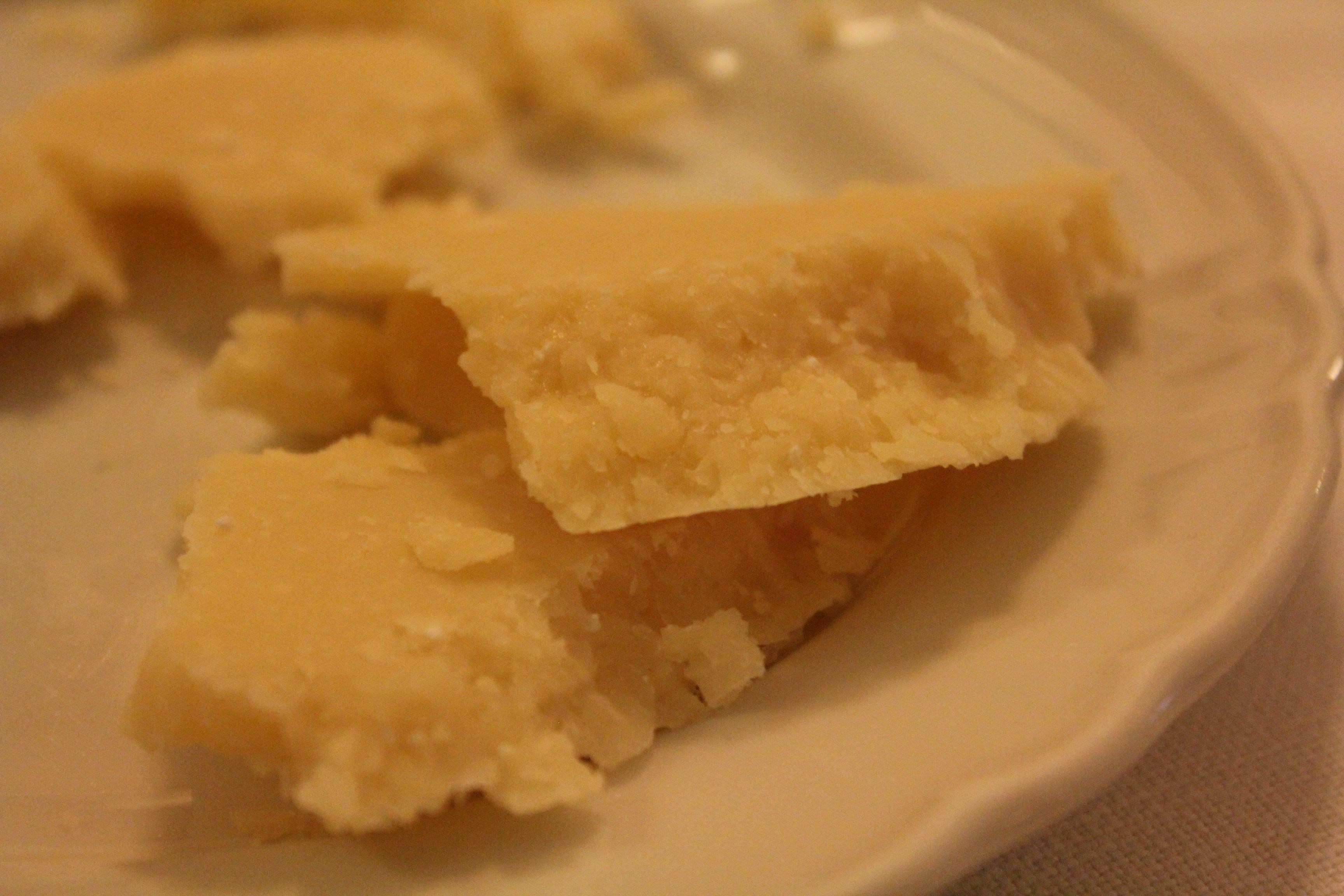
Parmigiano Reggiano
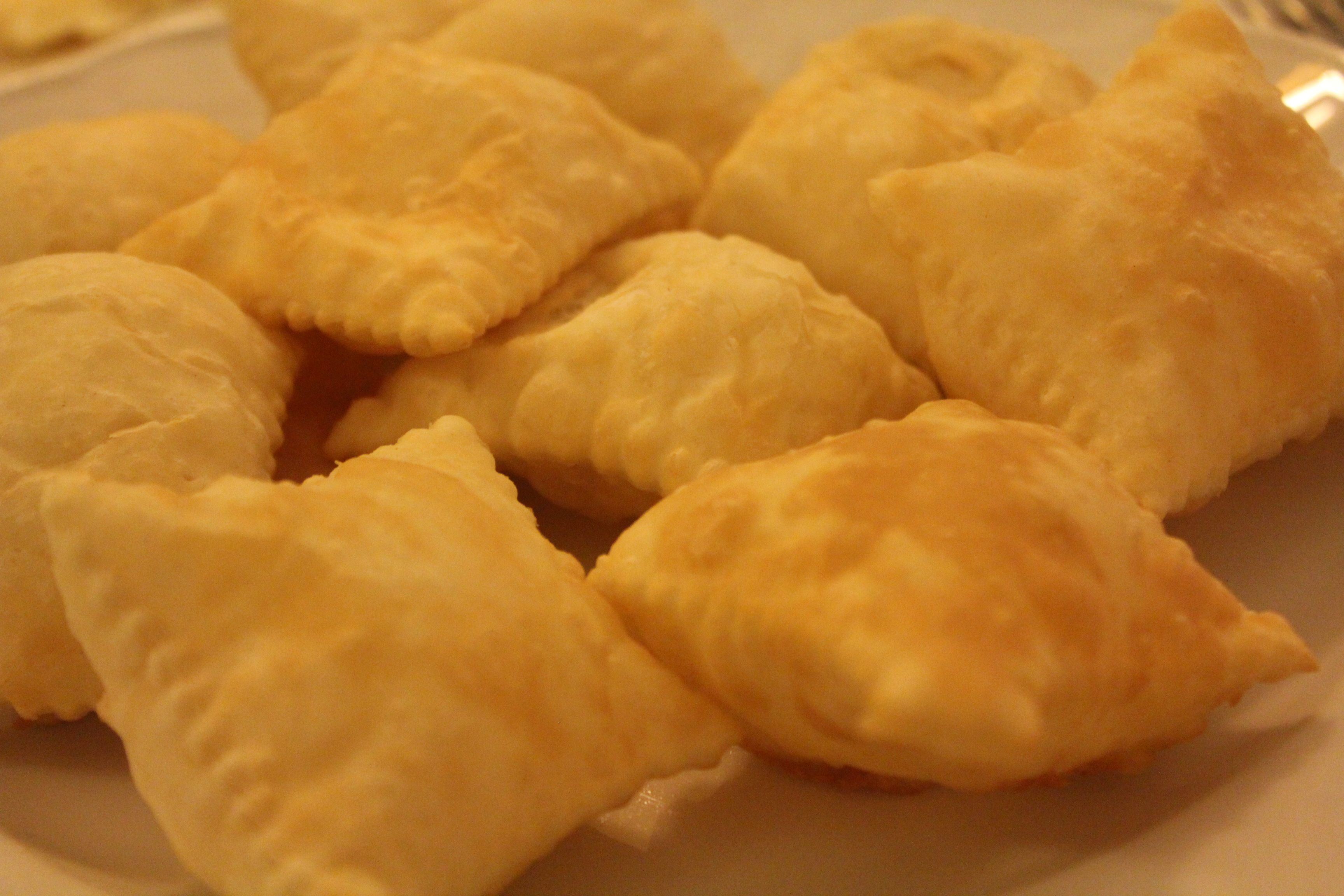
Torta fritta
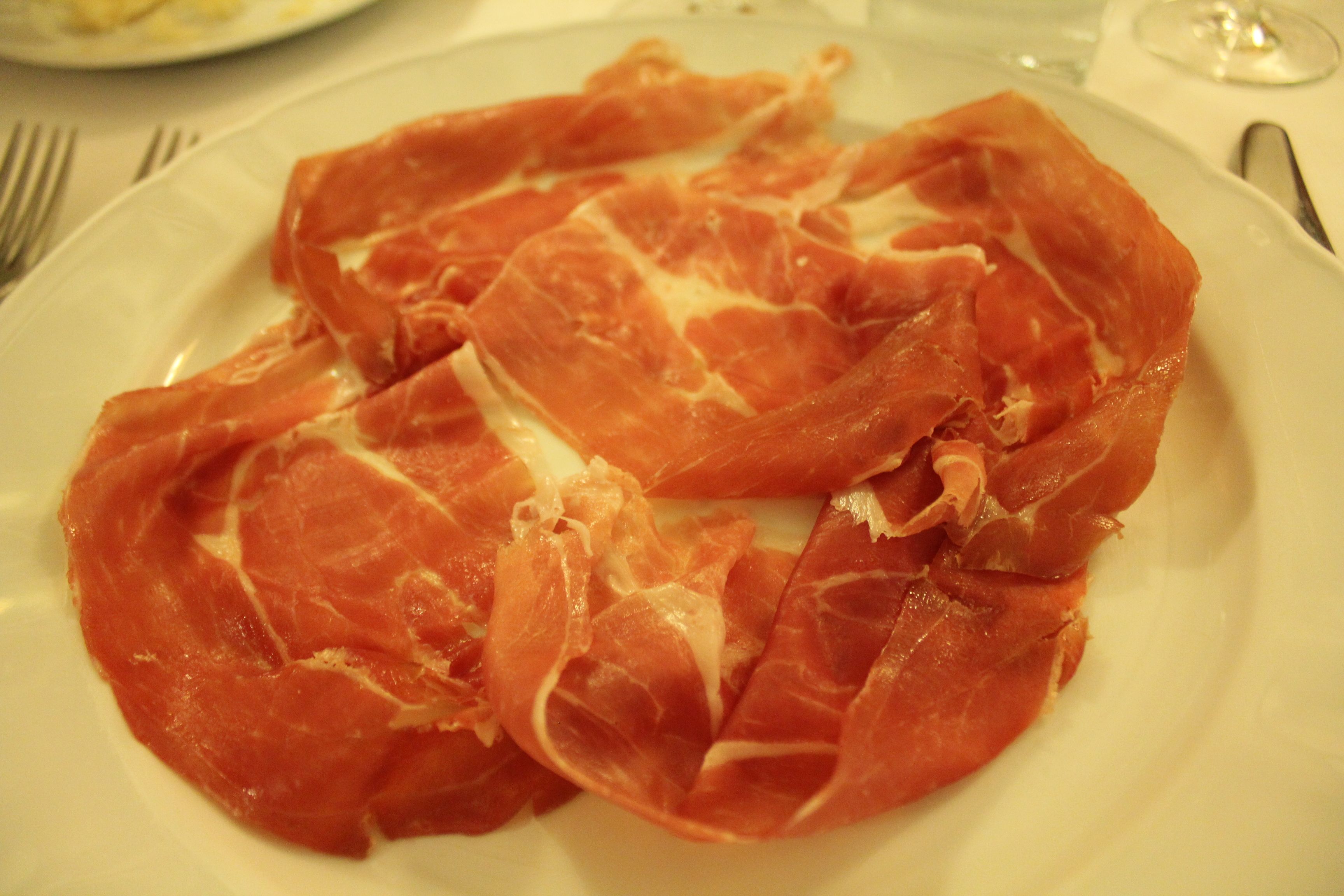
Parma ham
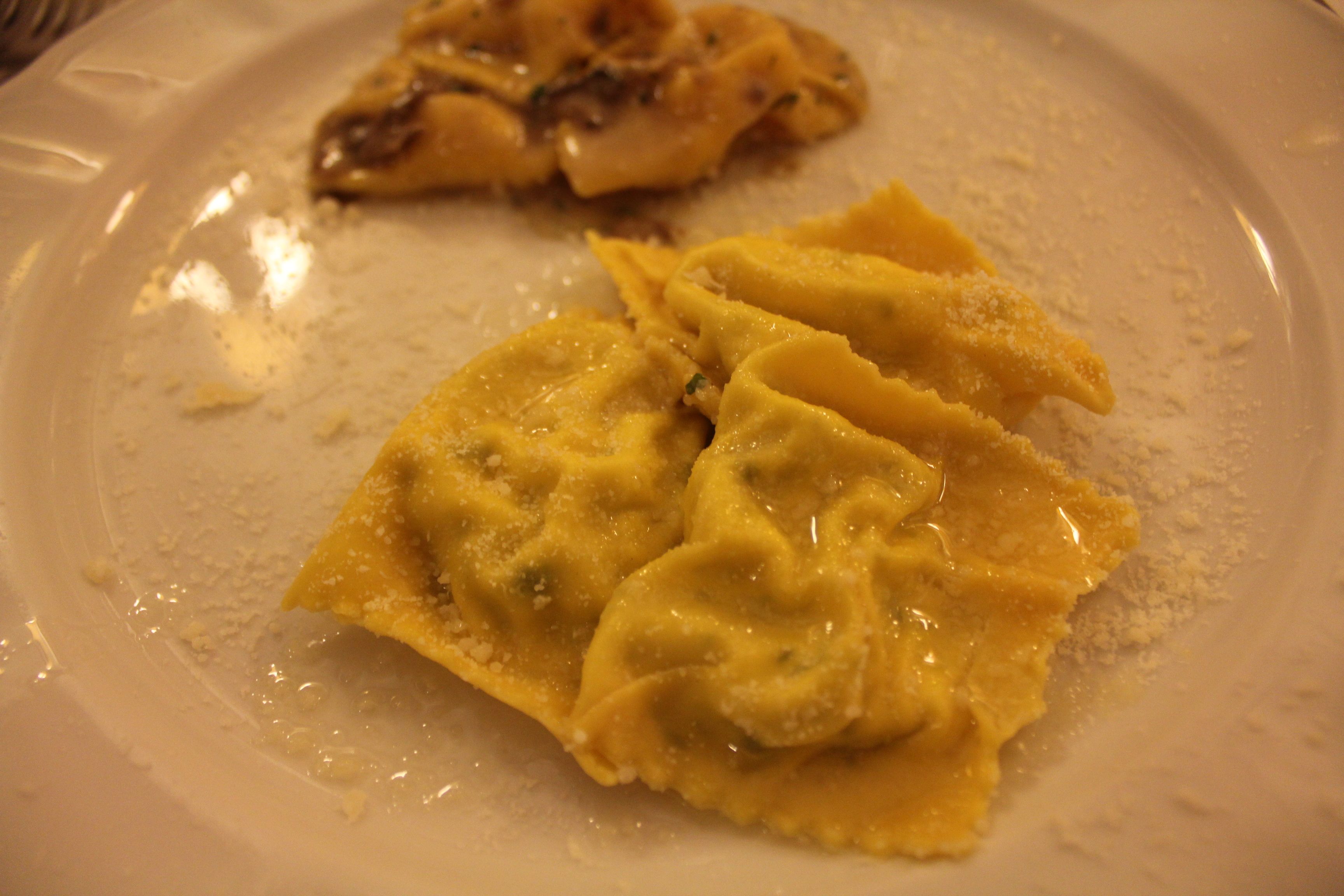
Ravioles de la Saint Jean
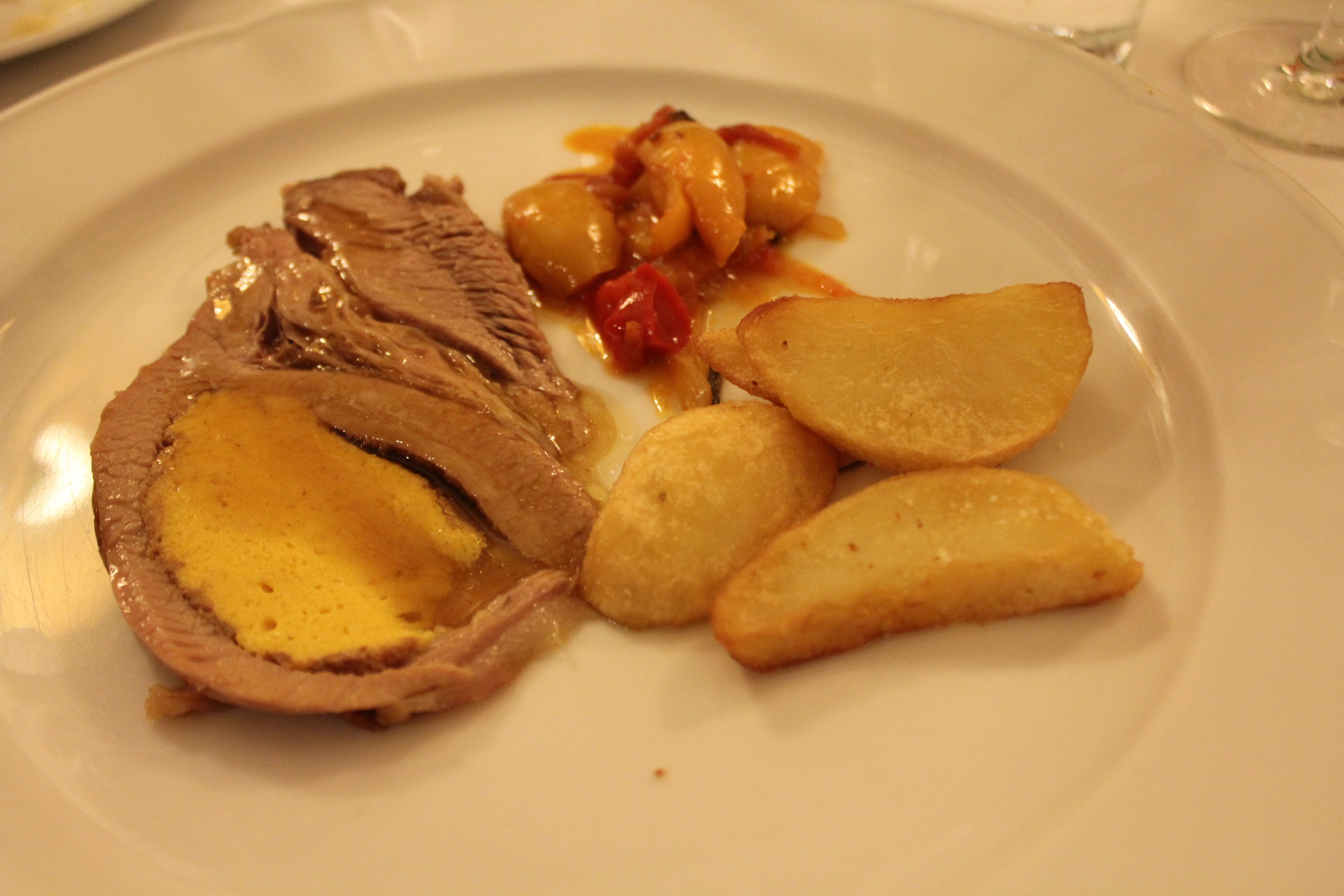
Vitello
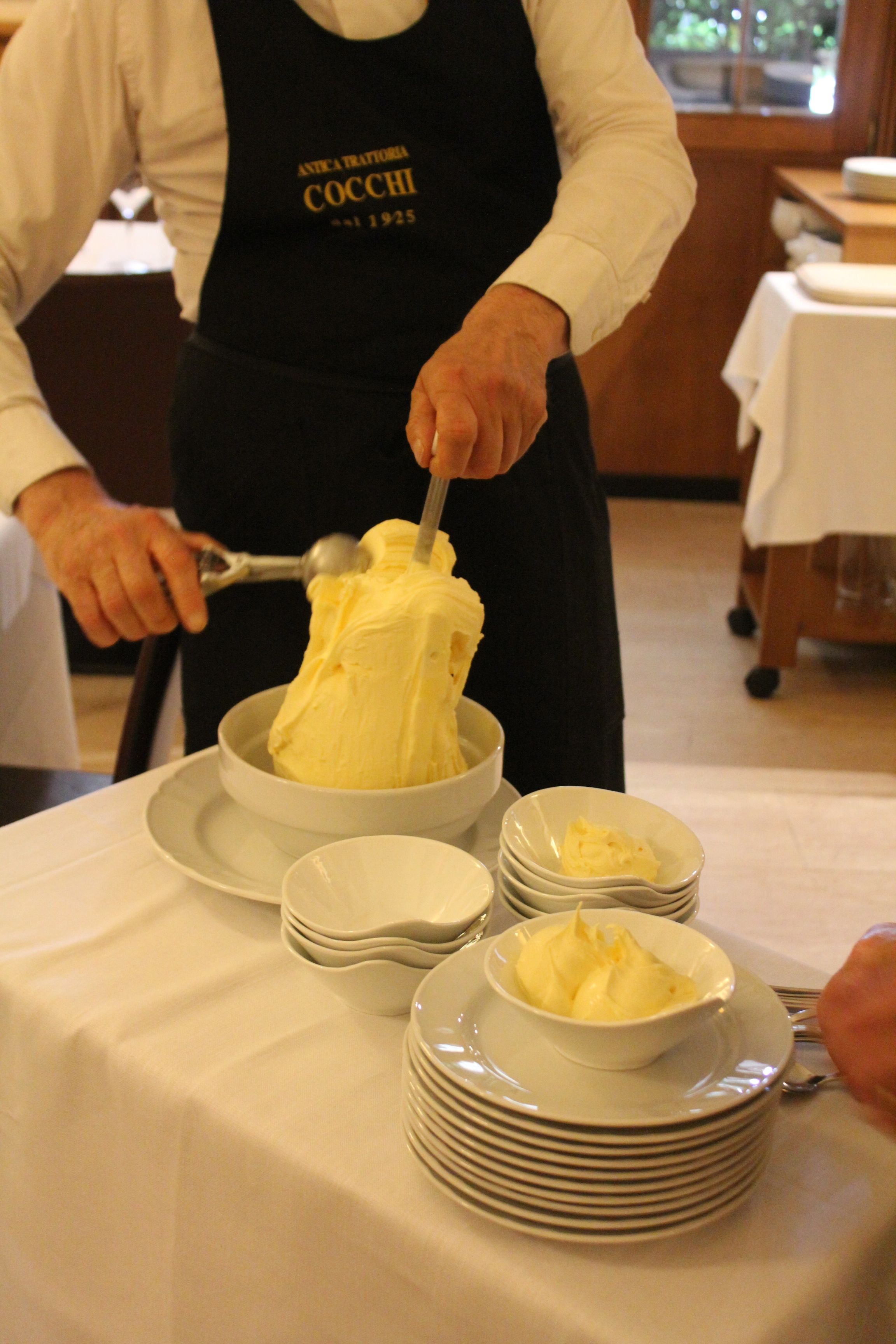
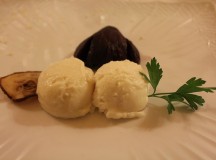
Gelato alla crema
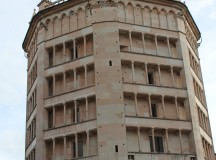
This is followed by a most instructive stroll through the city of Parma. We start at the Teatro del Reggio, where Italy’s most important operas have been performed for centuries, and the illustrious Palazzo Farnese, where the city’s naumachia (spectacular naval battles) and other famous events were held. We also stop off at Parma’s famous cathedral to see the dome by Corregio, master of the Renaissance and trompe l’oeil.

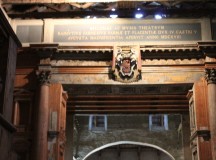
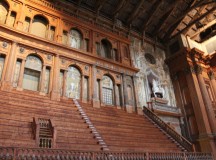
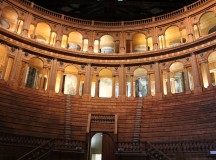
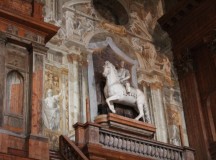
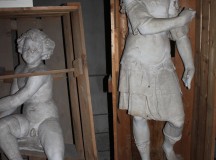
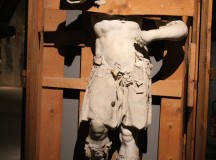
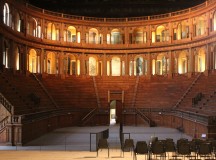
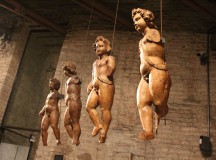
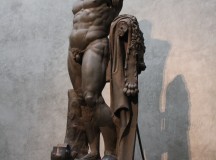


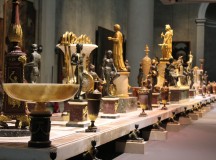


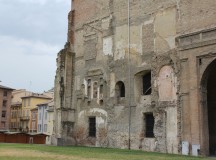
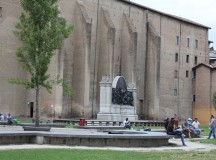

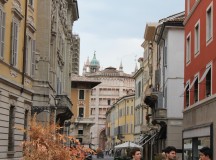
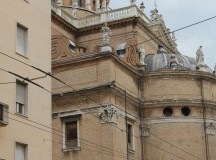
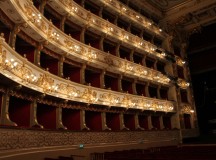
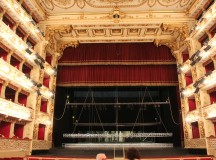

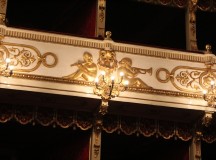
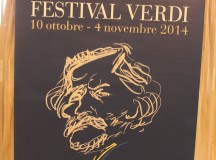
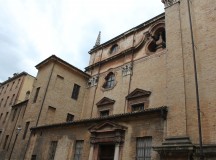
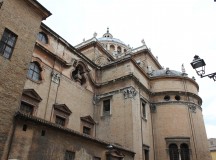
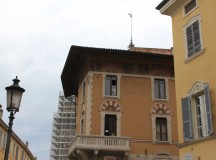
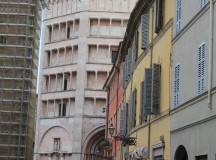
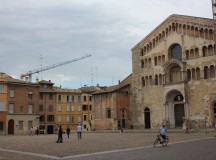


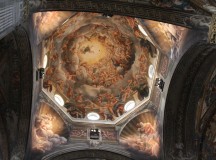
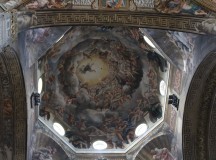


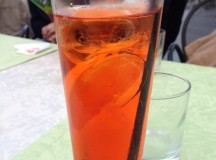
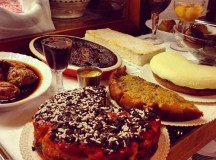
After a well-earned Spritz in the town’s central square, we’re off to sample other specialities at the Greppia restaurant.

The following day is devoted to discovering the Parmigiano Reggiano and Parma Ham production process.
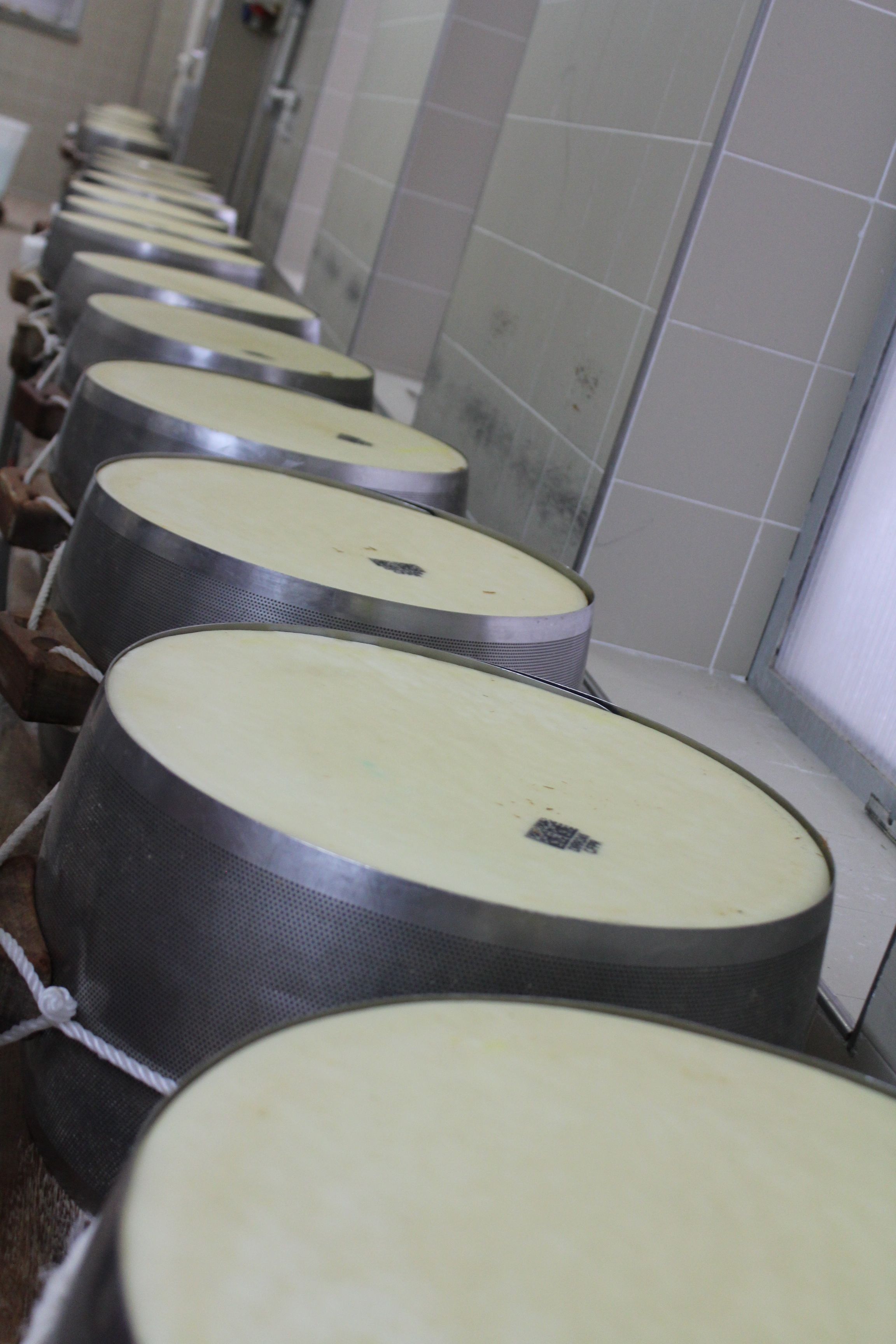
Visit a local farm to follow the morning’s production of Parmesan cheese.
Parmigiano Reggiano is a legend! It’s rooted in reality, in the cows, the fields, the land, the cheese dairies, the cellars and the men who make this king of cheeses. Italian-style pasta without its creamy, flavorful presence? With or without? But it’s night and day! It gives a truffle risotto an inimitable strength. As an aperitif, it cuddles the palate. It takes pride of place on cheese platters. It turns simple mixed salads into gourmet delights. Once a treat for a small elite, Parmigiano Reggiano has come a long way. Its nutritional benefits and the pleasure it brings are now within everyone’s reach. Its widespread popularity has brought it into every kitchen.
In France, we call it Parmesan. But there’s only one real Parmesan, authentic and 100% natural. It’s called Parmigiano Reggiano.
A hard, cooked, unpressed cheese with a long maturation period (24 months on average). This extended ripening (18, 22, 30 months and up to 48 months) gives it a stability that makes it the only cheese on board the Mir mission. Against all the odds, its nutritional capital, splendid taste and high digestibility remain unaltered. Other Italian cheeses, such as grana, from other areas, have the same form, but are not him. None can match Parmigiano Reggiano, both in taste and nutrition.
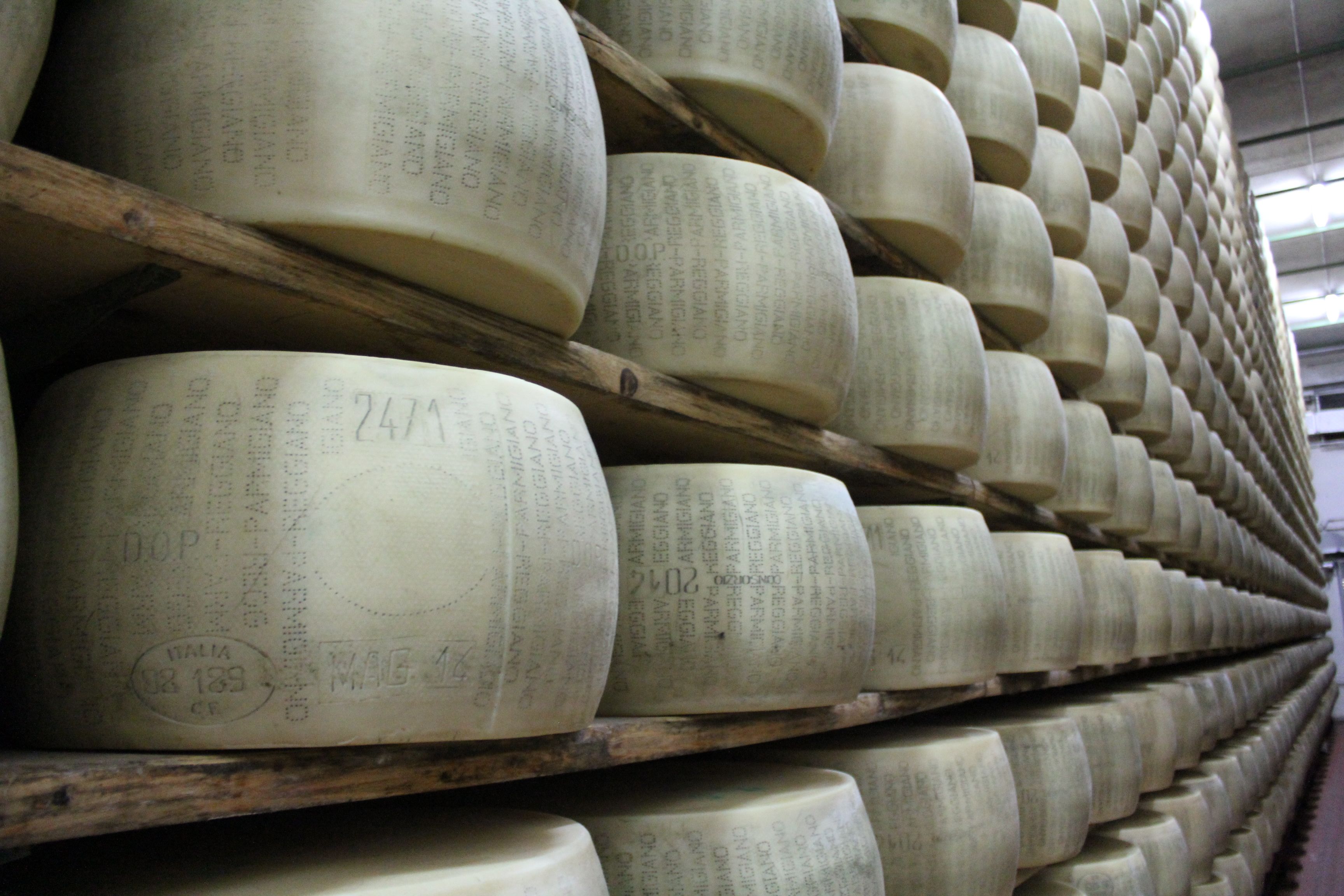
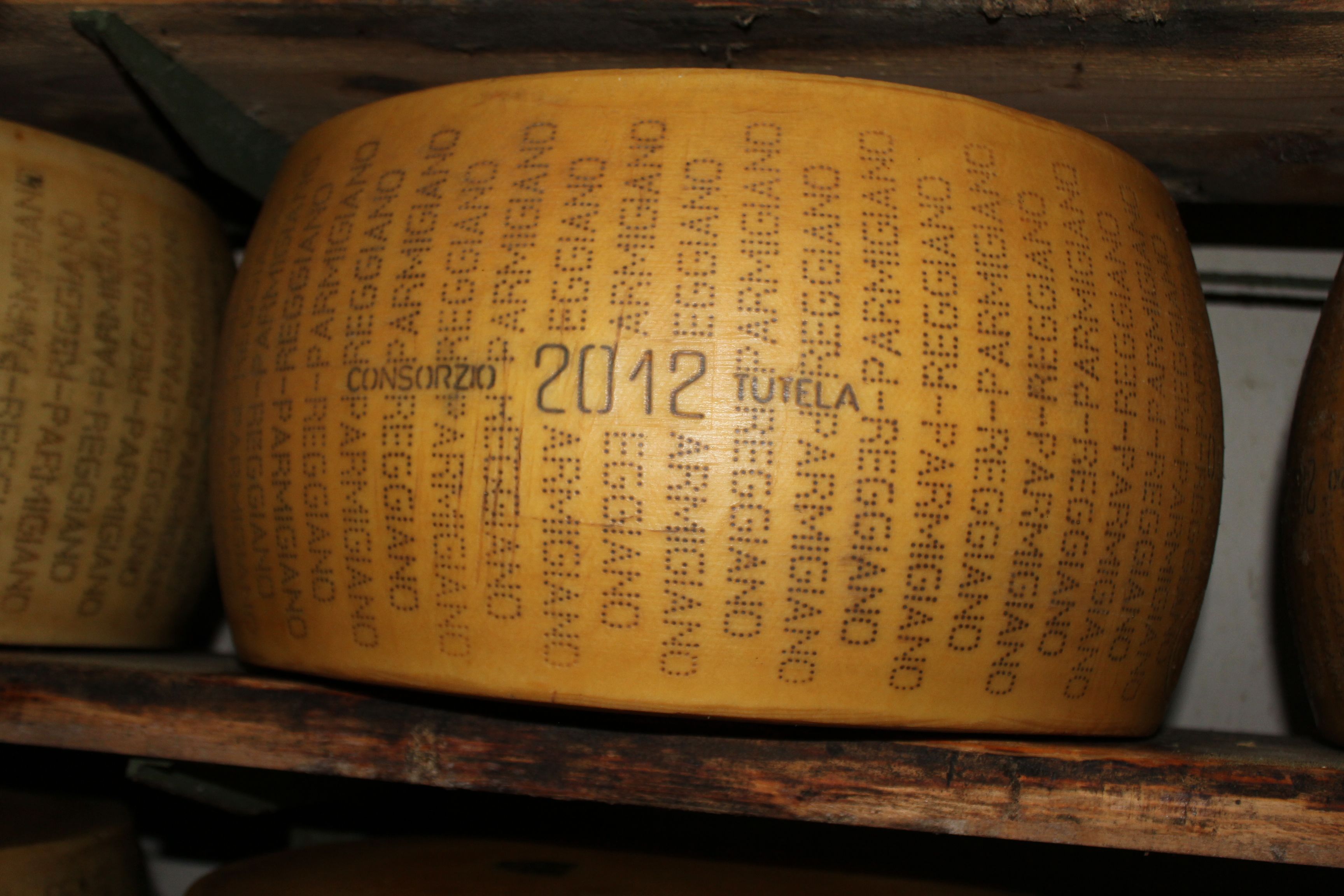
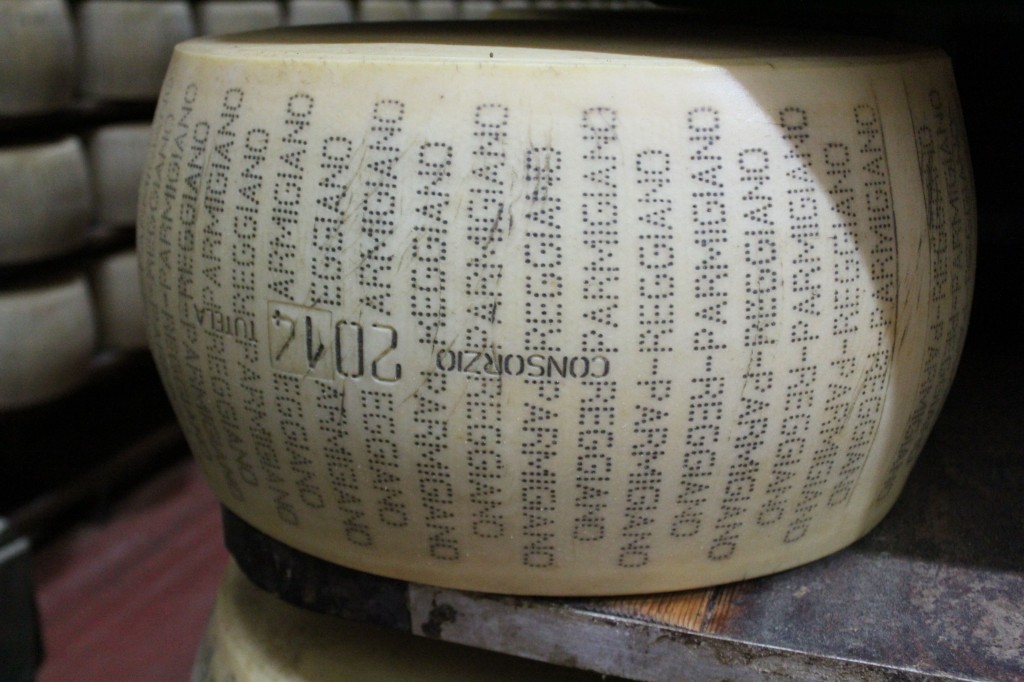
Its natural rind, pitted with dotted lines, is branded with the seal of the Parmigiano Reggiano Cheese Consortium, the pass of all Parmigiano Reggiano producers. It is a European D.O.P. cheese. Along the golden axis of marvellous products – just think of Prosciutto di Parma, the “king of hams”, or the Traditional Balsamic Vinegar of Modena and Reggio Emilia – for nine centuries, the way Parmesan cheese is made has remained unchanged: natural ingredients, unfailing artisan care. And time, more time.
Its history is the epic tale of inventive men and women careful to pass on the skills and know-how that are part of their bodies and their memories. It’s also a story of solidarity. The human chain is perpetuated: forage and milk producers, master cheesemakers and master ripeners, all combine their energy, generosity and openness to produce the best cheese in the world. Big words for a natural masterpiece. A true epic!
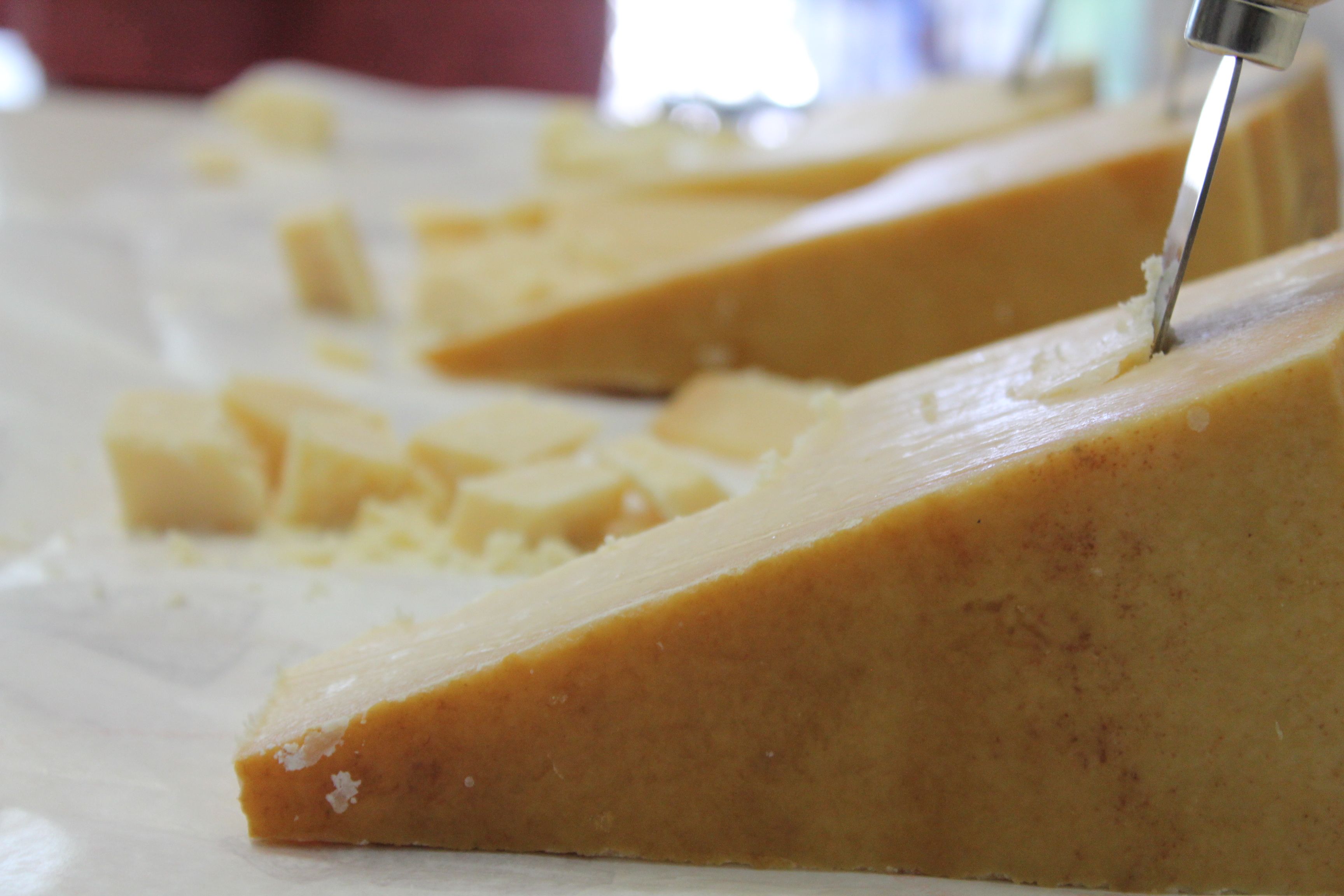
THE LONG CONFECTION OF PARMESAN
It’s not made, it’s made. Cheese dairies are developing an artisanal activity. Every stage of production is based on handwork, observation, experience and memory. All this in compliance with strict specifications and drastic hygiene rules.
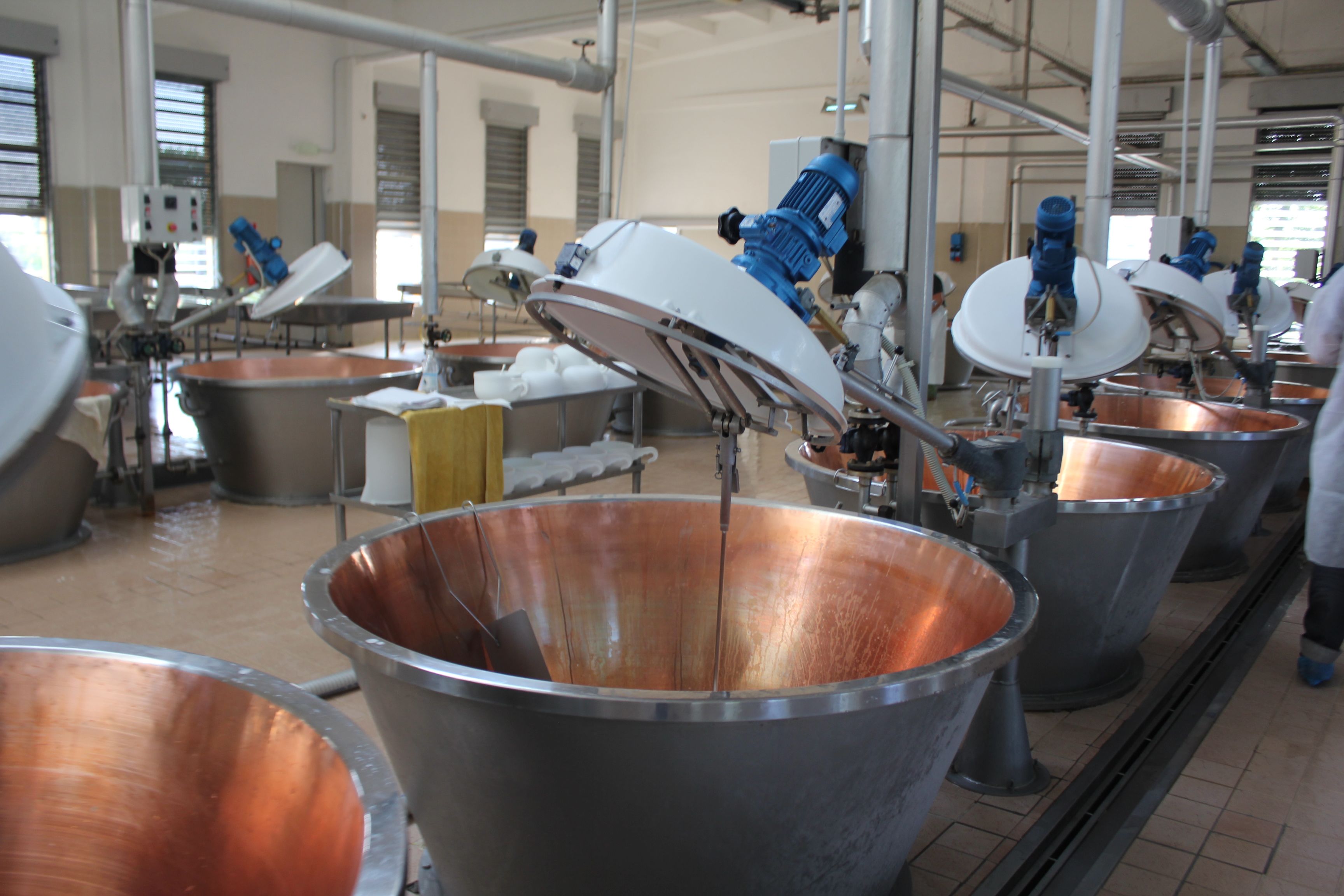
The beauty of the buildings, the instruments, the vats and the gestures used to make the cheese testify to a long passion and a taste for perfection.
1. Milk
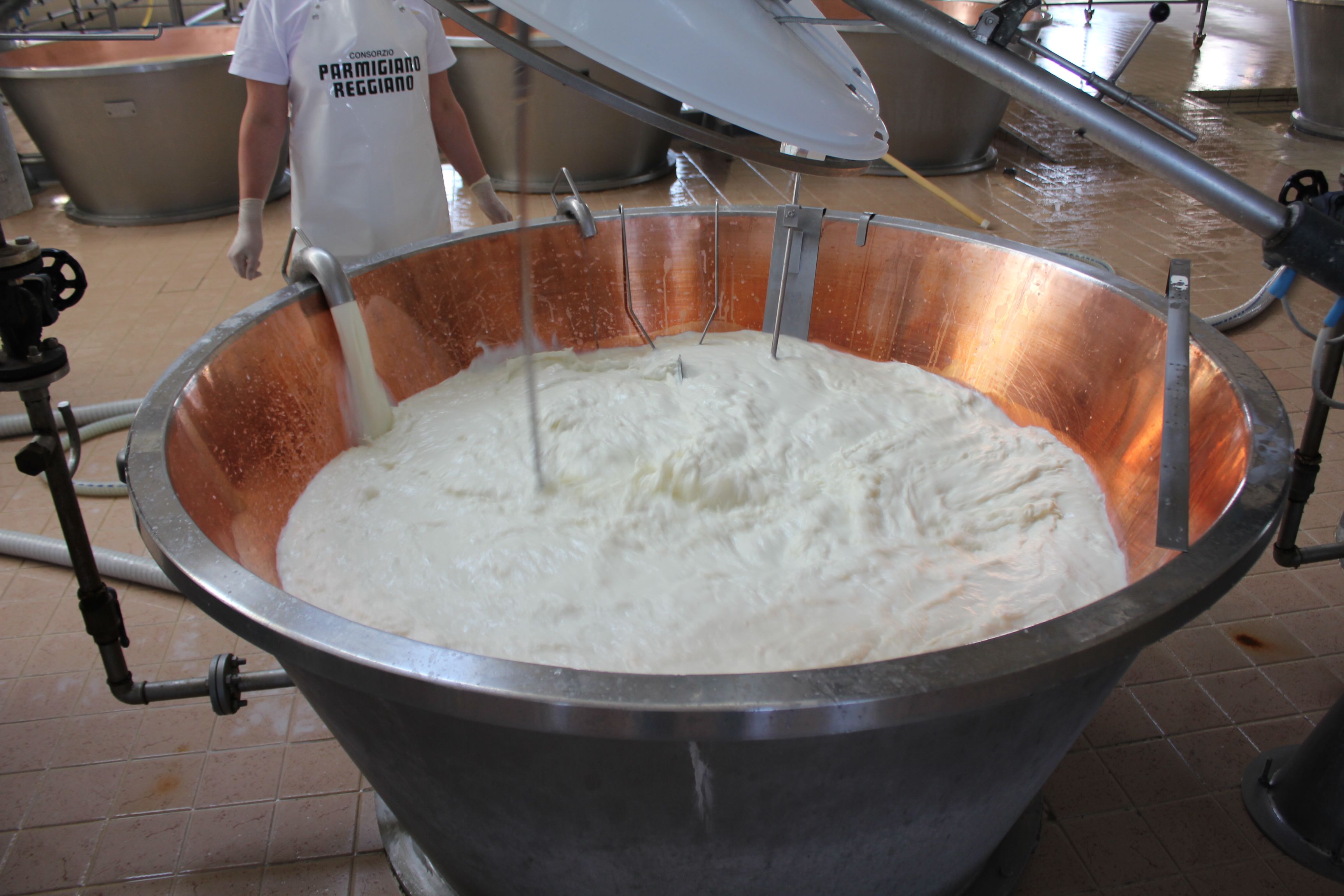
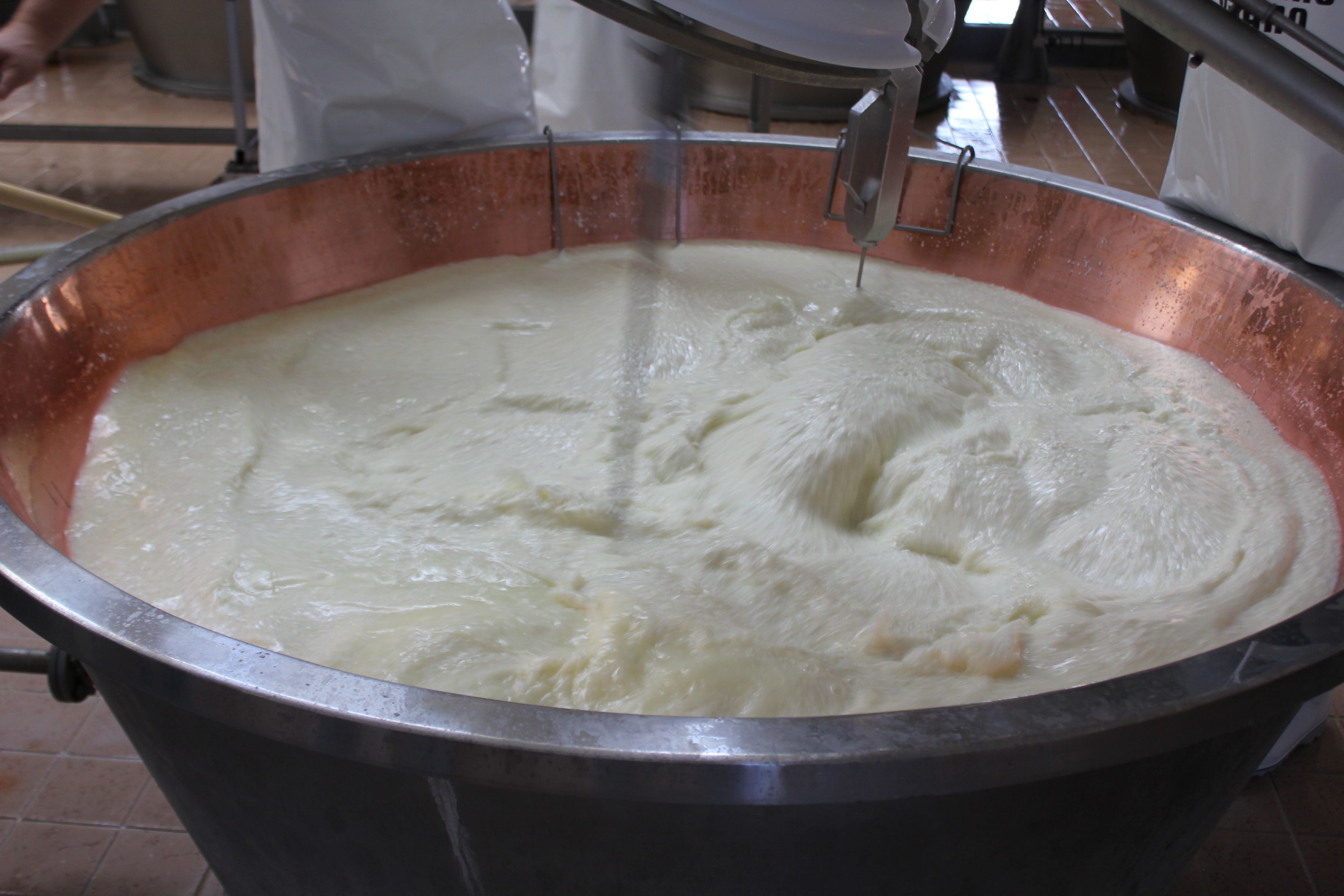
Milk from the evening milking, partially skimmed due to the natural skimming of fat, is mixed in copper cauldrons, in the shape of an inverted bell, with whole milk from the following morning.
2. Sero-ferment
Milk heated to 33-35°C receives the sero-ferment, a natural culture of lactic ferments obtained from the whey collected during the previous day’s production.
3. Natural rennet
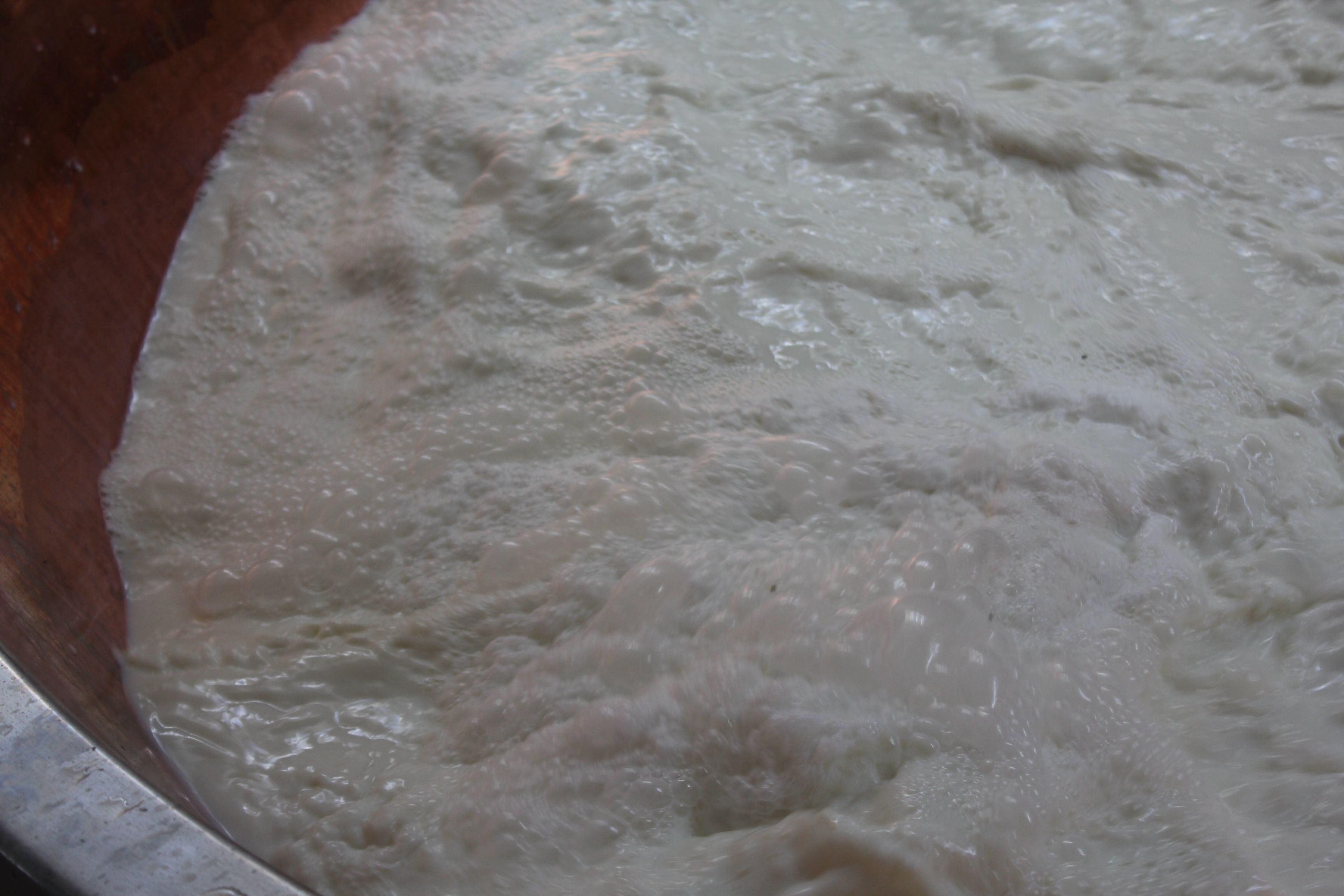
Rennet (a natural enzyme derived from the abomasum of unweaned calves) coagulates milk in 10-12 minutes.
4. Breaking the curds
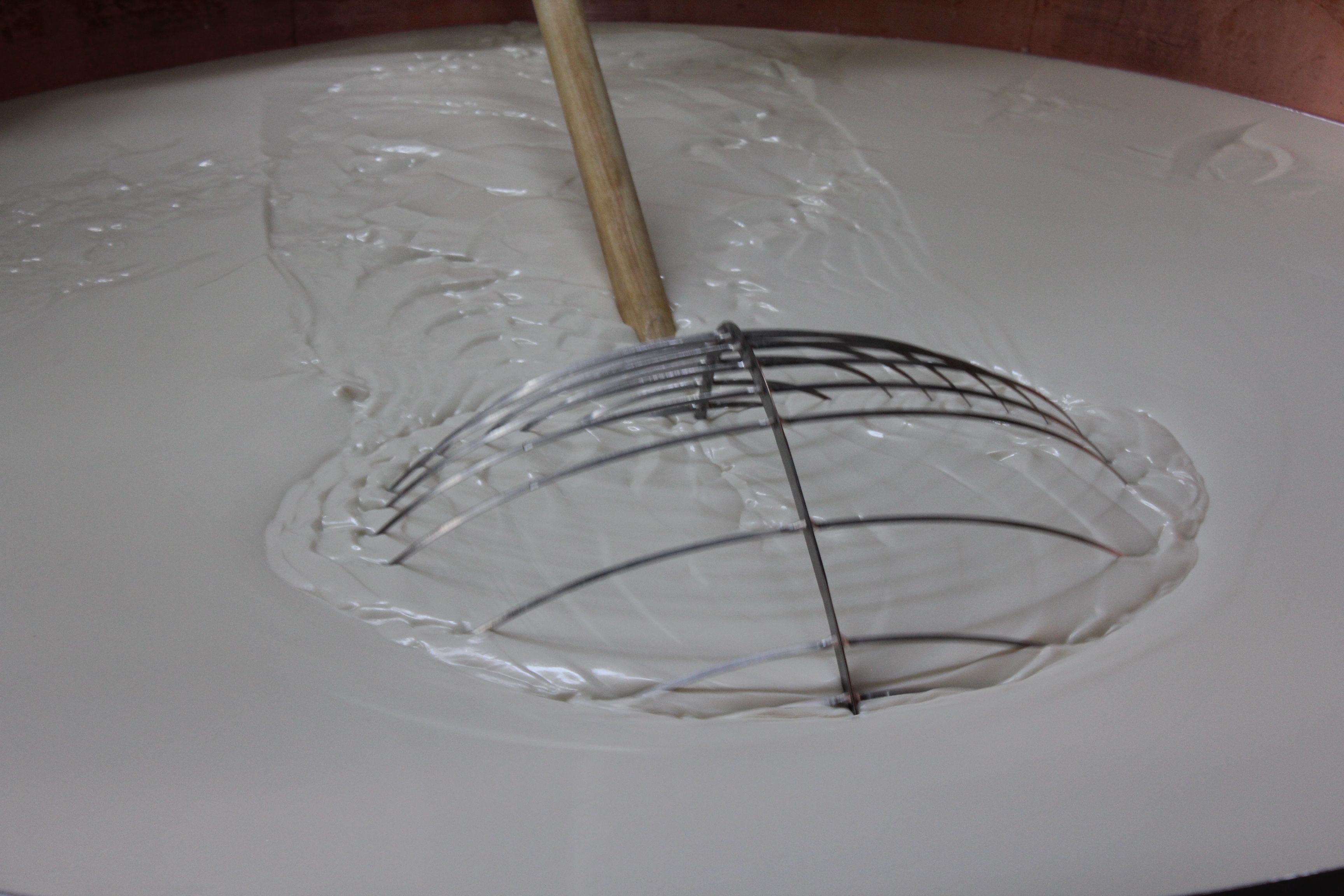
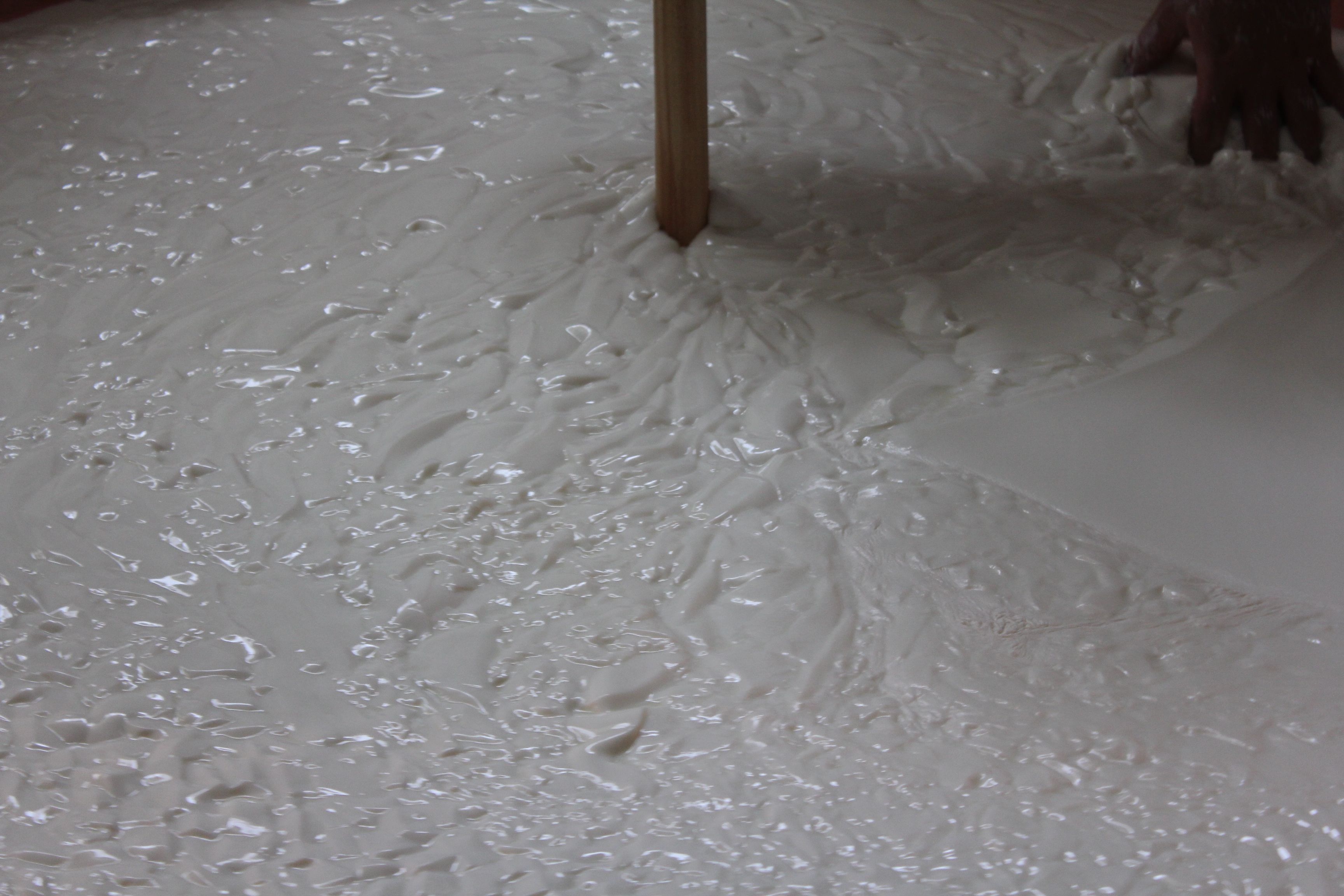
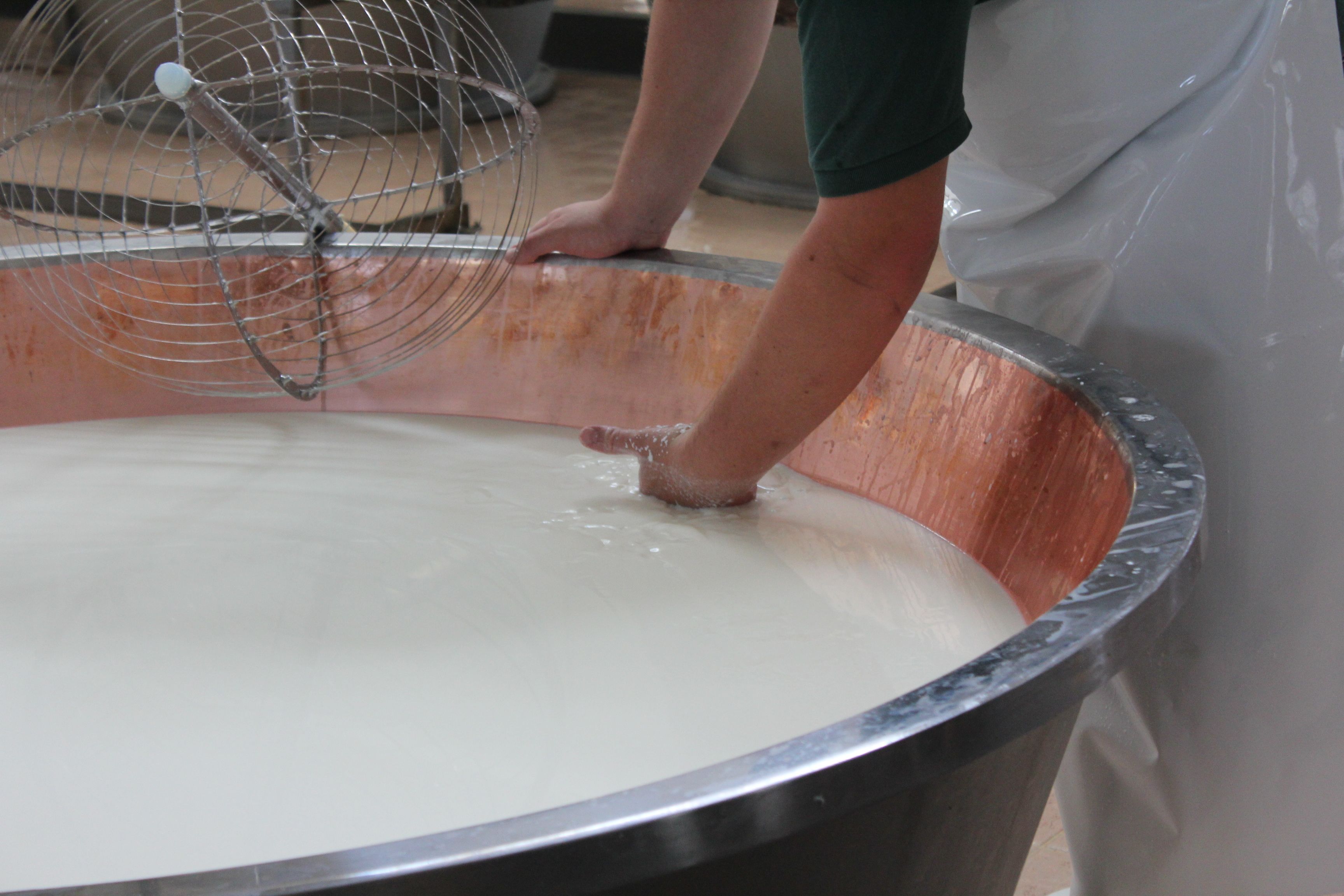
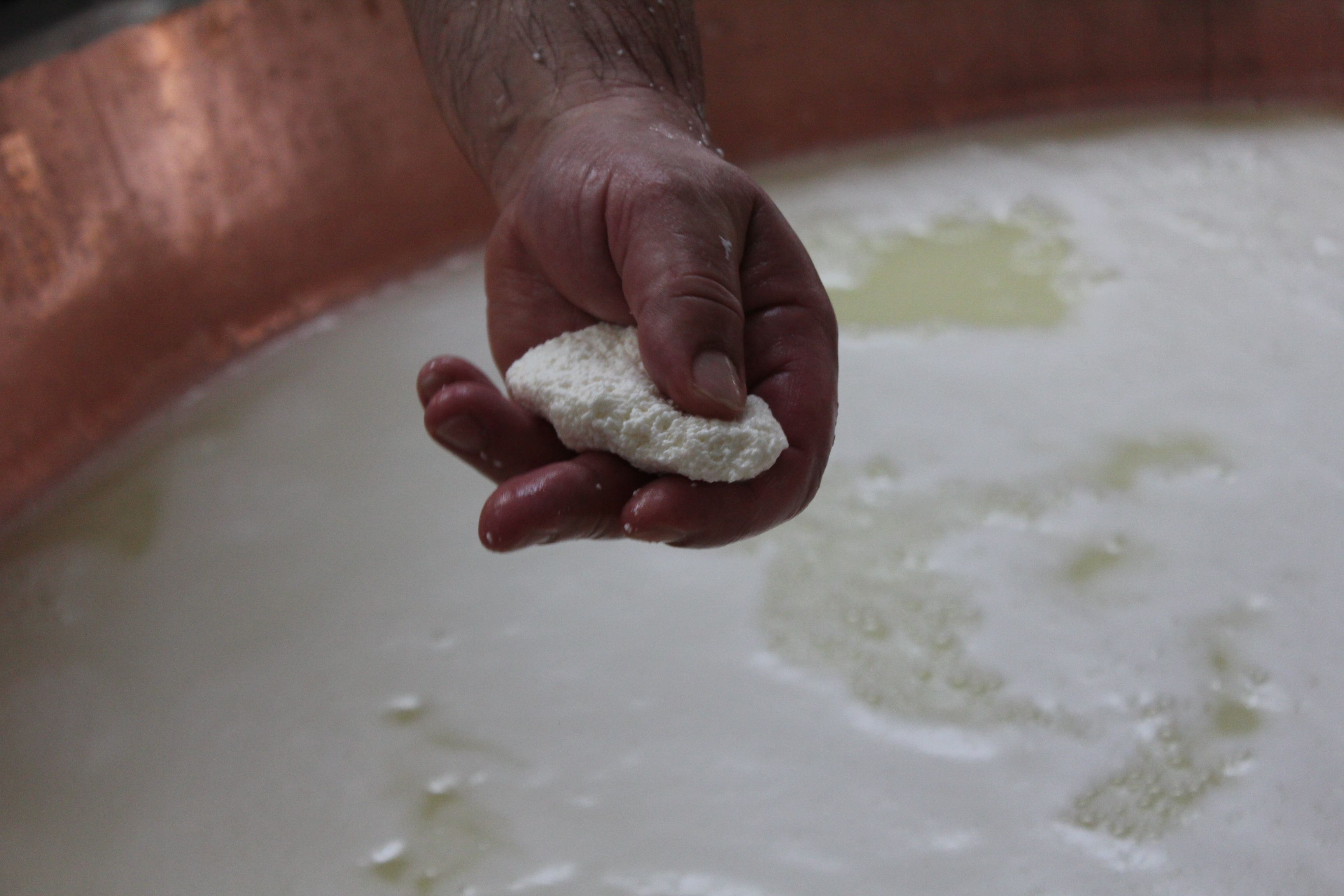
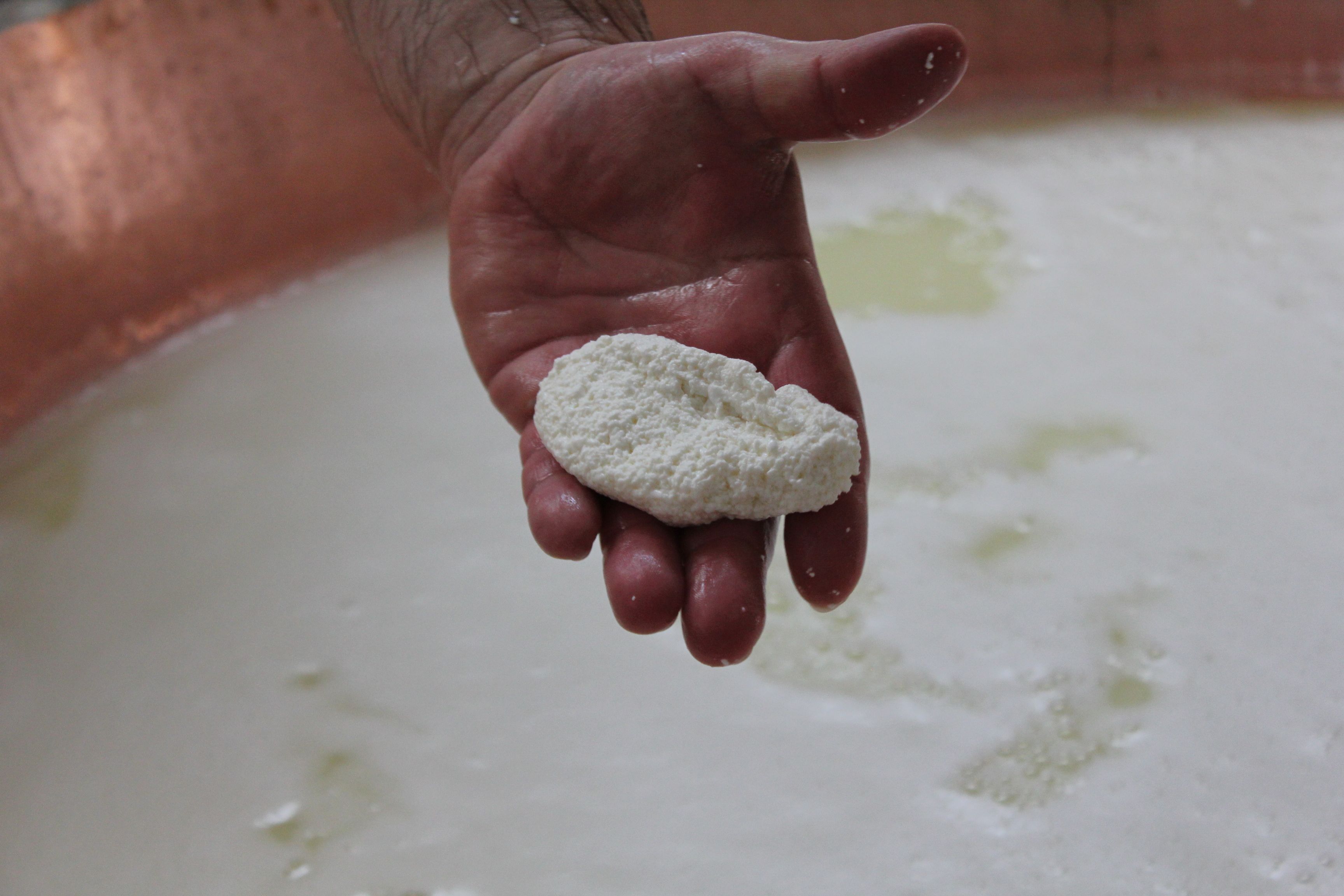
The astonishing spinatura, a traditional curd slicer, enters the scene, handled with a gondolier’s gesture. The curd is broken into small grains.
5. Cooking
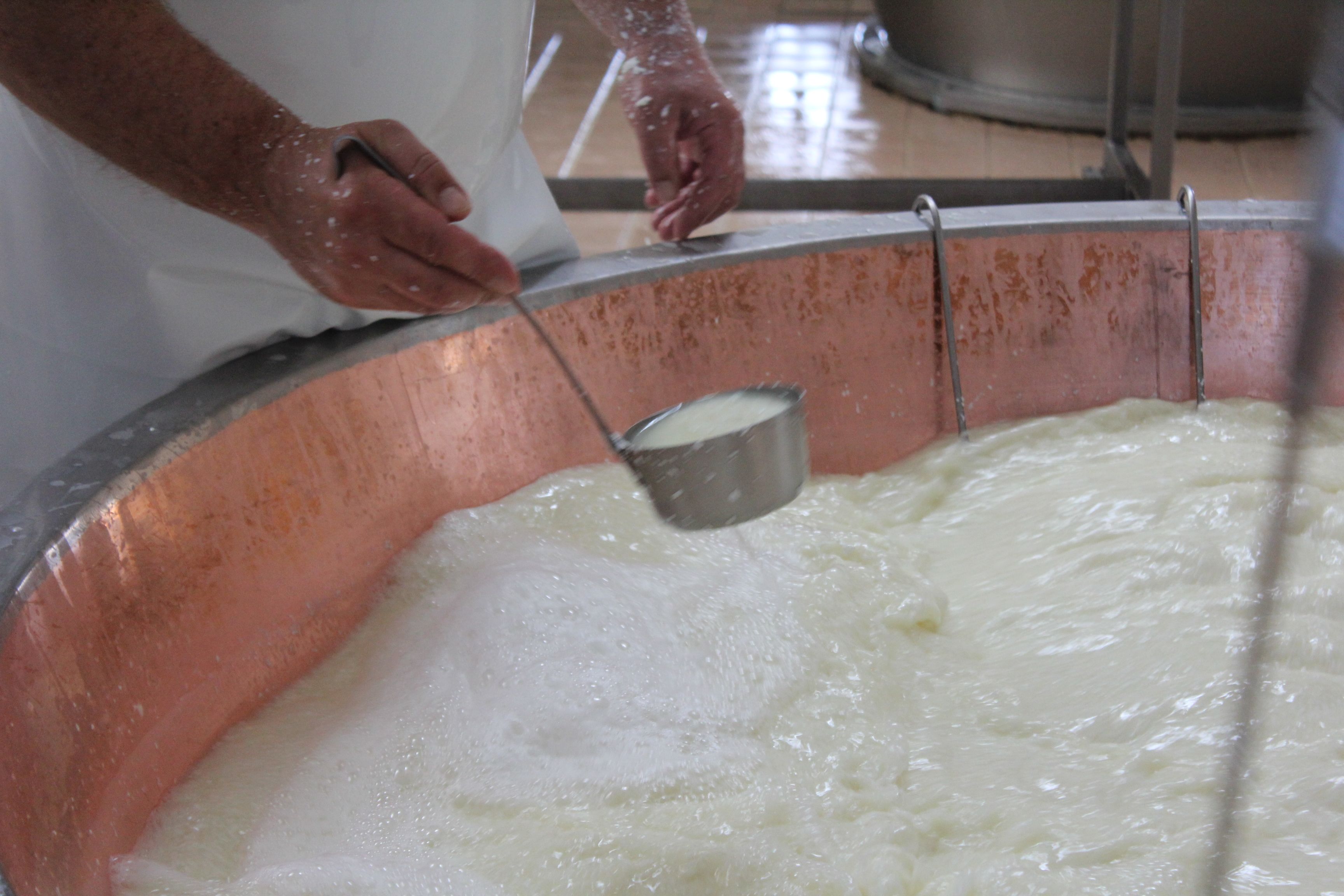
The master cheesemaker raises the temperature from 33-35°C to 55°C, in 10-12 minutes. Within an hour, the curds form a compact mass at the bottom of the cauldron.
6. Extraction and molding
The mass is divided in two in a linen cloth. Each part is placed in a traditional mold, the fascera, and left to drain for 2 to
3 days.
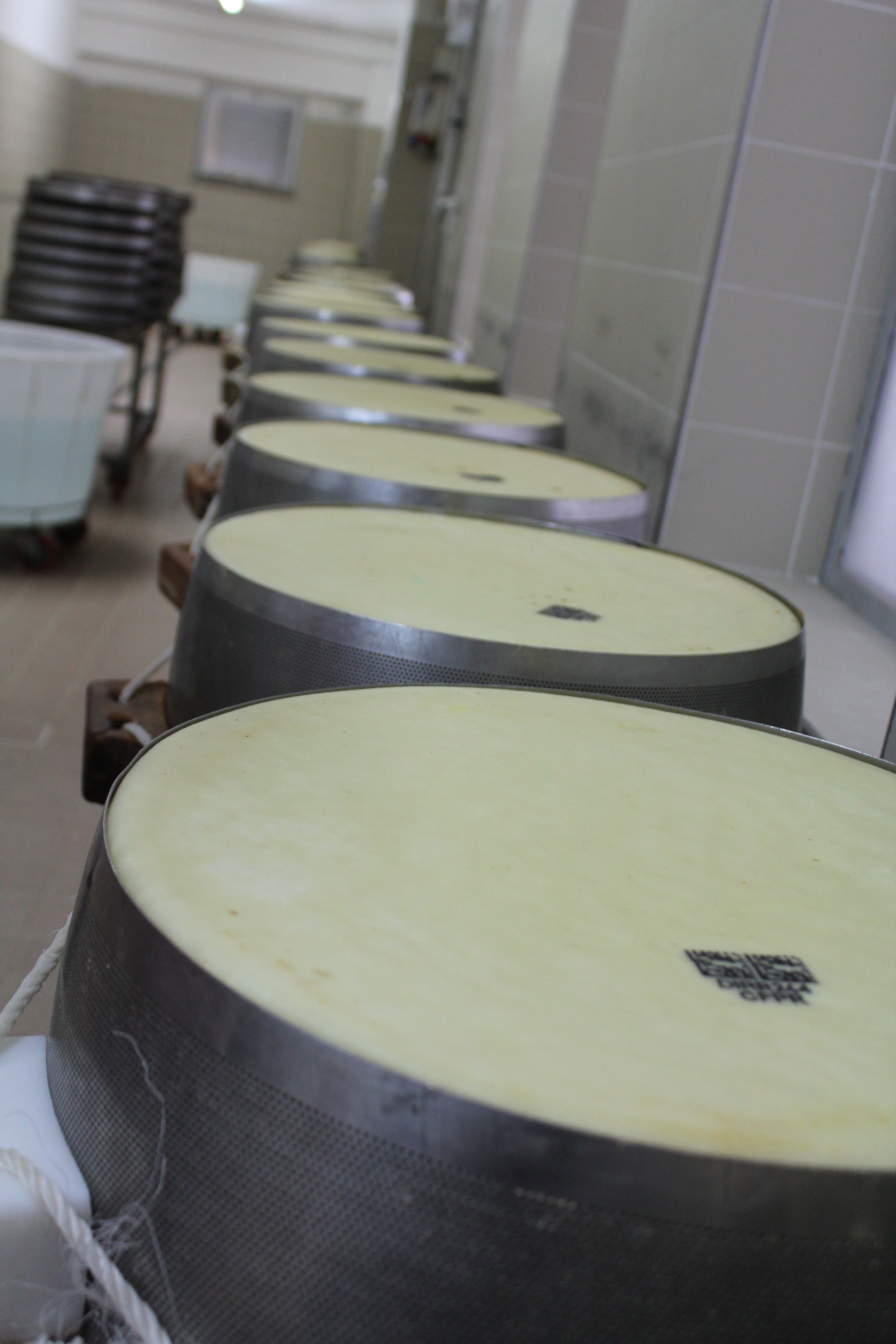
7. Marking
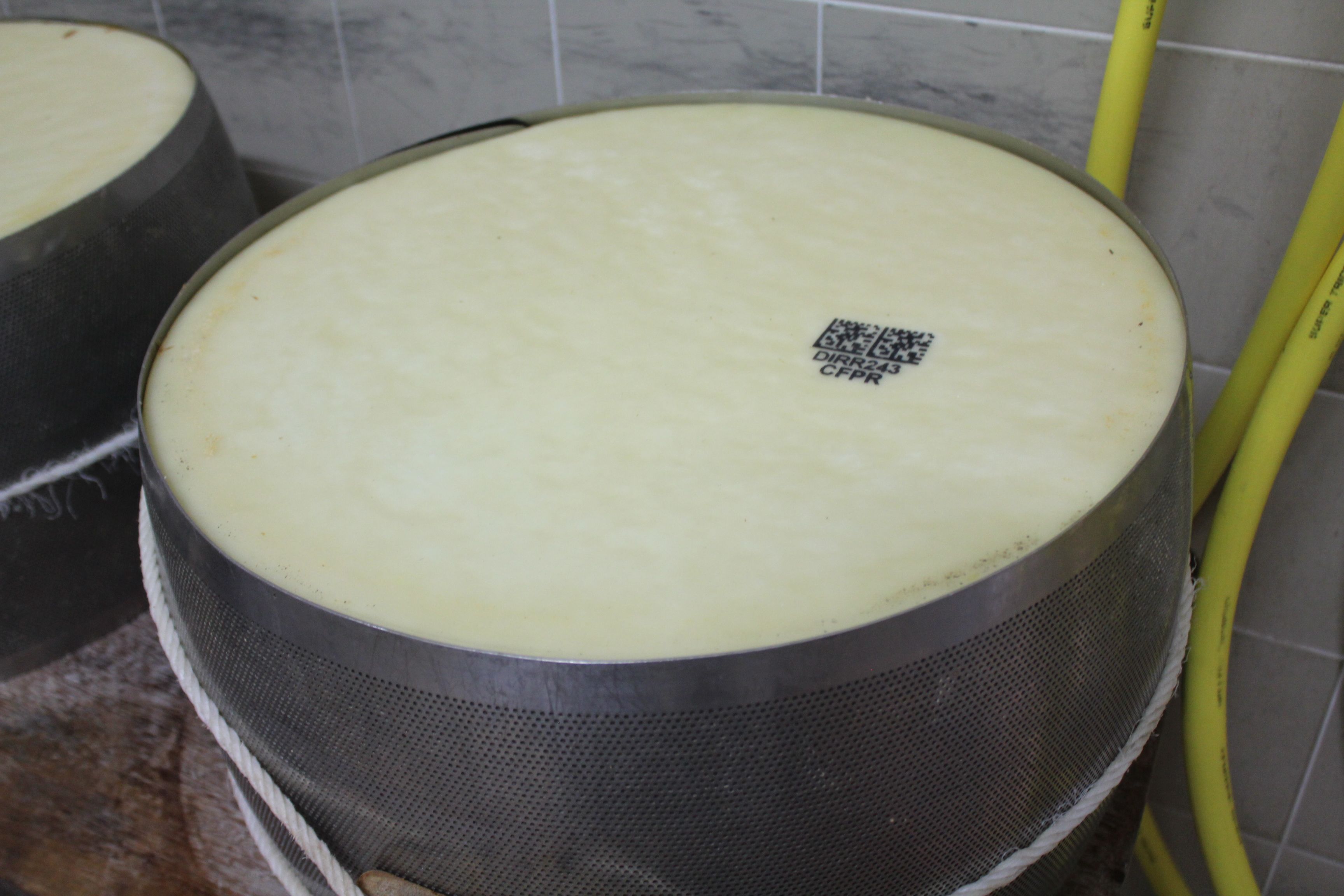
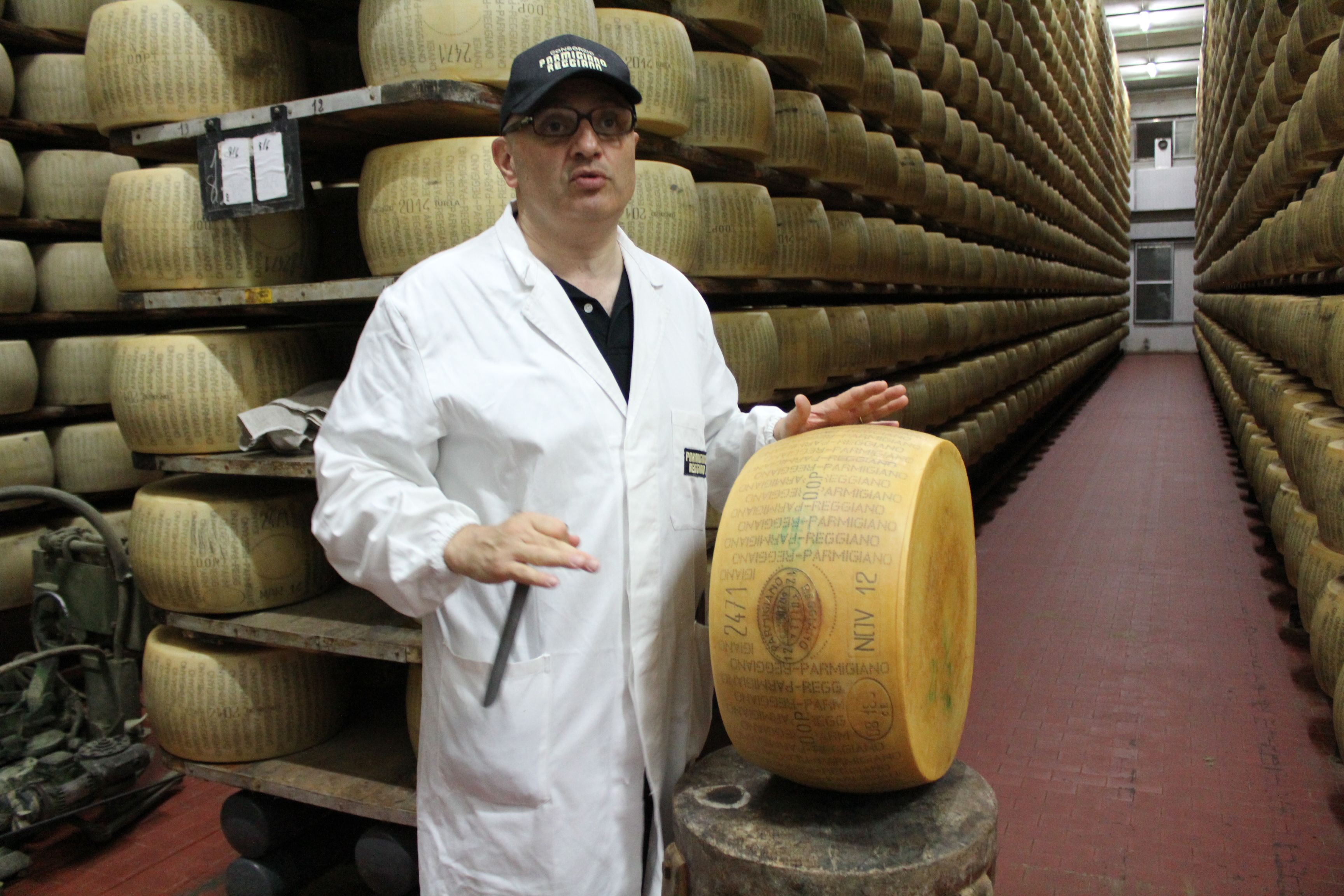
Marking is carried out in two stages. 1st marking: the casein plate affixed to each fresh cheese wheel bears the unambiguous identification code (year of production), the letters CFPR (Consorzio del Formaggio Parmigiano Reggiano), the alphanumeric code and/or flashcodes. It identifies the wheel and ensures its traceability. 2nd marking: on the first day of draining, the circular marking die inserted between the cheese and the mold engraves the typical dotted lines around the heel of the cheese, along with the name Parmigiano Reggiano, the cheese dairy number, the month and year of production, and the words DOP (European PDO) and Consorzio Tutela (Consorzio de Tutela).
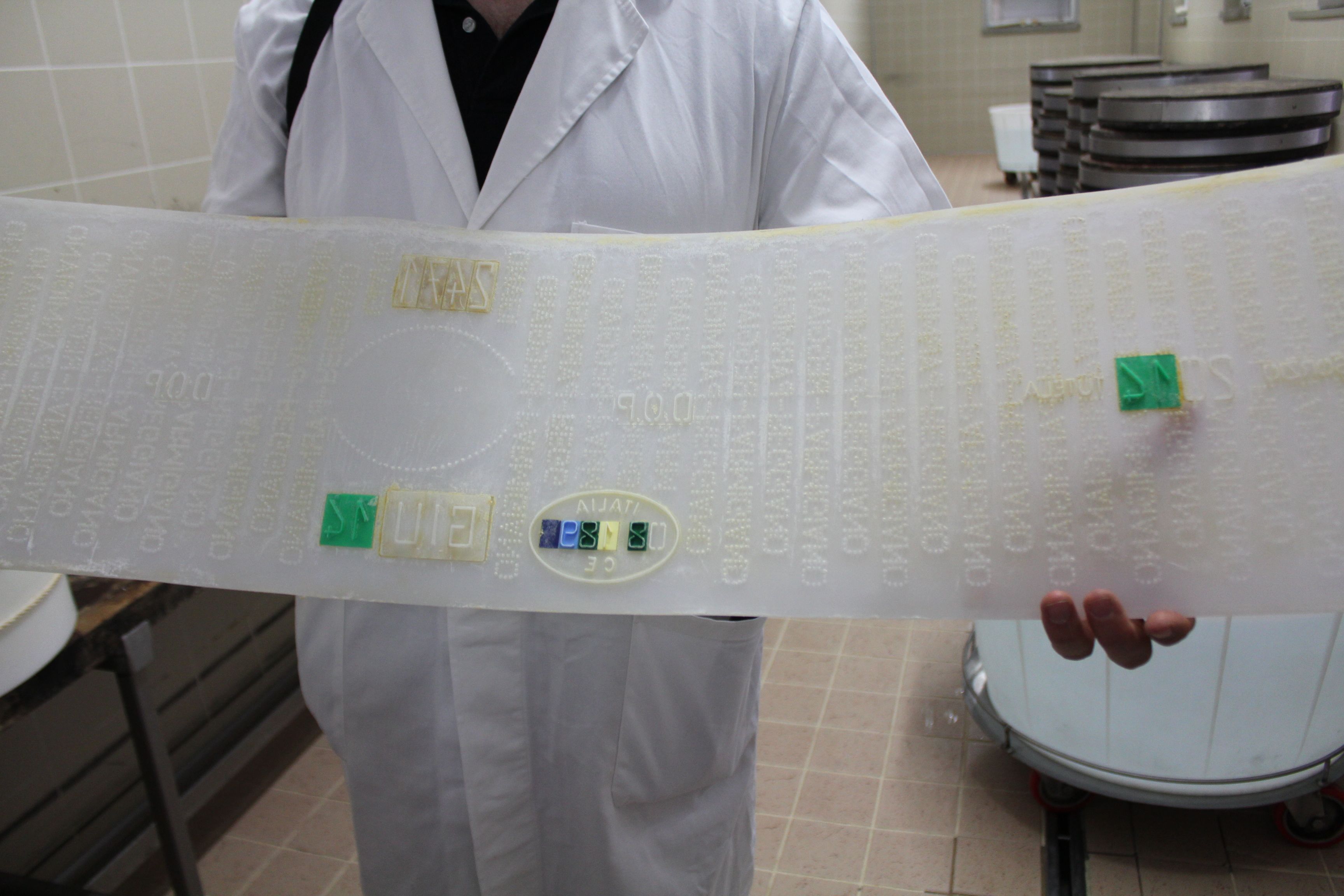
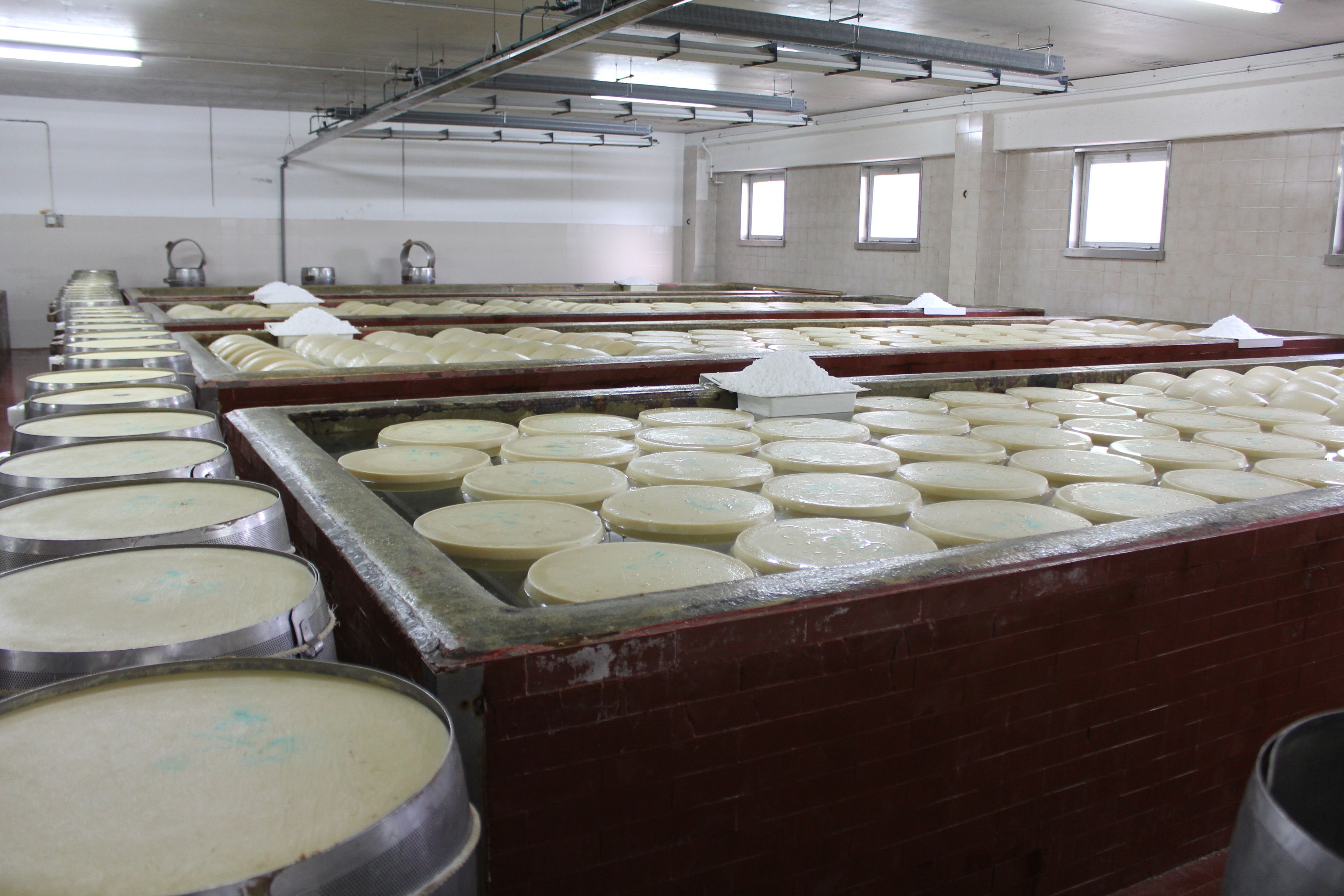
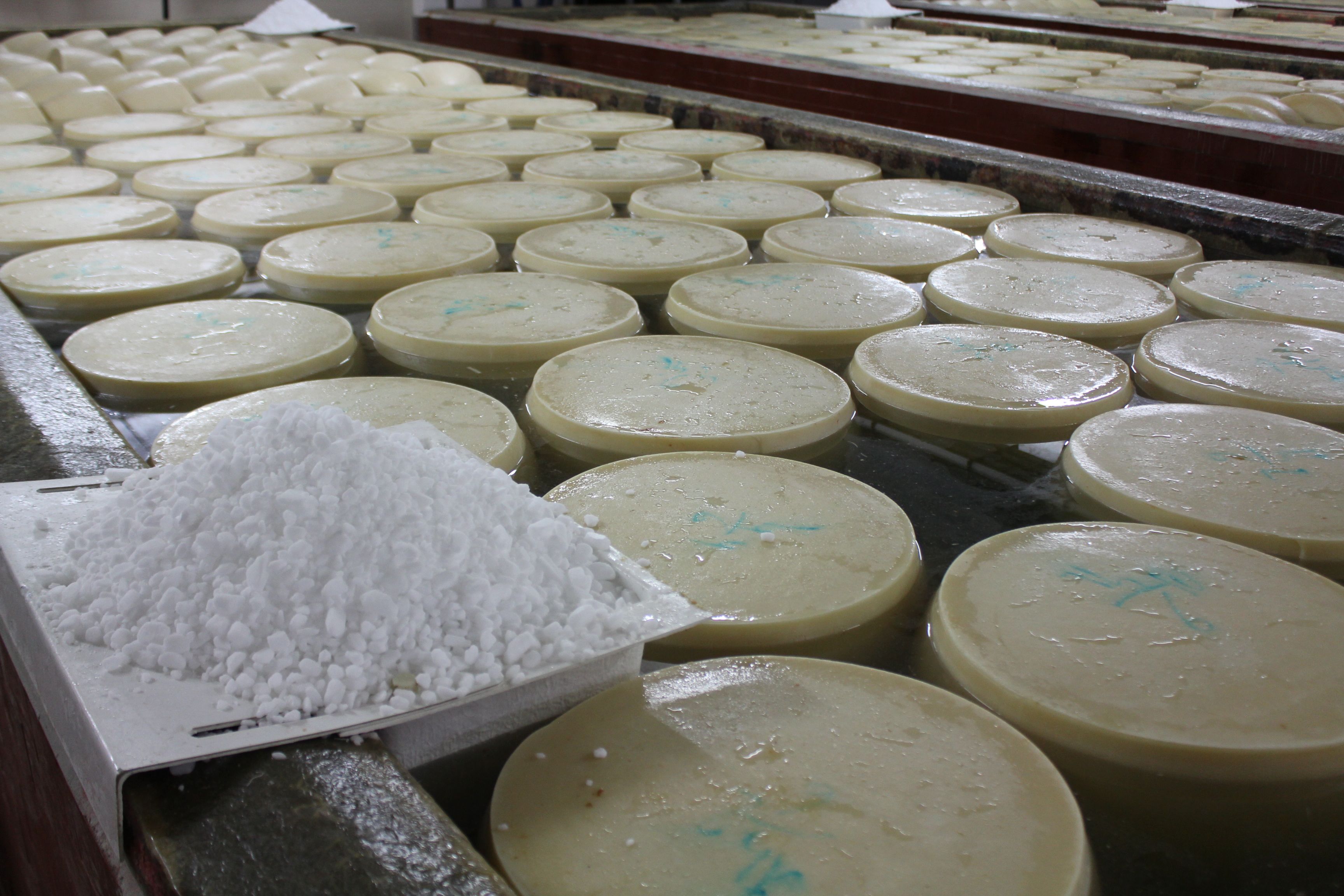
8. Salting and dehydration
The cheeses are immersed in a salt-saturated solution for 20 to 25 days, at a temperature of 18°C, the melting point of milk. They are then transferred to the maturing and ripening cellars.
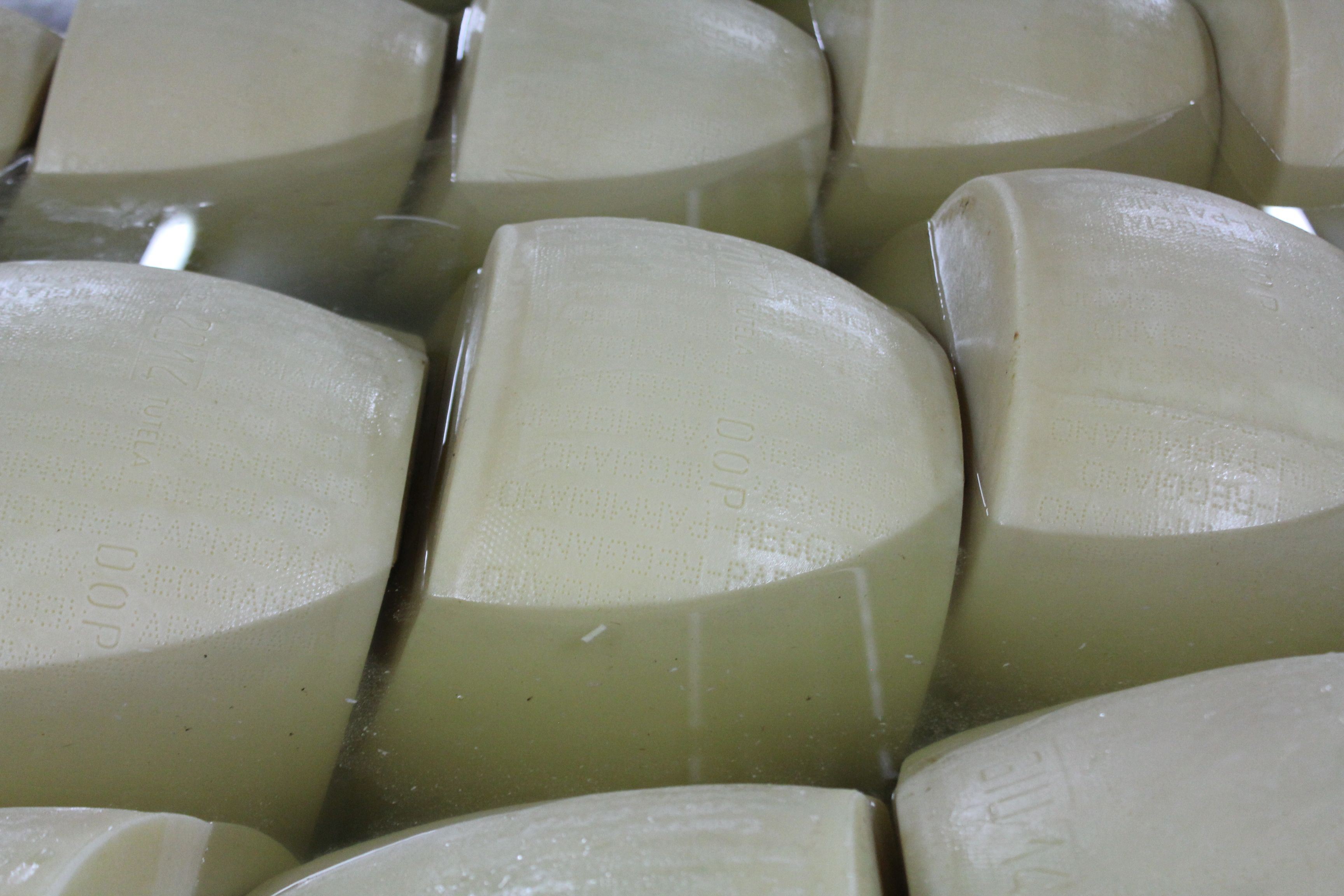
9. Ripening
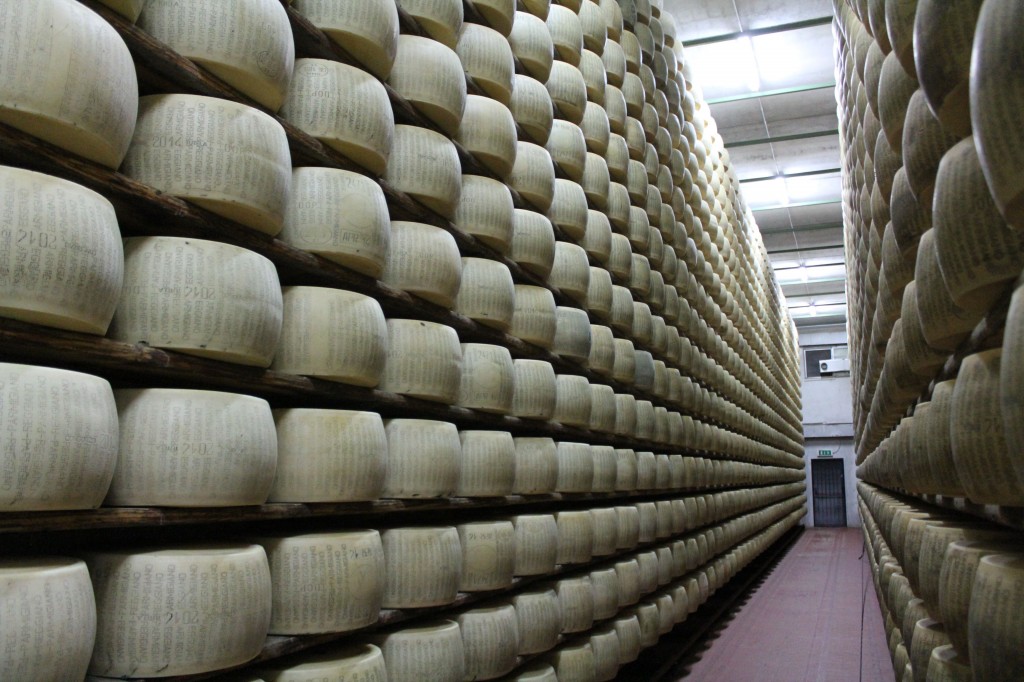
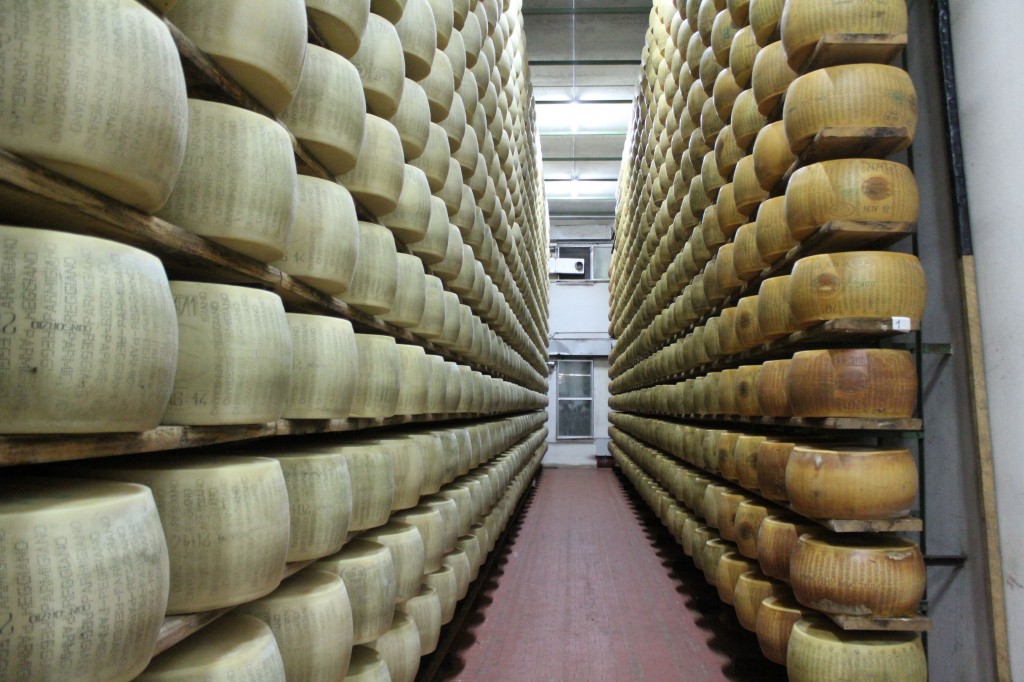
The 12-month ripening period begins. The temperature in the maturing cellar is maintained at around 18-20°C.
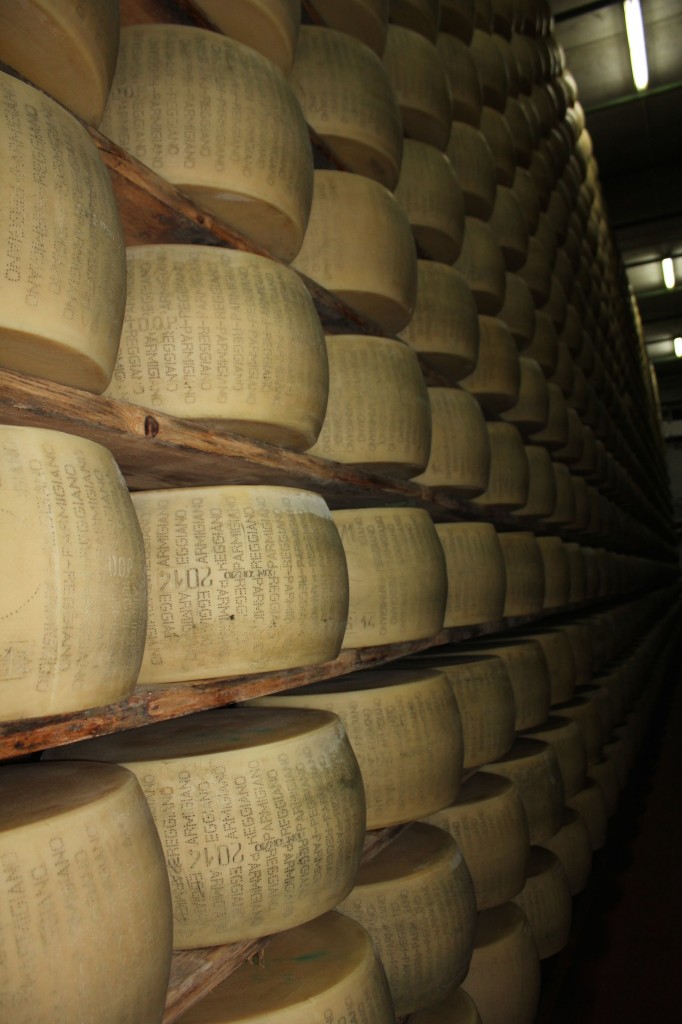
10. Expertise
Each wheel of cheese undergoes a series of visual and sound tests before being awarded the PDO. The wheels received by the experts are fire-marked with an oval inscription bearing “Parmigiano Reggiano Consorzio Tutela” and the year of production in clear. Wheels that do not meet the selection criteria are downgraded, their rind whitened.
11. MATURATION AND REFINING
Last in the chain: at the master maturer’s. Complex aromas, structure, ageing cheese: the words of wine are in harmony
with Parmigiano Reggiano. Like wine, Parmigiano Reggiano is the product of a terroir, a climate, a technique that touches on art at the moment of production and the long maturing period. The 12 months of initial maturation are a common core for all grindstones. But the
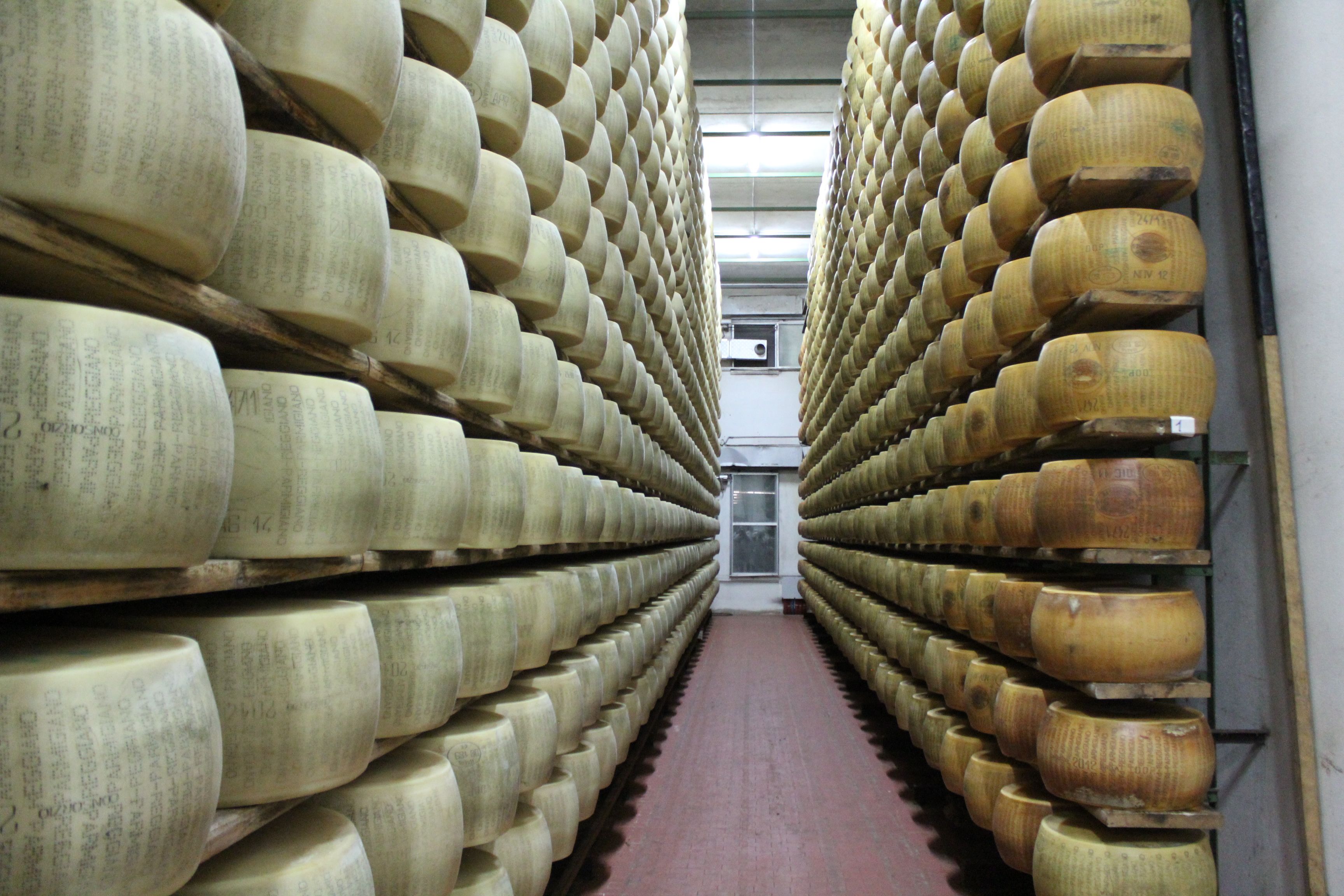
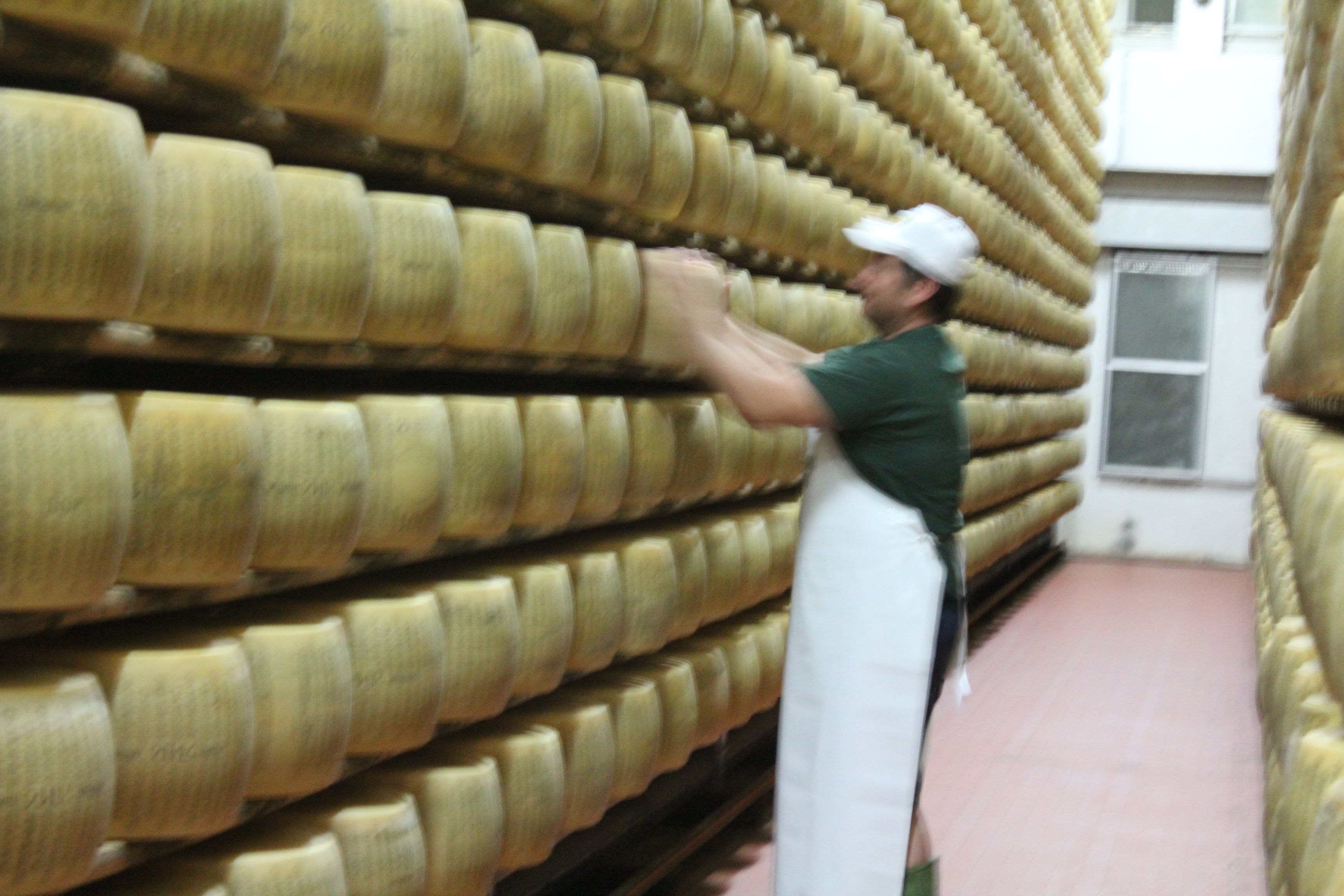
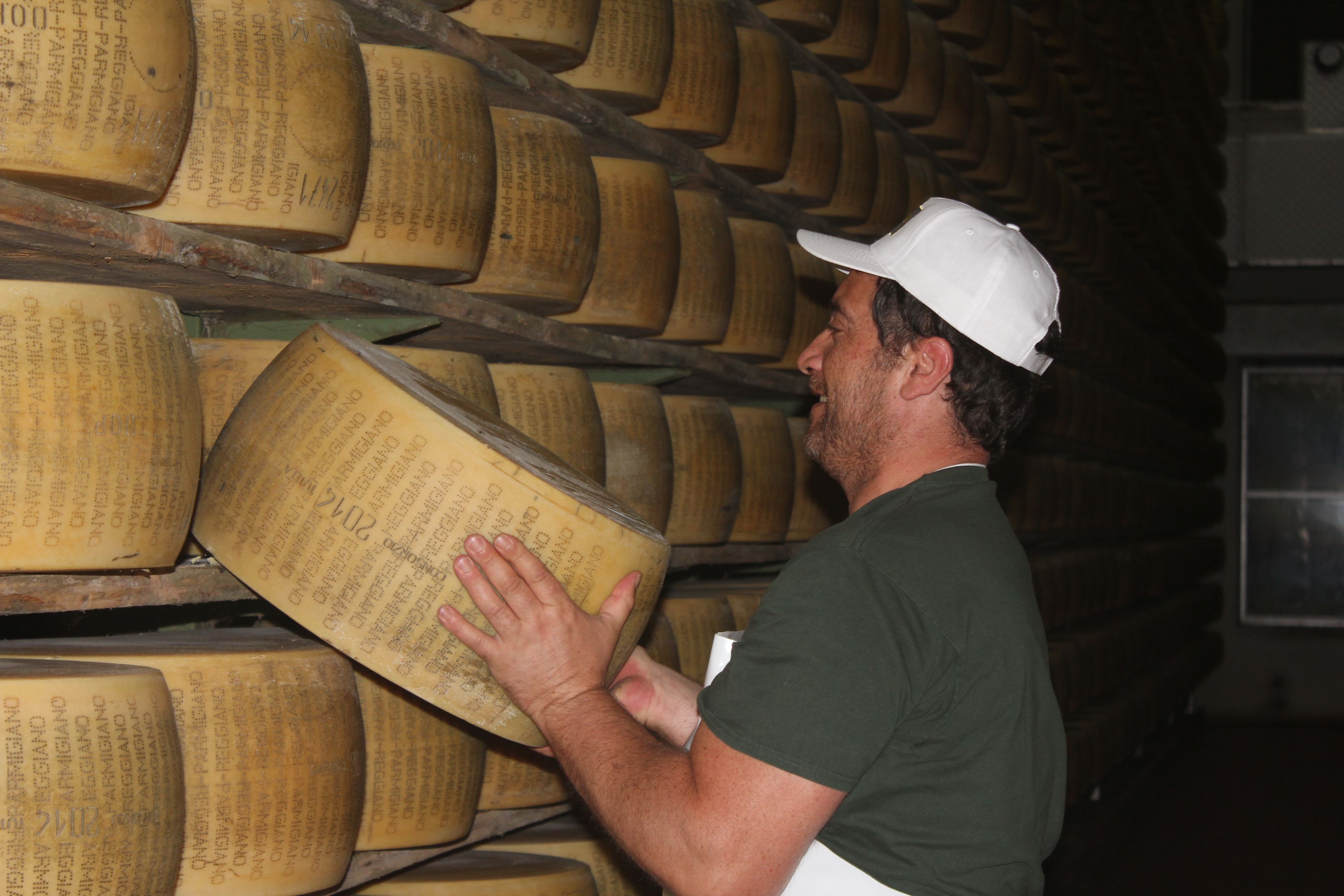
Parmigiano Reggiano acquires its specificity through maturing, during which the cheese improves. 18 months, 22 months and 30 months are the classes marketed. But ripening can extend to 36, 48 or even more months. The average ripening period observed on the market is 24 months. The cheese asserts itself in complexity, structure and texture. Aromas evolve and change, and the typical crumbliness and granularity herald ever-greater digestibility. Beneath the natural rind, the mystery unfolds, as the chubby cheeses line up on wooden shelves in the ripening cellars, where they are pampered, turned over, brushed and caressed…
The music of the wheels
During the maturing and refining period, the wheels are visited by experts. By eye, they assess the wheels. But also by ear, as they strike them with their fine hammers. If the sound is disharmonious, which is very rare, a vacuum has formed in the dough and the wheel is removed. Is the sound clear and harmonious? All is well under the crust. That’s Parmesan music. Most of the cheese wheels will be sent for maturing, while a small proportion will be declared Parmigiano Reggiano “Mezzano”, to be used immediately in culinary preparations.
Cheese wheels and banks, a unique system of solidarity
The Emilia-Romagna region of Parmigiano Reggiano has a long tradition of banking, dating back to the Middle Ages and Renaissance, and the relationships established between producers and financial institutions. The wheels of cheese served as collateral for loans taken out by producers or other retailers, in anticipation of a product that would take an average of 24 months to reach the market. The wheels of cheese are then deposited in maturing cellars, some of which belong to banks. Most of the time, this is a security deposit: the owner gets his cheeses back when the loan matures. Should the loan not be repaid, the bank has the option of selling the wheels it has stored.
TASTING PARMESAN
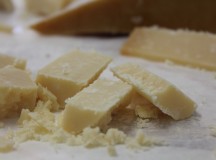
Like a fine wine, Parmigiano Reggiano releases aromas, reveals flavors, and possesses a structure and substance that depend on its maturation period. As with a fine wine, a taster will compare different cheeses with different maturation times, find the right words to describe them, and imagine the best moments to savor their full splendor.
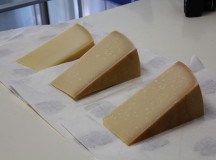
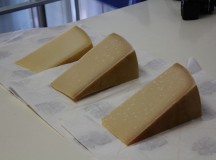
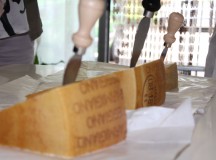
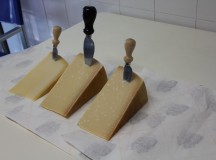
Parmigiano Reggiano aged 18 months
The milk is still present in the aromas, with a grassy freshness, and, to the taste, a touch of acidity, of yogurt. The granularity is already noticeable in the still tender and elastic paste. In shavings, it’s a friend of salads, sauces, fruit compotes or panna cotta… As an aperitif, it goes well with a dry white wine, a Burgundian Chardonnay or Champagne. Pairs well with fruits such as apples and pears. It’s a favorite with toddlers, who appreciate its openness and crumbly texture. Ideal for a snack or children’s afternoon tea.
Parmigiano Reggiano matured for 22 months
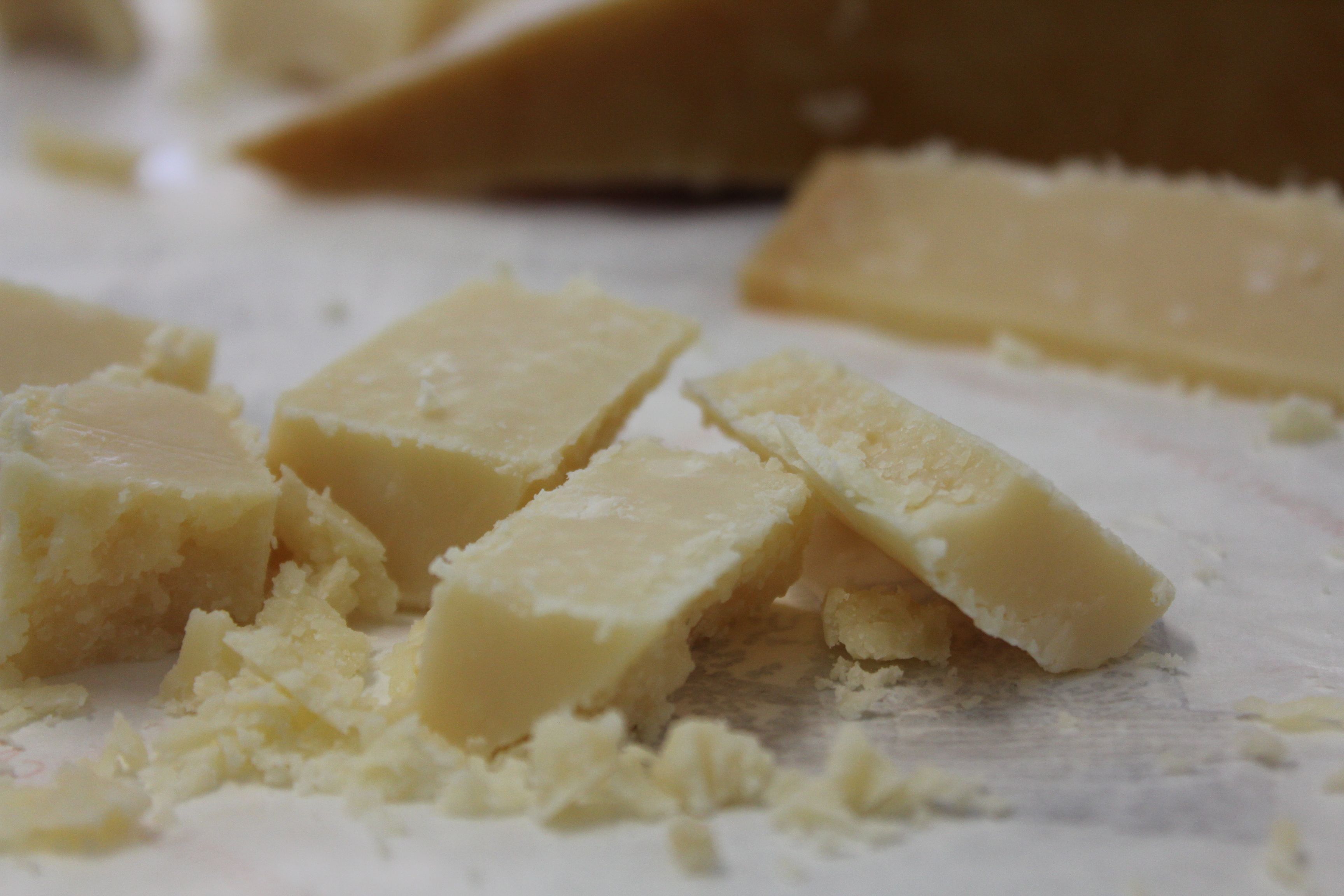
Maturation has taken its toll. Aromas of dried fruit, citrus, spices and melted butter impose a truly sensual nature. The flaky structure is more assertive, the cheese has become melt-in-the-mouth, and the granulosity is significant, with the appearance of tyrosine crystals heralding excellent digestibility. The taste is well-balanced, with a blend of sweetness and intense flavors.
Grated or shaved, it’s the perfect accompaniment to pasta, risottos or a lovely dish of seasonal vegetables. It loves walnuts and hazelnuts, and exalts grapes, black or white.
15g of grated Parmesan cheese on a plate of pasta – that’s around 30 euro cents (20 euros/kilo in supermarkets) – is a pleasure and a delight for young and old alike! For tasting, it needs structured red wines such as a Chianti classico, a vintage Porto, a Crozes Hermitage…
Parmigiano Reggiano aged 30 months
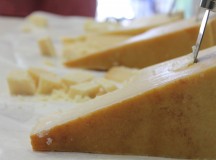
Even more dehydrated, the cheese becomes crumbly and granular, and the tyrosine crystals multiply and enlarge. These qualities are the hallmarks of a great cheese with aromas of butter, nutmeg and pineapple. Enjoy it with dried fruit, especially prunes, or in shavings on a fruit salad seasoned with Traditional Balsamic Vinegar of Modena or Reggio Emilia. It is indispensable for making tortelli and other stuffed pastas. The crust can be broken and plunged into a vegetable broth. It requires structured red wines, such as Sangiovese di Romagna, Amarone, Rioja, Argentine Malbec or a local wine, Gutturnio.
Parmigiano Reggiano stravecchio, 36 to 48 months
A dry, even arid cheese, crumbly, grainy, sometimes sandy, whose sometimes piquant flavor leads down paths to the sublime, with notes of pepper and dried fruit. He calls for great honeys, for unheard-of combinations, and the great Traditional Balsamic Vinegars that, with a drop on a splinter, cause palate revolutions. The wines he loves are great for ageing, like himself, Brunello, Barolo, or a grand cru classé from Margaux, a Château Palmer for example. And also sweet whites: Albana di Romagna, Sauternes or xérès oloroso. Parmesan also goes well with non-alcoholic cocktails and fruit juices – tomato,
pear, apple – or lightly sparkling mineral water.
For more information on Parmigiano Reggiano: Consorzio del Formaggio Parmigiano Reggiano www.parmigiano-reggiano.it
We’ll tell you more about Parma Ham in a future article.
Cette publication est également disponible en :