
Far from the received ideas that confine bubbles to summer heat or midnight toasts alone, winter is arguably the most enchanting season for champagne. As temperatures fall, French gastronomy dons its finest attire, celebrating the generosity of its terroirs and shores. It is the time of iodine-rich shellfish, freshly unearthed truffles and venison with powerful juices. To elevate these fleeting treasures, champagne sets aside mere aperitif lightness to assert itself as a great table wine, able to match the substance, richness and depth of each dish. Discover five major pairings to celebrate winter according to the rules of the art.
1. Open-sea oysters: raw salinity
Winter marks the height of the months with an “r”, a period in which oysters develop a dense, crisp, intensely marine flesh. Whether hazelnut-flavoured Belon flats or tide-battered Cancale cupped oysters, their vivacity calls for a wine without artifice or residual sweetness. For this iodine-laden encounter, the cuvée Latitude Extra Brut de Larmandier-Bernier works wonders. This pure Côte des Blancs chardonnay, vinified in large oak casks with minimal dosage, reveals a chalky, saline framework that cuts through the mollusc’s milky texture while enhancing its mineral finish.
2. The scallop: the textured elegance of a great vintage
Fished in the depths of winter cold along the Normandy and Brittany coasts, the scallop offers pearly flesh combining sweet tenderness and iodine subtlety. This noble flesh, particularly when just seared in lightly salted butter or delicately poached, calls for a wine able to respond to both its silkiness and its oceanic freshness.
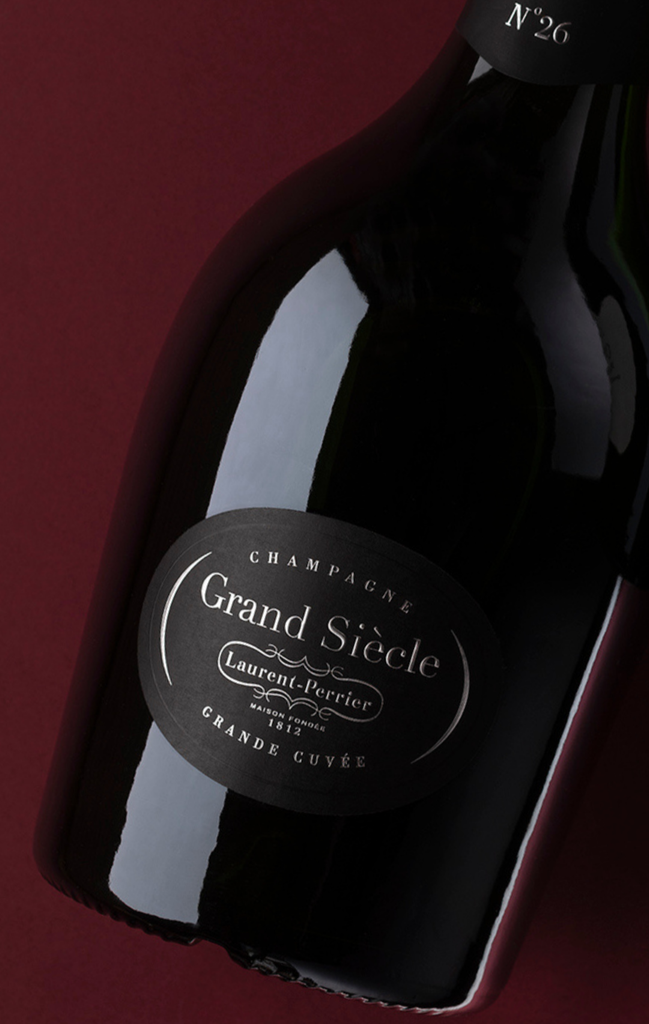
This is where the Brut Millésimé de Laurent-Perrier asserts itself. True to a historic standard, the House vintages only the greatest years, in the Laurent-Perrier style, making each opus a singular testimony to the Champagne climate. The 2018 vintage rigorously blends 52% chardonnay and 48% pinot noir, drawn exclusively from elite terroirs of the Côte des Blancs and the Montagne de Reims. After seven years of patient ageing in the cellar, this wine reaches a remarkable harmony between aromatic intensity and mineral tension, marked by notes of ripe citrus, white peach and warm chalk. Praised with a score of 96/100 by Bettane+Desseauve and 96/100 by James Suckling, this champagne finds its absolute echo in the creation of the three-Michelin-starred chef Christian Le Squer: a Champagne poaching of scallops, where the wine’s creamy effervescence delicately caresses the melting texture of the scallop.
3. Black truffle: the patina of time
From December to February, Tuber melanosporum reveals its earthy aromas of damp undergrowth and musk. Laid in fine slices over a creamy risotto or a warm scramble, black truffle requires a champagne whose tertiary evolution converses with its aromatic power. The Spécial Club Grands Terroirs de Pierre Gimonnet & Fils, kept several years after disgorgement, brings this indispensable dimension. The aged chardonnay reveals tones of toasted hazelnut, brioche and white truffle, enveloping the perfume of the black diamond without ever masking it.
4. Game and hunted meats: vinous structure
Roast partridge, venison noisette or wild duck call for a discreet but present tannic foundation. In Champagne, only nobly vinified pinot noir can sustain such gustatory intensity. The cuvée Grand Cru V.P. (Vieillissement Prolongé) d’Egly-Ouriet, from the solemn terroirs of Ambonnay, unfolds an impressive vinosity. Aged at length in wood, this bottle offers aromas of black cherry, leather and sweet spices, lending the flesh of the game a counterpoint of sovereign nobility.
5. Winter citrus: the brilliance of a rosé of character
To close the meal, seasonal citrus — Corsican clementines, citron and blood grapefruit — light up winter with their invigorating bitterness. Alongside a thin tart or a warm sabayon, a saignée rosé champagne provides the perfect balance. Notes of redcurrant, blood orange zest and white pepper answer the fruit’s acidity while cleansing the palate with distinction.
The art of winter service: gestures and temperatures
To fully appreciate the complexity of these winter pairings, respect for the art of the table is indispensable:
- Glassware: banish narrow flutes that imprison the aromas. Favour tulip glasses or slender white wine glasses, which let aeration do its work and reveal the breadth of the bouquet.
- Serving temperature: never serve a great champagne ice-cold. For vintage or vinous cuvées, aim for a temperature between 10 and 12 °C. A measured coolness releases the roundness and textured framework of the wine.
Also on Luxsure: Château Cantenac Brown 2016: a Margaux shaped by adversity · Campari and Abra turn the Negroni into a festive dessert · Disaronno Originale: the Venetian bottle that has accompanied the festive season since 1971 · Au Pied de Cochon rings in the Beaujolais Nouveau at midnight
Cette publication est également disponible en :


