
For its first fashion show, the Boloria brand did not feature its designer’s name on the cover. Olivier Theyskens, a unique figure in Belgian fashion, has chosen to step back behind a new entity named after a species of butterfly—a rare move in an industry obsessed with individual signatures.
In a fashion industry where every brand launch is typically accompanied by a strong emphasis on the designer’s name, Boloria’s choice stands out. Olivier Theyskens—who has launched his own eponymous collections and served as creative director at Rochas and Nina Ricci—has not named his new fashion house after himself. Boloria takes its name from a species of butterfly, a choice that is far from trivial: the idea of transience—of something that alights for a moment before disappearing—permeates the very concept of the first collection, titled Le Monde Flottant.
The expression, borrowed from the Japanese aesthetic of ukiyo-e—literally “pictures of the floating world ”—originally referred to an ephemeral urban culture, that of the theaters and fleeting pleasures of the Edo period. Applied to this debut collection, it becomes a way of conceiving of fashion itself as an art of the fleeting present: to be there, then fade away, while leaving a mark. A paradox that resonates directly with the brand’s founding principle—to exist without imposing itself through its name, to leave a mark without claiming authorship.
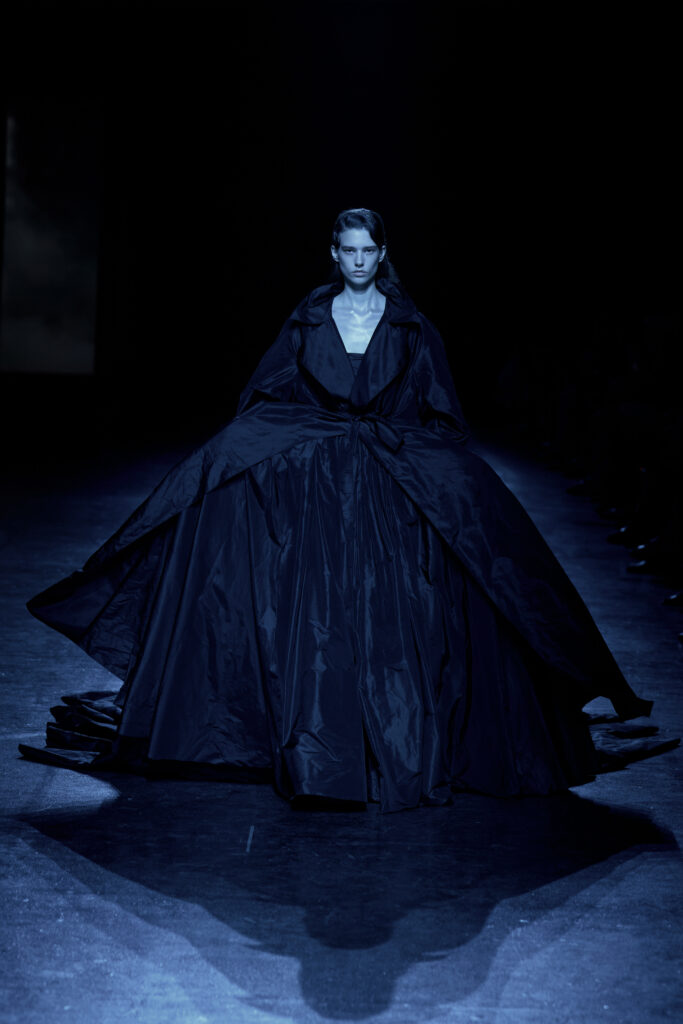
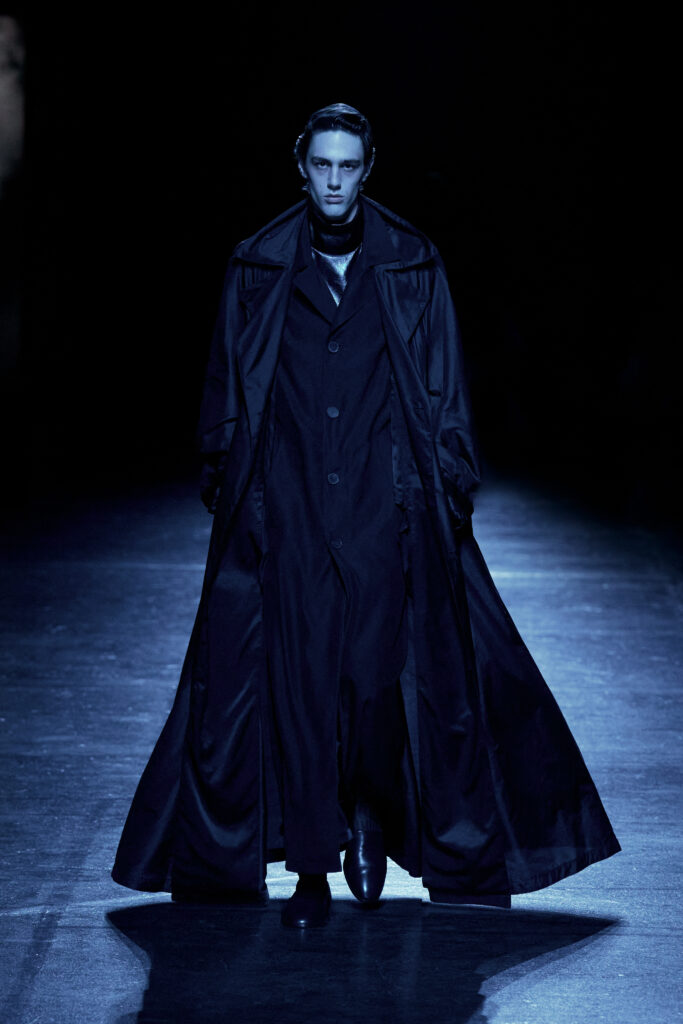
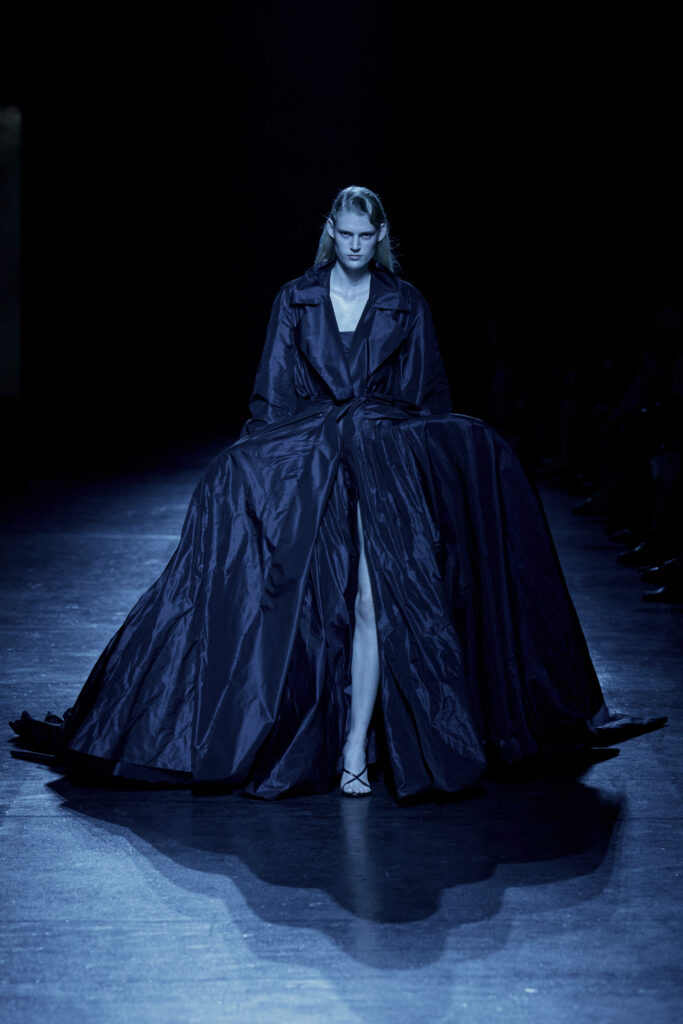
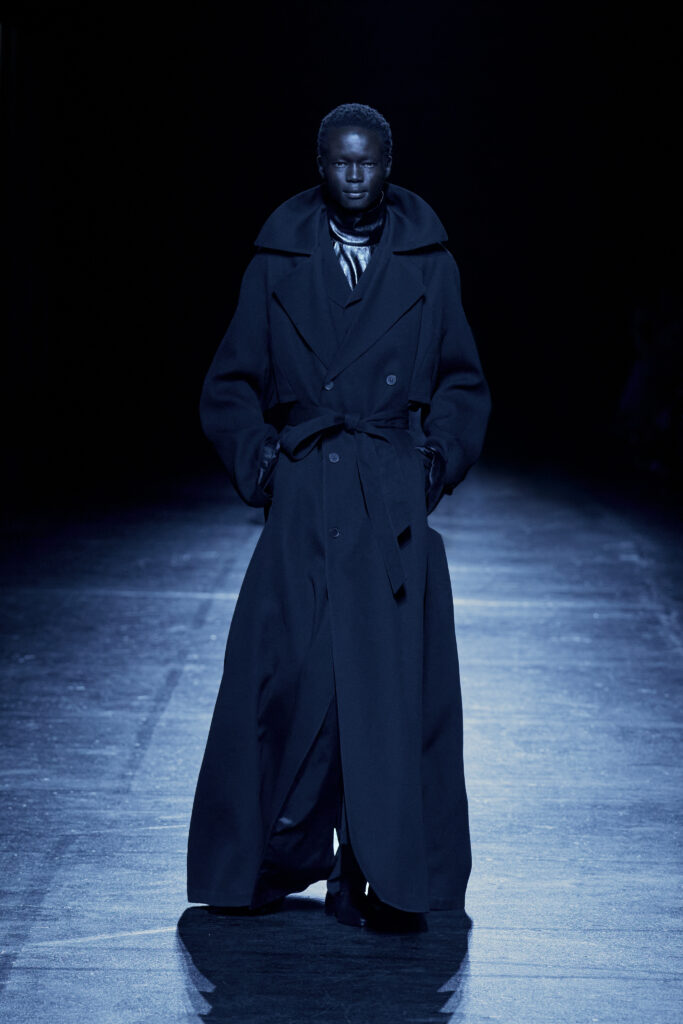
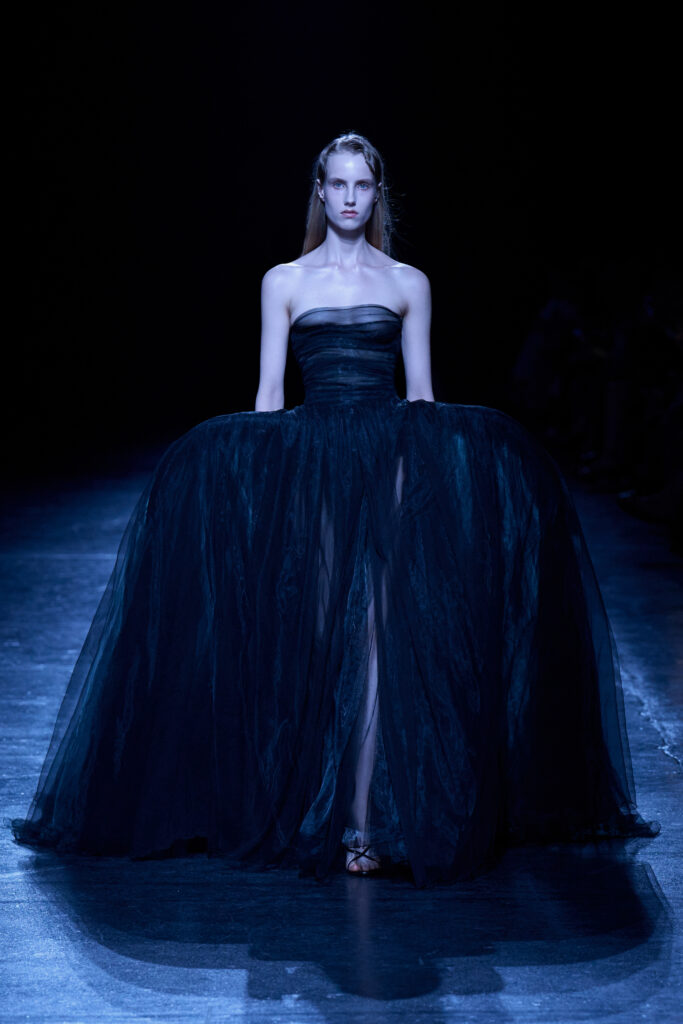
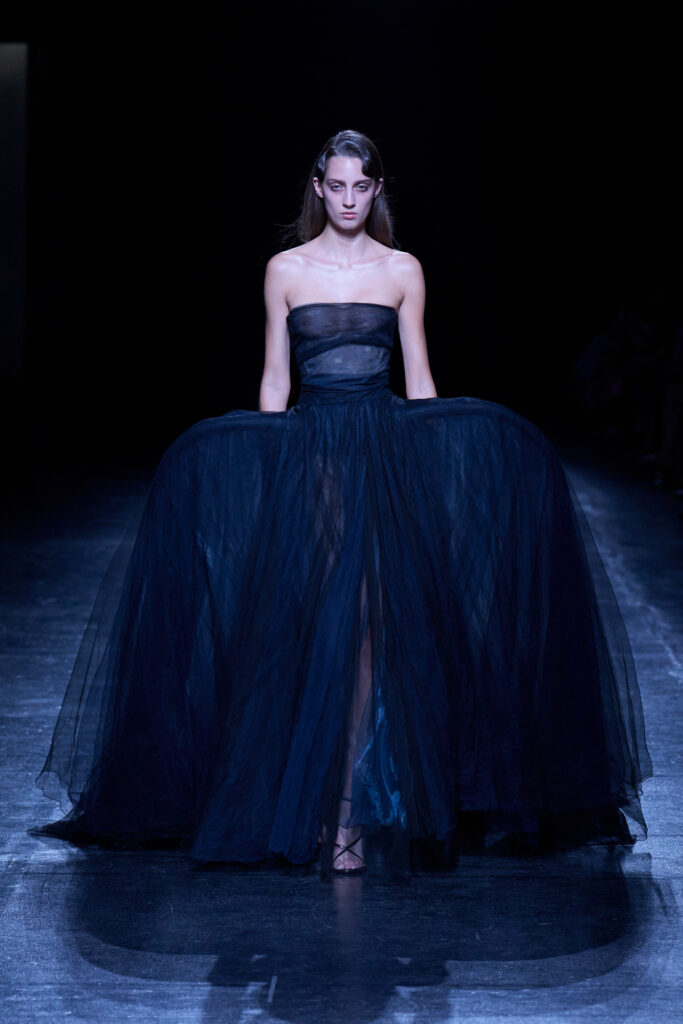
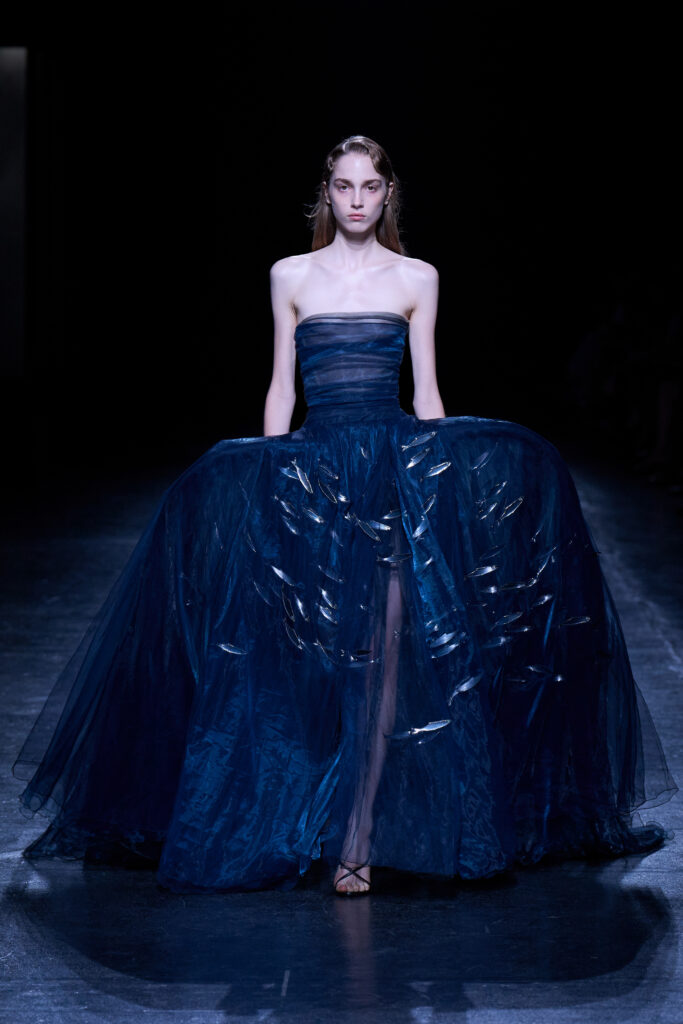
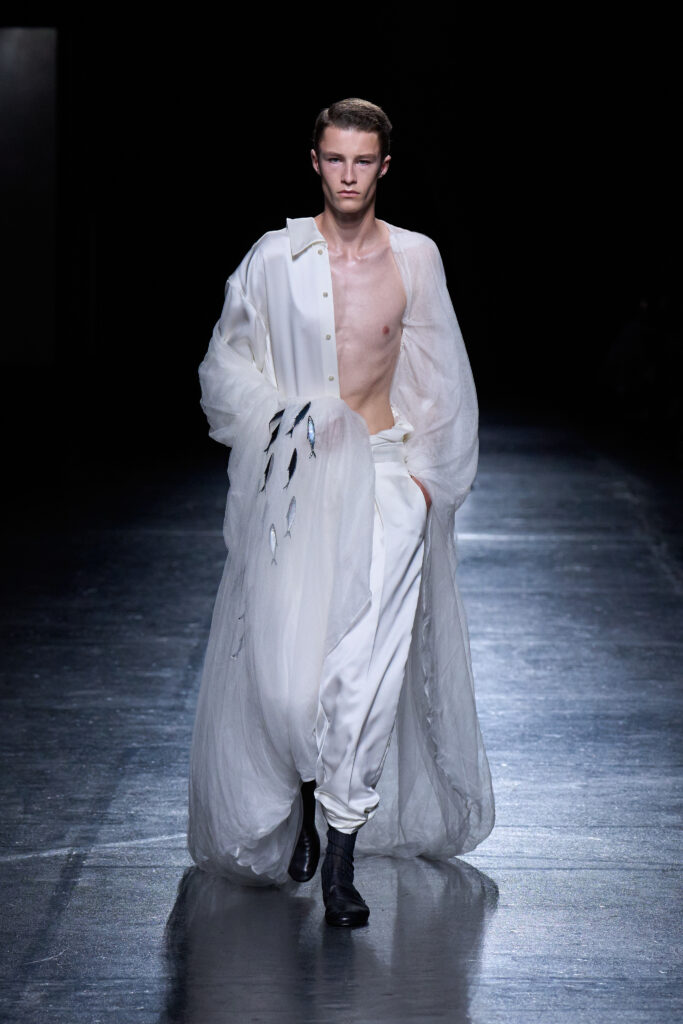
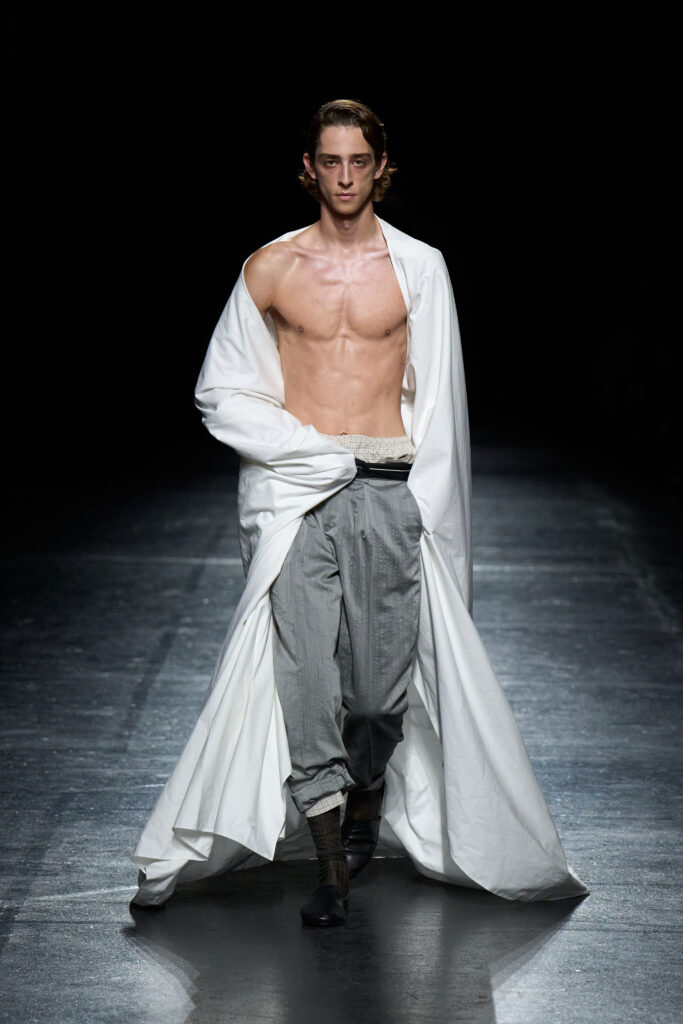
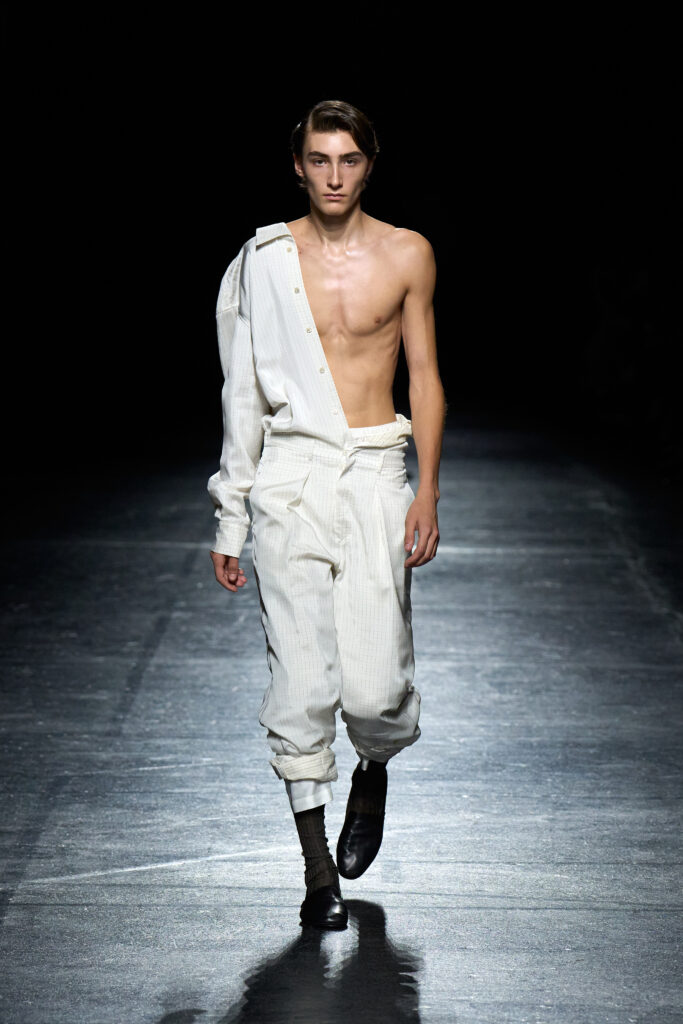
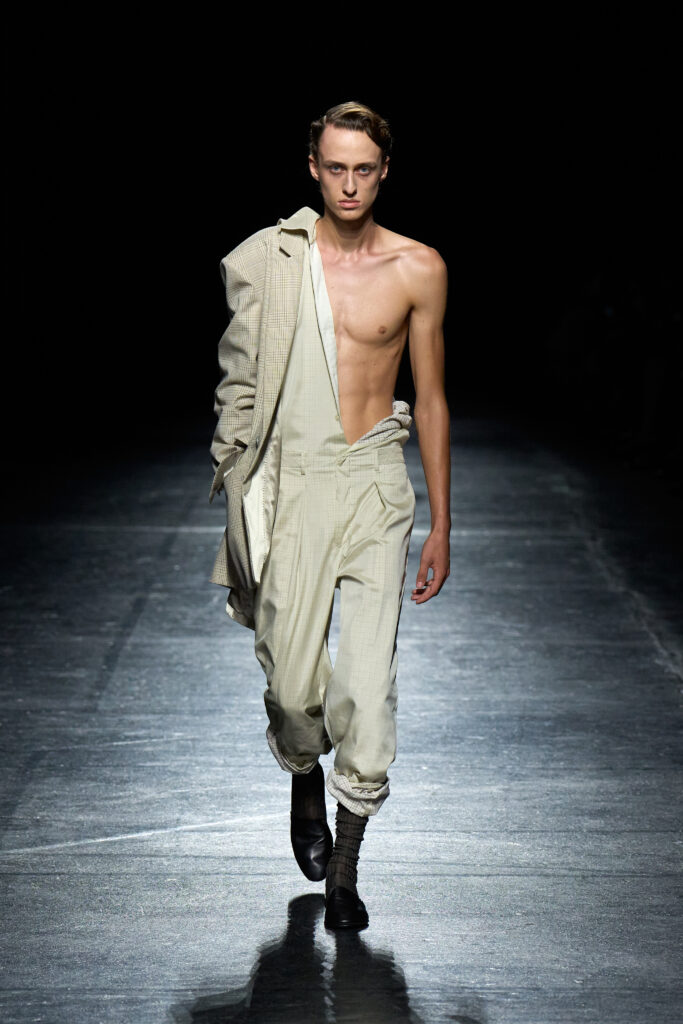
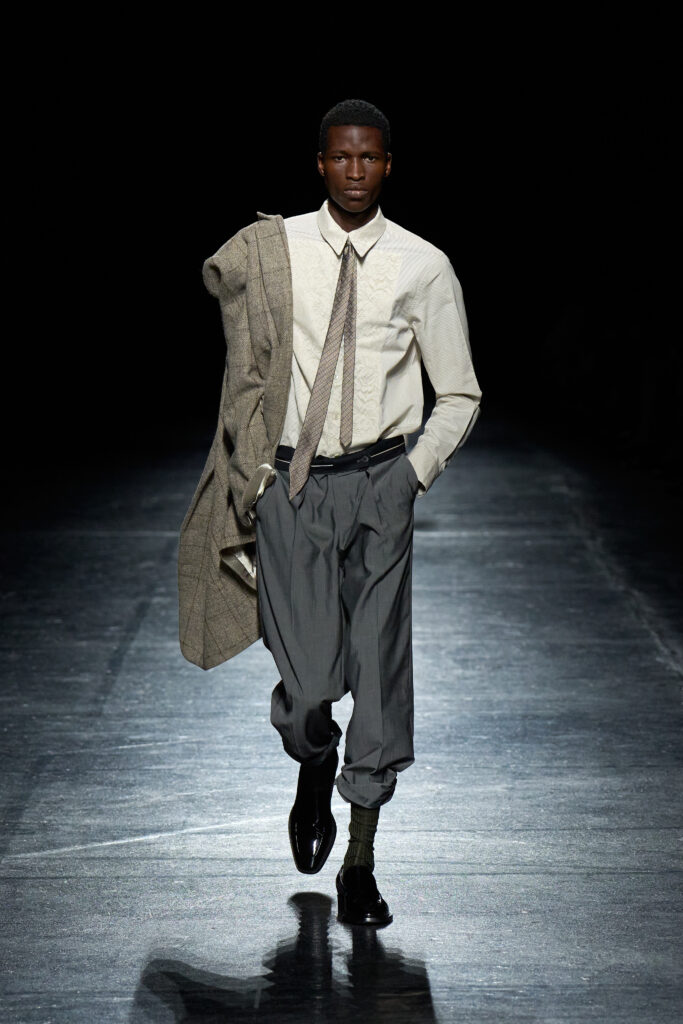
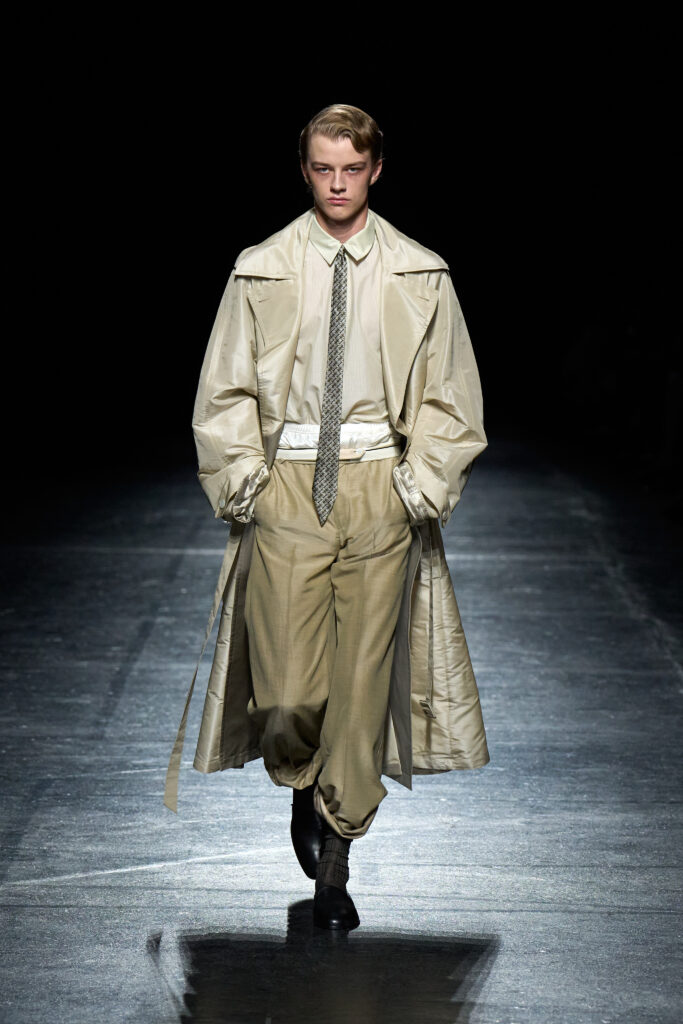
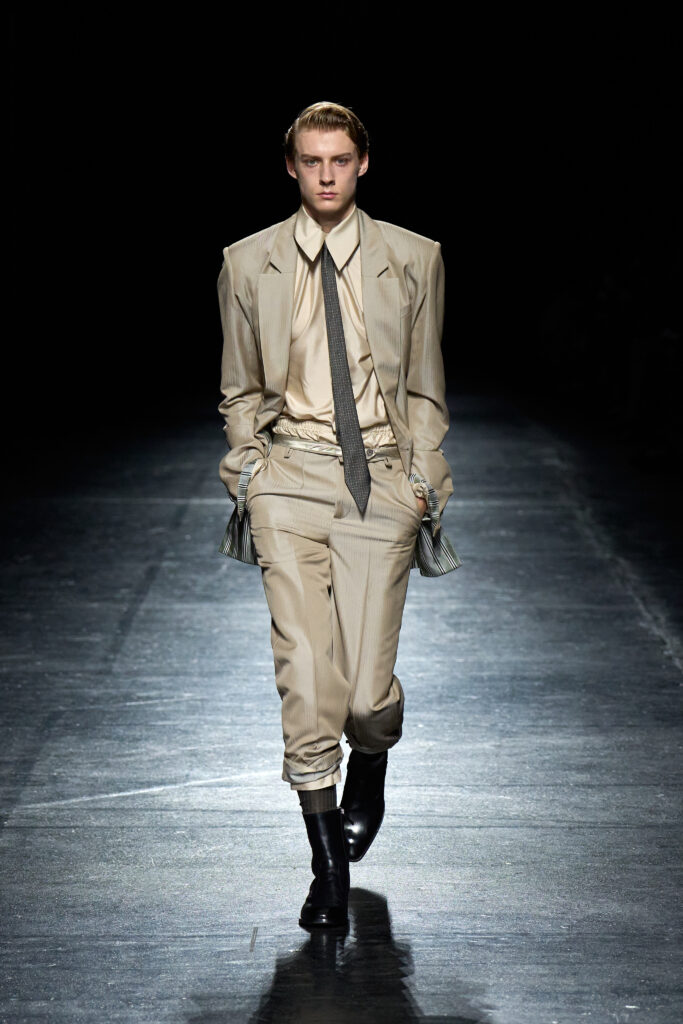
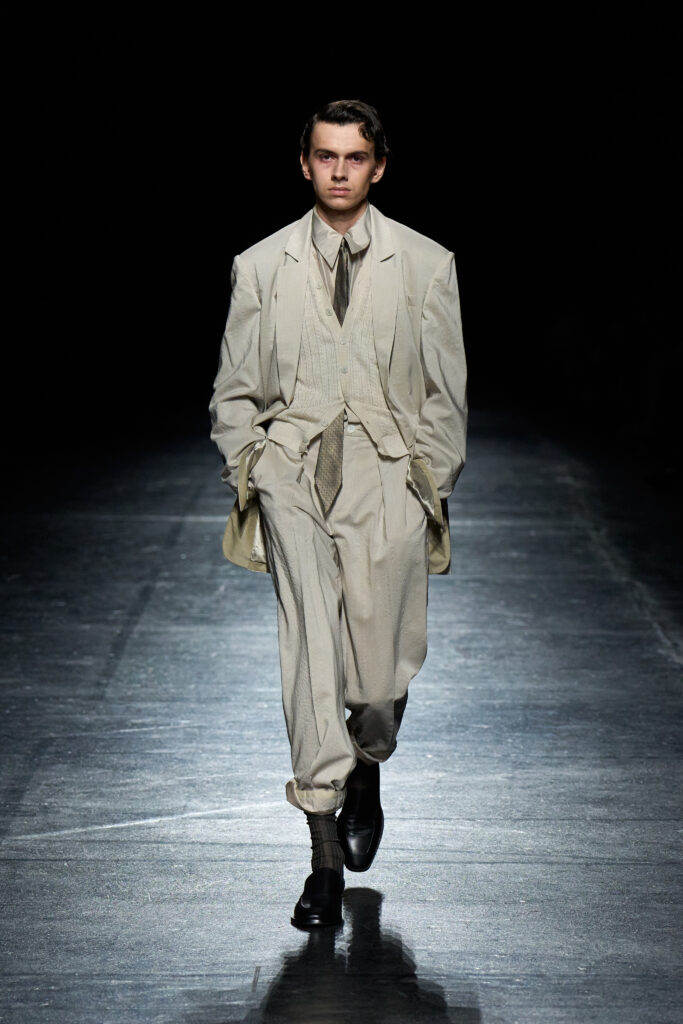
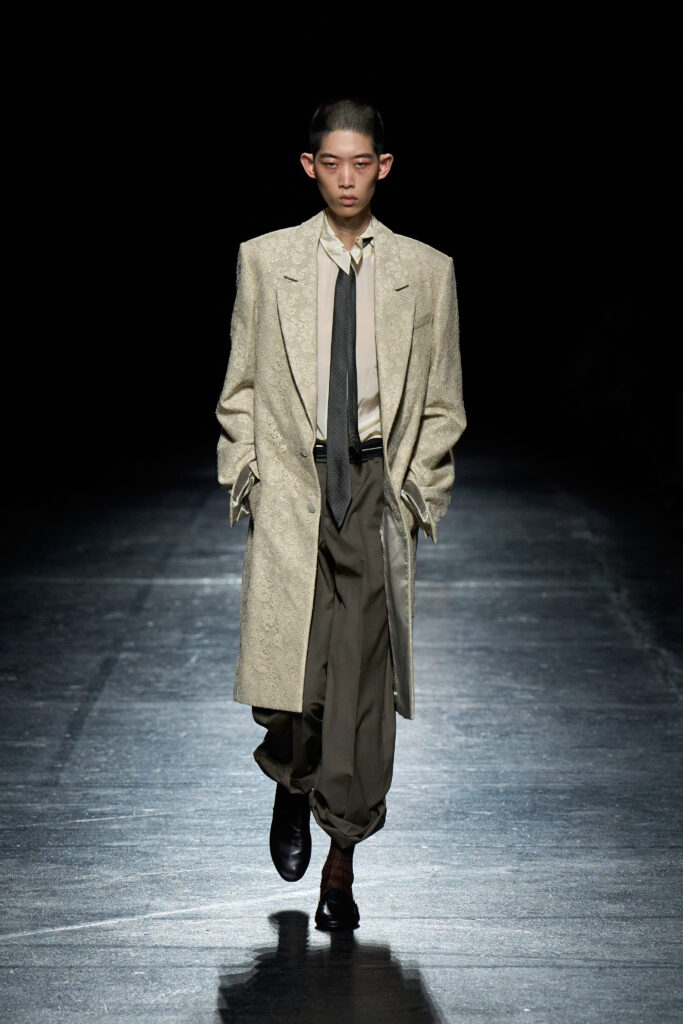
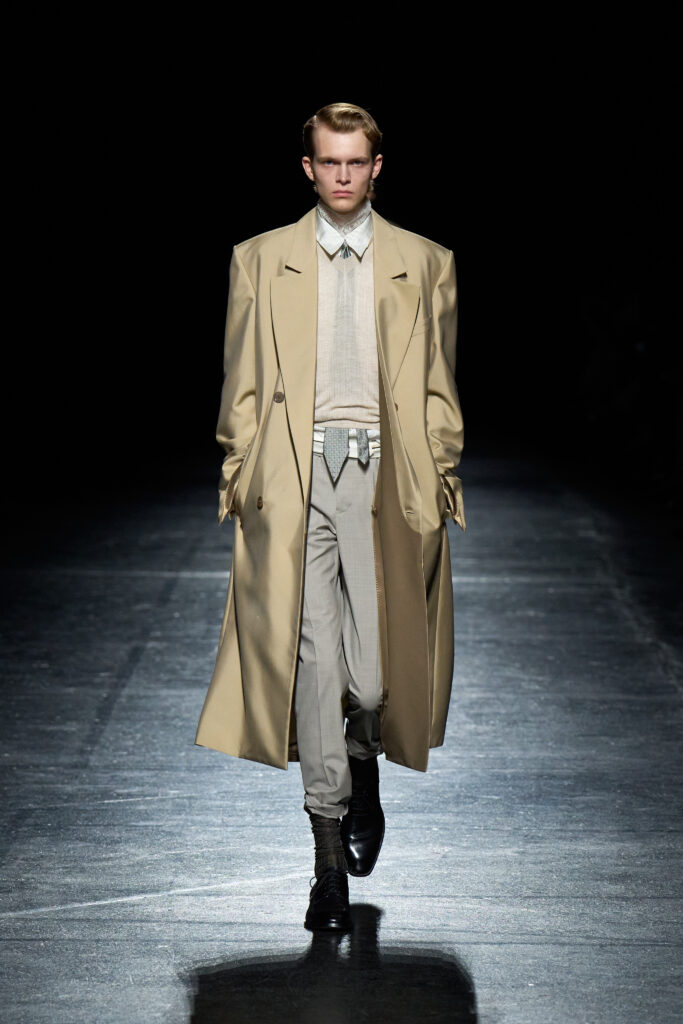
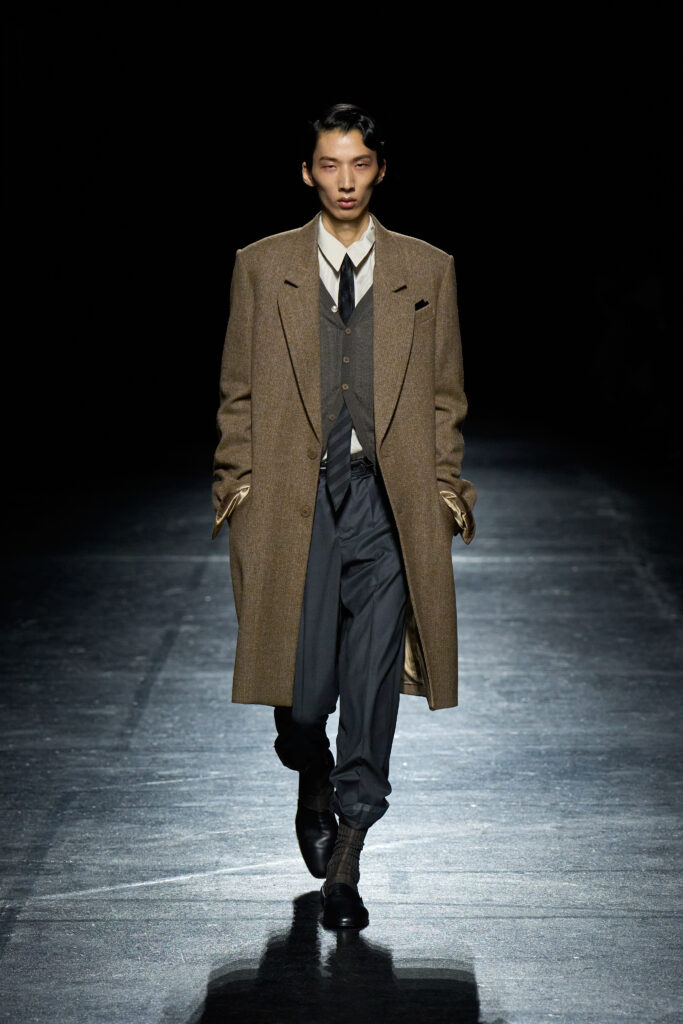
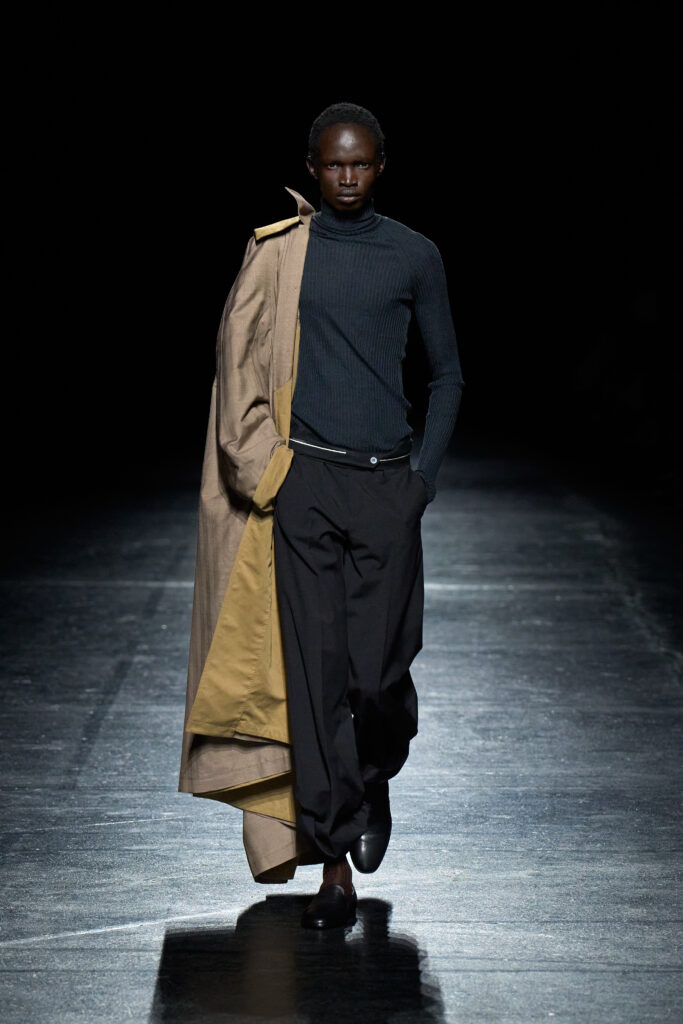
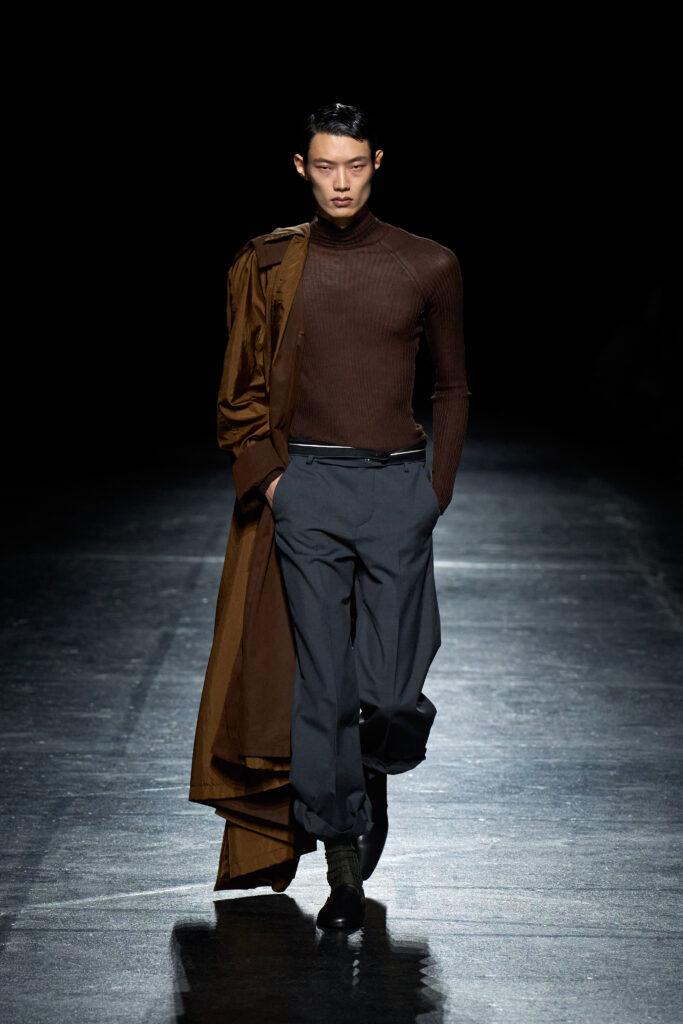
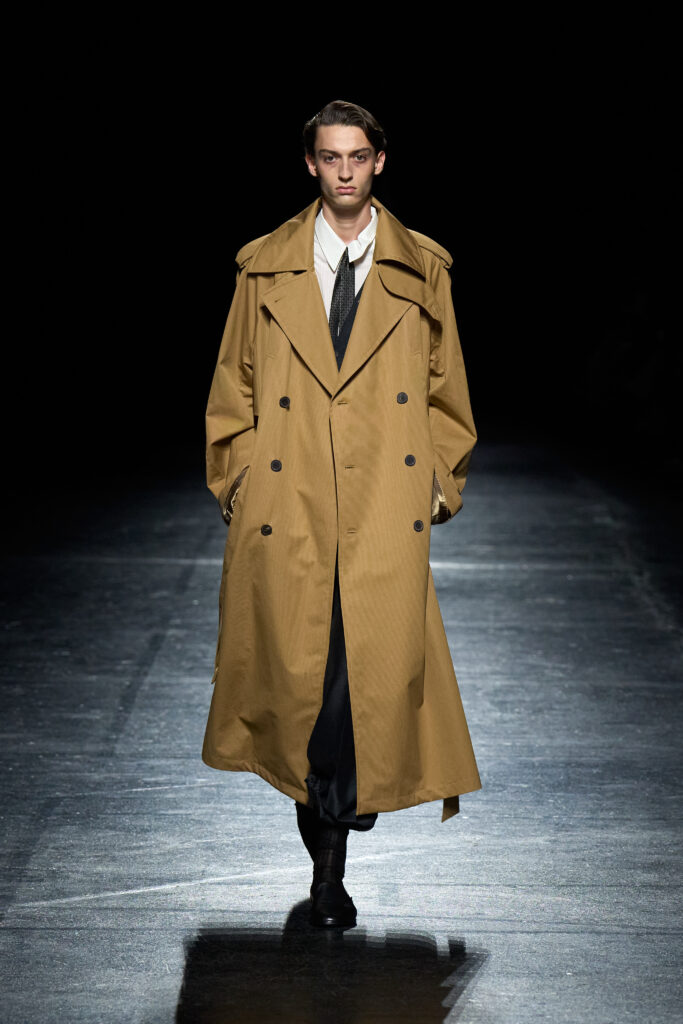
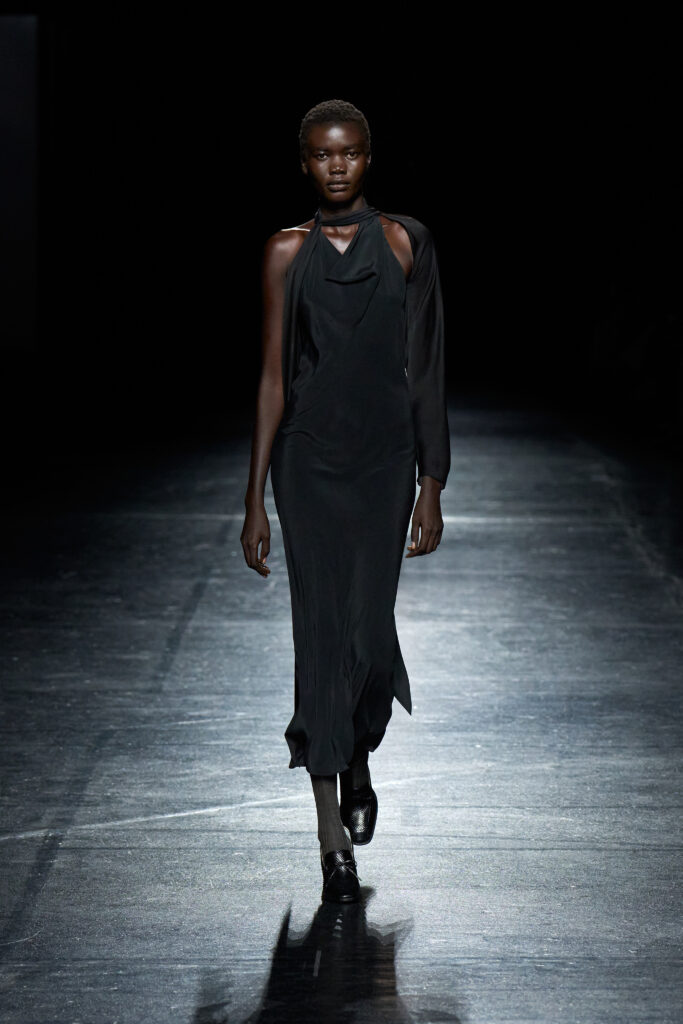
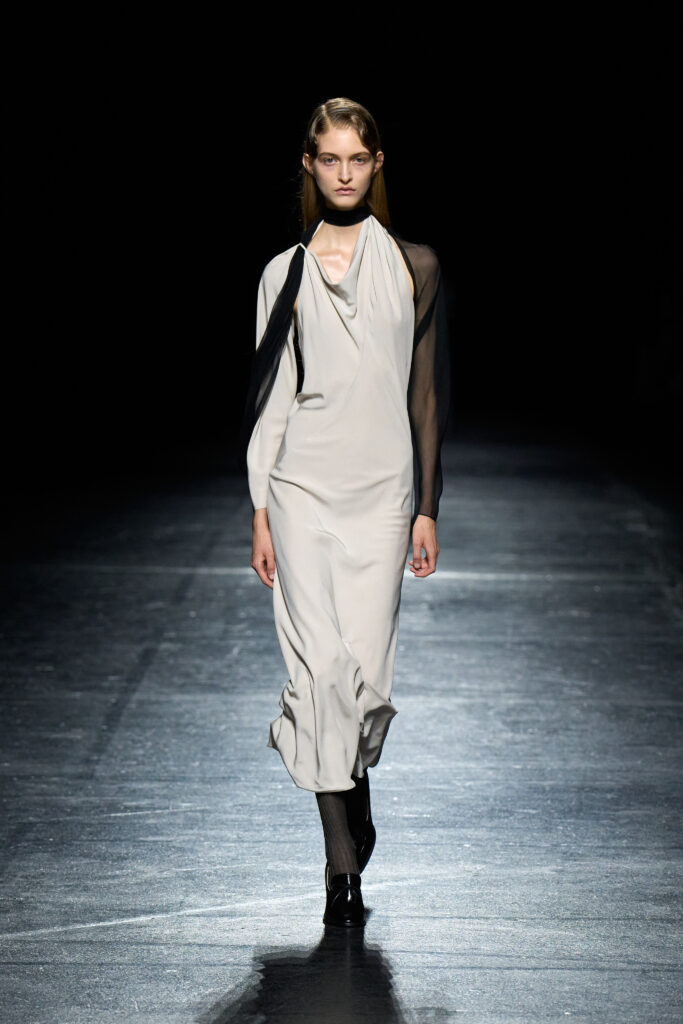
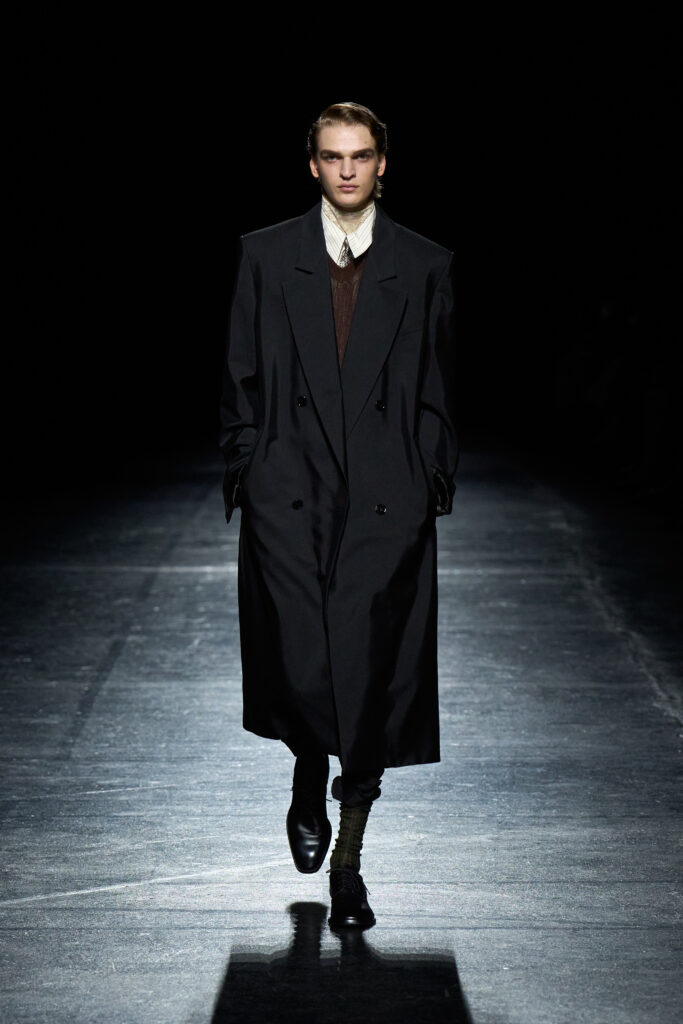
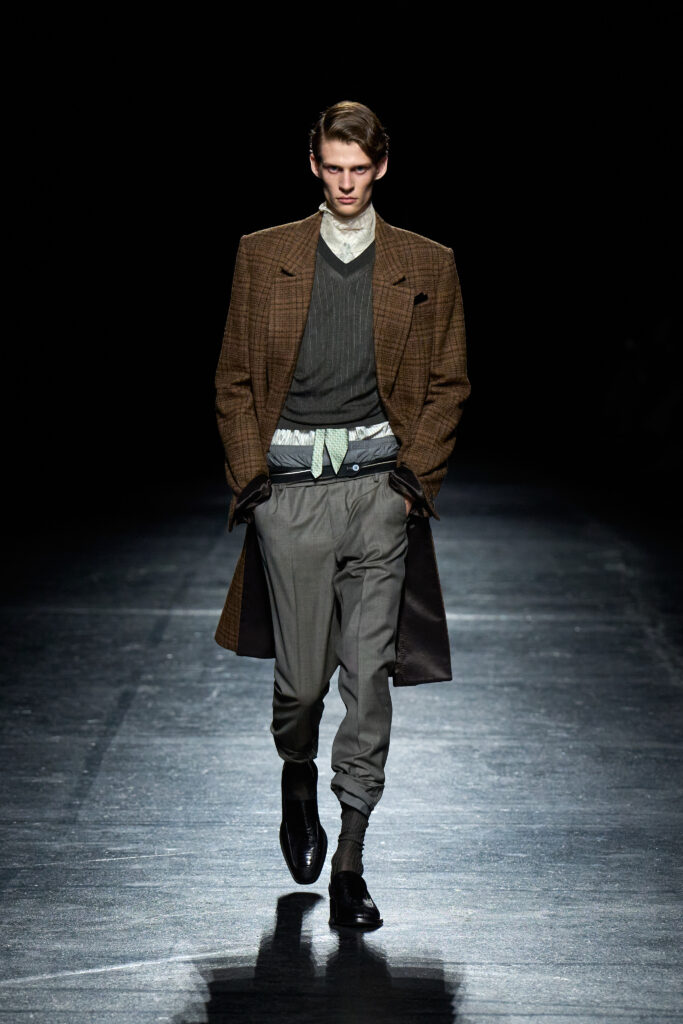
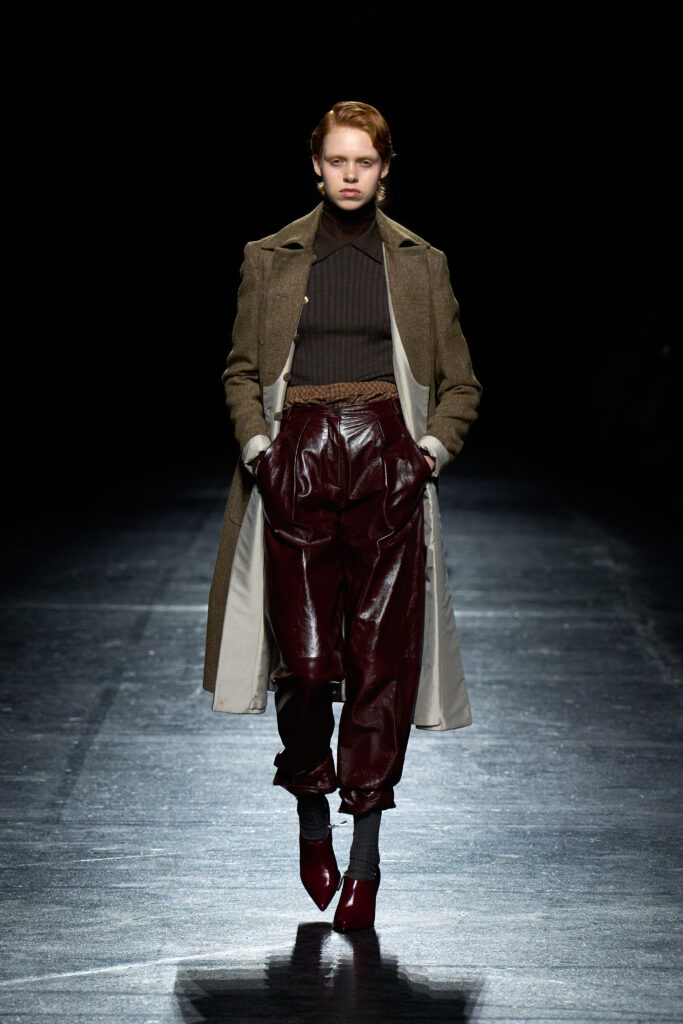
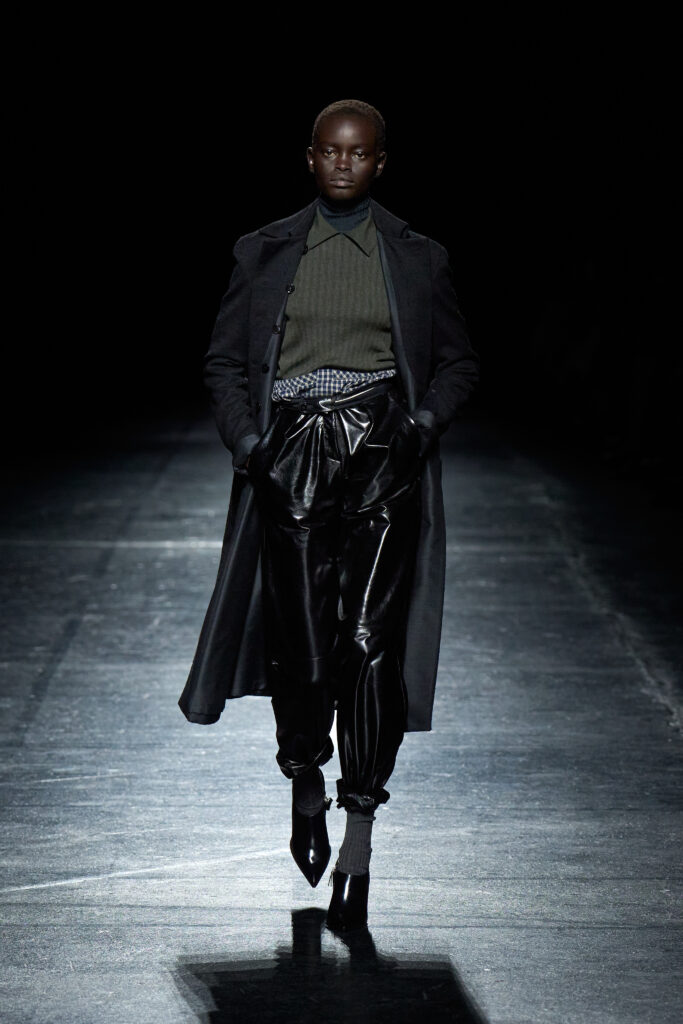
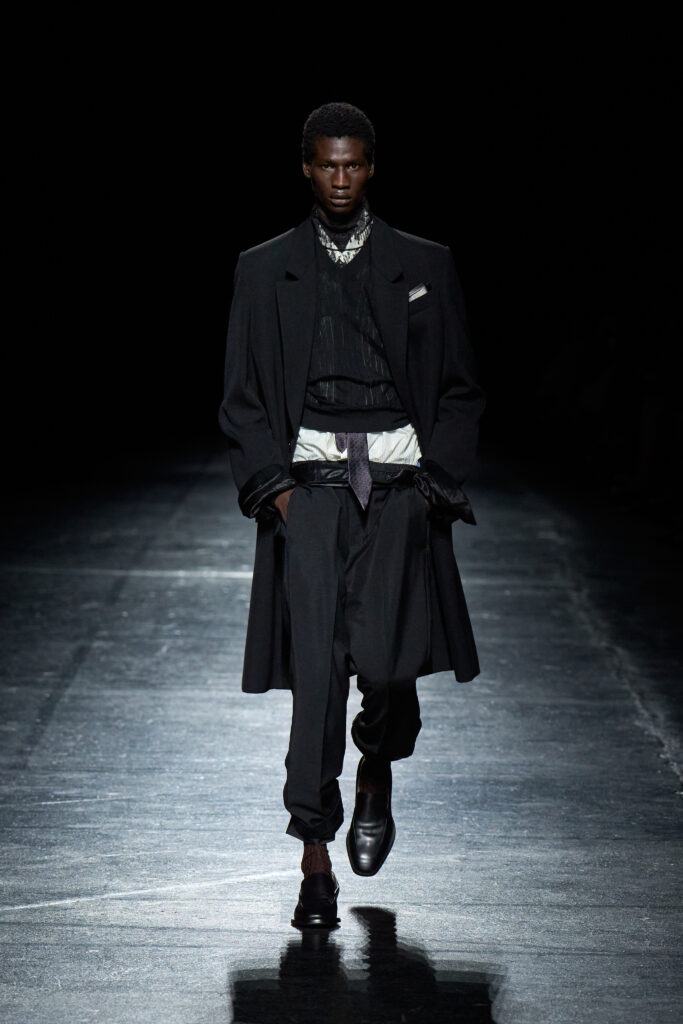
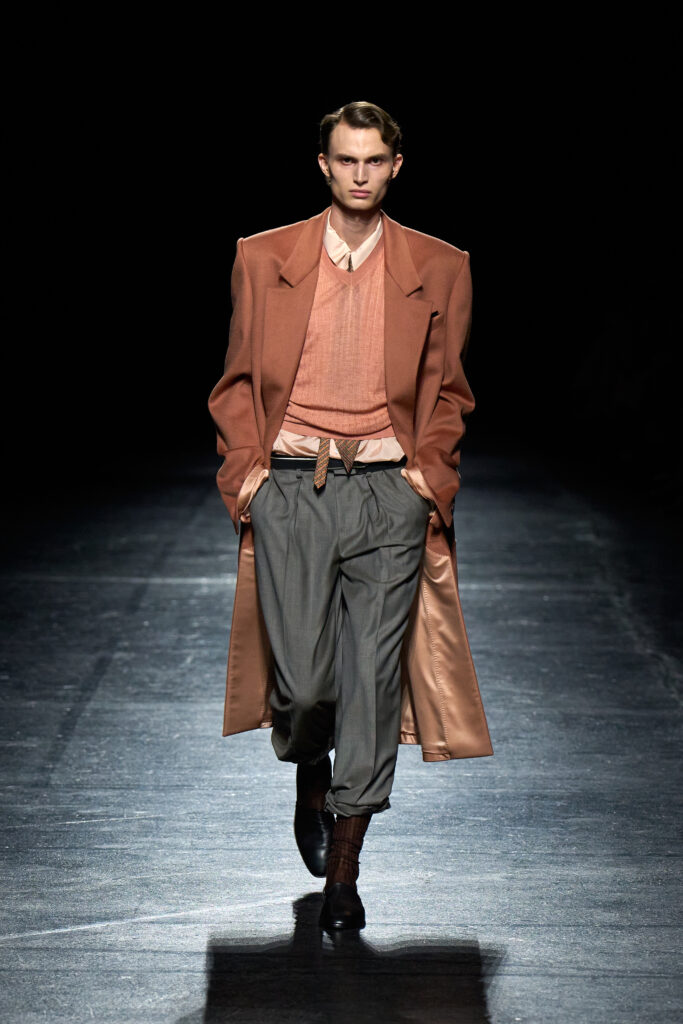
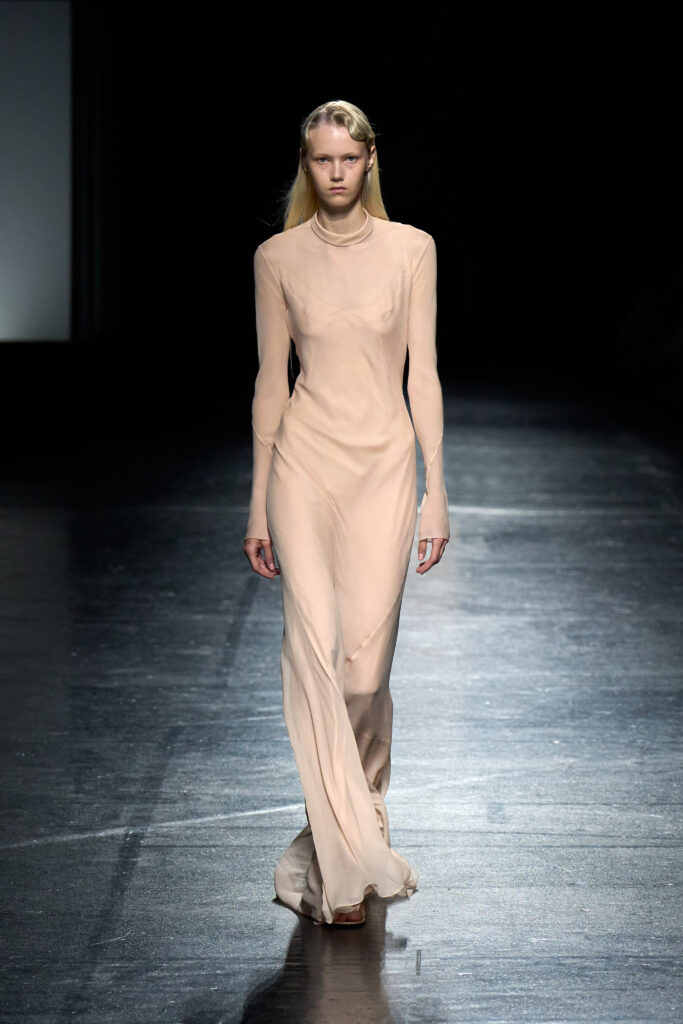
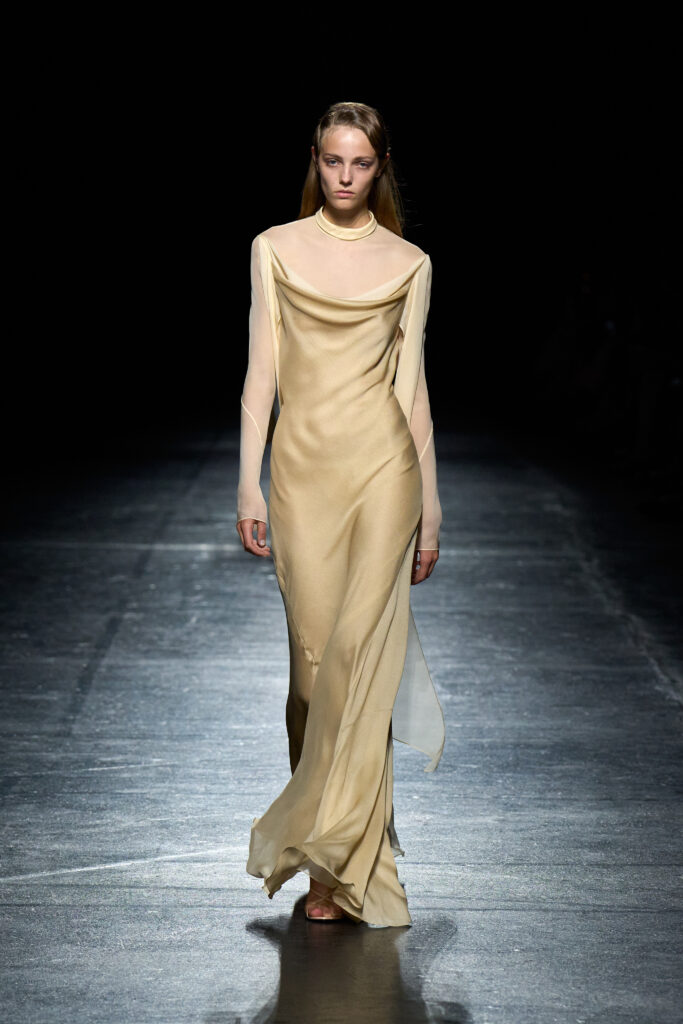
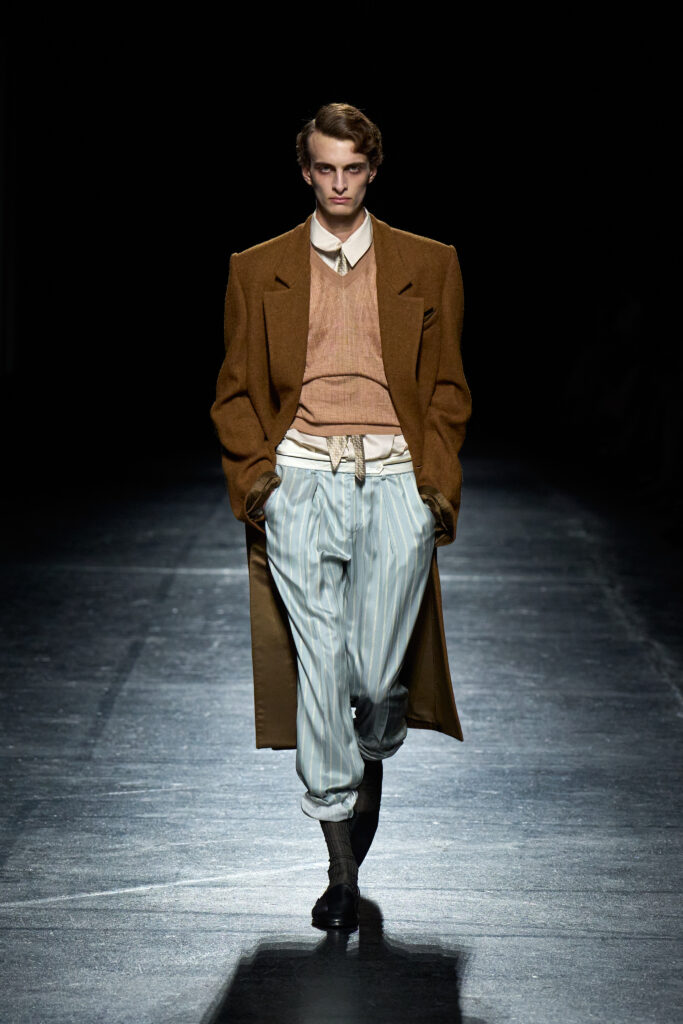
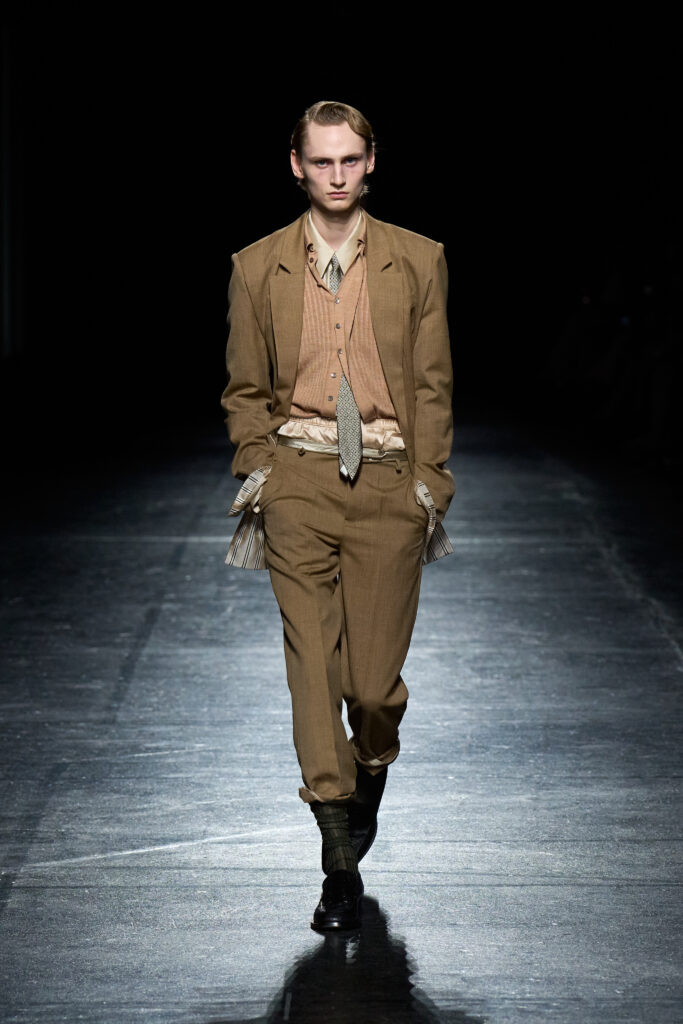
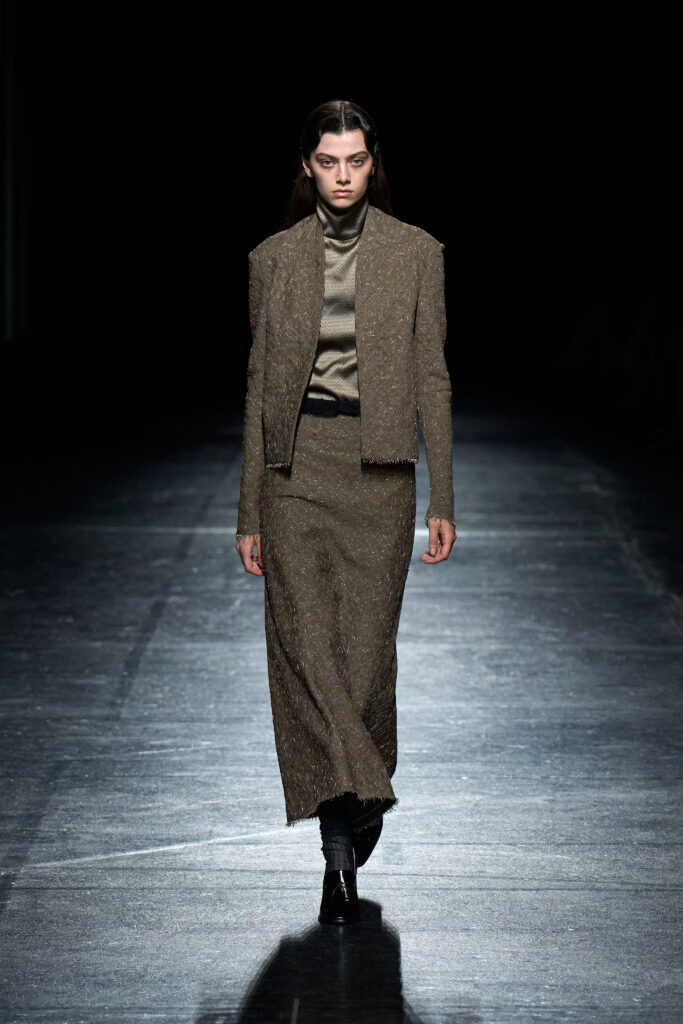
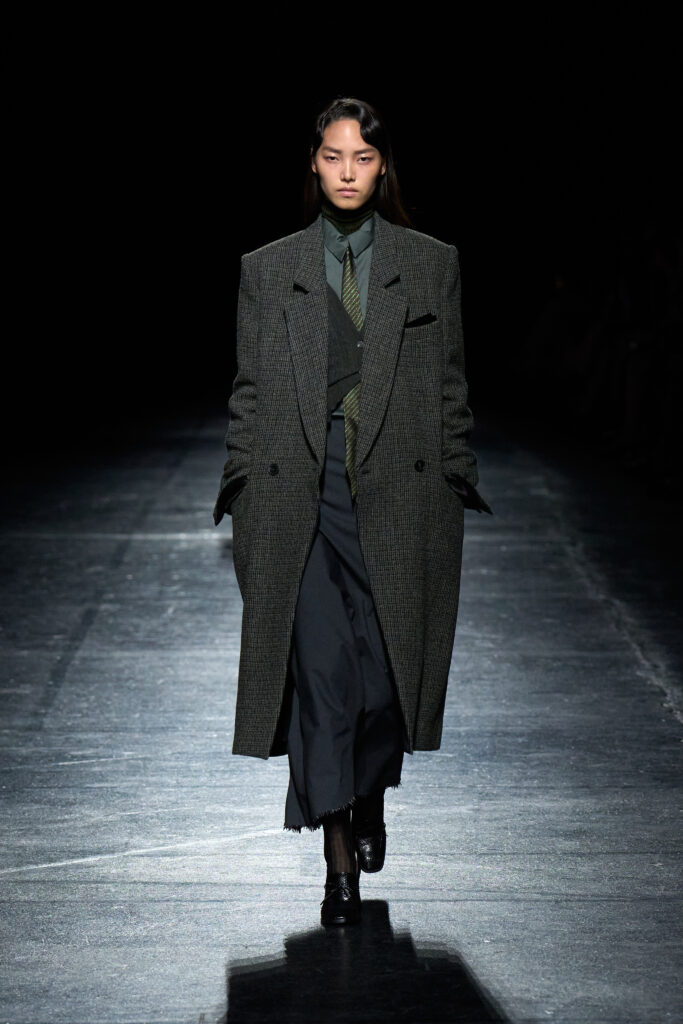
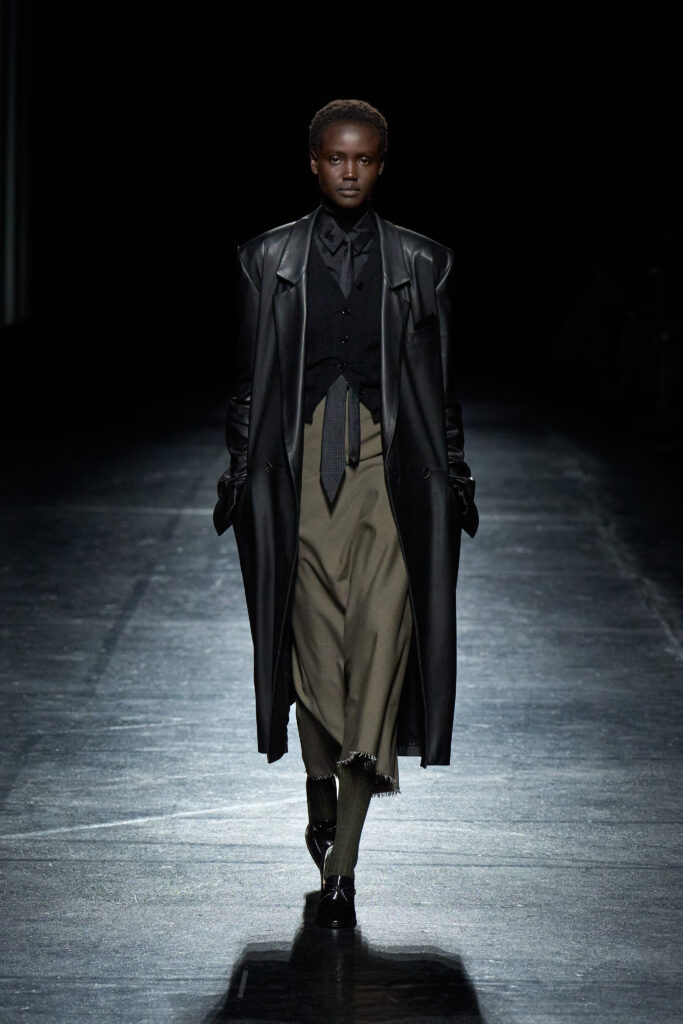
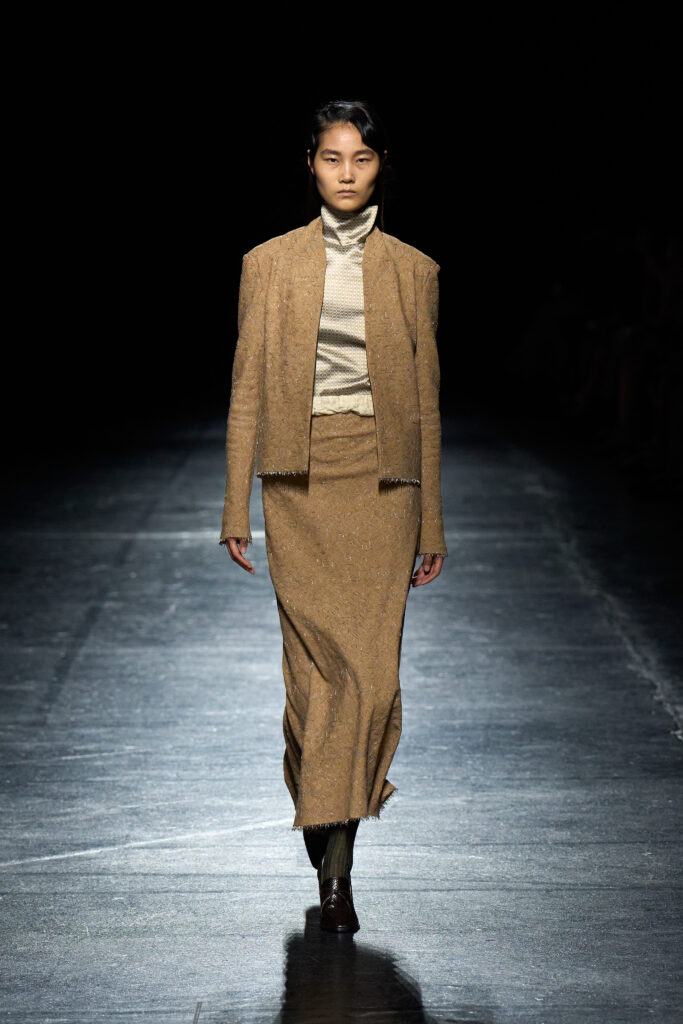
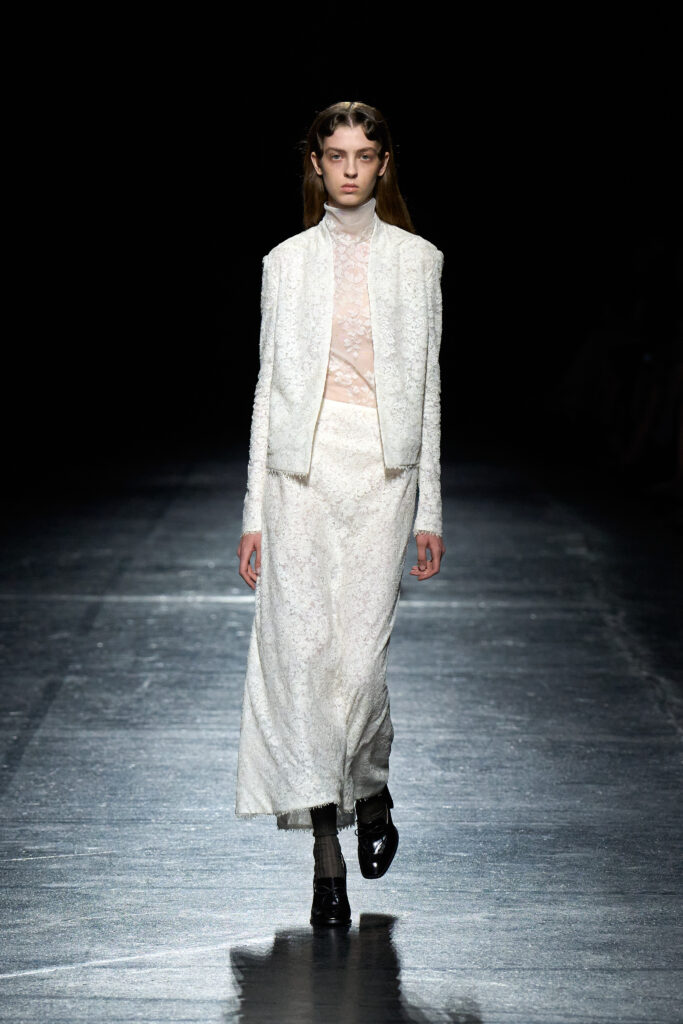
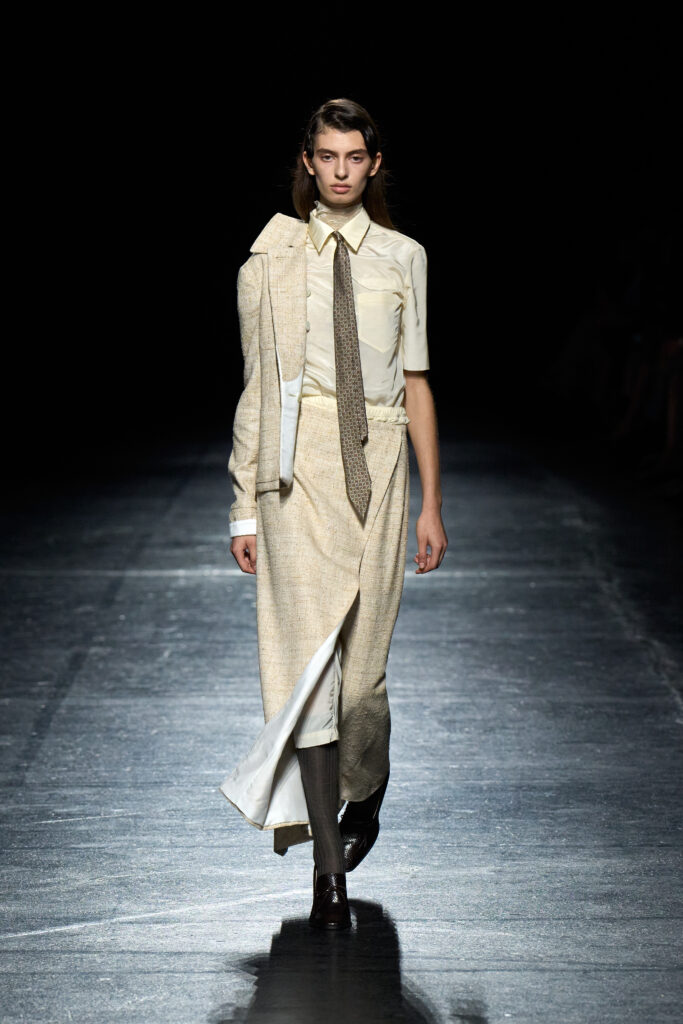
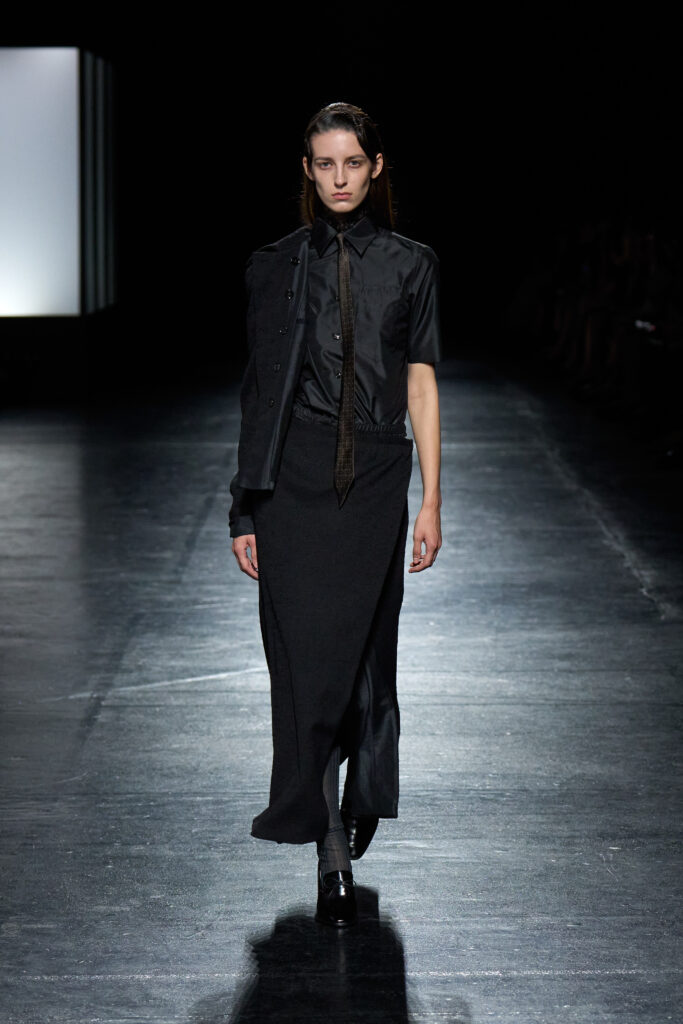
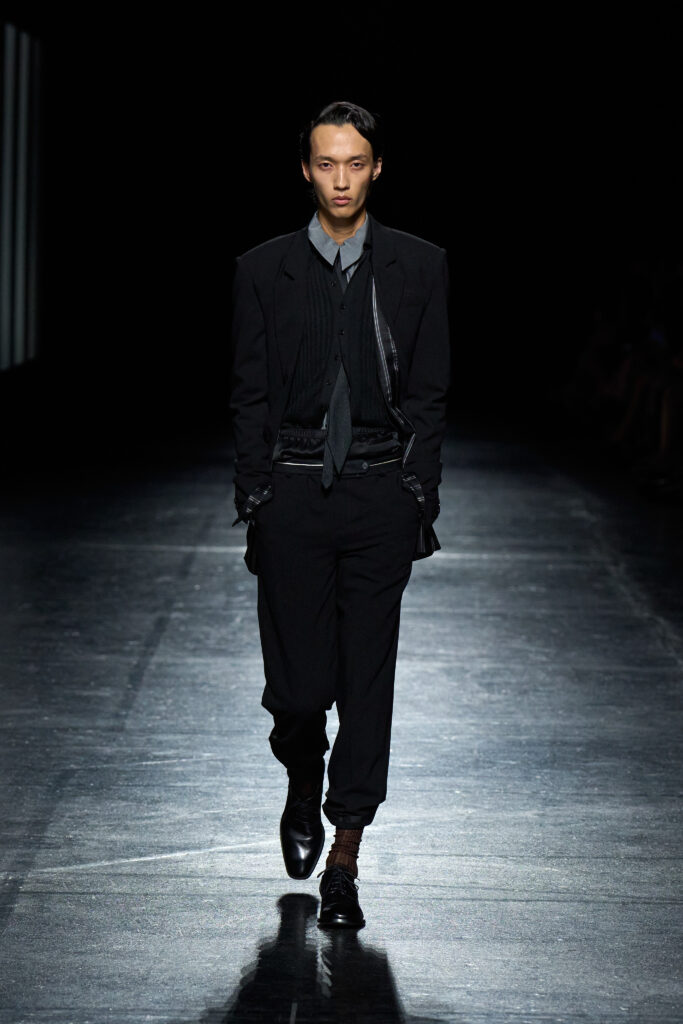
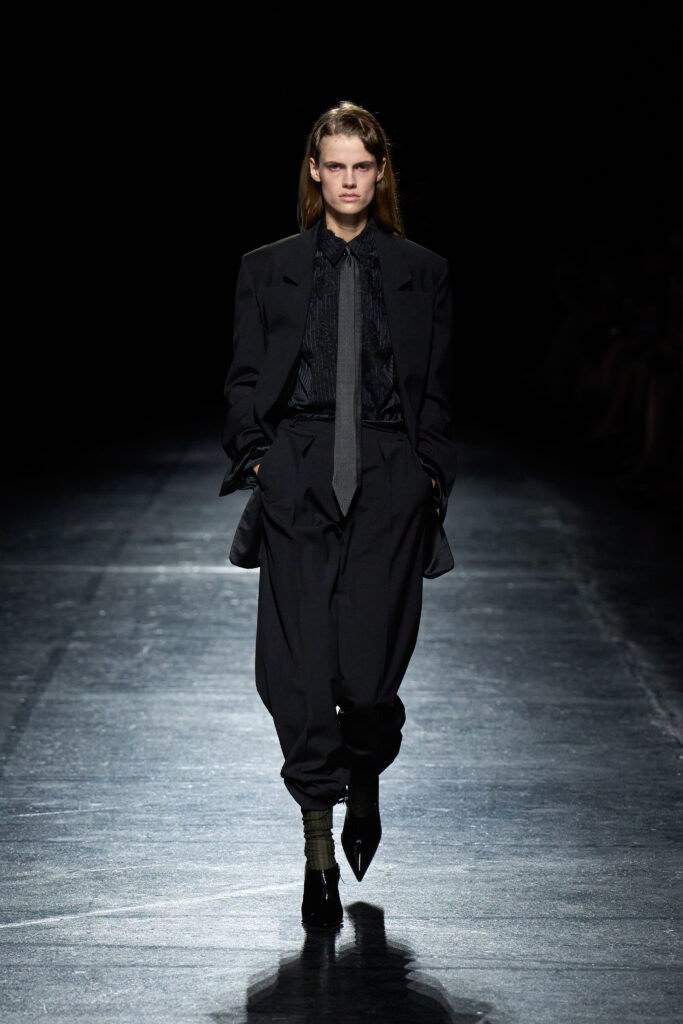
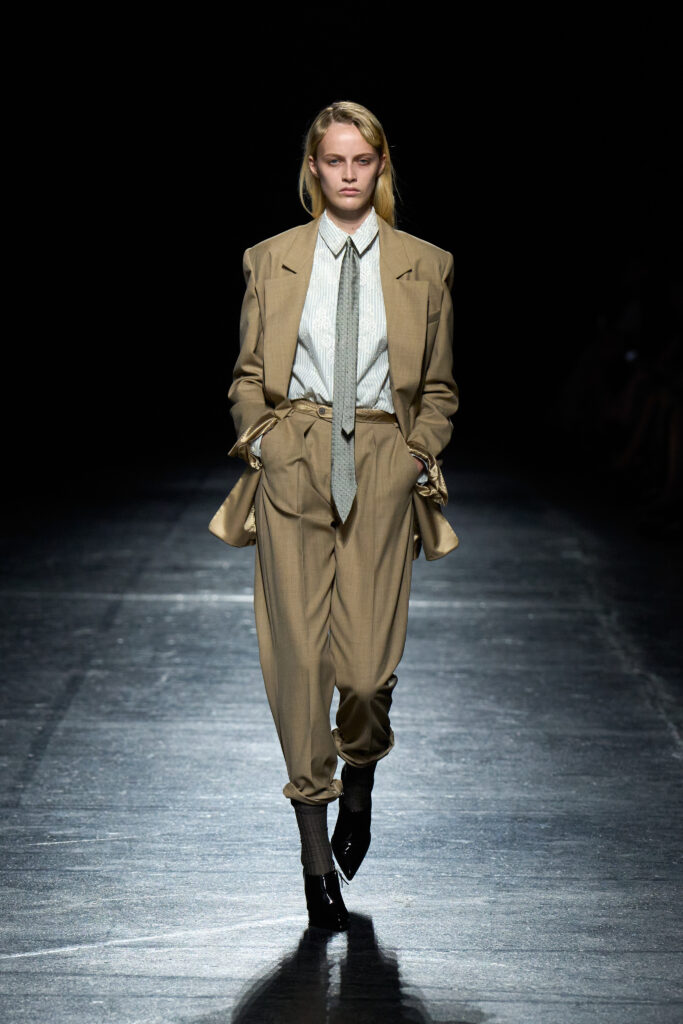
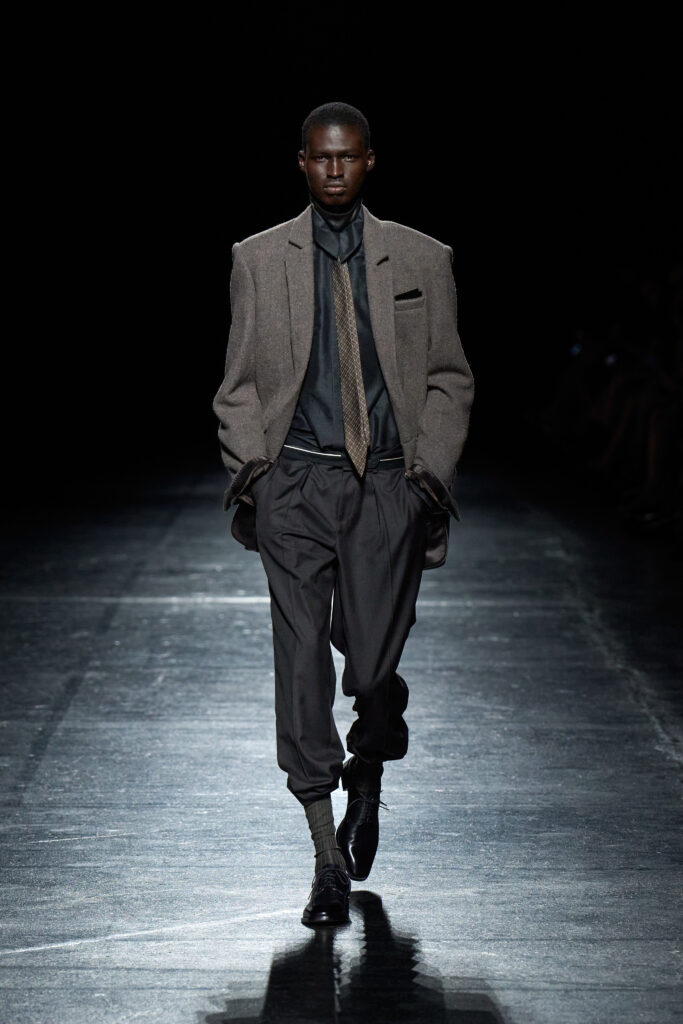
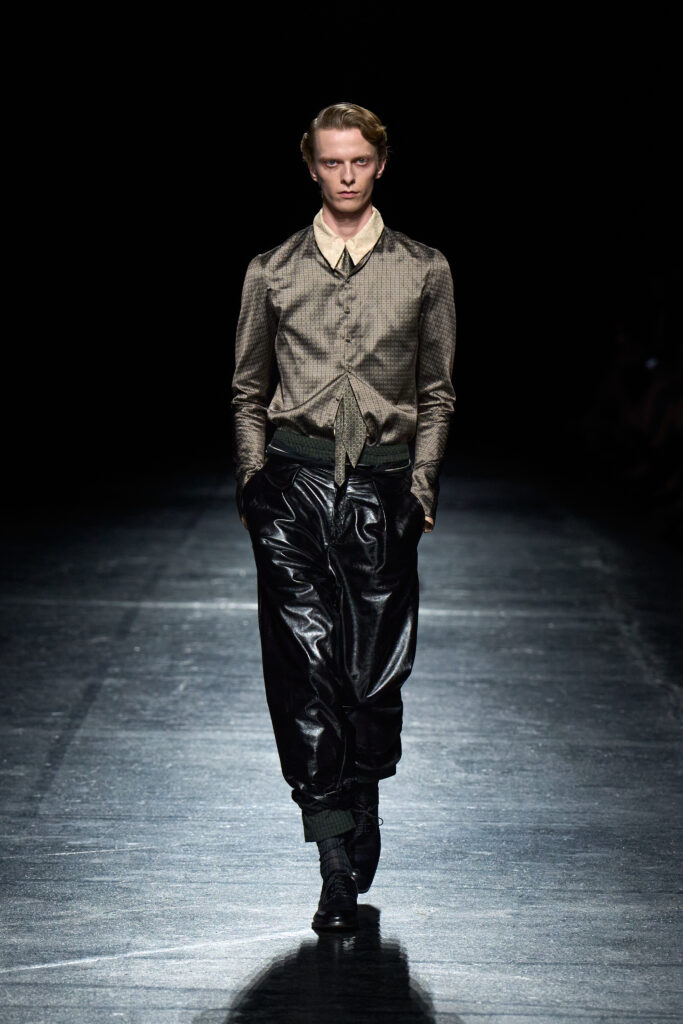
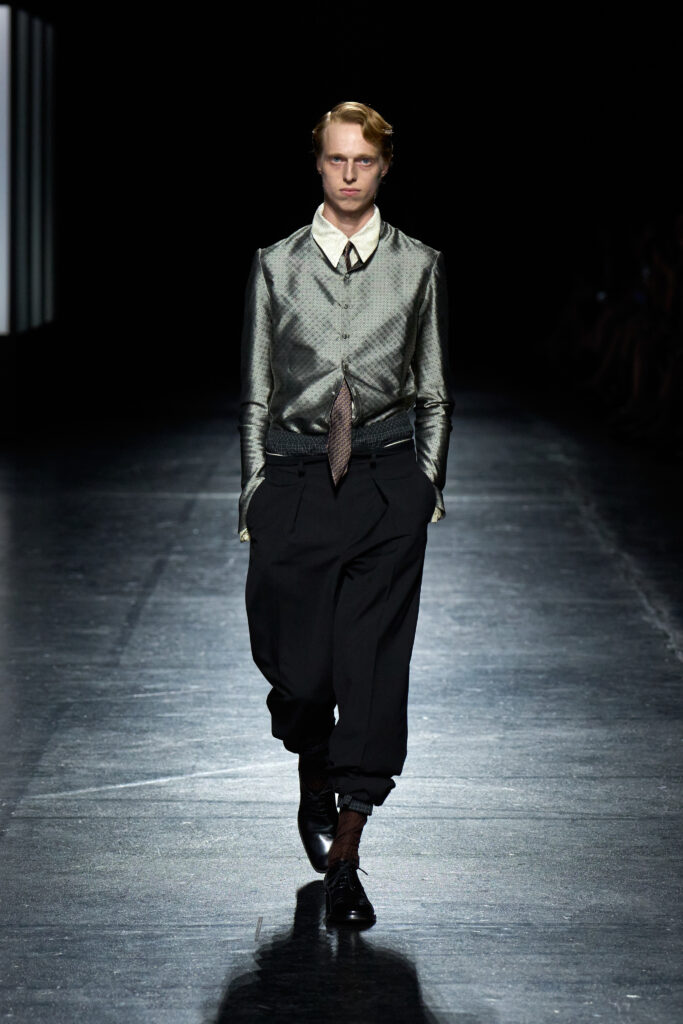
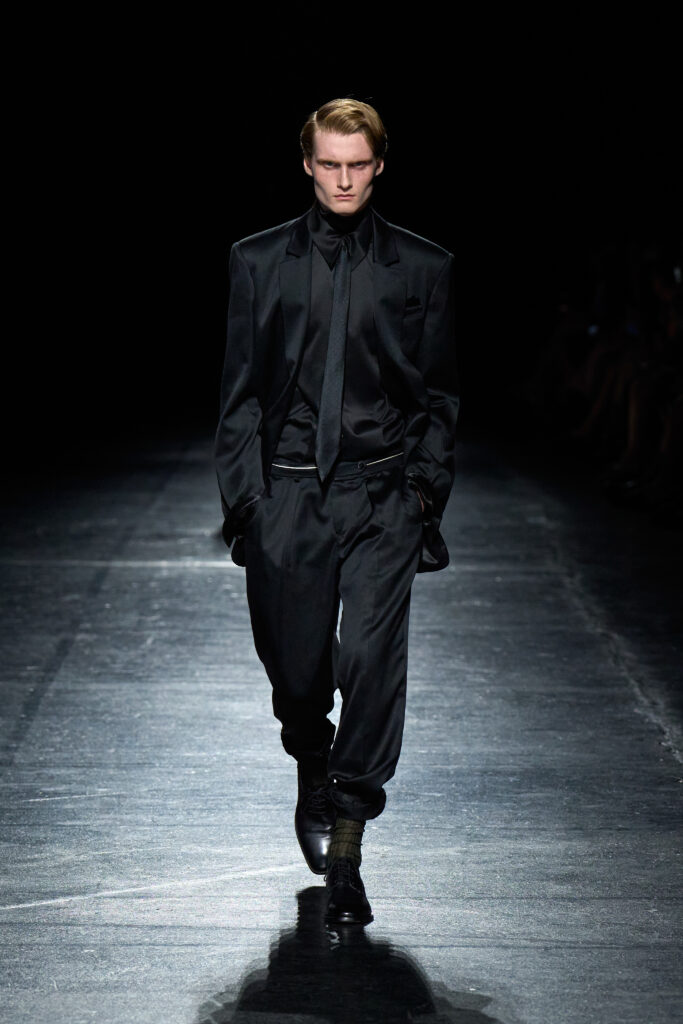
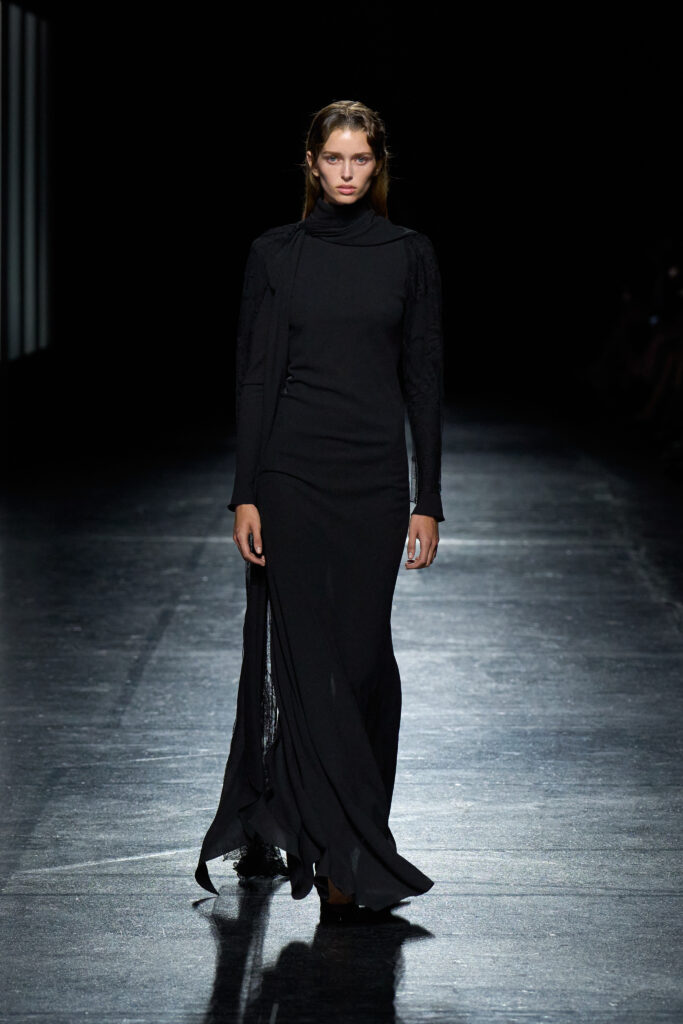
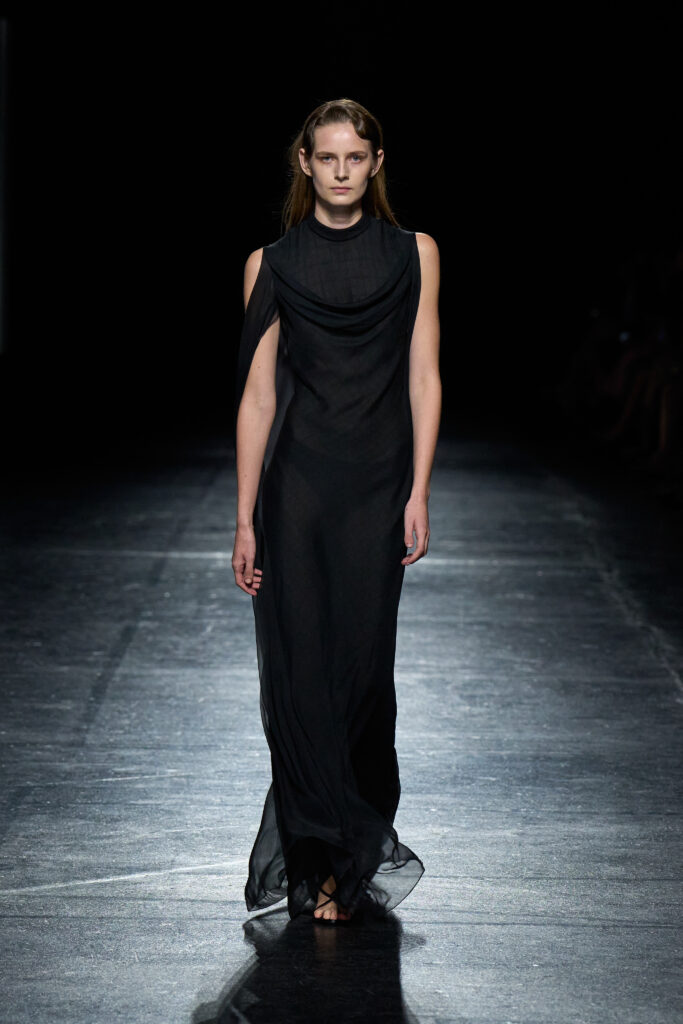
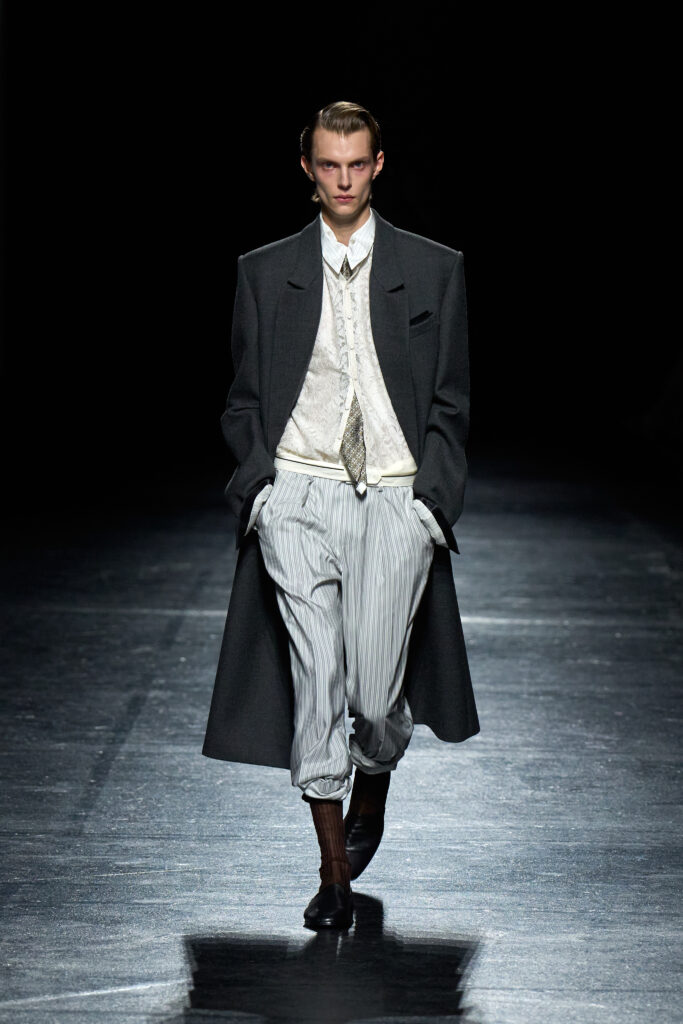
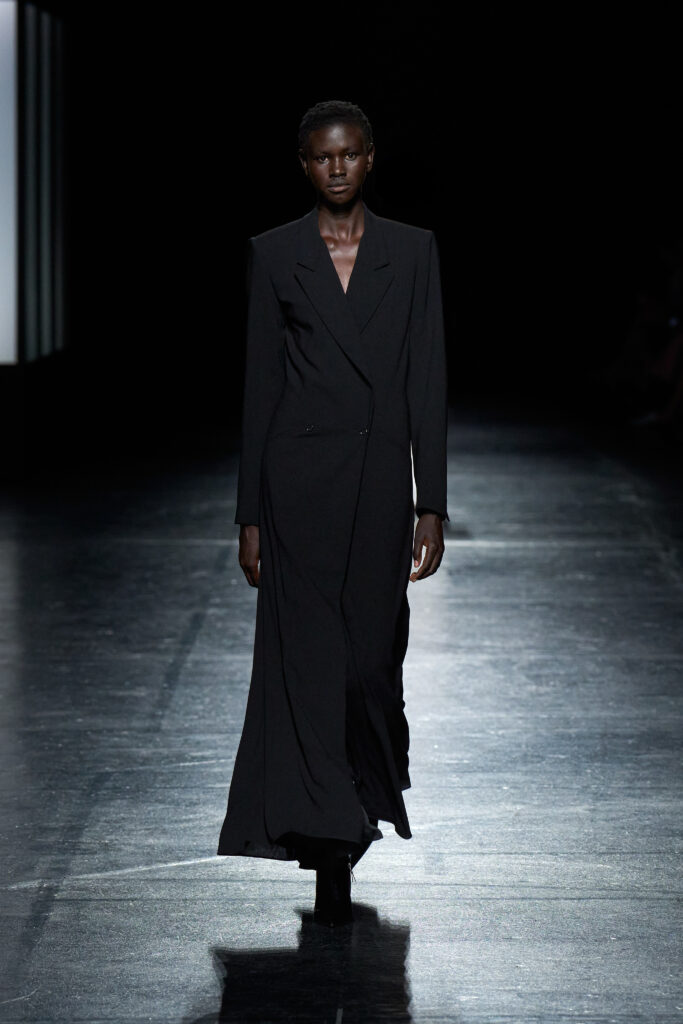
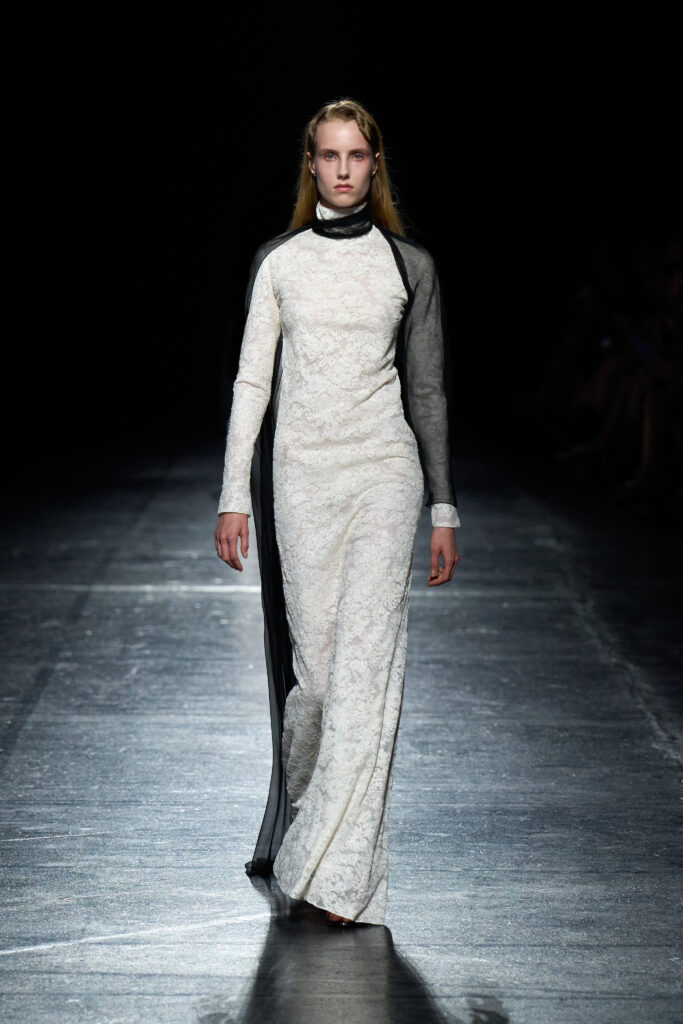
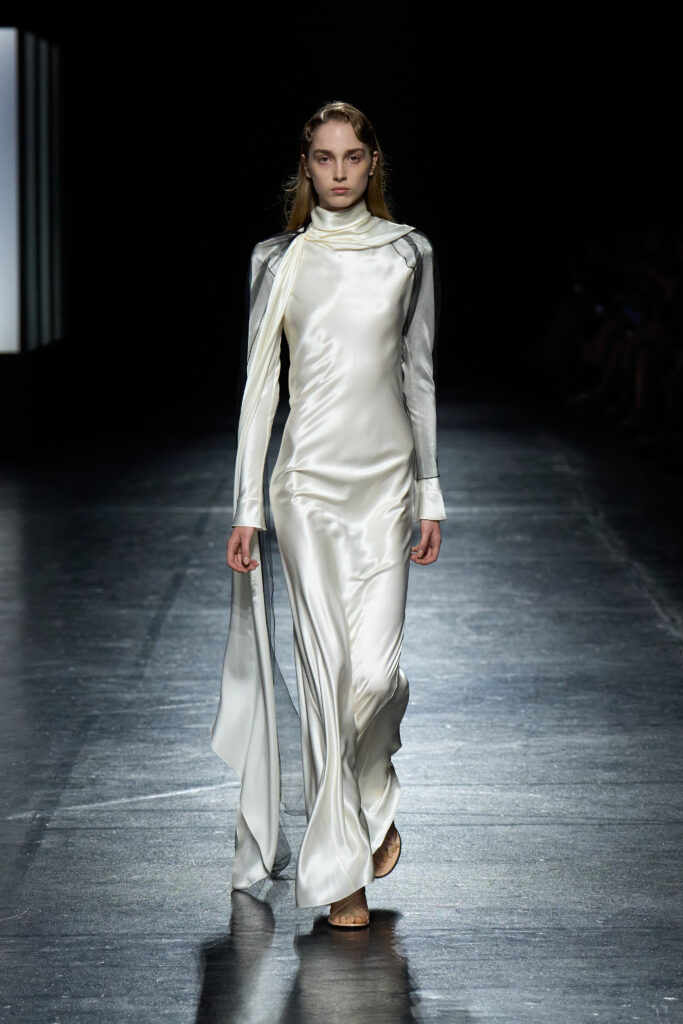
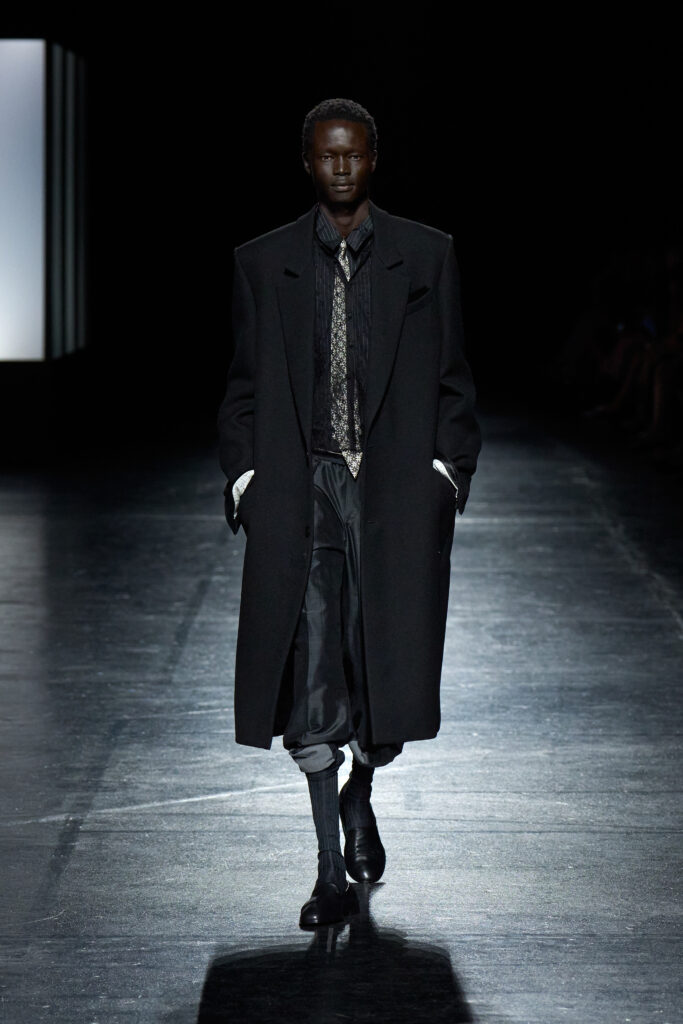
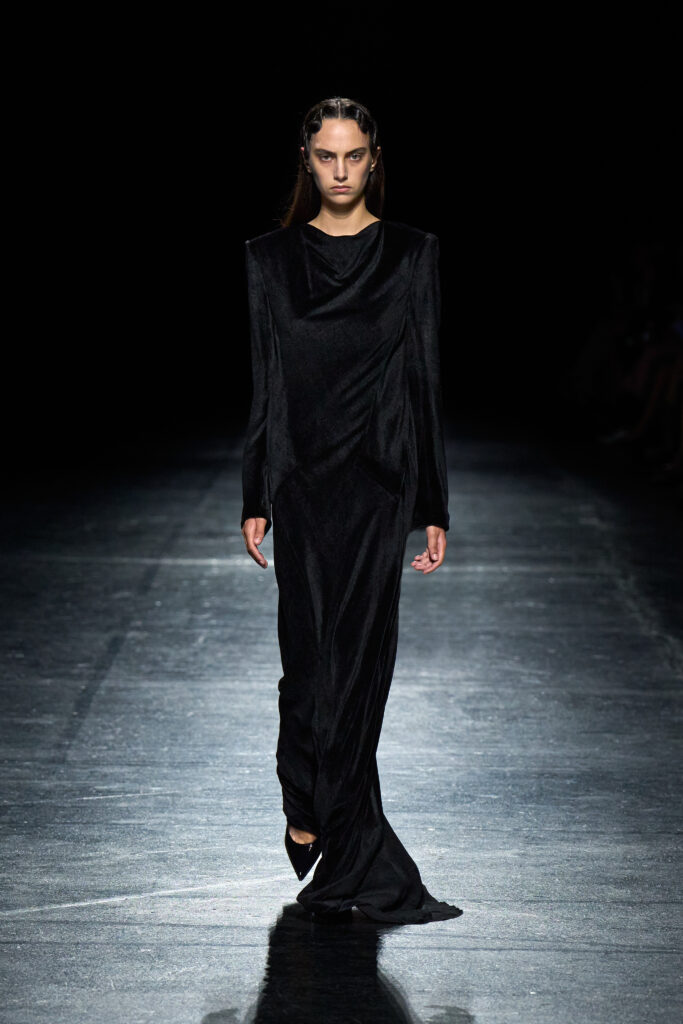
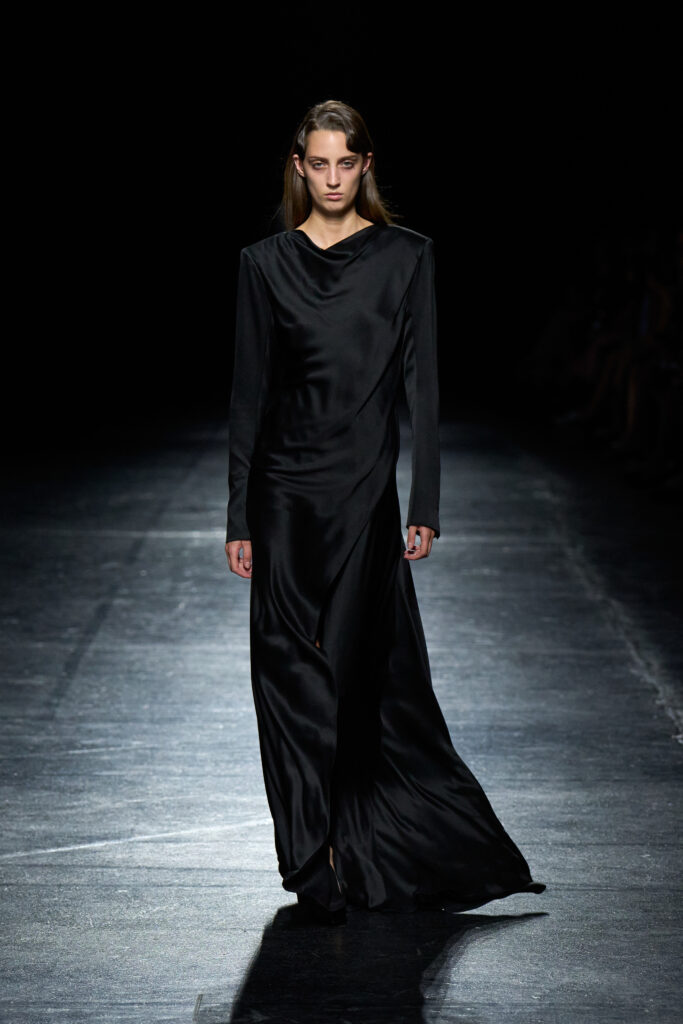
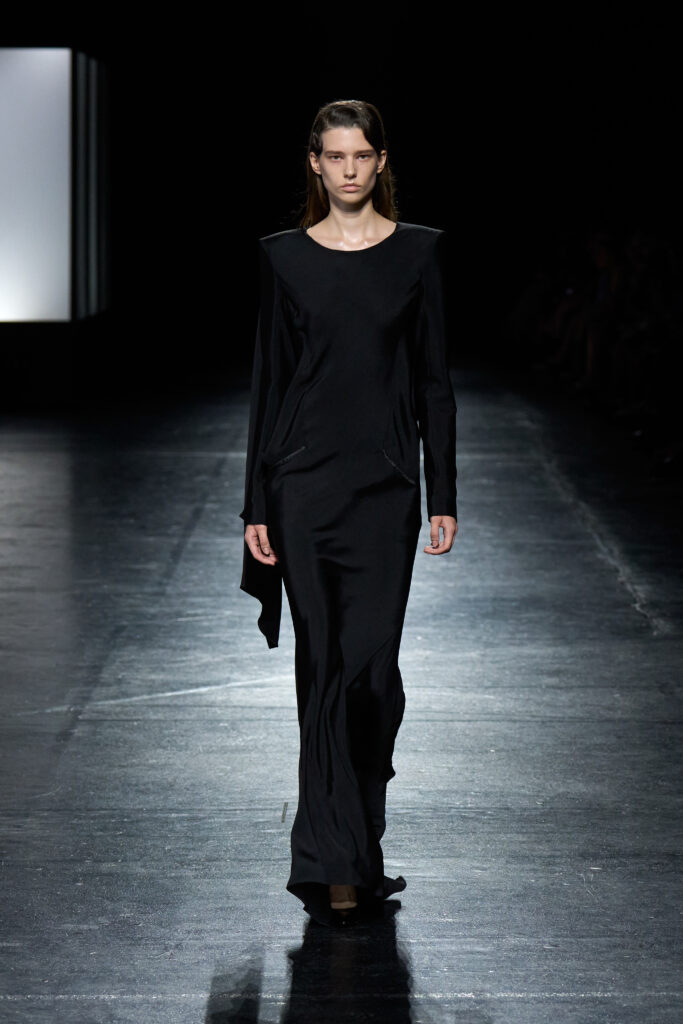
Creatively speaking, the collection draws inspiration from a distinctively Belgian natural world—an evocation of cultures, materials, landscapes, and colors that relies more on sensation than on direct reference. The color palette, composed of muted tones evoking the lowlands, is brought to life by luxurious fabrics: fine wool and cashmere, charmeuse silk, exceptionally soft cotton, and translucent silk lace. The elongated and softened proportions exude timeless elegance, while the bias cut reinterprets the classic interplay of fluidity and tailoring, applied equally to evening gowns, pants, and jackets.
One technical detail is worth noting: several pieces are designed to be reversible, allowing the inside of the garment to become its outside. This approach, presented as the revival of a forgotten craft, extends the collection’s overarching philosophy—that of clothing designed to last beyond the seasons, conceived as a permanent wardrobe rather than a succession of disposable pieces. At Boloria, fashion is less about immediate impact and more about a garment’s ability to stand the test of time without going out of style—a goal that is increasingly rare in an industry driven by the perpetual acceleration of new collections.
It remains to be seen how this brand—deliberately built in the shadows rather than in the spotlight—will find its place in a luxury market that thrives precisely on the star power of its designers. Boloria’s gamble—“who they are is who we are,” the press release concludes—consists precisely in reversing this logic: not imposing a signature on the garment, but letting the garment collectively define an identity yet to be born.
Cette publication est également disponible en :

