
Kering is launching an Academy for Excellence, designed as a network of academic partnerships.
The issue goes beyond training: it touches on how a luxury group organizes the transmission of its cultural, technical, and strategic knowledge.
At a time when expertise is becoming a matter of sovereignty, the school is once again becoming a arena for soft power.
In the luxury sector, the future is not shaped solely in workshops or boutiques. It is also shaped in the places where vocations, methods, and narratives are forged. The launch of the Kering Academy for Excellence should therefore be viewed less as an institutional announcement and more as a signal: luxury groups now want to structure their relationship with the academic world not through isolated initiatives, but through networks.
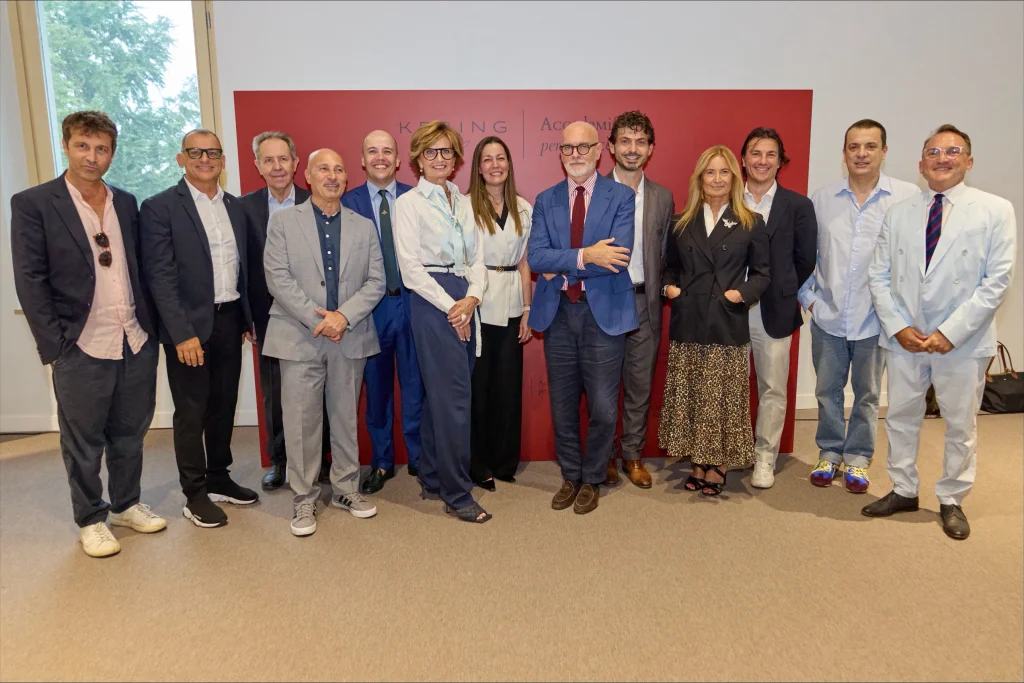
The information provided remains brief. Kering has announced the launch of a network of academic partnerships and the involvement of figures from the worlds of culture and luxury in a think tank. This two-pronged approach is interesting. On the one hand, education; on the other, thought. In other words, an initiative that is not limited to developing skills but also seeks to foster a conversation about excellence.
Why now? Because the luxury industry is facing unprecedented pressure. It must accelerate its efforts in AI, sustainability, traceability, and global distribution, all while preserving craftsmanship that is passed down slowly. It must appeal to new generations without undermining the codes that underpin desirability. In this context, the academy becomes a strategic tool. It makes it possible to identify talent, formalize standards, establish cultural authority, and spread a vision of luxury beyond the company’s boundaries.
The word “excellence” is often overused. Here, it becomes justifiable if it is grounded in concrete partnerships, programs, identified stakeholders, educational criteria, and measurable outcomes. The wheat, at this stage, lies in the proposed structure: an academic network and a think tank. The chaff lies in the risk of institutional jargon—which is very common in this type of communication—if the partner schools, course content, and schedules are not clearly documented.
Culturally, it’s the gesture that counts. Major conglomerates are no longer content merely to preserve their Houses; they seek to influence the ecosystem that will produce the professionals capable of understanding them. It is a form of soft power that is more discreet than a fashion show, but potentially more enduring. Luxury is not seen here as merely an economy of image, but as a discipline: history, high standards, production, transmission, and responsibility.
For Kering, the stakes are also symbolic. At a time when companies are being judged on their ability to renew their creative leadership, growth models, and commitments, an academy allows them to regain control over the long term. It reinforces the idea that excellence isn’t something that can be decreed in a campaign but is cultivated through learning, challenge, and continuity.
The initiative will have to be judged on its merits: the names of the schools, the countries involved, the duration of the programs, the targeted professions, the selection criteria, the composition of the think tank, and the expected outcomes. But the message is clear. In the cultural battle for luxury, education has become a way to shape the future.
Cette publication est également disponible en :

