
A leather jacket may seem simple at first glance. A zipper, a few pockets, a collar, and a recognizable material. Yet it’s often the details that make the difference between an ordinary piece and a garment you’ll keep for years to come.
In the case of an aviation-inspired jacket, this requirement is even more important. The cut and finishes are not merely aesthetic: they must remain consistent with the garment’s history.
A Cut Rooted in Function
The first aviator jackets were not designed to follow a trend.
They were meant to protect pilots, allow for a certain degree of freedom of movement, and provide sufficient warmth. Their cut therefore had to meet very specific requirements.
Today, these characteristics have evolved, but their influence remains evident.
A leather aviator jacket generally has a more enveloping silhouette than a classic jacket. The collar, cuffs, and waist can be designed to reinforce this sense of protection.
These elements contribute to its identity and explain why the cut remains so important.
Leather: A Living Material
The quality of a jacket doesn’t depend solely on the thickness of the leather. Suppleness, grain, finish, and the way the material ages over time are just as important.
Leather with character can be relatively stiff when new, then gradually soften with wear. Natural creases then appear in the areas where the garment follows the body’s movements.
This transformation is part of the material’s charm.
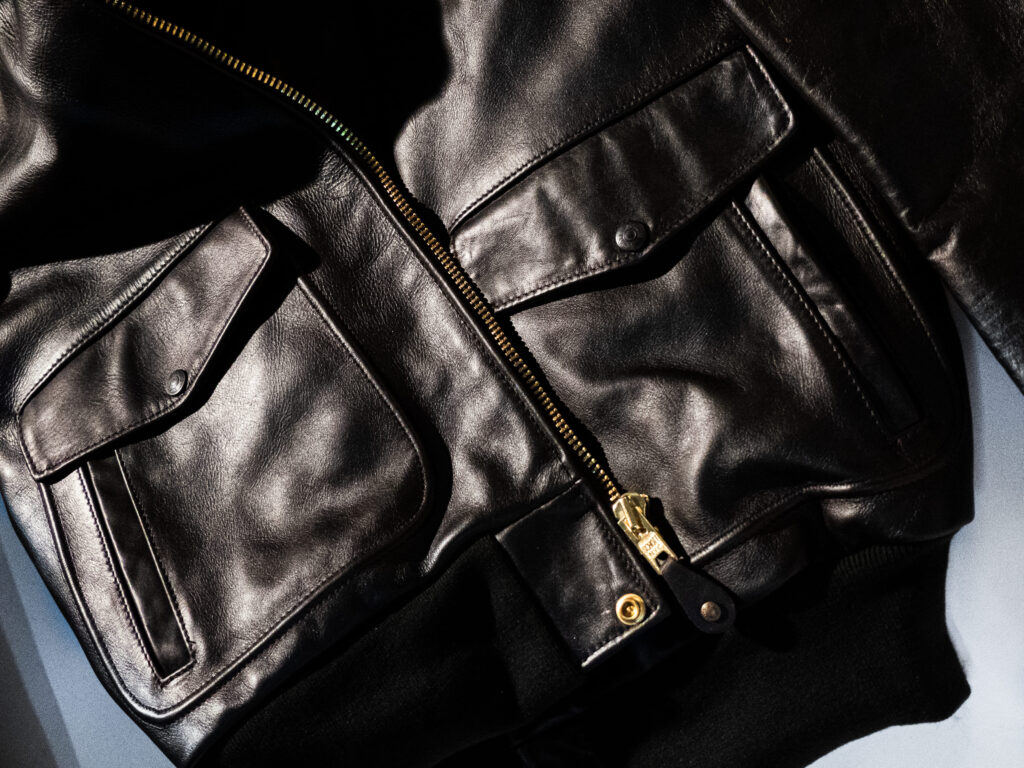
Details That Tell a Story
Pockets, fasteners, and seams may seem secondary. Yet they play a direct role in a jacket’s identity. A pocket originally designed for practical use can become an aesthetic element. A sturdy fastener evokes the rigors to which outerwear was once subjected. It is this blend of function and aesthetics that makes historic pieces particularly interesting.
Schott: A Culture of Outerwear
This approach is particularly evident in the history of Schott NYC®. Founded in New York in 1913, the American brand built its reputation on outerwear whose details often serve a functional purpose as well as an aesthetic one.
The Perfecto® has become the best-known symbol of this philosophy. Its asymmetrical closure, pockets, and instantly recognizable design have all contributed to its iconic status. The Schott® brand thus remains strongly associated with an approach to clothing design in which authenticity stems from the harmony between form, material, and history.
The cut must also suit its intended use
Even a perfectly designed garment won’t be suitable for everyone.
Before choosing a jacket, it’s therefore important to consider how it will be worn.
Will it be worn as a main jacket? Paired with a sweater? Mainly in the fall or also in the winter?
These questions help determine the ideal fit.
A style that’s too fitted will limit layering options. A cut that’s too loose can drastically alter your silhouette.
The goal is to find a balance between the piece’s character and everyday comfort.
Recognizing a Piece Built to Last
Durability is rarely evident in a single detail. It results from the whole. The right fabric, sturdy seams, reliable fasteners, and a well-thought-out cut come together to form a cohesive whole.
It’s also important to consider how the garment will age. A high-quality piece shouldn’t lose its appeal after just a few seasons. On the contrary, it should develop character over time.
This is especially true for leather, which develops a patina and changes over time.
An authentic bomber jacket, therefore, isn’t meant to remain frozen in time. It’s designed to evolve with its owner.
And perhaps that is the true mark of a beautiful piece: being well-designed enough to remain relevant long after the novelty has worn off.
Cette publication est également disponible en :

