
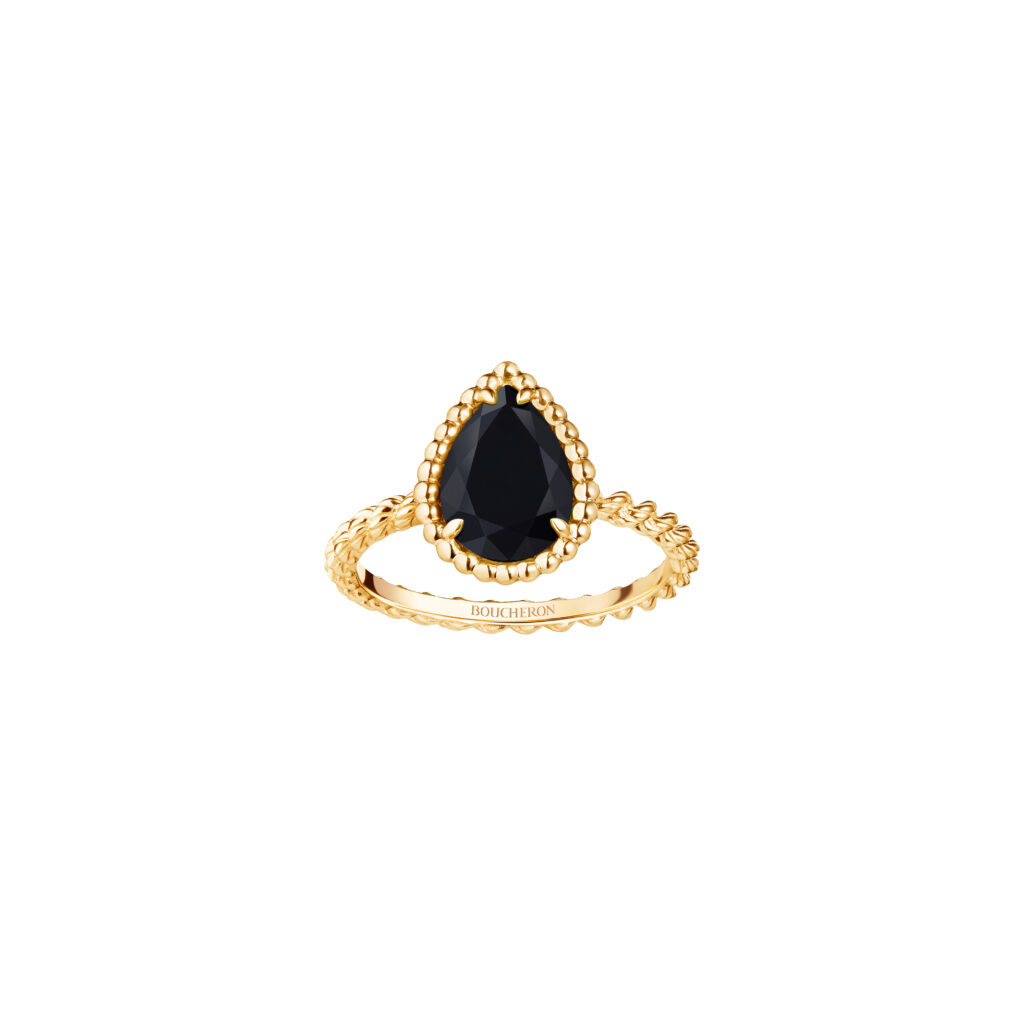
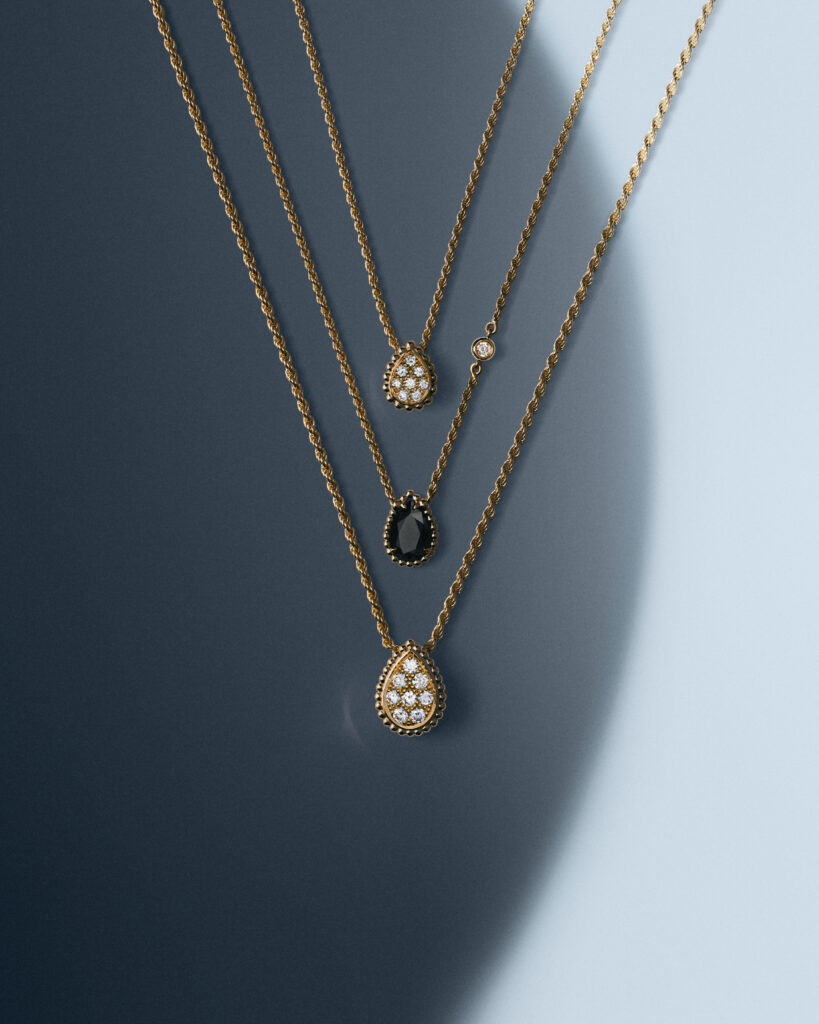
Since 1968, the Serpent Bohème has been based on a consistent design element: a gold teardrop motif, edged with granulated pearls, with a stone set at its center. Rose quartz, diamond, blue topaz—the collection features many variations, but the design principle remains the same. The stone takes center stage. The gold frames it.
The collection presented in May 2026 changes this relationship in two distinct ways.
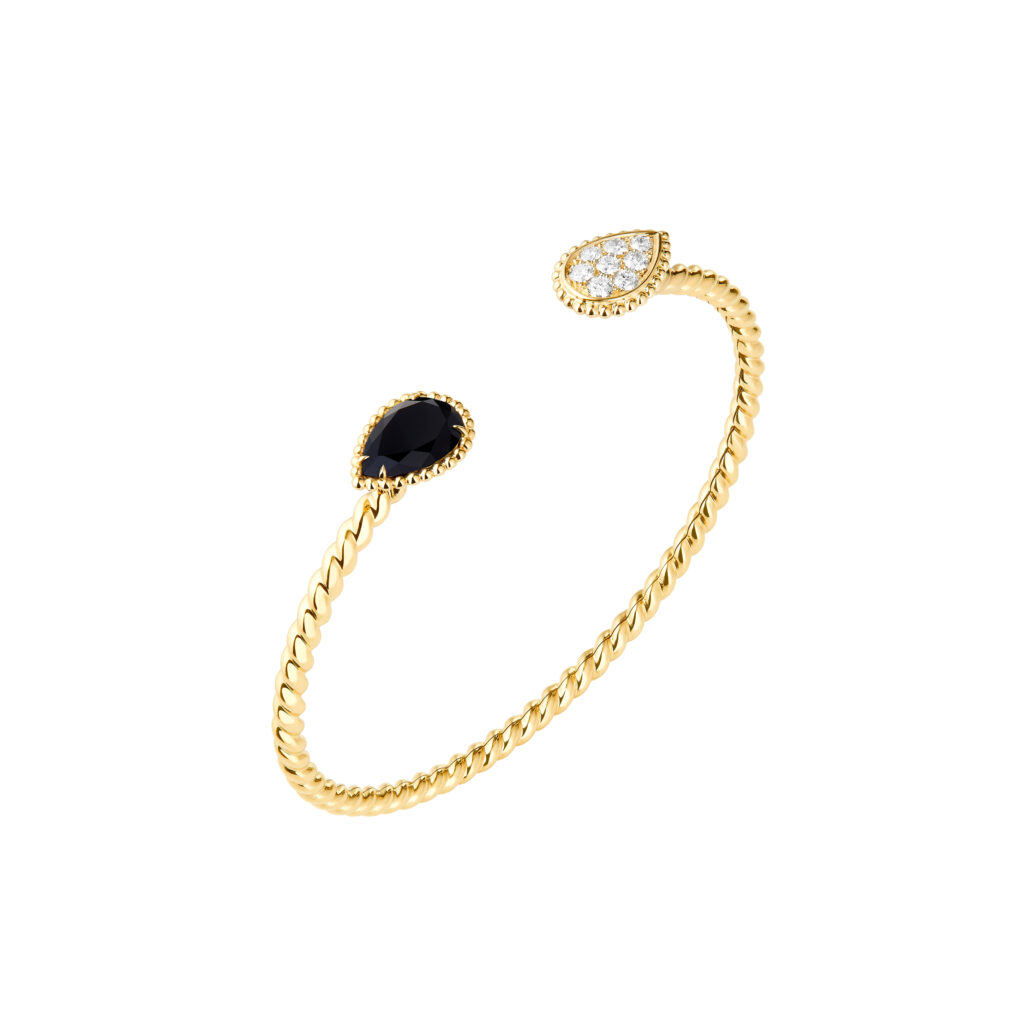
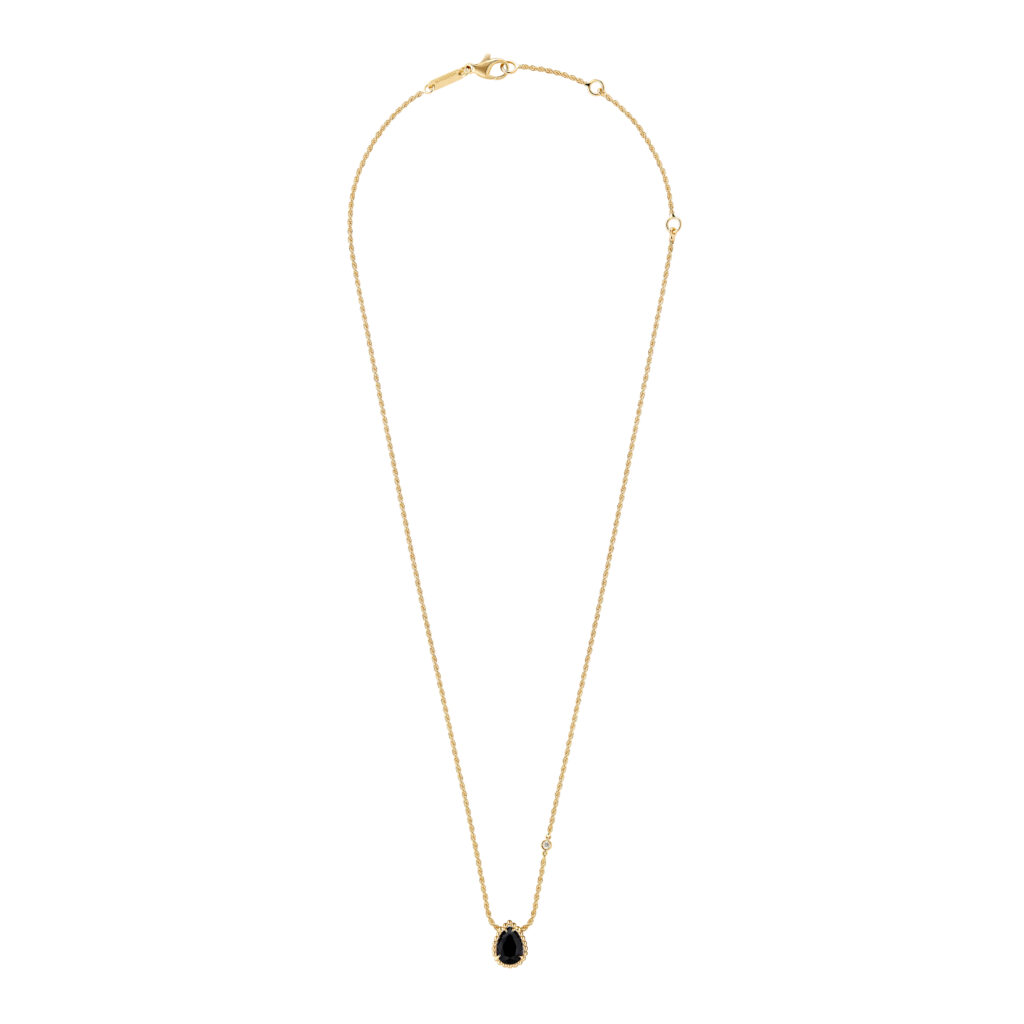
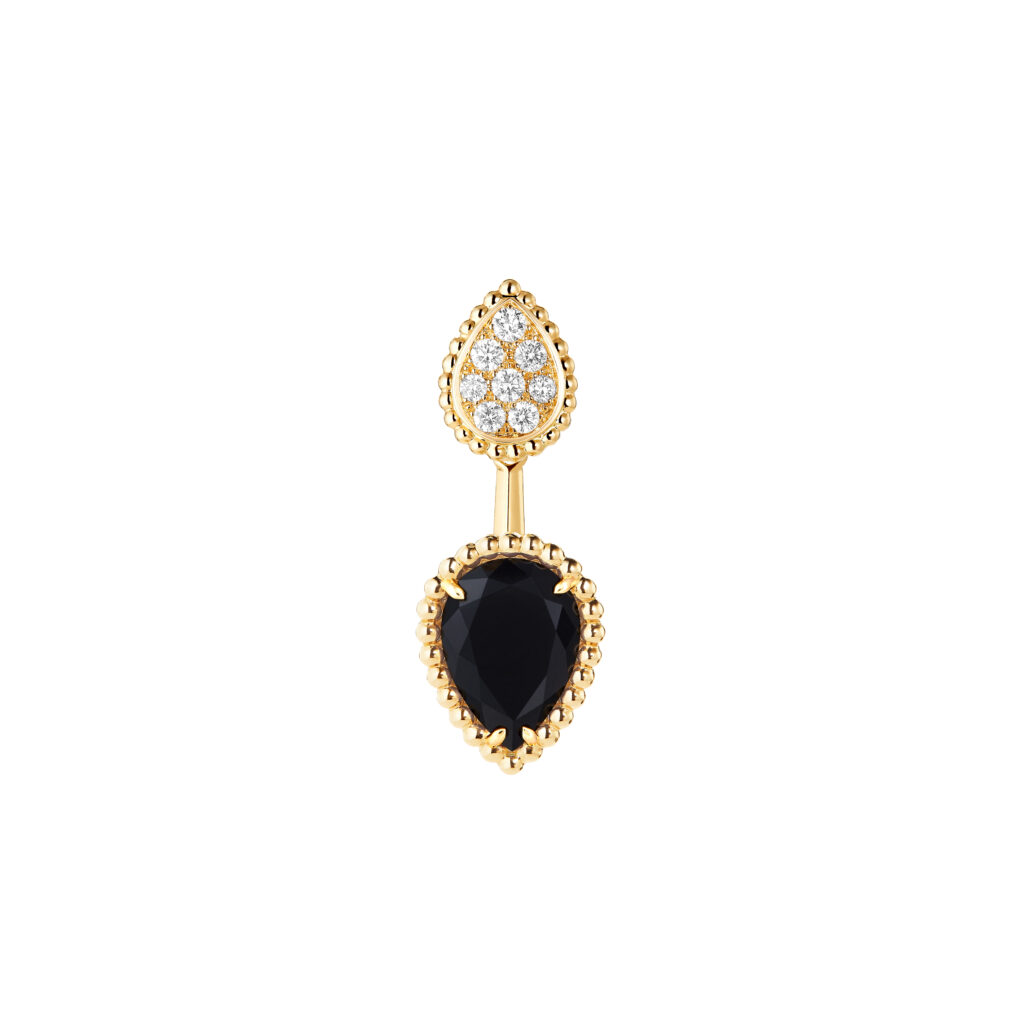
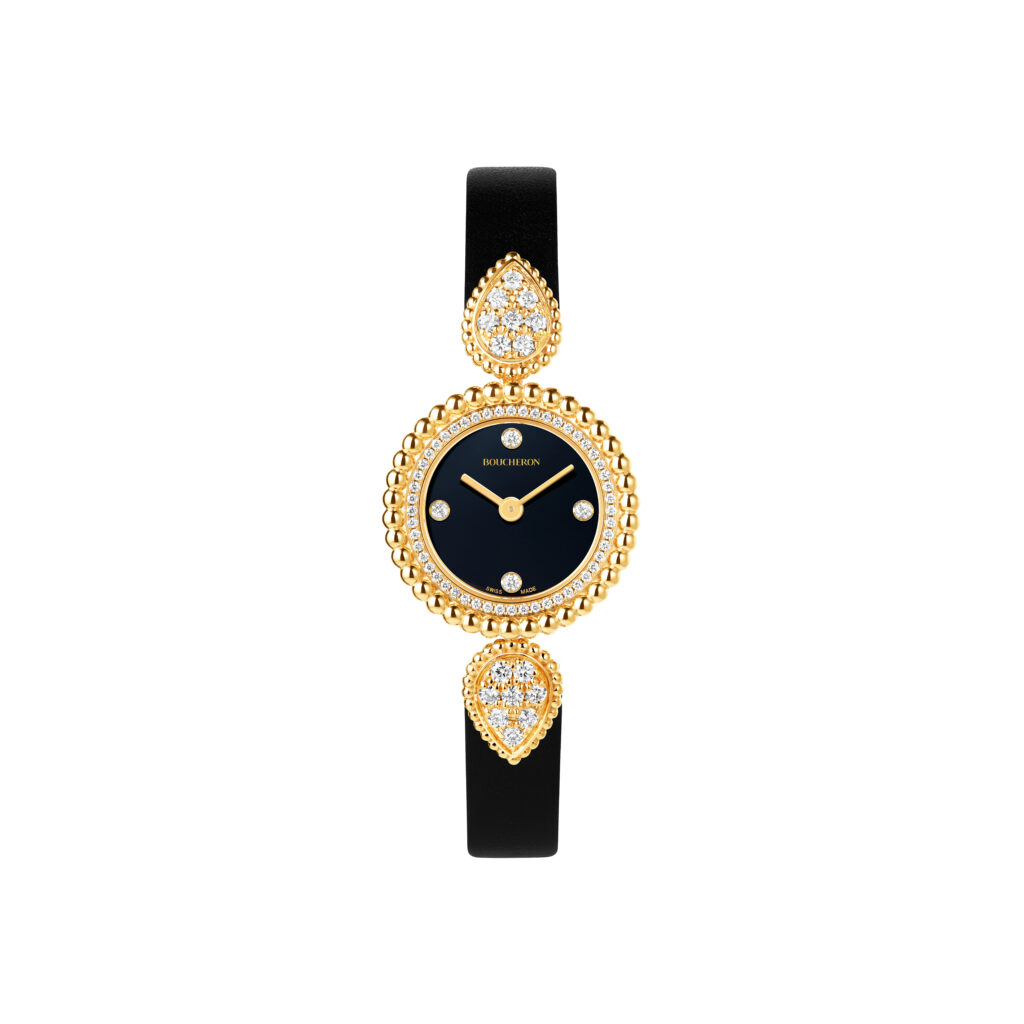
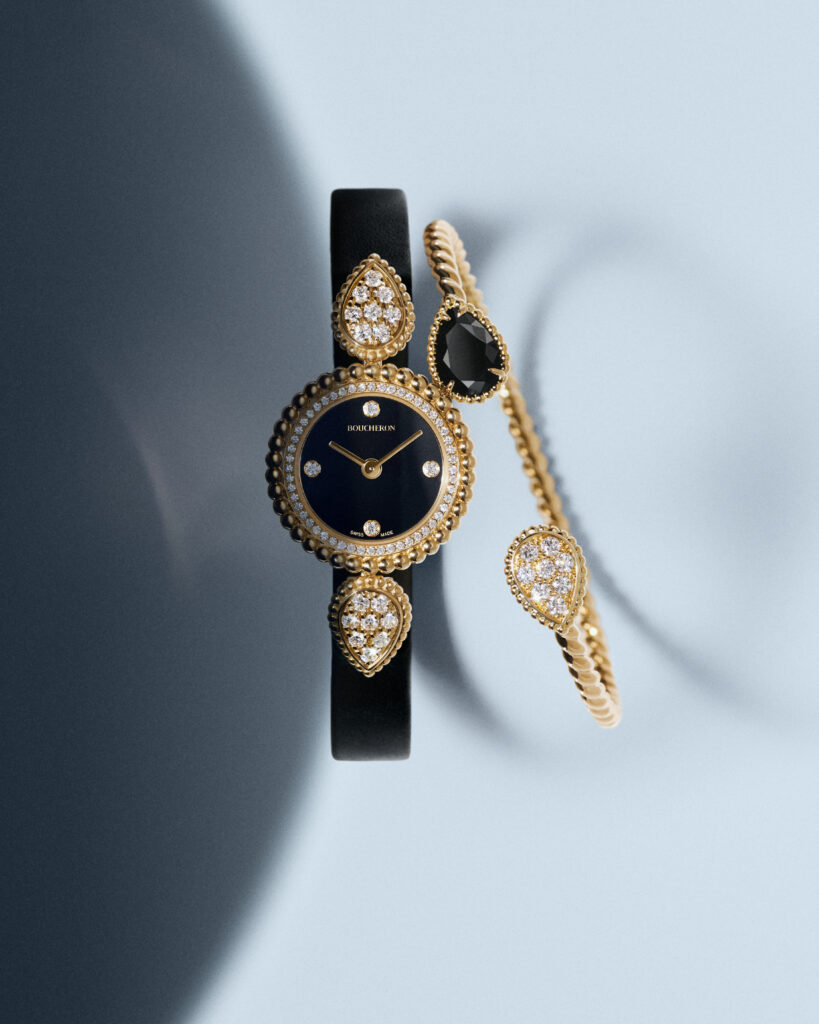
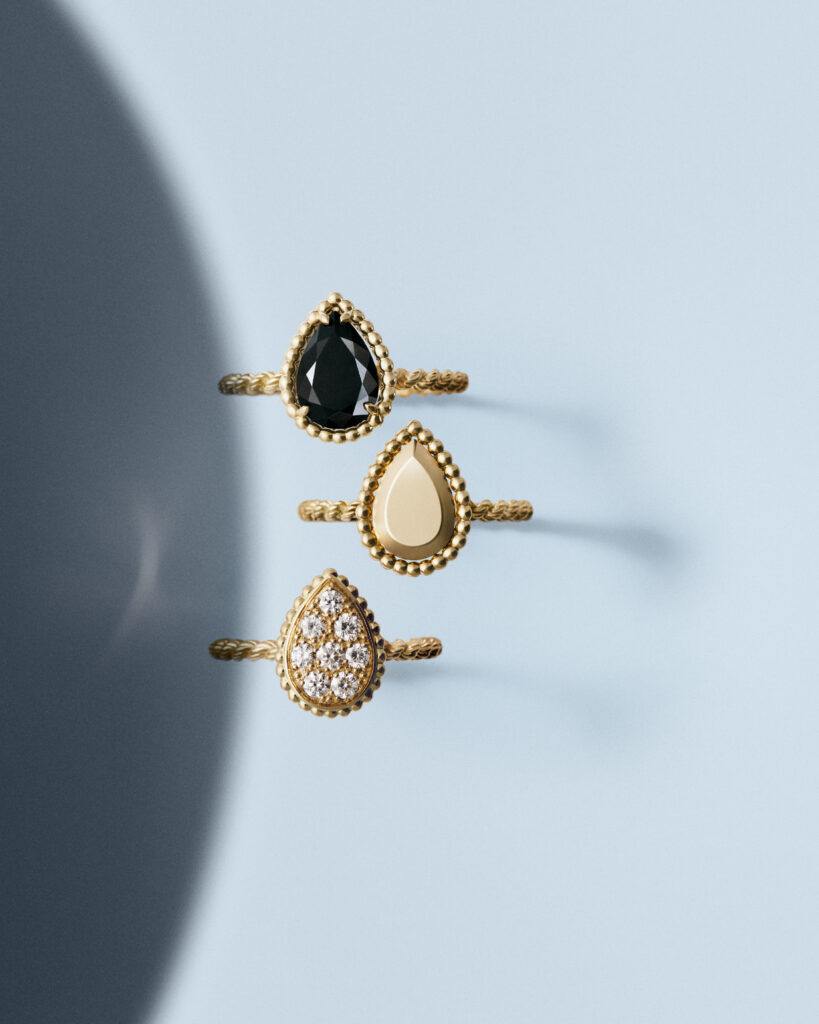
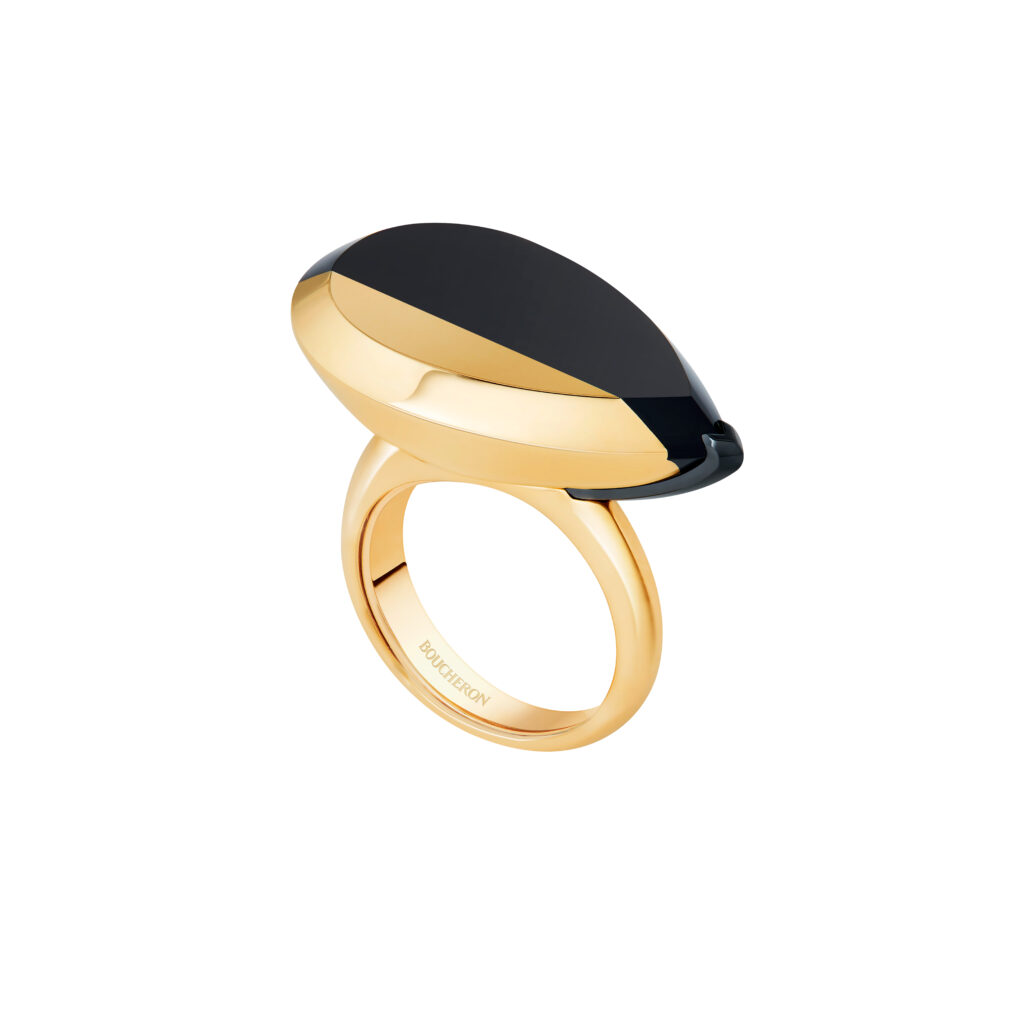
The first features twelve pieces in which onyx replaces the usual colored gemstones. Faceted onyx—opaque and a deep black—introduces a visual contrast that translucent gemstones did not offer. Rings, bracelets, earrings, and watches all feature this same substitution: the teardrop motif now incorporates a material that absorbs light rather than allowing it to pass through. The interplay between polished yellow gold and this black surface relies on the intensity of the contrast.
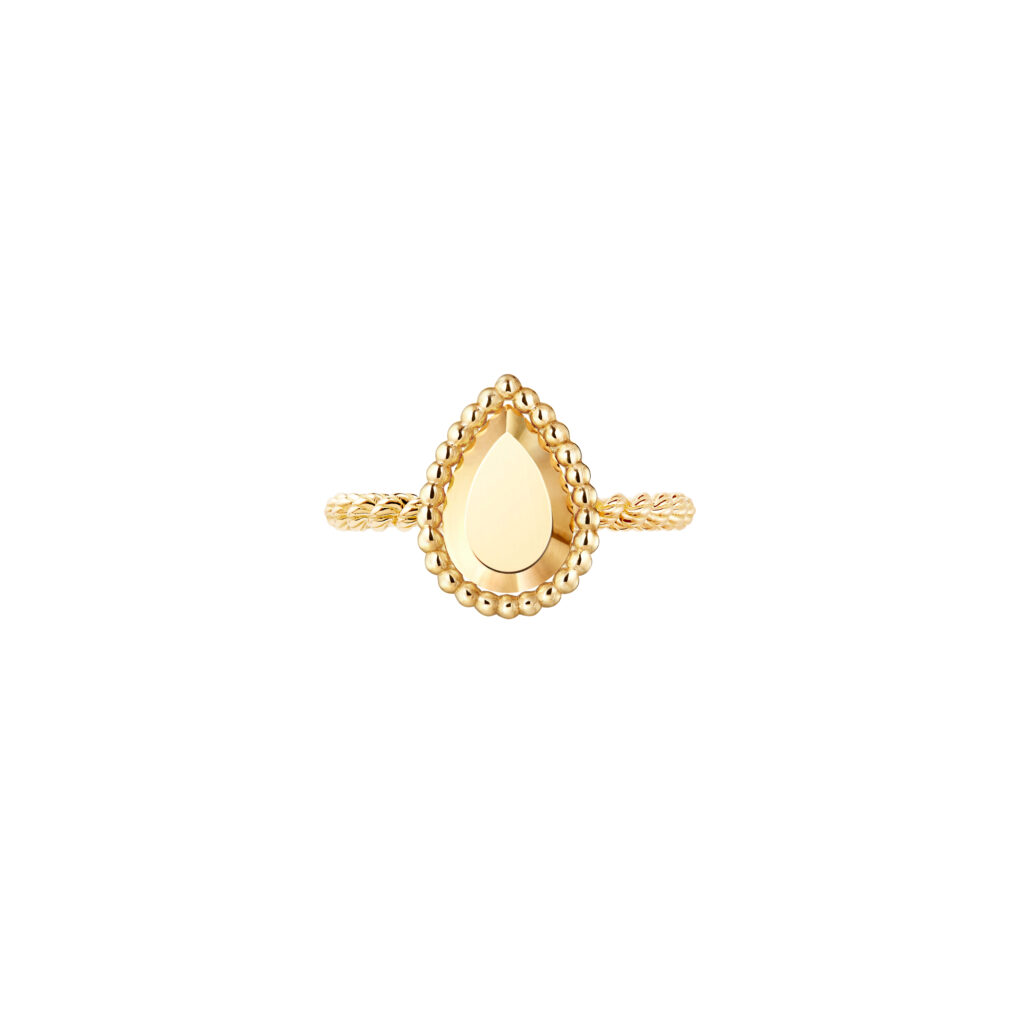
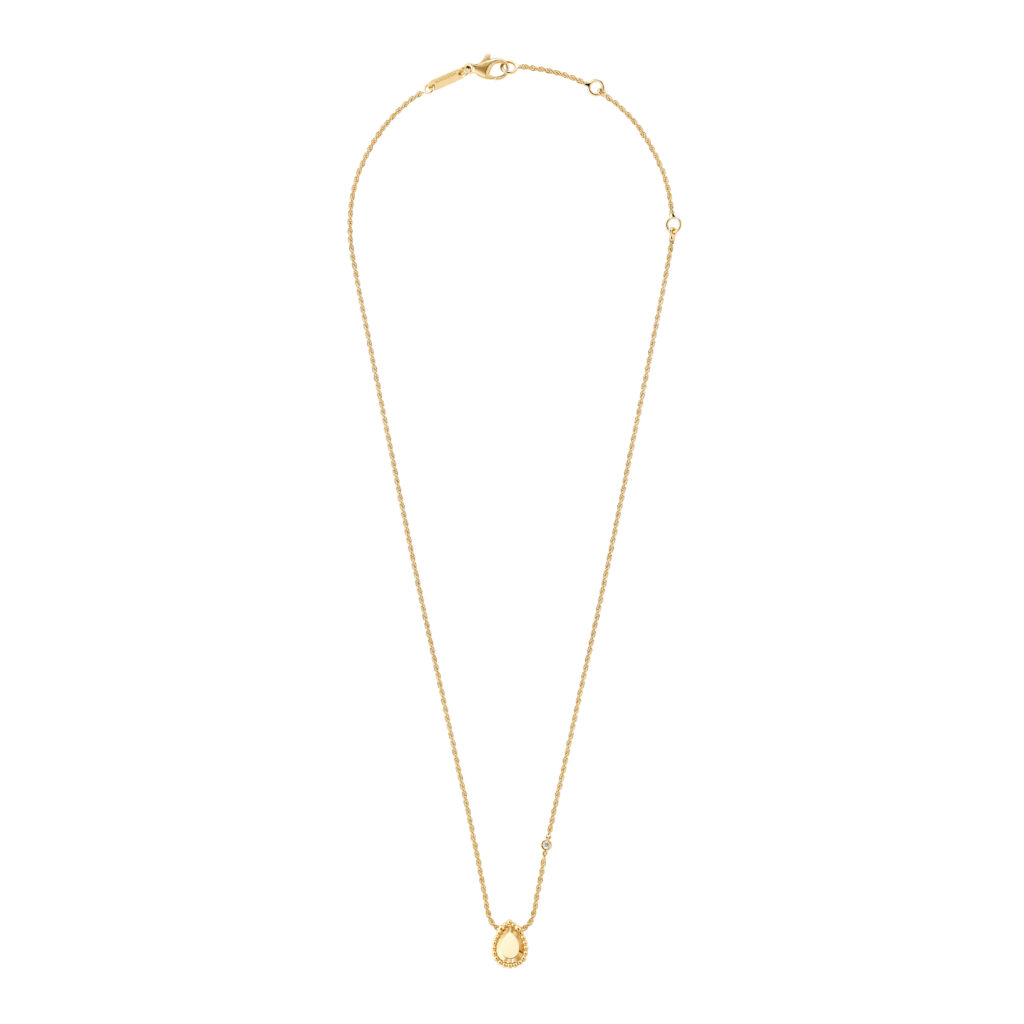
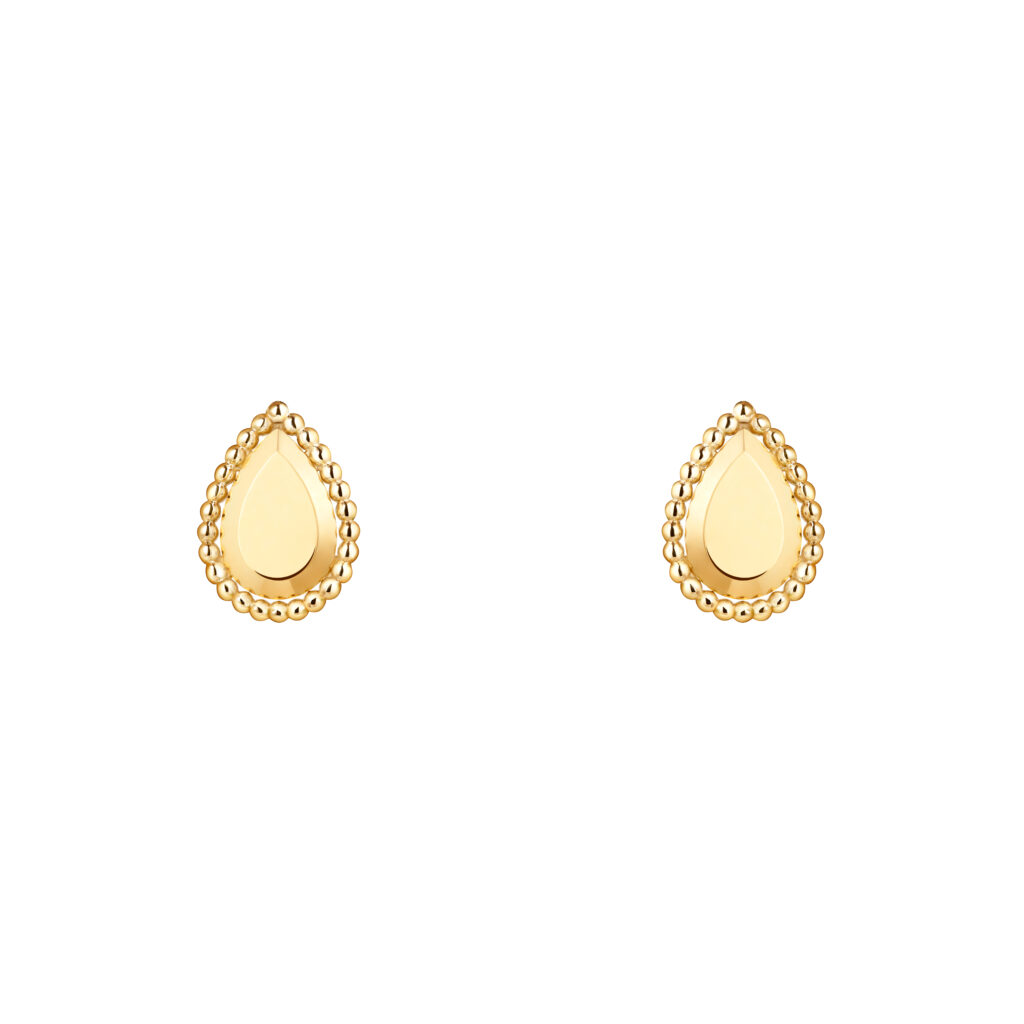
The second shift is more radical. Three pieces do away with gemstone settings entirely: a pendant, earrings, and a ring all echo the silhouette of the Serpent Bohème, but their centers are made of polished gold, without stones. The gold, which is usually limited to the setting, becomes the object itself.
Technical details
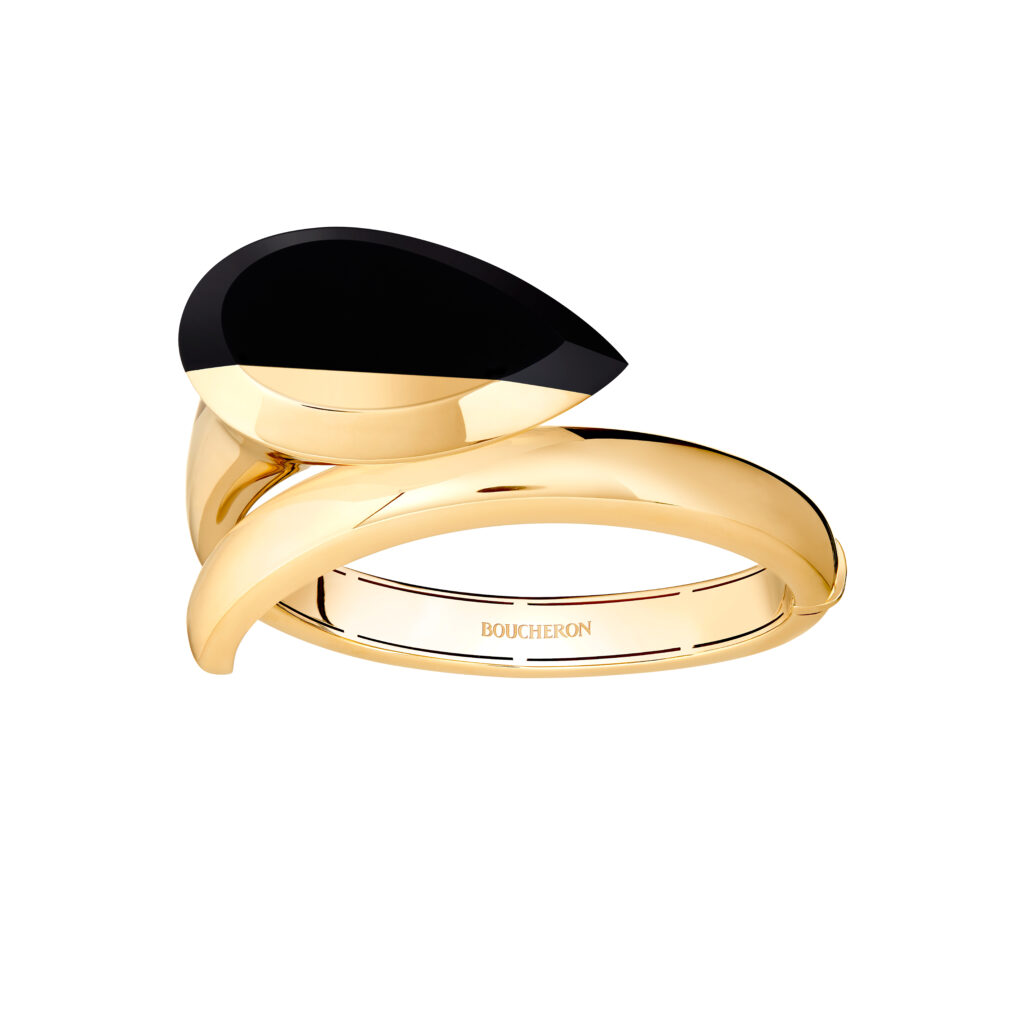
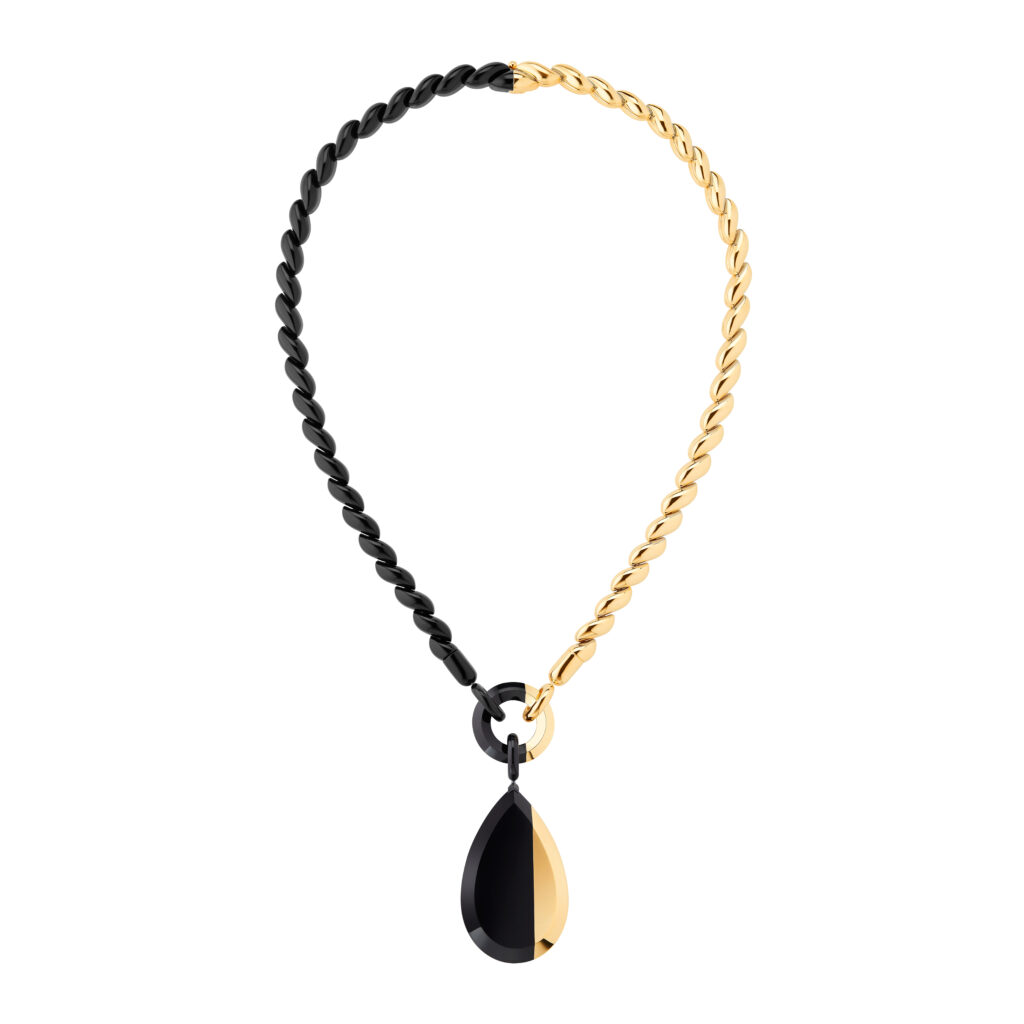
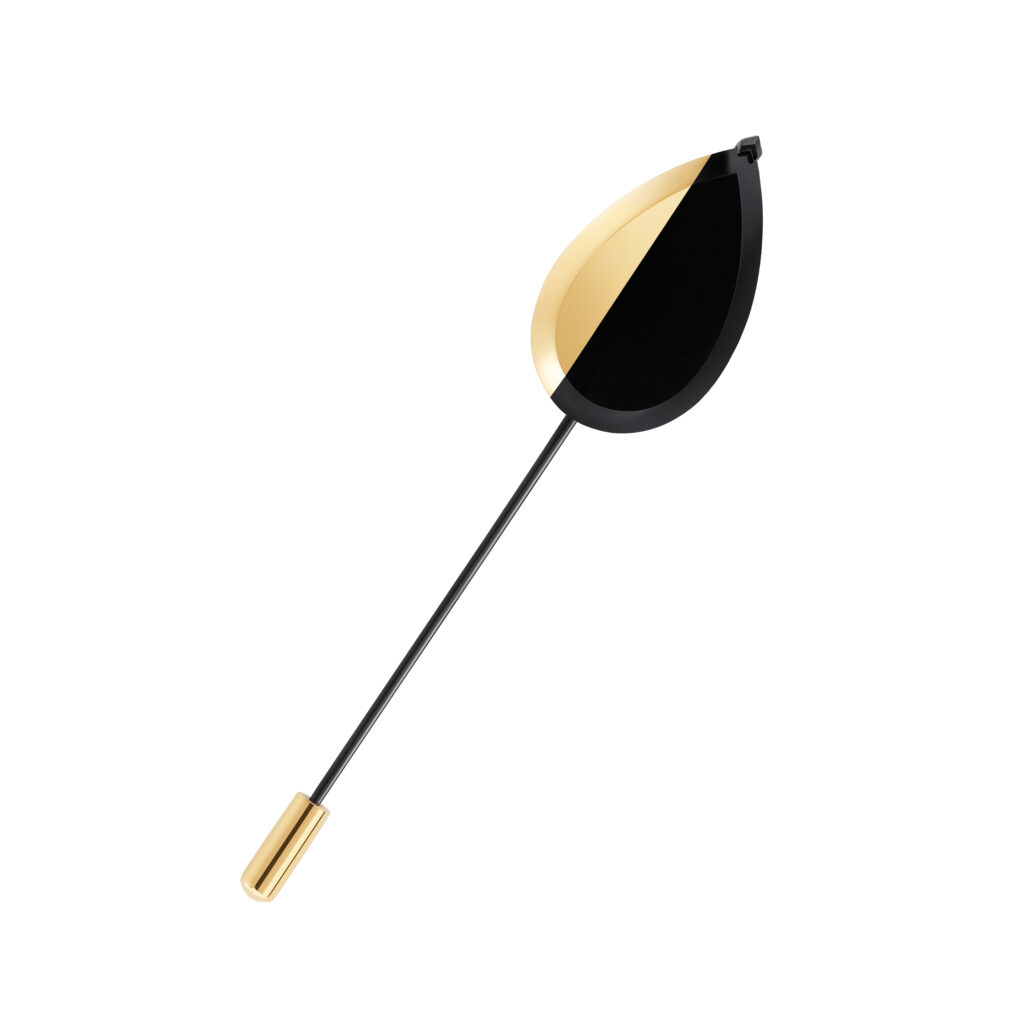
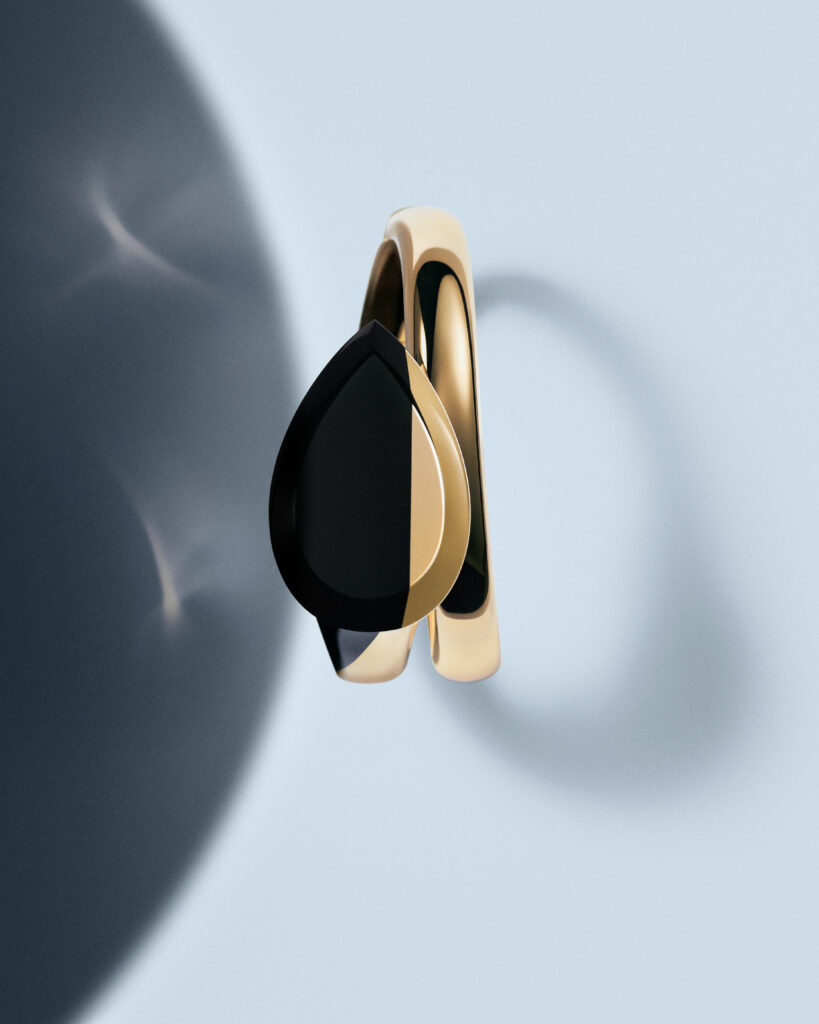
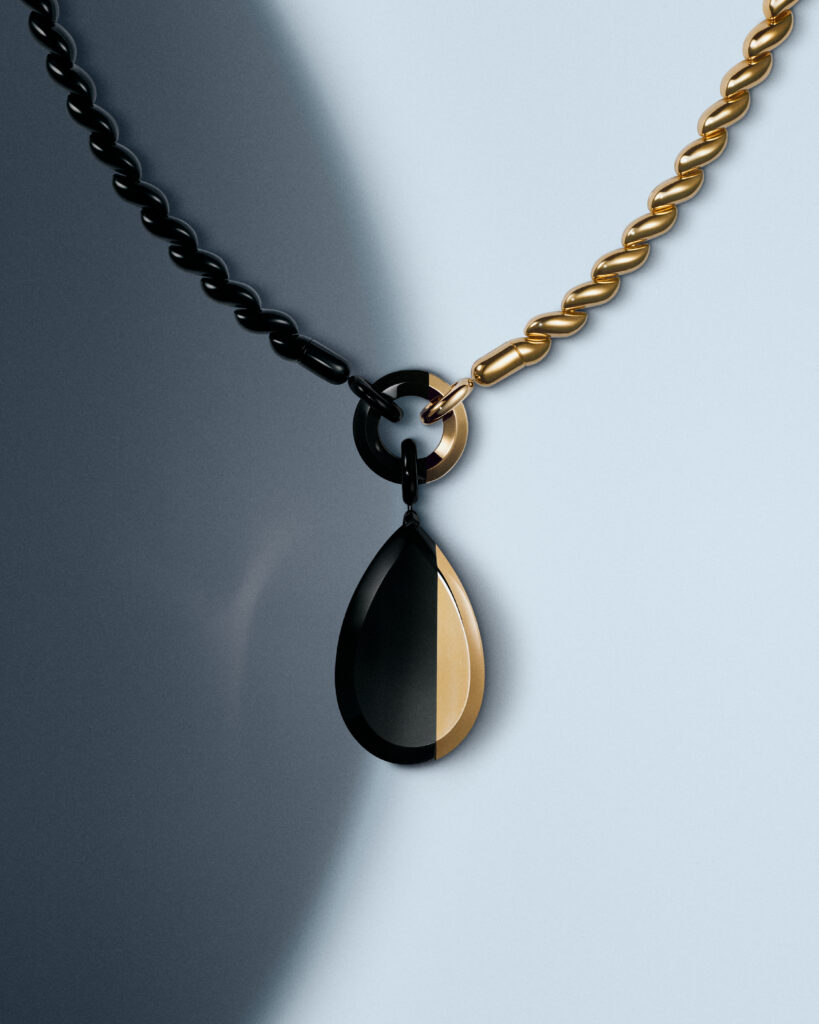
In the four pieces designed by Claire Choisne, Creative Director at Boucheron, onyx and gold coexist without one serving as a setting for the other. The necklace is the clearest example of this: the twisted chain is composed half of onyx links and half of gold links, connected at their center by a teardrop-shaped pendant that is half onyx and half gold. Two materials, a single piece, with no formal hierarchy between them.
This shift is significant in the vocabulary of jewelry. Setting a stone is to recognize its status as the focal point—the gold serves the stone. Eliminating the setting or placing the two materials on an equal footing is a way of asserting that the piece holds its own through its construction and proportions rather than through the value of what it contains.
Boucheron, the first house to open a boutique on Place Vendôme in the 19th century, has been developing its own jewelry language since 1858, based on the tension between bold design and the continuity of motifs. The onyx-and-yellow-gold collection is part of this tradition: not a break with the past, but a reinterpretation of a familiar formula.
The question raised by this collection—can gold be treated as an optical material in its own right, just like gemstones?—cannot be answered in a press kit. It can be seen in the piece itself when worn, in the way the polished surface captures or reflects light depending on the angle.



Cette publication est également disponible en :

