
In Henri Matisse’s work, there is a way of simplifying the world without ever impoverishing it. Sometimes a single line is enough to define a form. A single blue can convey the entire essence of a figure. A cut-out sheet of paper becomes architecture, dance, vegetation, a window opening onto the South. With the Masters of Art Homage to Henri Matisse collection, Montblanc does more than simply pay tribute to a painter; the House takes a visual language and transposes it into another realm of expression: that of writing.
Born in 1869 and died in 1954, Matisse is one of those artists who permanently transformed the artistic perspective of the 20th century. A painter, draftsman, sculptor, and creator of cut-out gouaches, he pursued a form of essential reduction throughout his life: not doing less, but finding the right form. The cut-out works from his later years—which the Tate Modern highlighted in a major exhibition in 2014—remain one of the most radical expressions of this artistic exploration: here, color no longer adorns form; it becomes form itself.
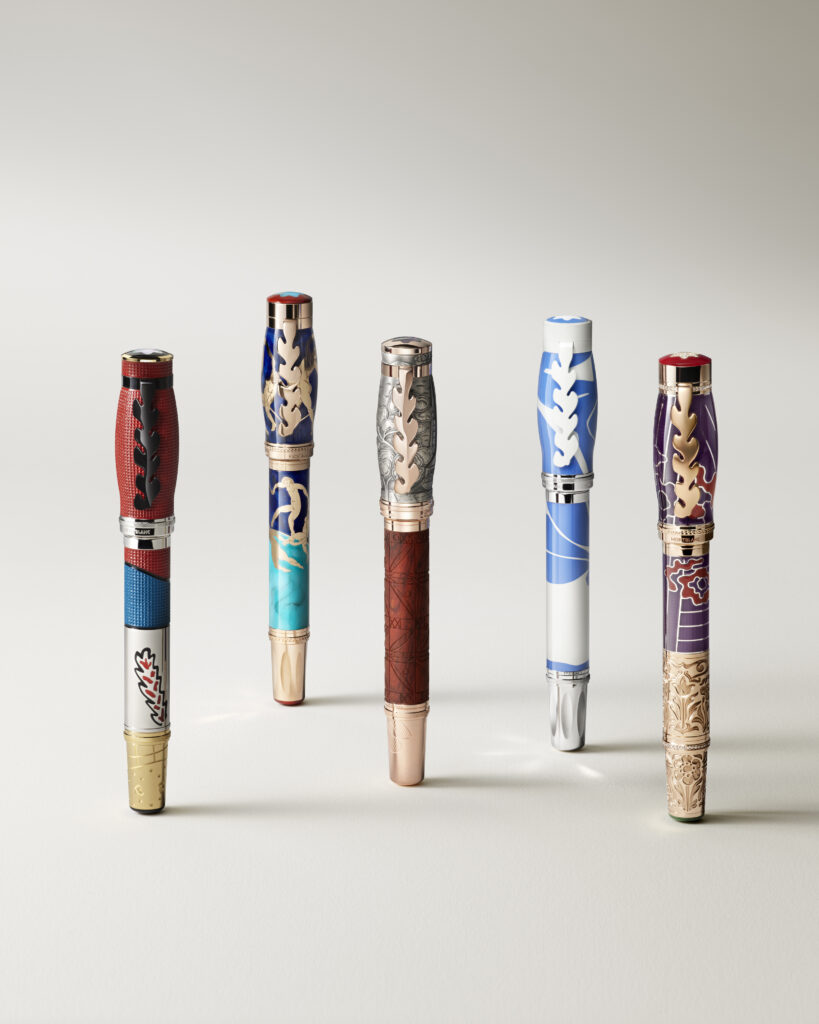
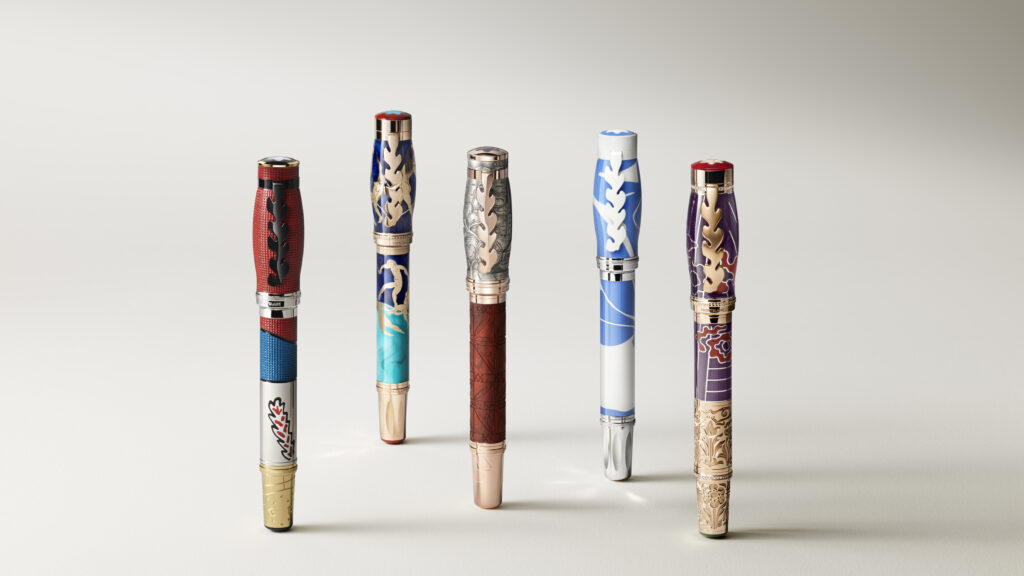
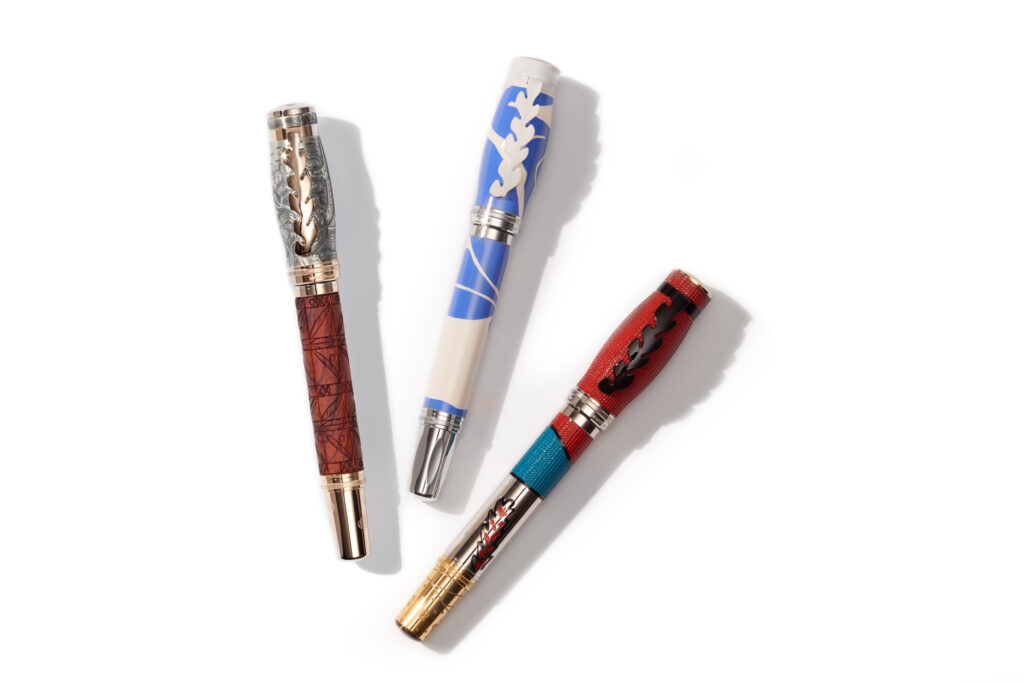
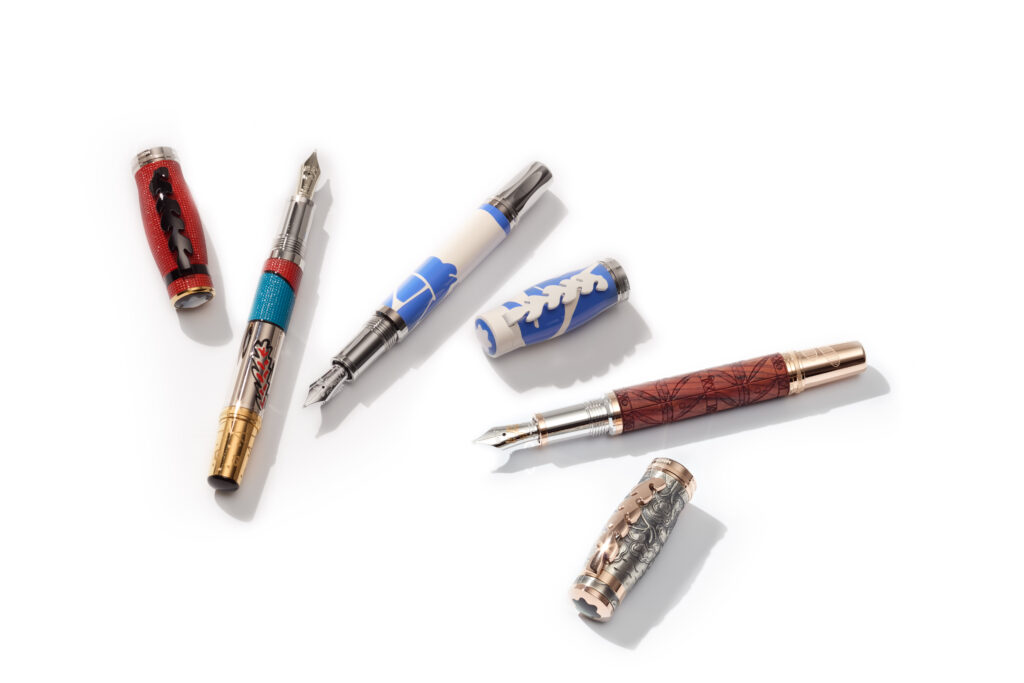
The Montblanc Masters of Art Homage to Henri Matisse collection, designed in partnership with the Maison Matisse, follows this approach in fragments. Each edition takes as its starting point a work, a period, or a journey into the artist’s imagination. The overall silhouette of the writing instruments draws on the idea of organic forms, echoing Matisse’s sculptures. The clip references paper cutouts, particularly *La Gerbe*, a 1953 work created using gouache-painted, cut-out, and glued paper, whose monumental dimensions—311 x 350 cm—are noted by the Centre Pompidou.
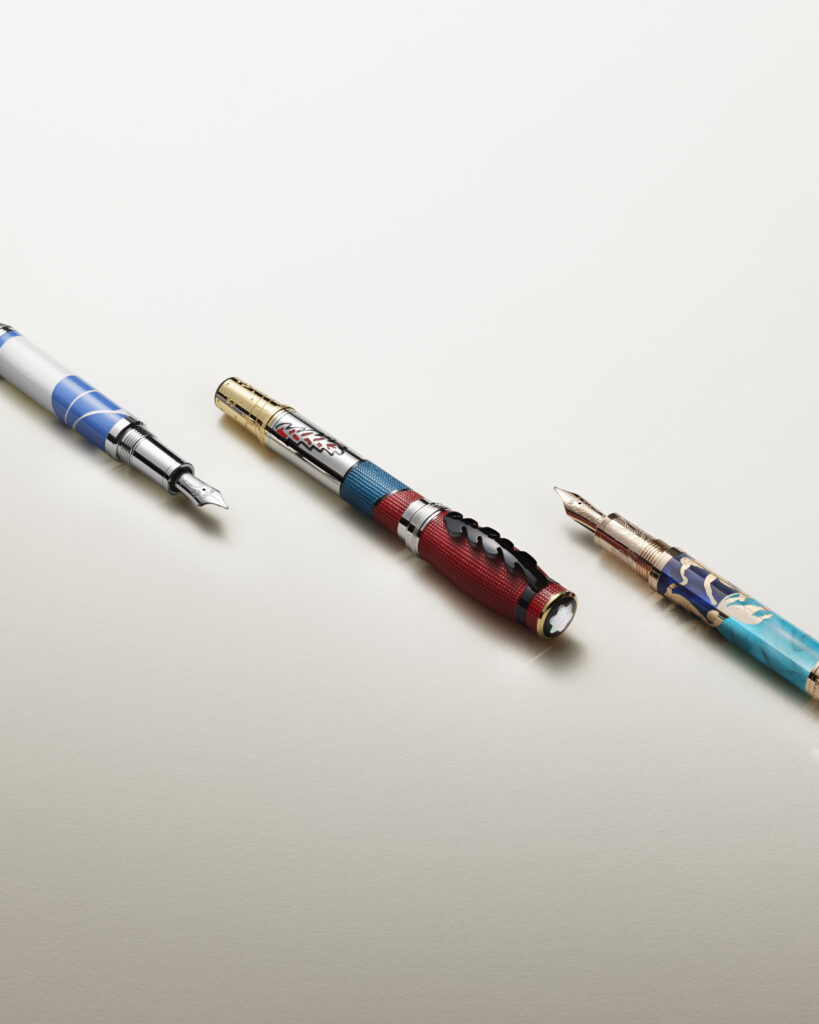
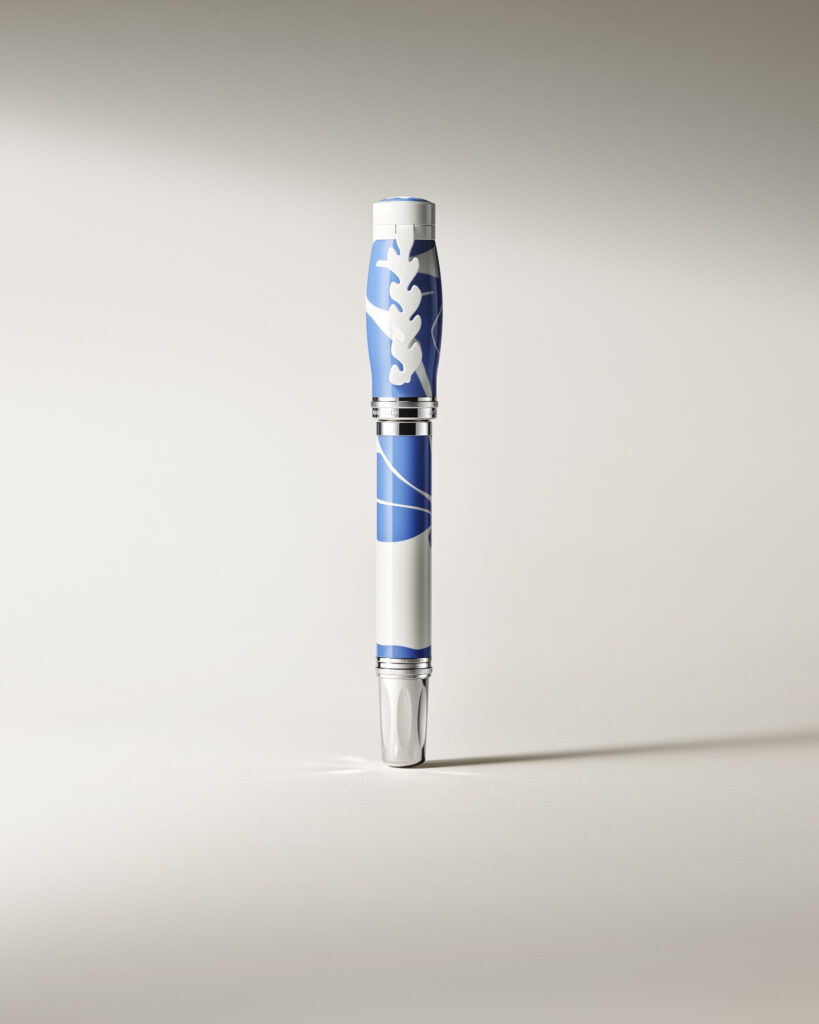
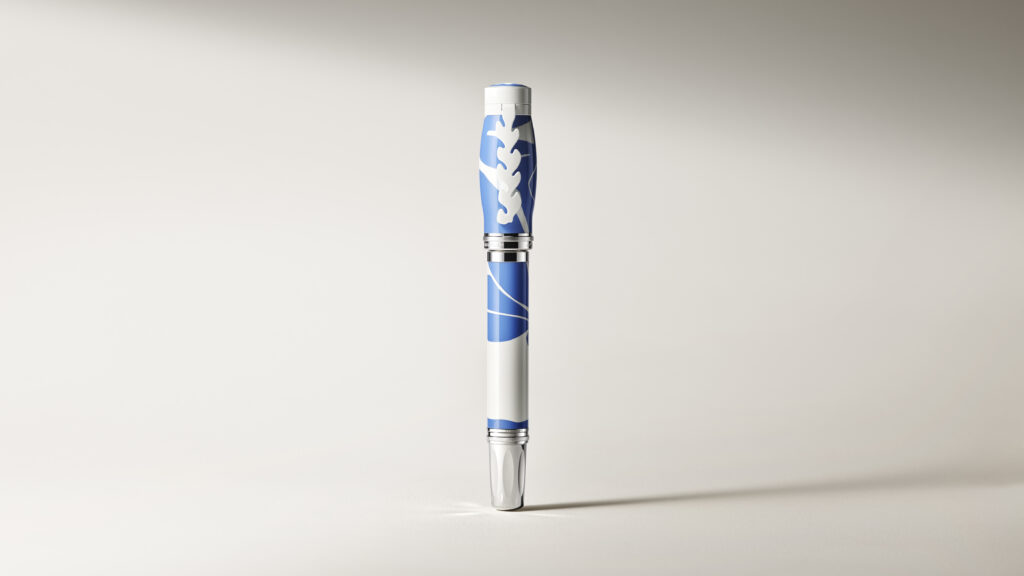
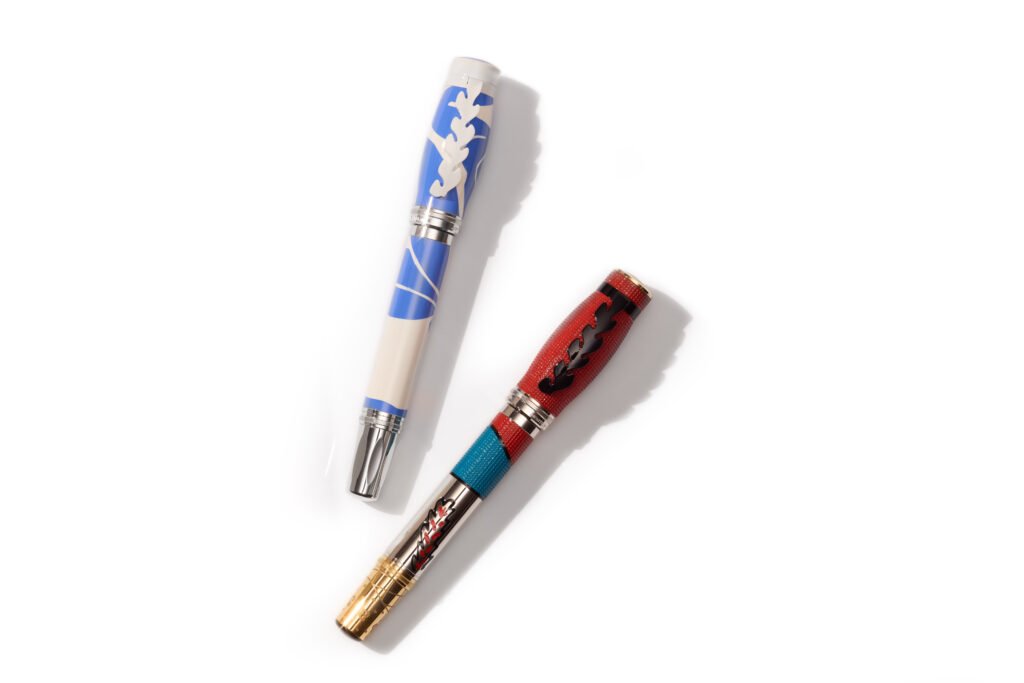
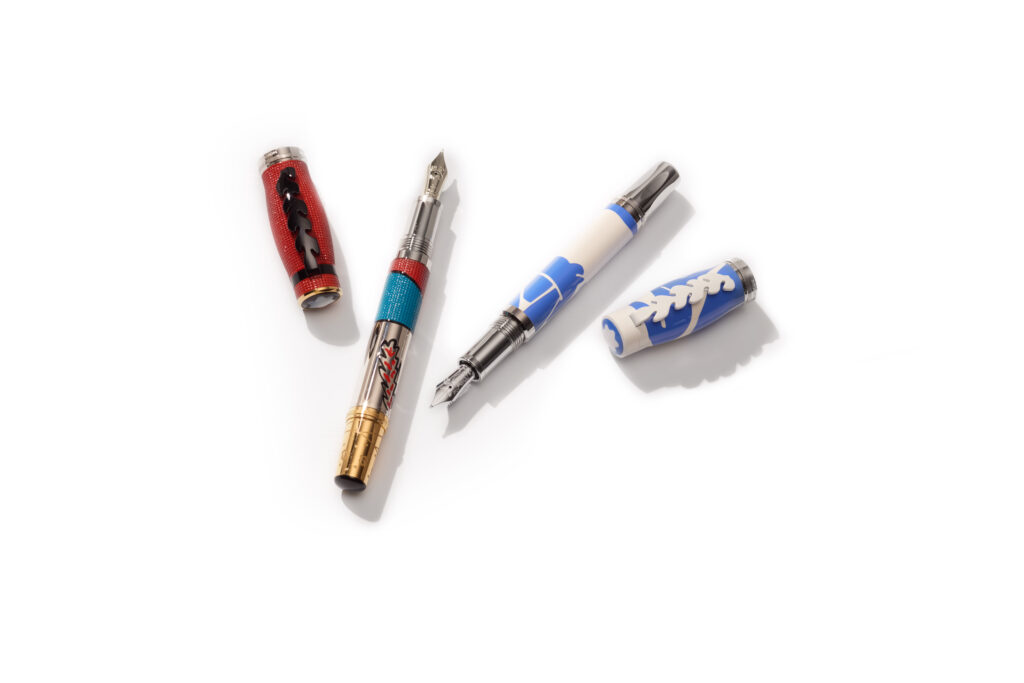
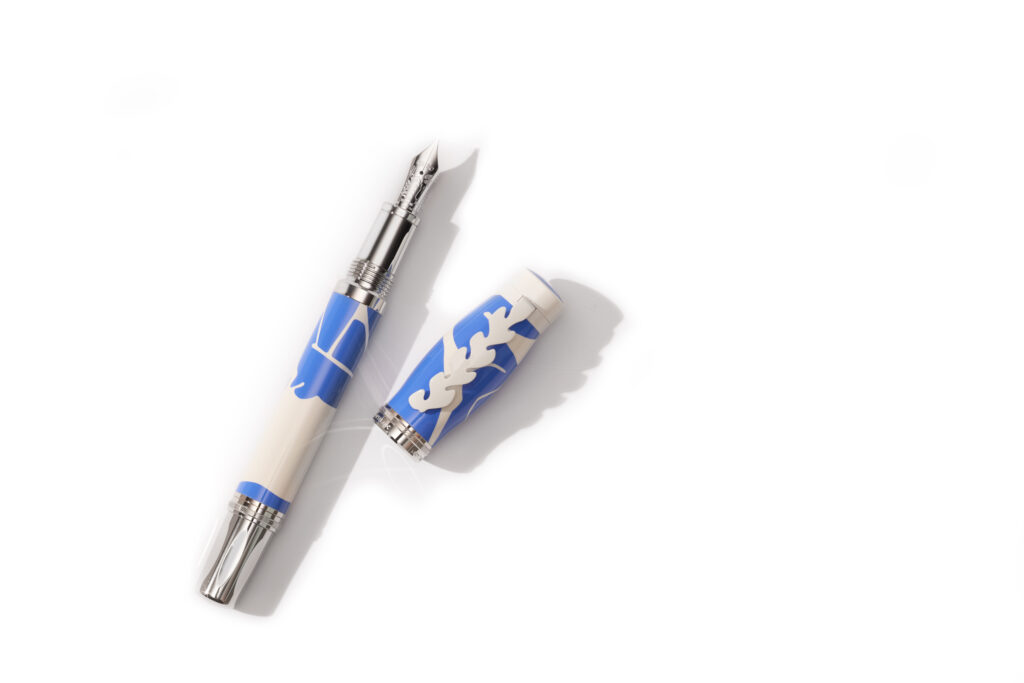
The Limited Edition 4810 is inspired by *Nu Bleu III*, one of the major works from the 1952 series of cut-out gouaches. The Centre Pompidou describes the work as a cut-out gouache on paper, mounted on canvas, measuring 112 x 73.5 cm. Montblanc draws on its blue-and-white interplay, not merely as a motif, but as a visual cue: the pen’s body appears abstract at first glance, before rotating it gradually reveals the seated figure. The blue-and-white lacquer, the platinum-plated accents, the Montblanc emblem in precious white resin set with blue, and the rhodium-plated 18-karat solid gold nib together form a fairly direct homage to the method of cut-out art—this way of drawing with color rather than coloring a drawing.
The Limited Edition 888 draws inspiration from the 1940 Romanian Blouse. Here, Matisse is no longer merely the painter of the pure line; he becomes the artist of fabrics, ornaments, costumes, and decorative surfaces conceived as structure. The body and cap reinterpret a red and blue color palette, with a lacquered texture reminiscent of canvas. The black and red lacquer details, the engravings on the 18-karat solid gold cone, the Montblanc emblem in mother-of-pearl set in black onyx, and the nib adorned with the “Grand Visage” (Mask) design draw the eye to another dimension of Matisse: that of ornament as syntax.
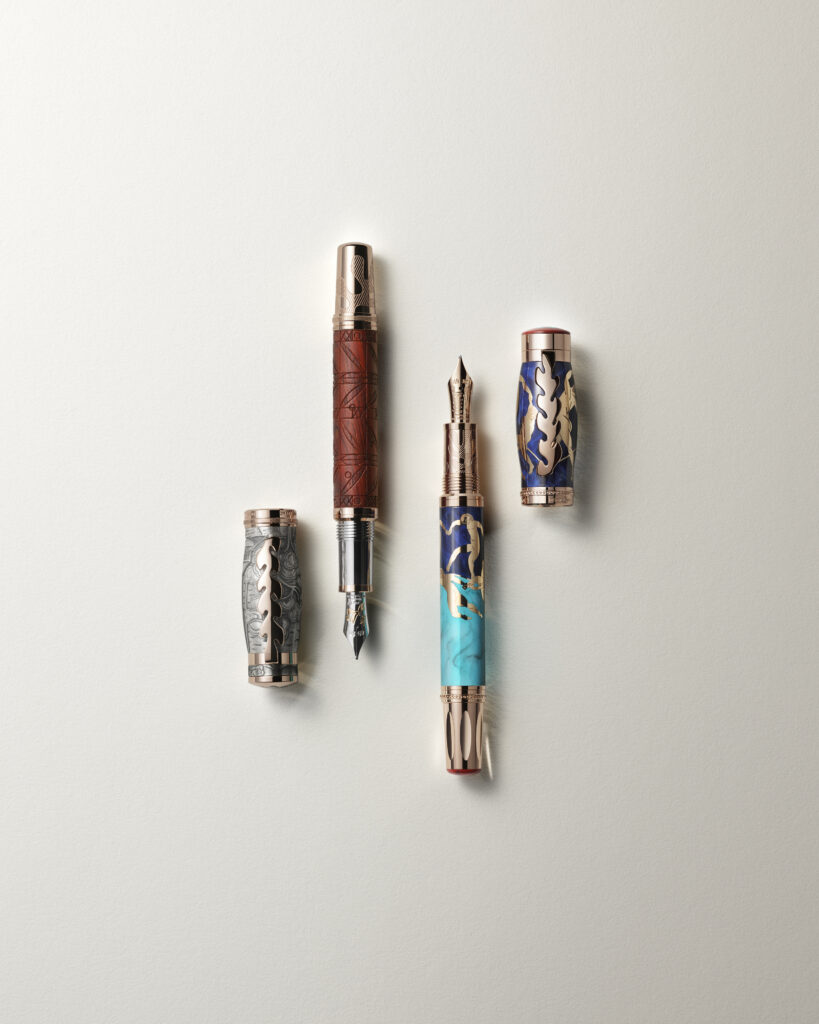
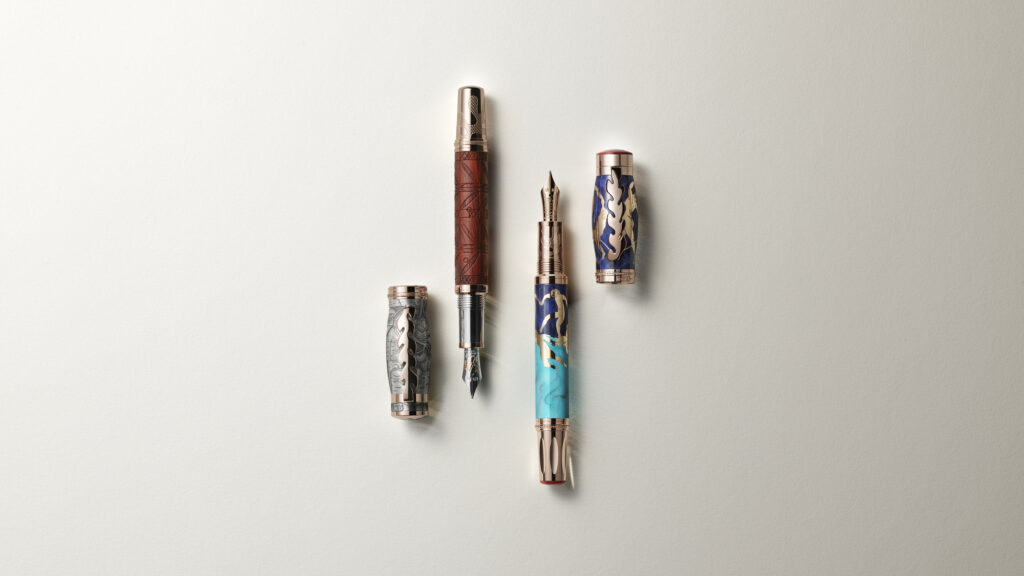
The Limited Edition 161 commemorates Matisse’s trip to Tahiti in 1930. The official Montblanc website states that this edition features a hand-engraved cap with a detail from *Fenêtre à Tahiti* and a cocobolo wood barrel inspired by the tapa cloths brought back from the Pacific. The number 161 refers to the golden ratio, also indicated by the Greek letter Phi on the nib. The partially blackened 925 sterling silver, cocobolo wood, 18-karat rose gold, and paua shell emblem introduce an almost geographical materiality: the piece does not merely reference a work of art; it attempts to recreate an experience of light, distance, and transformation.
The Limited Edition 96 is based on *La Danse II*, a monumental composition from 1910 that is now regarded as one of the pinnacles of the Fauvist period and of Matisse’s exploration of circular movement. The work, housed at the Hermitage in Saint Petersburg according to art databases, measures 260 x 391 cm. Montblanc captures this energy with vivid blue and turquoise lacquer, bronze dancers encircling the cap and barrel, 18-karat solid rose gold accents, and a turquoise emblem framed in gold and red jasper. The number 96 refers to 1896, the year of Matisse’s first exhibition at the Salon des Beaux-Arts.
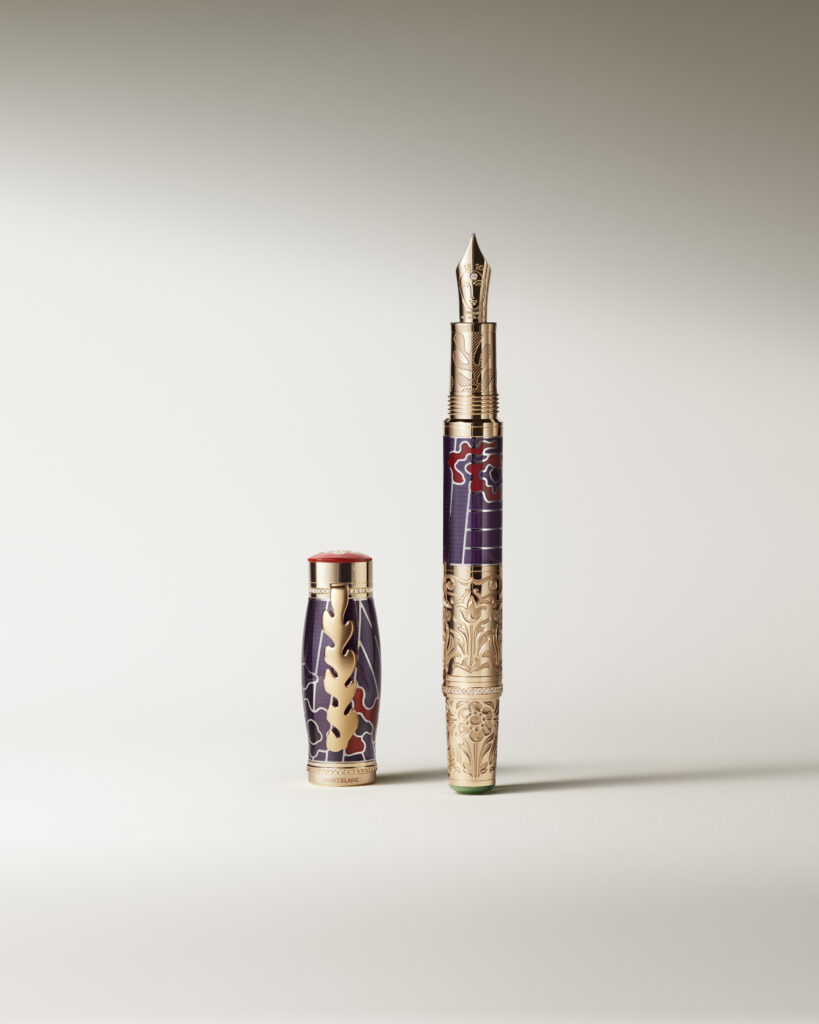
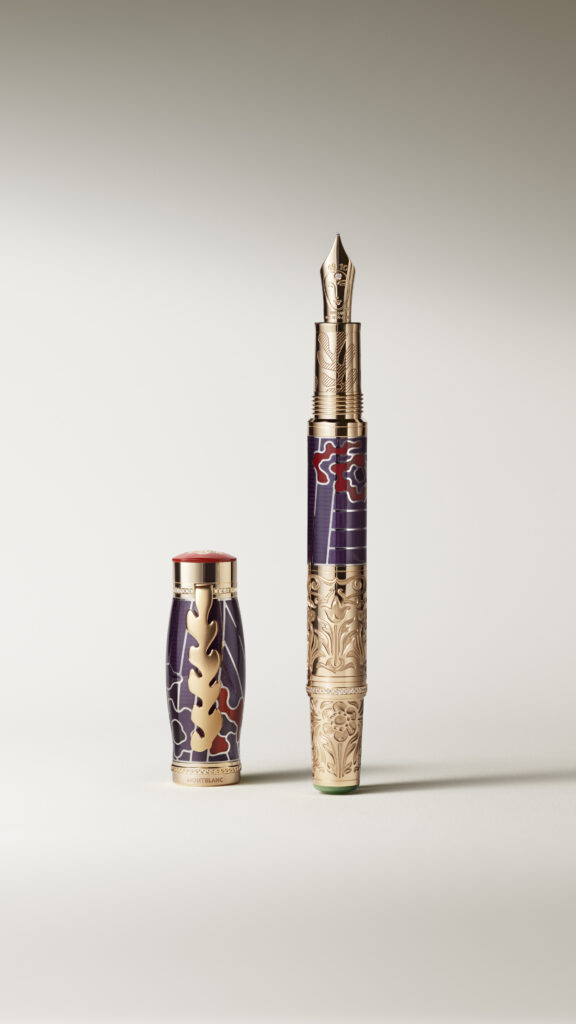
The rarest piece, Limited Edition 8, takes its inspiration from *Purple Dress and Anemones*, painted in 1937. The 18-karat solid white gold, hand-painted enamel, 3D engravings, green jade, red carnelian, cognac-colored diamonds, and the pavé-set Montblanc emblem place this piece more firmly in the realm of micro-architectural jewelry than that of a simple writing instrument. The 18-karat gold nib, set with brilliant-cut diamonds, also features the “Grand Visage” (Mask) motif. With only eight pieces in existence worldwide, this object is less an accessory than a collector’s item.
What is of interest here is not only the preciousness of the materials, but the way Montblanc approaches this interpretation. The German company, whose history began in 1906 with a focus on the culture of writing, has been working for several years to redefine the writing instrument as an object of memory, transmission, and collection. Its Masters of Art series continues this strategy: placing the pen in dialogue with the great visual narratives of the 20th century, at a time when handwriting is becoming less commonplace—and therefore more deliberate.
The tribute to Matisse comes at a particularly fitting time. In 2026, the Grand Palais will dedicate a retrospective to the artist, with a strong focus on his cut-out gouaches and his final creative years. Le Monde notes that the exhibition brings together, among other works, numerous cut-outs, paintings, and drawings, and demonstrates how Matisse resolved, in his late works, the age-old dialogue between line and color by cutting directly into the painted surface. Montblanc is part of this same contemporary perspective: not to rediscover Matisse, but to understand why his simplicity remains so contemporary.
The collection is rounded out by a notebook featuring a reproduction of *Nu Bleu III* and a set of three inks—red, blue, and green—inspired by the artist’s colors. Available starting in April 2026 at Montblanc boutiques and online, it reminds us of something that the luxury world sometimes forgets when it indulges in ostentation: a beautiful object doesn’t need to say it all. It can simply inspire you to write a sentence by hand, slowly, in the hue of a memory.
Montblanc pays tribute to Henri Matisse with a “Masters of Art” collection inspired by *Nu Bleu III*, *La Gerbe*, *La Danse II*, and his paper cutouts.
Cette publication est également disponible en :

