
In 1983, an Australian crew broke one hundred and thirty-two years of American domination of the America’s Cup – not with brute force, but with an L-shaped fin keel that no one had dared to conceive. Forty years on, Nicky Zimmermann recalls this victory through technical gesture in a collection that questions what fashion owes to calculated transgression.
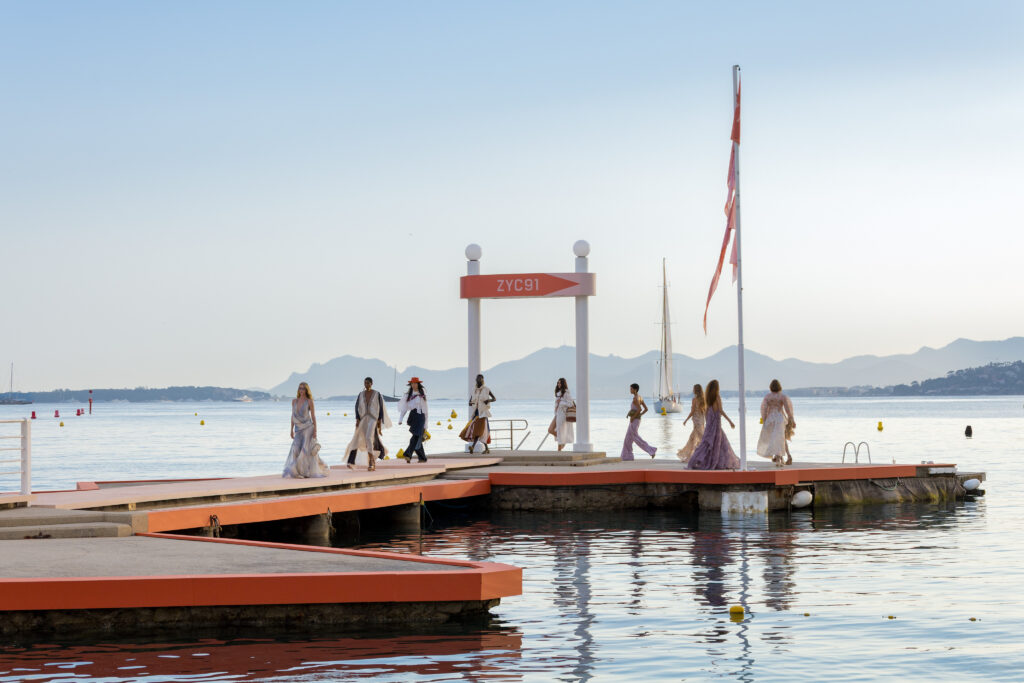
The Cruise 2027 presentation, held on June 2 in Dubai under the title The Clash, is not a tribute to yachting. It’s a reflection on the morphology of the challenge: how a structural gesture – in naval architecture as in cutting – changes speed, balance and result.
The Creative Director’s quote sets the scene: “One of my most vivid memories as a kid was watching Australia II win the 1983 America’s Cup. The cheeky upstart against the establishment, and the ultimate come-from-behind victory to win a race that one country had dominated for 132 years.” What keeps Zimmermann going is not the victory itself – it’s the mechanics. TheAustralia II won because its designers refused to accept constraints not explicitly forbidden by the regulations. The collection follows the same logic.
Duality as a cutting method
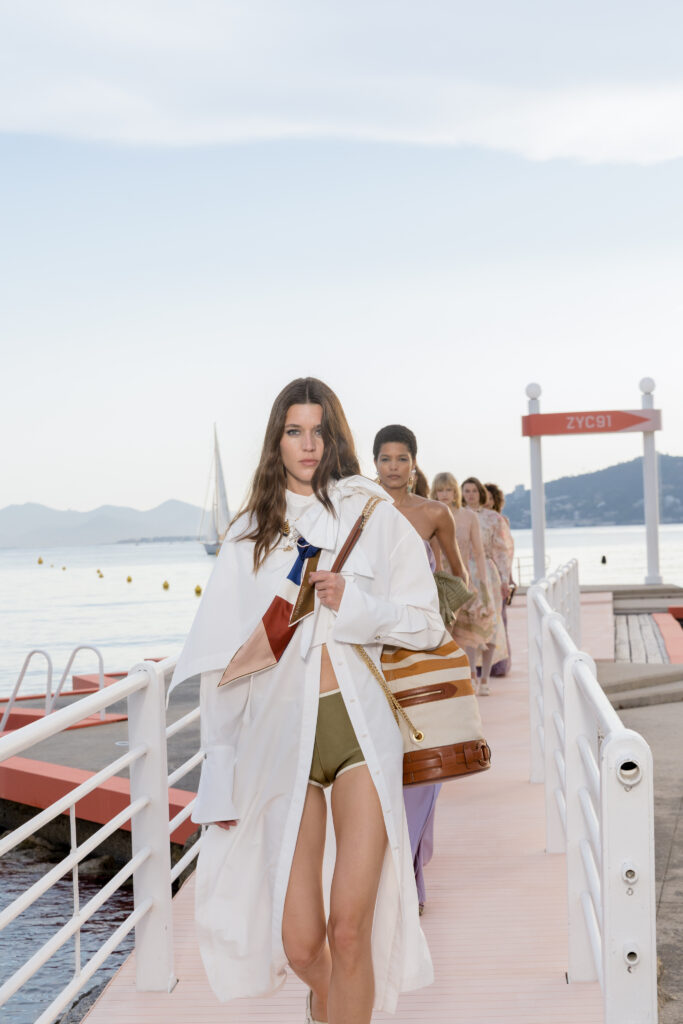
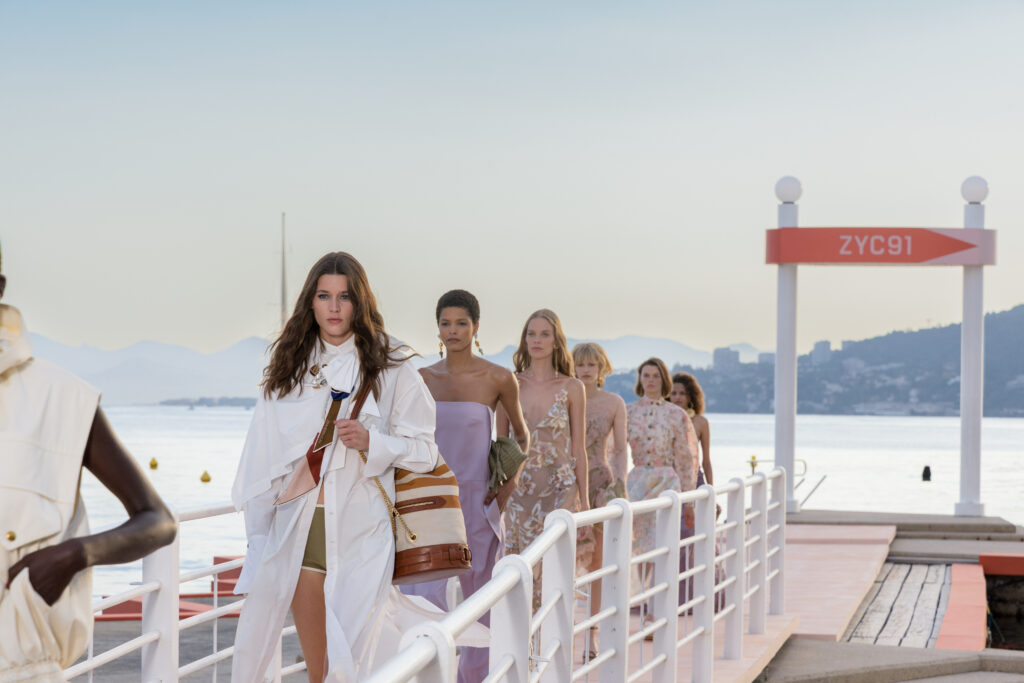
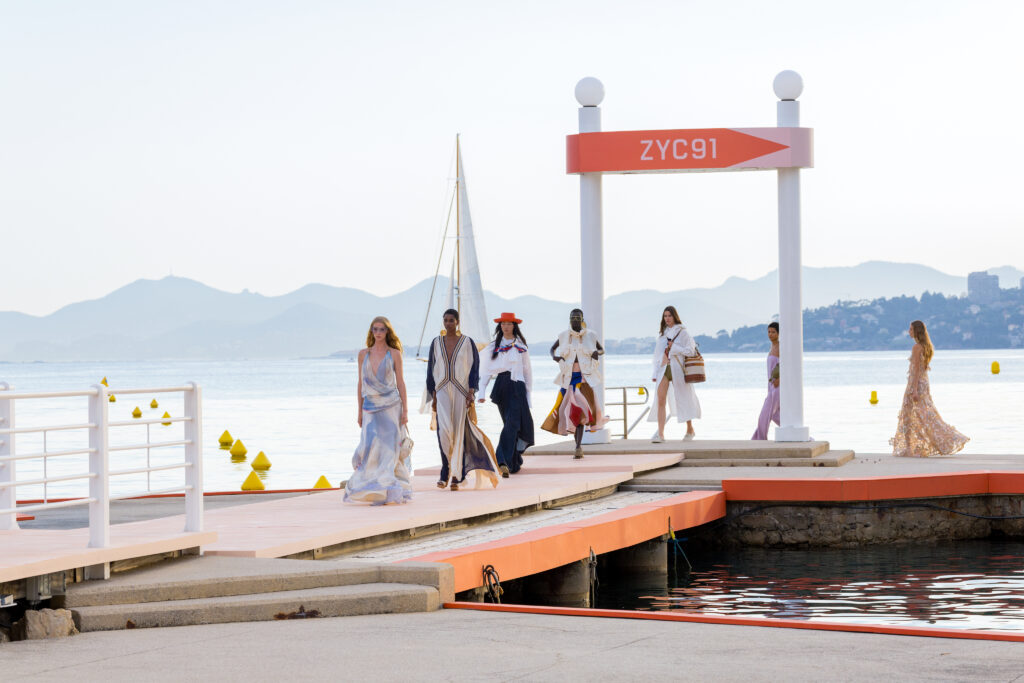
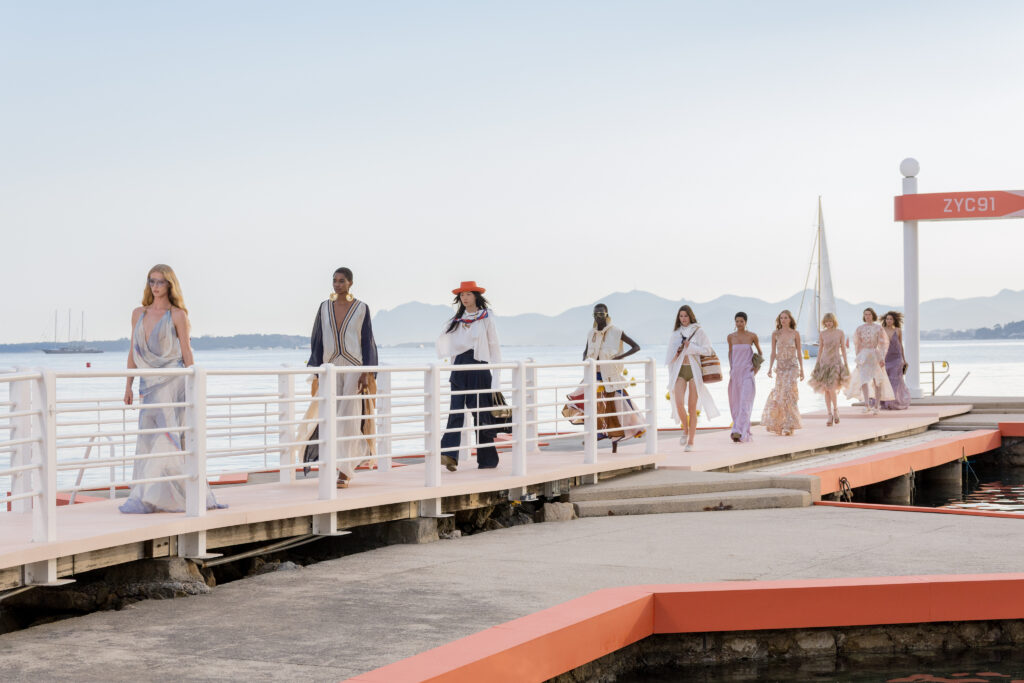
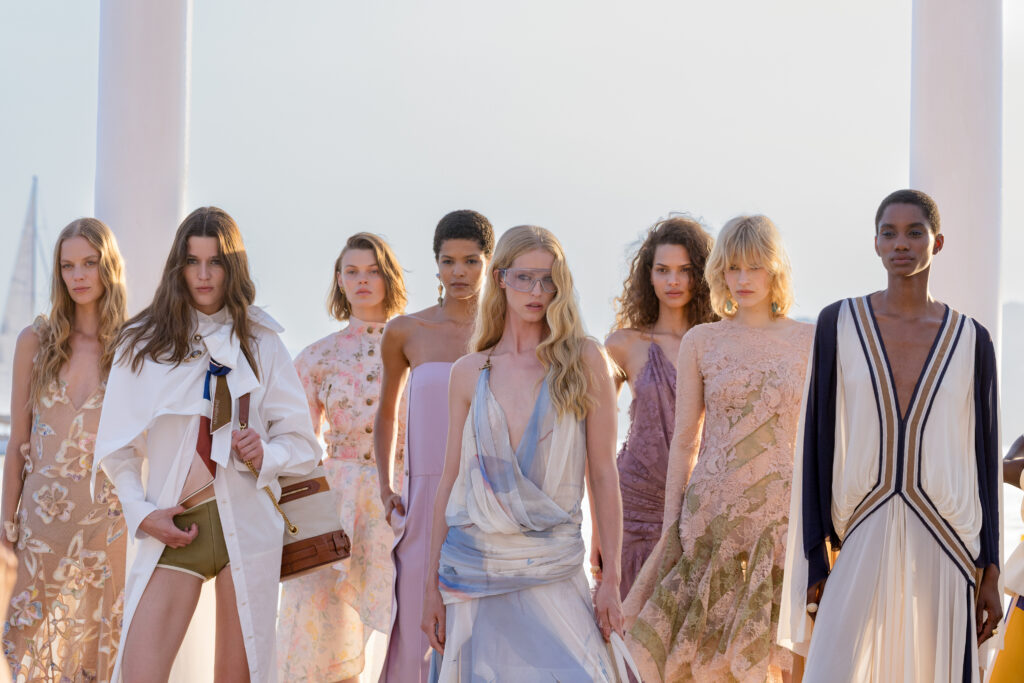
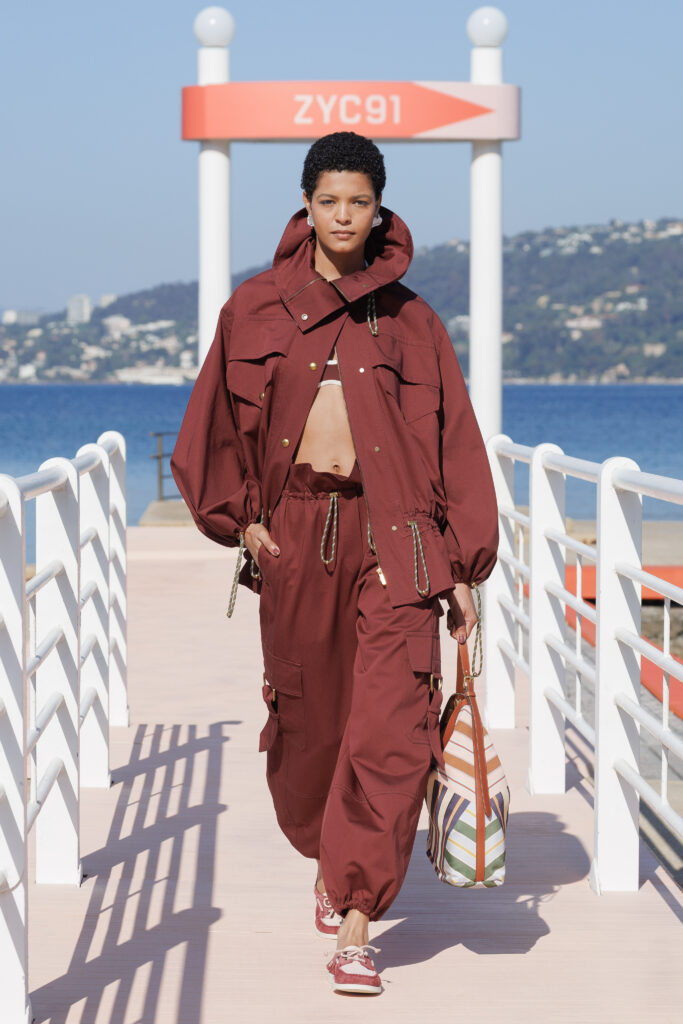
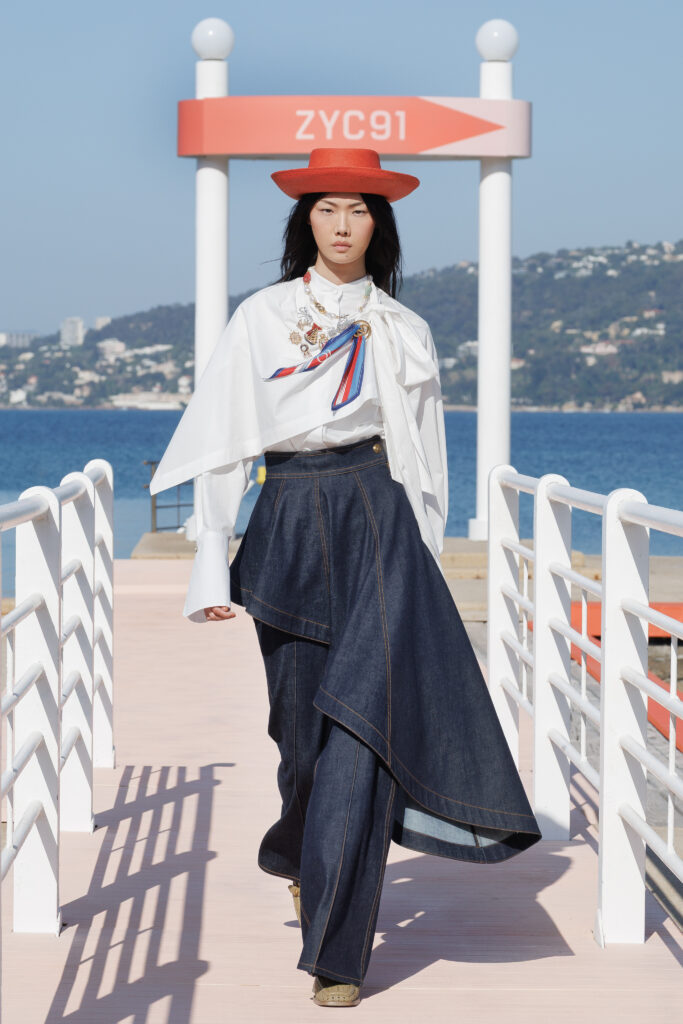
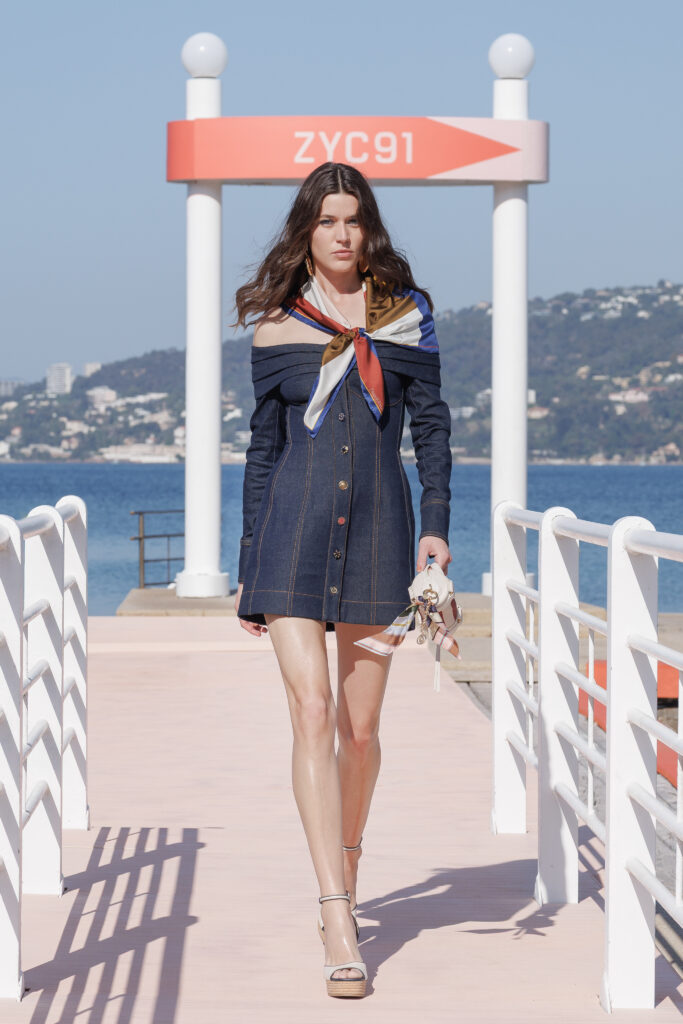
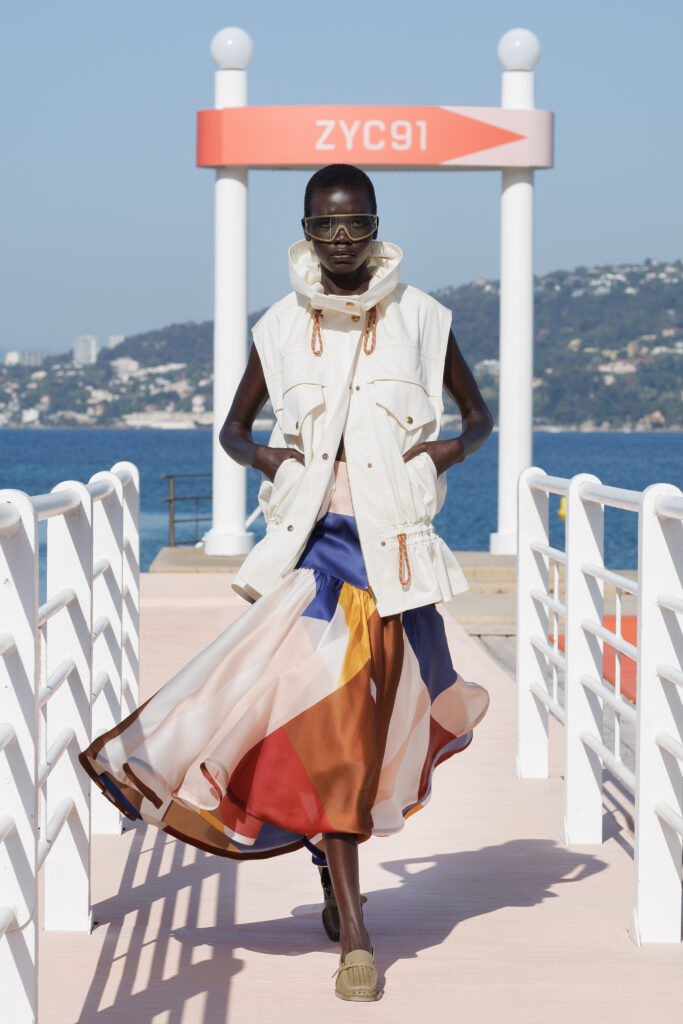
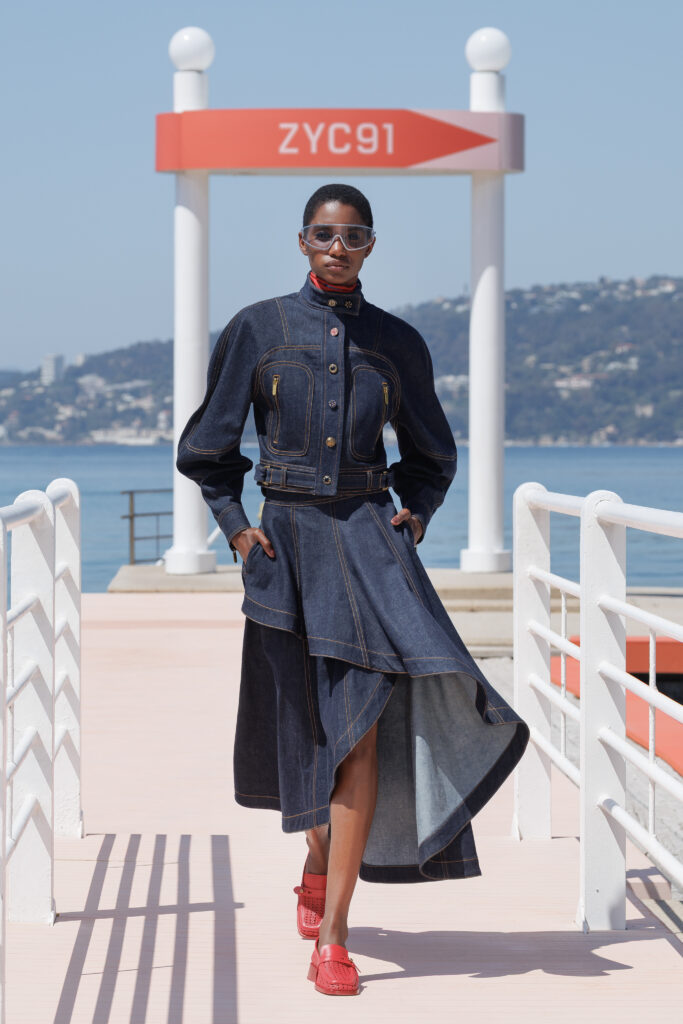
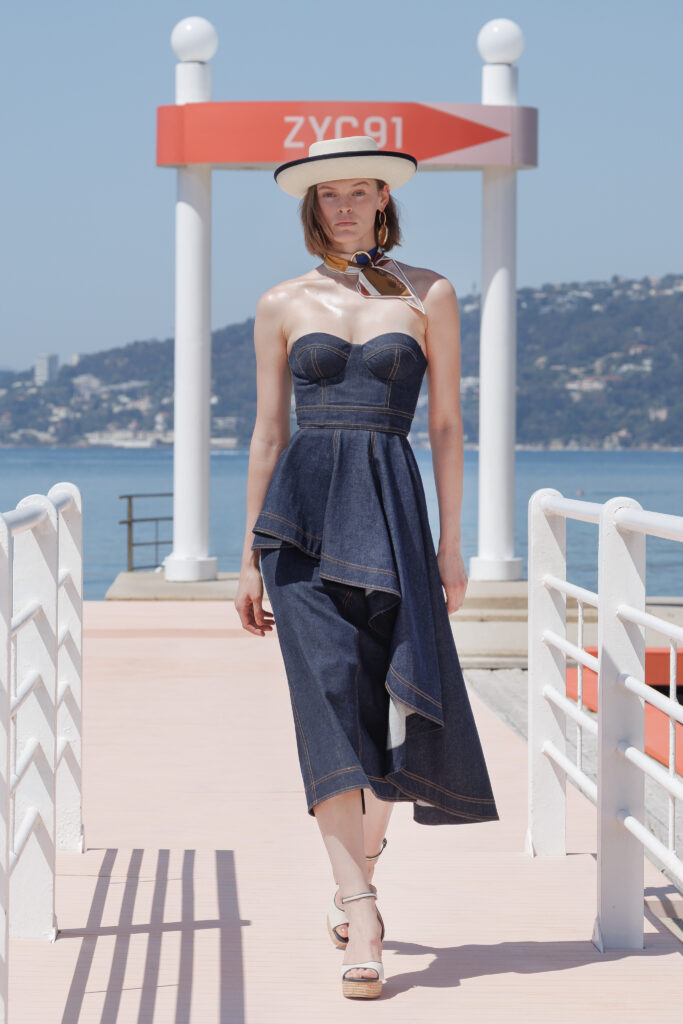
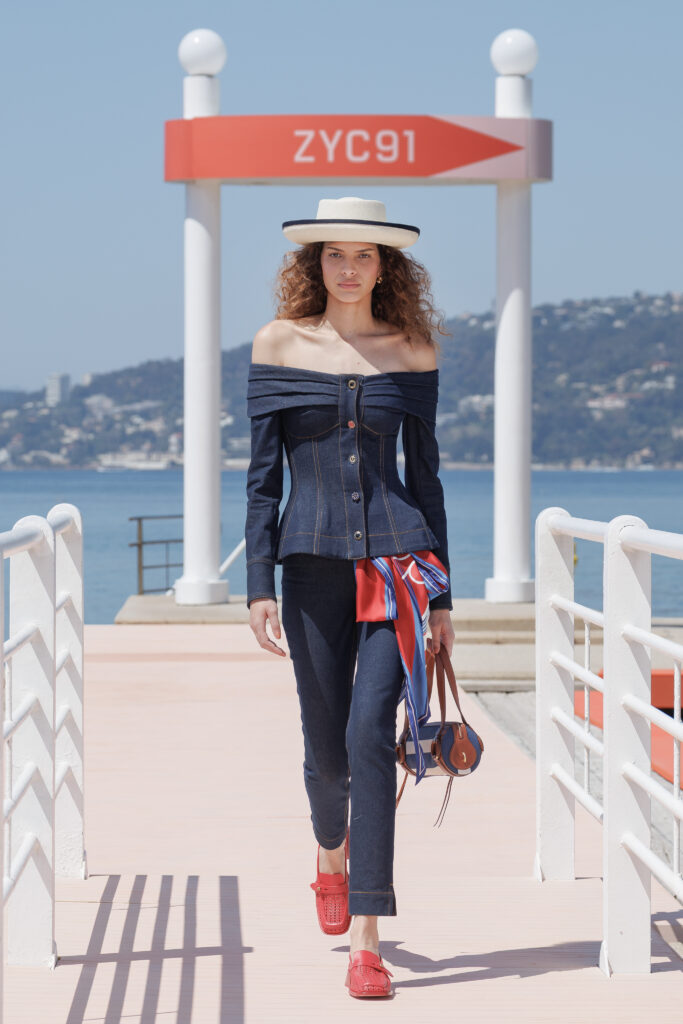
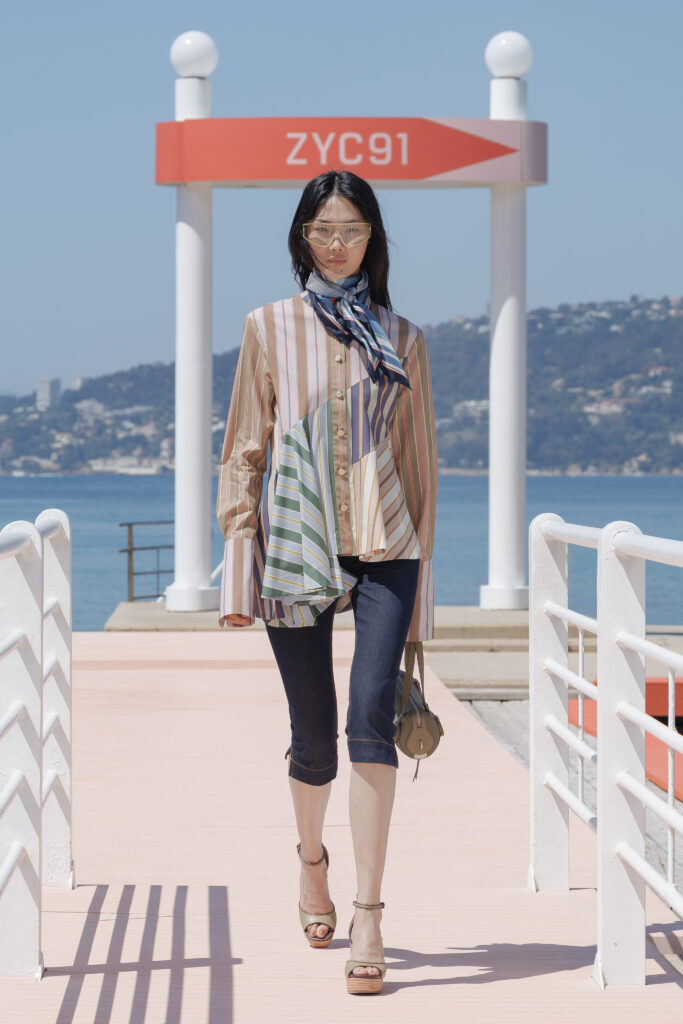
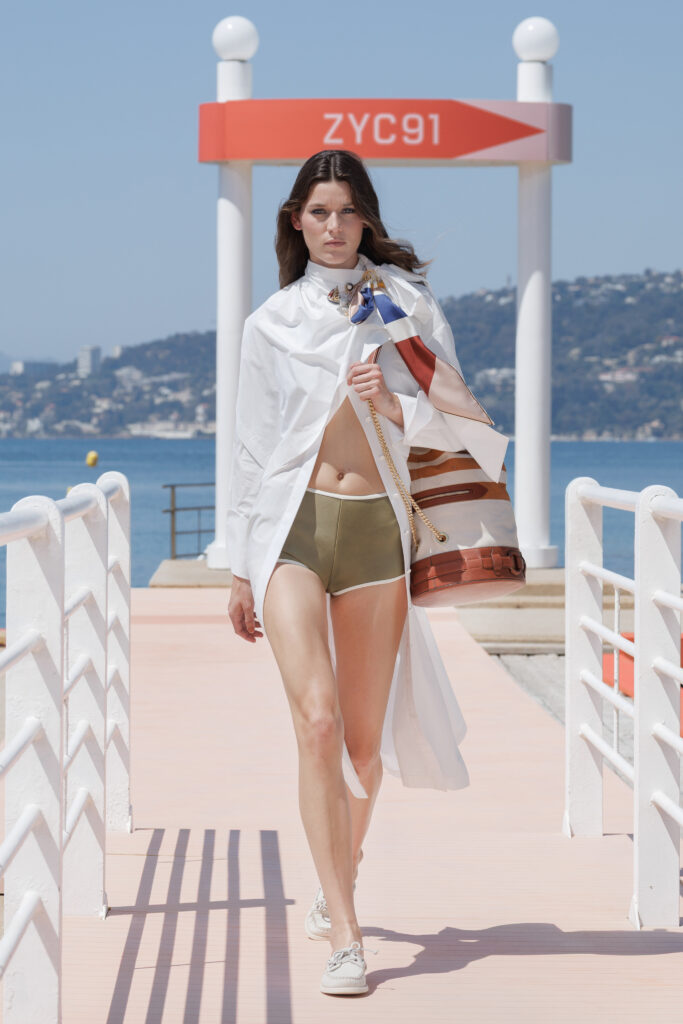
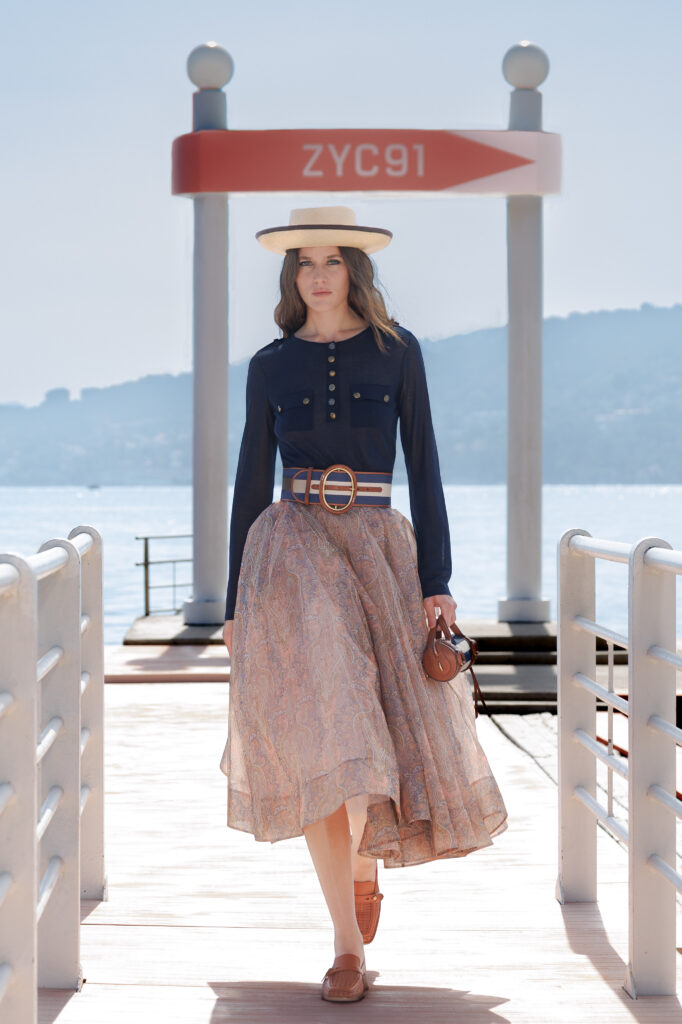
The opening pieces mobilize the technical vocabulary of sailing not by decoration but by construction. The nautical rope pulls on the drill cotton romper are not an ornament – they reference the functionality of ropes on a racing deck, where every centimeter counts in managing wind and weight. The crisp, angular popline blouse counterbalances the drama of denim pants topped by a layered skirt: two structural logics that cohabit without neutralizing each other, just as theAustralia II ‘s keel combined hydrodynamics and lateral lift.
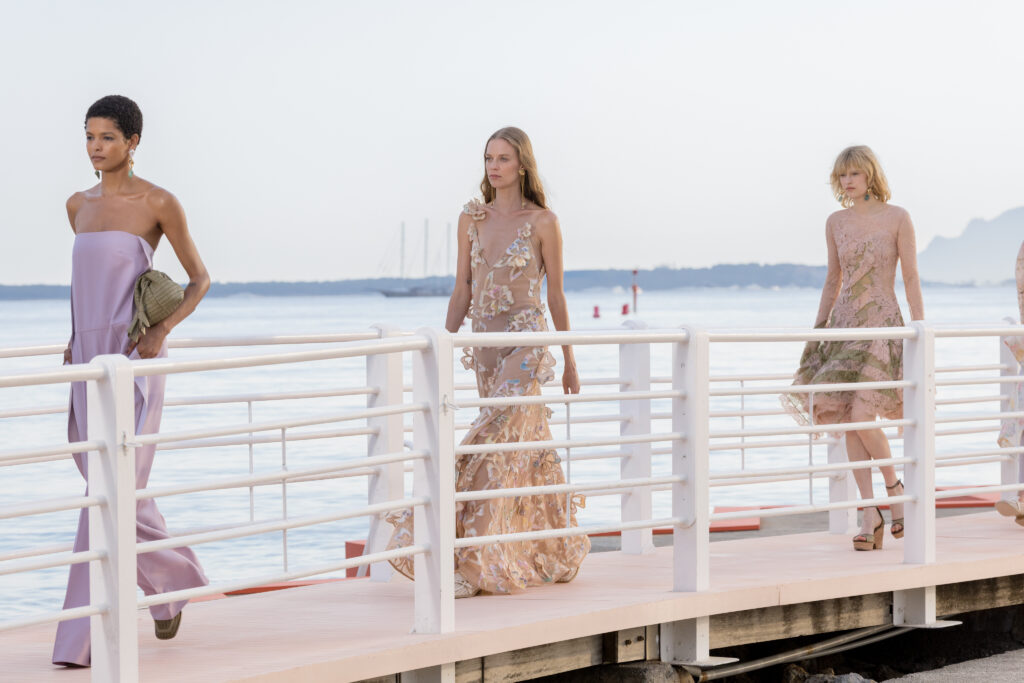
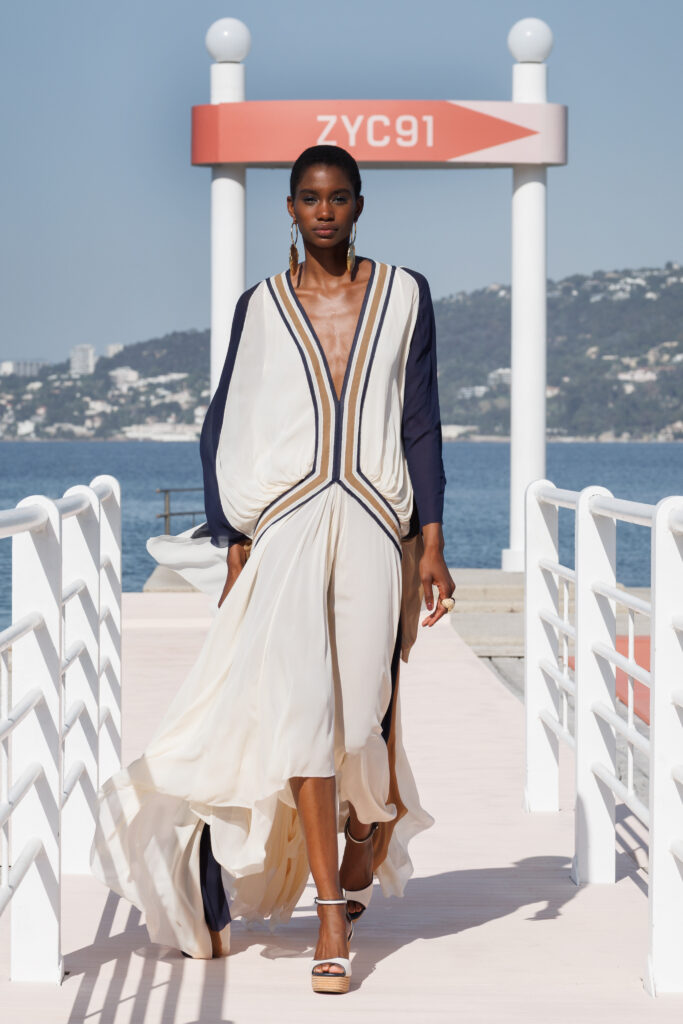
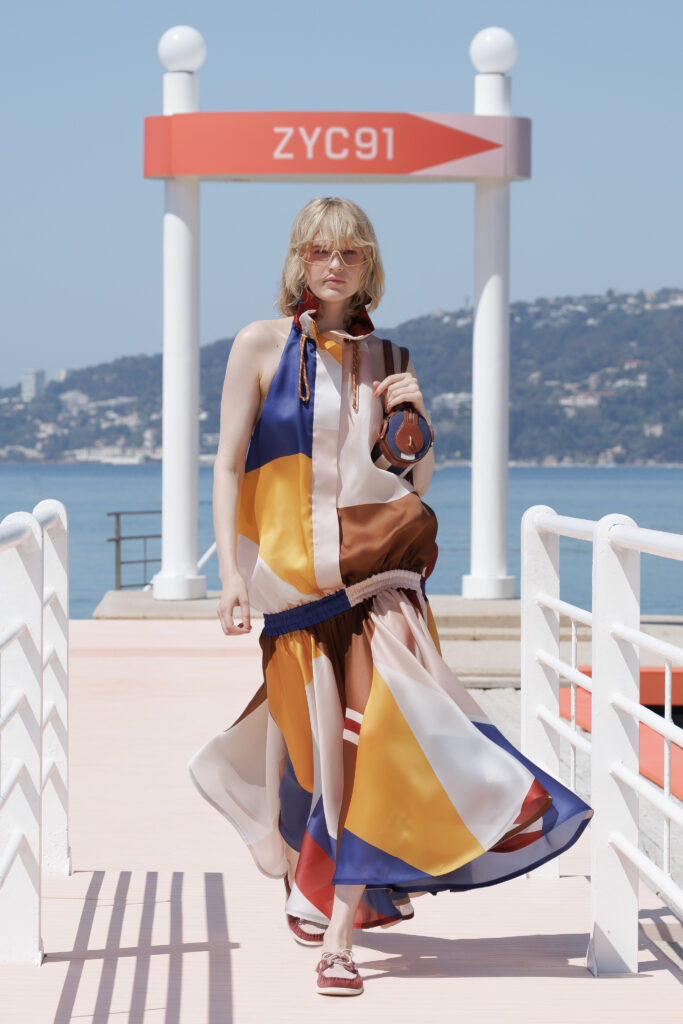
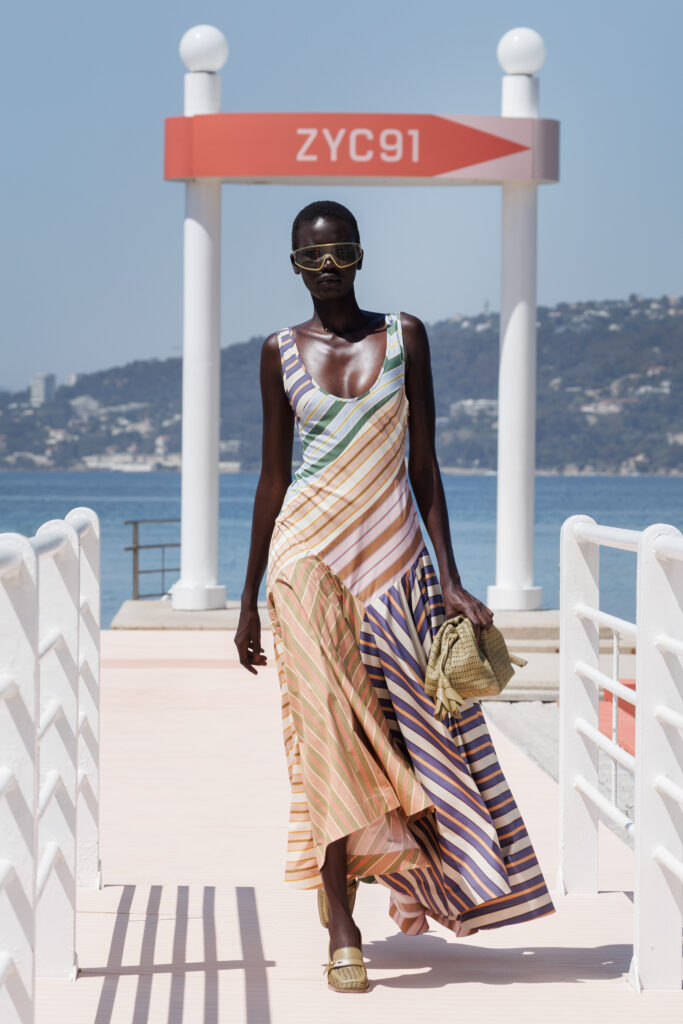
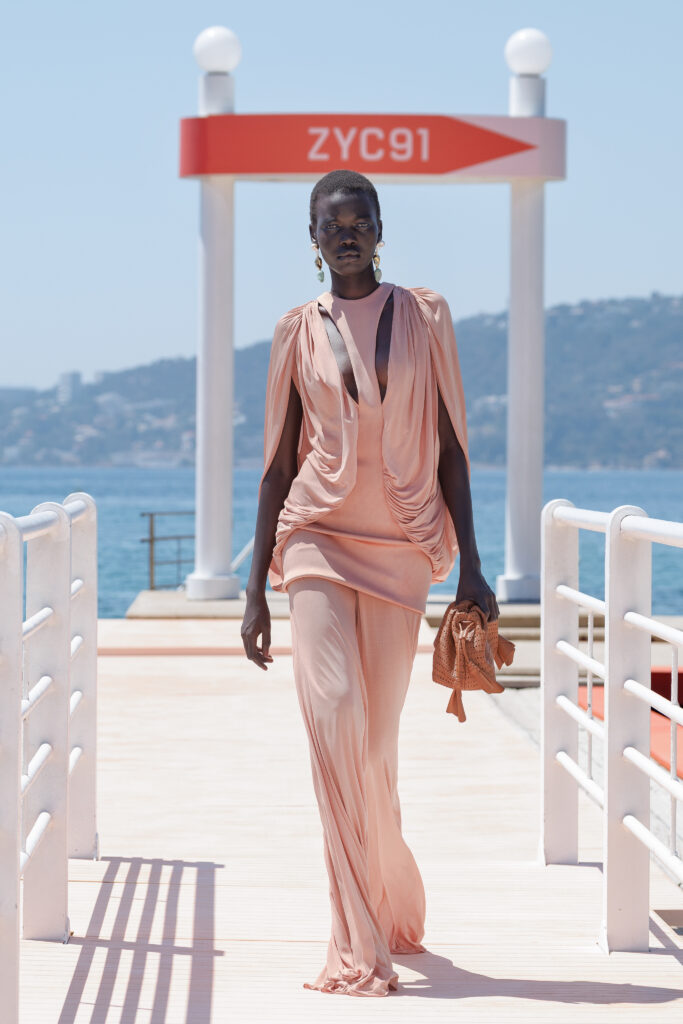
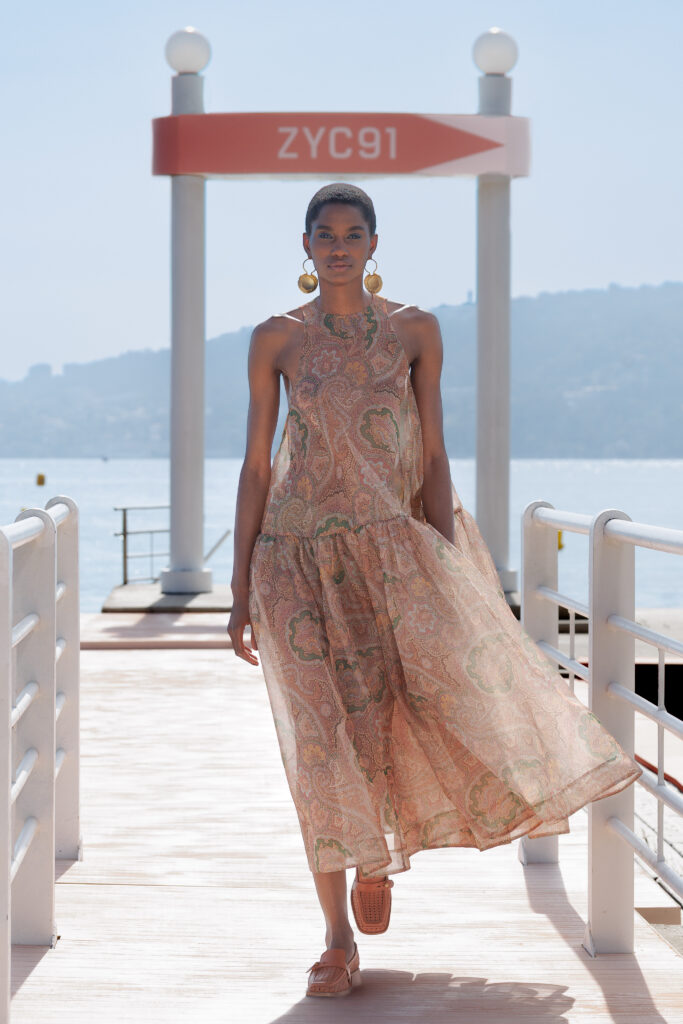
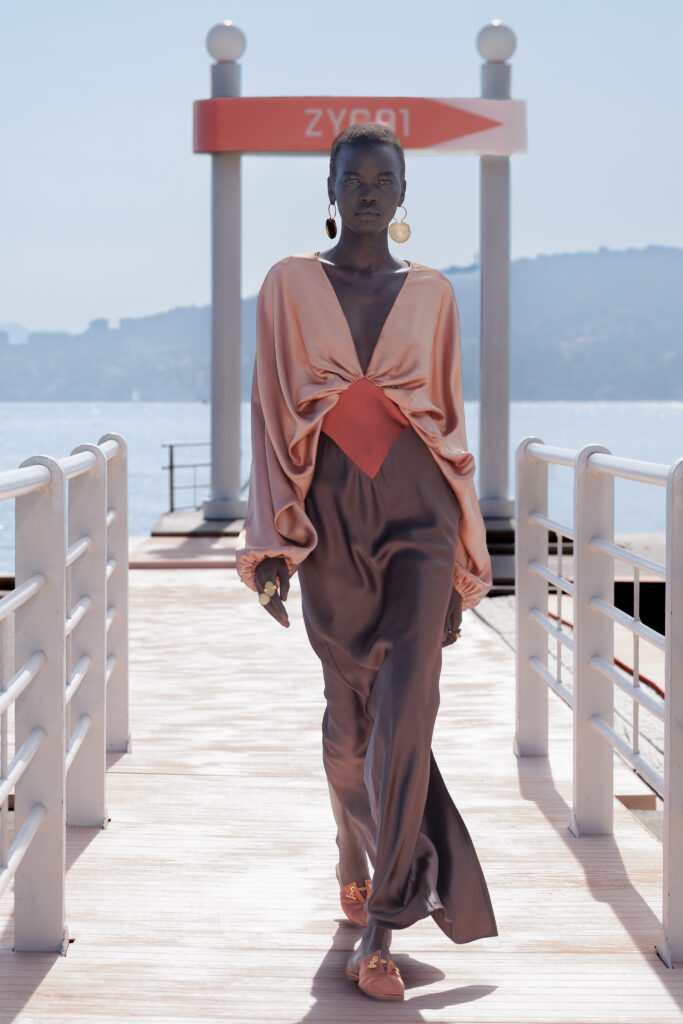
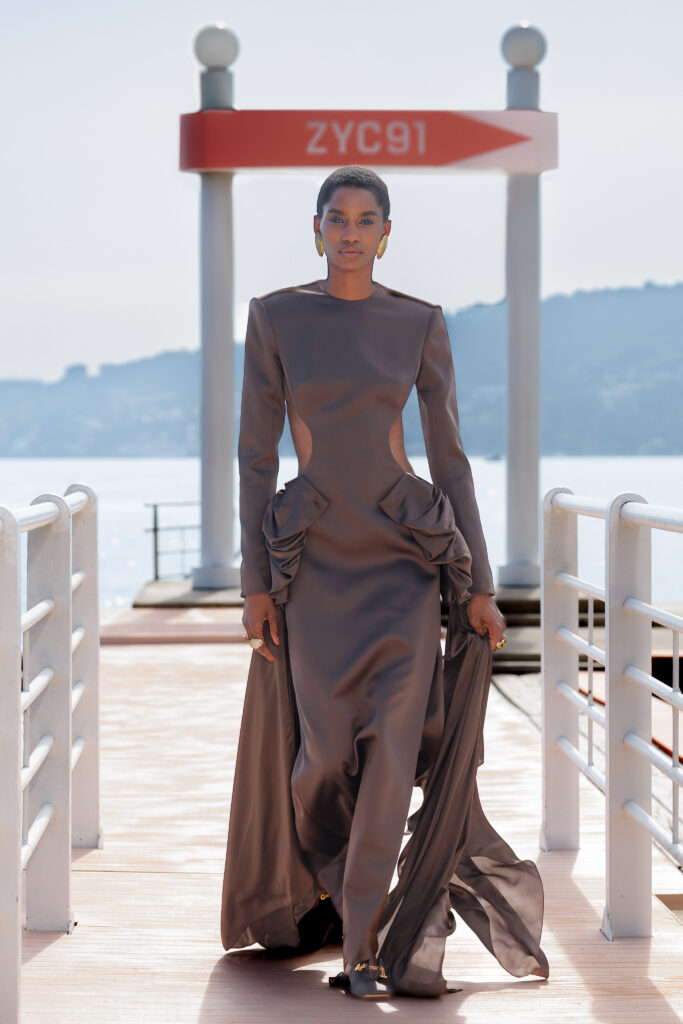
Silk duchesse satin with paisley print, used in evening pieces, represents the other pole of the collection – the opulence of the ballroom invaded by sailboats. Here, the House works the tension between two textile cultures: satin-weave woven silk, whose density naturally creates that characteristic sheen, against the fluidity of silk jersey, which embraces movement like an unfurled sail. The difference isn’t stylistic; it’s physical, measurable in the hand.
The palette insert
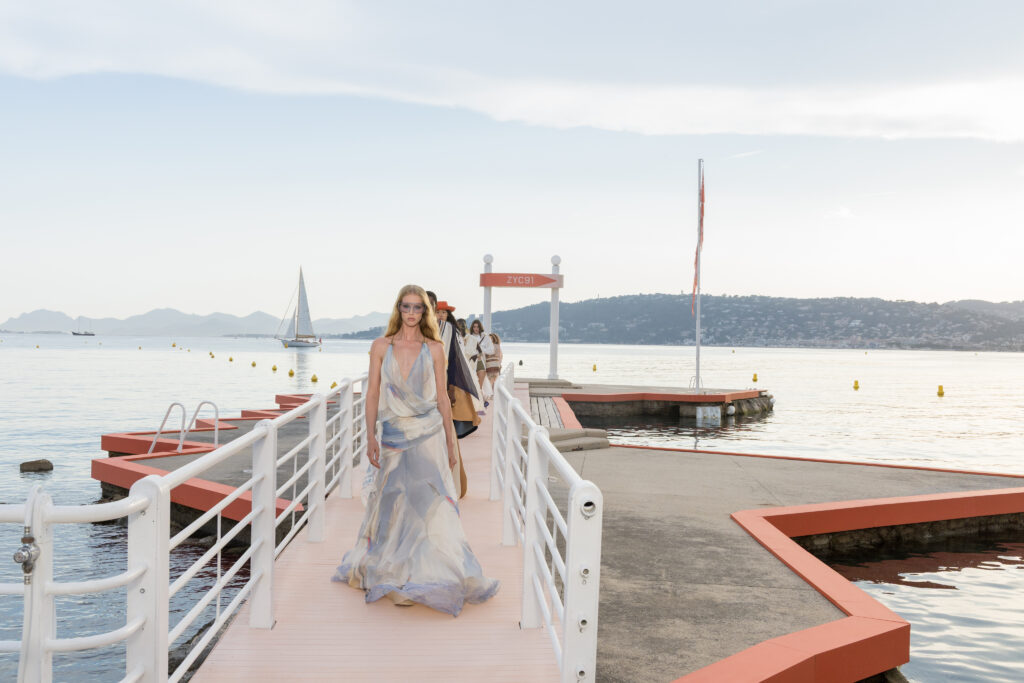
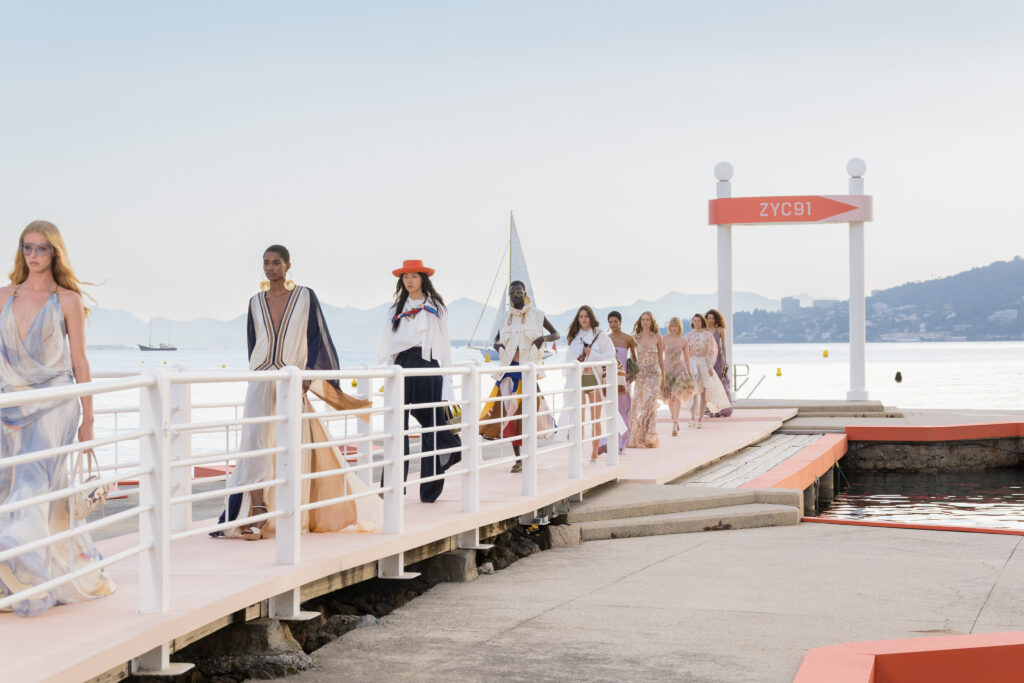
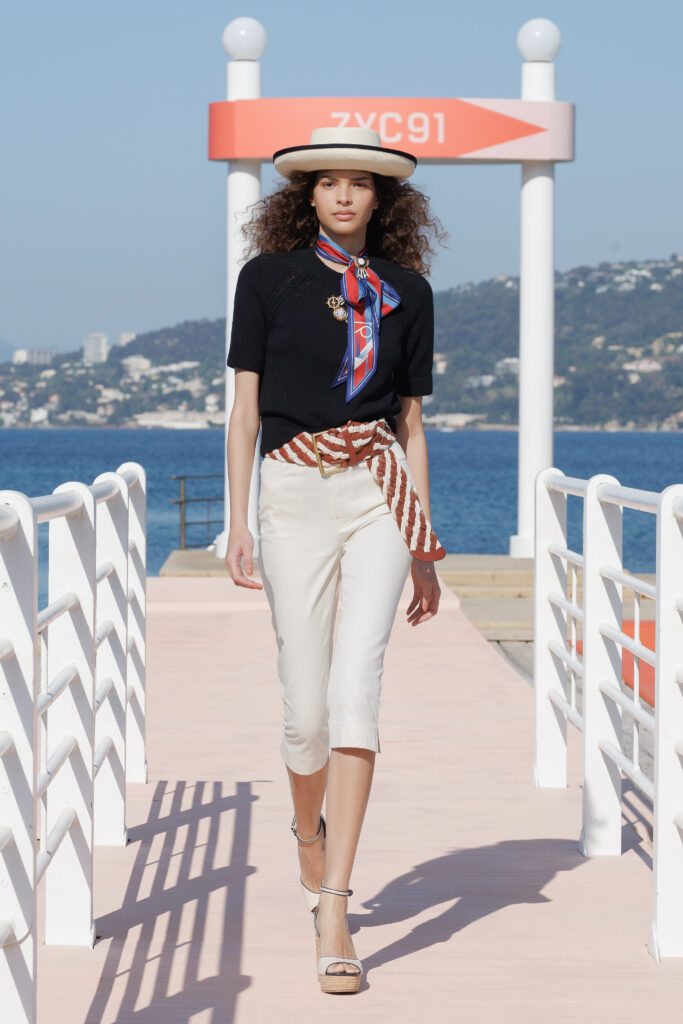
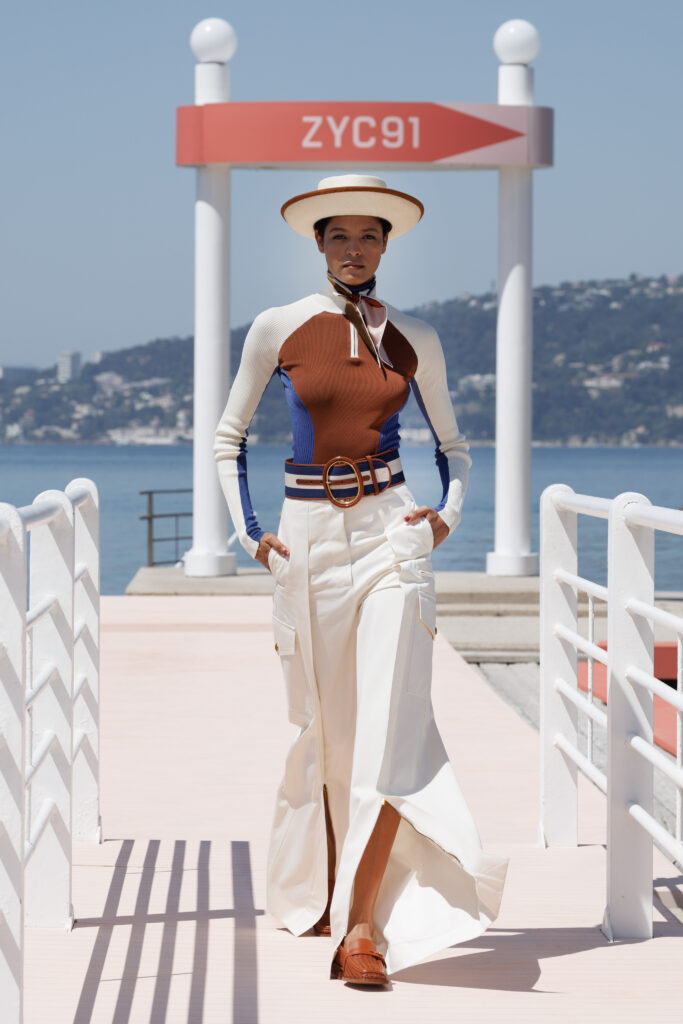
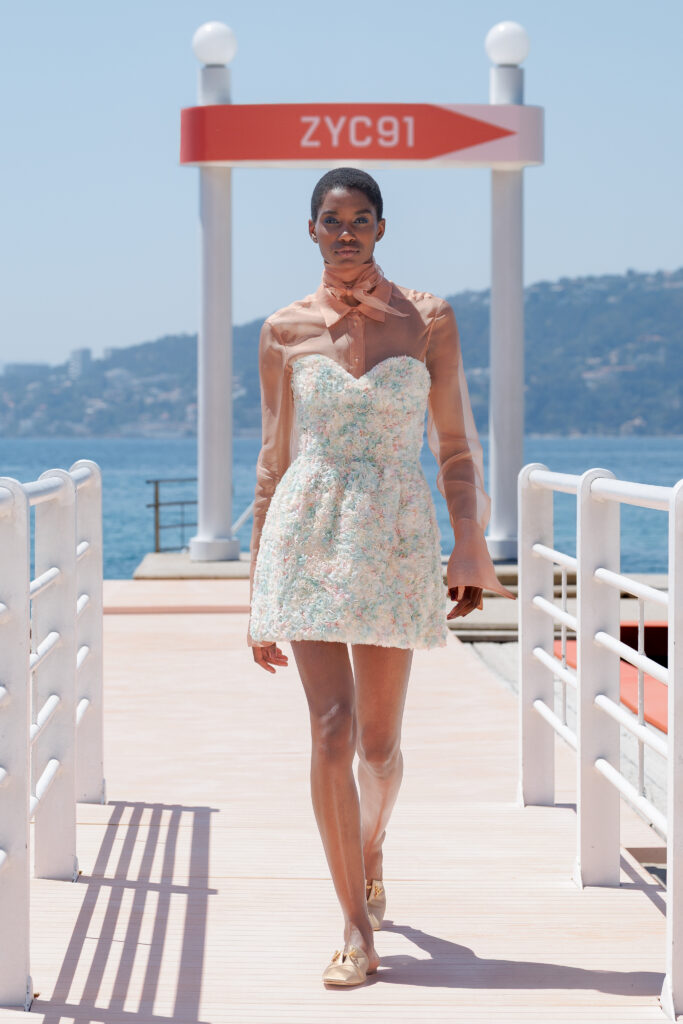
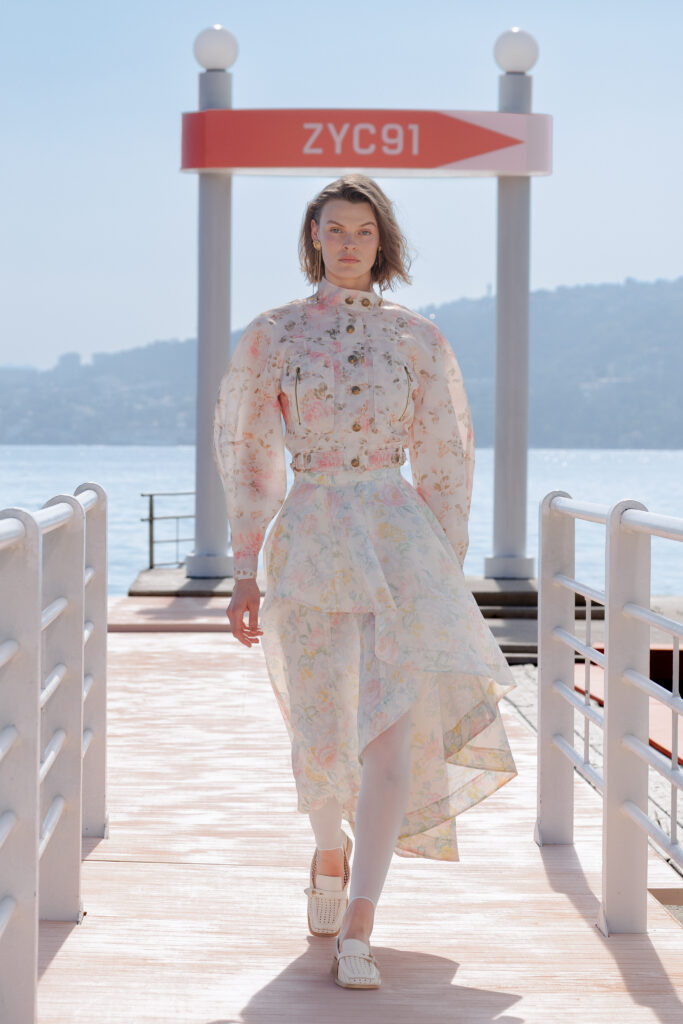
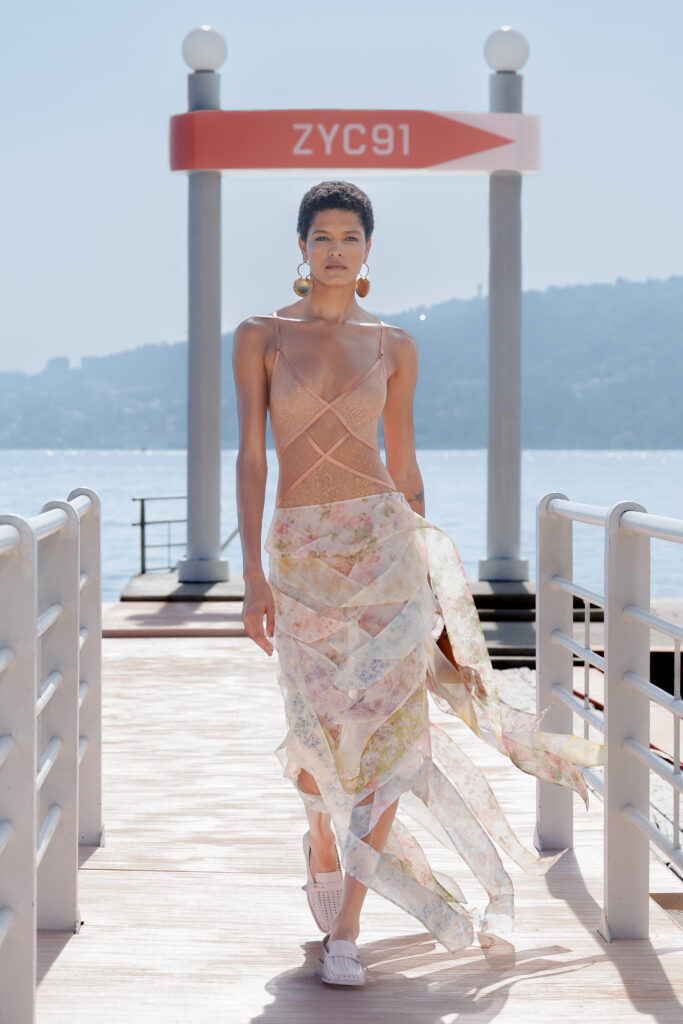
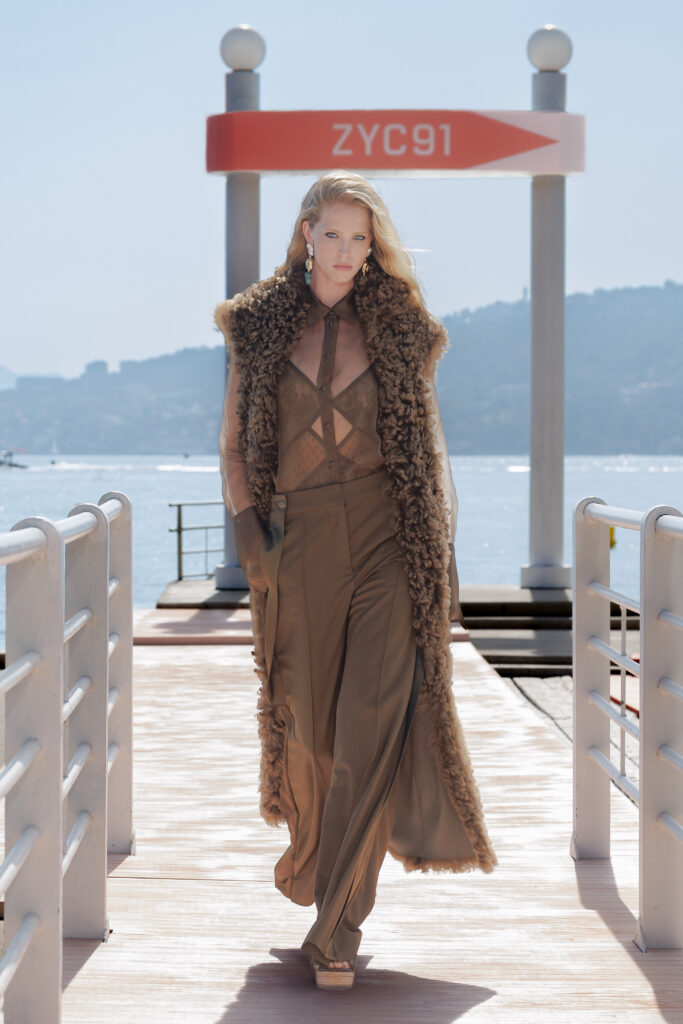
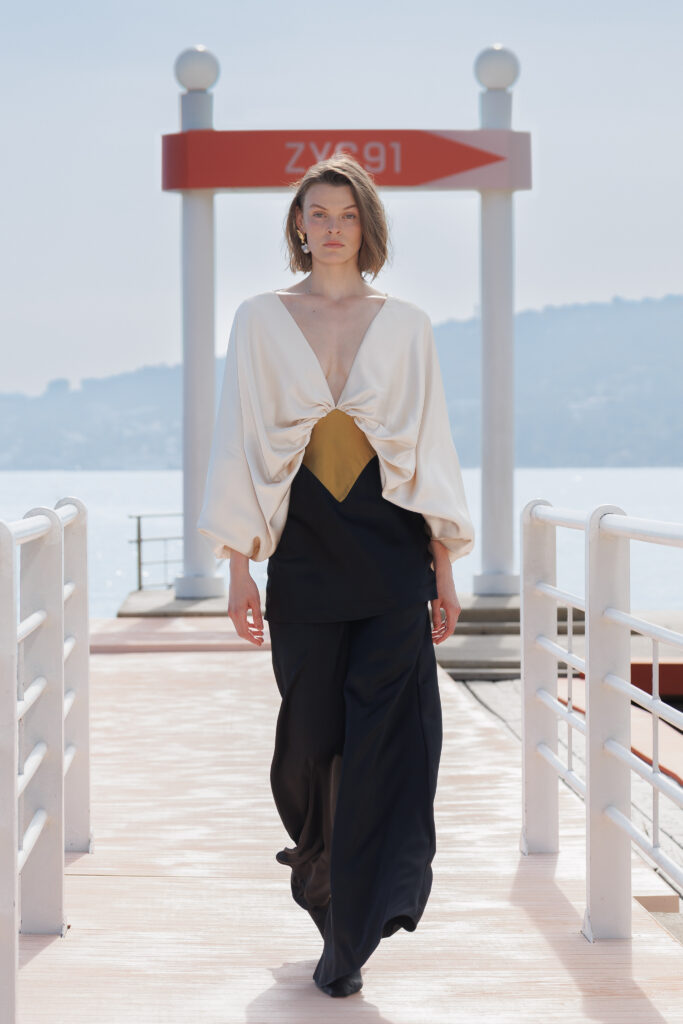
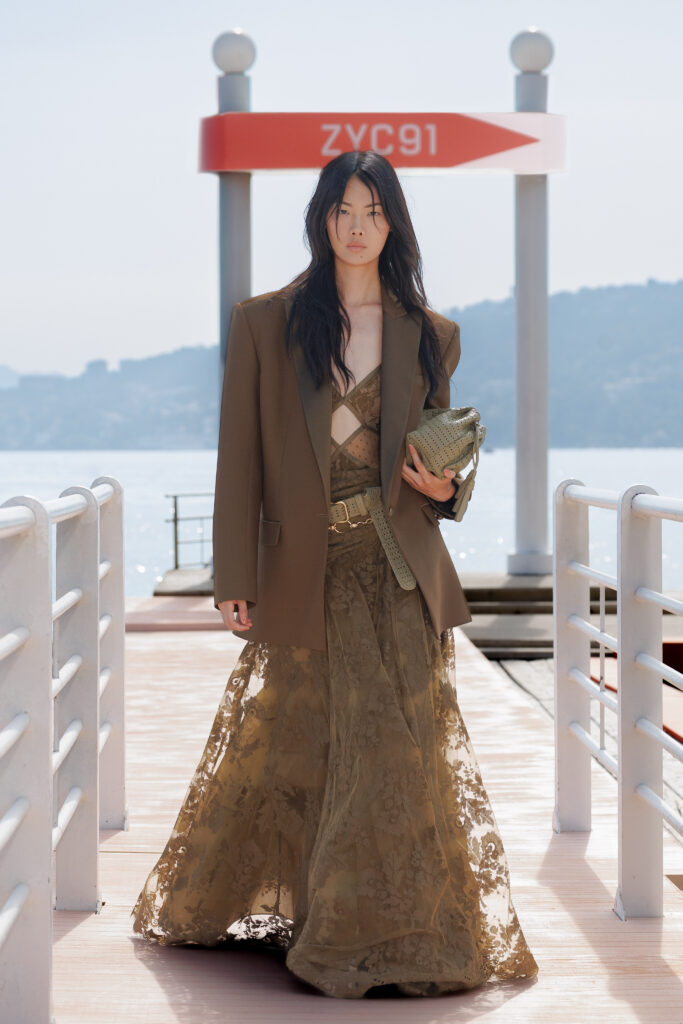
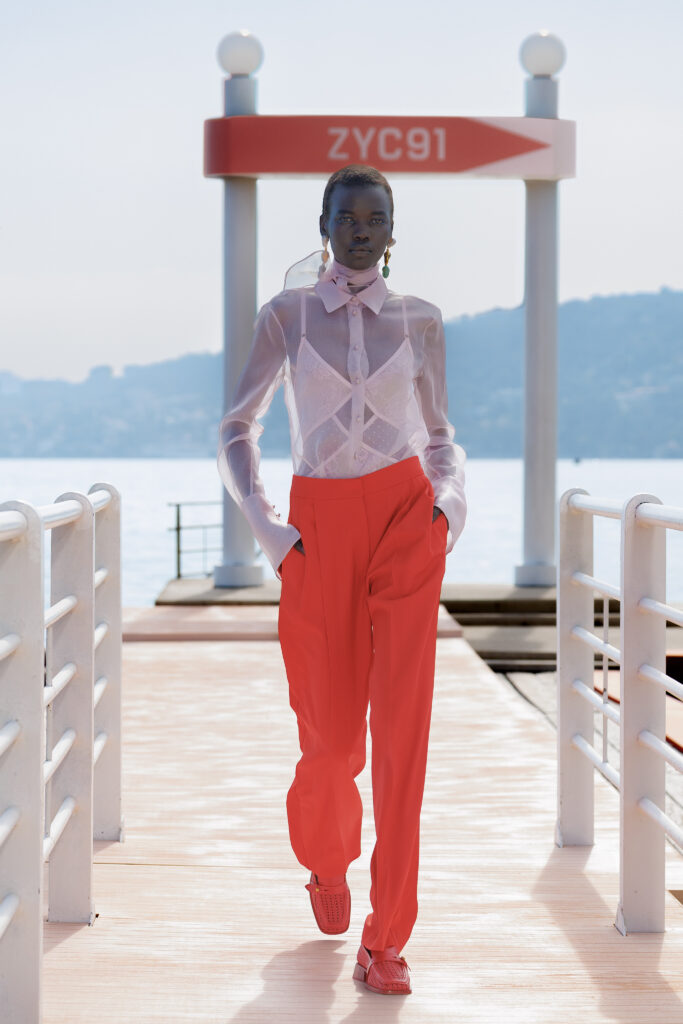
The chromatic architecture follows the same logic of progression as the race itself: navy blue, cream, red for the first few hours – Australia’s national colors and universal nautical codes – then pastels and earth tones as the day progresses, ending in crimson. A palette that tells a story, not an assortment.
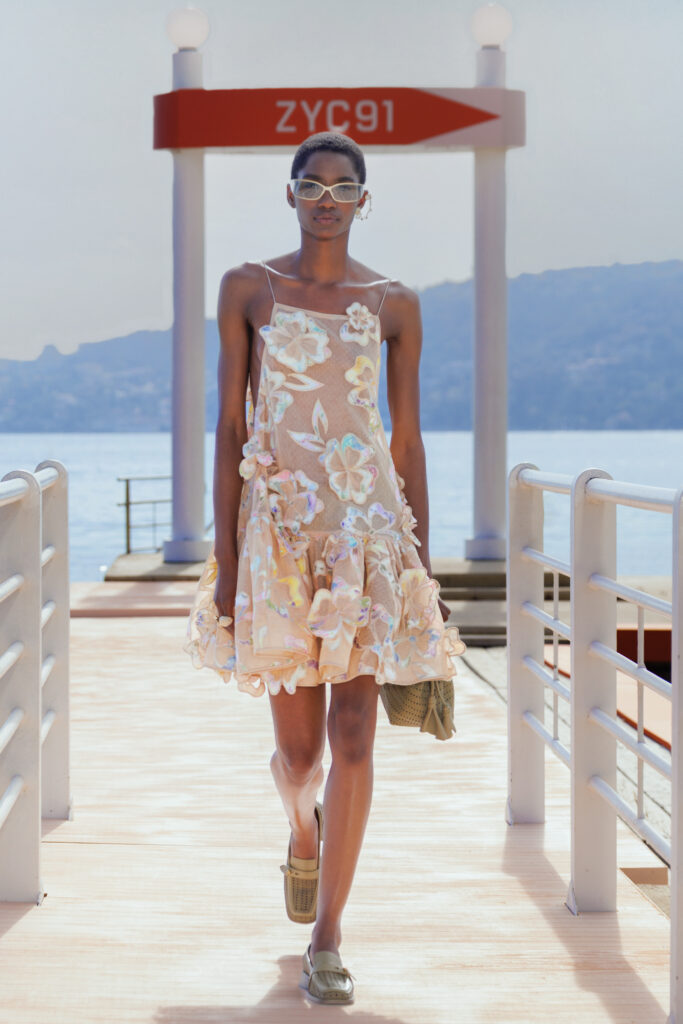
The accessories complete the picture. The Cloud 91 lightened in basketweave leather offers a precise example of surface work: the braiding creates an openwork structure that maintains the shape without the weight of full-grain leather, echoing in miniature the constructive logic of theAustralia II ‘s carbon-fiber shell – structural lightness by method, not by suppression.
What 1983 says to 2027
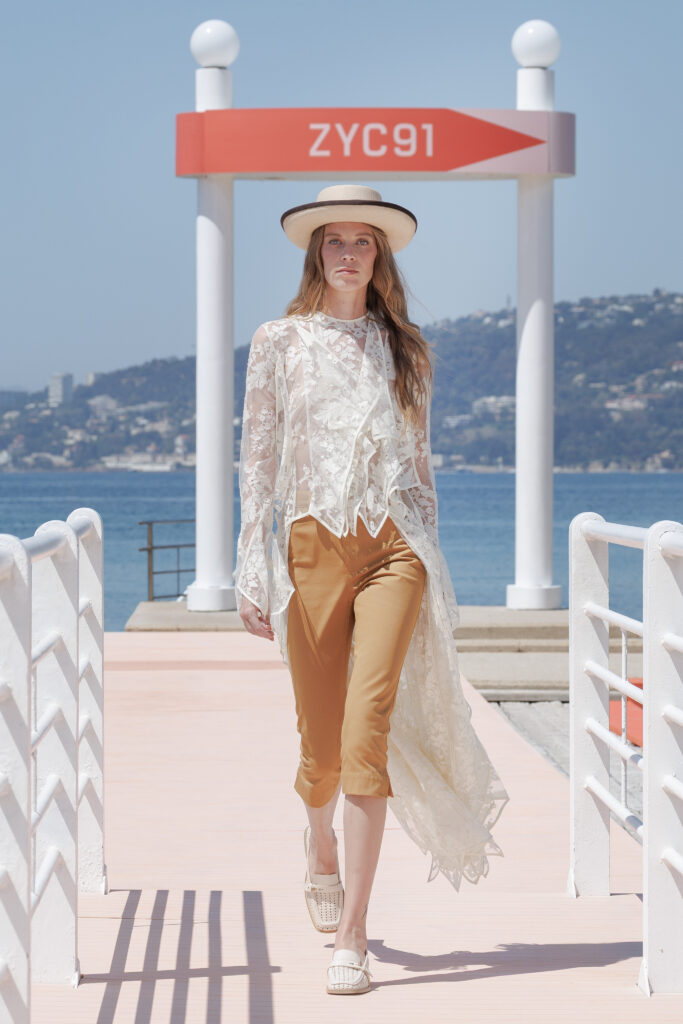
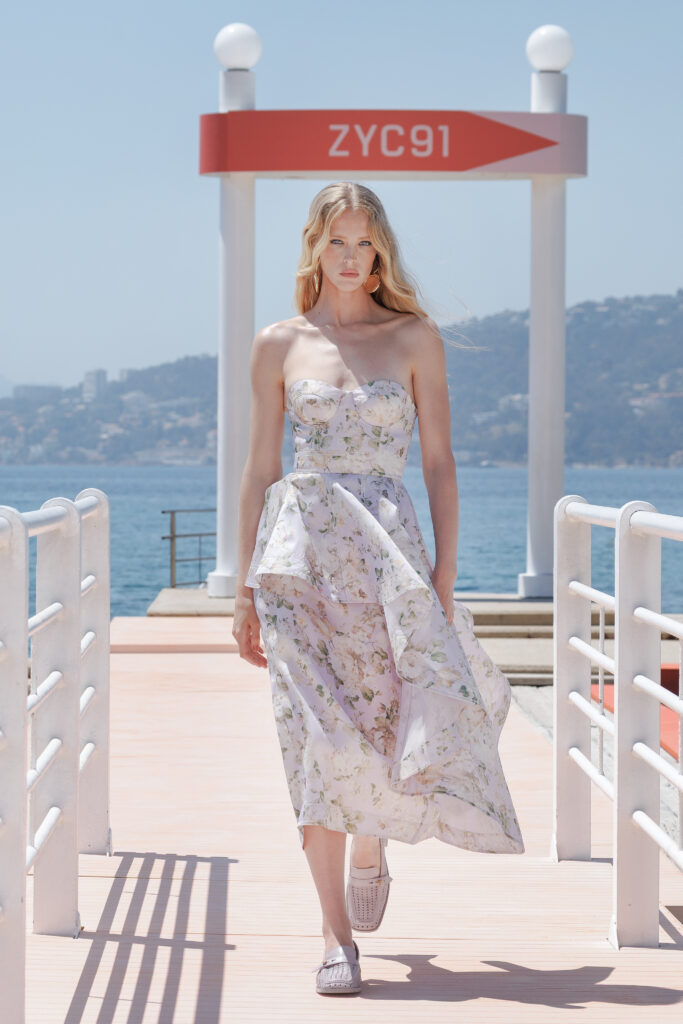
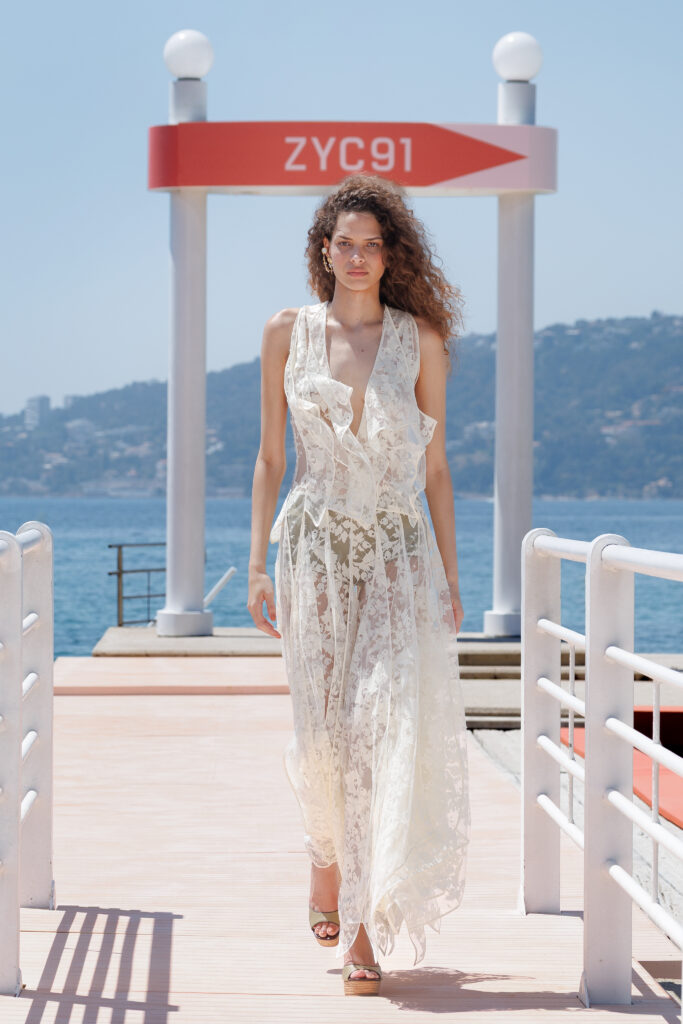
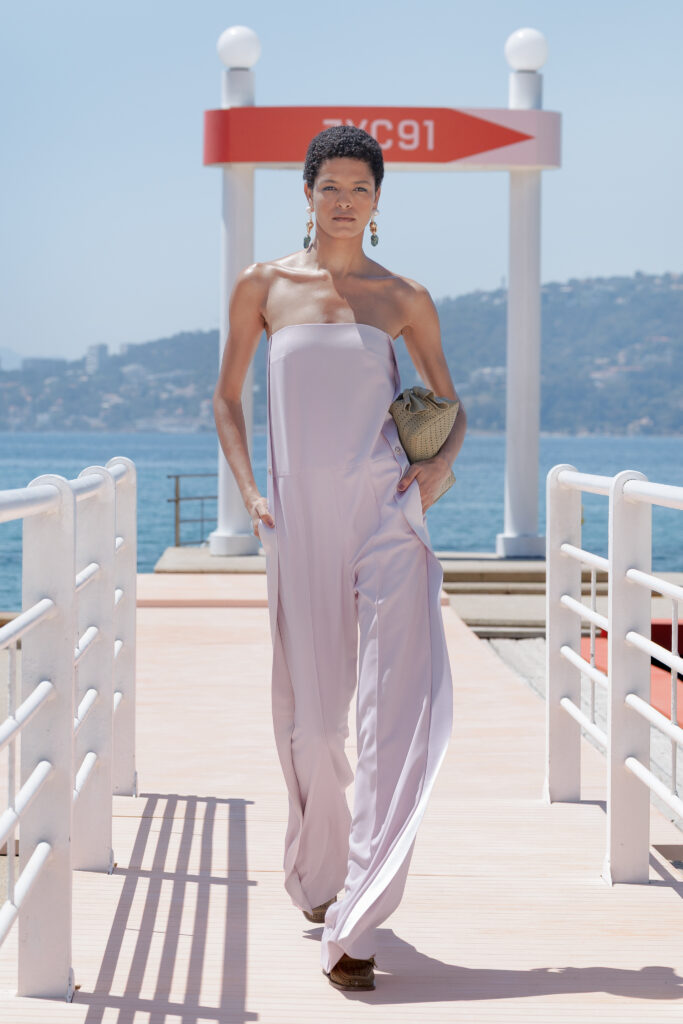
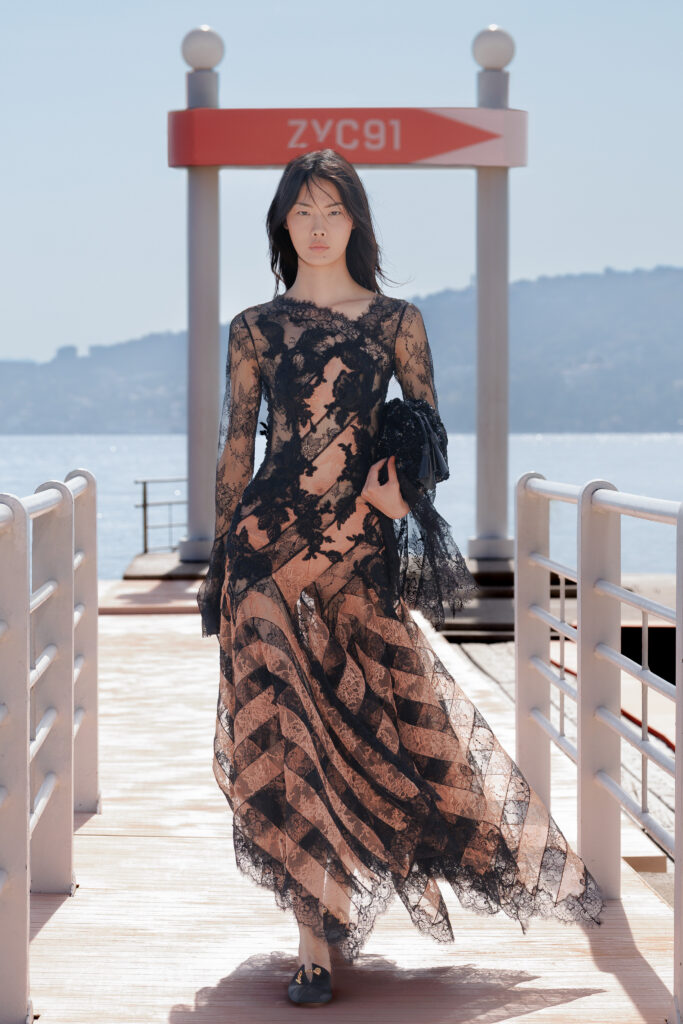
Zimmermann’s Cruise 2027 collection asks a question that few fashion presentations formulate so clearly: what does winning mean when the rules are written by those who have always won? Australia II didn’t cheat – she read the rules with the eyes of someone who had nothing to lose. The strapless lavender jumpsuit worn over a tuxedo, the lace skirt with striped panels that descends in flared movement: these pieces don’t violate the codes of formality – they occupy them from within.
The Australian House, founded in 1991 by sisters Nicky and Simone Zimmermann in Sydney – nine years after the victory in Newport – has built its identity on femininity as a territory for technical experimentation. The Clash is perhaps its most explicit expression of what this experimentation owes to a national culture where audacious design is a transmissible value.
Perhaps the next chapter will explore whether this challenger logic – reading the rules differently – extends to the question of manufacturing itself.
Australia II and the fin keel
In 1983, the Australian team led by Alan Bond introduced an inverted bulb keel with two side fins, reducing displacement and improving windward pointing. This innovation, contested by the New York Yacht Club but validated by the jury, enabledAustralia II to overcome a four-two deficit in the final. It was the first non-American victory in 132 editions of the Cup. In fashion, this logic of the technical gesture concealed in the rule can be found in collections that reinterpret a formal constraint – the tuxedo, the evening gown – through the choice of material and construction, not through a visible stylistic break.














Cette publication est également disponible en :

