
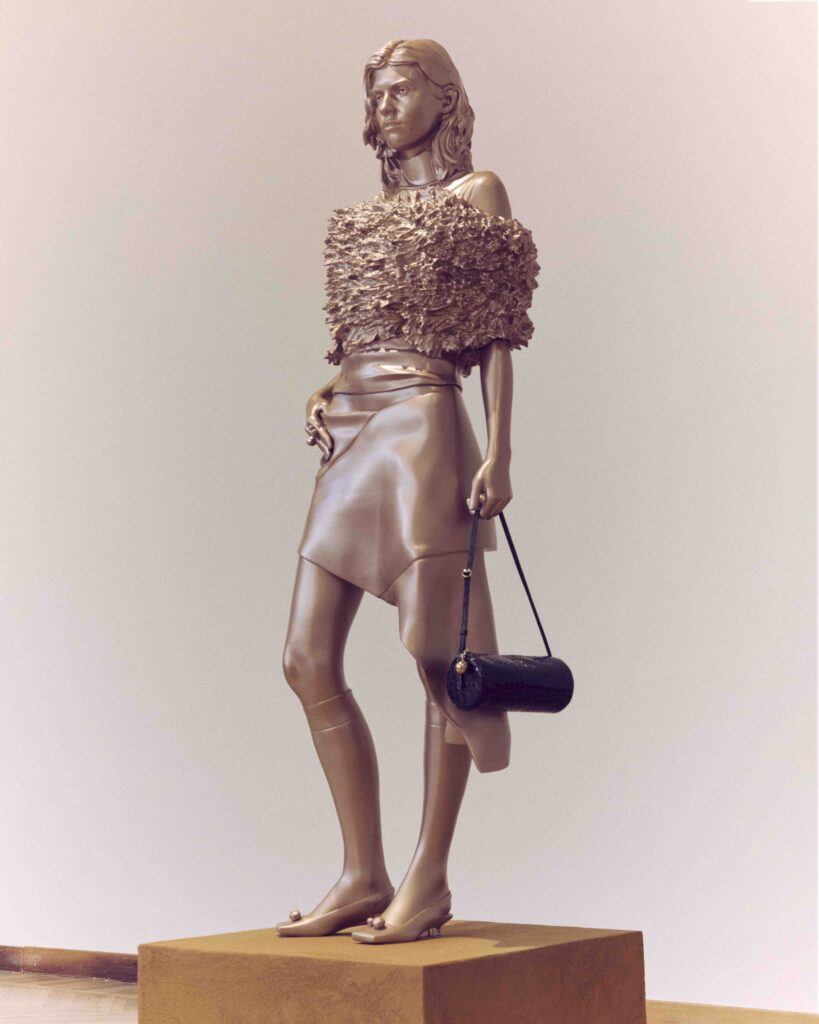
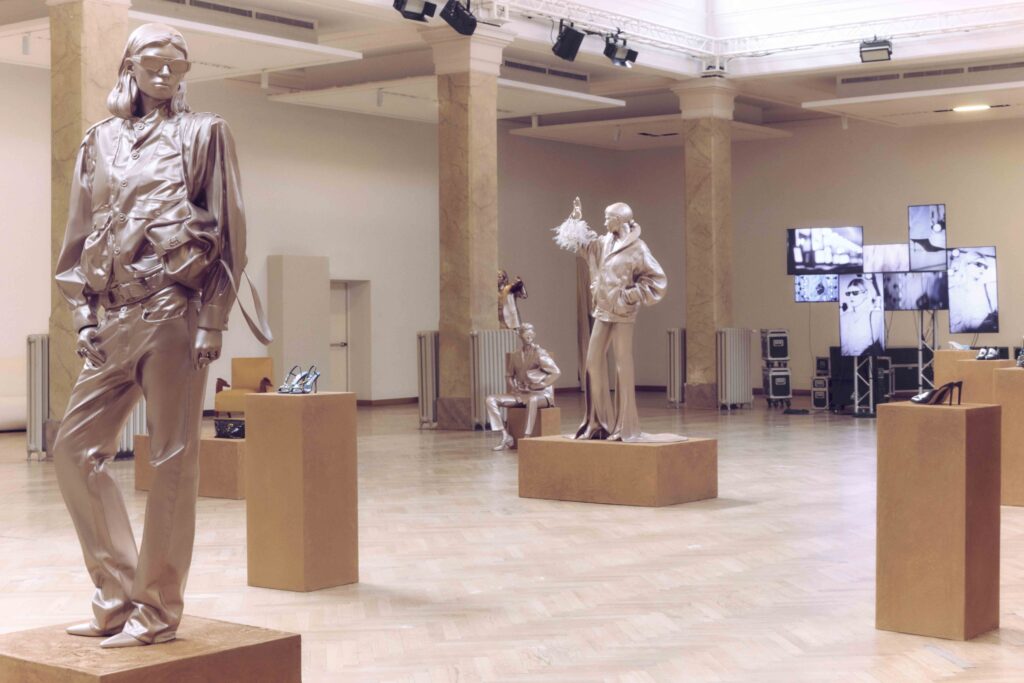
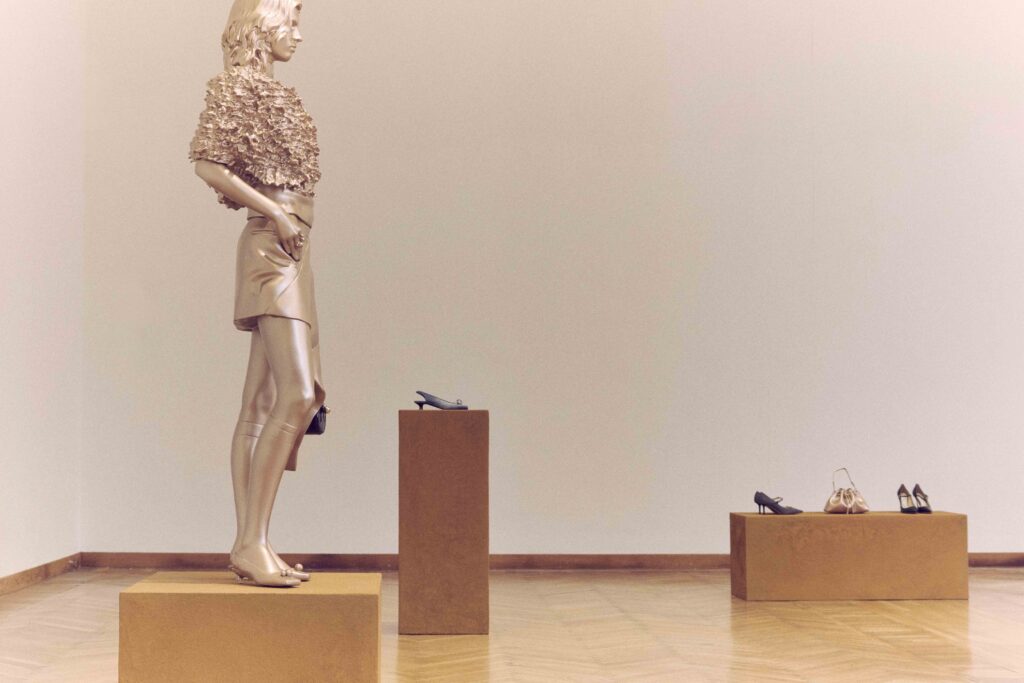
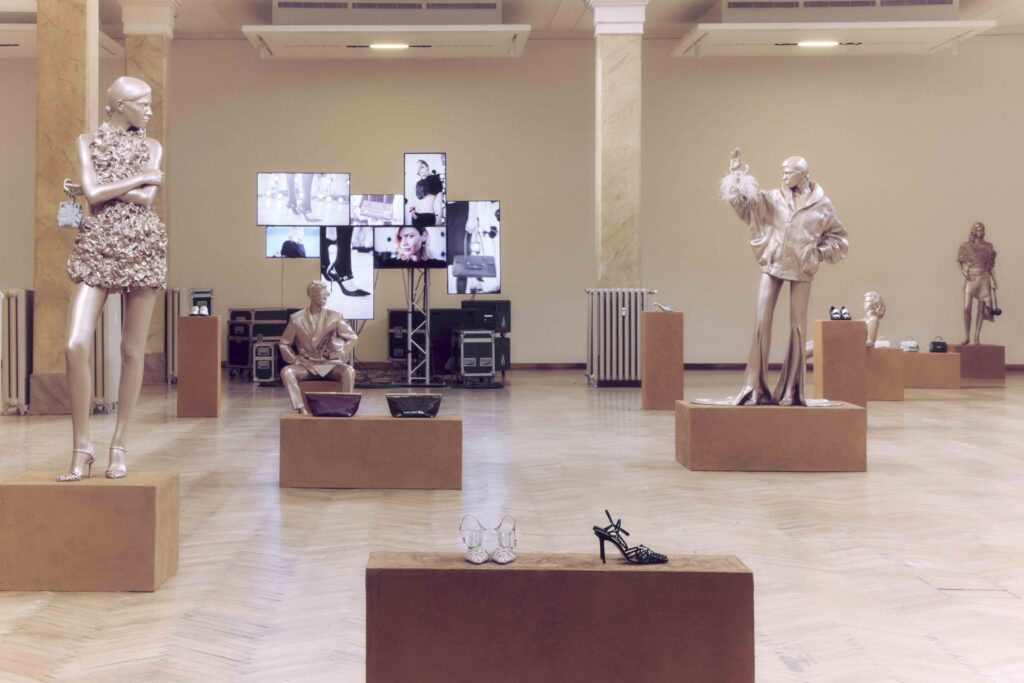
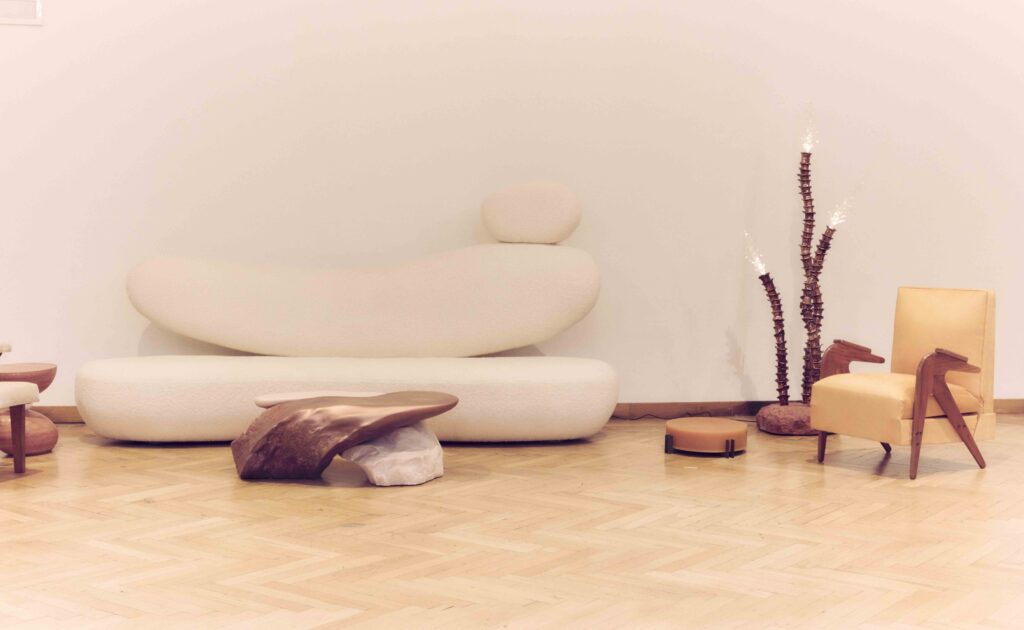
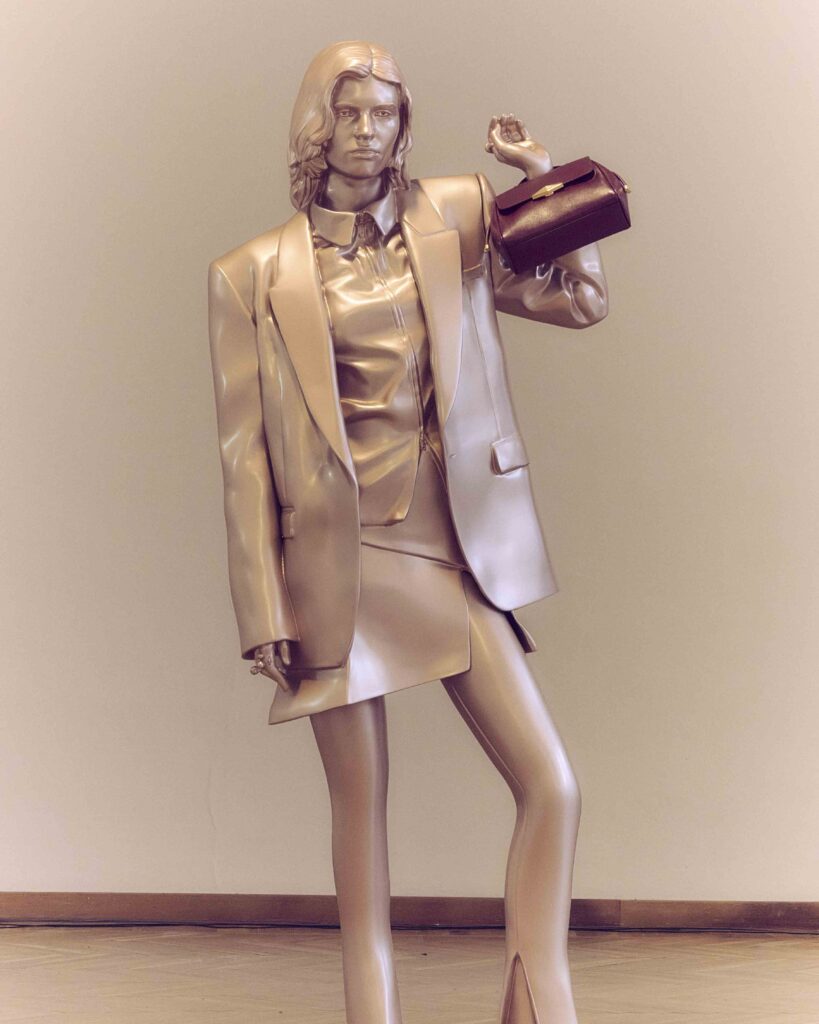
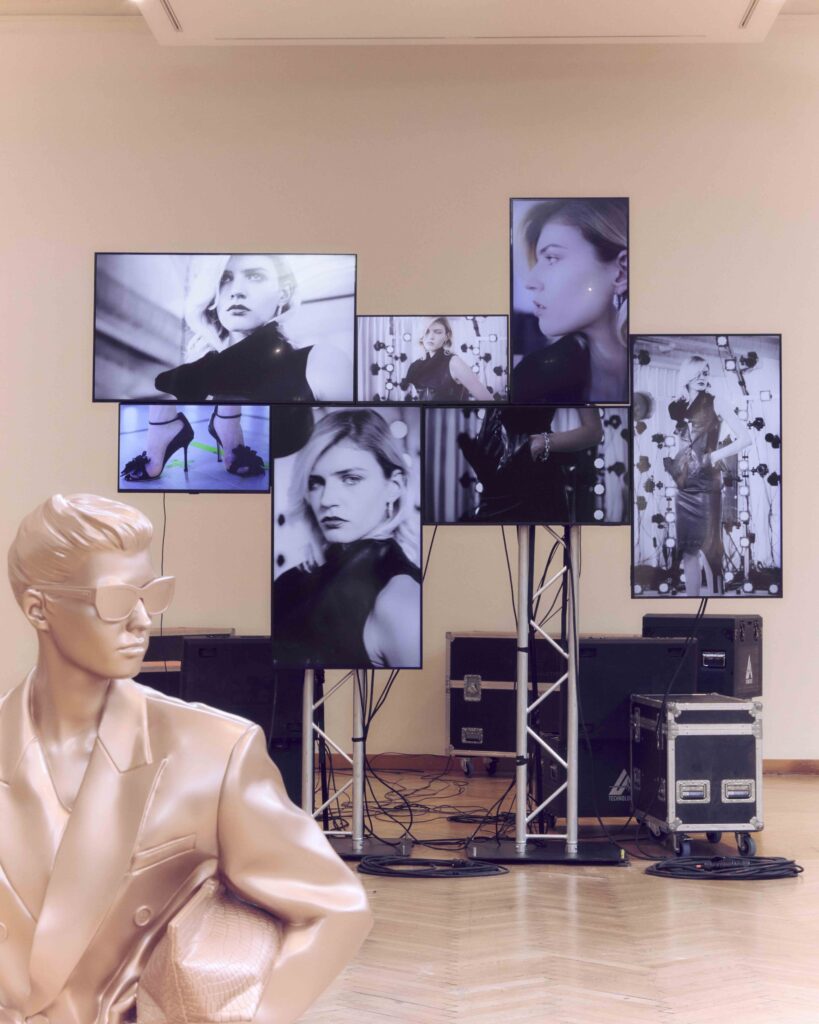
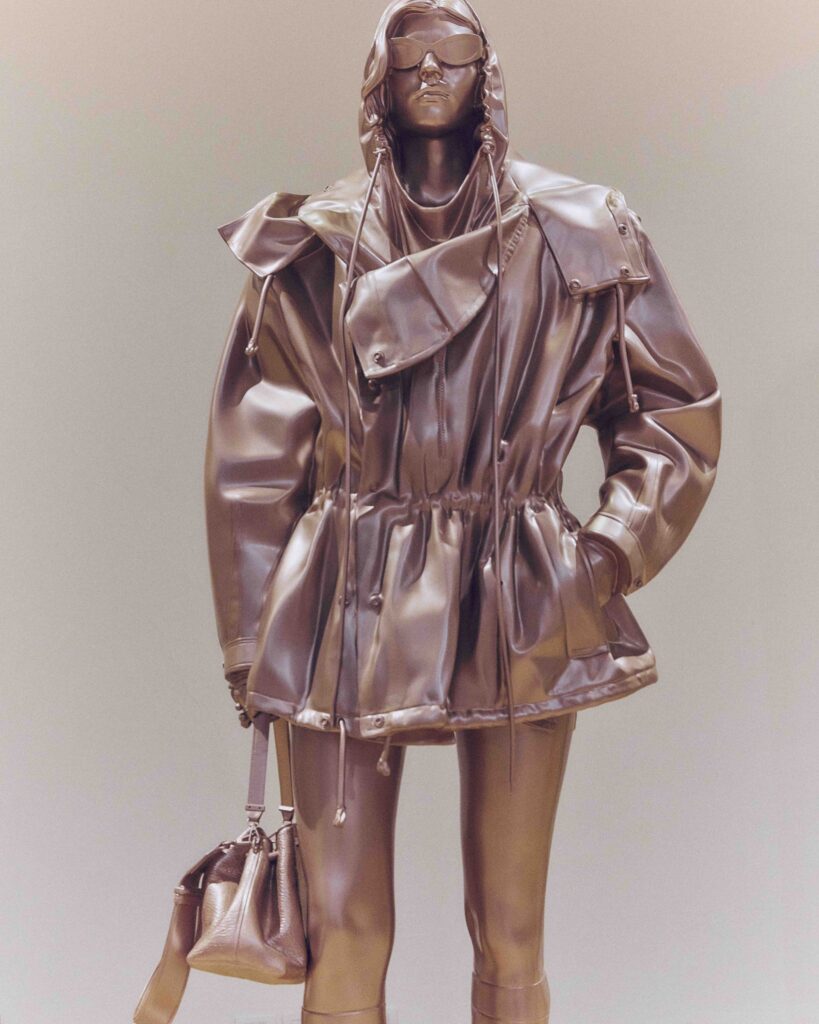
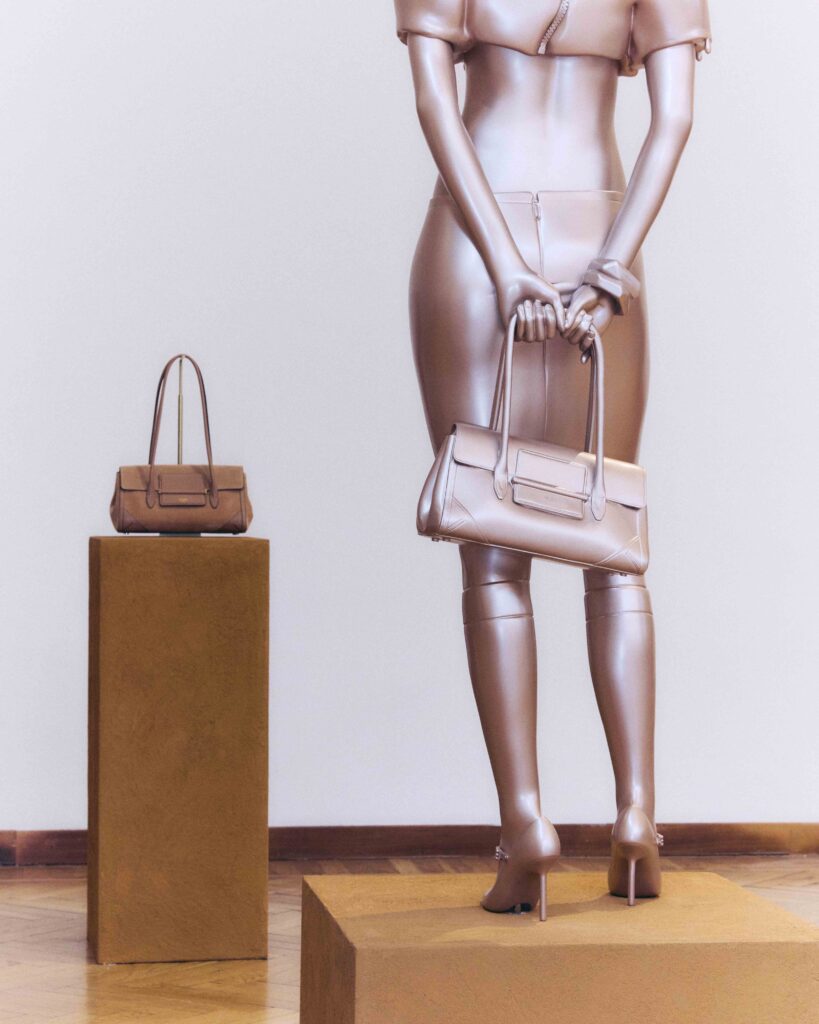
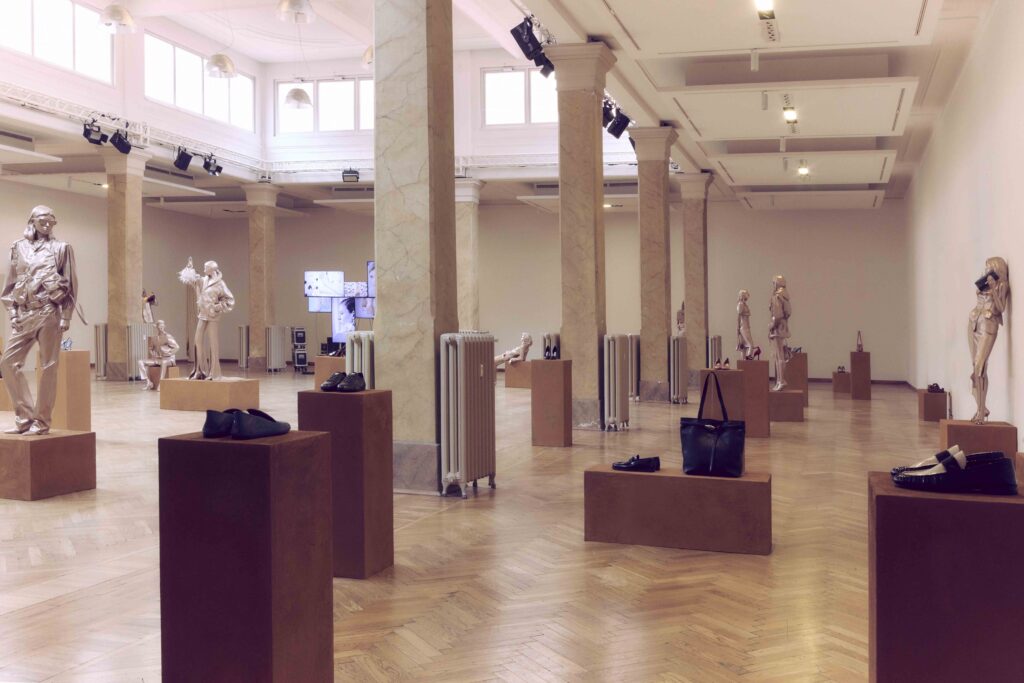
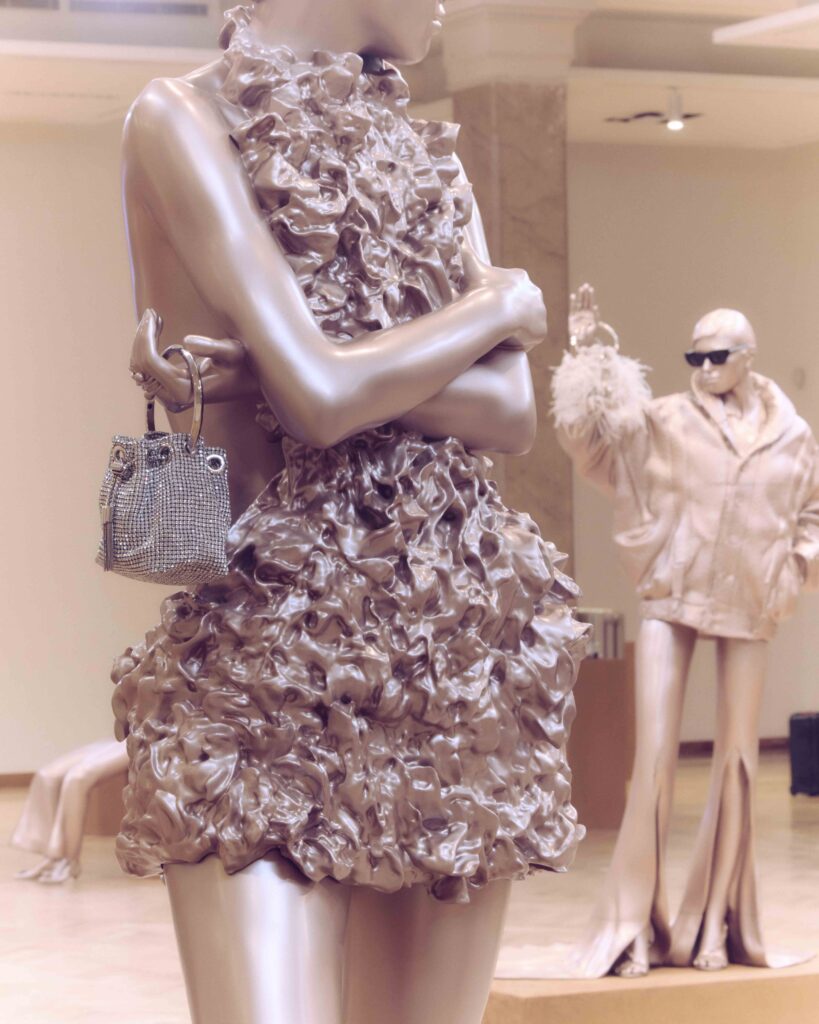
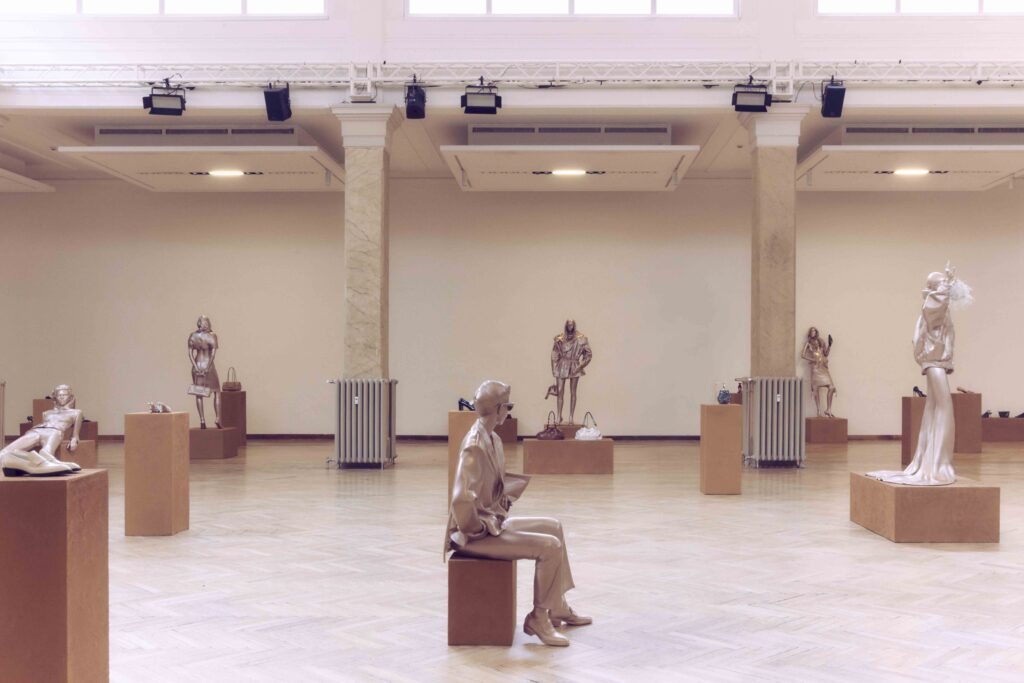
Presented in Milan in a museum-gallery setting peopled with life-size golden statues, Jimmy Choo’s Spring-Summer 2027 collection flatly rejects categories. Sandra Choi embraces contrast as a signature, making glamour an energy rather than a uniform.
There is a kind of quiet boldness in never deciding. For its thirty-first year, Jimmy Choo chooses precisely that: not to choose. The Spring-Summer 2027 collection, presented during Milan Fashion Week in a space evoking both a library and a museum gallery, stages golden statues frozen in perpetual transformation, from day to night, from mood to mood. A way of saying, before the very first shoe, that the house intends to explore identities rather than fix them.
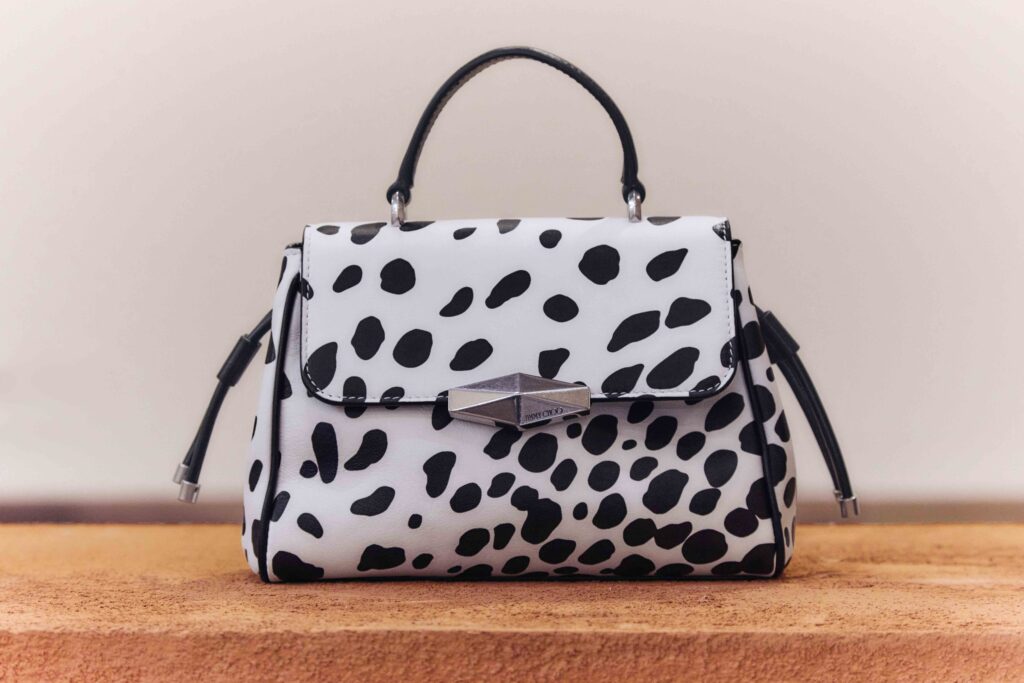
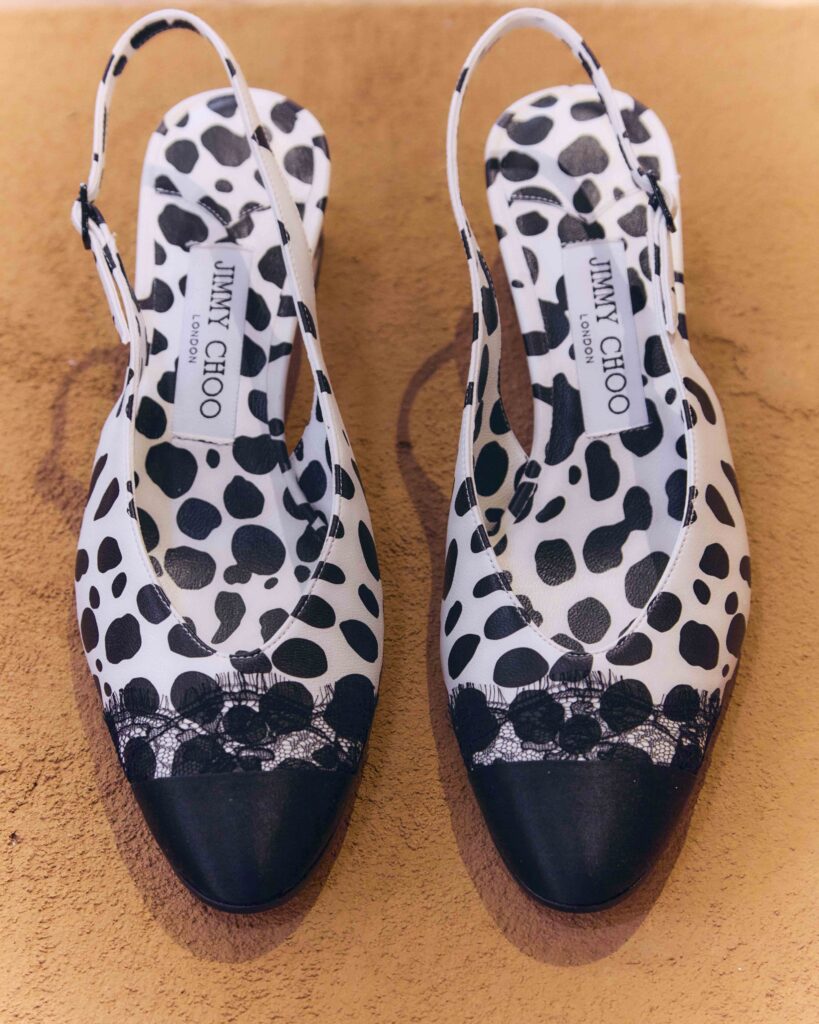
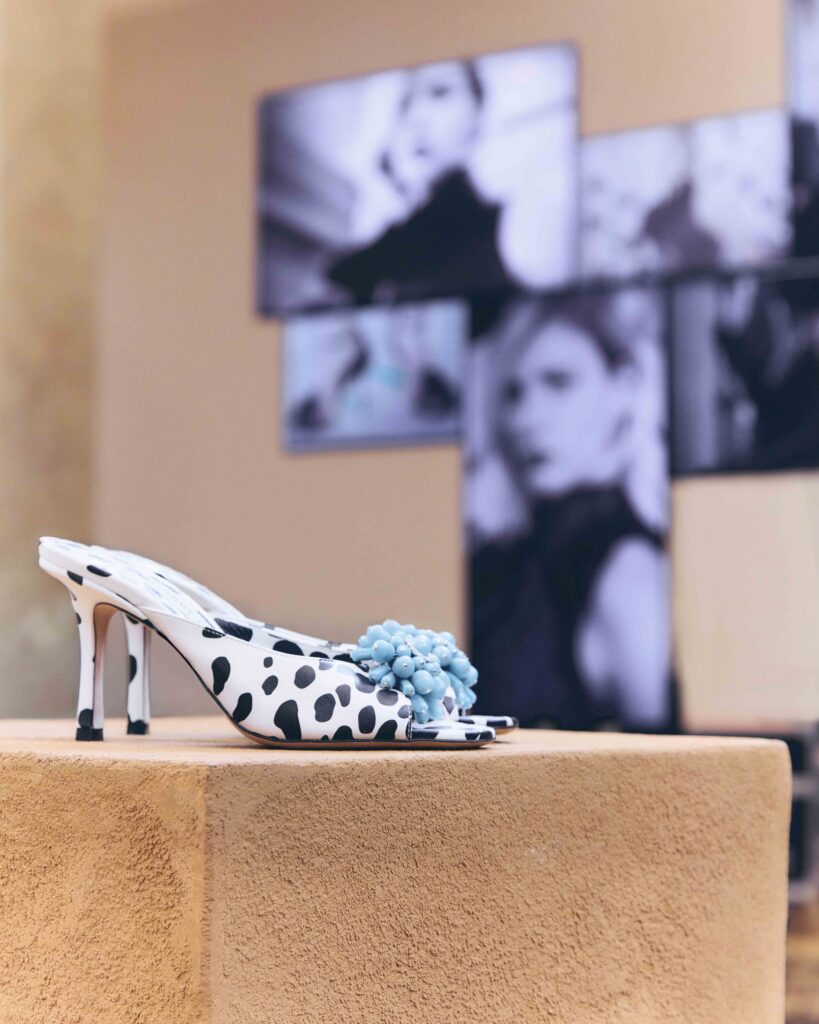
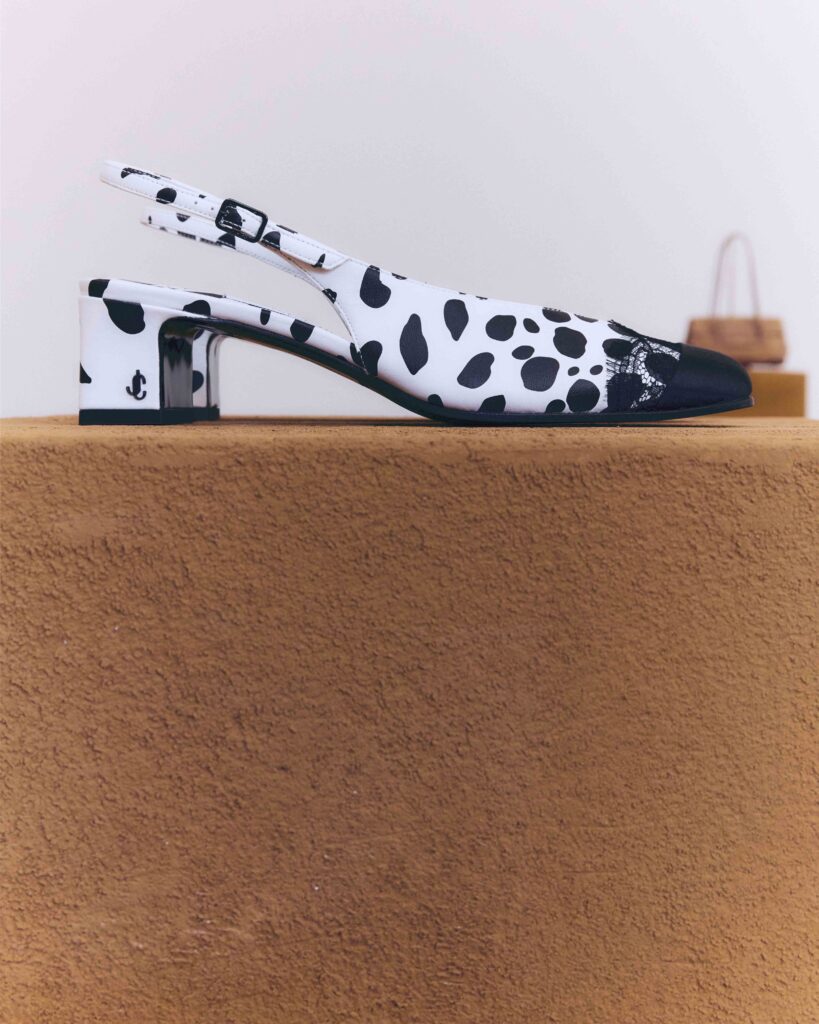
“Glamour doesn’t always need to be expected. It can be anywhere, in anyone. It’s a spirit, a way of feeling,” sums up Sandra Choi, creative director. This idea of contrast runs through every piece. The IZU, an open-toe mule perched on an 85 mm slim heel, takes up the house’s archival dotted elaphe motif, but translates it into a monochrome print on nappa latte — a gesture of quotation rather than repetition, enriched by a brooch of turquoise resin pearls and crystals that reasserts, in a more joyful tone, the house’s own jewellery-like opulence. The same motif dresses the EYLA differently, a back-strap pump on a 45 mm low heel, conceived for a daytime attitude — proof that Jimmy Choo likes to replay the same detail in opposite registers rather than confine it to a single silhouette.
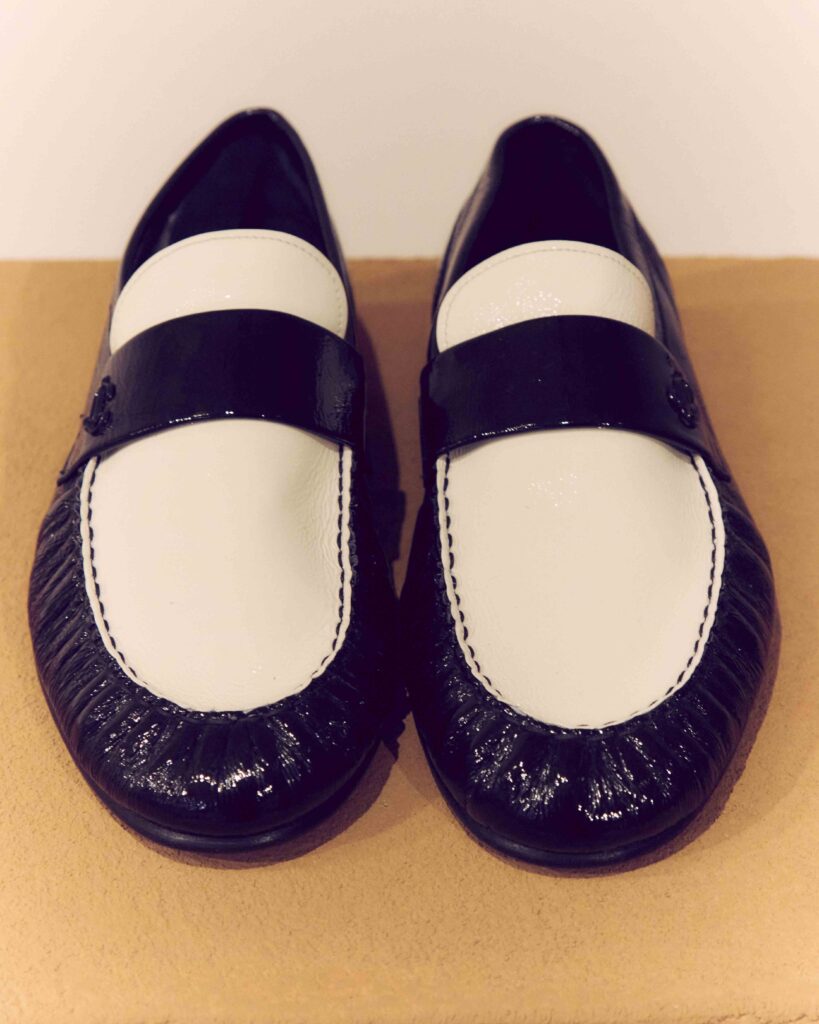
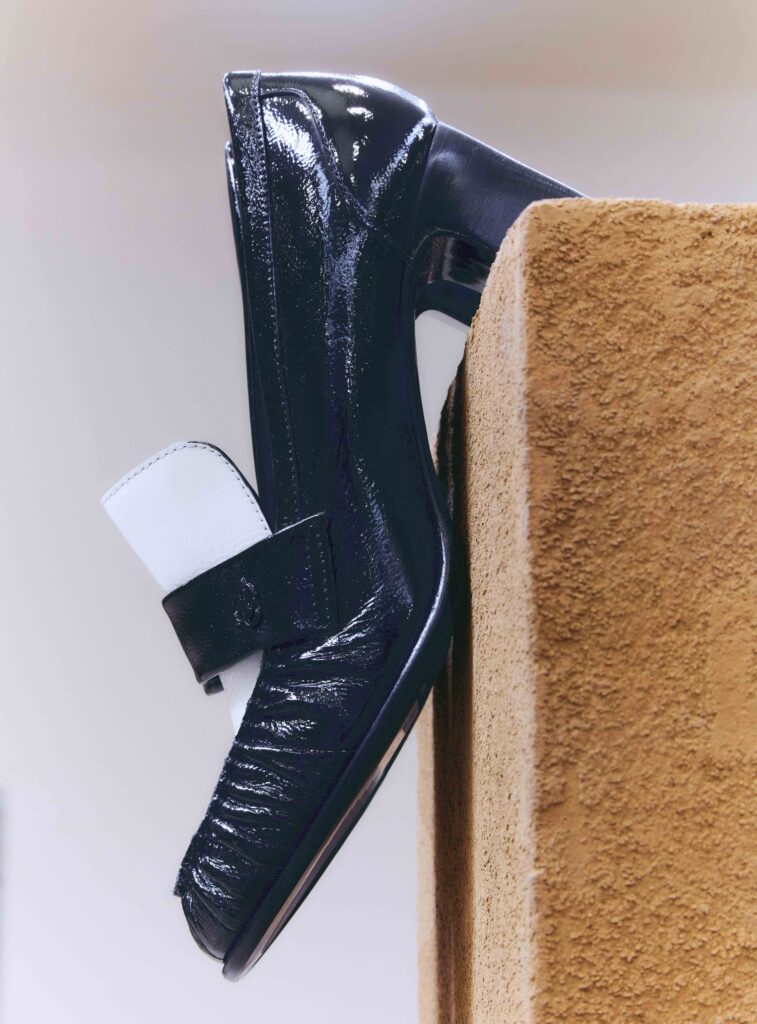
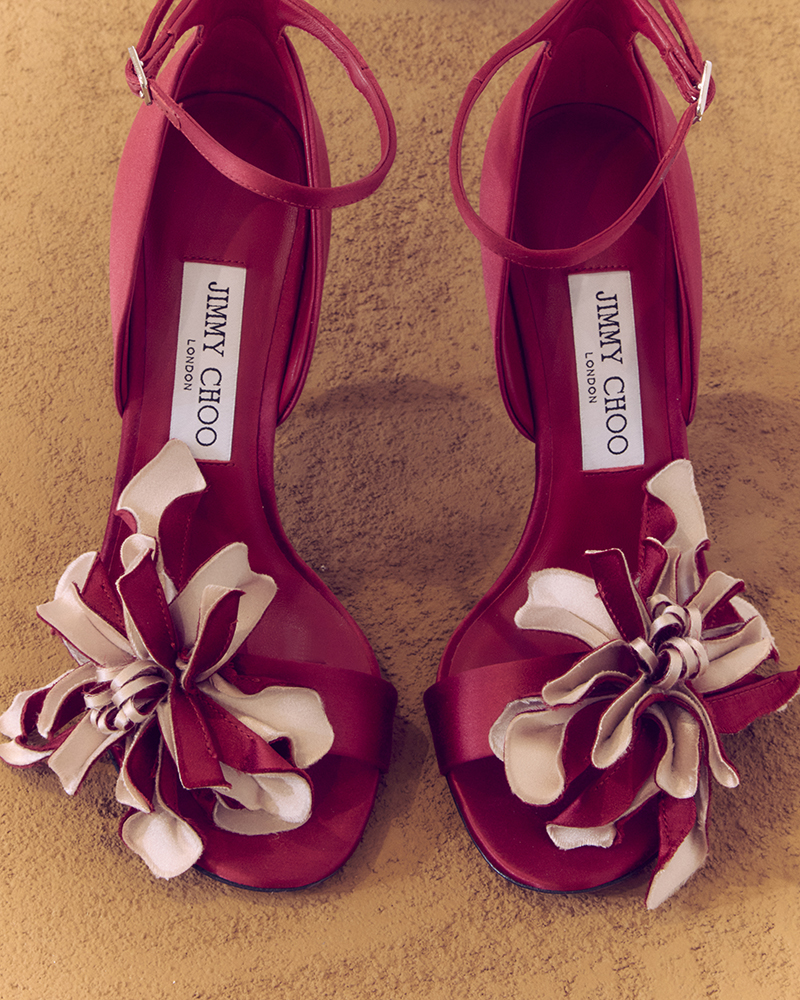
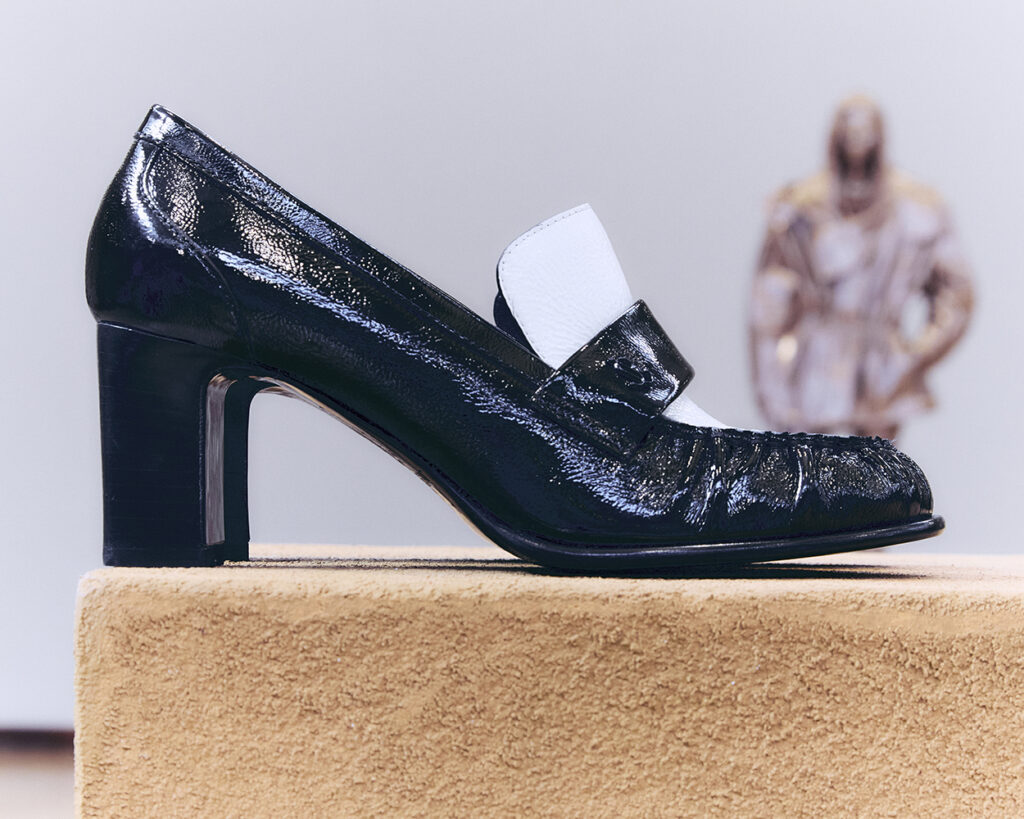
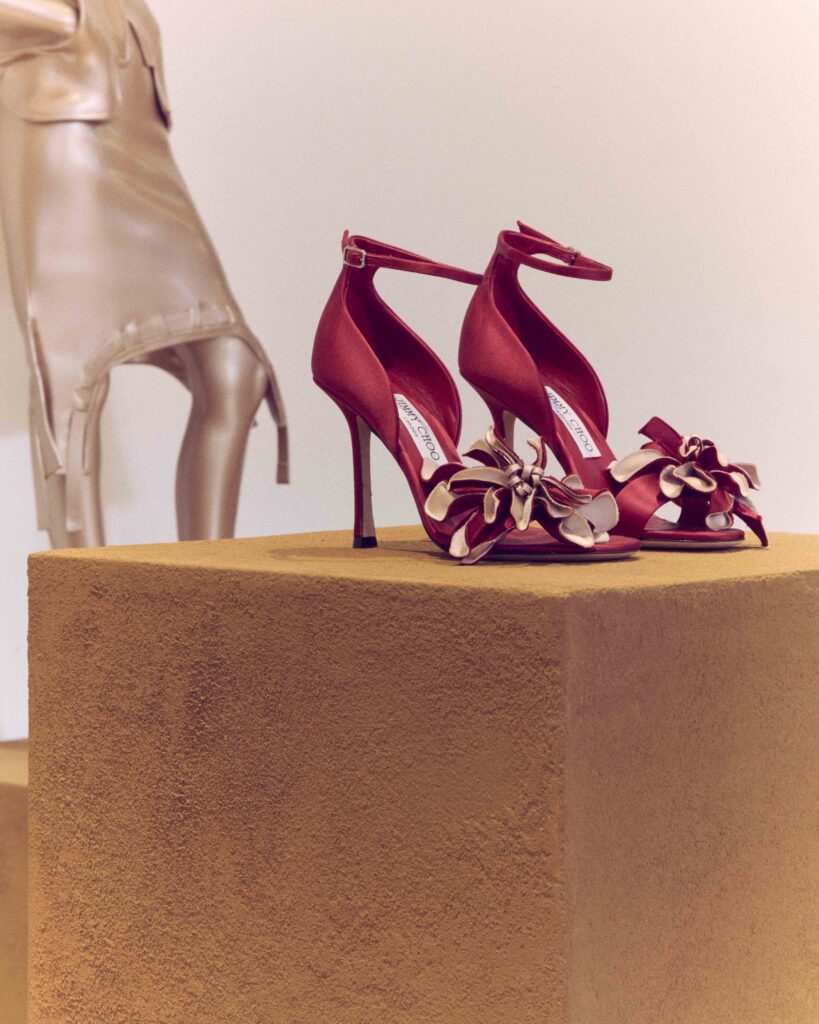
The house also plays on levels: the COKO court shoe, in two-tone satin embellished with a ruby-red and macaron-pink floral corsage, can slide effortlessly from the spectacular to the everyday, this same corsage motif reinterpreted on the more utilitarian silhouette of the EYLA in pure nappa latte. Conversely, the ELLIS, a loafer offered flat or on a 65 mm block heel, explores black and white in glazed, crackled naplak patent leather — a way of raising a loafer rather than lowering a heel, reversing the house’s usual logic, which ordinarily prefers to scale its heights down rather than up.
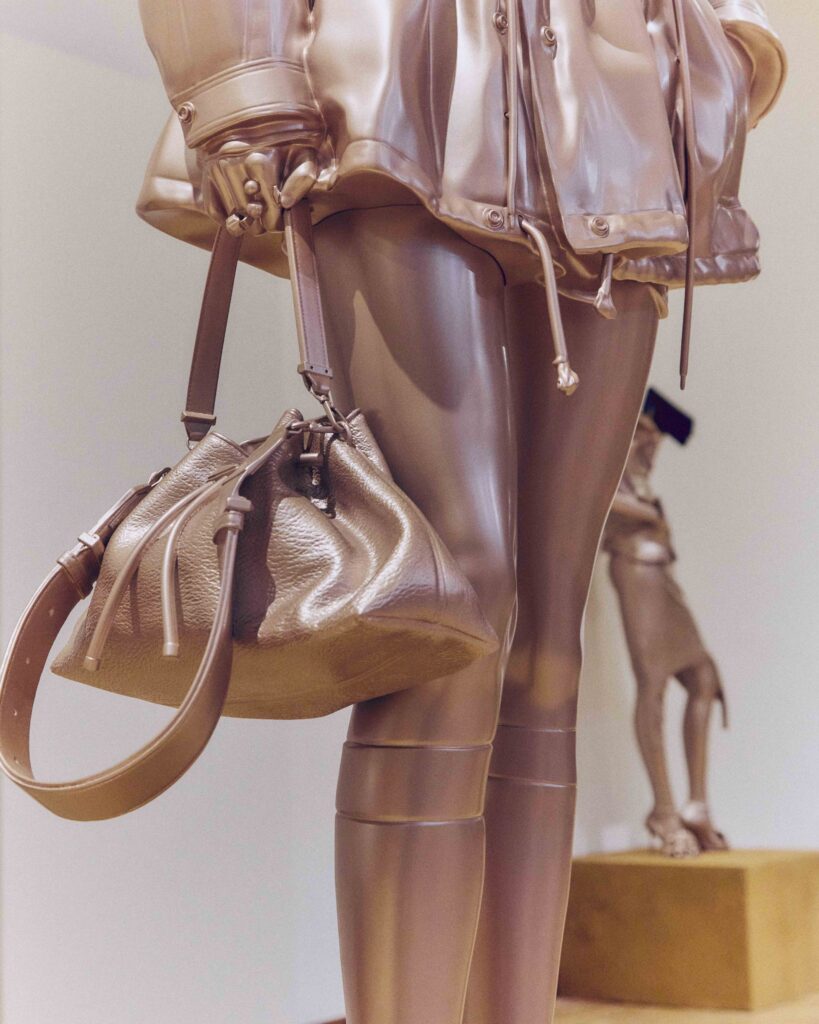
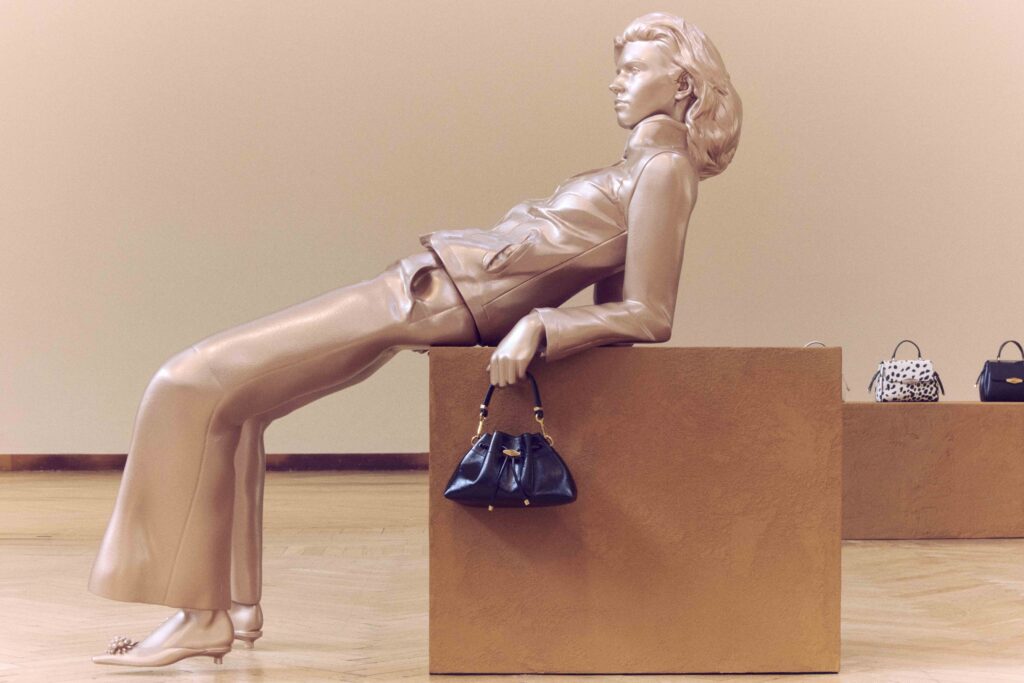
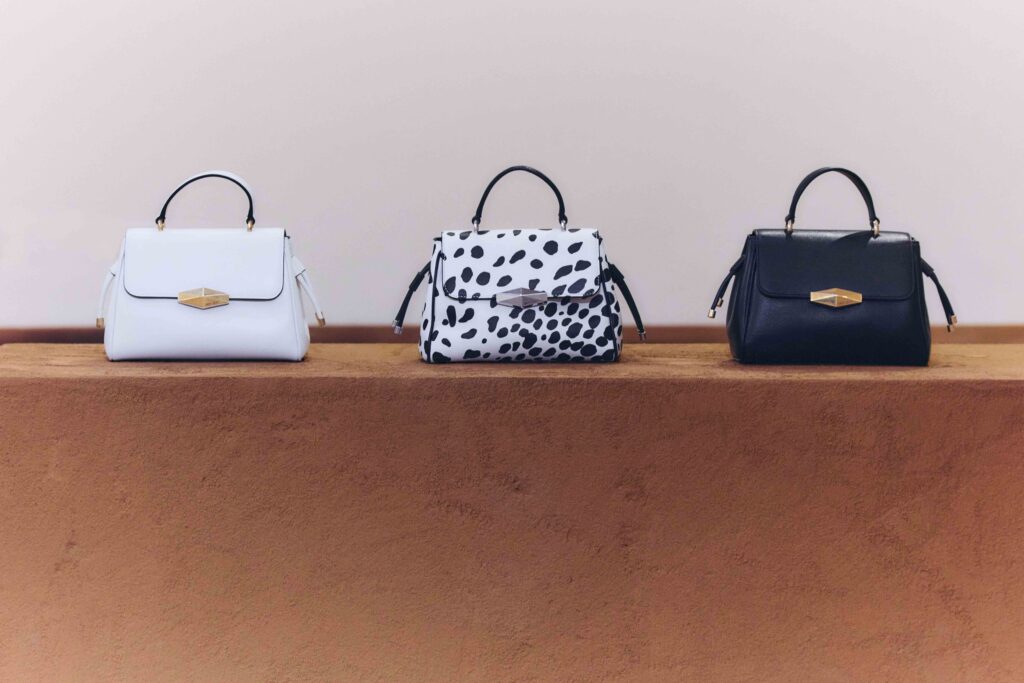
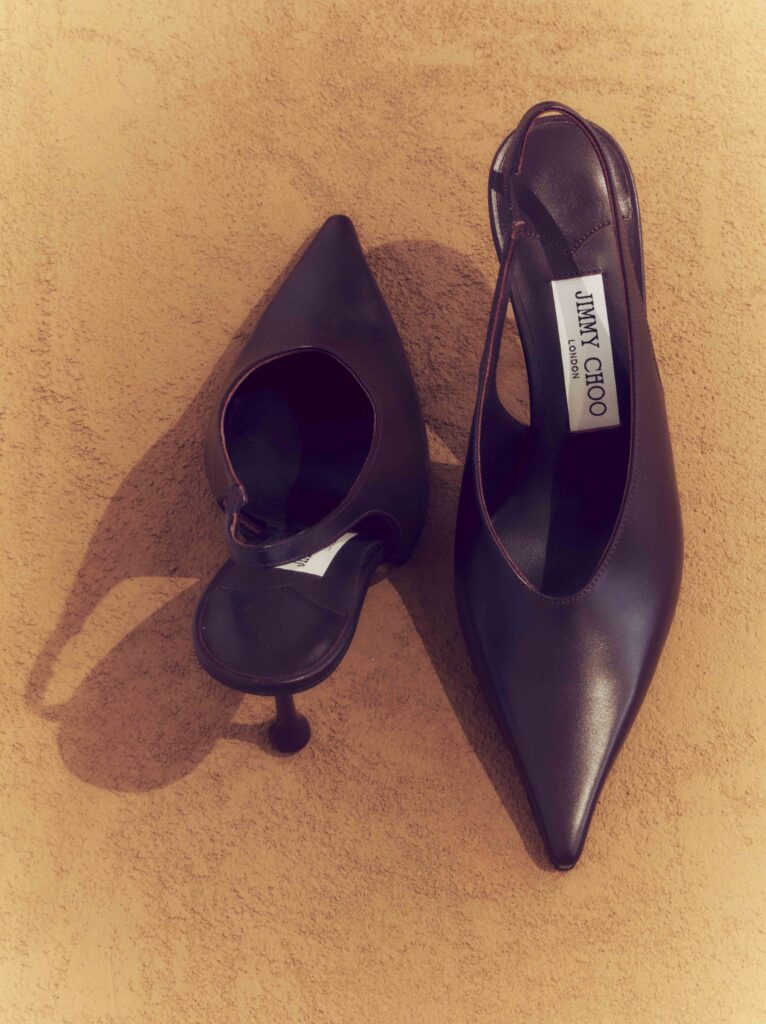
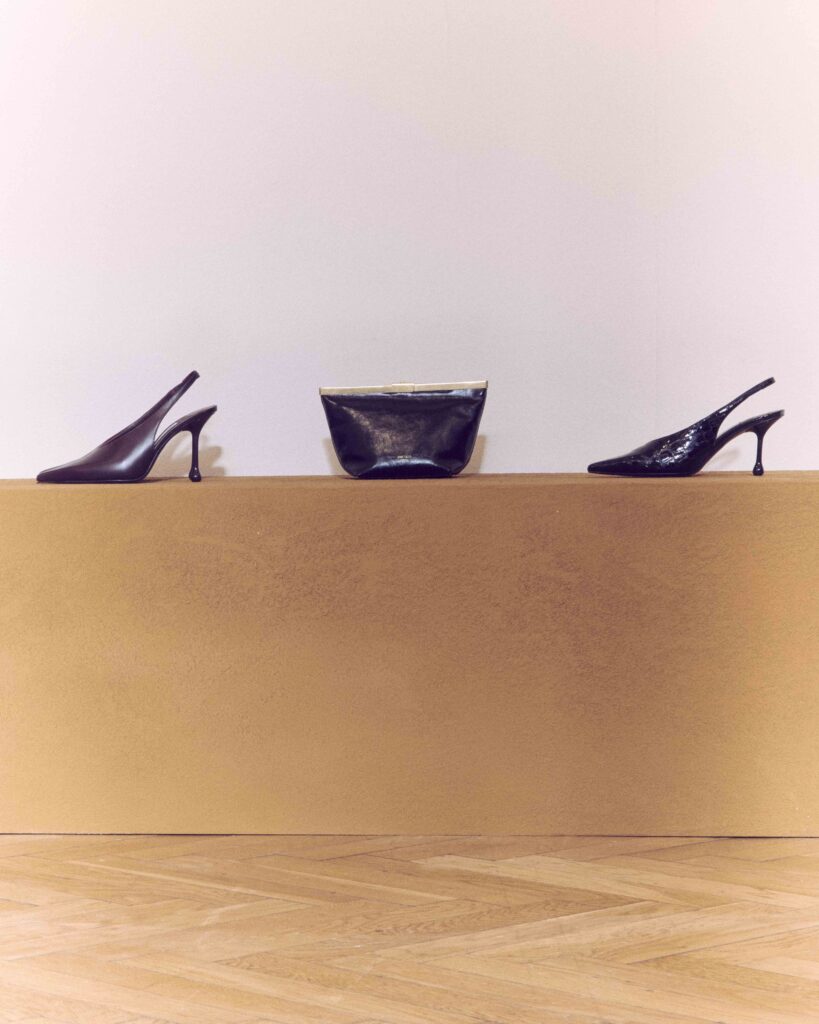
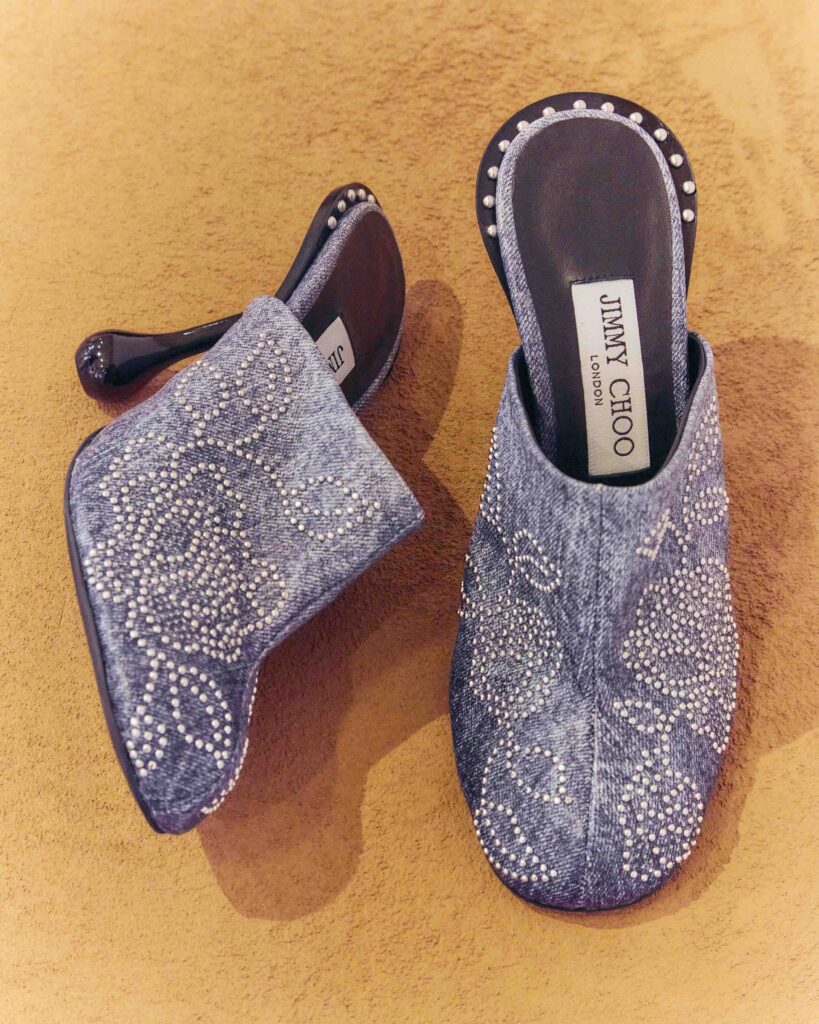
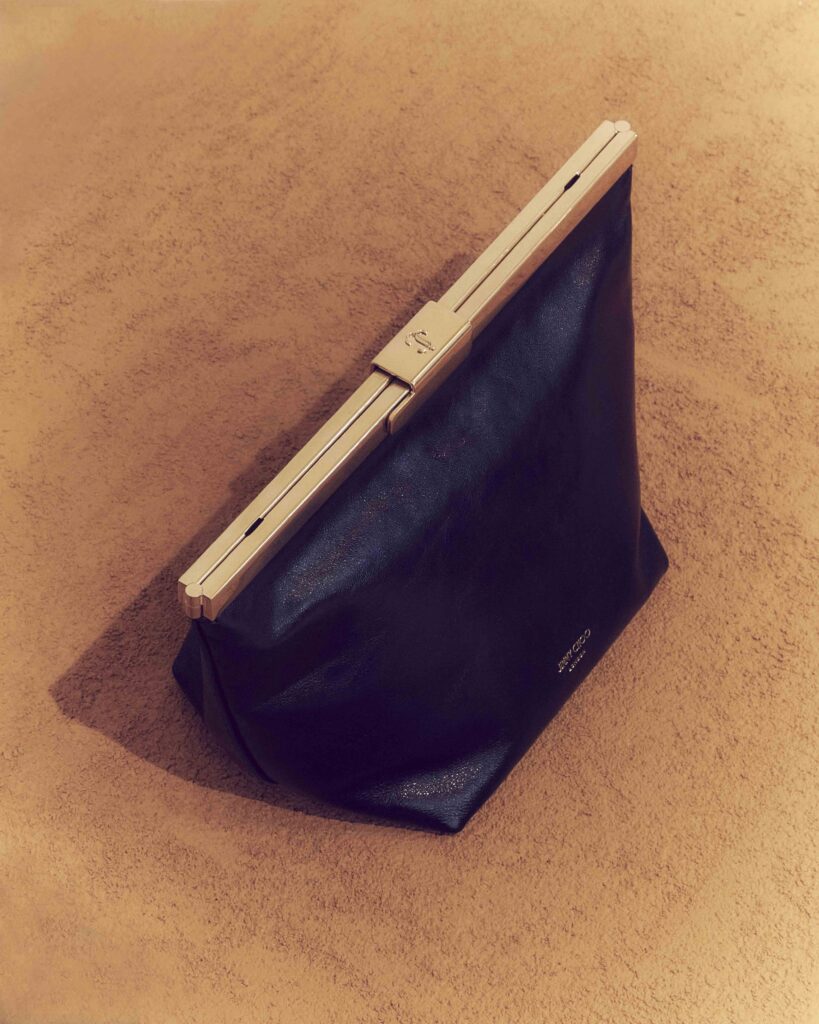
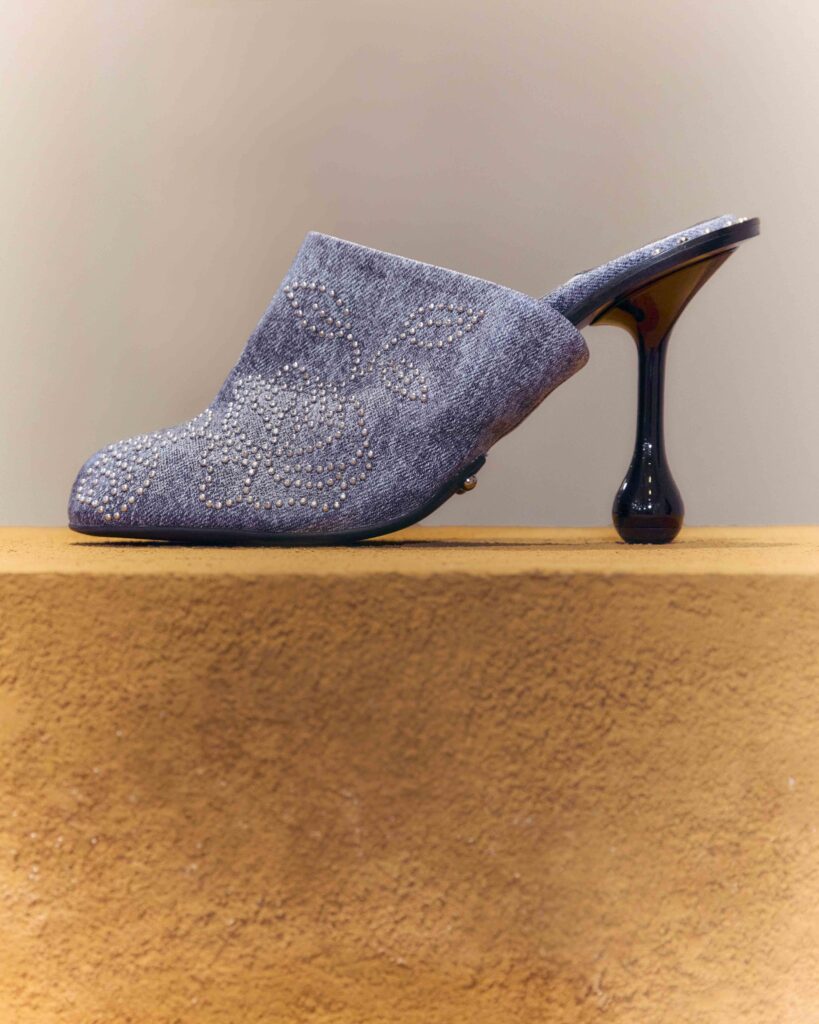
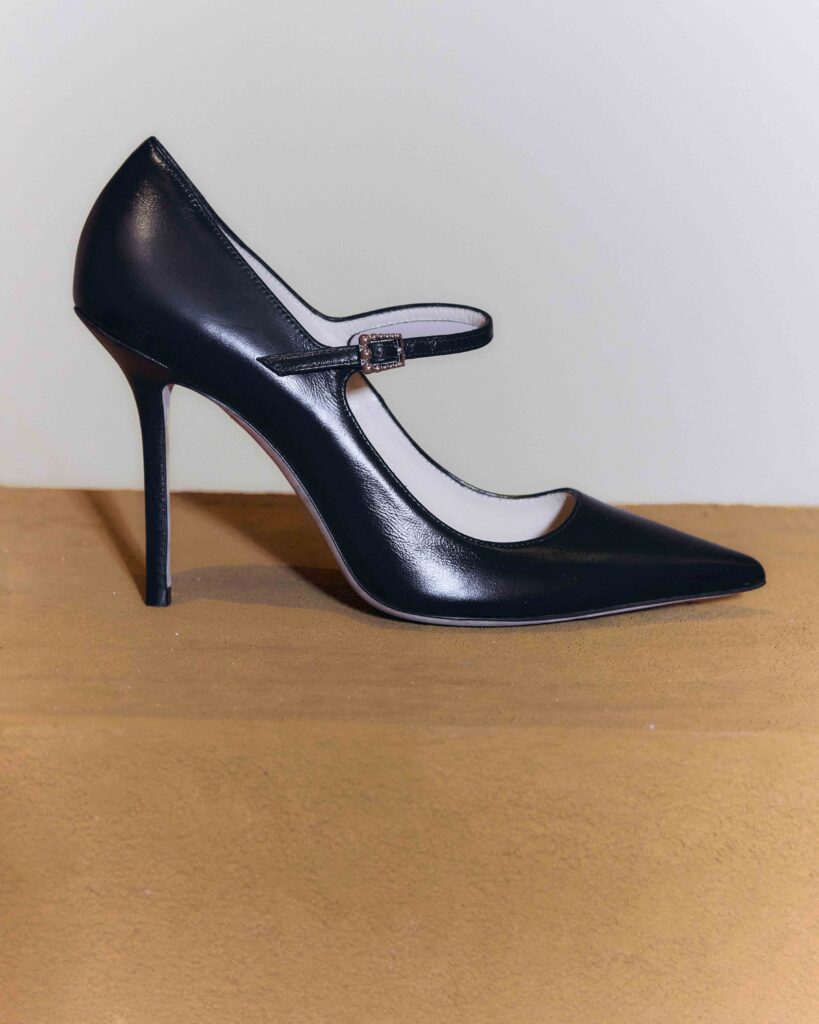
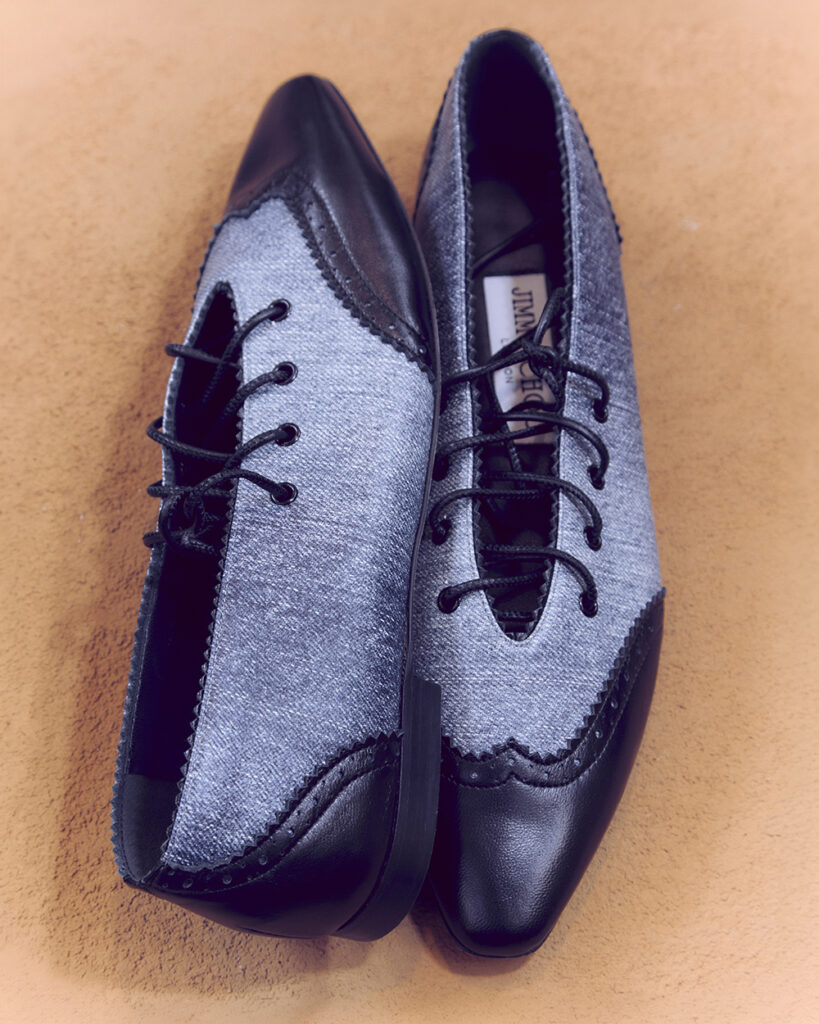
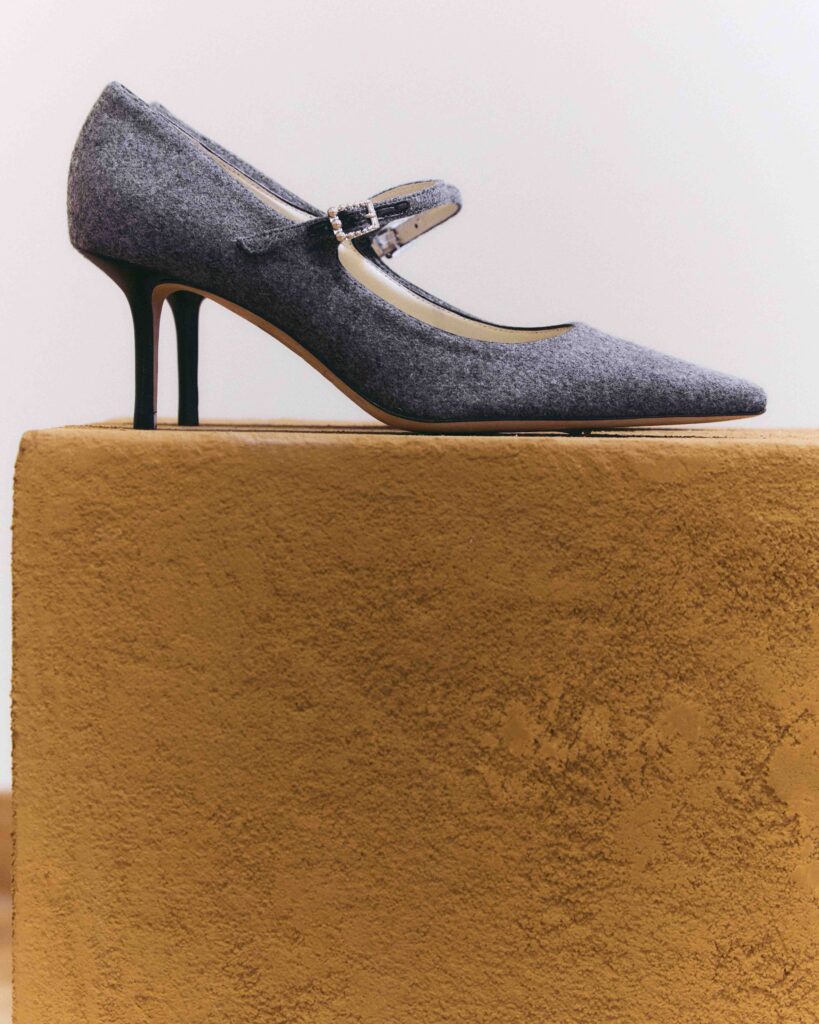
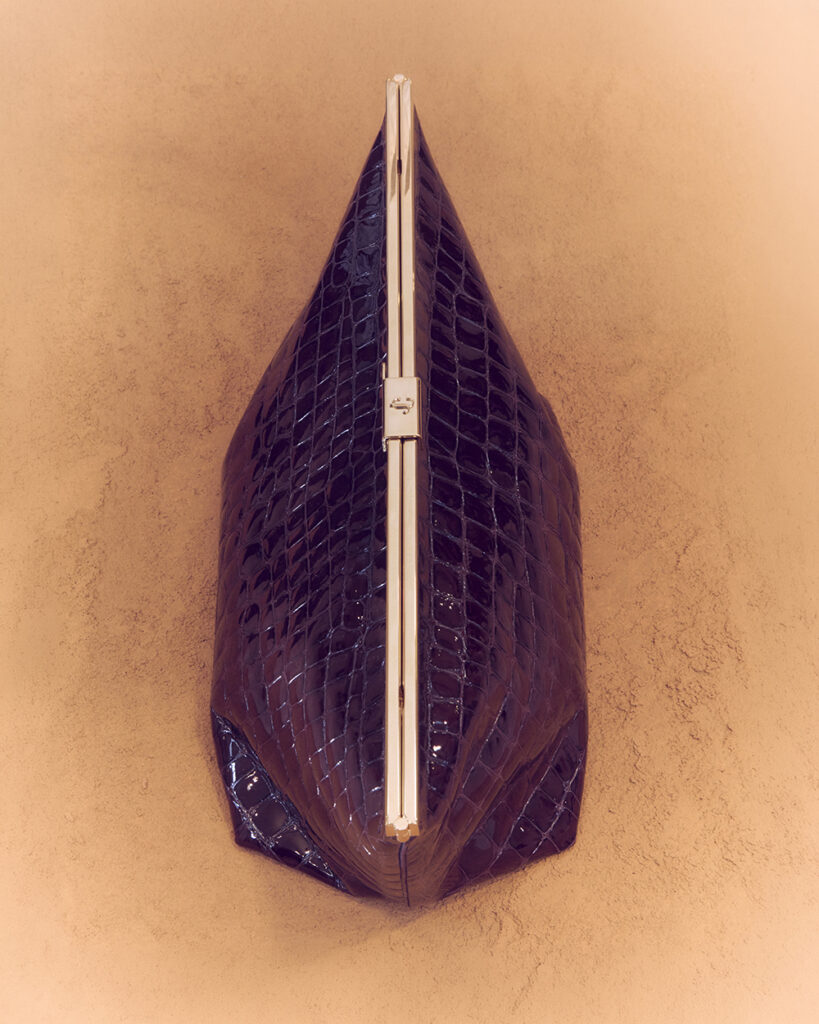
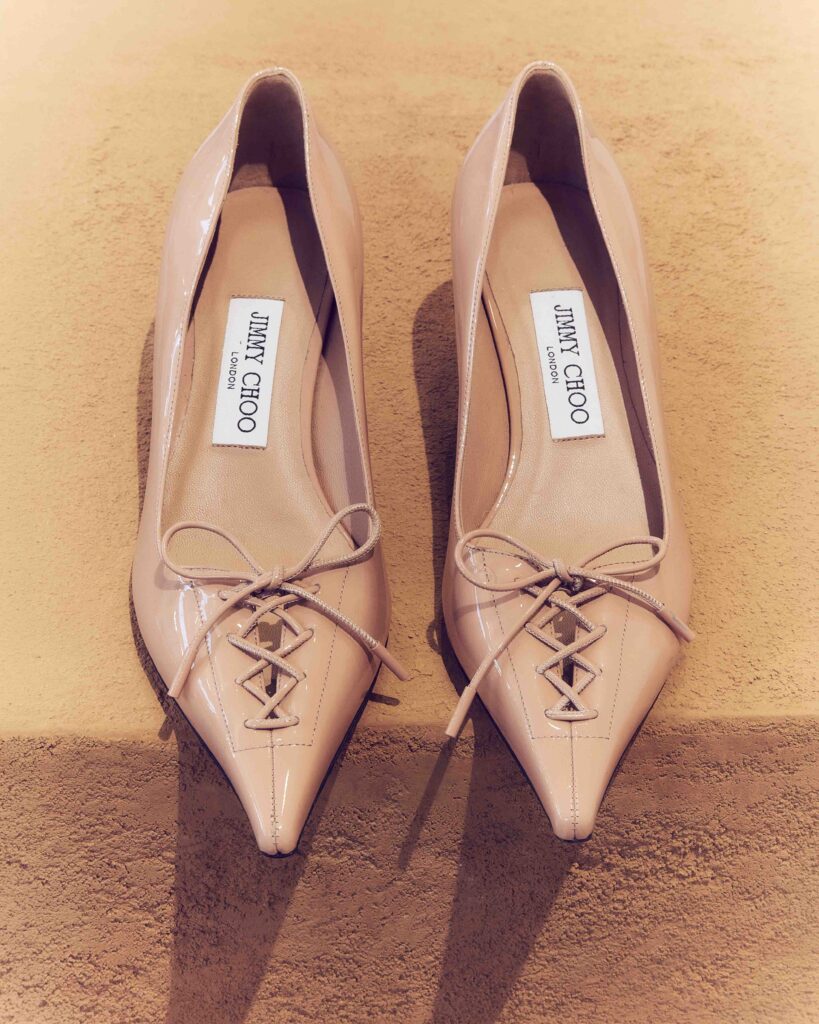
On the leather goods side, the CINCH family is enriched with a shoulder bag cinched by a signature flap closure, offered in ripe cherry or monochrome elaphe, while a historic Jimmy Choo, the BING, reinvents itself in a Mary Jane version in deliberately masculine finishes — cherry-oxblood nappa, heathered grey flannel as a discreet nod to the house’s very first models in the 1990s. The DROP heel, for its part, appears on the ORIA mule, where a floral micro-pearl decoration draws an English rose on hazelnut nappa, before extending into trompe-l’œil denim prints on fine leather, also offered on the RESA slingback and the MARGOT lace-up.
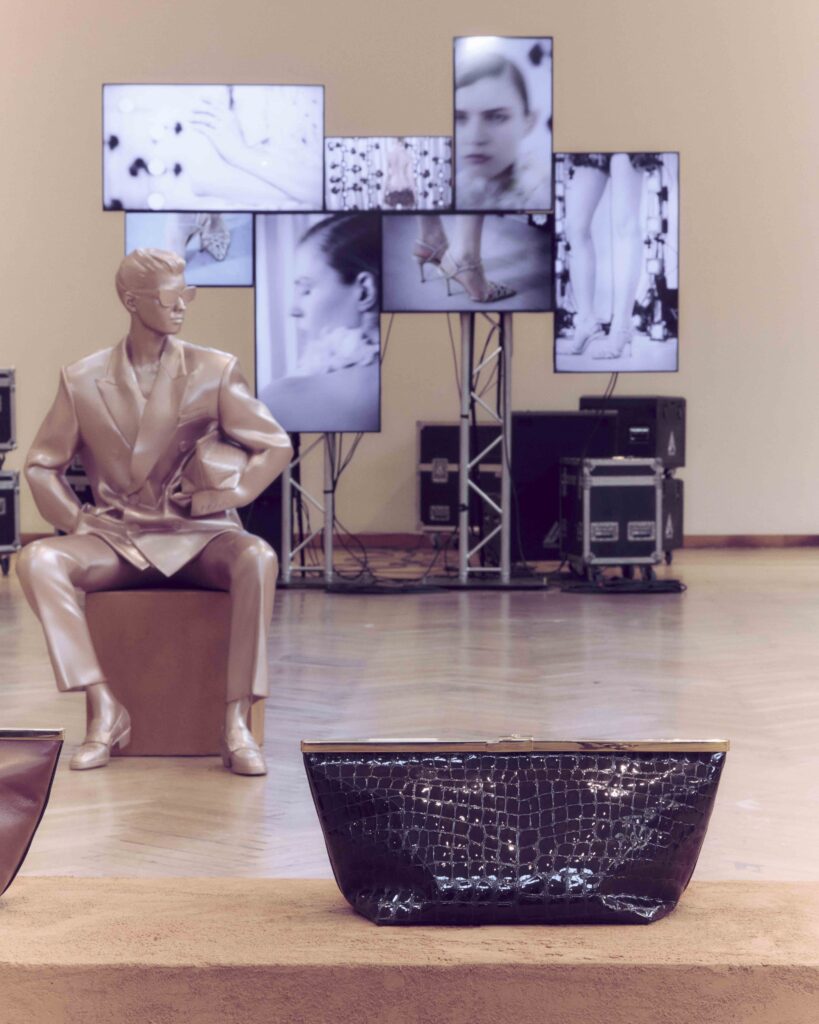
This approach through contrasts is not a mere conceptual dressing laid over a seasonal collection: it also runs through how Jimmy Choo now thinks about its shows themselves, installing, rather than a classic runway, a space staged as a place of contemplation. The golden statues, motionless yet caught mid-transformation, then become the true silent spokespeople of this idea of multiple femininity, refusing to be reduced to a single pose or a single moment.
What this collection tells, at bottom, is less a season than how a luxury house can age without freezing: by refusing to be a single face, even if it means embracing several at once, and by entrusting golden statues — rather than a simple runway — with the task of recalling that every identity remains, by nature, a work in progress.
Cette publication est également disponible en :


