
There is something almost doctrinal about the title Duran Lantink chose for his first Pre-Spring collection at Jean Paul Gaultier. “Le Vestiaire 1”—like an entry in a register, a numbering system that already implies a sequel. Not a question mark, but a beginning. Fashion often feels compelled to reinvent itself. Lantink, however, makes it clear from the outset that this is about building.
Trompe-l’œil as an act of remembrance
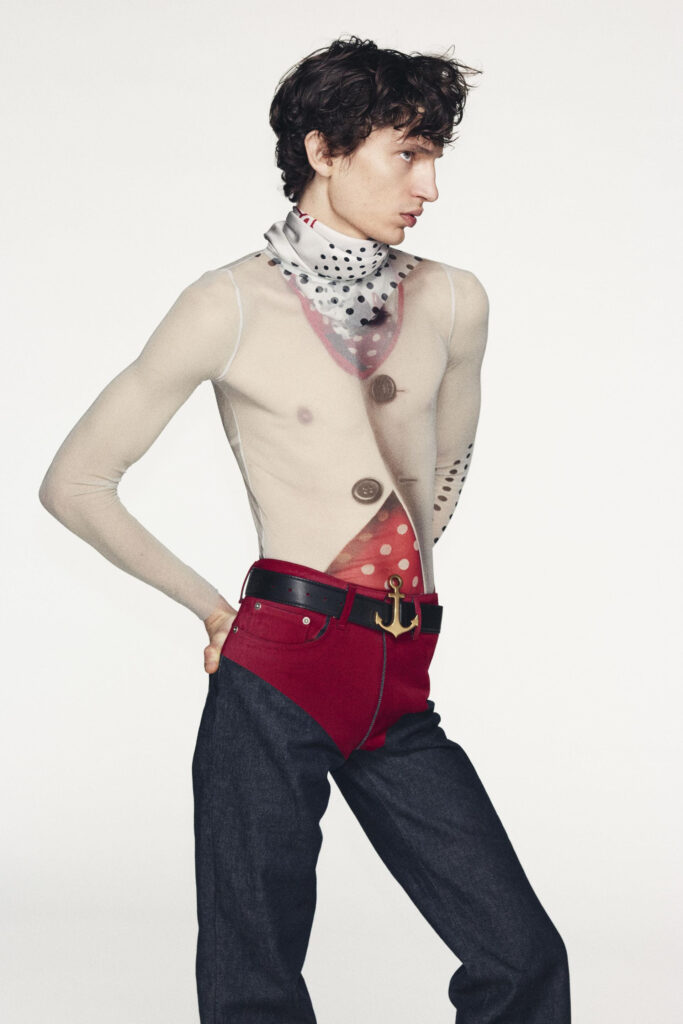
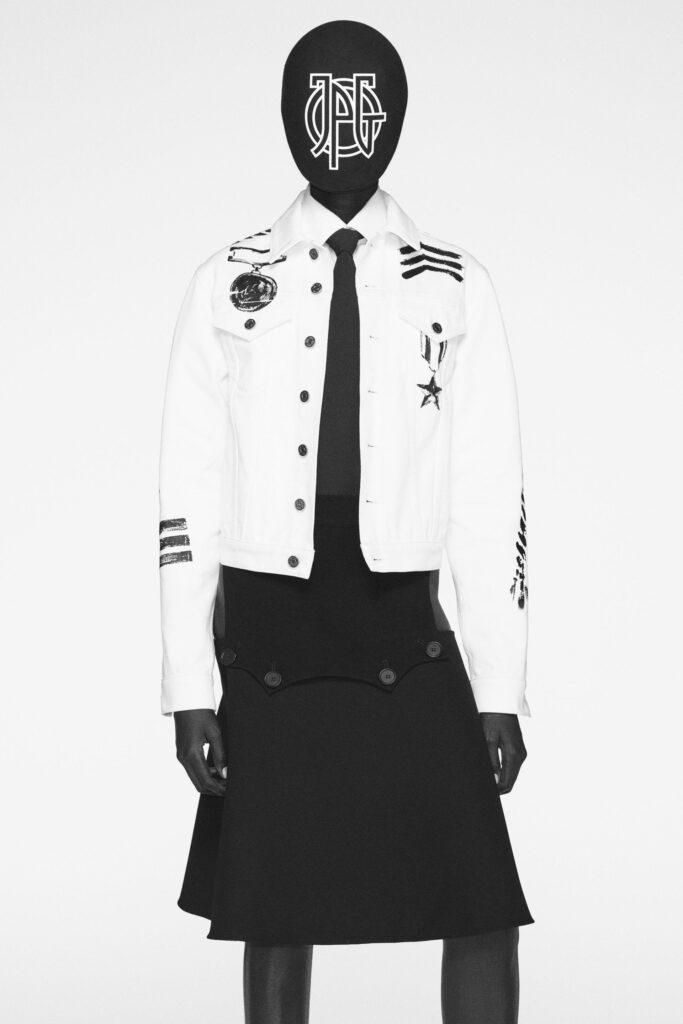
The starting point is clear: analog fitting photographs taken by Jean Paul Gaultier himself during the 1997 collection. Intimate images of the creative process, transformed into a trompe-l’œil print. There is something in this decision that goes beyond a conventional tribute: Lantink does not merely reference Gaultier; he reveals him behind the scenes—the designer photographing his own mock-ups, a gesture more of a craftsman than of a creator.
This seminal 1997 collection resonates particularly strongly: it was the year Gaultier solidified his image as a streetwear designer, blending the sailor top with the corset. Lantink knows this. The nautical, military, and biker references that run through the collection are not nostalgic nods but structural archetypes—codes powerful enough to drive a transformation.
The wardrobe as a method
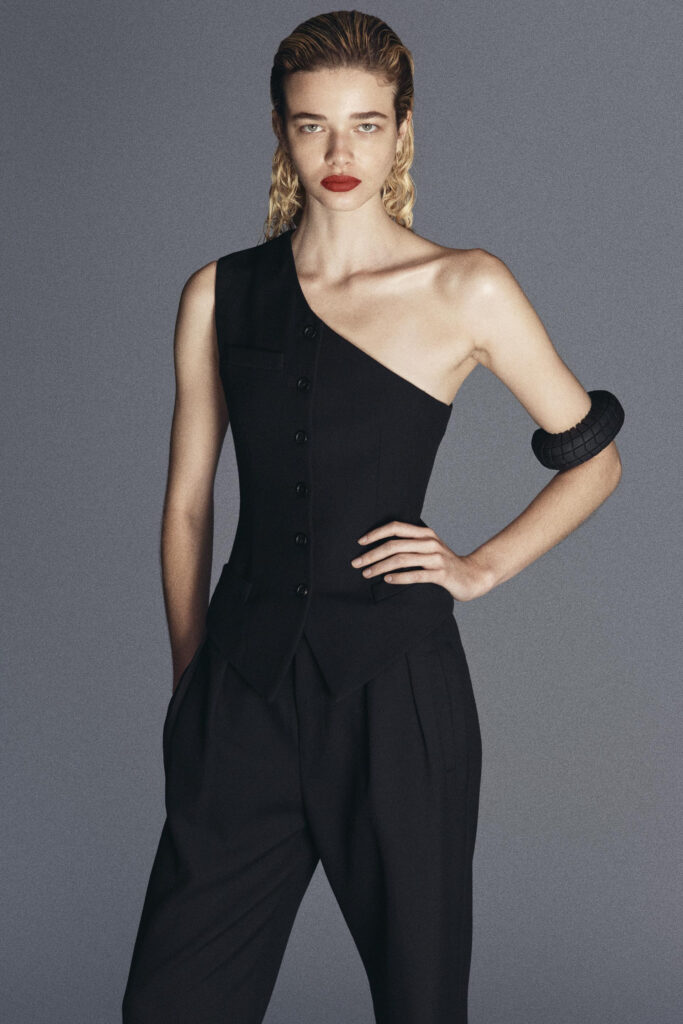
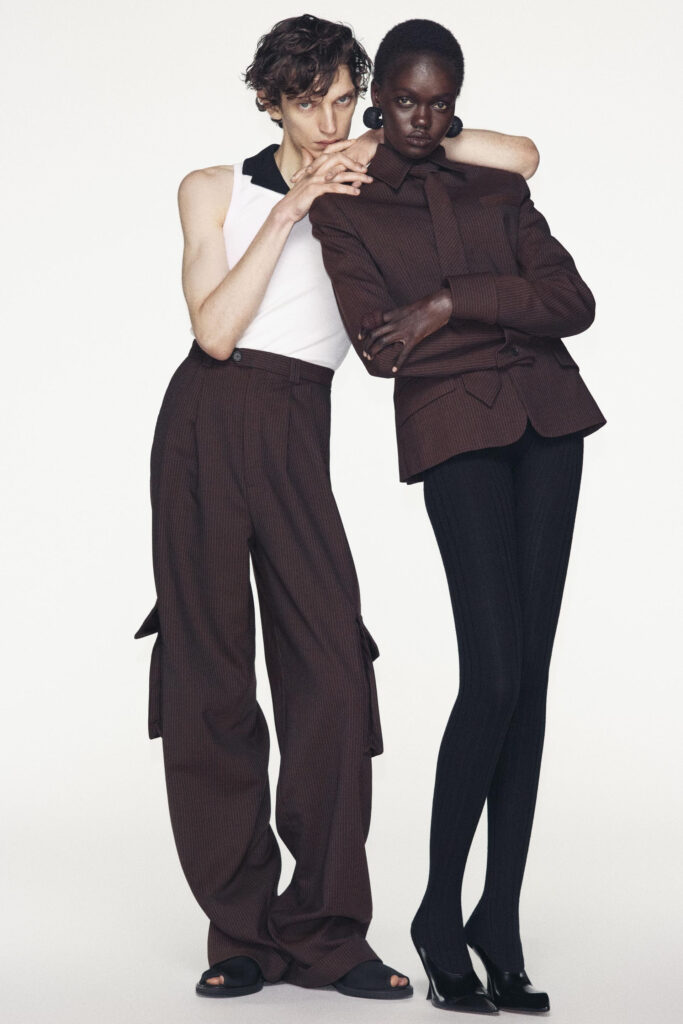
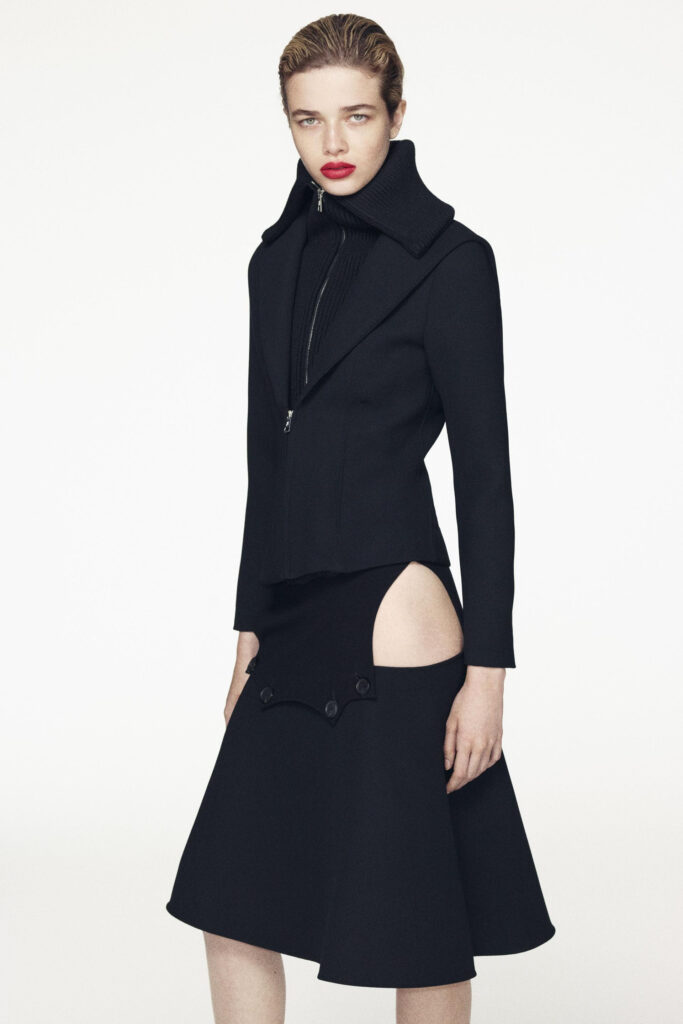
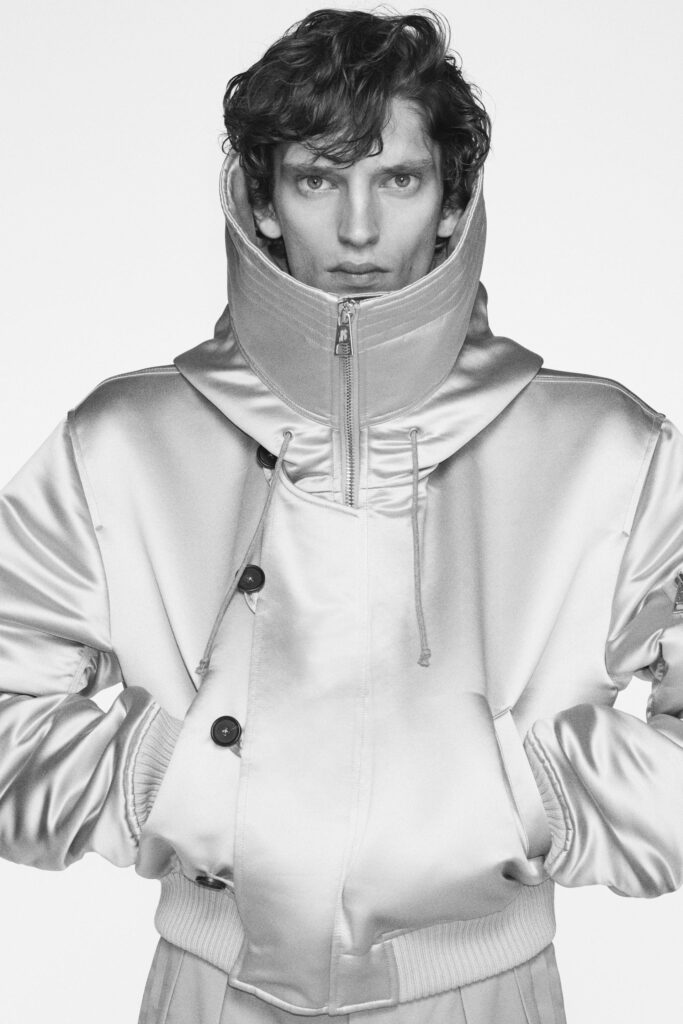
What sets “Le Vestiaire 1” apart from a simple collection is its functional ambition. Lantink designs pieces intended to transition seamlessly between seasons, occasions, and styles of dress. The padded bomber jacket becomes a dress. The high collar evokes a sense of protection. The anchor-shaped belt literally anchors the silhouette in reality. This is fashion that doesn’t aspire to be looked at, but to be lived.
The cone-shaped bra, the tie, tire-inspired jewelry: these signature Gaultier elements return not as museum-worthy references but as wardrobe staples—those pieces we keep because they work, because they say something about us without shouting it from the rooftops. It’s a redefinition of the concept of “Gaultier classic,” one that integrates eccentricity into everyday life rather than reserving it for provocation.
Duran Lantink joins Gaultier with a unique background: he is known for his reconstructions—garments that are unstitched and then reconfigured—and his ability to find desirable materials in waste. For him, “Le Vestiaire 1” marks a turning point—less ostentatious deconstruction, more self-assured continuity. He is a designer who, for the first time, has chosen to work with time rather than against it.
This choice perhaps offers the most interesting lesson from this collection: after years of spectacular reboots, the House of Jean Paul Gaultier is now seeking to build a coherent wardrobe legacy. Not an anthology—but a living house, whose pieces accumulate and interact from one season to the next. The wardrobe as an active archive.
Jean Paul Gaultier Pre-Spring 27 “Le Vestiaire 1,” collection available at jeanpaulgaultier.com.
Cette publication est également disponible en :

