
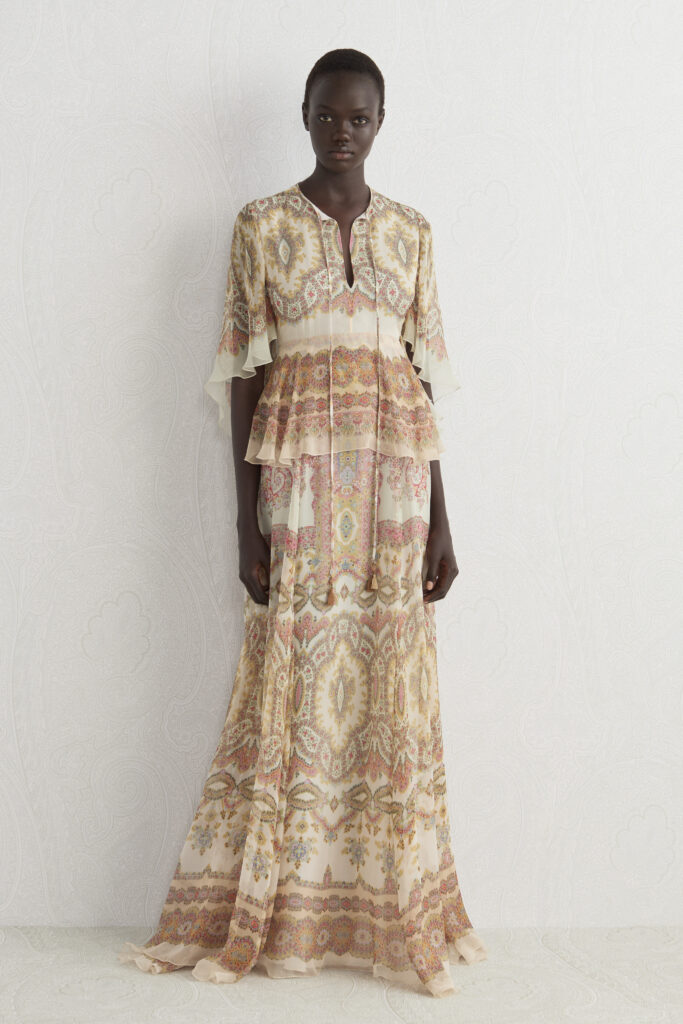
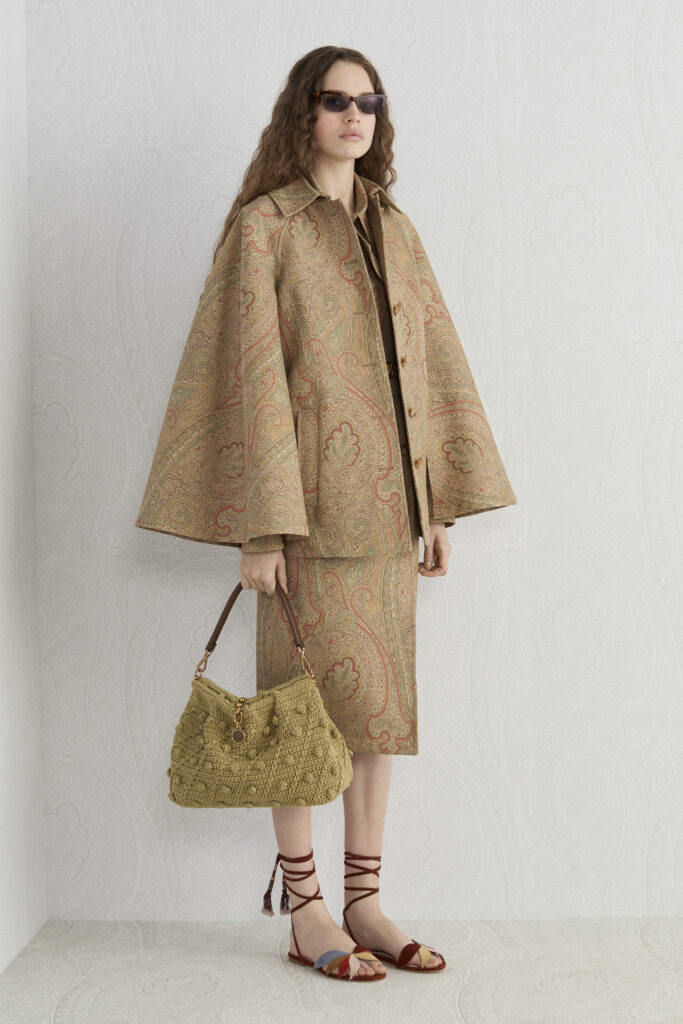
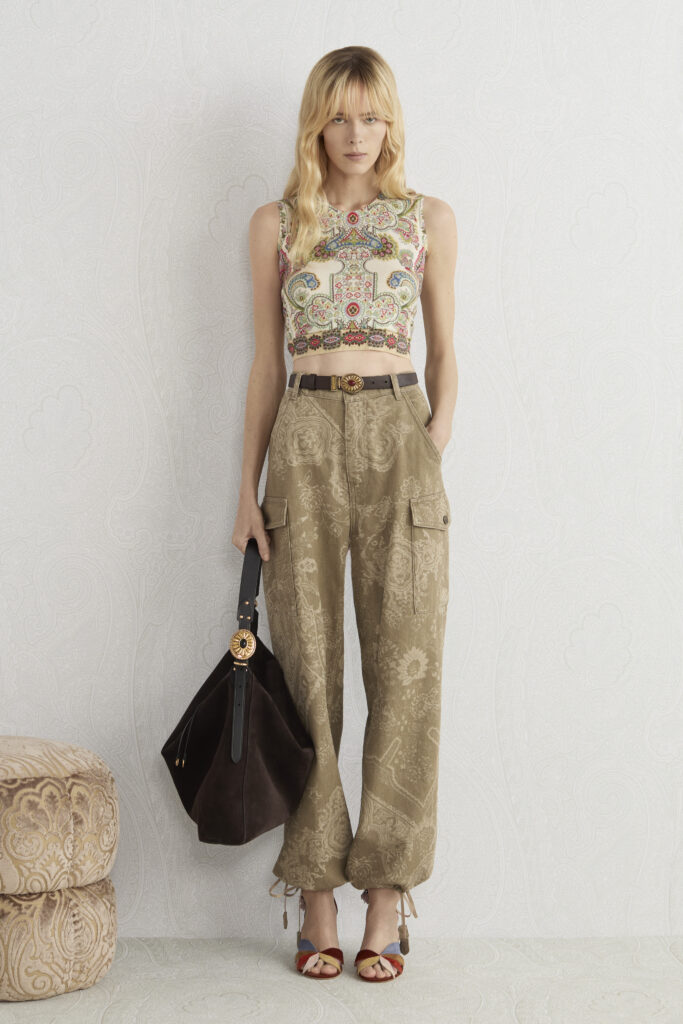
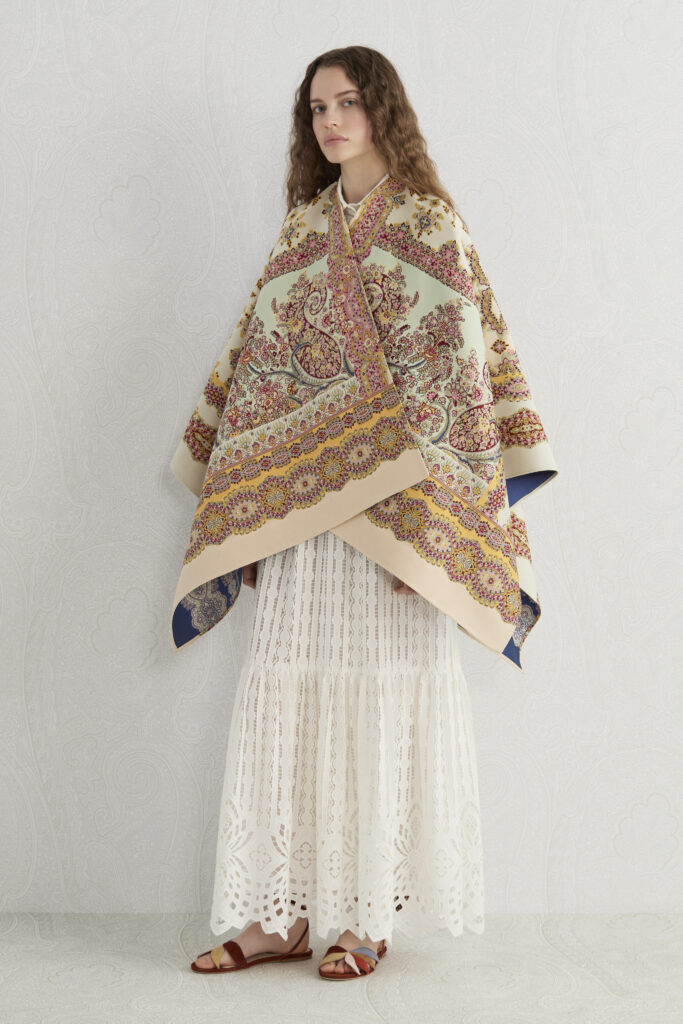
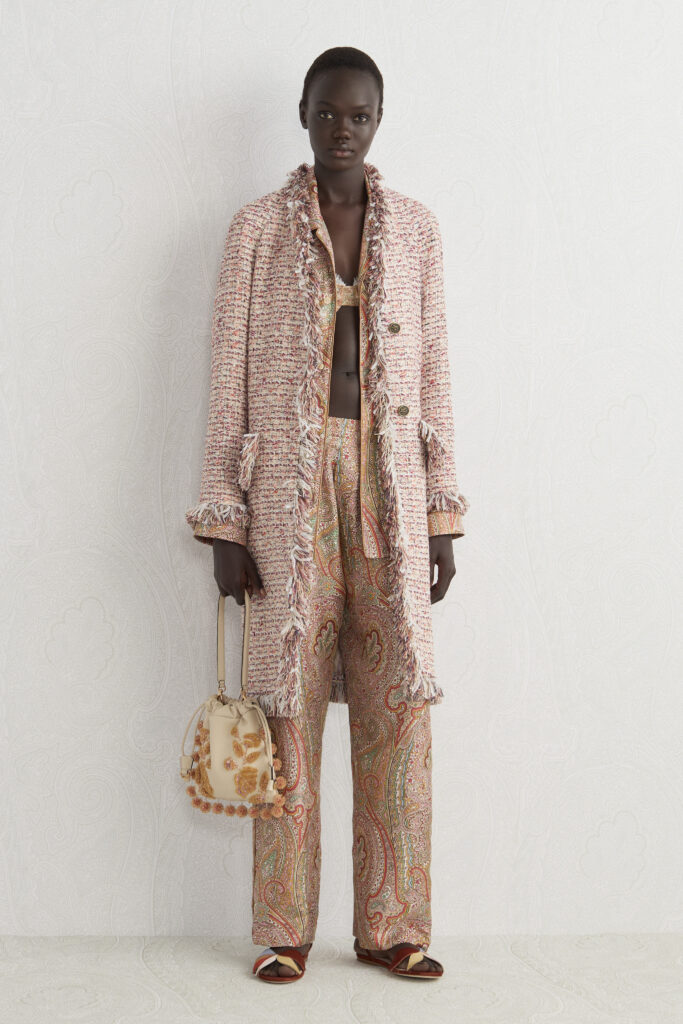
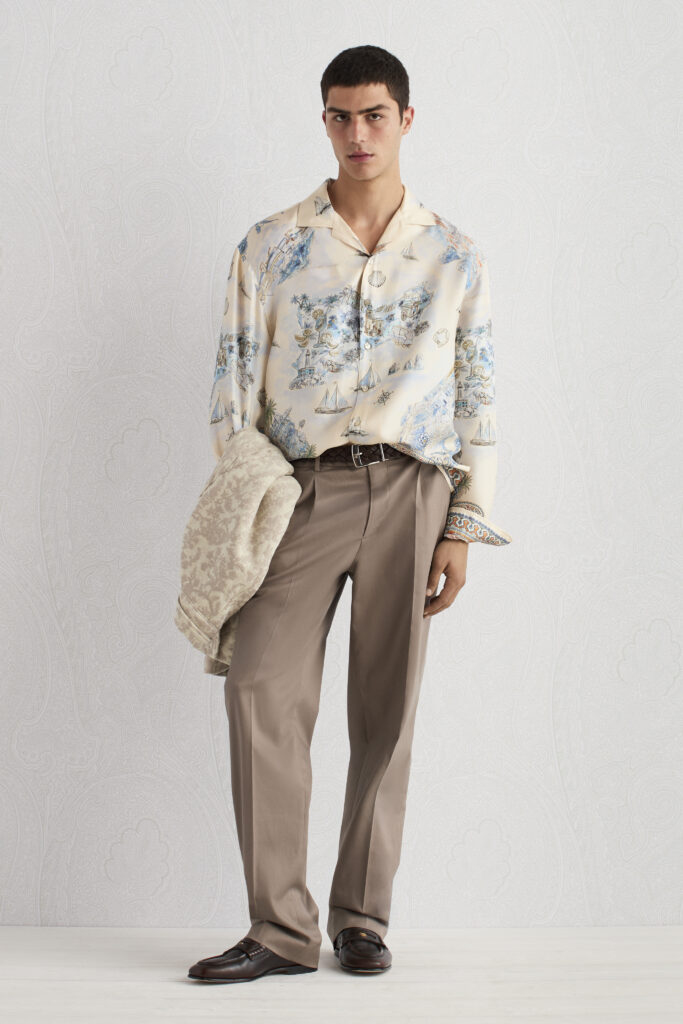
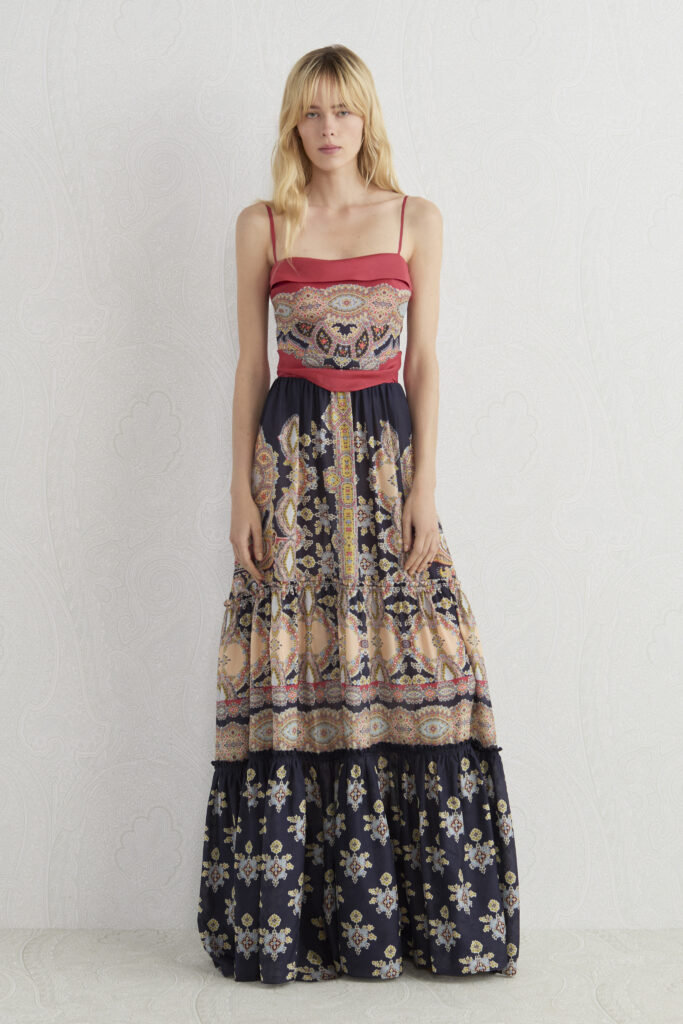
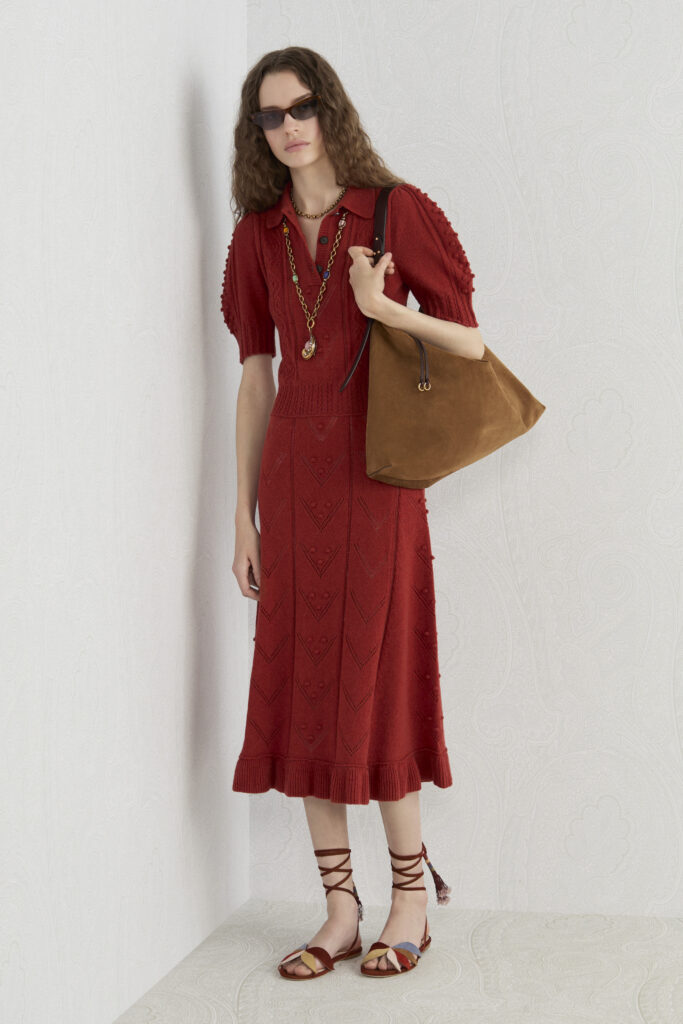
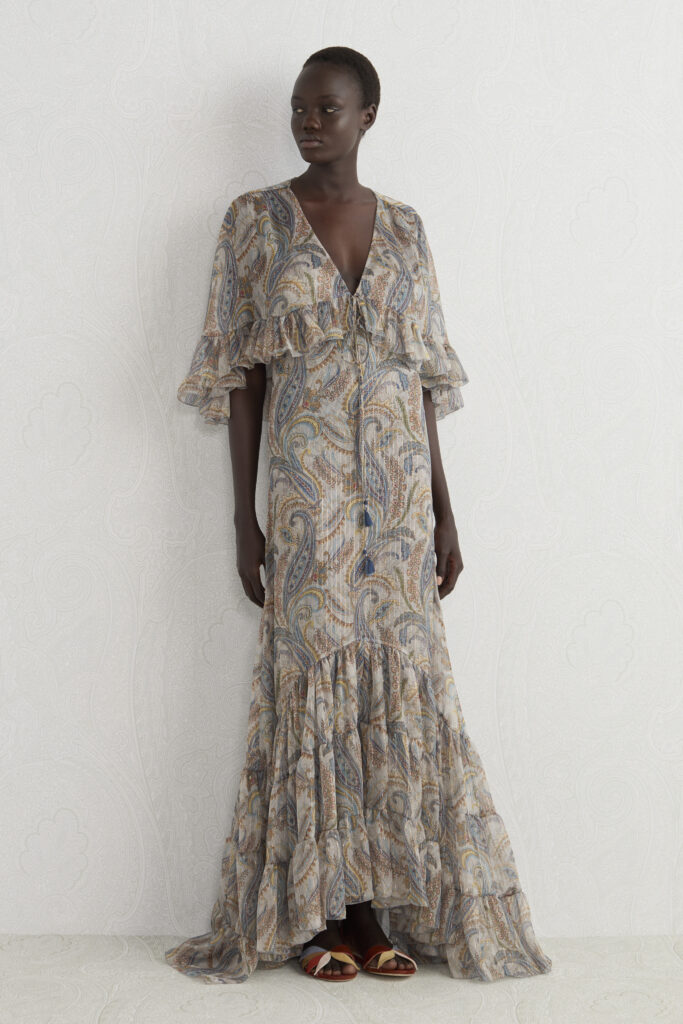
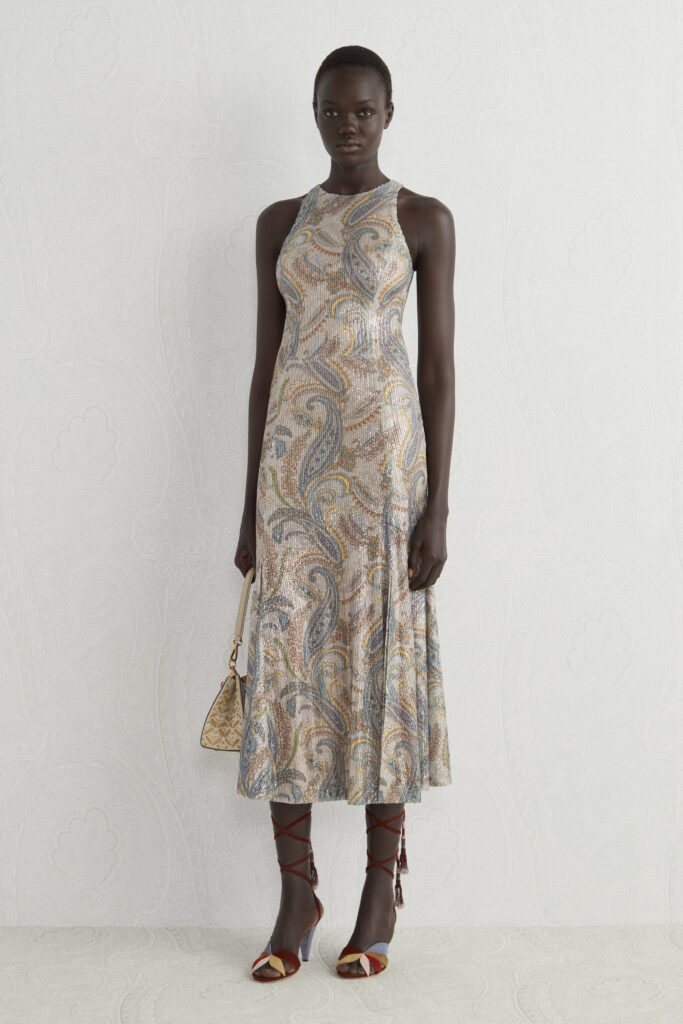
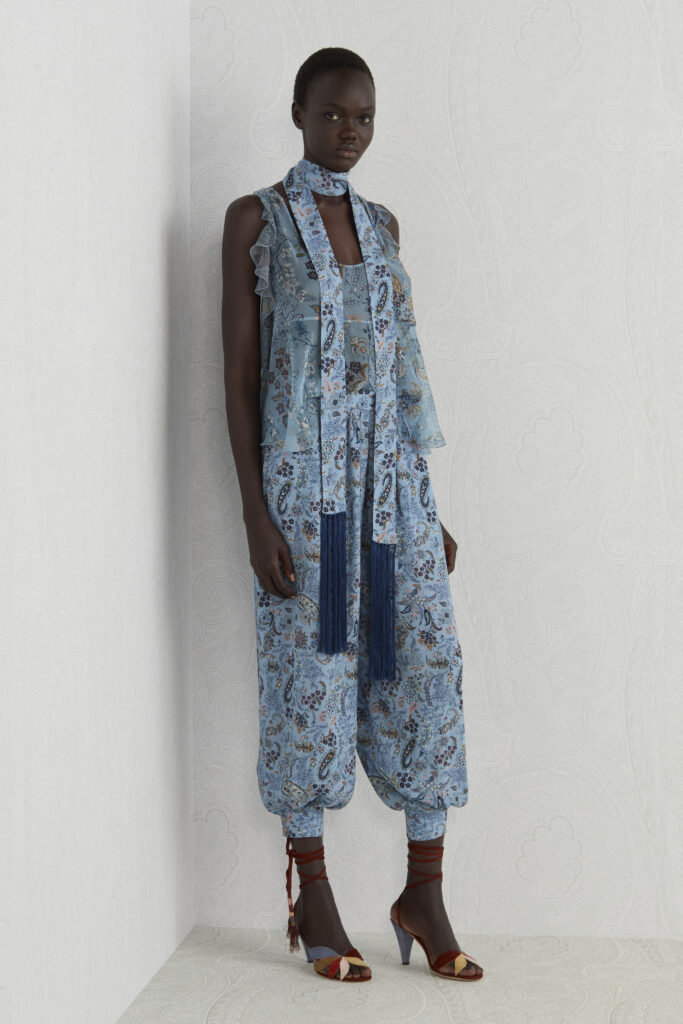
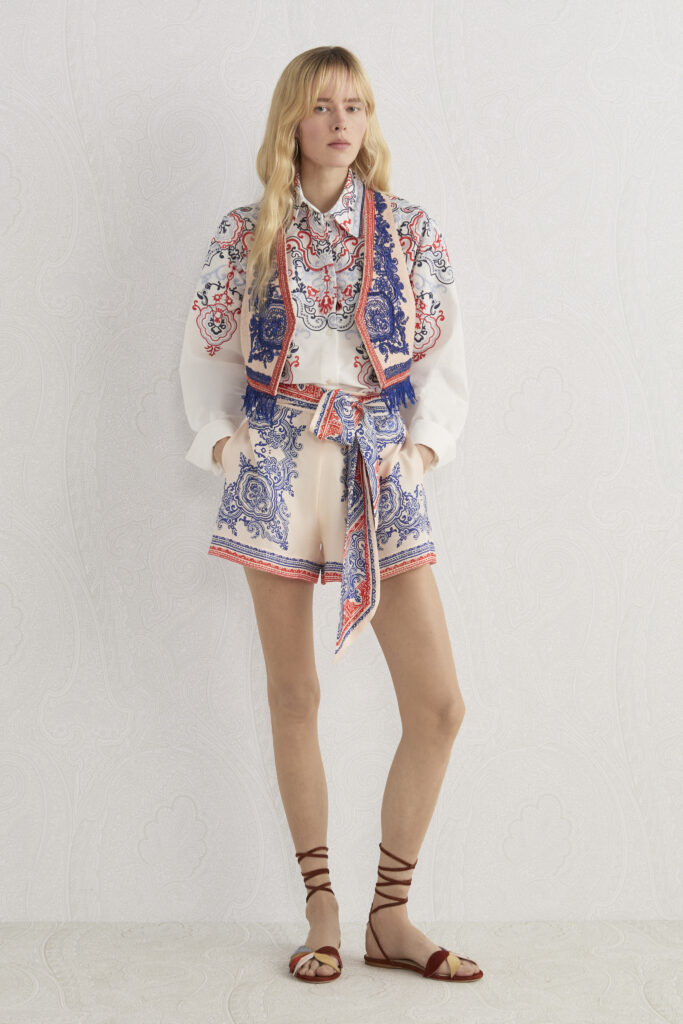
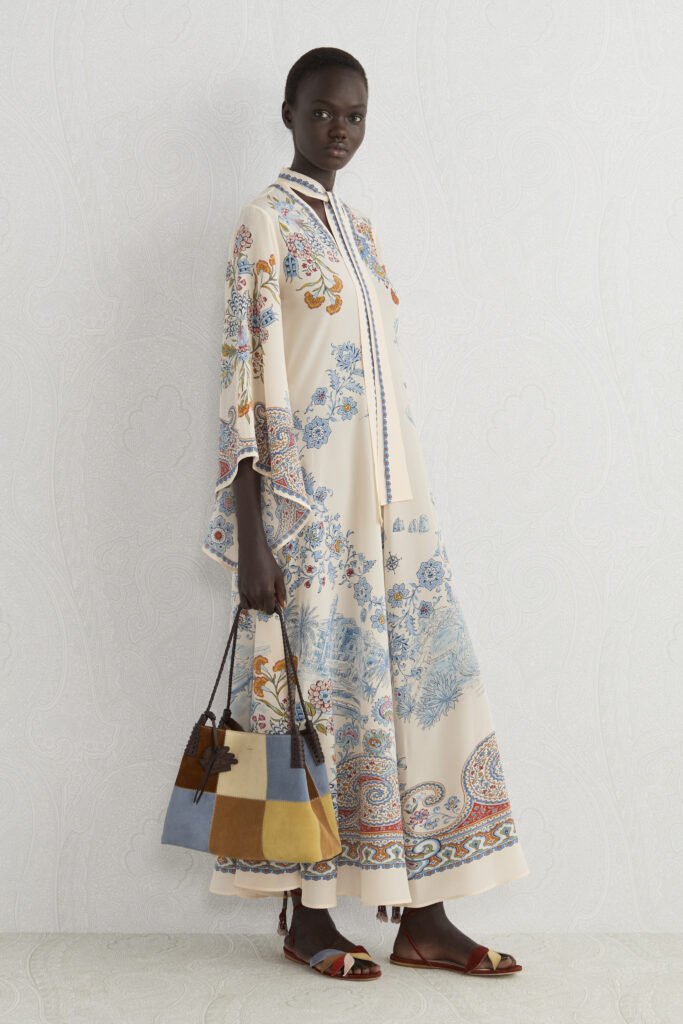
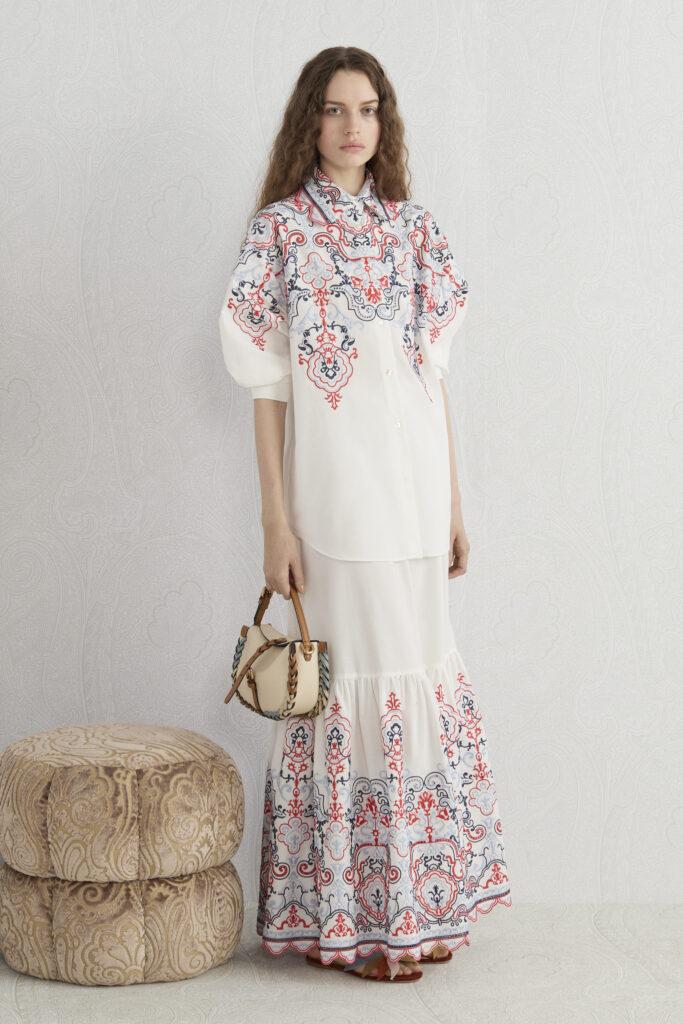
Outside the fashion show calendar, the Resort collection serves as a discreet testing ground for fashion houses. At Etro, it puts to the test the emblem that has defined the house since 1968: the paisley pattern, which Marco De Vincenzo treats as a living material rather than a legacy to be preserved.
Resort collections—once known as “cruise” collections—hold a special place in a fashion house’s annual calendar. Neither a grand runway spectacle nor a mere seasonal sales push, they have become the moment when a design house tests its convictions away from the hustle and bustle. At Etro, founded in Milan in 1968 by Gimmo Etro, this low-key event carries special significance: it explores the motif that serves as both the brand’s signature and its foundation—paisley, that teardrop-shaped cashmere pattern inherited from the roads of the Orient.
An emblem rather than a logo
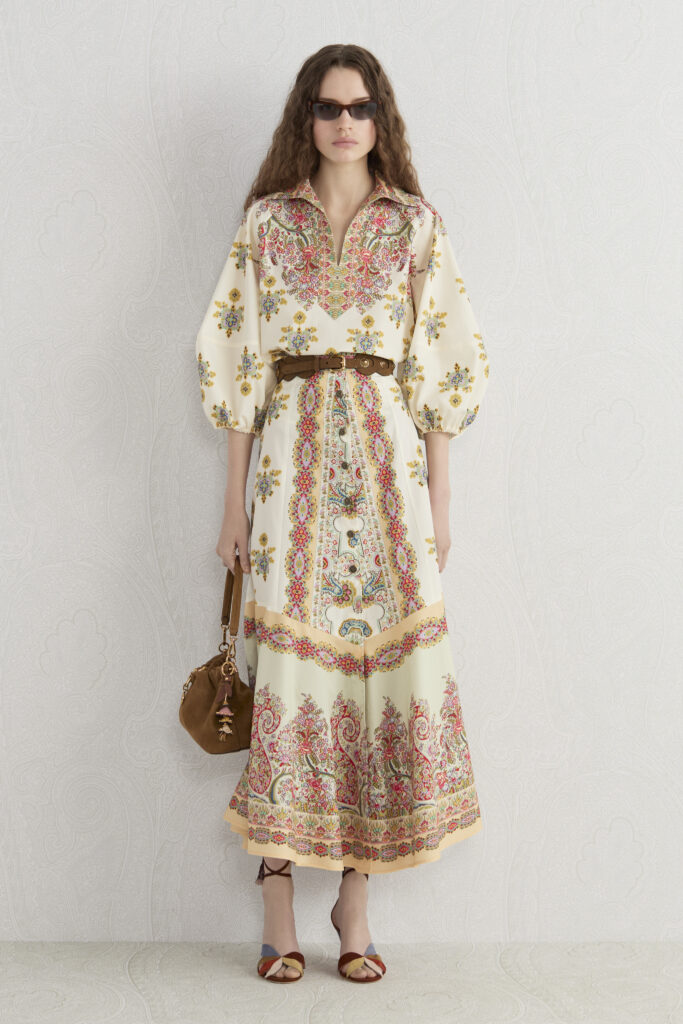
Etro’s history is that of a textile company before it became a fashion label. The House initially produced fabrics, and it was through printing, weaving, and dyeing that it made its name. Paisley, therefore, is not merely a logo slapped onto a garment: it is a language, a craft, a way of thinking about the fabric’s surface. This textile heritage changes everything. Where other fashion houses protect a monogram, Etro works with a pattern—that is, a material that can be distorted, recomposed, and reinterpreted without betraying its essence.
Since 2023, Marco De Vincenzo has been at the helm. Having risen to the position of creative director after training in embroidery and printing techniques, he has transformed Etro’s decorative heritage not into a museum but into an open workshop. His interpretation of the paisley pattern hinges on an idea he champions: the brand’s DNA possesses a self-generating quality. The pattern is not a finished product to be reproduced, but a system capable of generating its own variations.
Regenerate Rather Than Replace
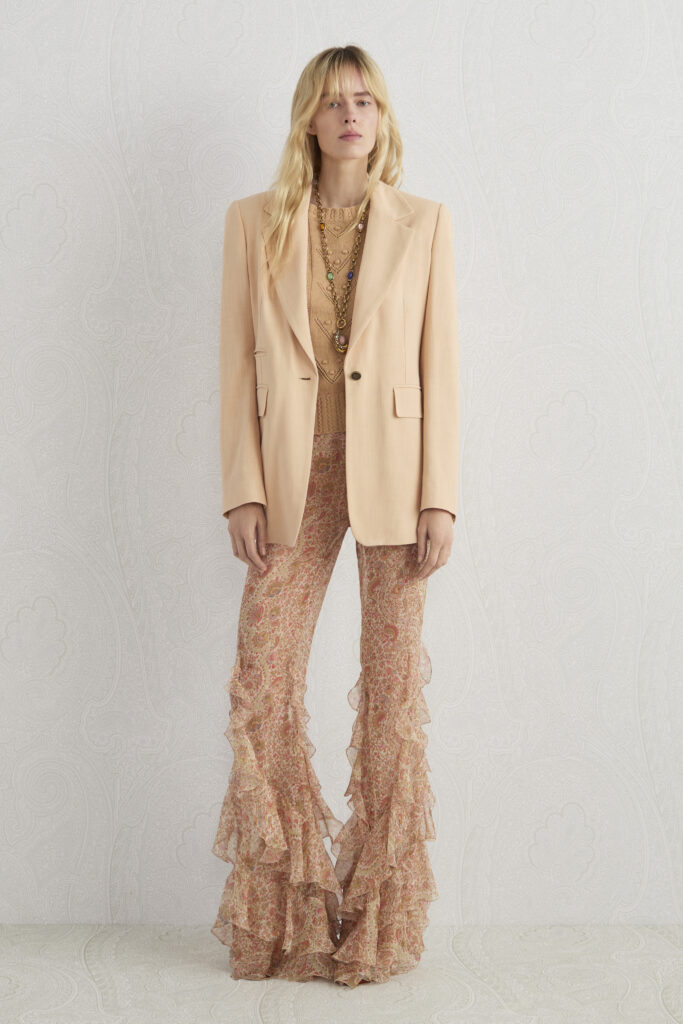
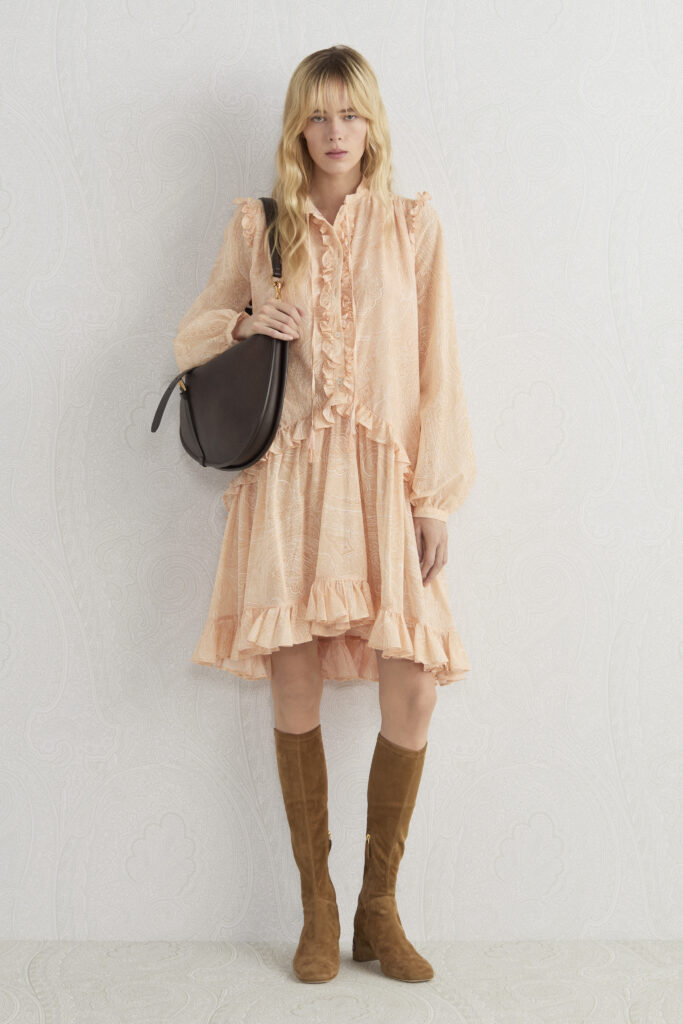
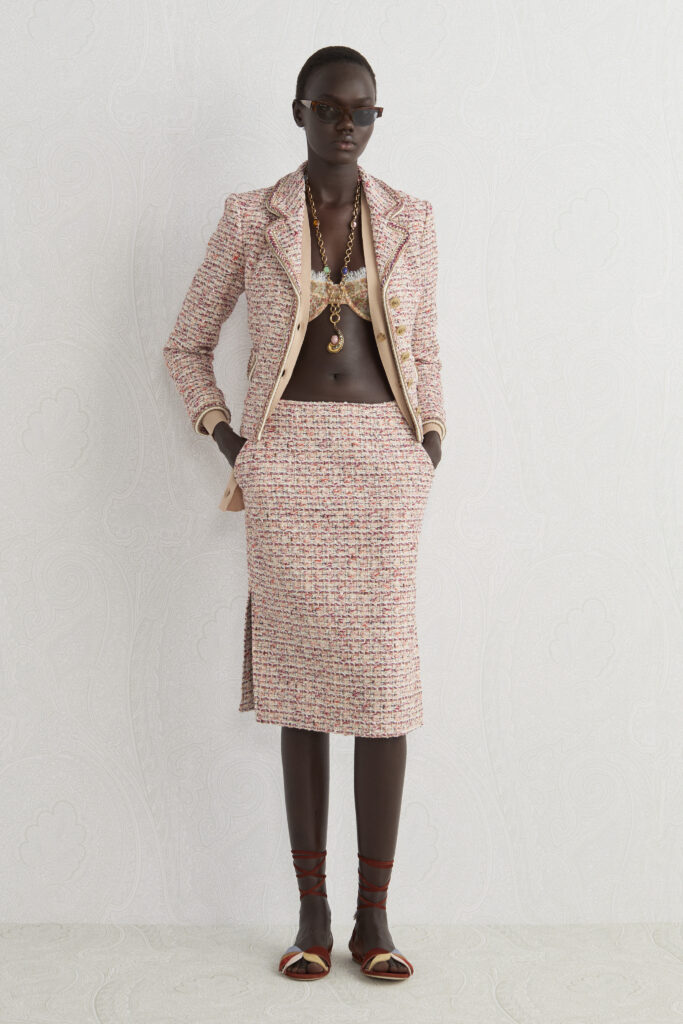
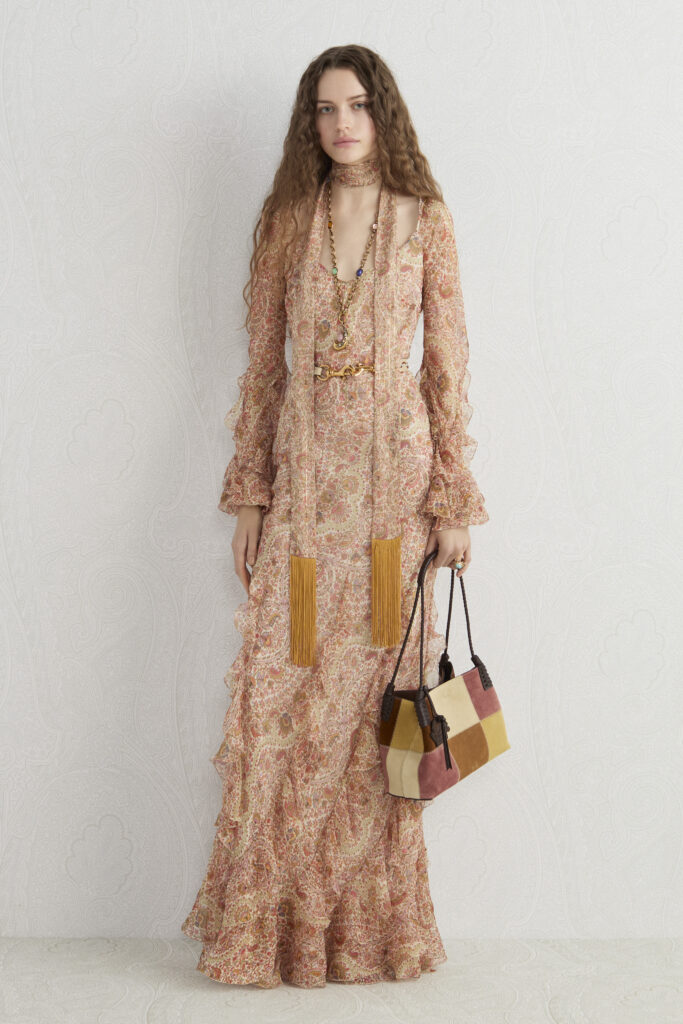
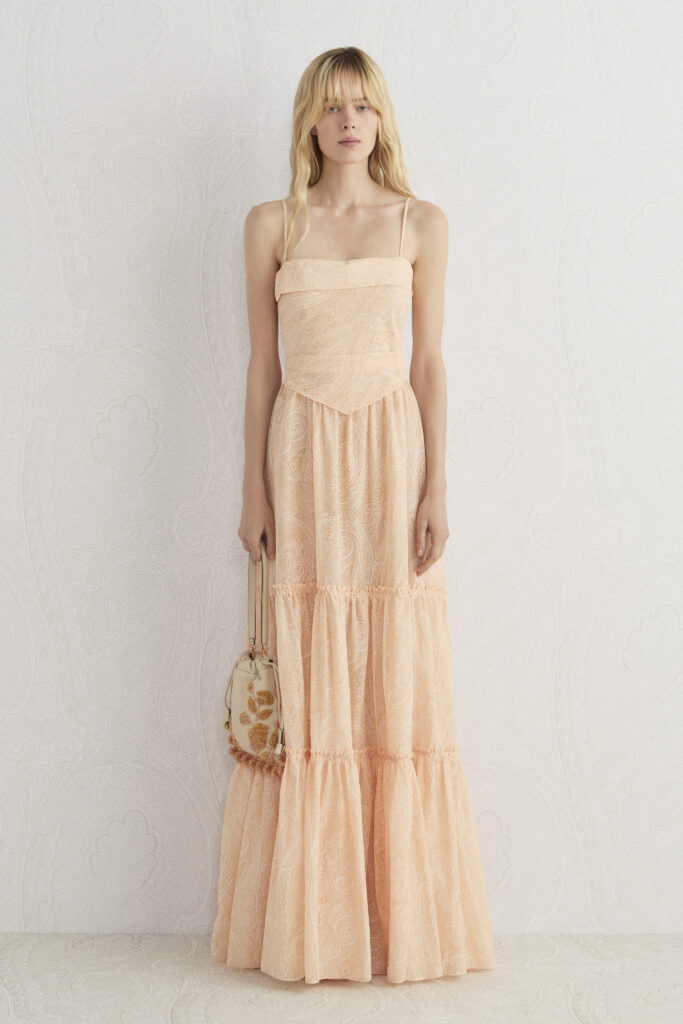
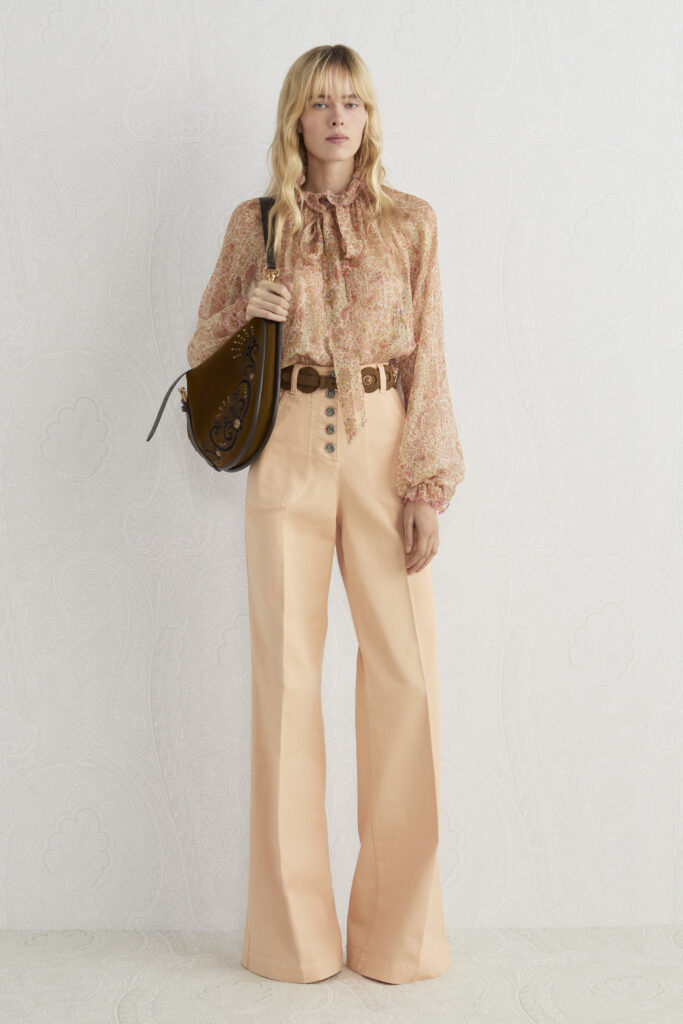
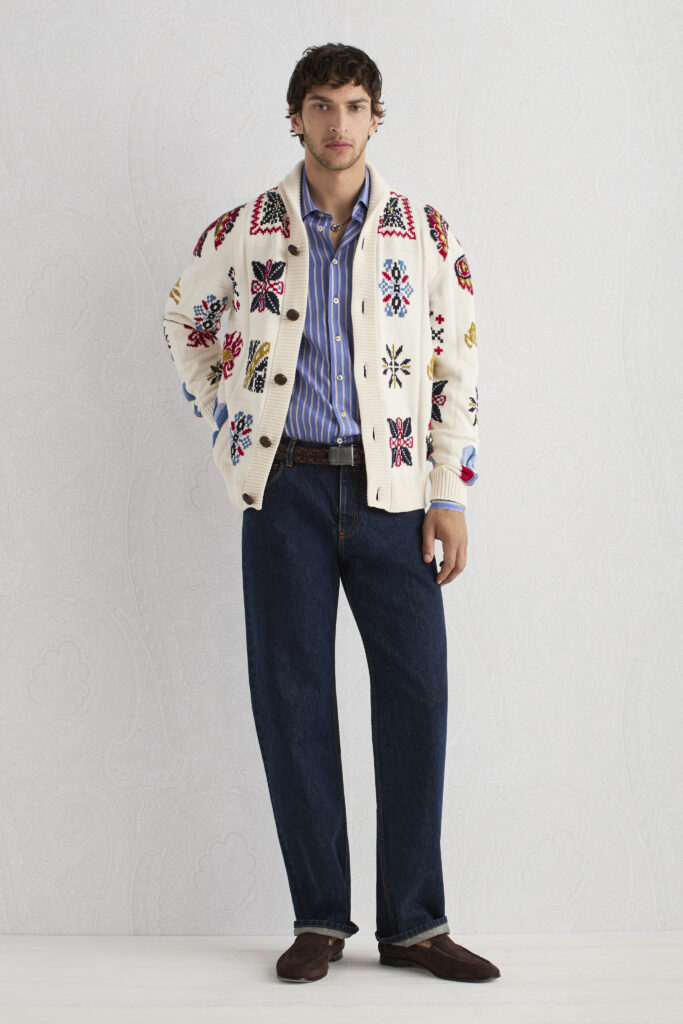
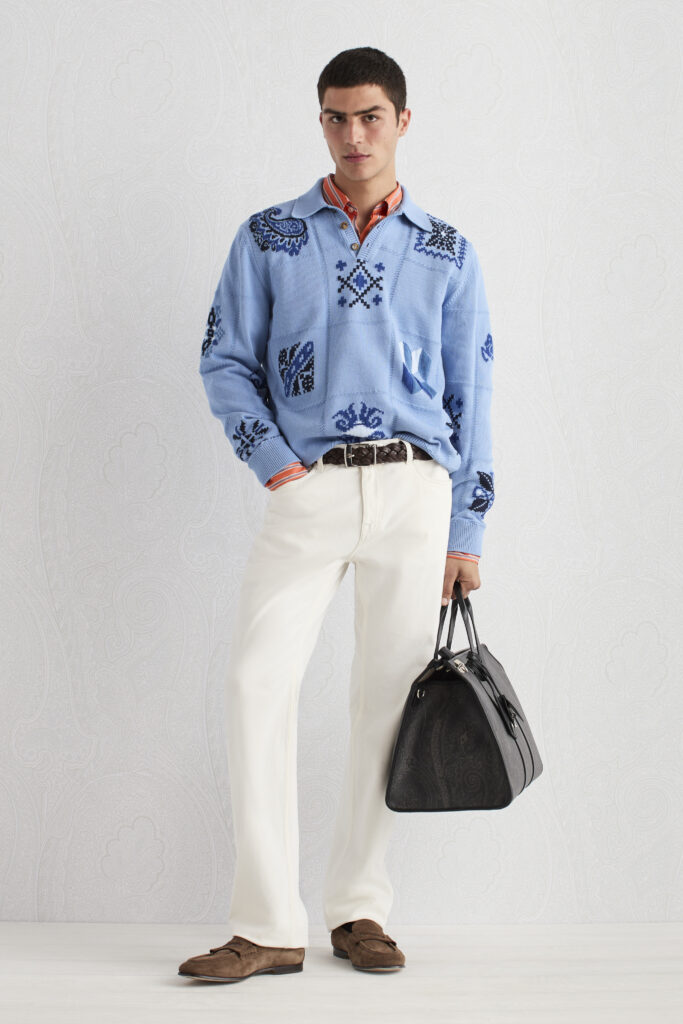
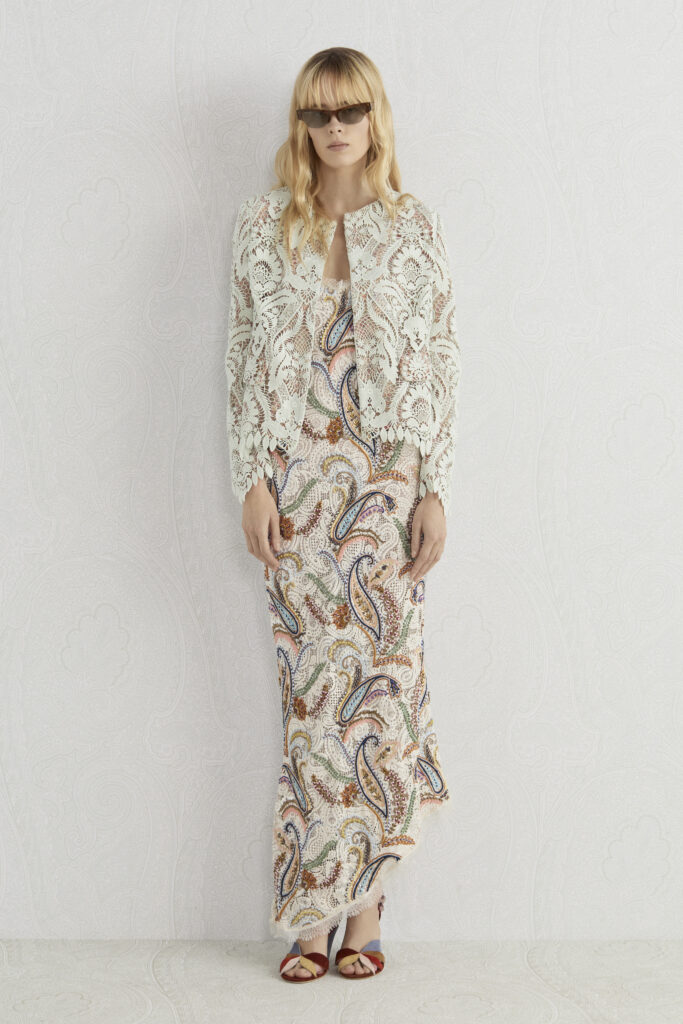
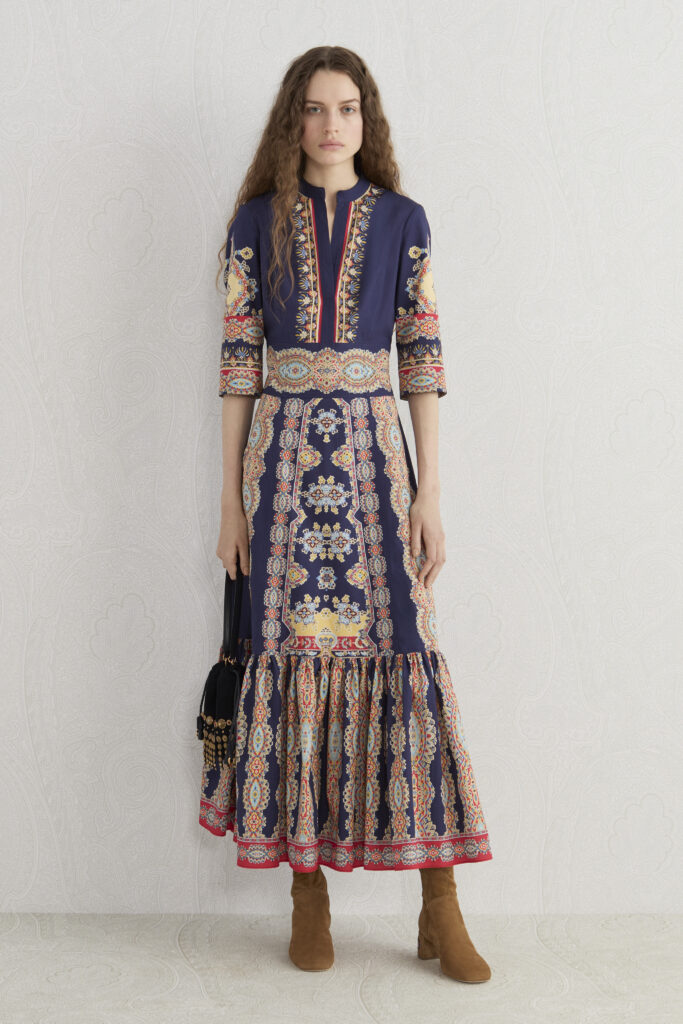
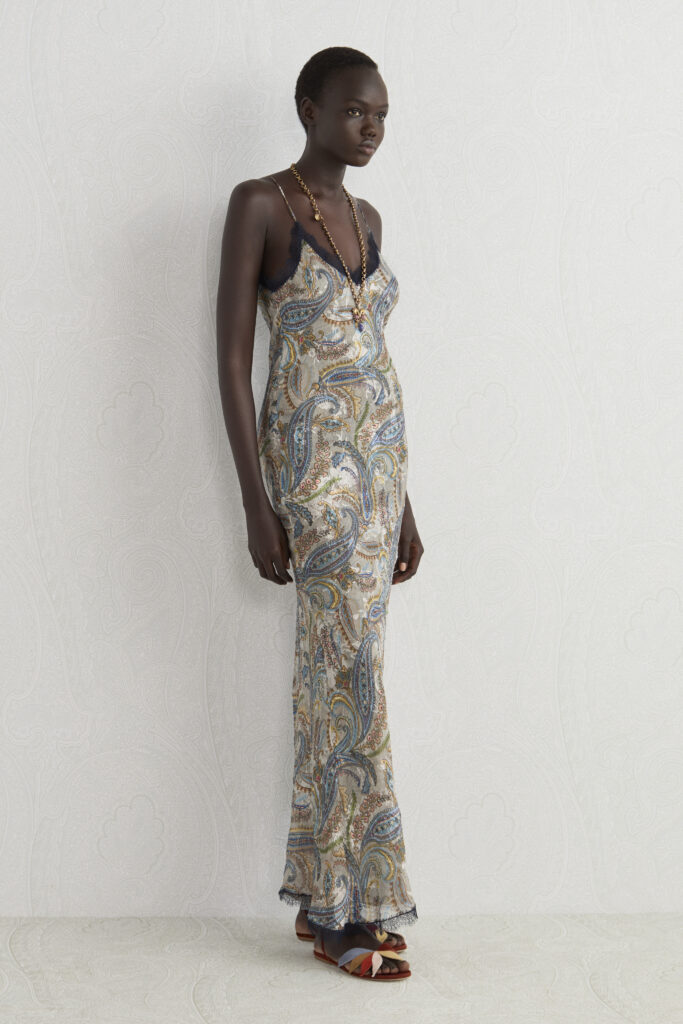
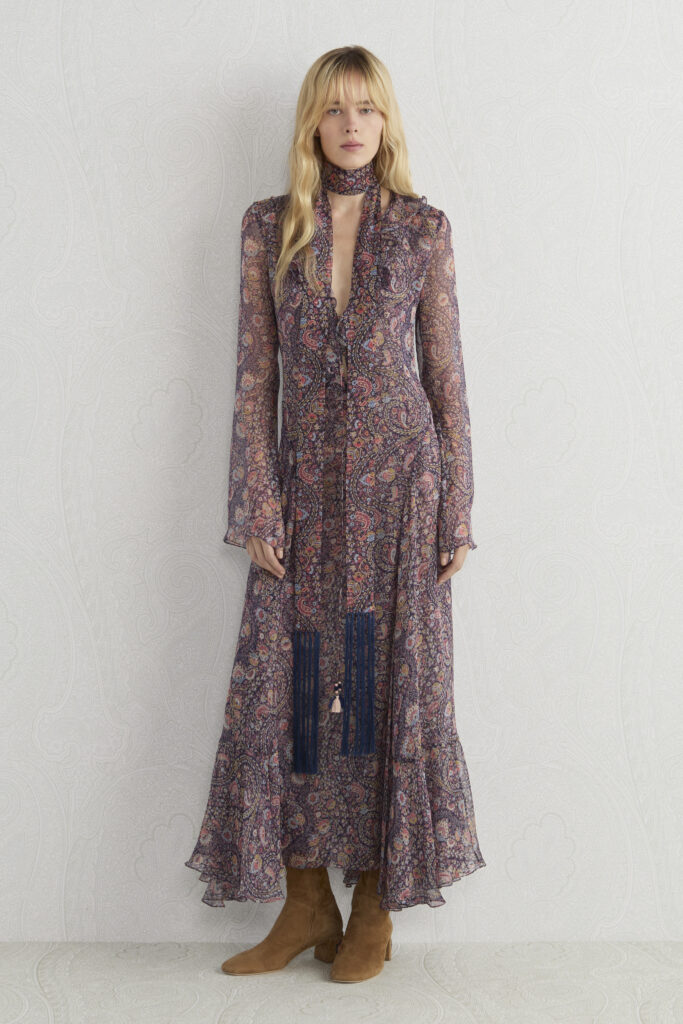
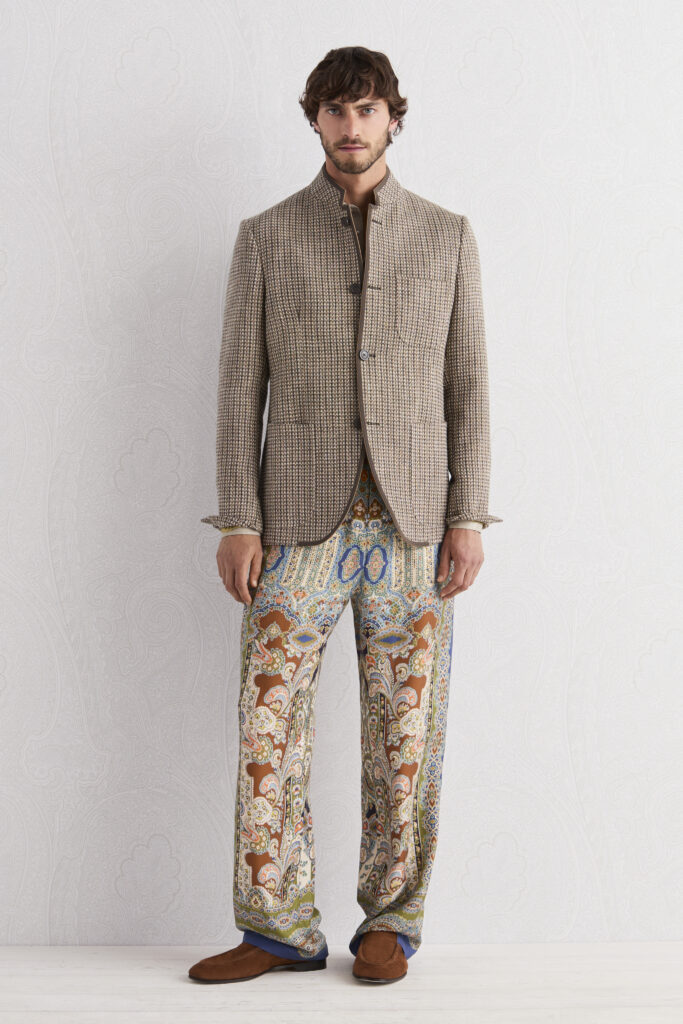
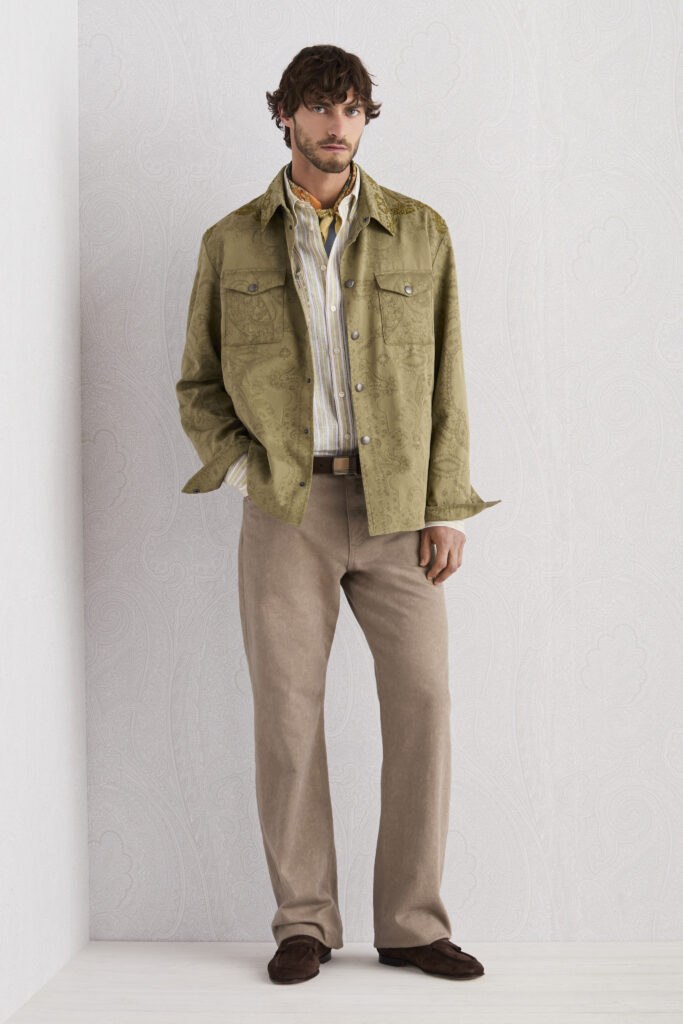
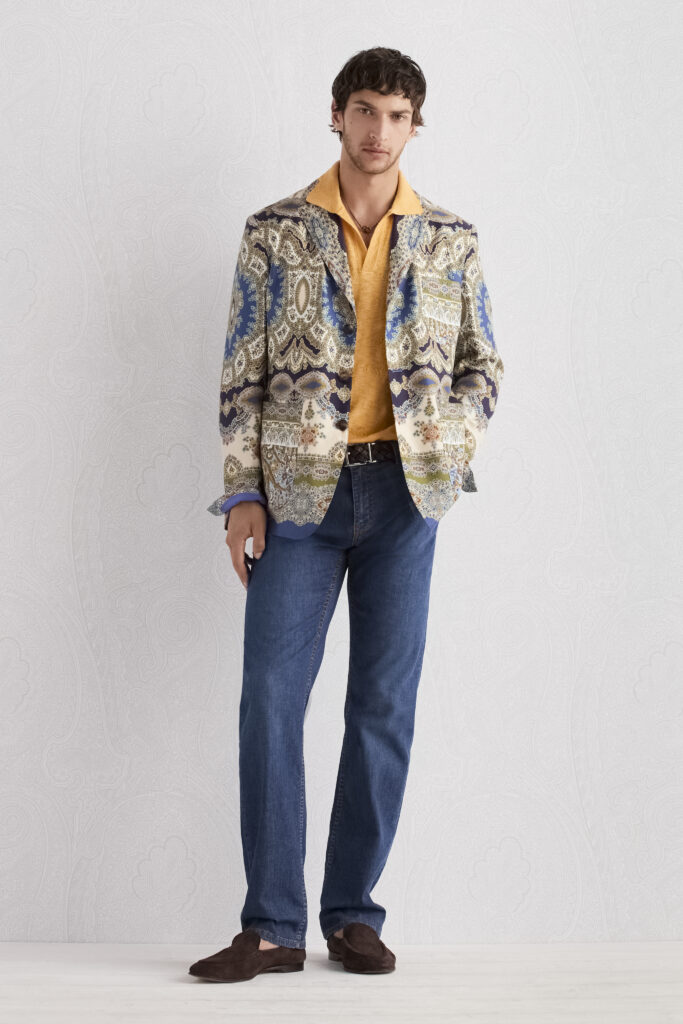
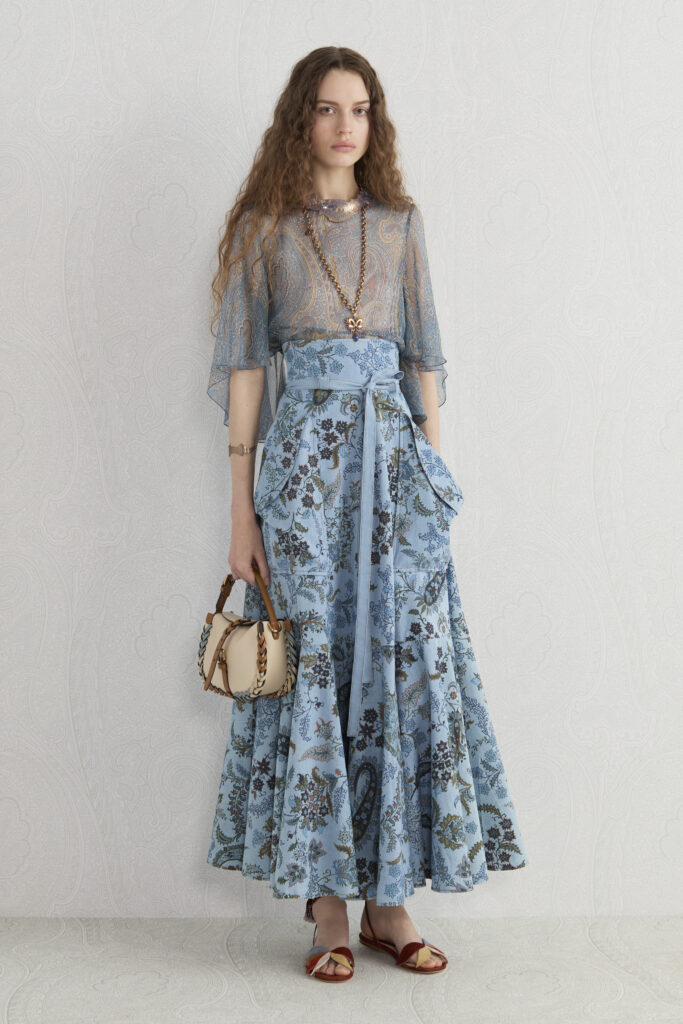
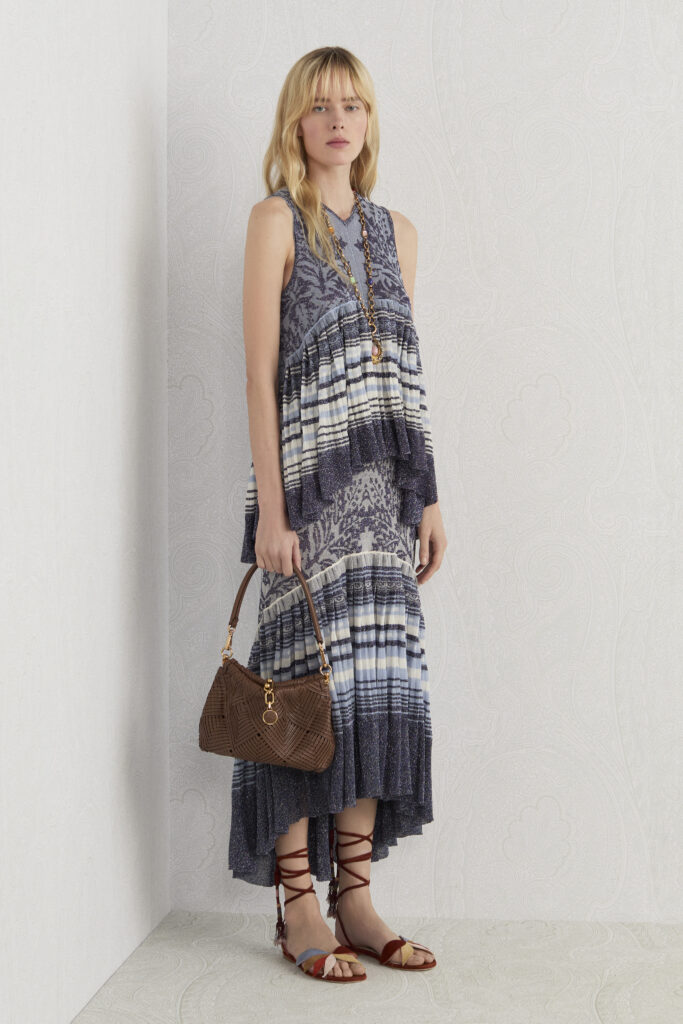
The distinction is significant. To renew is to break with the past; to regenerate is to allow a language to produce new forms based on its own rules. In recent collections, this approach has been evident in the treatment of materials rather than in a departure from traditional silhouettes: paisley and floral patterns migrate to denim jacquard, crochet, and suede, eventually becoming almost monochromatic textures that reveal themselves in the light before they are apparent at first glance. De Vincenzo refines form and surface without ever overturning them. He honors the spirit of the atelier by preventing it from becoming stagnant.
Founded in 1968, Etro began as a textile design house before becoming a fashion label. Its paisley pattern—the teardrop-shaped cashmere motif—functions less as a logo than as a decorative motif, reimagined season after season in jacquards, crochet, and suede under the direction of Marco De Vincenzo since 2023.
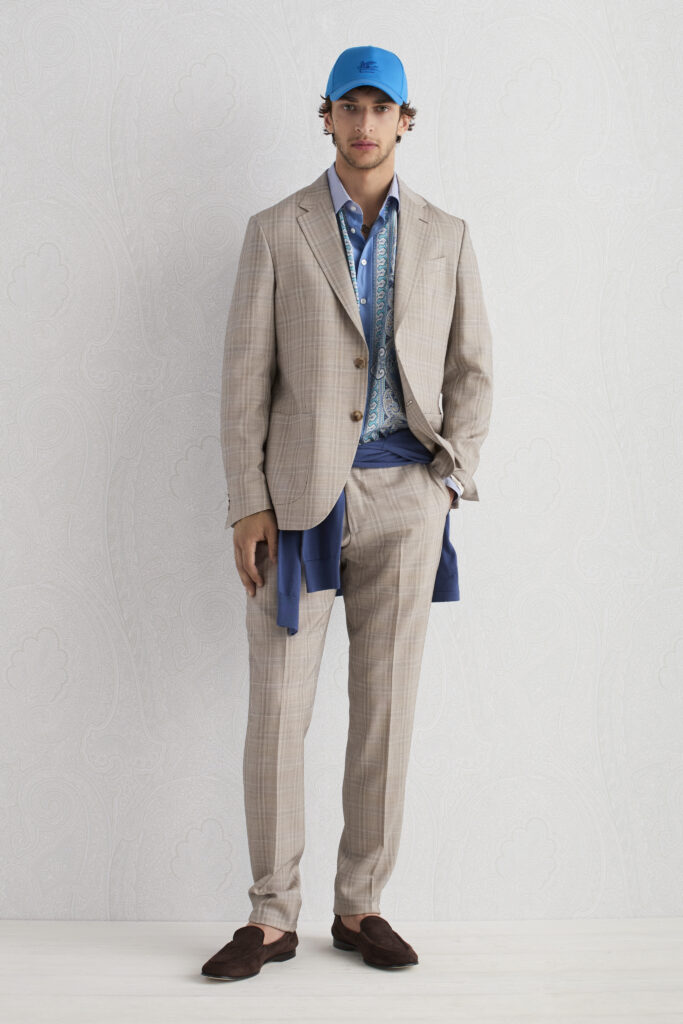
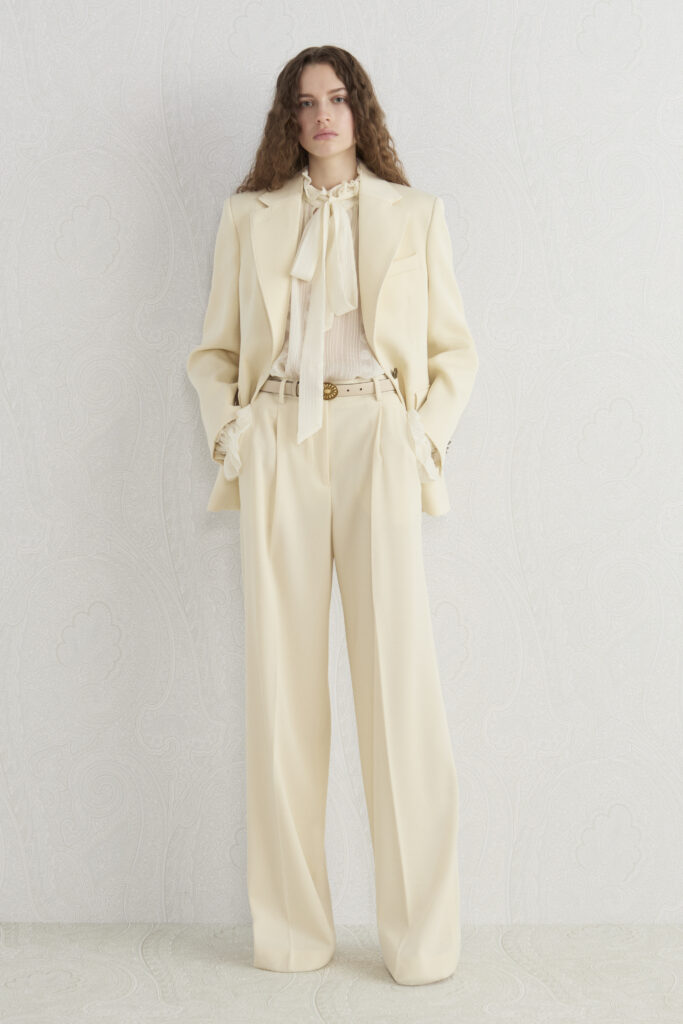
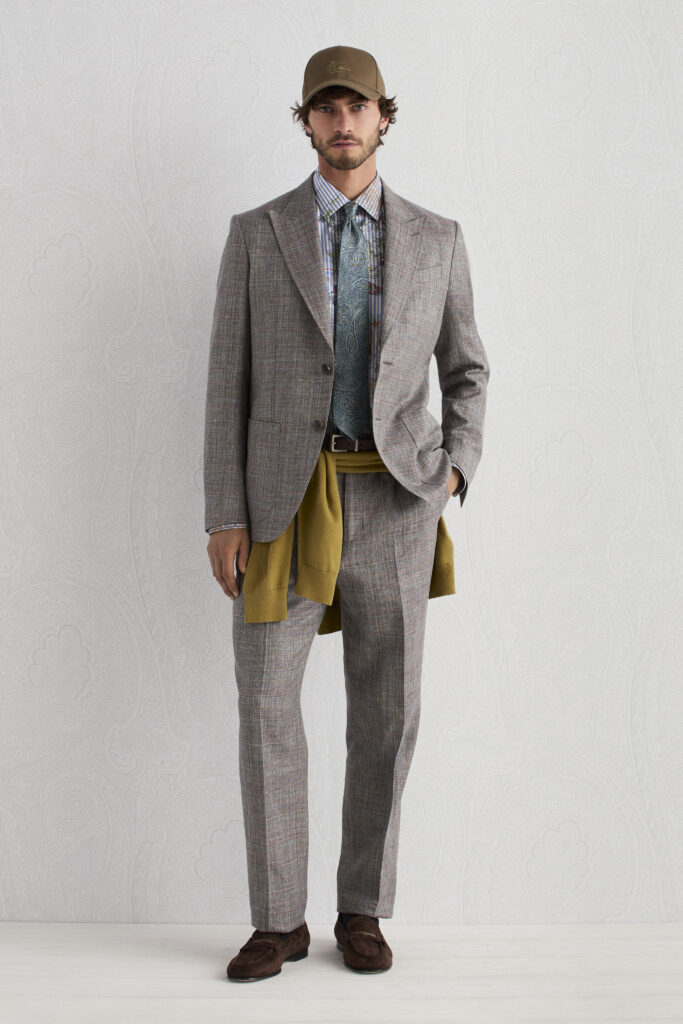
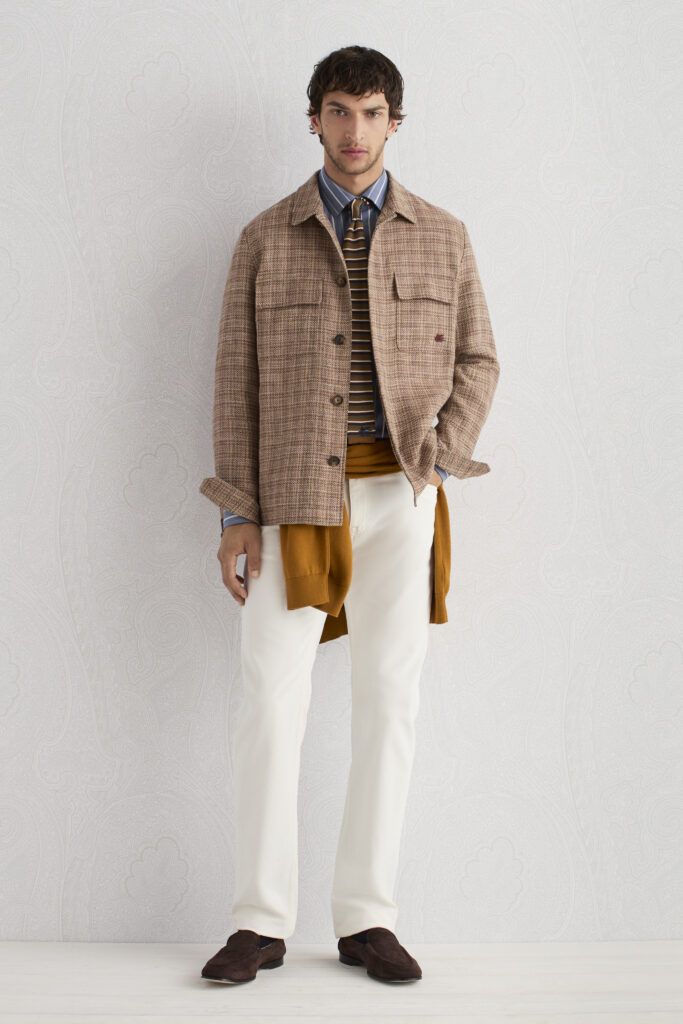
This is why the Resort collection makes sense as a laboratory. Freed from the drama of the runway show, it allows for experimentation with materials, testing of printing techniques, and exploring color combinations that the main collection may later adopt. Resort wear, designed for more relaxed climates and casual occasions, becomes the ideal canvas for this renewal: here, the focus is on lightness, layering, and variation—a far cry from the formality of a tailored suit.
What a Design Protects
There is a rare form of discipline in this loyalty to a single emblem. Many fashion houses change their signature motifs with each new creative director; Etro, however, asks every designer to work with the same motif. The constraint is demanding—it precludes the ease of starting from scratch—but it ensures a continuity that few brands can claim. Here, the paisley pattern serves as a basso continuo: the melody changes, but the foundation remains steadfast.
The question raised by the upcoming cruise collection is therefore not one of novelty, but of depth: to what extent can a motif reinvent itself before it has said everything there is to say? As long as the answer remains open, Etro’s design studio still has plenty of material to work with.






Cette publication est également disponible en :

