
You can now stroll through the palm grove without luggage. The Marrakesh resort offers its day-trippers access to its private villas—these sanctuaries that are usually reserved for residents. A promotional gesture that says something specific about the state of the contemporary luxury hotel.
In the world of luxury hotels, there is a boundary that has long been considered sacred: the one that separates residents from visitors. Guests who stay overnight at the property enjoy full access; those who come from outside for lunch or a treatment are restricted to the common areas. This dividing line is not merely logistical—it is symbolic. It underpins the value of the stay, justifies the room rate, and preserves the privacy of those who have paid to be alone.
The Mandarin Oriental in Marrakech has just crossed that line.
The Villa’s Architecture as a Marketing Proposal
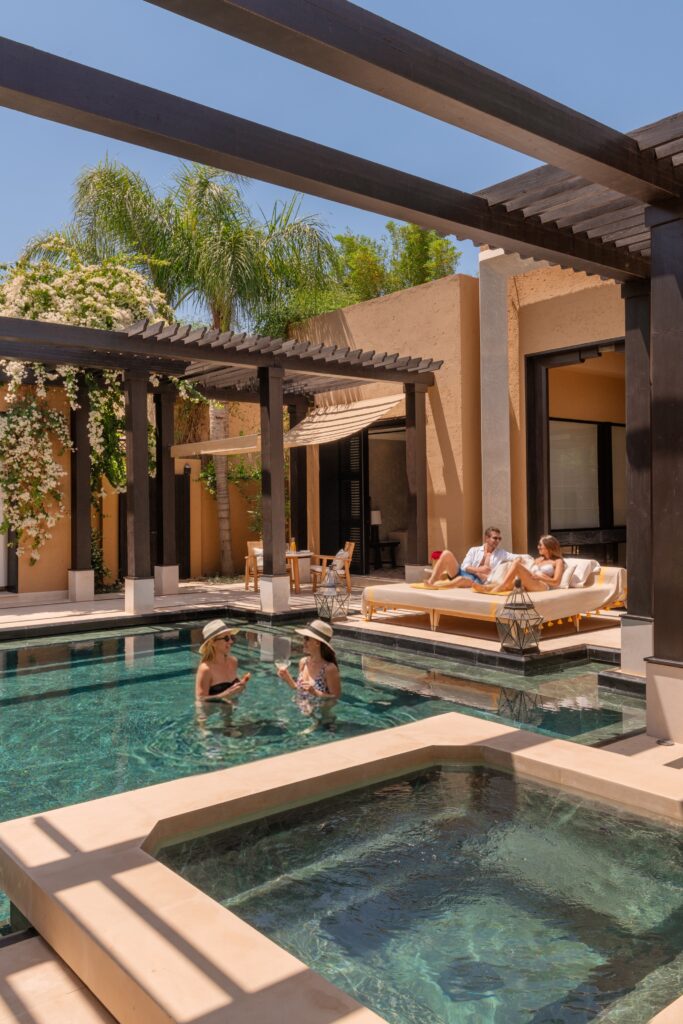
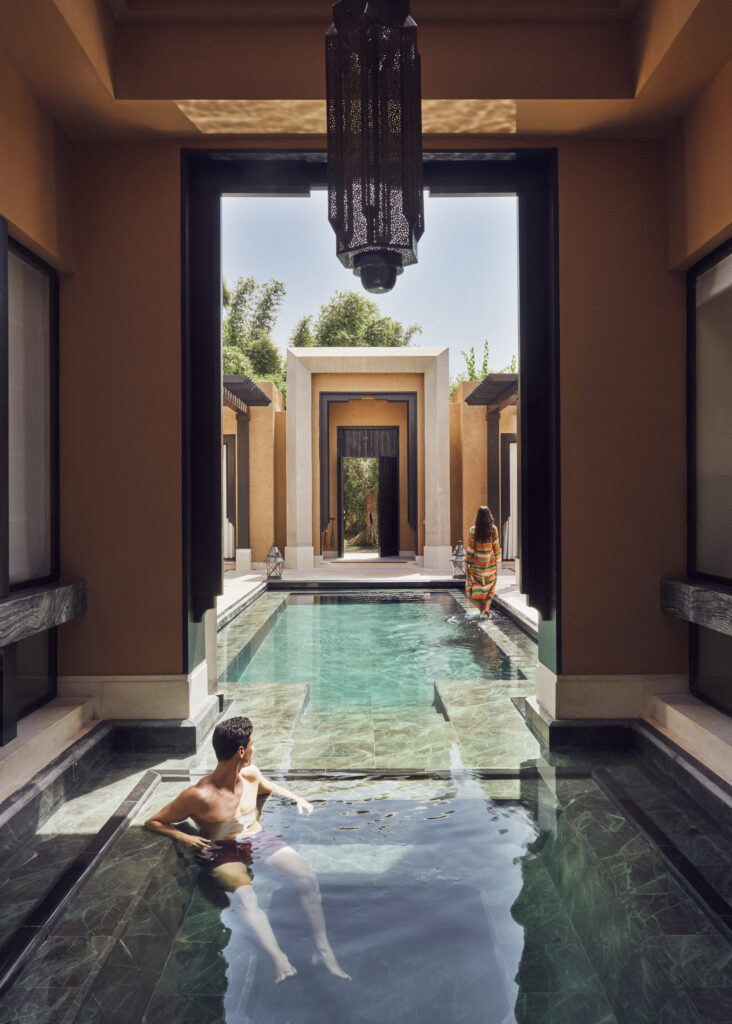
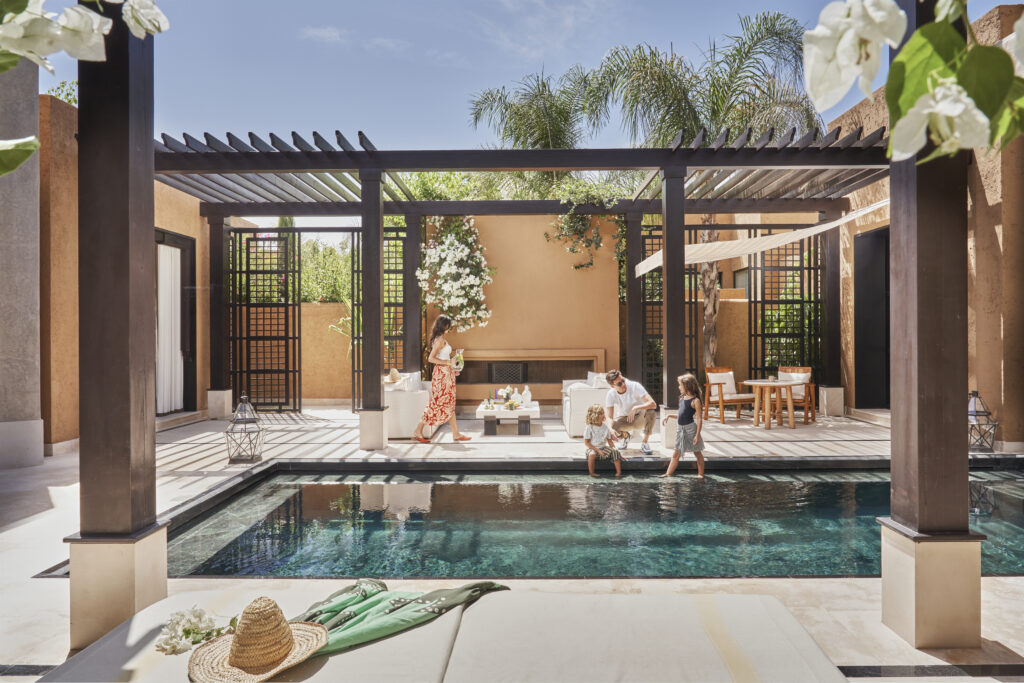
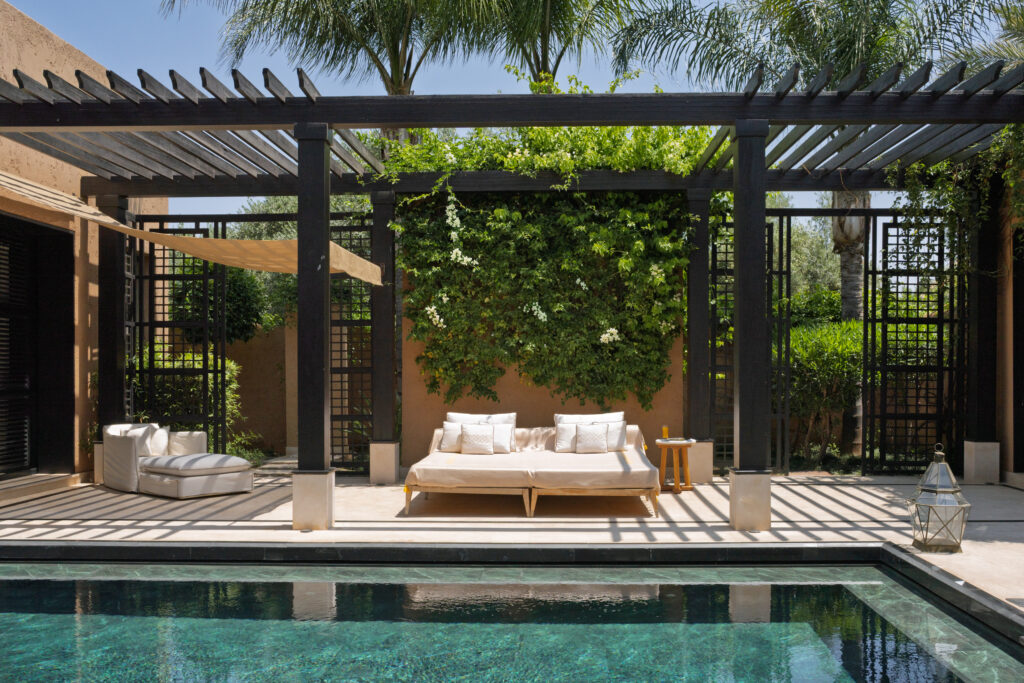
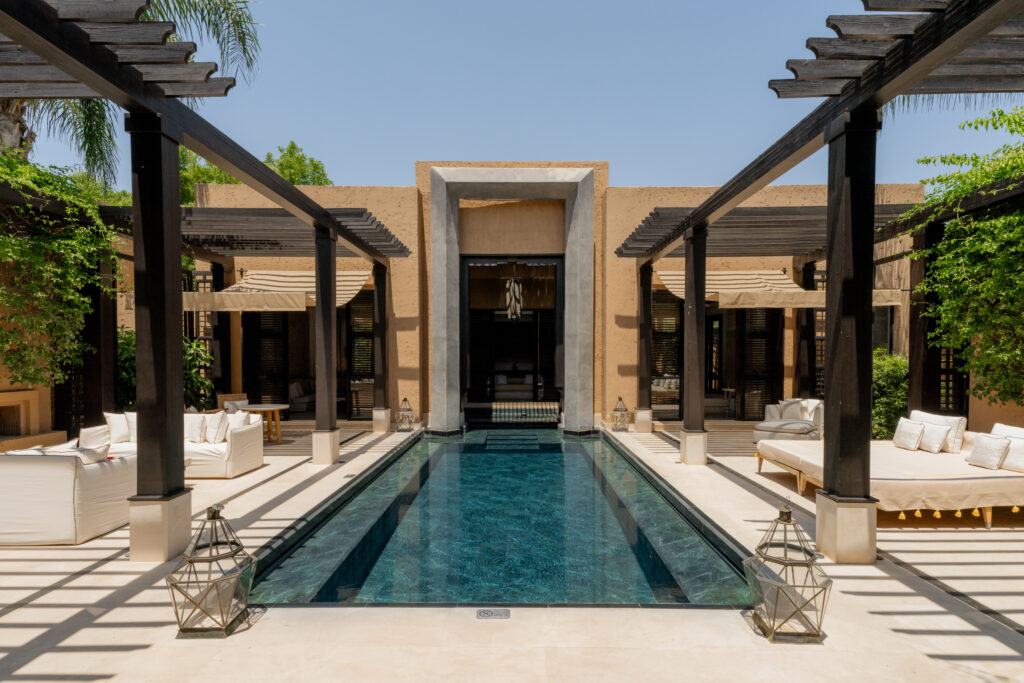
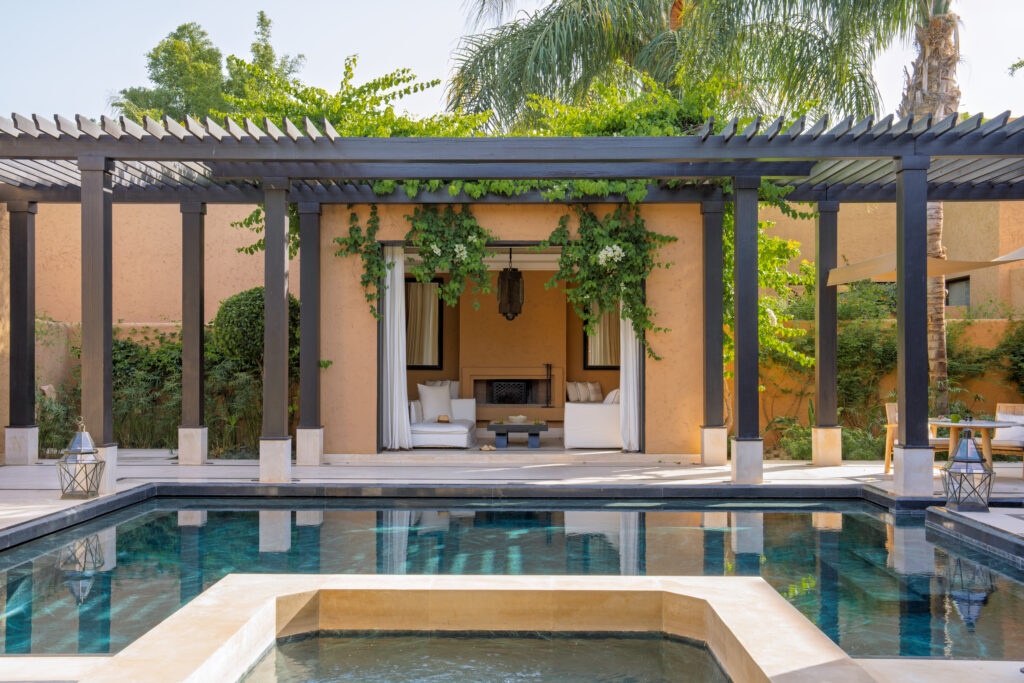
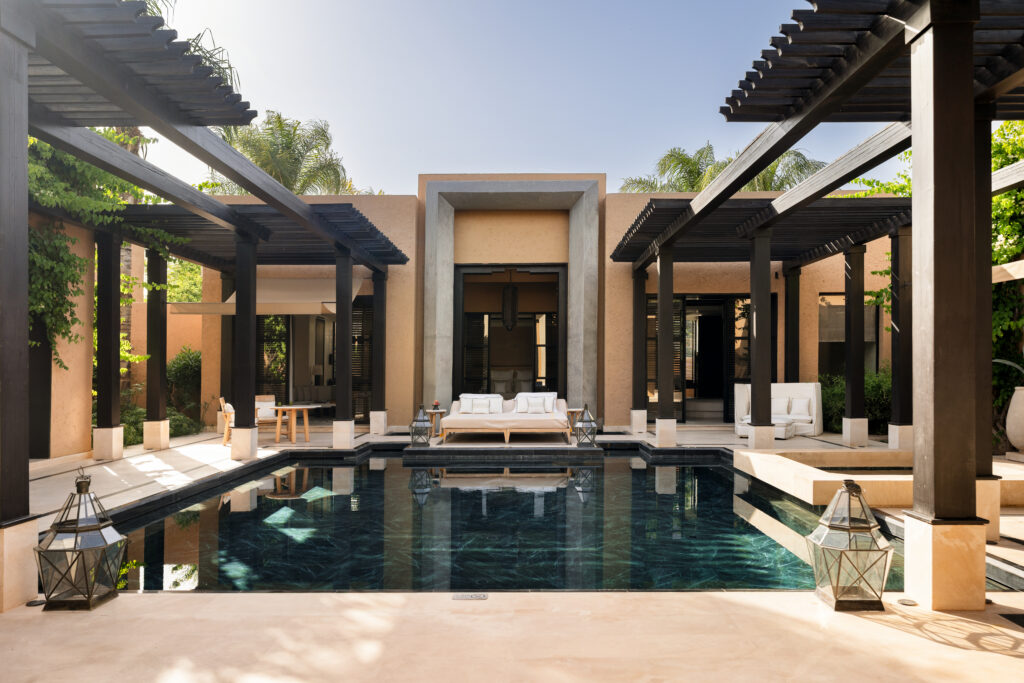
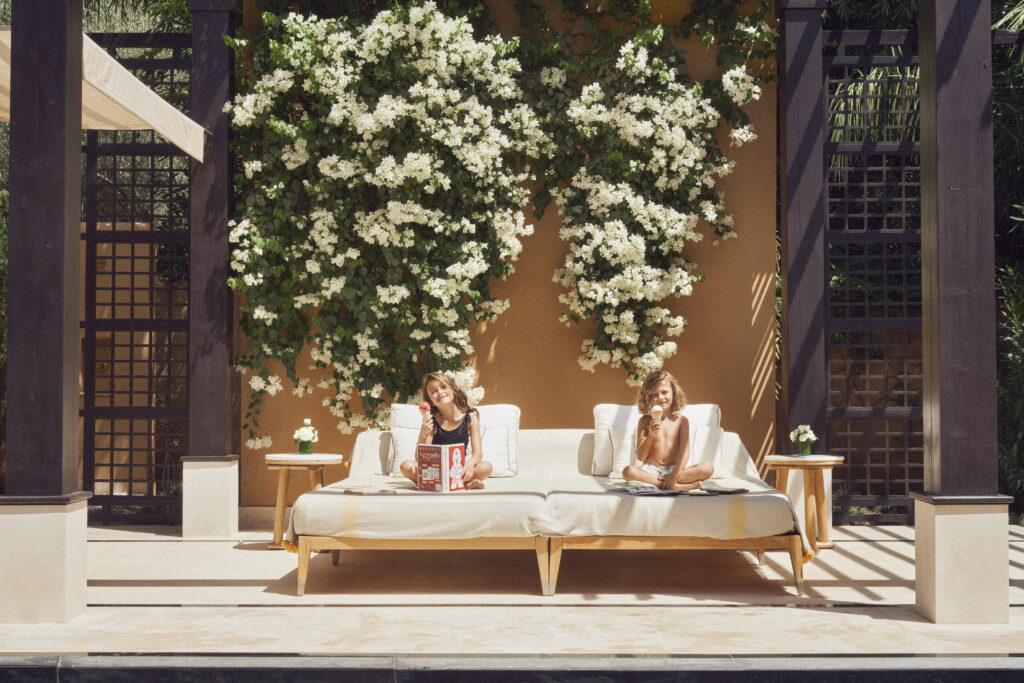
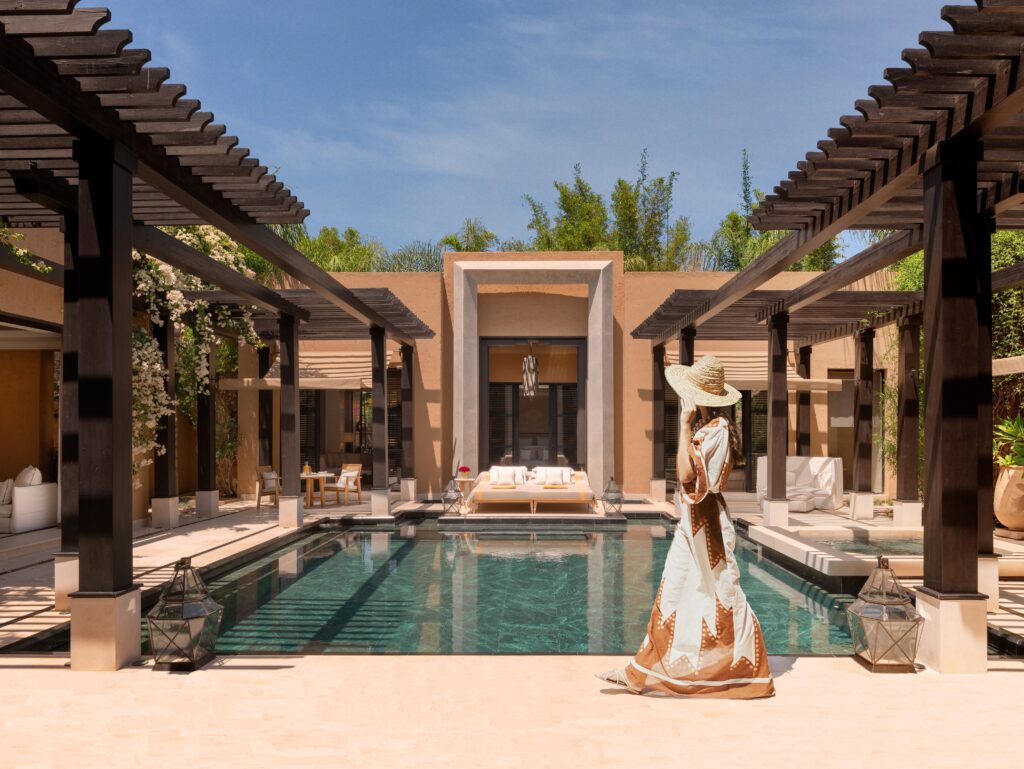
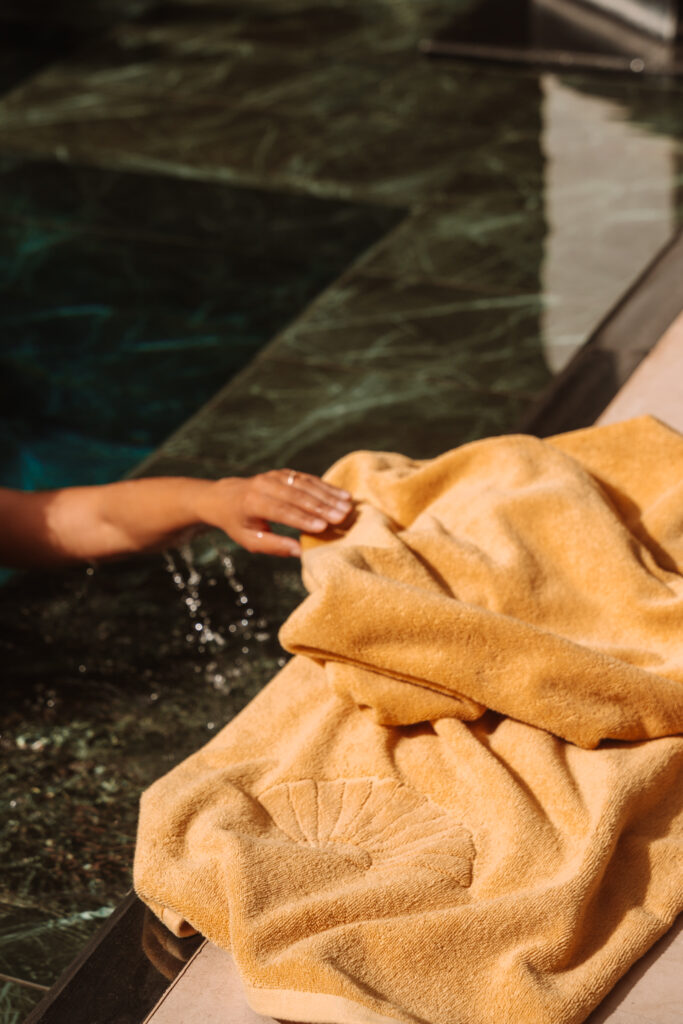
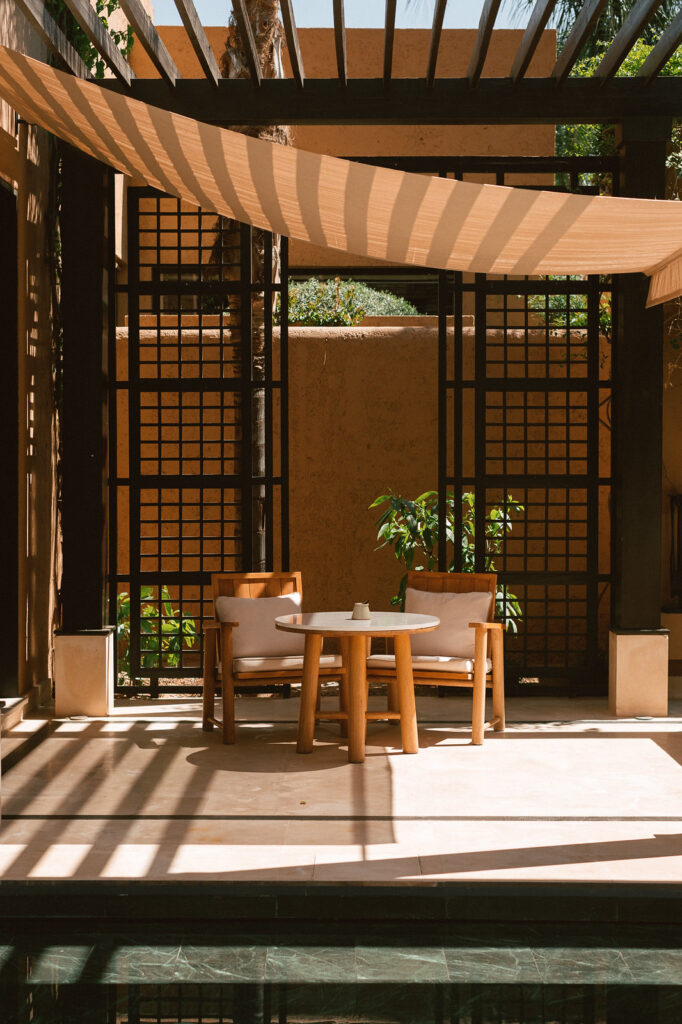
The resort, nestled in the palm grove north of the medina, is organized around a strong architectural concept: the private villa. Each unit features its own outdoor space, a private pool, and an enclosed garden that ensures privacy in the heart of a destination with heavy tourist traffic. It is these villas—usually reserved exclusively for residents—that the Mandarin Oriental is now opening up to day-pass holders.
The decision makes good business sense. An unoccupied villa is an asset that generates no income. By offering it on a daily basis, the resort capitalizes on its off-peak hours without, in theory, compromising the experience of its guests—since each villa remains a private, self-contained space.
What the Day Pass Says About Luxury Hotels
The growing popularity of day passes at luxury hotels and high-end resorts reflects a profound shift in how people view the hotel experience. The hotel is no longer just a place to spend the night; it is becoming a place to live, accessible in short bursts—a lunch, an afternoon at the spa, a few hours by a private pool.
For the Mandarin Oriental in Marrakech, however, the opening of villas in this format represents a significant leap in quality: we are no longer talking about access to a communal pool or a lounge, but to the most intimate aspect of the hotel experience. In the imagination of the contemporary luxury hotel, the villa is the modern equivalent of a secret room—the ultimate expression of seclusion.
Marrakech: A Testing Ground for Flexible Hospitality
Marrakech has always had a special relationship with the traditions of hospitality. The city, whose hotel scene blends traditional riads with contemporary luxury hotels, has developed a culture of hospitality that transcends conventional boundaries. Here, you can step into a riad for a cup of tea or for a week; you can visit private gardens simply by knowing the address.
By offering its villas on a daily basis, the Mandarin Oriental embraces this local tradition while formalizing it in accordance with international standards of luxury resort hospitality. The apparent incongruity—opening what was once closed—becomes, in this context, a form of fidelity to the spirit of the place.
A luxury hotel that opens its doors without compromising its standards: this may be the most accurate definition of hotel luxury in 2026—no longer exclusion as a value, but selection as an art.
Cette publication est également disponible en :

