
At the heart of a world where transparency becomes matter
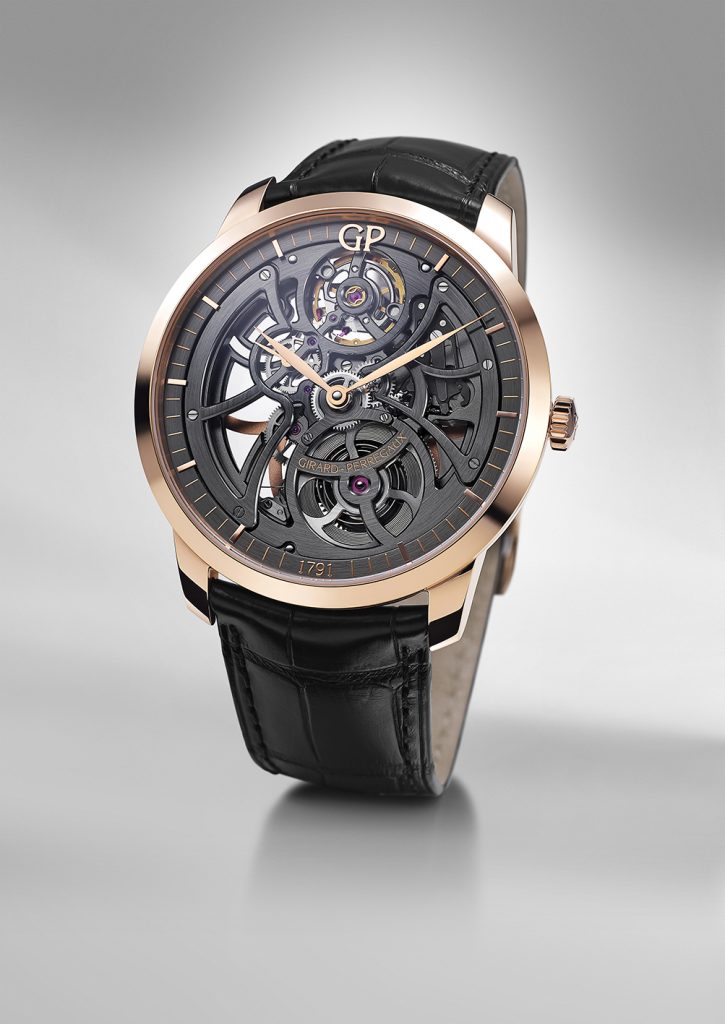
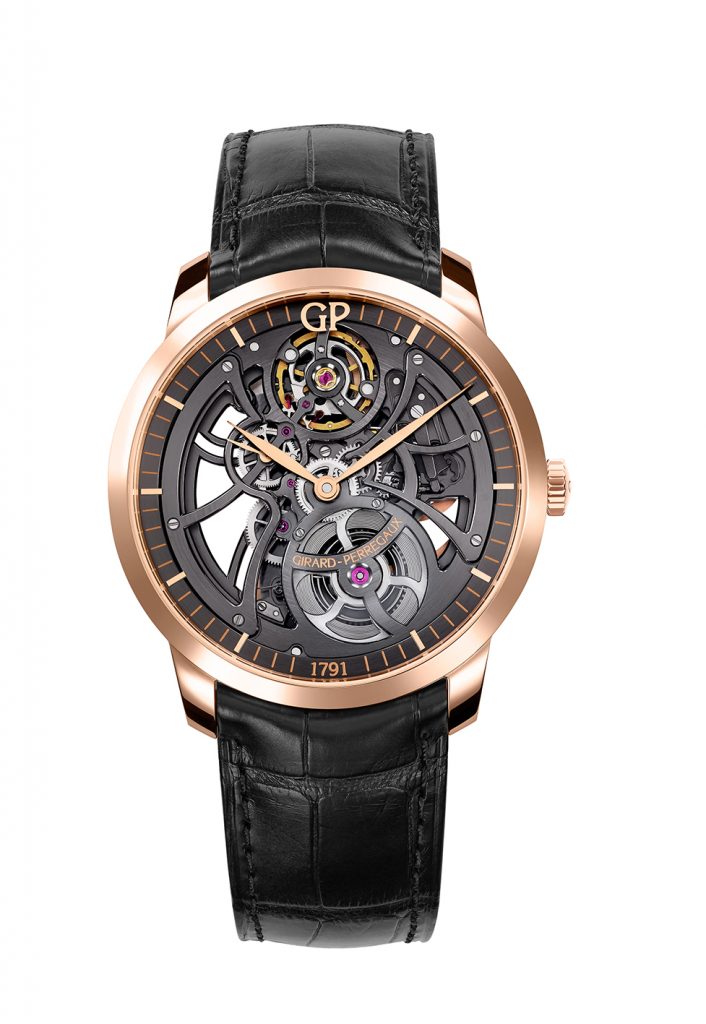
Conceived by the watchmakers of Manufacture Girard-Perregaux as an ode to fine mechanics, the 1966 Squelette plunges the eye into the heart of its magnificent automatic caliber, thanks to impressive openworked components, all hand-decorated in an original and contemporary way.
Captivating the discerning eye of the watch enthusiast is a complex matter, since the right balance has to be struck. To reveal the magic of mechanical watchmaking, it is no longer enough to skeletonize a movement to let the light in. As Girard-Perregaux’s craftsmen have done, it is necessary to establish a clear vision of the stylistic grammar specific to the Manufacture and its interpretation of the art of watchmaking.
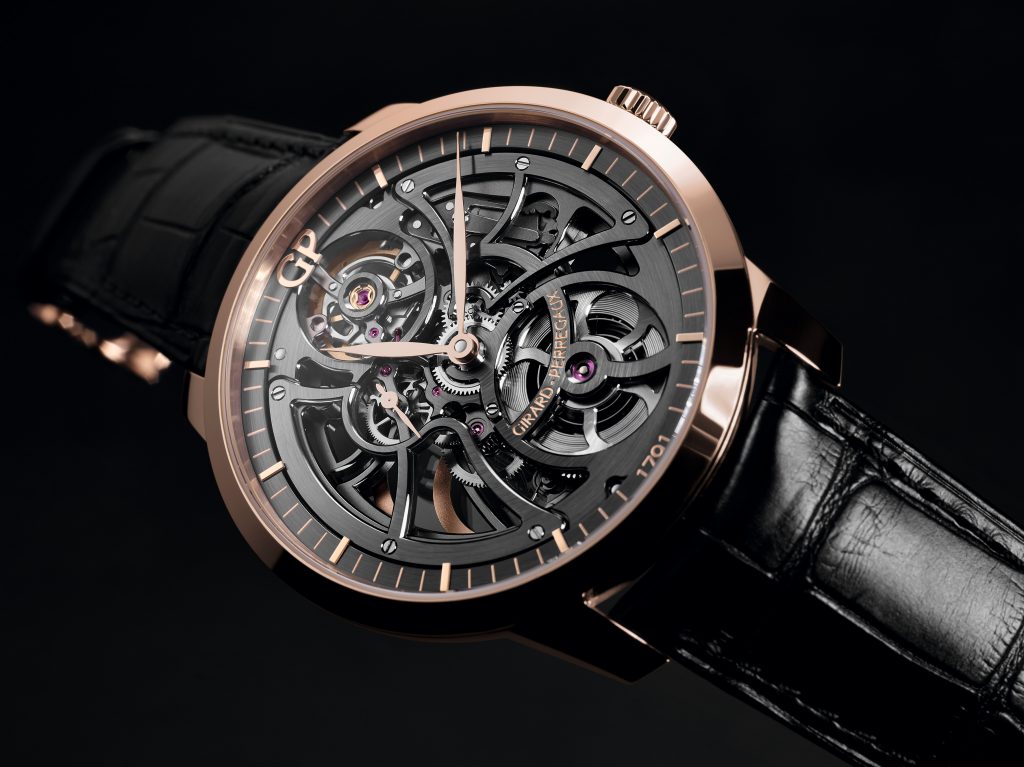
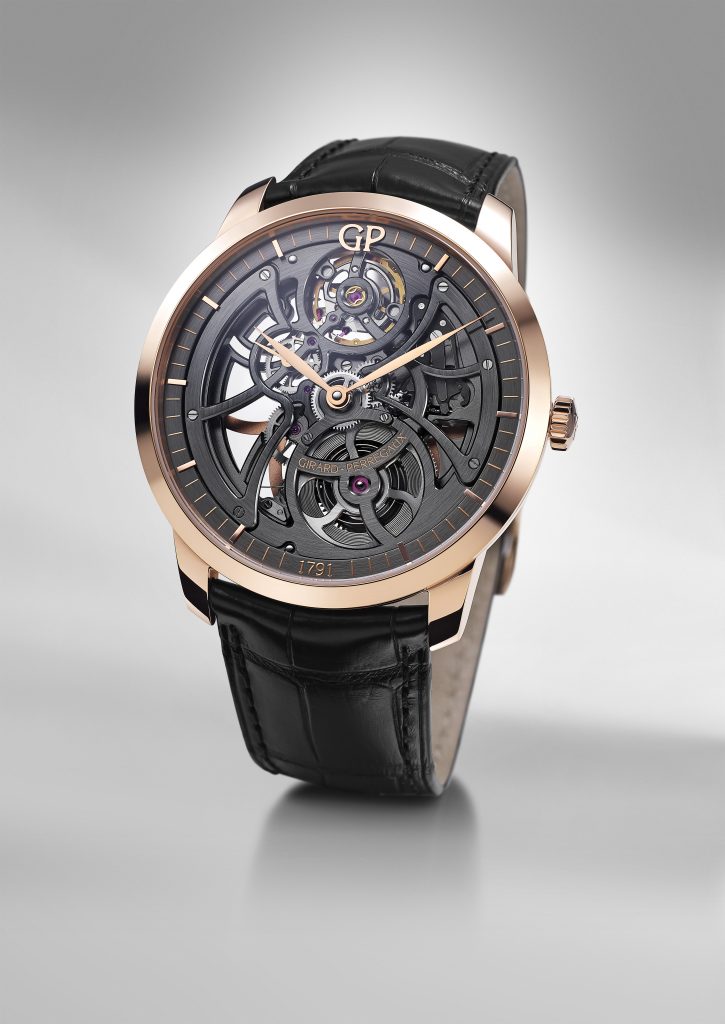
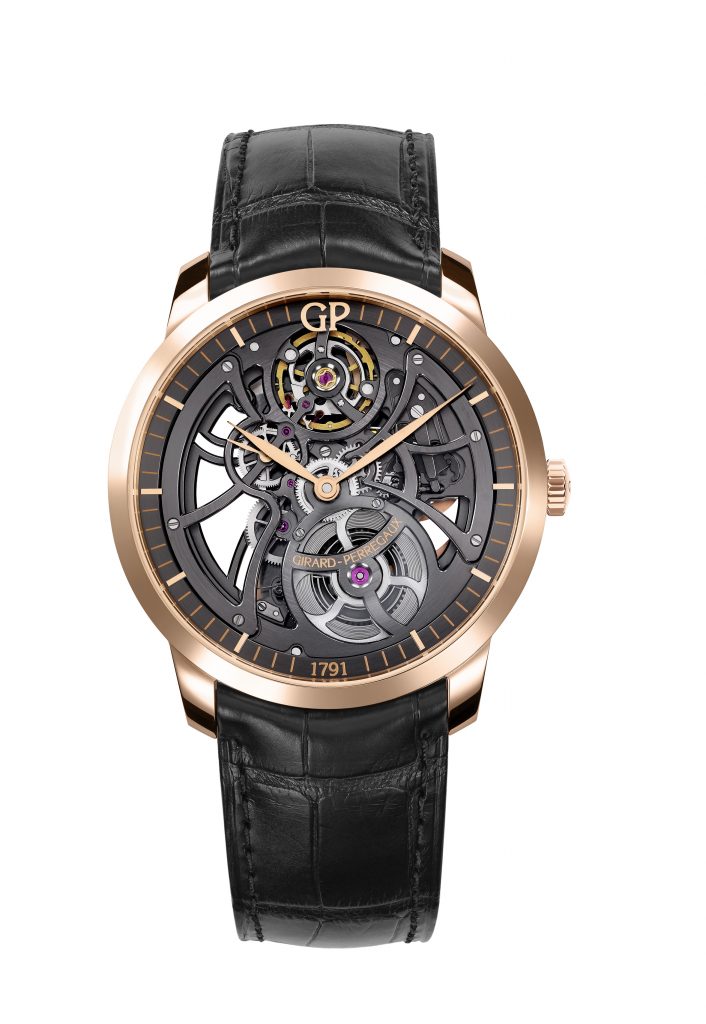
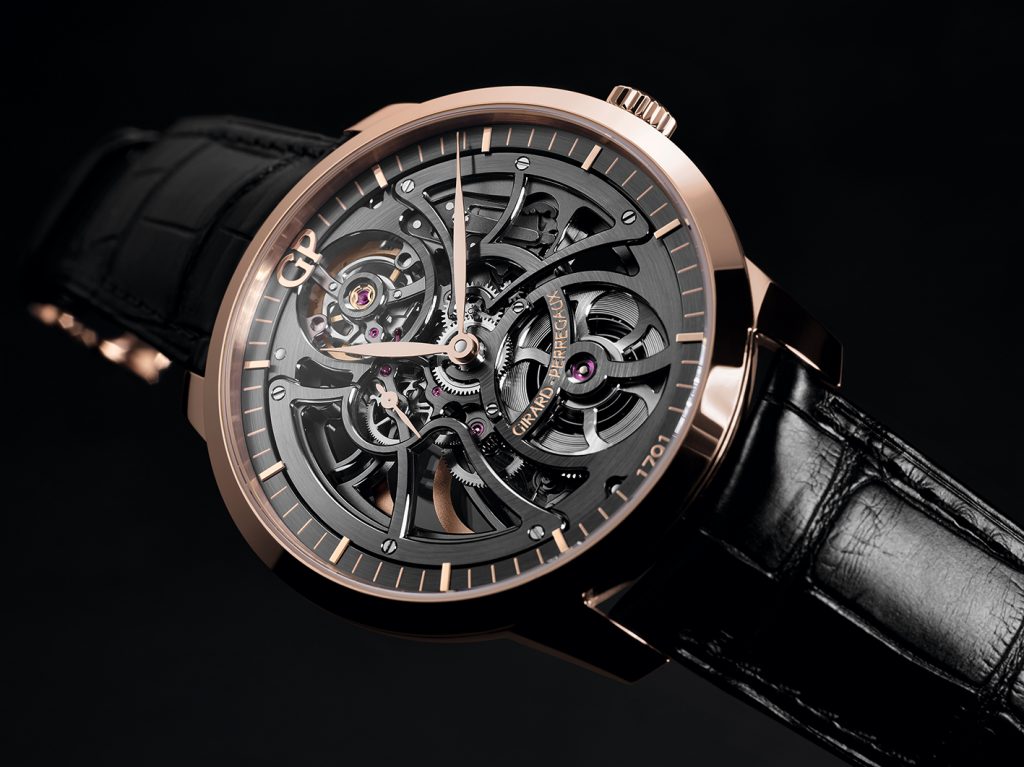
This grammar is a continuation of that established by Jean-François Bautte, the watchmaker whose company, launched in 1791, forms the roots of the Girard-Perregaux Manufacture. In this perspective, the hour becomes a pretext for revealing the mechanical watch as an objet d’art. Fine and complex, the openwork structure of the 1966 watch’s large 13 ¼-line (30.00 mm) self-winding movement invites contemplation of its bridges and plates. In this millimetric scenography, cogs, rockers, pulls and other components, usually invisible, can be guessed at the heart of the openings: beveled, polished-satinized and finished by hand by the watchmaking craftsmen. Their expertise has enabled them to push back the structural limits of the material and breathe something sublime into this openworked approach to mechanics, of which the “leaf” hands, with the balance judiciously positioned at 12 o’clock, are the graphic highlight.
Getting to the heart of things
This movement, derived from the famous GP1800 caliber, is here treated with a galvanic process (anthracite-gray ruthenium) and worked like a metal mesh. The rhodium-plating of the gear train allows the eye to follow the path of energy. During this initiatory journey through a mechanical labyrinth of 173 components, including 25 rubies, the eye is drawn to the second hand at 10 o’clock, supported by the seconds wheel. It is then captivated by the rapid oscillation of the regulating organ equipped with Girard-Perregaux’s exclusive “Microvar” variable inertia balance, vibrating at 4 hertz (28,800 vibrations per hour).
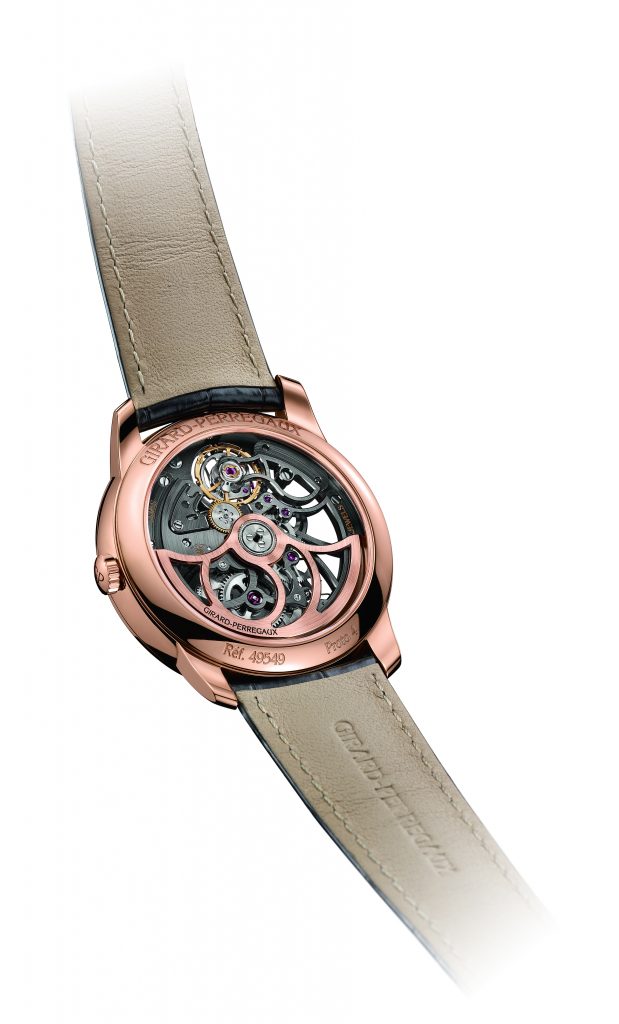
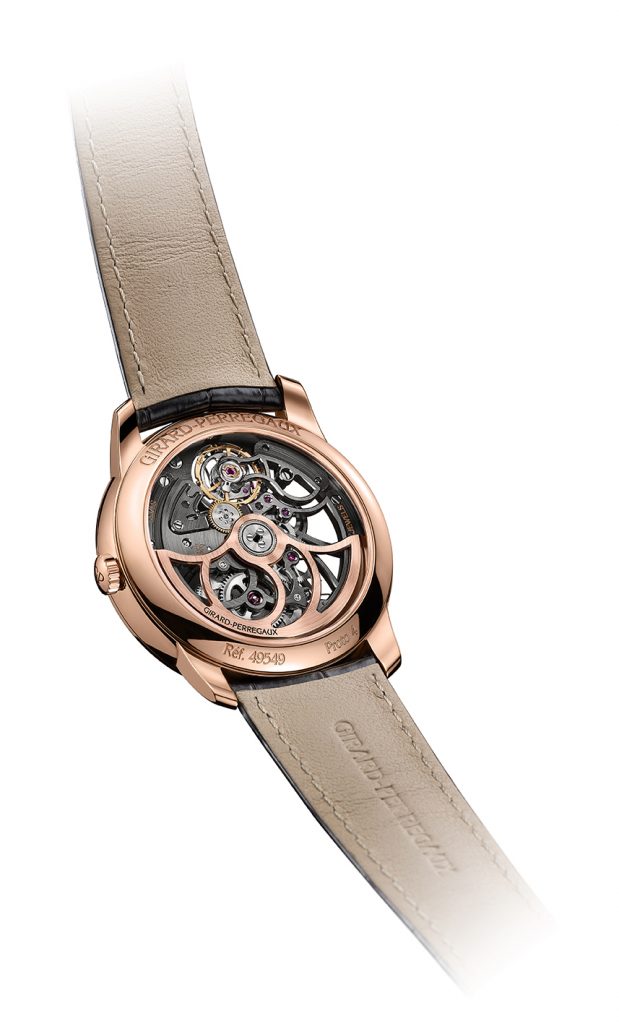
To further magnify this 13 ¼-line caliber within its 38 mm-diameter case in 18-carat pink gold, Girard-Perregaux took the decision to openwork the oscillating weight, which, visible through the sapphire crystal caseback, has been crafted in gold. Magnificently balanced, this rotor ensures optimal winding of the barrel, guaranteeing an autonomy of over 54 hours.
The timeless design of the Girard-Perregaux 1966 Squelette not only confirms the House’s aesthetic sense and the virtuosity of its craftsmen and watchmakers, but also underlines its exceptional mastery of the art of finishing and decorating movements. This perfection is worn soberly on a black alligator leather strap fastened by a rose gold pin buckle. This year’s celebration of the Manufacture’s 225-year history highlights the quest for sophistication initiated by François-Bautte in the 18th century. The Manufacture pursues its age-old savoir-faire and preserves its heritage through elaborate finishes and marvels of precision.
Cette publication est également disponible en :

