
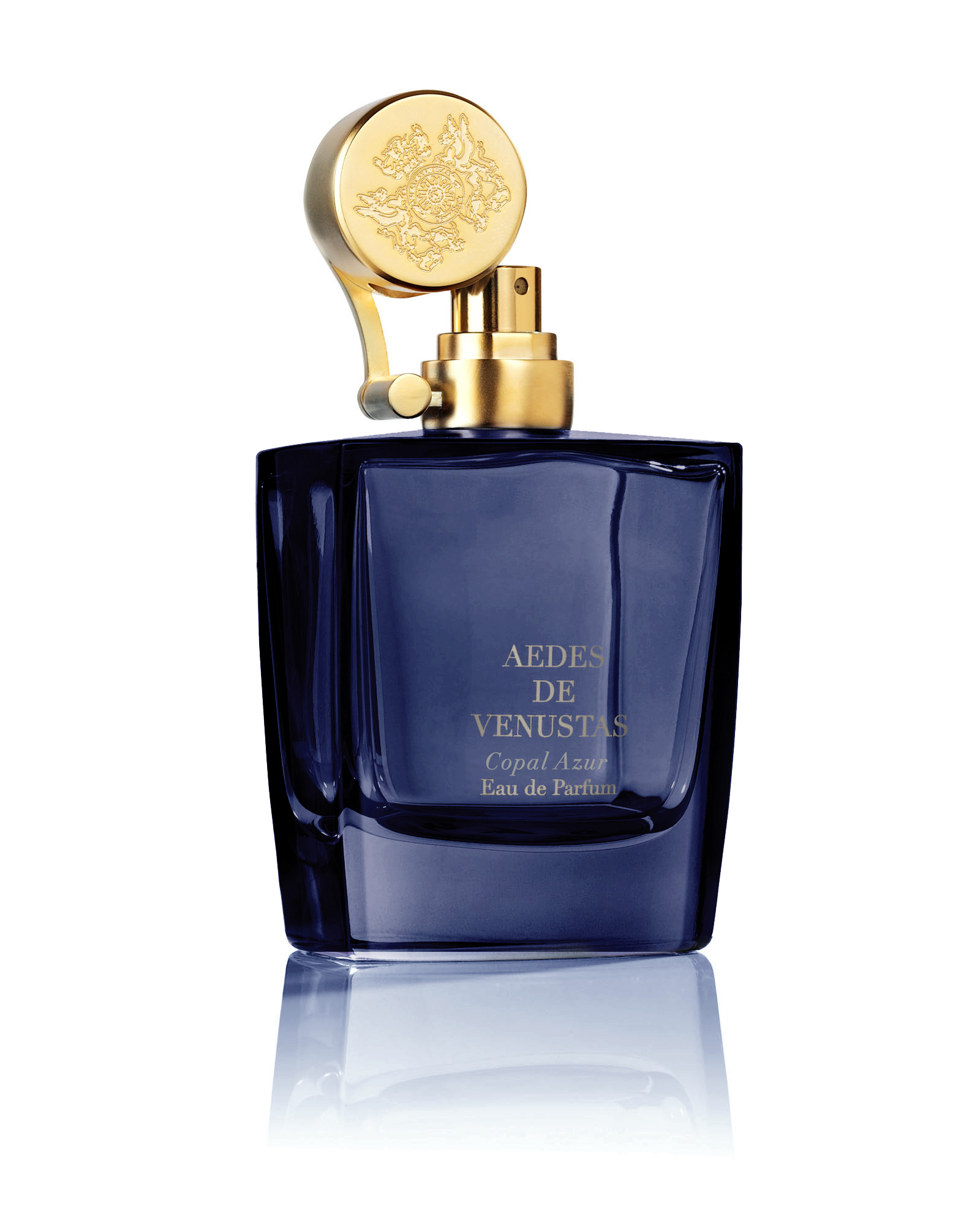
Mayan incense burned in centuries-old temples. Caribbean breezes laden with sea spray. Scents of the jungle where the jaguar prowls… Lush and mysterious, Copal Azur captures the spirituality of the sacred city of Tulum.
A muse: Copal, Mayan incense
With a scent very similar to incense or frankincense – its name means “incense” in Nahuatl – copal resin can be extracted from various species of tree native to Central America. And like incense in ancient Egypt and Greece, the Mayas and Aztecs once burned it to “feed” the gods. In Mexico, it is still used today for spiritual purposes. Karl Bradl discovered it in the Yucatan, cycling through air saturated with copal smoke towards the Sian Ka’an nature reserve, whose name means “The Gates of Heaven”. His inspiration is confirmed by the suave wisps on the terrace of Casa Jaguar in Tulum, an eco-chic seaside village at the foot of an ancient Mayan citadel.
A fragrance: Copal Azur
Just as the Mayan citadel overlooks the tropical paradise of Tulum, an incense cliff – steep, mineral, woody – dominates the olfactory landscape of Copal Azur. As copal resin is not on the perfumers’ palette, three different frankincense extracts are used to evoke it in the head, heart and base notes: they account for 30% of the formula.
The shimmering colors of the Riviera Maya filter through the milky wisps of this pine-scented smoke. Blue, for the Caribbean Sea and the limpid depths of the cenotes, natural underground pools that riddle the Yucatan: a fresh breeze of ozonic and salty notes. Green, for the lush Mexican jungles: a burst of cardamom piercing humid thickets of myrrh and patchouli. White,
for the purest quality of Copal and the pristine beaches of Tulum: a touch of almondy tonka bean mingled with creamy notes. Amber, for the Jaguar God of Fire – the fire that burns the sacred copal… Hypnotic, spiritual and powerful, Copal Azur could indeed open the “Gates of Heaven”.
A house: Aedes de Venustas
A baroque boudoir in the heart of Greenwich Village, Aedes de Venustas is a mecca for New York perfume connoisseurs. Since 2012, it has also been a perfume house that strongly affirms the aesthetic choices asserted by its co-owners, Karl Bradl and Robert Gerstner.
A vision: to bring perfume back to its origins by projecting it into the future
Frankincense is the olfactory thread running through this collection. Burned for millennia as an offering to the gods, it harks back to the very origins of perfumery, since the word “perfume” comes from the Latin per fumare, “by smoke”. In Aedes de Venustas Eau de Parfum, Bertrand Duchaufour twists this incense cloud with a rhubarb accord. Ralf Schwieger veils a mystical flower, Iris Nazarena, in dark wisps. Rodrigo Flores-Roux ignites it with exotic spices in Carnation Bengal. Today, Bertrand Duchaufour does it again, infusing it with sea spray and jungle scents…
A perfumer: Bertrand Duchaufour
For aficionados, Bertrand Duchaufour is a star whose unusual, deeply personal compositions have earned him a reputation for artistic integrity. One of the few classically-trained perfumers to work independently, he collaborates with Accords et Parfums, a company based in Grasse, where his compositions are produced by hand. A keen traveler and collector of primitive arts, he has made incense his signature: his Avignon for Comme des Garçons in 2002 was one of the very first fragrances to focus on this theme. In 2008, Karl Bradl and Robert Gerstner, equally obsessed with frankincense, called on him to create the first fragrance for Aedes de Venustas, produced with L’Artisan Parfumeur. He composed their brand’s first creation in 2012.
With Copal Azur, his third collaboration with the house, he takes incense out of the church and into the jungle…
COPAL AZUR Eau de Parfum
Recommended retail price €195 (100 ml bottle)
Spray bag and refills €150 (3×10 ml)
Cette publication est également disponible en :

