
With Minerva, NVIDIA wants to link technical alerts to the work AI infrastructure actually performs. The announced gain remains to be distinguished from a measured result.
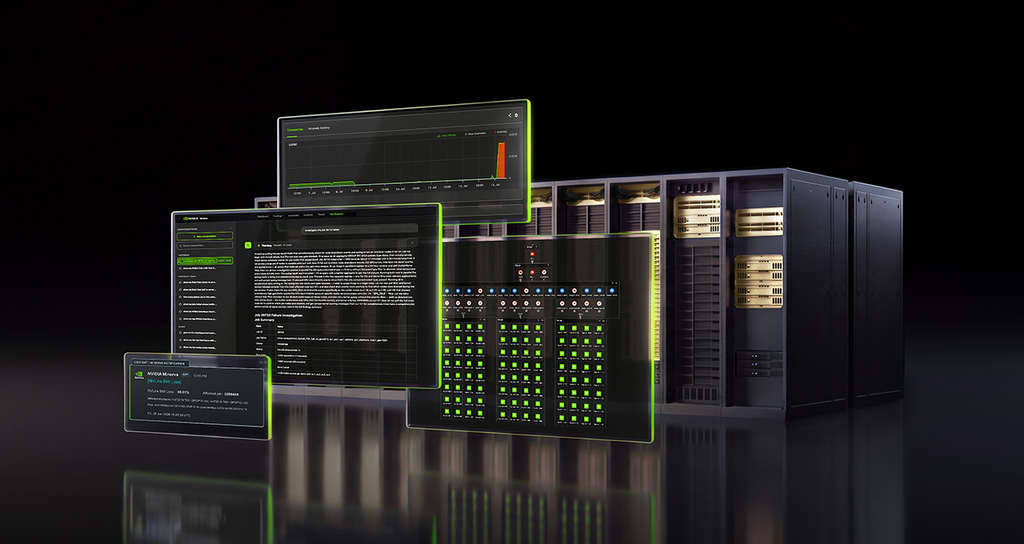
A slowed component can affect an entire computing job. NVIDIA presents Minerva, launched on 22 October, as a way of recovering these relationships between machines and workloads. The platform gathers measurements from GPUs, networks, storage and the software that distributes tasks.
According to NVIDIA, a knowledge graph represents these connections. The system correlates anomalies and can turn a multitude of alerts into a single incident with a probable cause. Its assistant then suggests corrective steps. Teams can keep execution manual or connect Minerva to automation tools.
From the component purchased to the service rendered
For a house that uses AI through a provider, this subject seems remote from creation. Yet it touches an ordinary question of service quality: what happens when an operation slows down, fails or has to be started over? A computing invoice does not by itself describe the work ultimately obtained.
Observability here means the ability to understand the state of the system from its measurements. It can help a customer ask for explanations about an interruption, provided the contract specifies which indicators will be shared with them. Nothing in the announcement guarantees this access for end customers.
Correction remains an operating choice
NVIDIA cites IREN among Minerva’s users, without publishing a quantified before-and-after comparison. It would therefore be premature to infer a specific saving from it, still less an environmental reduction.
The documented point is the possibility of separating diagnosis, recommendation and execution. To evaluate a provider, a house could ask for an example of an incident tracing these three stages, with the person responsible for the decision. That record would be more instructive than a general promise of availability.
Sources — editorial verification
NVIDIA Unveils Minerva to Bring End-to-End Observability for AI Factories — 22 October 2026. Consulted on 26 October 2026.
Also on Luxsure: Team Bots: deciding what a team can pool · Claude Sonnet 5.5: cost also depends on the work requested · Mistral in Munich: bringing research closer to industrial knowledge · GPT-6.1 Sol: what the price of reused context changes
Cette publication est également disponible en :


