
Until 18 October, Boucheron is showing more than eighty creations in New York, in the Christie’s galleries. The lists of pieces give a fact the exhibition does not put forward: the old jewels almost all come from the House’s own collection.
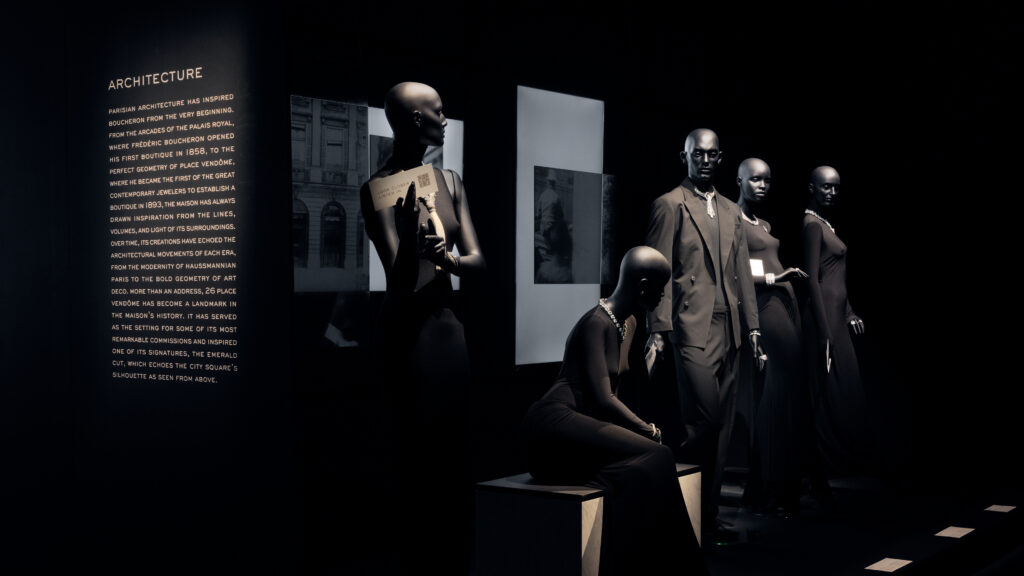
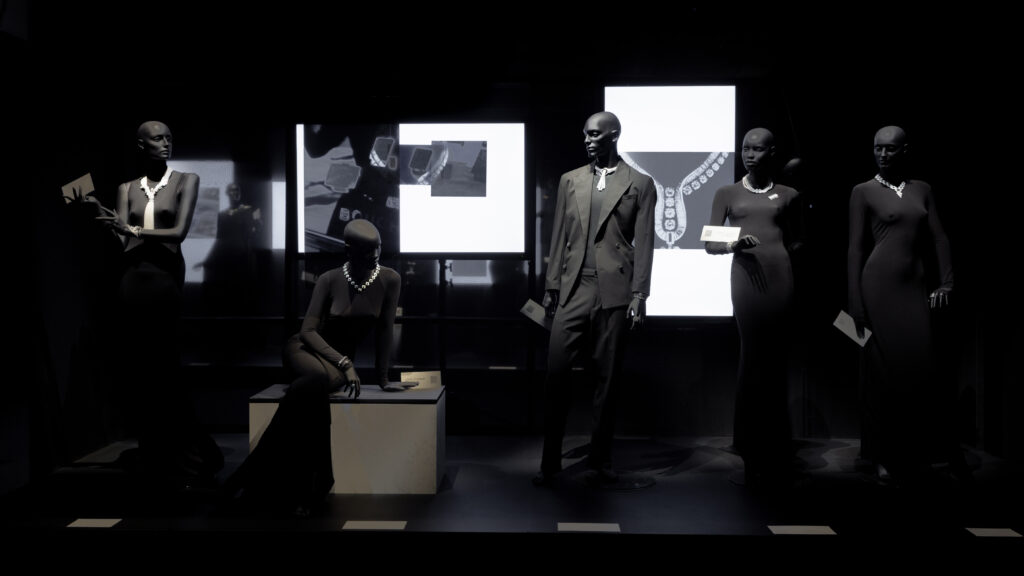
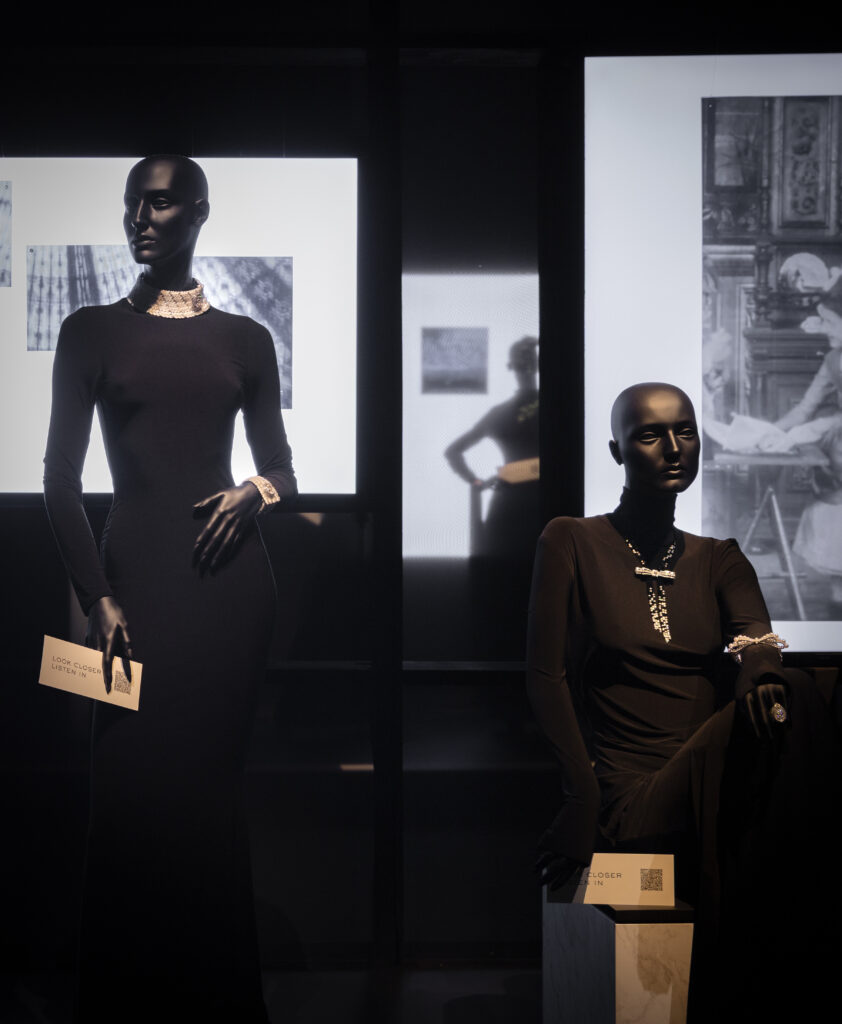
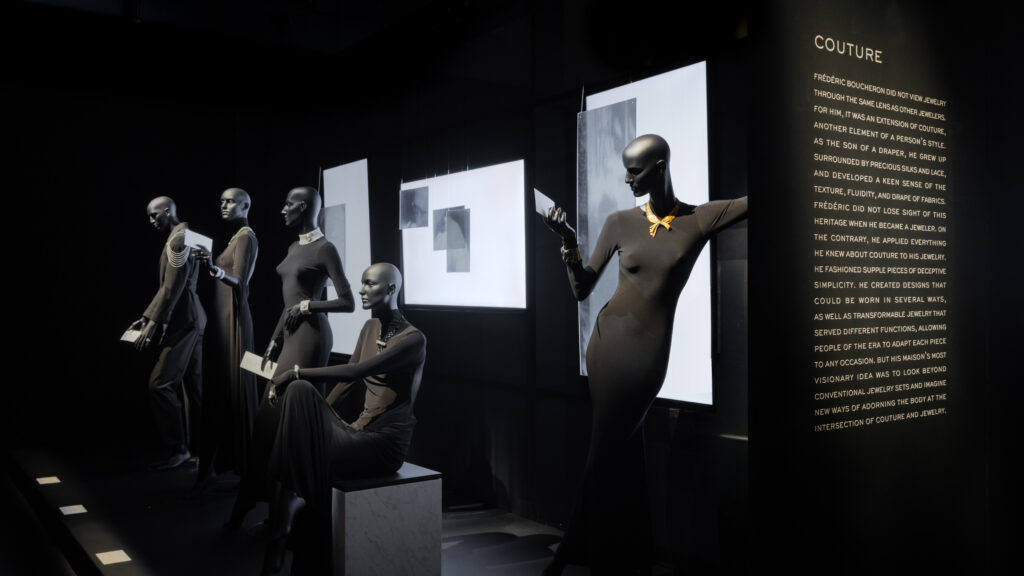
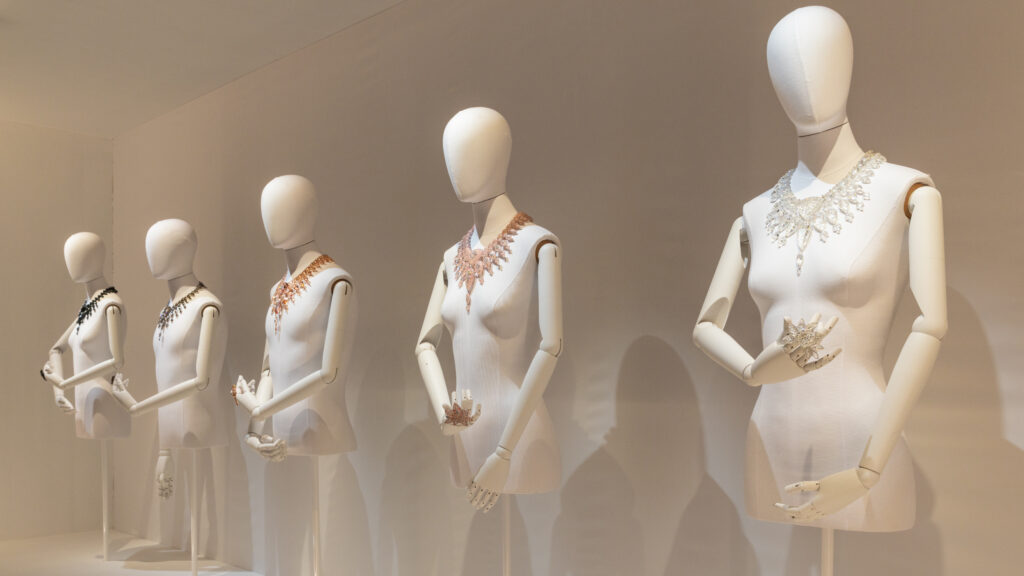
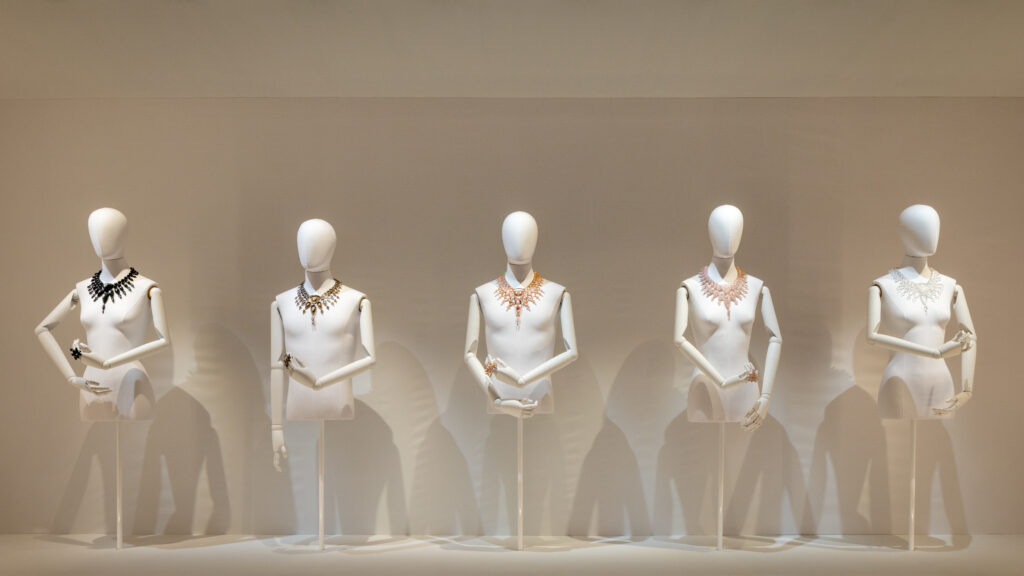
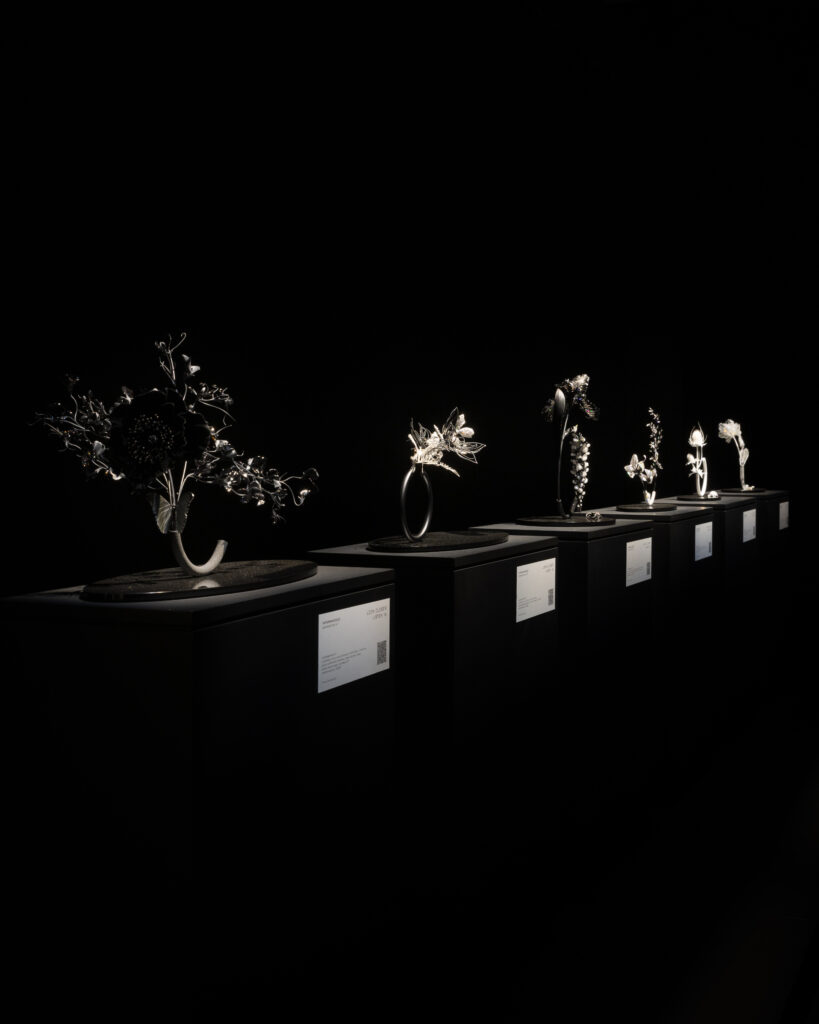
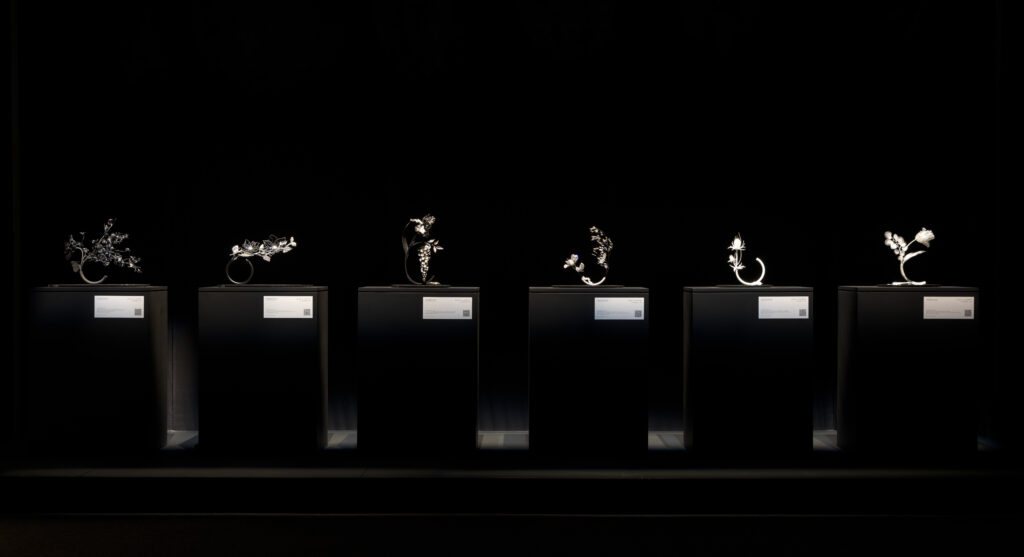
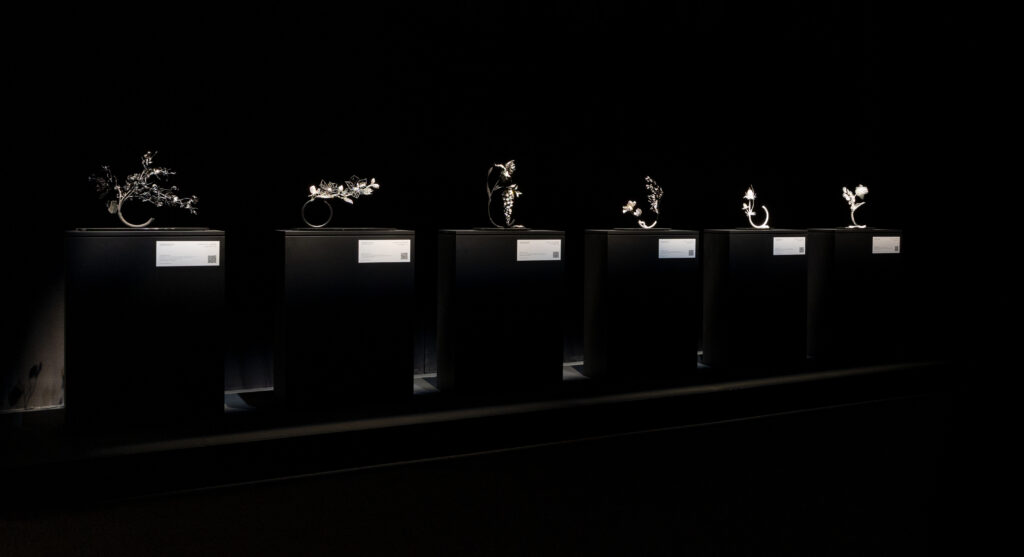
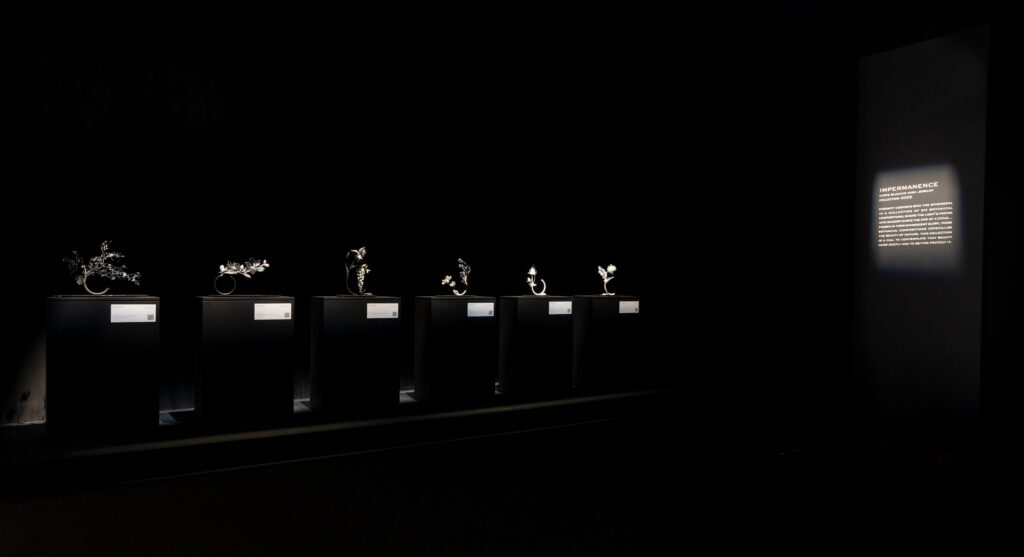
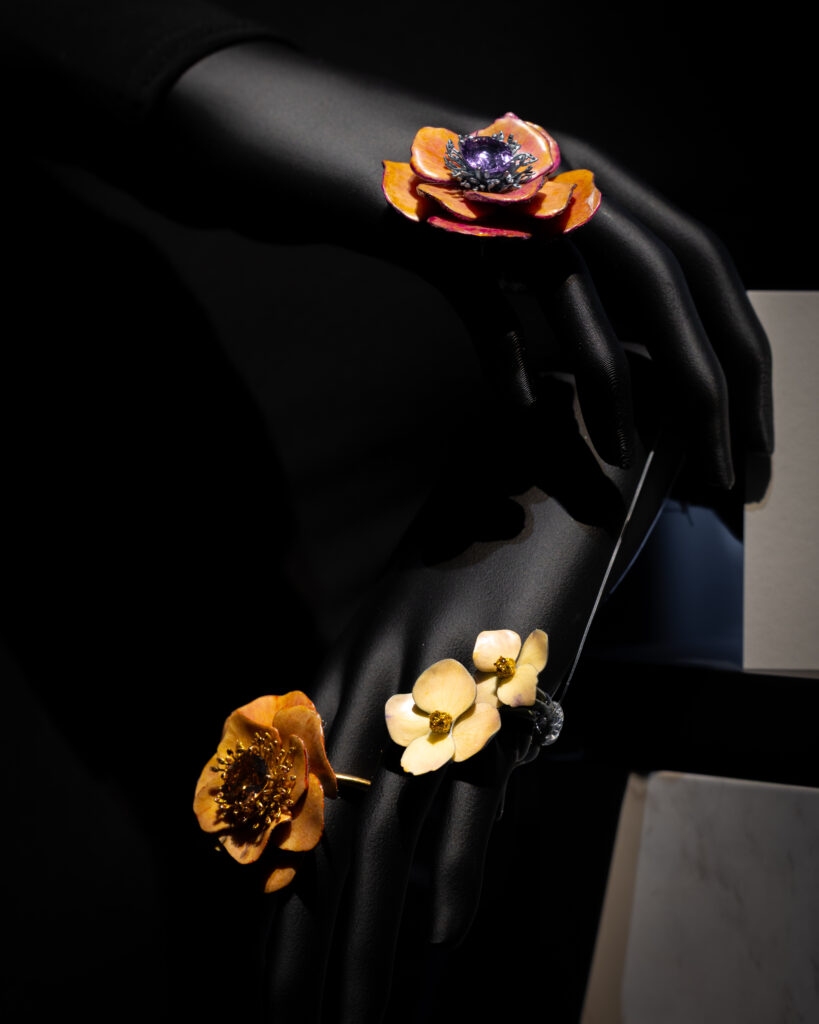
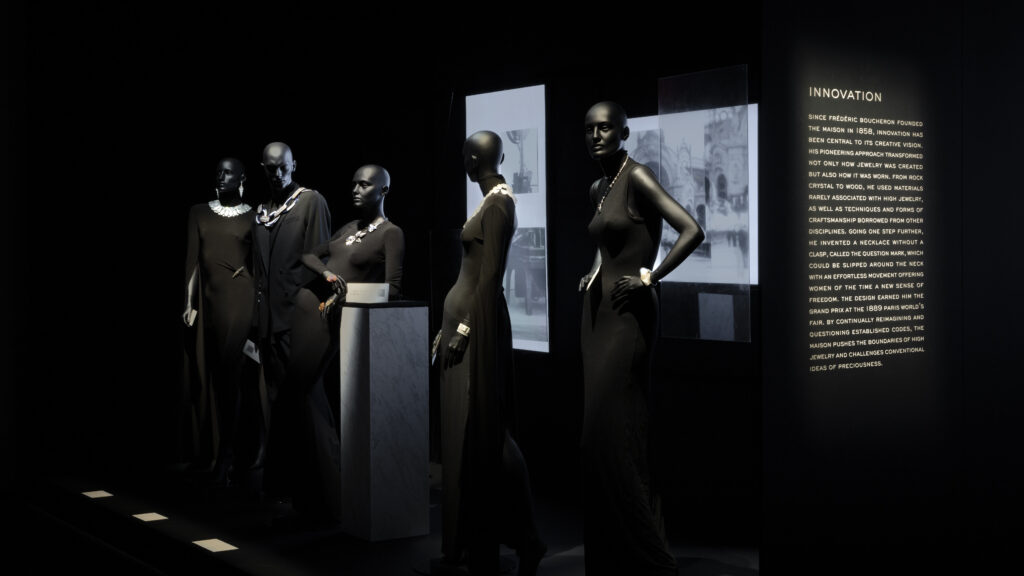
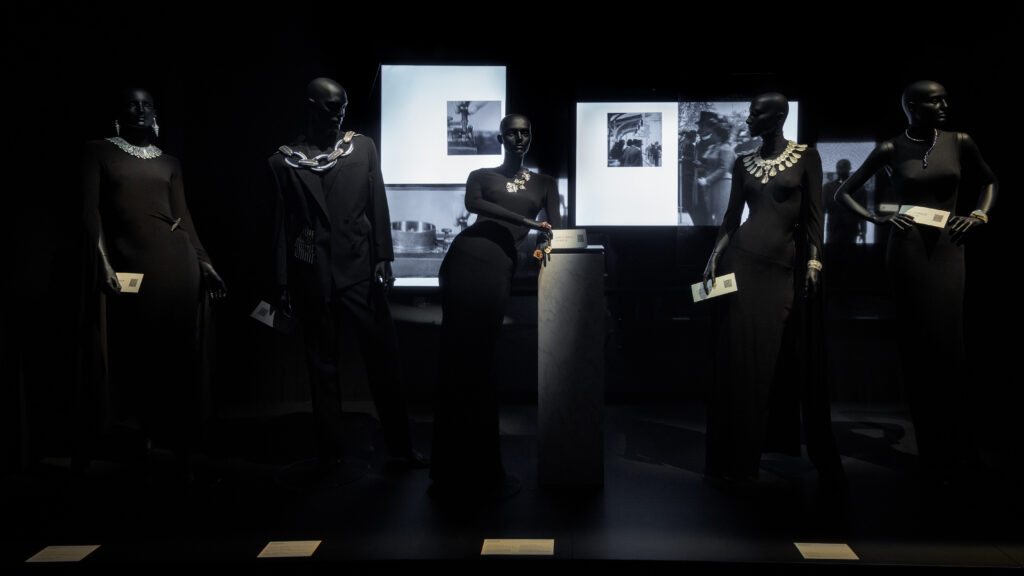
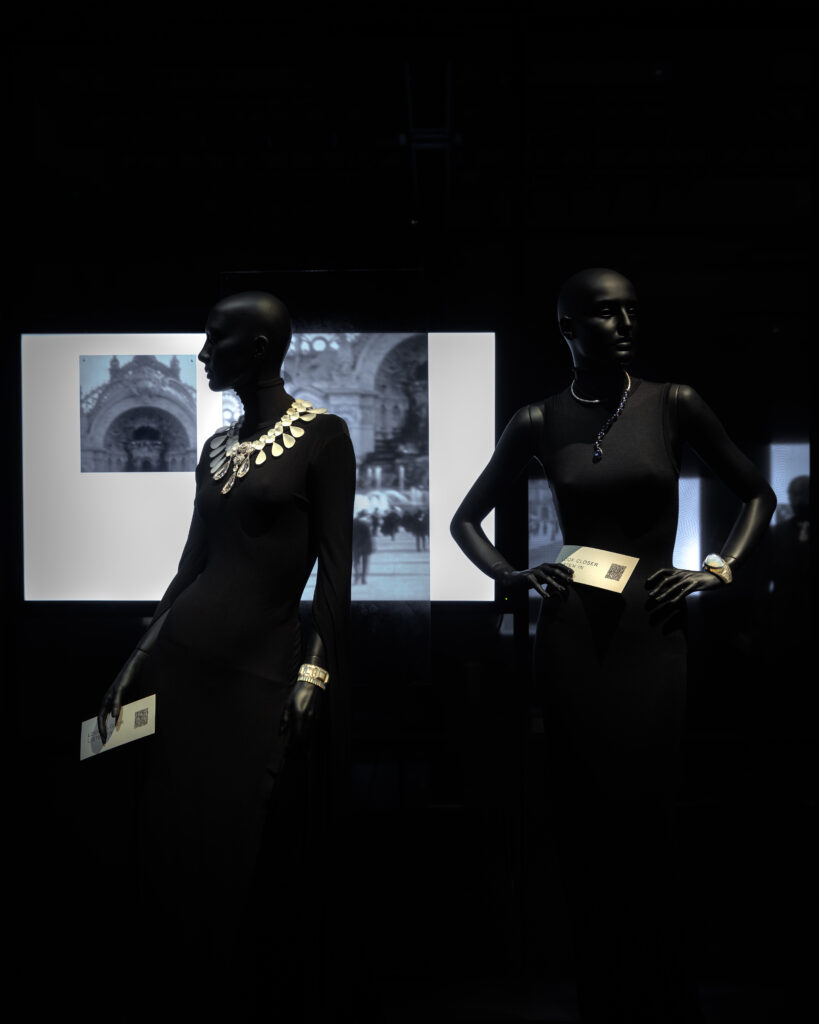
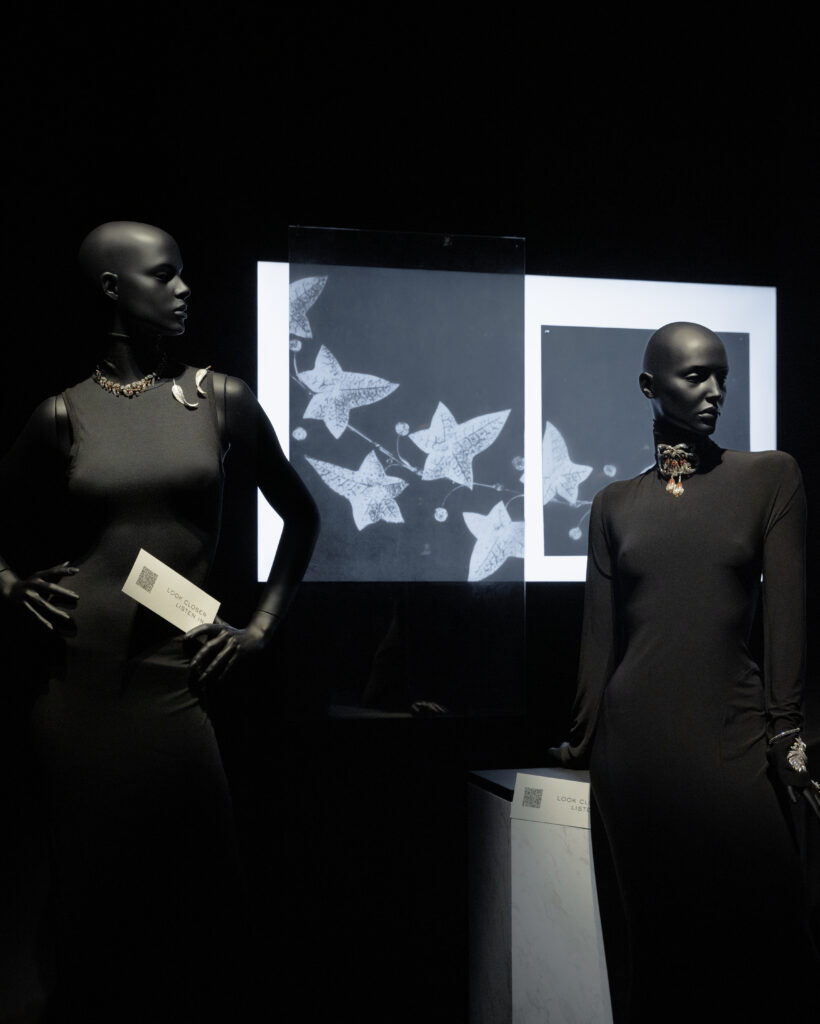
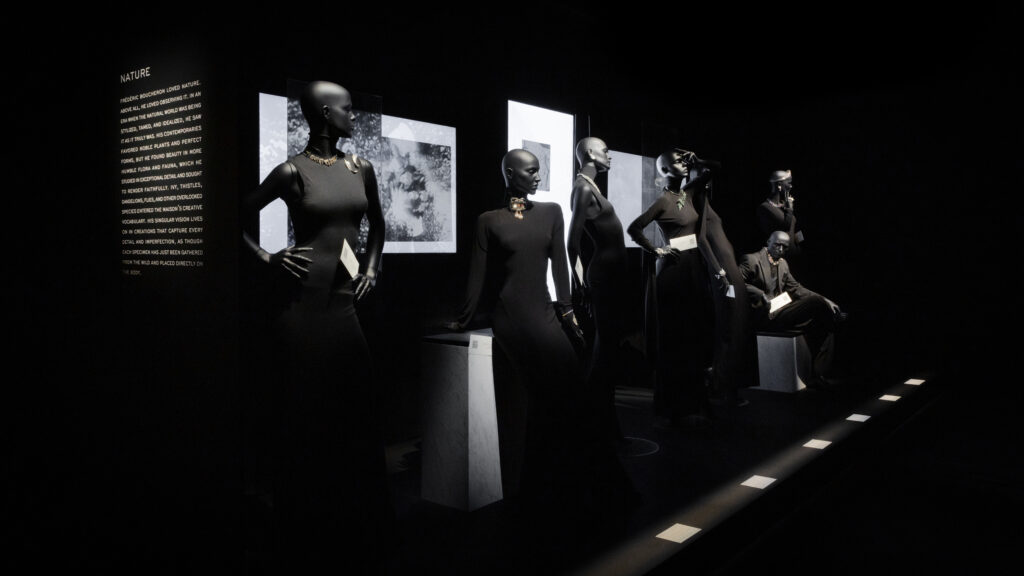
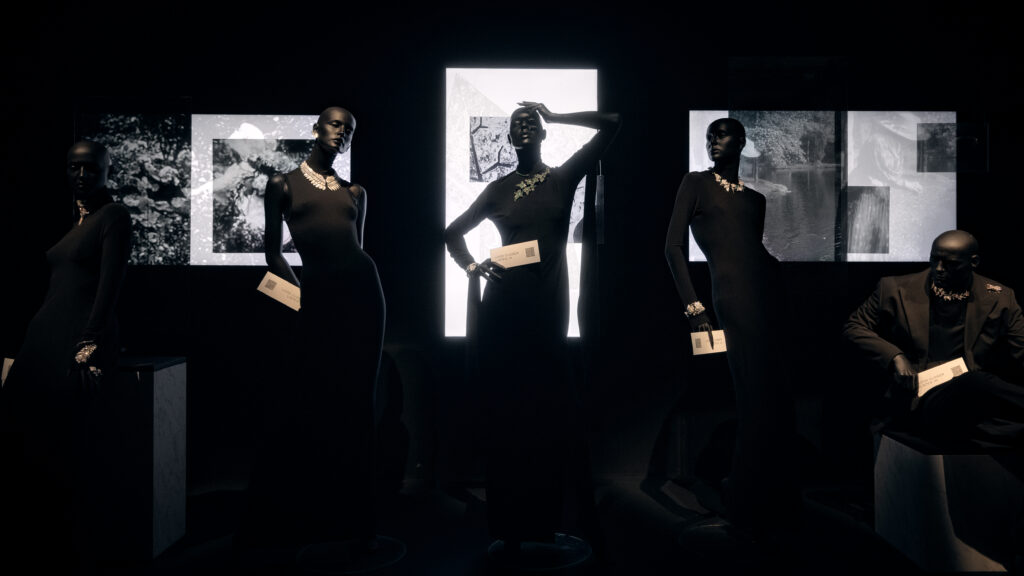
Boucheron: In Focus – A Monograph of a Visionary has been open to the public since 9 October, in the Christie’s galleries at Rockefeller Center. Rather than a chronology, the House has chosen four chapters: architecture, nature, couture, innovation. One room is reserved for Impermanence, the 2025 Carte Blanche by Claire Choisne, creative director. The 2026 Carte Blanche, Human Being, launched in Paris in July, is shown for the first time in the United States.
The context is American. According to the House, clients from the United States appear in its order books as early as 1865, and Louis Boucheron opened an office in New York in 1903. The first American boutique, on Madison Avenue, dates from 2024: one hundred and twenty-one years separate the office from the boutique. In the House’s press release, Hélène Poulit-Duquesne, its CEO, hopes that visitors will leave thinking that “Frédéric Boucheron’s boldness is still alive in our creations”. This is the House’s official position.
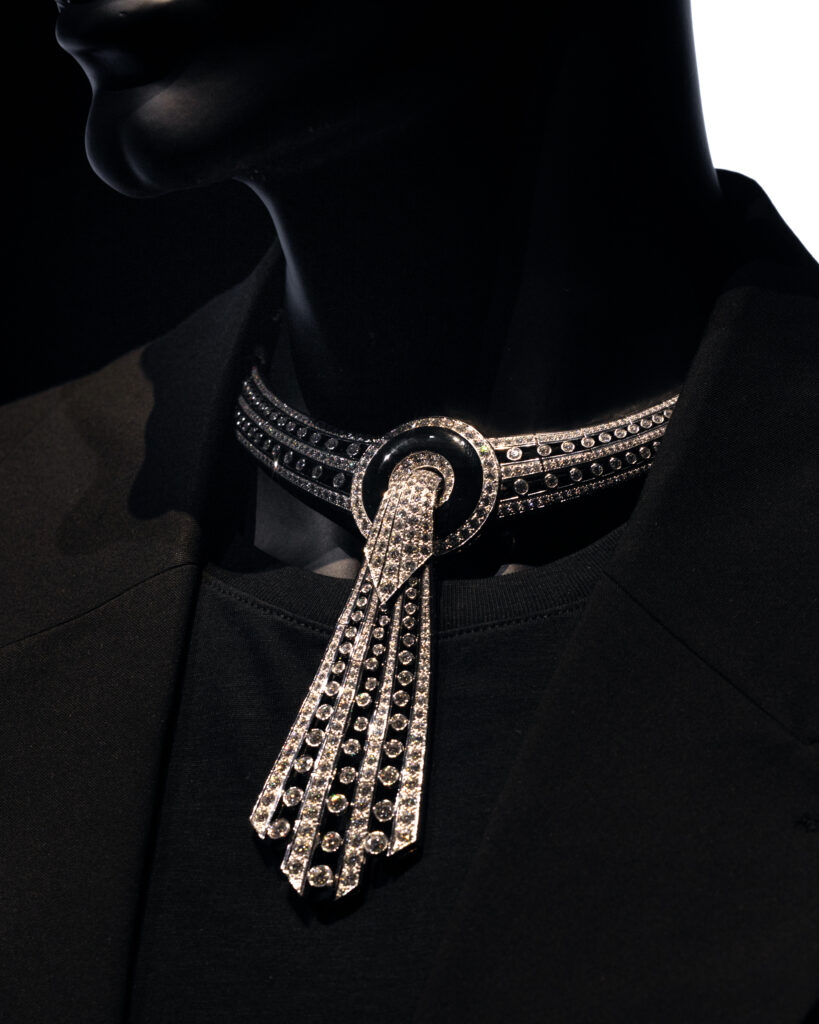
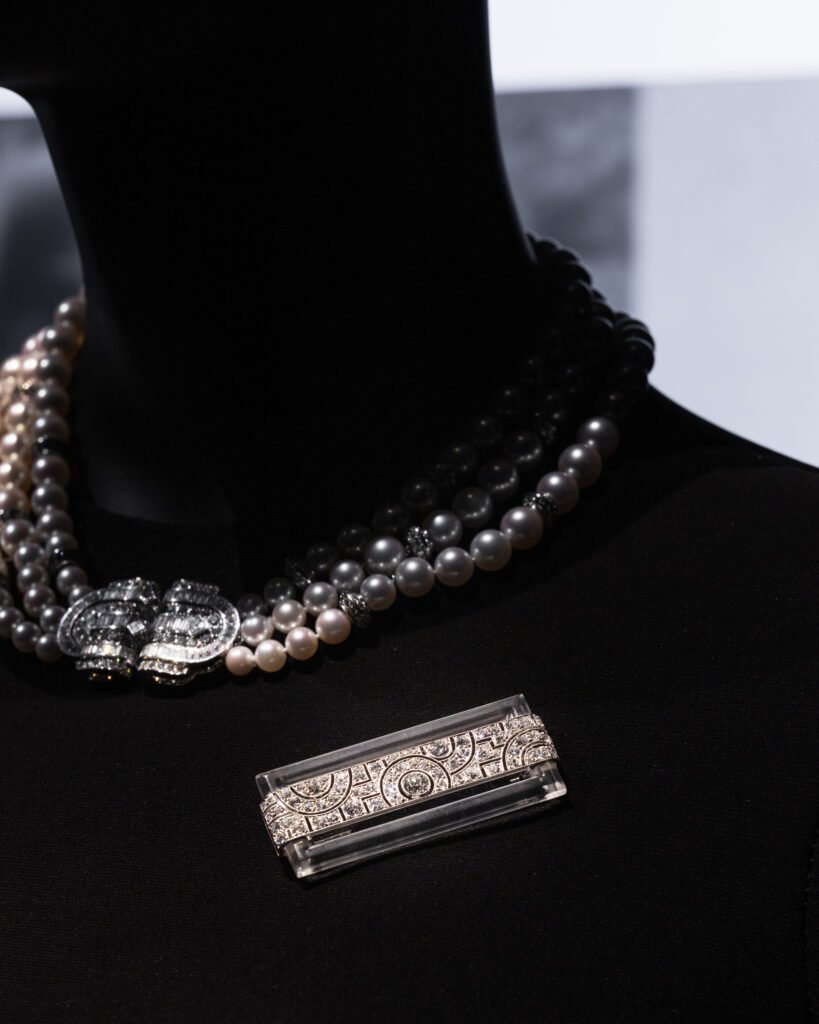
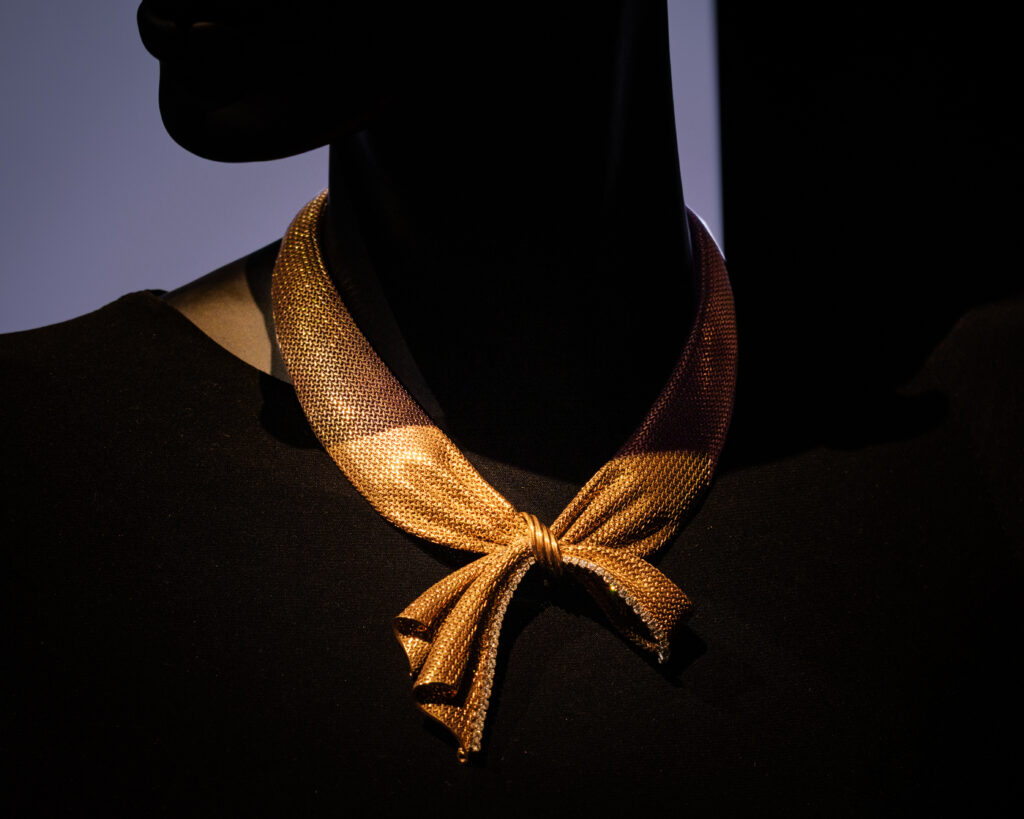
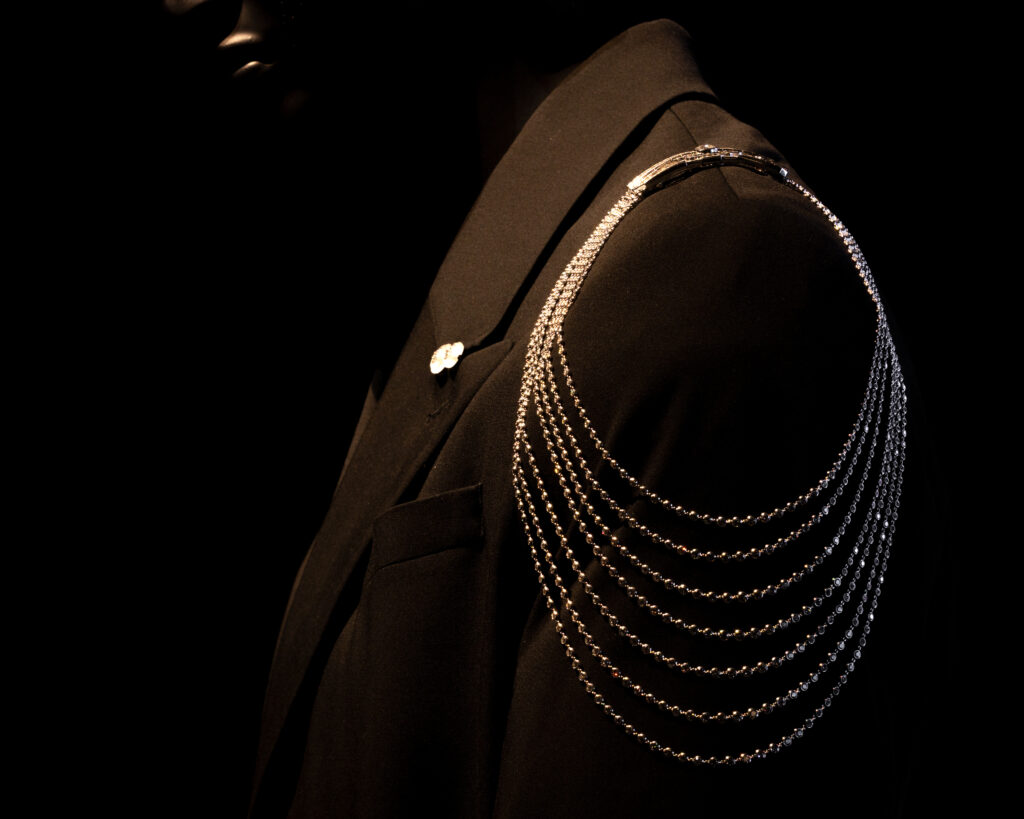
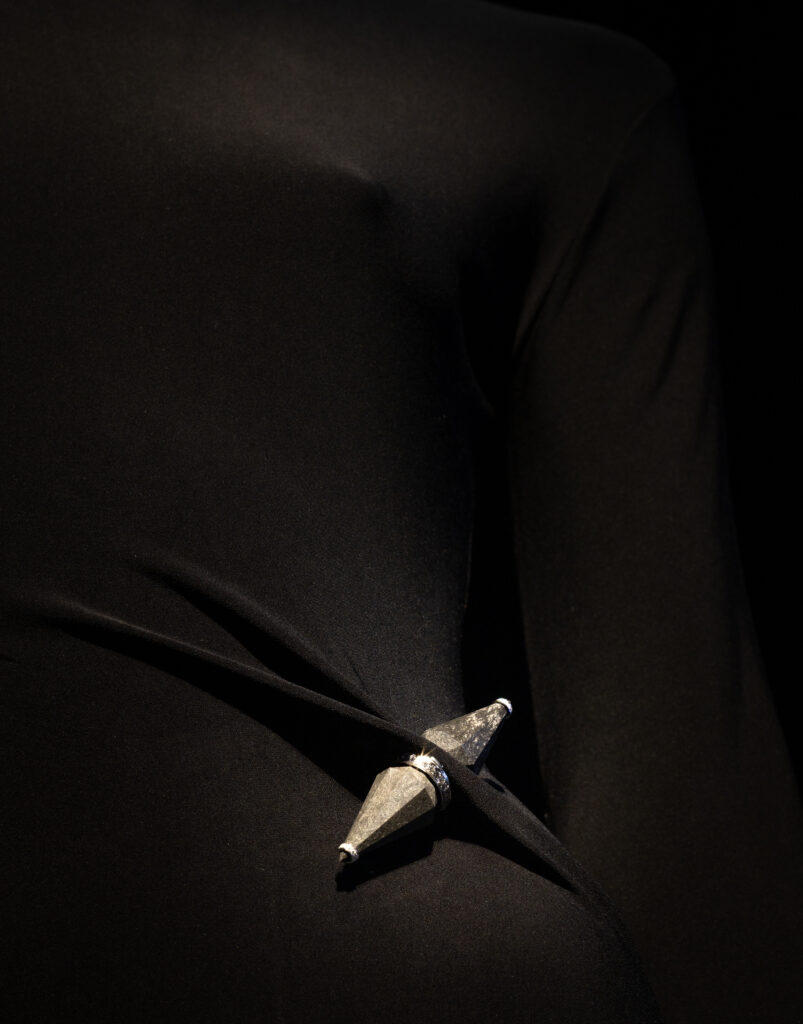
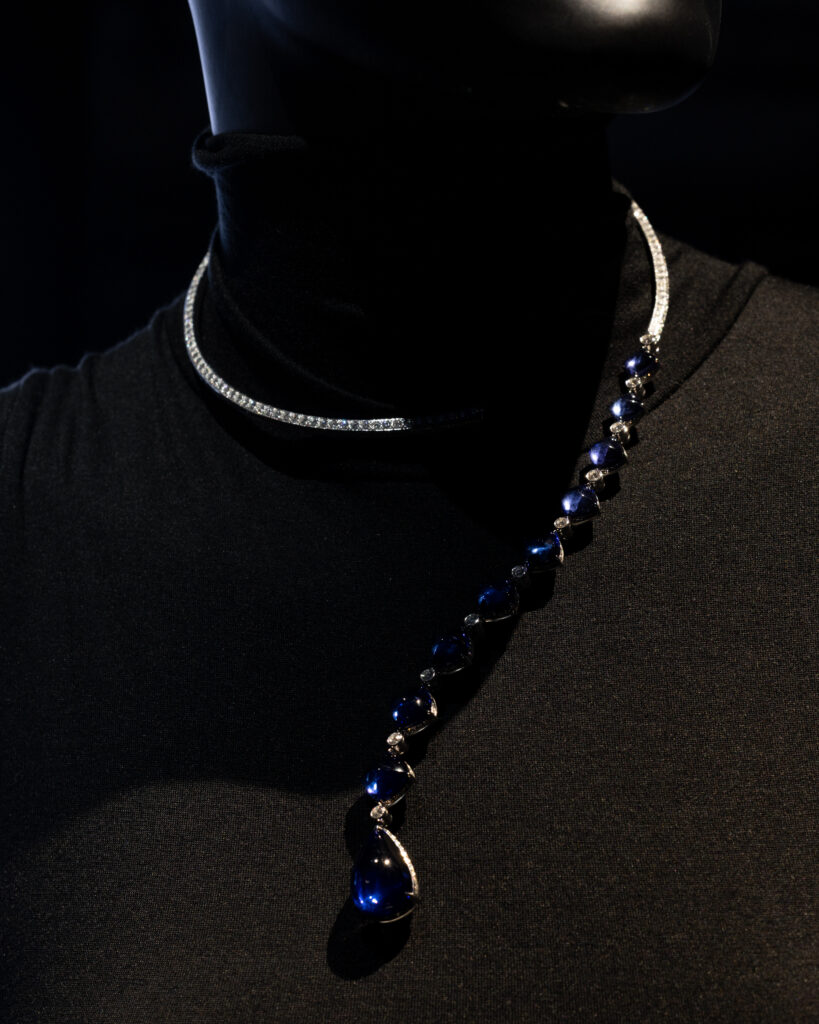
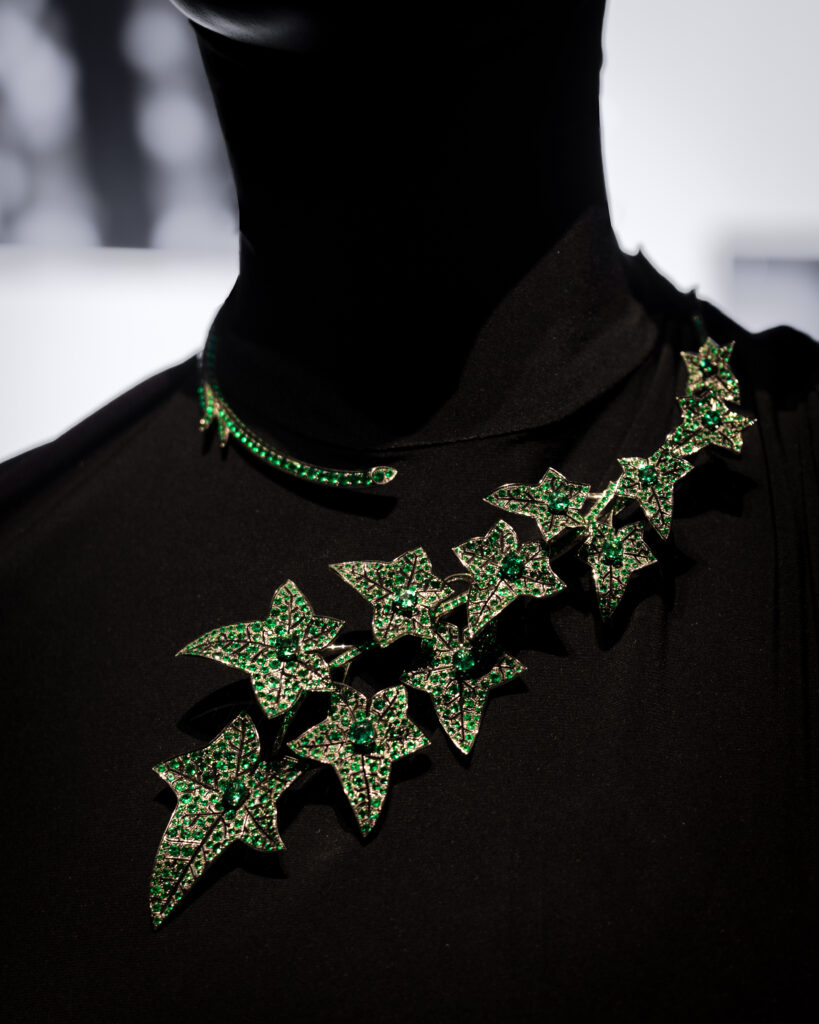
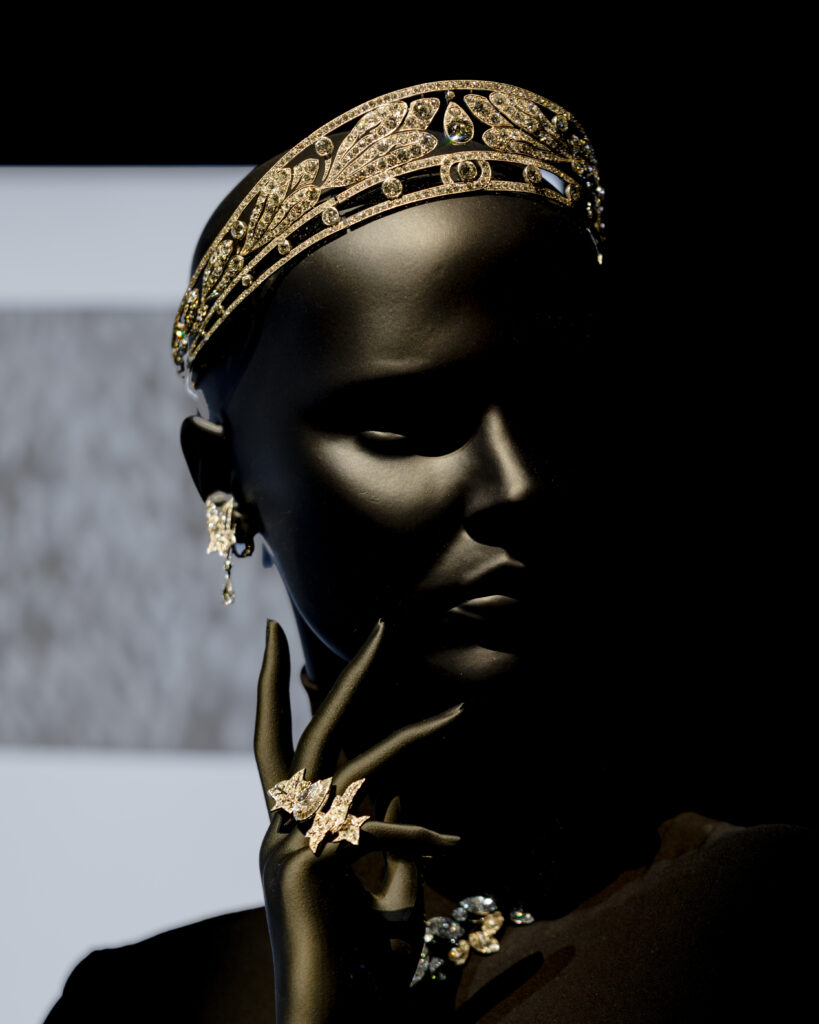
The principle of the exhibition rests on pairs, and the lists give several. A 1925 brooch in white gold, platinum and diamonds faces the Lavallière necklace of 2021, in onyx and black lacquer: Art Deco geometry, taken up by Claire Choisne almost a century later. A 1959 necklace in gold mesh, whose ribbon ties at the front, is continued by Silhouette, a 2026 piece in white gold and diamonds that can be worn in six ways, from necklace to pair of bracelets. A 1924 tiara, in platinum and diamonds, in the shape of a branch, sits alongside the Point d’Interrogation ivy necklace, in white gold and emeralds, which refers back to the first Point d’Interrogation, drawn in 1879.
The tiara has a history of its own. According to the House, it was commissioned by Mary Ethel, Viscountess Harcourt, one of its most loyal clients, as a wedding present for her daughter Doris. More than a century later, it returned to the House and is part of its private collection.
The lists add a detail. With one exception, Mrs. Mackay’s necklace (1888), indicated “private collection” with no further mention, all jewels prior to 1980 are attributed to the Boucheron private collection. They include the Muguet tiara-necklace of 1893, the Lucane brooch of 1889, the pompom bracelets of 1946 and 1952, the Galaxie watch of 1977. The exhibition thus shows a collection that the House has built, and sometimes rebuilt, since the 1924 tiara had left it before returning. The House does not say how: purchase, gift or sale — the difference matters, because a collection is a series of decisions, not an inheritance received.
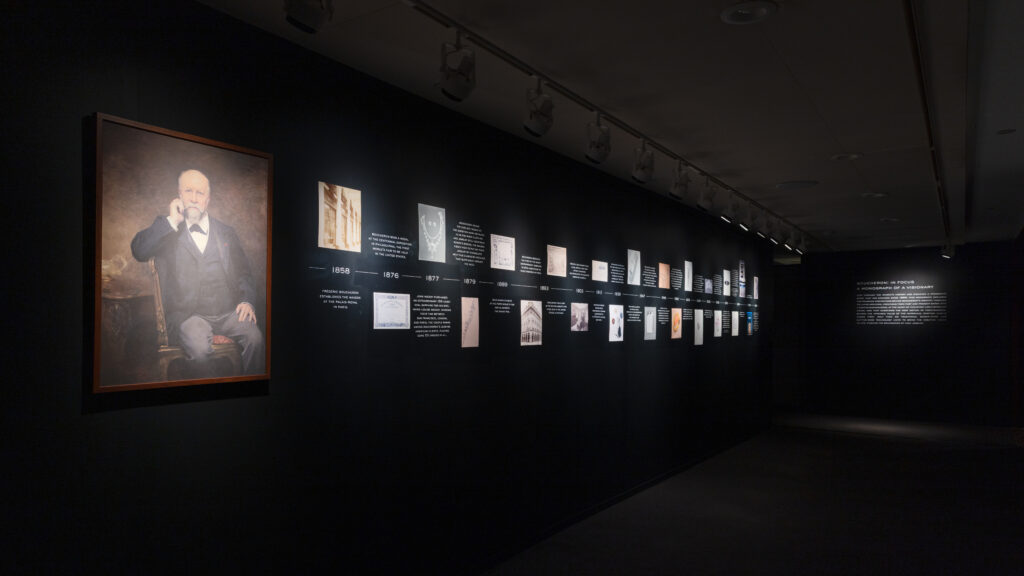
The pairs convince where the lists give a lineage of technique or design: the geometry from 1925 to 2021, the gold mesh from 1959 to 2026. The ivy pair rests more on the motif than on a process. One point remains to be clarified. Hélène Poulit-Duquesne says she wants to show how “a piece from 1858” and a piece of today answer one another, but the oldest dated work in the lists goes back to 1888. This does not prove that no object from the founding is shown, since the entrance frieze does go back to 1858. It says only that the lists do not carry one.
The venue is an auction house, and nothing in the House’s information indicates that the pieces exhibited are for sale. What New York sees until 18 October is therefore a constituted collection. To speak to a clientele that has appeared in its registers since 1865, Boucheron has chosen to show first what it has managed to keep, and to recover.
Detail — Boucheron: In Focus – A Monograph of a Visionary, Christie’s, New York. From 9 to 18 October 2026. Thursday–Saturday: 10 am–5 pm; Sunday: 1 pm–5 pm; Monday–Wednesday: 10 am–5 pm.
Cette publication est également disponible en :


