
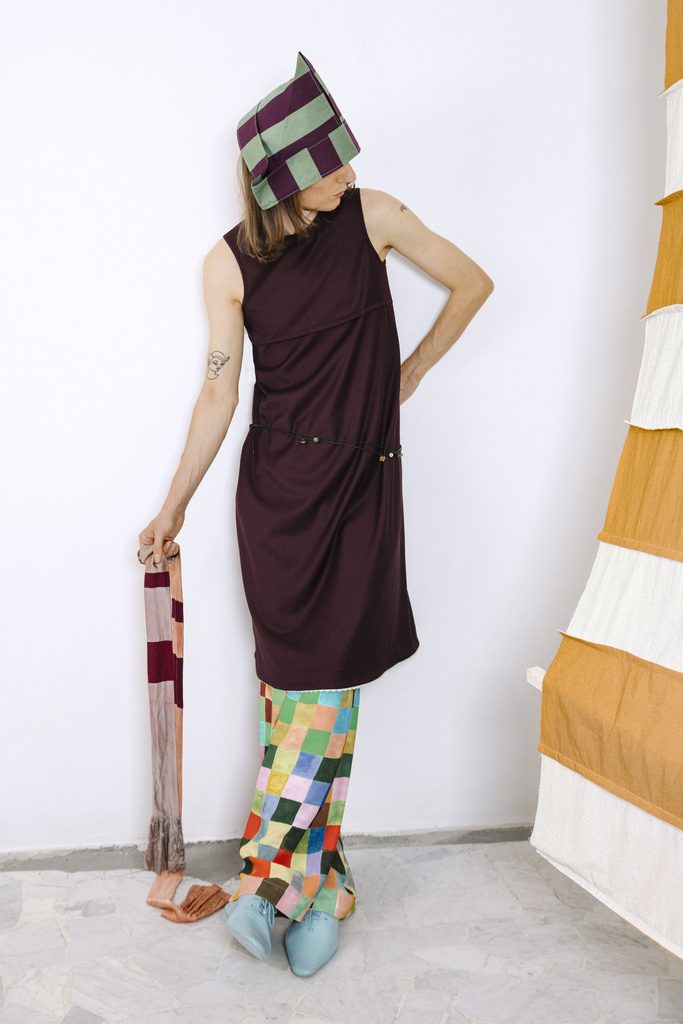
“When it’s gone, it’s gone”: the phrase, signed Arthur Arbesser, sums up the production logic behind his Fall/Winter 2026-27 collection, called A Revival Collection. A collection built entirely from the house’s deadstock, without exception.
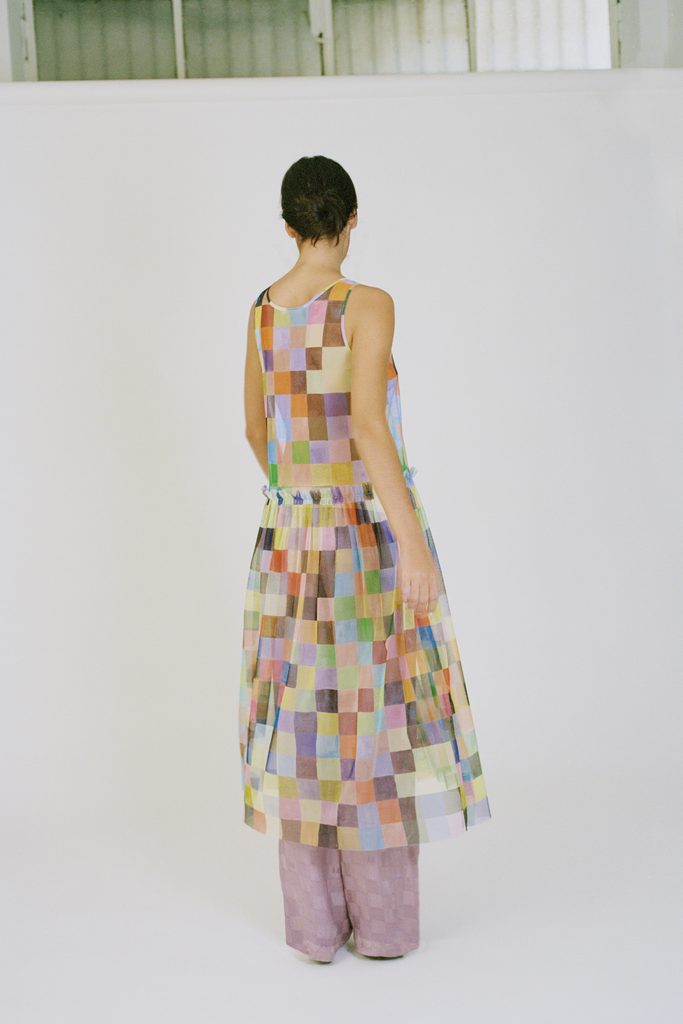
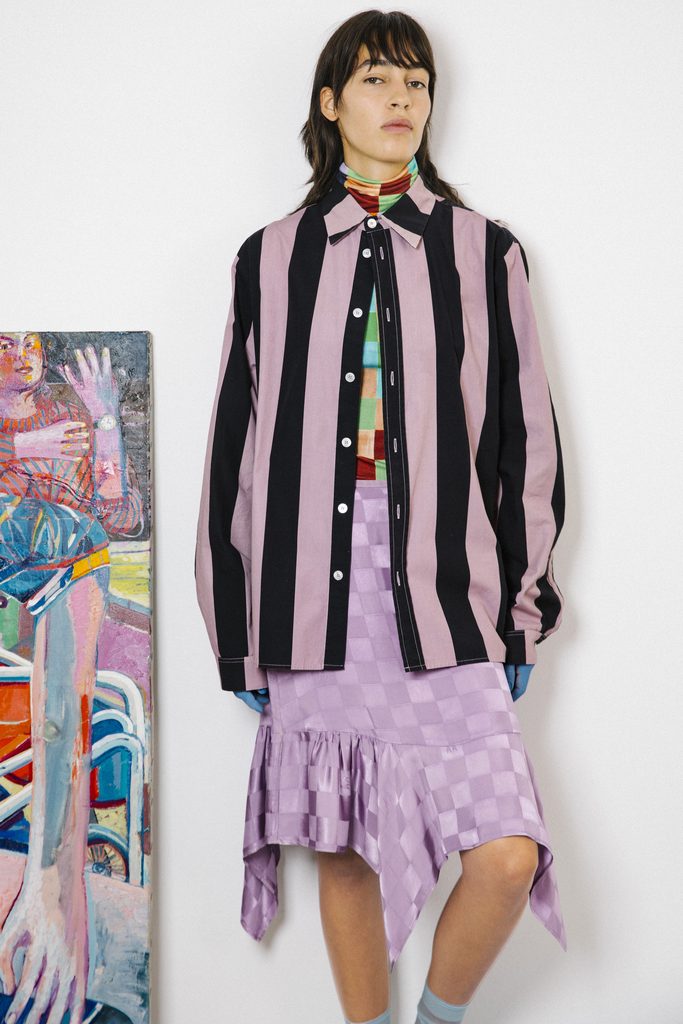
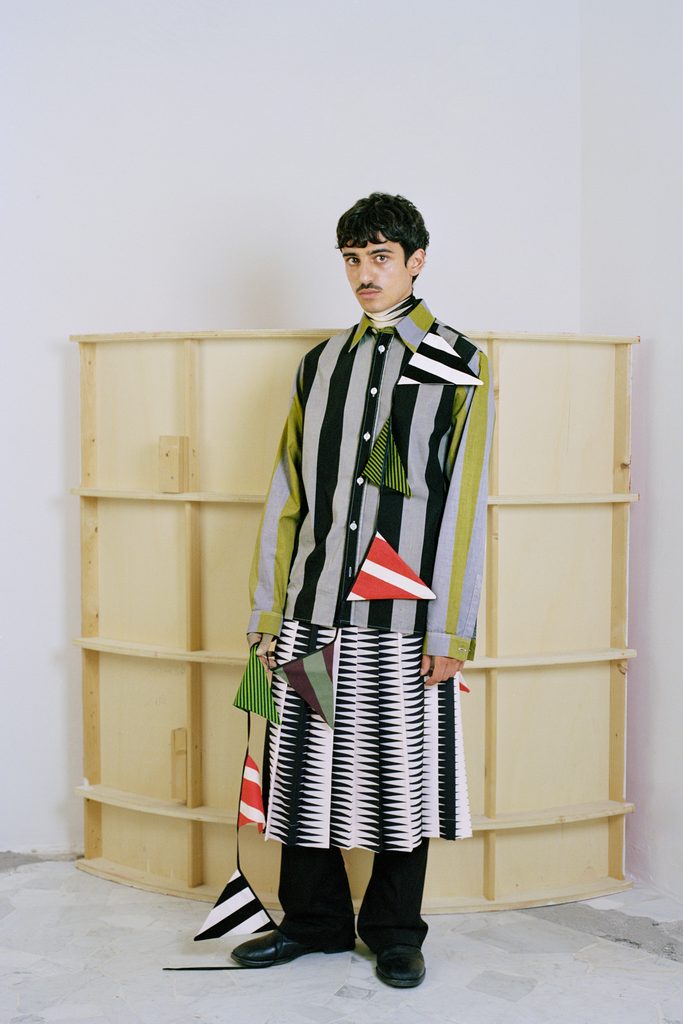
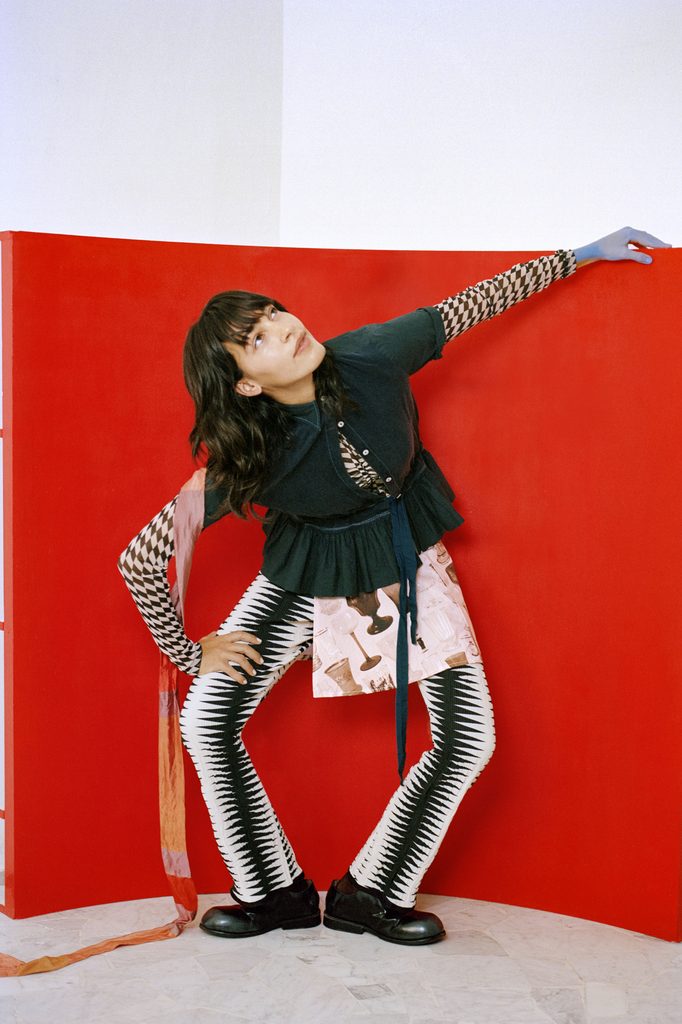
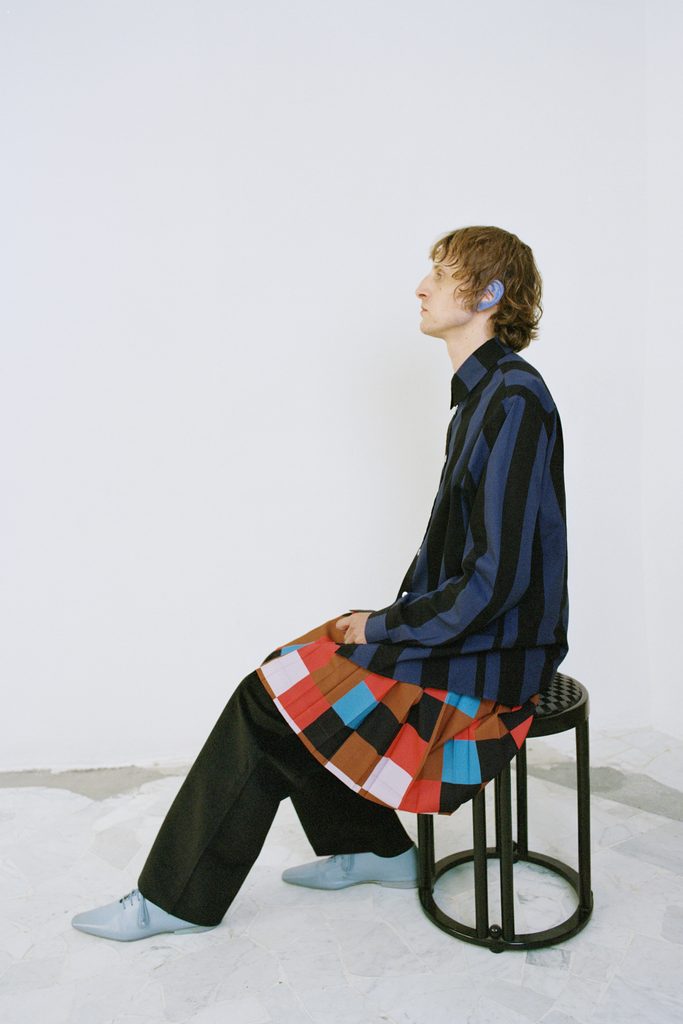
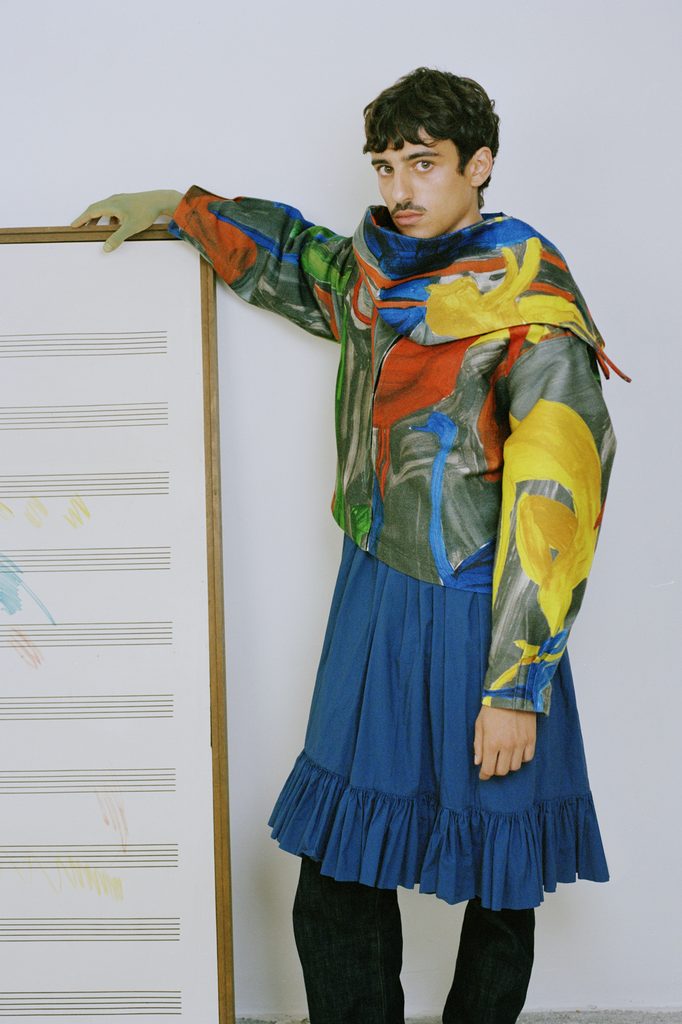
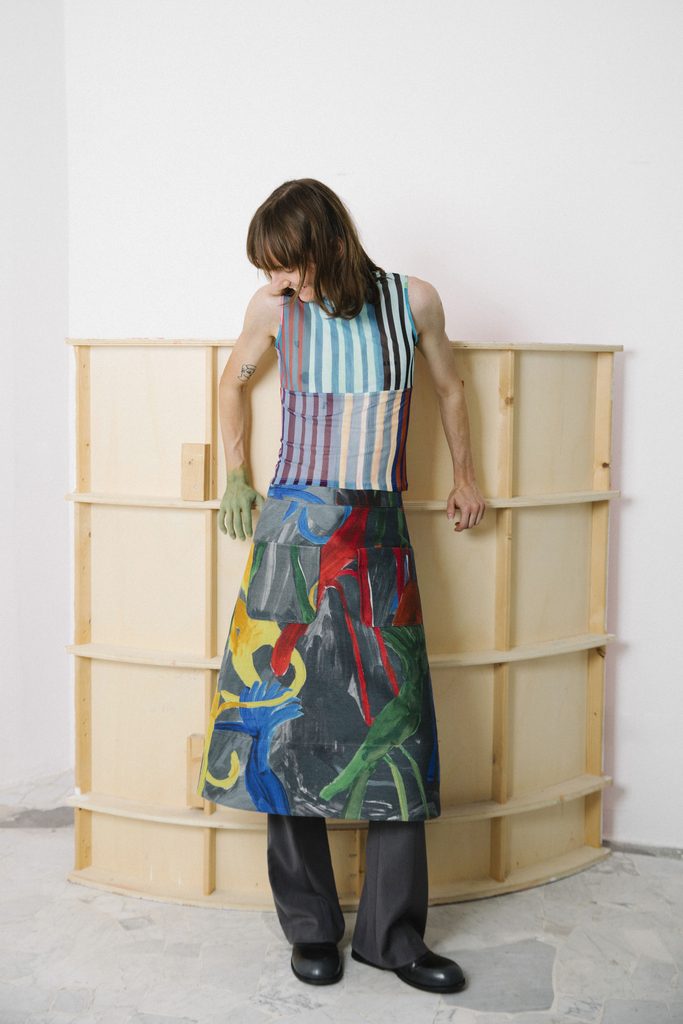
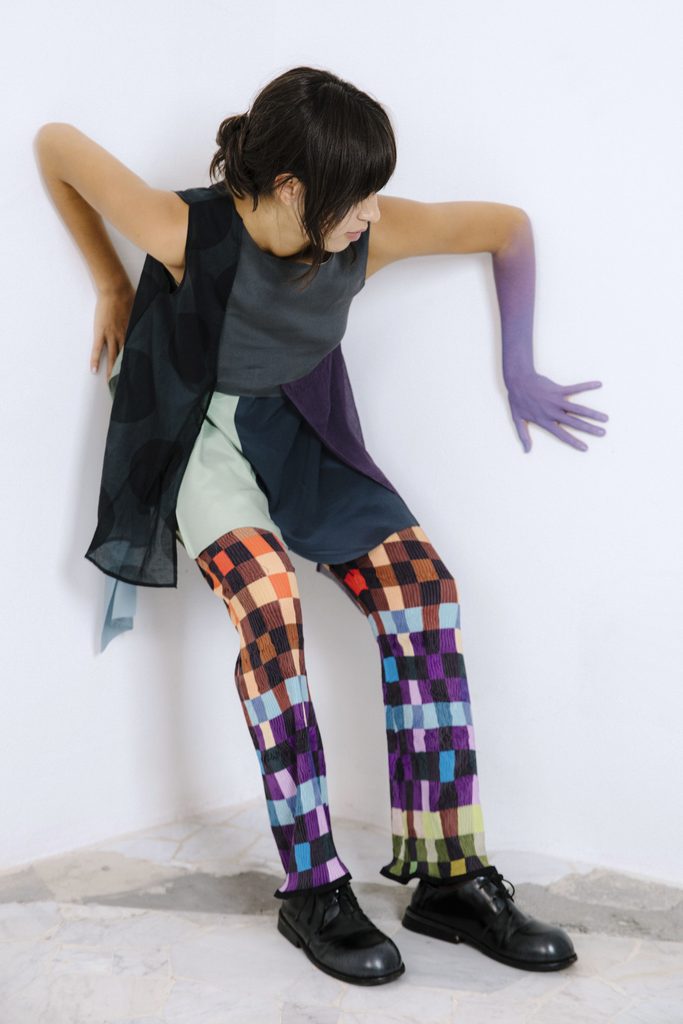
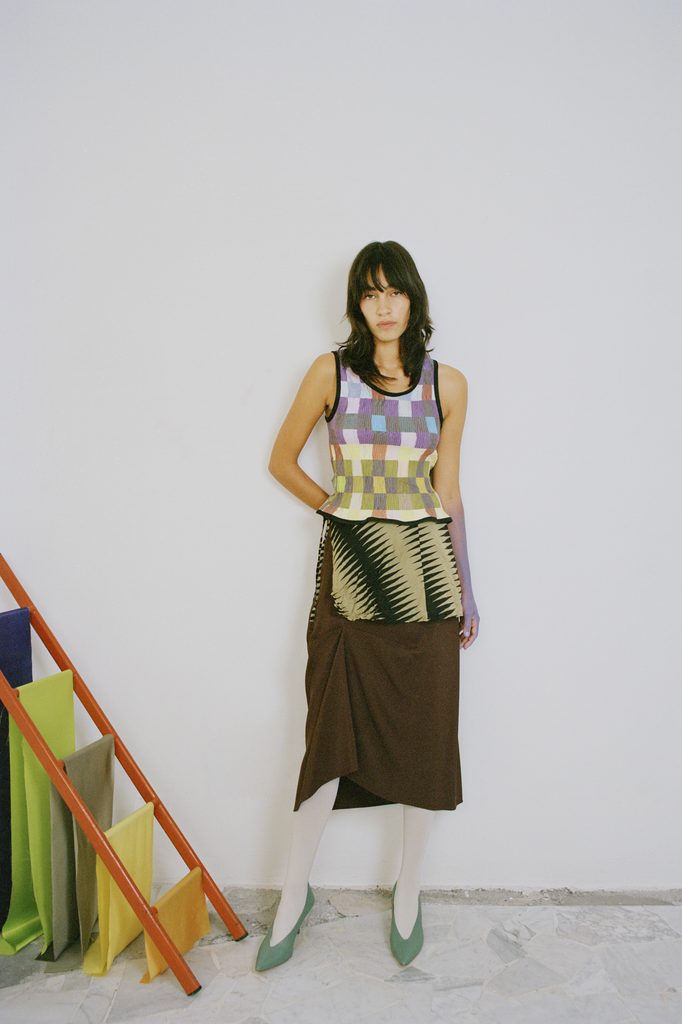
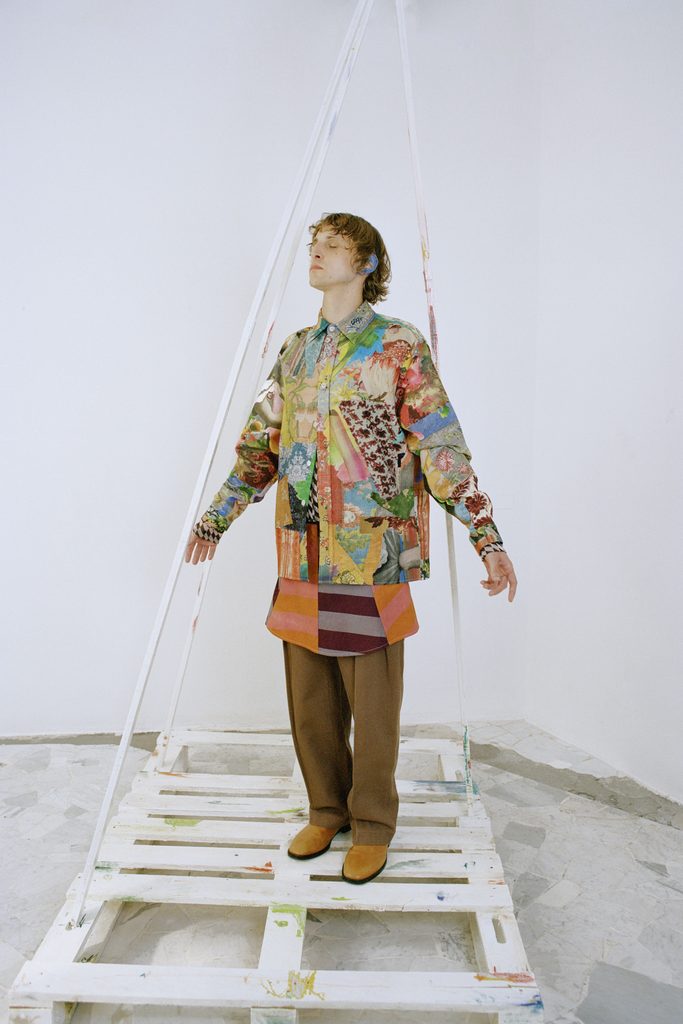
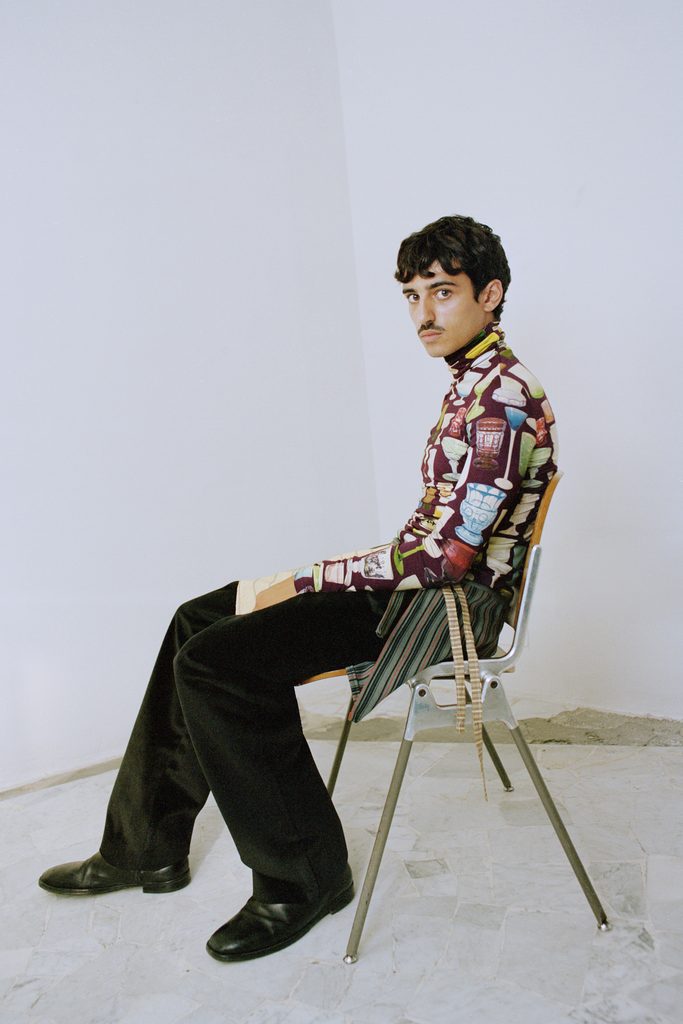
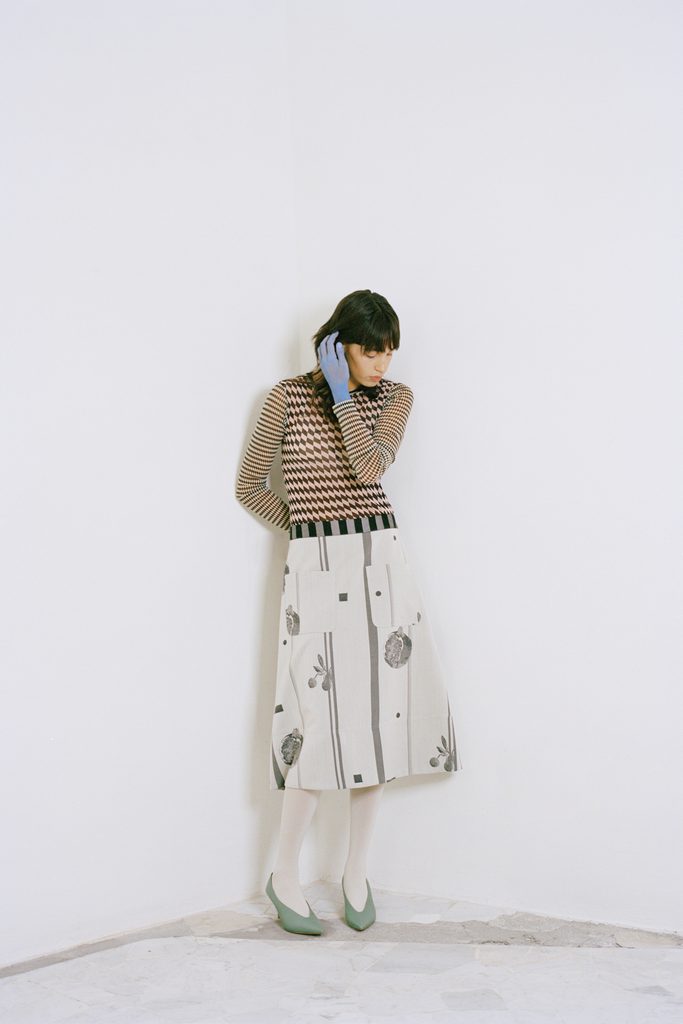
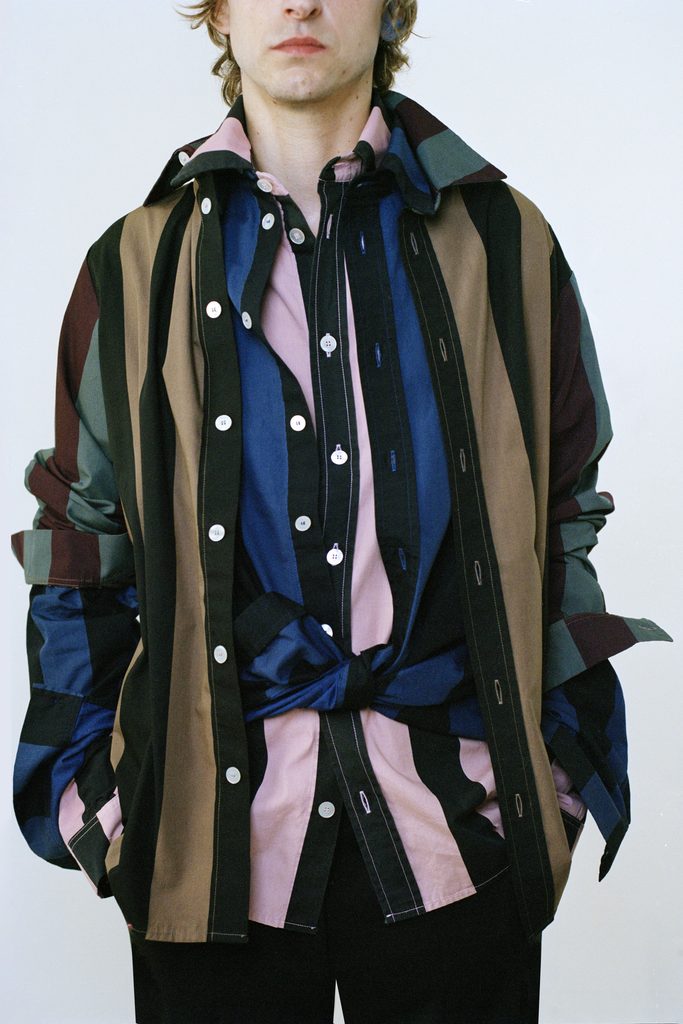
“We wanted to work with what we already have: revisit textiles, reconsider patterns and give new life to archive prints,” explains the Austrian designer. Being an independent brand, he points out, gives a certain freedom in the way of working: production quantities are simply determined by the amount of fabric left of each reference. The collection thus brings together textiles from different seasons and moments in the house’s history: the baroque print of Fall/Winter 22-23, the striped cottons of Spring/Summer 25, the multicoloured checks and stained-glass prints of Fall/Winter 24-25, or geometric motifs ranging from Spring/Summer 20 to Fall/Winter 25-26.
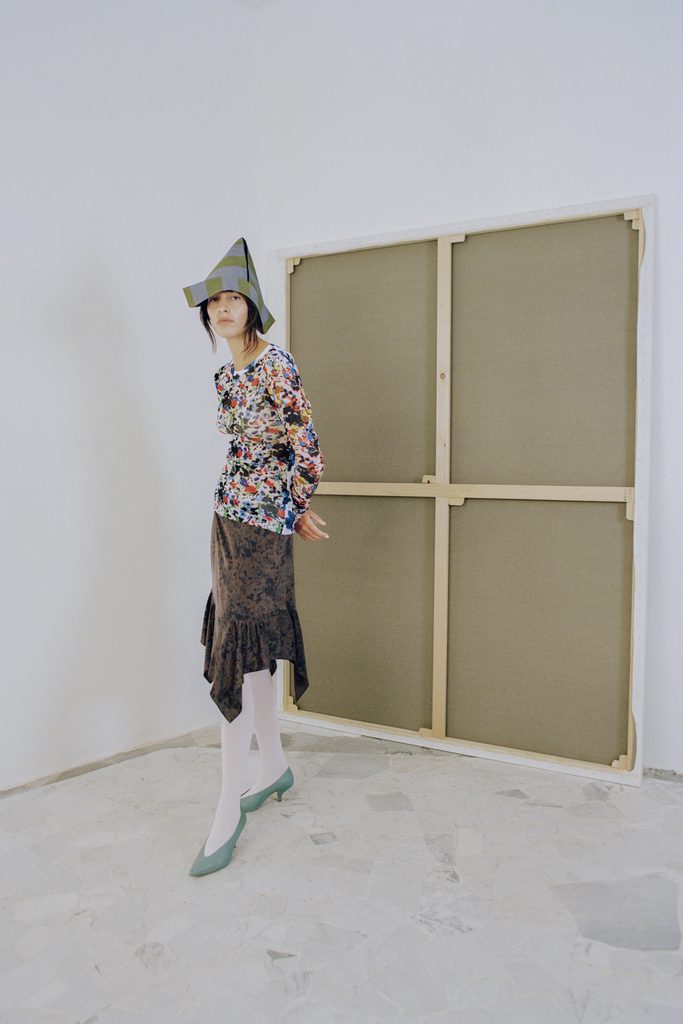
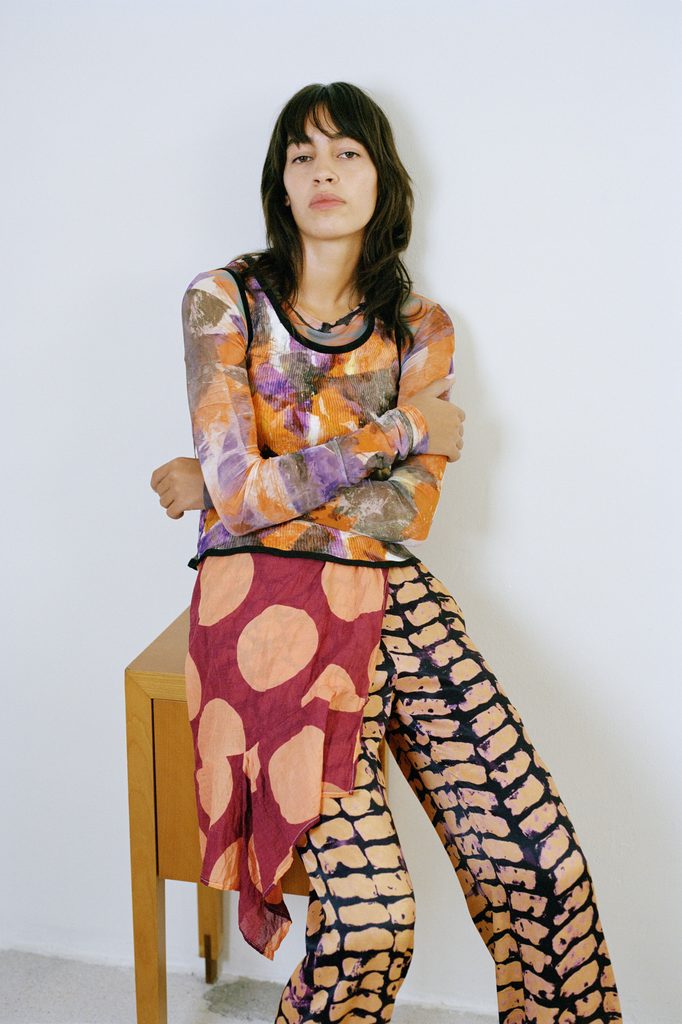
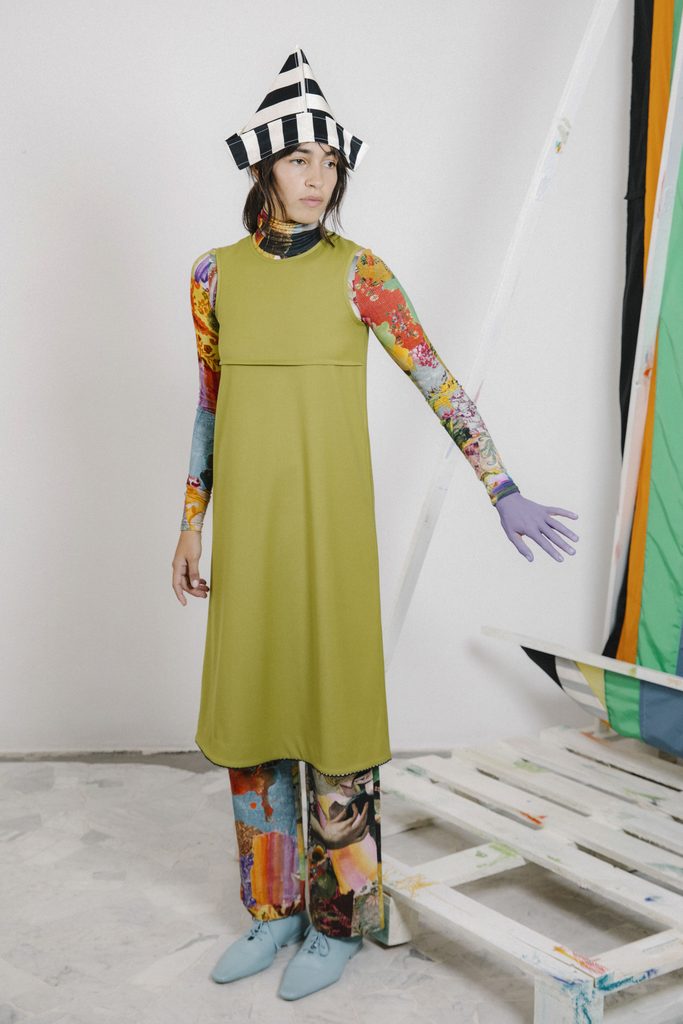
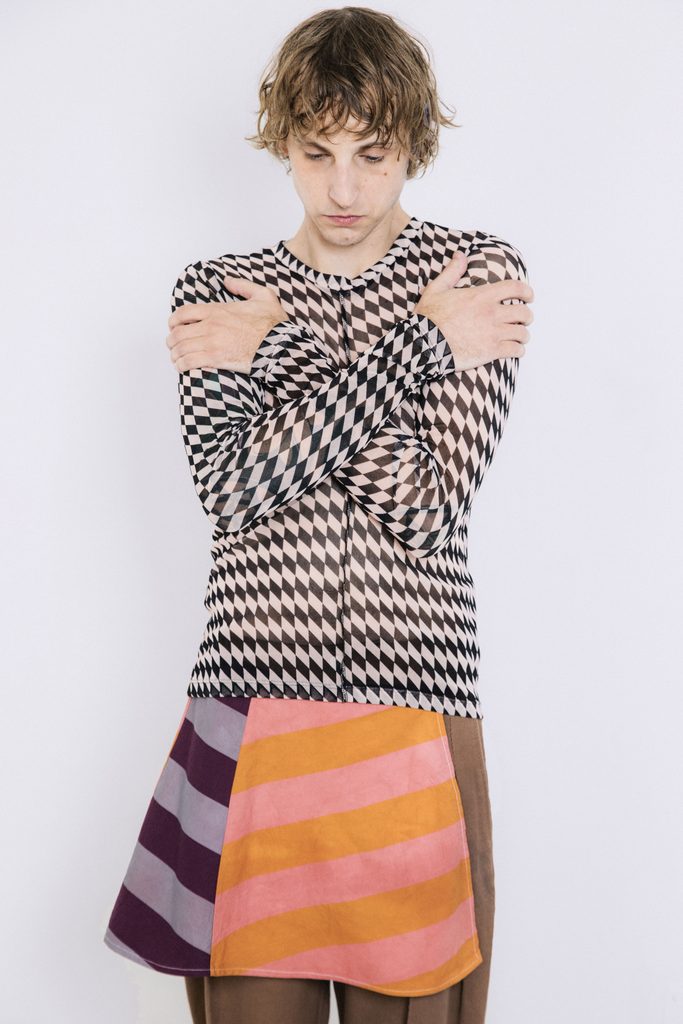
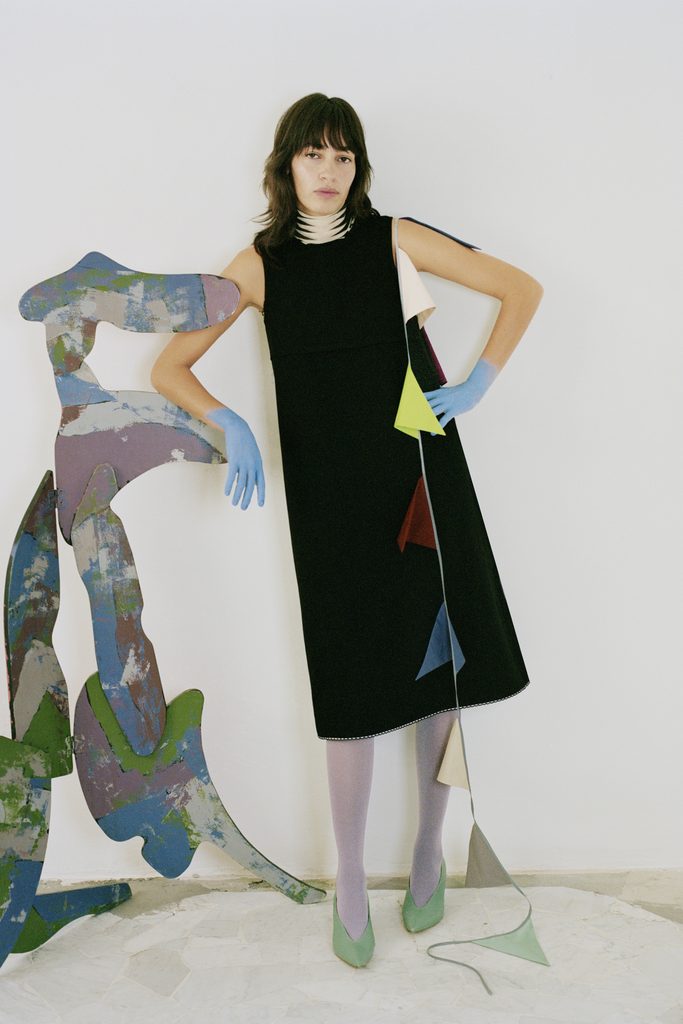
To these archives are added lighter, sheer materials — polka dots, diamonds and stripes printed on mesh, multicoloured checked tulle — alongside a cobra-style printed satin, a logo jacquard viscose, gingham, zigzag crinkled crepe, pomegranate jacquard and animal prints. Rather than hiding the disparate origin of these fabrics, the house chooses to assemble them and transform the way they are perceived: a large part of the collection is garment-dyed, altering the original colours and prints to give them a completely different character — a bright floral silk becomes dull brown, suddenly autumnal; colourful summer stripes become more discreet, more sober, more earthy.
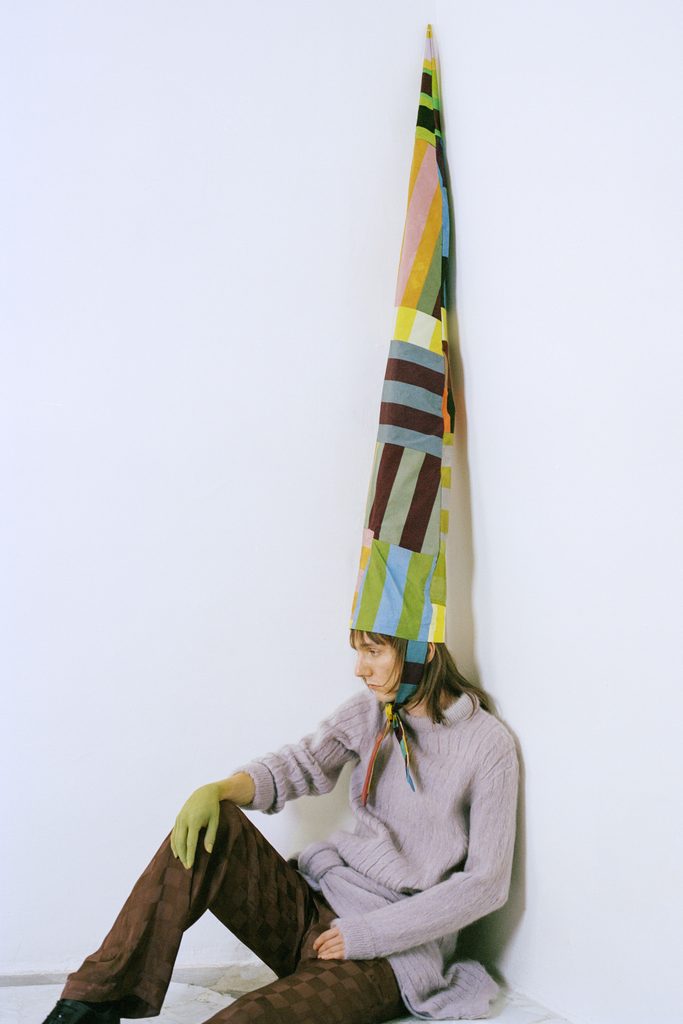
The silhouettes, for their part, remain deliberately simple: loose, generous cuts, designed for different bodies and different ages, where proportions are played with without ever complicating the construction. The accessories bring a theatrical and slightly absurd touch — a triangular painter’s hat in striped cotton, patchwork headpieces with exaggerated points, and the triangular pennant, a familiar motif of the house, reinvented as a fabric scarf.
“The world, seen through the prism of fashion, seems rather dull and often monotonous today,” observes Arthur Arbesser. “Our response is to create something that goes in the opposite direction: rich, energetic, colourful, and perhaps a little excessive.” Prints are layered, patterns collide, fabrics that were never meant to meet suddenly find themselves together — without the collection ceasing to be wearable: each piece, the designer specifies, works just as well with a simple white T-shirt or black trousers. “We just think it’s not our job to make those pieces.”
A way, by implication, of offering a definition of sustainable fashion that is not limited to a marketing argument: here, the constraint of existing stock becomes the real creative engine, to the point of dictating — literally — the size of the collection. Few houses agree to go this far in this logic, where the exhaustion of a specific fabric marks, without any possible negotiation, the end of a piece’s availability — against an industry more generally built on the unlimited reproducibility of the same model.
Cette publication est également disponible en :


